

Oral Obesity Therapies Market Report 2026
Global Outlook – By Drug Class (Lipase Inhibitors, Sympathomimetic Appetite Suppressants, Combination Therapies, Oral GLP-1 Agonists, Other Oral Mechanisms), By Patient Indication (BMI ≥30 Primary Obesity, Overweight + Metabolic Comorbidities, Short-term Weight Reduction, Weight Maintenance, Adolescent Populations), By Sales Channel (Retail Pharmacies, Mail-order Pharmacies, Telehealth Platforms, Hospital Outpatient Pharmacies, Specialty Pharmacies), By Application (Obesity Management, Weight Loss Maintenance, Cardiometabolic Risk Reduction, Pre-Surgical Weight Control), By End User (Hospitals, Clinics, Homecare Settings) – Market Size, Trends, Strategies, and Forecast to 2035
Oral Obesity Therapies Market Overview
• Oral Obesity Therapies market size has reached to $3.94 billion in 2025 • Expected to grow to $6.32 billion in 2030 at a compound annual growth rate (CAGR) of 9.9% • Growth Driver: Rising Obesity Prevalence Driving Growth In The Market Due To Increasing Consumption Of Calorie-Dense Processed Foods • Market Trend: Advancement Of Incretin-Based Oral Therapies For Enhanced Metabolic And Weight Management Outcomes • North America was the largest region in 2025 and Asia-Pacific is the fastest growing region.What Is Covered Under Oral Obesity Therapies Market?
Oral obesity therapies refer to medications taken by mouth that are designed to help manage and treat obesity by influencing appetite, metabolism, or fat absorption. These therapies work through various mechanisms, such as suppressing hunger signals in the brain, increasing feelings of fullness, or reducing the amount of dietary fat absorbed in the digestive system. The main drug classes of oral obesity therapies include lipase inhibitors, sympathomimetic appetite suppressants, combination therapies, oral glp-1 agonists, and other oral mechanisms. Lipase inhibitors refer to medications that reduce fat absorption in the digestive system to support weight reduction and obesity management. The different patient indications include bmi ≥30 primary obesity, overweight + metabolic comorbidities, short-term weight reduction, weight maintenance, and adolescent populations and the different sales channels include retail pharmacies, mail-order pharmacies, telehealth platforms, hospital outpatient pharmacies, and specialty pharmacies. The various applications involved are obesity management, weight loss maintenance, cardiometabolic risk reduction, and pre-surgical weight control, and they are used by end users including hospitals, clinics, and homecare settings.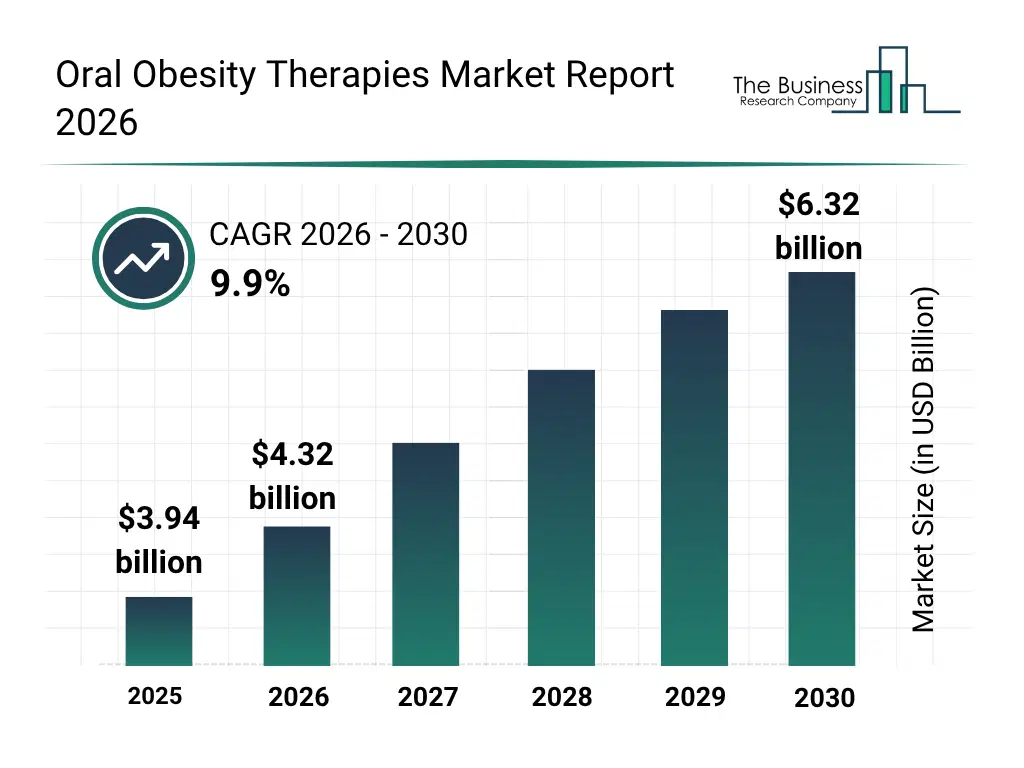
What Is The Oral Obesity Therapies Market Size and Share 2026?
The oral obesity therapies market size has grown strongly in recent years.It will grow from $3.94 billion in 2025 to $4.32 billion in 2026 at a compound annual growth rate (CAGR) of 9.7%. The growth in the historic period can be attributed to increasing global obesity prevalence, rising awareness of metabolic health risks, expansion of prescription-based weight management drugs, growth in clinical research on appetite regulation mechanisms, increasing healthcare focus on non-invasive obesity treatments.What Is The Oral Obesity Therapies Market Growth Forecast?
The oral obesity therapies market size is expected to see strong growth in the next few years.It will grow to $6.32 billion by 2030 at a compound annual growth rate (CAGR) of 9.9%. The growth in the forecast period can be attributed to rising adoption of oral glp-1 therapies, increasing demand for personalized metabolic treatments, growth in telemedicine-based obesity care, expansion of next-generation oral incretin drugs, rising investment in obesity drug pipelines by pharma companies.Major trends in the forecast period include rising adoption of oral glp-1 based therapies for appetite regulation and weight management, increasing use of combination oral obesity drugs targeting multiple metabolic pathways, growing demand for personalized obesity treatment based on genetic and metabolic profiling, expansion of telehealth enabled prescription access for oral weight loss therapies, rising development of gut hormone modulating oral drugs for improved metabolic control.
Global Oral Obesity Therapies Market Segmentation
1) By Drug Class: Lipase Inhibitors, Sympathomimetic Appetite Suppressants, Combination Therapies, Oral GLP-1 Agonists, Other Oral Mechanisms 2) By Patient Indication: BMI ≥30 Primary Obesity, Overweight + Metabolic Comorbidities, Short-term Weight Reduction, Weight Maintenance, Adolescent Populations 3) By Sales Channel: Retail Pharmacies, Mail-order Pharmacies, Telehealth Platforms, Hospital Outpatient Pharmacies, Specialty Pharmacies 4) By Application: Obesity Management, Weight Loss Maintenance, Cardiometabolic Risk Reduction, Pre-Surgical Weight Control 5) By End User: Hospitals, Clinics, Homecare Settings Subsegments: 1) By Lipase Inhibitors: Prescription Lipase Inhibitors, Over The Counter Lipase Inhibitors, High Dose Lipase Inhibitors, Low Dose Lipase Inhibitors, Generic Lipase Inhibitors, Branded Lipase Inhibitors 2) By Sympathomimetic Appetite Suppressants: Short Acting Appetite Suppressants, Long Acting Appetite Suppressants, Central Nervous System Stimulants, Adrenergic Appetite Suppressants, Prescription Appetite Suppressants, Extended Release Appetite Suppressants 3) By Combination Therapies: Appetite Suppressant And Antidepressant Combinations, Appetite Suppressant And Anticonvulsant Combinations, Multi Mechanism Combination Therapies, Fixed Dose Combination Therapies, Dual Mechanism Combination Therapies, Triple Mechanism Combination Therapies 4) By Oral Glucagon Like Peptide One Agonists: Daily Oral Glucagon Like Peptide One Agonists, Weekly Oral Glucagon Like Peptide One Agonists, High Potency Glucagon Like Peptide One Agonists, Sustained Release Glucagon Like Peptide One Agonists, Next Generation Incretin Agonists 5) By Other Oral Mechanisms: Serotonin Receptor Modulators, Metabolic Enhancers, Thermogenic Agents, Gut Hormone Modulators, Energy Expenditure Regulators, Dual Incretin AgonistsWhat Is The Driver Of The Oral Obesity Therapies Market?
The rising obesity prevalence is expected to propel the growth of the oral obesity therapies industry going forward.Obesity refers to a medical condition characterized by excessive accumulation of body fat that increases the risk of health problems such as heart disease, diabetes, and hypertension.Obesity is increasing primarily due to higher consumption of calorie-dense processed foods, which leads to excess energy intake and gradual weight gain when not balanced with physical activity.Oral obesity therapies help treat obesity by regulating hunger-related hormones and reducing calorie absorption, which leads to sustained weight management and improved health outcomes.For instance, in May 2025, according to the Office for Health Improvement and Disparities, a UK-based government body, in 2023–2024, the prevalence of overweight (including obesity) among adults was higher in men (69.7%) than in women (59.2%), whereas obesity alone was slightly more prevalent in women (26.9%) compared to men (26.2%).Therefore, the rising obesity prevalence is driving the growth of the oral obesity therapies industry.Key Players In The Global Oral Obesity Therapies Market
Major companies operating in the oral obesity therapies market are F. Hoffmann-La Roche AG, Merck & Co. Inc., Pfizer Inc., AstraZeneca PLC, Eli Lilly and Company, Novo Nordisk A/S, Takeda Pharmaceutical Company Limited, Boehringer Ingelheim GmbH, Sun Pharmaceutical Industries Ltd., Jiangsu Hengrui Medicine Co. Ltd., Celltrion Inc., Zydus Lifesciences Limited, Jiangsu Hansoh Pharmaceutical Group Co. Ltd., Hanmi Pharmaceutical Co. Ltd., Innovent Biologics Inc., Viking Therapeutics Inc., Rhythm Pharmaceuticals Inc., Septerna Therapeutics, Eccogene Inc., Currax Pharmaceuticals LLC, Ascletis Pharma Inc., Structure TherapeuticsGlobal Oral Obesity Therapies Market Trends and Insights
Major companies operating in the oral obesity therapies market are focusing on developing innovative solutions such as, incretin-based therapy, to enhance weight loss efficacy, improve metabolic outcomes, and offer convenient non-injectable treatment options for patients. Incretin-based therapy refers to a class of treatments that mimic or enhance the action of incretin hormones (such as GLP-1) to regulate blood sugar levels, suppress appetite, and promote weight loss. For instance, in January 2026, Denmark A/S, a Denmark-based healthcare company, launched an LP-1 pill for obesity, called the Wegovy pill (oral semaglutide), for chronic weight management in adults with obesity or overweight plus related conditions, alongside diet and exercise. It's also cleared to reduce cardiovascular risks such as heart attacks and strokes in those with established heart disease.What Are Latest Mergers And Acquisitions In The Oral Obesity Therapies Market?
In December 2023, Hoffmann-La Roche AG, a Switzerland-based healthcare company, acquired Carmot Therapeutics Inc. for $2. 7 billion. With this acquisition, Roche aims to strengthen its presence in the obesity and metabolic disease segment by expanding its portfolio of incretin-based therapies, including oral GLP-1 drug candidates, and enhancing its drug development capabilities. Carmot Therapeutics Inc. is a US-based biotechnology company that offers oral obesity therapies.Regional Insights
North America was the largest region in the oral obesity therapies market in 2025. Asia-Pacific is expected to be the fastest-growing region in the forecast period. The regions covered in this market report are Asia-Pacific, South East Asia, Western Europe, Eastern Europe, North America, South America, Middle East and Africa. The countries covered in this market report are Australia, Brazil, China, France, Germany, India, Indonesia, Japan, Taiwan, Russia, South Korea, UK, USA, Canada, Italy, Spain.What Defines the Oral Obesity Therapies Market?
The oral obesity therapies market consists of sales of prescription oral anti-obesity drugs, over-the-counter weight management tablets, appetite suppressants, fat absorption inhibitors, and metabolic enhancers. Values in this market are ‘factory gate’ values, that is, the value of goods sold by the manufacturers or creators of the goods, whether to other entities (including downstream manufacturers, wholesalers, distributors, and retailers) or directly to end customers. The value of goods in this market includes related services sold by the creators of the goods.What is the Market Assessment and Strategic Outlook for the Oral Obesity Therapies Industry?
The oral obesity therapies market research report is one of a series of new reports from The Business Research Company that provides market statistics, including industry global market size, regional shares, competitors with the market share, detailed market segments, market trends and opportunities, and any further data you may need to thrive in the oral obesity therapies industry. The market research report delivers a complete perspective of everything you need, with an in-depth analysis of the current and future state of the industry.What is the Market Assessment and Strategic Outlook for the Oral Obesity Therapies Market Report 2026?
The oral obesity therapies market research report is one of a series of new reports from The Business Research Company that provides oral obesity therapies market statistics, including oral obesity therapies industry global market size, regional shares, competitors with a oral obesity therapies market share, detailed oral obesity therapies market segments, market trends and opportunities, and any further data you may need to thrive in the oral obesity therapies industry. This oral obesity therapies market research report delivers a complete perspective of everything you need, with an in-depth analysis of the current and future scenario of the industry.Oral Obesity Therapies Market Report Forecast Analysis
| Report Attribute | Details |
|---|---|
| Market Size Value In 2026 | $4.32 billion |
| Revenue Forecast In 2035 | $6.32 billion |
| Growth Rate | CAGR of 9.9% from 2026 to 2035 |
| Base Year For Estimation | 2025 |
| Actual Estimates/Historical Data | 2020-2025 |
| Forecast Period | 2026 - 2030 - 2035 |
| Market Representation | Revenue in USD Billion and CAGR from 2026 to 2035 |
| Segments Covered | Drug Class, Patient Indication, Sales Channel, Application, End User |
| Regional Scope | Asia-Pacific, Western Europe, Eastern Europe, North America, South America, Middle East, Africa |
| Country Scope | The countries covered in the report are Australia, Brazil, China, France, Germany, India, Indonesia, Japan, Taiwan, Russia, South Korea, UK, USA, Canada, Italy, Spain. |
| Key Companies Profiled | F. Hoffmann-La Roche AG, Merck & Co. Inc., Pfizer Inc., AstraZeneca PLC, Eli Lilly and Company, Novo Nordisk A/S, Takeda Pharmaceutical Company Limited, Boehringer Ingelheim GmbH, Sun Pharmaceutical Industries Ltd., Jiangsu Hengrui Medicine Co. Ltd., Celltrion Inc., Zydus Lifesciences Limited, Jiangsu Hansoh Pharmaceutical Group Co. Ltd., Hanmi Pharmaceutical Co. Ltd., Innovent Biologics Inc., Viking Therapeutics Inc., Rhythm Pharmaceuticals Inc., Septerna Therapeutics, Eccogene Inc., Currax Pharmaceuticals LLC, Ascletis Pharma Inc., Structure Therapeutics |
| Customization Scope | Request for Customization |
| Pricing And Purchase Options | Explore Purchase Options |