
Orally Disintegrating Tablet Market Report 2026
Global Outlook – By Drug Class (Anti-Psychotics, Anti-Epileptics, Central Nervous System Stimulants, Anxiolytics, Anti-Parkinsonian Drugs, Anti-Hypertensives, Non-Steroidal Anti-Inflammatory Drugs, Anti-Allergy Drugs, Proton Pump Inhibitors, Other Drug Classes), By Disease Indication (Central Nervous System Disease, Gastrointestinal Disease, Cardiovascular System Disorders, Allergy, Other Disease Indications), By Distribution Channel (Hospital Pharmacies, Online Pharmacies, Retail Pharmacies, Drug Stores), By Consumer Type (Pediatric, Adult, Geriatric) – Market Size, Trends, Strategies, and Forecast to 2030
Orally Disintegrating Tablet Market Overview
• Orally Disintegrating Tablet market size has reached to $16.2 billion in 2025 • Expected to grow to $24.43 billion in 2030 at a compound annual growth rate (CAGR) of 8.5% • Growth Driver: Surge In Neurological Disorders Fueling The Growth Of The Market Due To People Living Longer Conditions • Market Trend: Innovation In Patient-Centric Drug Delivery To Enhance Treatment Adherence • North America was the largest region in 2025 and Asia-Pacific is the fastest growing region.What Is Covered Under Orally Disintegrating Tablet Market?
An orally disintegrating tablet (ODT) is a type of tablet designed to dissolve or break down rapidly in the mouth without requiring water. It is particularly beneficial for patients who have difficulty swallowing, offering a convenient and easy-to-administer alternative to traditional tablets. The main drug classes of orally disintegrating tablets are antipsychotics, antiepileptics, central nervous system stimulants, anxiolytics, anti-Parkinsonian drugs, antihypertensives, nonsteroidal anti-inflammatory drugs, antiallergy drugs, proton pump inhibitors, and others. Antipsychotics refers to medicines used to treat mental health conditions by reducing symptoms such as hallucinations and delusions. The multiple disease indications include central nervous system disease, gastrointestinal disease, cardiovascular system disorders, allergies, and others that are distributed through various distribution channels such as hospital pharmacies, online pharmacies, retail pharmacies, and drug stores, and cater to several consumer types, including pediatric, adult, and geriatric.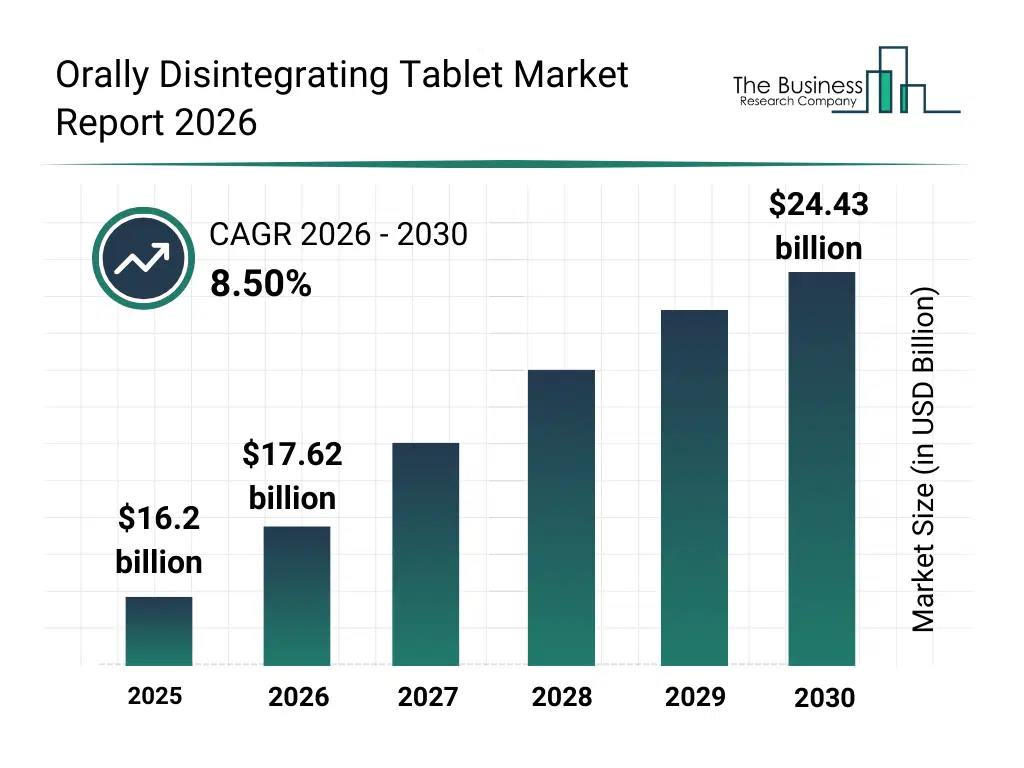
What Is The Orally Disintegrating Tablet Market Size and Share 2026?
The orally disintegrating tablet market size has grown strongly in recent years. It will grow from $16.2 billion in 2025 to $17.62 billion in 2026 at a compound annual growth rate (CAGR) of 8.8%. The growth in the historic period can be attributed to limited awareness of orally disintegrating tablets, conventional tablet dominance, low pediatric and geriatric targeting, reliance on hospital pharmacy channels, slow adoption of specialty drug formulations.What Is The Orally Disintegrating Tablet Market Growth Forecast?
The orally disintegrating tablet market size is expected to see strong growth in the next few years. It will grow to $24.43 billion in 2030 at a compound annual growth rate (CAGR) of 8.5%. The growth in the forecast period can be attributed to technological advancements in odt formulation, increasing patient preference for convenience and compliance, growth of online and retail pharmacy networks, rising prevalence of cns and gastrointestinal disorders, expanding r&d in anti-psychotics and anti-epileptics. Major trends in the forecast period include rising demand for easy-to-swallow and patient-friendly dosage forms, expansion of pediatric and geriatric patient targeting, growth in hospital and retail pharmacy distribution channels, increased focus on rapid-onset therapeutics, rising adoption of specialty drug classes in odt formulations.
Global Orally Disintegrating Tablet Market Segmentation
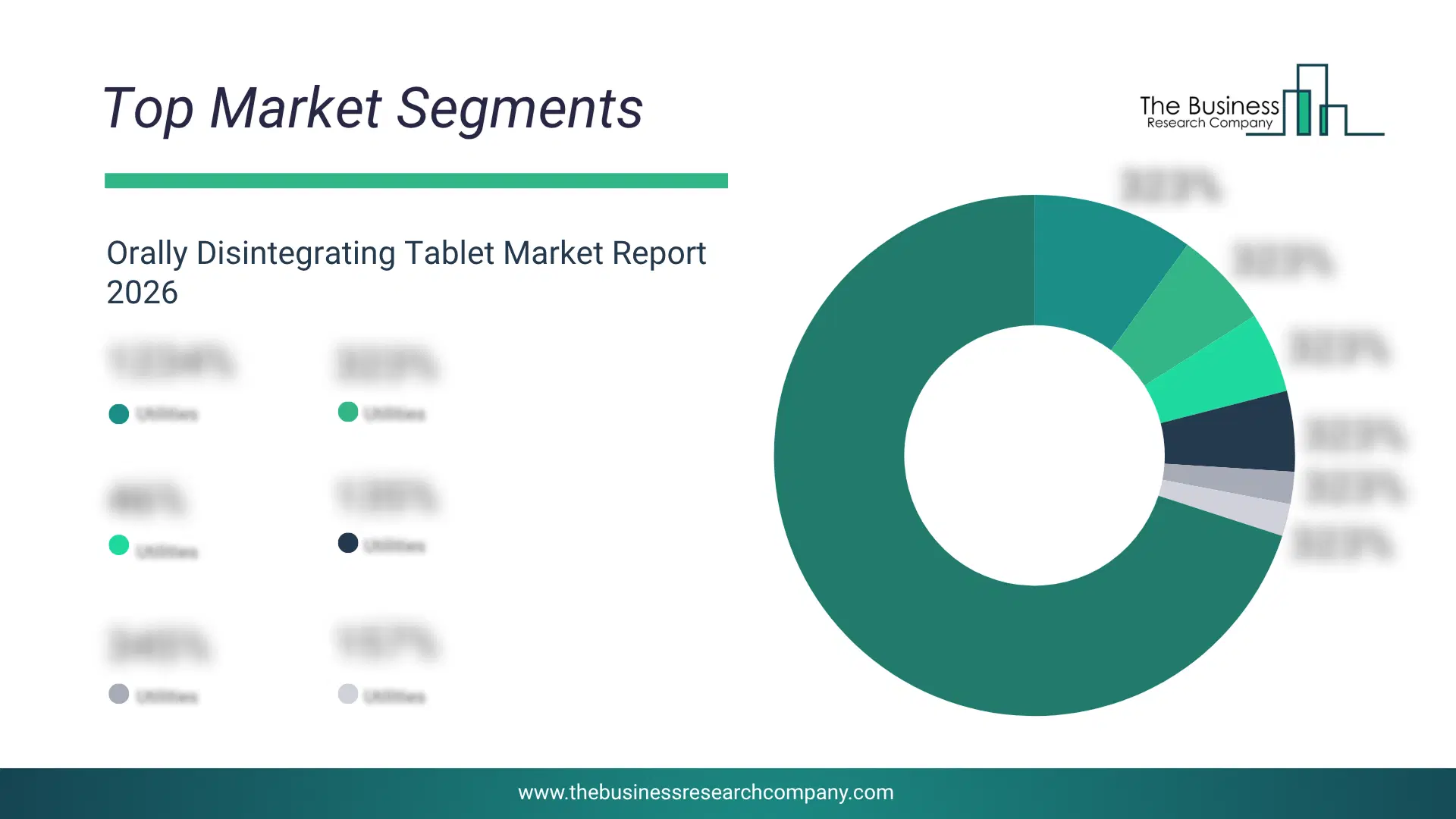
1) By Drug Class: Anti-Psychotics, Anti-Epileptics, Central Nervous System Stimulants, Anxiolytics, Anti-Parkinsonian Drugs, Anti-Hypertensives, Non-Steroidal Anti-Inflammatory Drugs, Anti-Allergy Drugs, Proton Pump Inhibitors, Other Drug Classes 2) By Disease Indication: Central Nervous System Disease, Gastrointestinal Disease, Cardiovascular System Disorders, Allergy, Other Disease Indications 3) By Distribution Channel: Hospital Pharmacies, Online Pharmacies, Retail Pharmacies, Drug Stores 4) By Consumer Type: Pediatric, Adult, Geriatric Subsegments: 1) By Anti-Psychotics: Atypical Anti-Psychotics, Typical Anti-Psychotics 2) By Anti-Epileptics: Sodium Channel Blockers, GABA Analogs, Other Anti-Epileptics 3) By Central Nervous System Stimulants: Amphetamine Derivatives, Methylphenidate, Other CNS Stimulants 4) By Anxiolytics: Benzodiazepines, Non-Benzodiazepine Anxiolytics 5) By Anti-Parkinsonian Drugs: Dopamine Agonists, MAO-B Inhibitors, Other Anti-Parkinsonian Drugs 6) By Anti-Hypertensives: Beta-Blockers, Calcium Channel Blockers, ACE Inhibitors, Other Anti-Hypertensives 7) By Non-Steroidal Anti-Inflammatory Drugs (NSAIDs): Ibuprofen, Diclofenac, Other NSAIDs 8) By Anti-Allergy Drugs: Antihistamines, Corticosteroids 9) By Proton Pump Inhibitors: Omeprazole, Esomeprazole 10) By Other Drug Classes: Antiemetics, Antimigraine Drugs, Other Therapeutic ClassesWhat Is The Driver Of The Orally Disintegrating Tablet Market?
The increasing incidence of neurological disorders is expected to propel the growth of the orally disintegrating tablet market going forward. Neurological disorders refer to medical conditions that affect the nervous system, including the brain and peripheral nerves, and disrupt the normal functioning of the nervous system. The rising number of neurological disorders is mainly due to people living longer, as conditions such as Alzheimer’s and Parkinson’s become more common with age, leading to an overall increase in cases. Orally disintegrating tablets help neurological disorders by allowing easier and faster medication administration, particularly for patients who have difficulty swallowing (dysphagia) or cognitive impairments, and improve treatment adherence, ensure timely dosing, and enhance the overall effectiveness of therapy. For instance, in March 2023, according to the Alzheimer's Association, a US-based nonprofit voluntary health organization, in 2023, about 6.7 million Americans aged 65 and older are living with Alzheimer's dementia, with projections indicating an increase to 13.8 million by 2060. Therefore, the increasing incidence of neurological disorders is driving the growth of the orally disintegrating tablet industry.Key Players In The Global Orally Disintegrating Tablet Market
Major companies operating in the orally disintegrating tablet market are Pfizer Inc., Merck & Co Inc., Bayer AG, Novartis AG, GlaxoSmithKline plc, Takeda Pharmaceutical Company Limited, Viatris Inc., Teva Pharmaceutical Industries Ltd., Otsuka Pharmaceutical Co Ltd., Astellas Pharma Inc., Daiichi Sankyo Company Limited, Sun Pharmaceutical Industries Limited, Aurobindo Pharma USA Inc., Dr. Reddy's Laboratories Limited, Cadila Healthcare Limited, Torrent Pharmaceuticals Limited, Adare Pharma Solutions.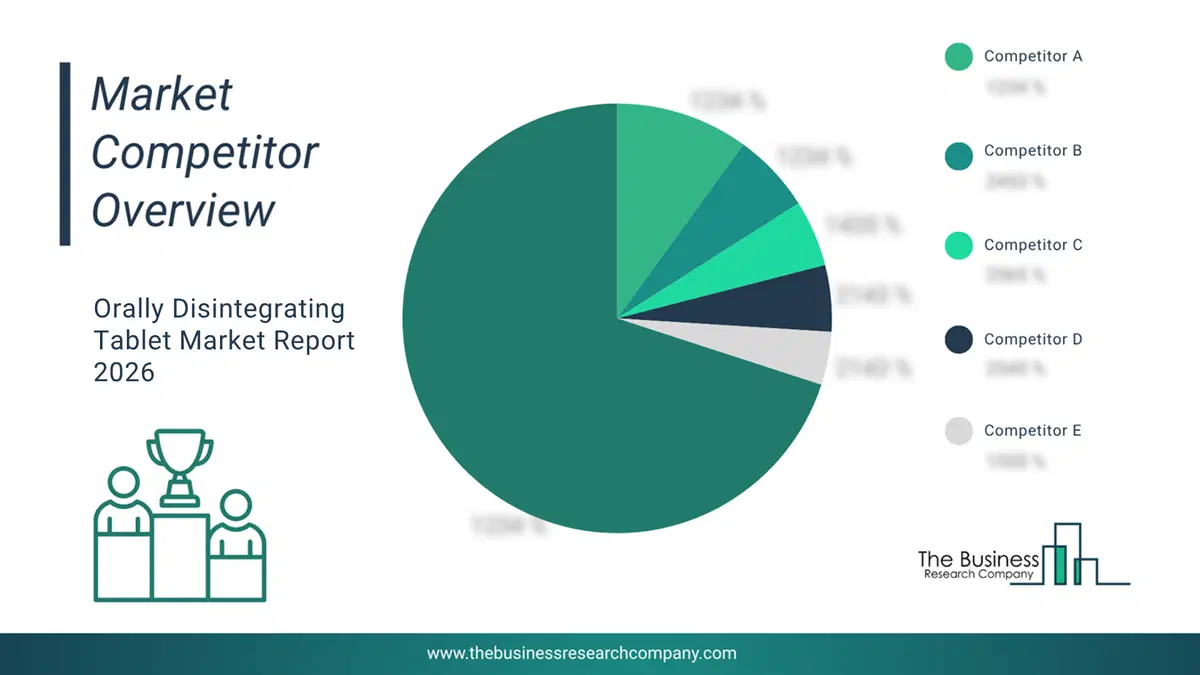
This chart is for illustrative purposes; the full report includes a detailed competitor analysis and comprehensive overview of the top 10 companies in the market.
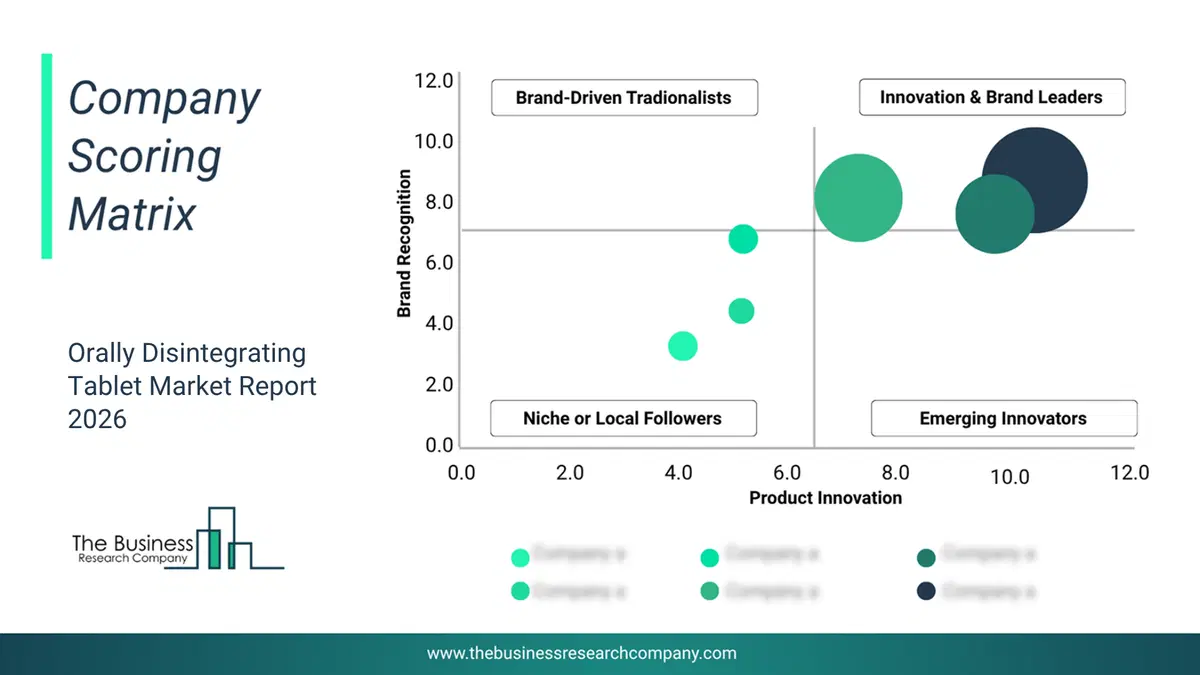
This chart maps companies by product innovation and brand strength, with bubble size indicating relative revenue, helping identify market leaders, challengers, and niche players. This is an illustrative chart; the full report provides a complete and accurate competitive analysis.
Global Orally Disintegrating Tablet Market Trends and Insights
Major companies operating in the orally disintegrating tablet market are focusing on innovation in drug formulation, such as patient-centric drug delivery systems, to enhance treatment adherence and improve patient outcomes. A patient-centric drug delivery system refers to a way of designing and delivering medicines that makes them easier and more comfortable for patients to take, improving their treatment experience and adherence. For instance, in May 2025, Viatris Inc., a US-based healthcare company, launched Gen-Clozapine orally disintegrating tablets (ODT) in Canada, providing a new treatment option for treatment-resistant schizophrenia. It offers several unique features, making it a significant addition to the management of treatment-resistant schizophrenia in Canada. As the first clozapine orally disintegrating tablet (ODT) available in the country, it provides a patient-friendly option that disintegrates quickly in the mouth without water, aiding those with difficulty swallowing or adherence challenges. The product is available in multiple strengths (12.5 mg, 25 mg, 50 mg, 100 mg, and 200 mg), allowing flexible and precise dose titration based on individual patient needs. By using clozapine, the only approved antipsychotic for treatment-resistant schizophrenia, the ODT formulation supports alignment with established treatment protocols.What Are Latest Mergers And Acquisitions In The Orally Disintegrating Tablet Market?
In December 2024, Novo Holdings A/S, a Denmark-based life-sciences investment firm, acquired Catalent, Inc. for $16.5 billion. With this acquisition, Novo Holdings aims to strengthen its position in contract development and manufacturing by partnering with a global leader in drug-delivery and fill-finish services. Catalent, Inc. is a U.S.-based manufacturing and CDMO company that specializes in providing advanced drug-delivery technologies, including orally disintegrating tablets, softgels, and biologics fill-finish solutions.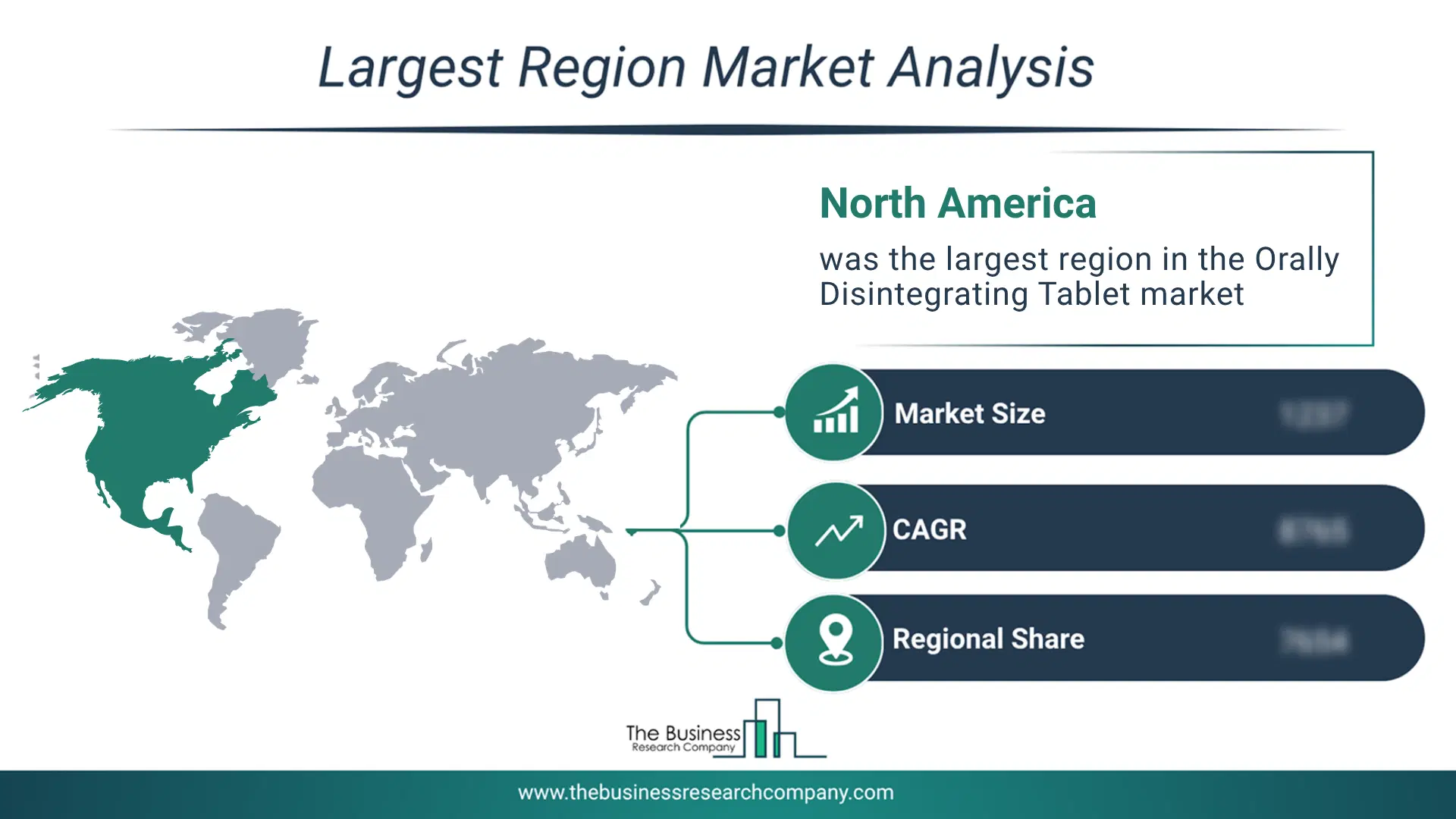
Regional Insights
North America was the largest region in the orally disintegrating tablet market in 2025. Asia-Pacific is expected to be the fastest-growing region in the forecast period. The regions covered in this market report are Asia-Pacific, South East Asia, Western Europe, Eastern Europe, North America, South America, Middle East, Africa. The countries covered in this market report are Australia, Brazil, China, France, Germany, India, Indonesia, Japan, Taiwan, Russia, South Korea, UK, USA, Canada, Italy, Spain.What Defines the Orally Disintegrating Tablet Market?
The orally disintegrating tablet market consists of sales of benadryl orally disintegrating tablets (diphenhydramine), zofran orally disintegrating tablets (ondansetron), cialis orally disintegrating tablets (tadalafil), and lamictal orally disintegrating tablets (lamotrigine). Values in this market are ‘factory gate’ values, that is the value of goods sold by the manufacturers or creators of the goods, whether to other entities (including downstream manufacturers, wholesalers, distributors and retailers) or directly to end customers. The value of goods in this market includes related services sold by the creators of the goods.How is Market Value Defined and Measured?
The market value is defined as the revenues that enterprises gain from the sale of goods and/or services within the specified market and geography through sales, grants, or donations in terms of the currency (in USD unless otherwise specified). The revenues for a specified geography are consumption values that are revenues generated by organizations in the specified geography within the market, irrespective of where they are produced. It does not include revenues from resales along the supply chain, either further along the supply chain or as part of other products.
This chart presents market attractiveness based on a quantitative evaluation of growth, competition, strategic alignment, and risk, offering a clear view of opportunity areas for decision-making. This chart is for illustrative purposes; the full report contains the complete analysis.

This chart highlights the Total Addressable Market (TAM) by estimating the maximum revenue opportunity using an assumption-driven approach, supporting strategic planning and opportunity sizing across markets. The chart is illustrative; the full report provides a more comprehensive analysis.
What Key Data and Analysis Are Included in the Orally Disintegrating Tablet Market Report 2026?
The orally disintegrating tablet market research report is one of a series of new reports from The Business Research Company that provides market statistics, including industry global market size, regional shares, competitors with the market share, detailed market segments, market trends and opportunities, and any further data you may need to thrive in the orally disintegrating tablet industry. The market research report delivers a complete perspective of everything you need, with an in-depth analysis of the current and future state of the industry.Orally Disintegrating Tablet Market Report Forecast Analysis
| Report Attribute | Details |
|---|---|
| Market Size Value In 2026 | $17.62 billion |
| Revenue Forecast In 2030 | $24.43 billion |
| Growth Rate | CAGR of 8.8% from 2026 to 2030 |
| Base Year For Estimation | 2025 |
| Actual Estimates/Historical Data | 2020-2025 |
| Forecast Period | 2026 - 2030 |
| Market Representation | Revenue in USD Billion and CAGR from 2026 to 2030 |
| Segments Covered | Drug Class, Disease Indication, Distribution Channel, Consumer Type |
| Regional Scope | Asia-Pacific, Western Europe, Eastern Europe, North America, South America, Middle East, Africa |
| Country Scope | The countries covered in the report are Australia, Brazil, China, France, Germany, India, Indonesia, Japan, Taiwan, Russia, South Korea, UK, USA, Canada, Italy, Spain. |
| Key Companies Profiled | Pfizer Inc., Merck & Co Inc., Bayer AG, Novartis AG, GlaxoSmithKline plc, Takeda Pharmaceutical Company Limited, Viatris Inc., Teva Pharmaceutical Industries Ltd., Otsuka Pharmaceutical Co Ltd., Astellas Pharma Inc., Daiichi Sankyo Company Limited, Sun Pharmaceutical Industries Limited, Aurobindo Pharma USA Inc., Dr. Reddy's Laboratories Limited, Cadila Healthcare Limited, Torrent Pharmaceuticals Limited, Adare Pharma Solutions. |
| Customization Scope | Request for Customization |
| Pricing And Purchase Options | Explore Purchase Options |