
Organoids And Spheroids Market Report 2026
Global Outlook – By Type (Organoids, Spheroids), By Method (Extracellular Matrix Scaffold Method, Spinning Bioreactor Method, Hanging Drop Method, Low Adherent Culture Plate Method, Magnetic levitation Method, Other Methods), By Application (Developmental Biology, Personalized Medicine, Regenerative Medicine, Disease Pathology Studies, Drug Toxicity And Efficacy Testing), By End User (Biotechnology And Pharmaceutical Industry, Academic And Research Institutes, Hospitals And Diagnostic Centers) - Market Size, Trends, And Global Forecast 2026-2030
Organoids And Spheroids Market Overview
• Organoids And Spheroids market size has reached to $1.39 billion in 2025 • Expected to grow to $3.44 billion in 2030 at a compound annual growth rate (CAGR) of 19.7% • Growth Driver: Growing Demand for Cell Therapy and Tissue Engineering Fuels Organoids and Spheroids Market Expansion • Market Trend: Innovative Single-Particle Dispensers Drive Precision And Efficiency In Drug Discovery • North America was the largest region in 2025 and Asia-Pacific is the fastest growing region.Market Gains By 2030 – Top Opportunities By Segment
Market Gain identifies the most promising market opportunities by highlighting the segments or products expected to generate the highest incremental revenue growth over the next five years.
What Is Covered Under Organoids And Spheroids Market?
Organoids and spheroids are 3D cell culture systems that mimic the structure and function of organs and tissues. Organoids are miniaturized and simplified versions of organs derived from stem cells, while spheroids are spherical clusters of cells that can represent tumor microenvironments or tissue models. These models are used for research in disease modeling, and drug testing. The main types of organoids and spheroids are organoids and spheroids. Organoids refer to miniature, simplified versions of organs grown in vitro from stem cells, used for studying organ development, disease modeling, and drug testing. Methods for creating these include the extracellular matrix scaffold method, spinning bioreactor method, hanging drop method, low adherent culture plate method, magnetic levitation method, and others. Applications encompass developmental biology, personalized medicine, regenerative medicine, disease pathology studies, drug toxicity, and efficacy testing. The end users include the biotechnology and pharmaceutical industries, academic and research institutes, and hospitals and diagnostic centers.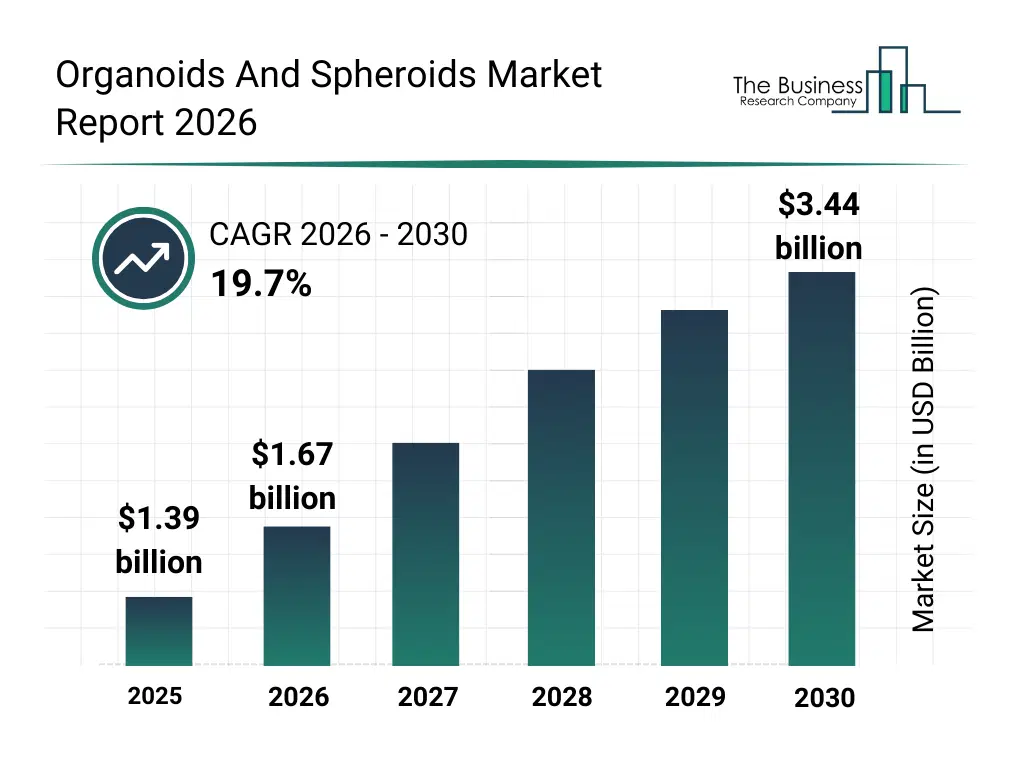
What Is The Organoids And Spheroids Market Size and Share 2026?
The organoids and spheroids market size has grown rapidly in recent years. It will grow from $1.39 billion in 2025 to $1.67 billion in 2026 at a compound annual growth rate (CAGR) of 20.0%. The growth in the historic period can be attributed to early adoption of stem cell technologies, increasing research funding for 3d cell culture, development of organoid culture protocols, rising interest in disease modeling, establishment of specialized biobanks.What Is The Organoids And Spheroids Market Growth Forecast?
The organoids and spheroids market size is expected to see rapid growth in the next few years. It will grow to $3.44 billion in 2030 at a compound annual growth rate (CAGR) of 19.7%. The growth in the forecast period can be attributed to growing demand for personalized medicine, technological advancements in 3d culture methods, expansion of pharmaceutical r&d activities, increasing adoption of organoids in regenerative medicine, rising collaborations between academic institutes and biotech companies. Major trends in the forecast period include increasing adoption of organoids and spheroids in drug discovery, rising use of 3d cell culture models for personalized medicine, growing application of organoids and spheroids in regenerative medicine, rising development of disease-specific organoid and spheroid models, increasing integration of 3d cell models in drug efficacy and toxicity testing.
Global Organoids And Spheroids Market Segmentation
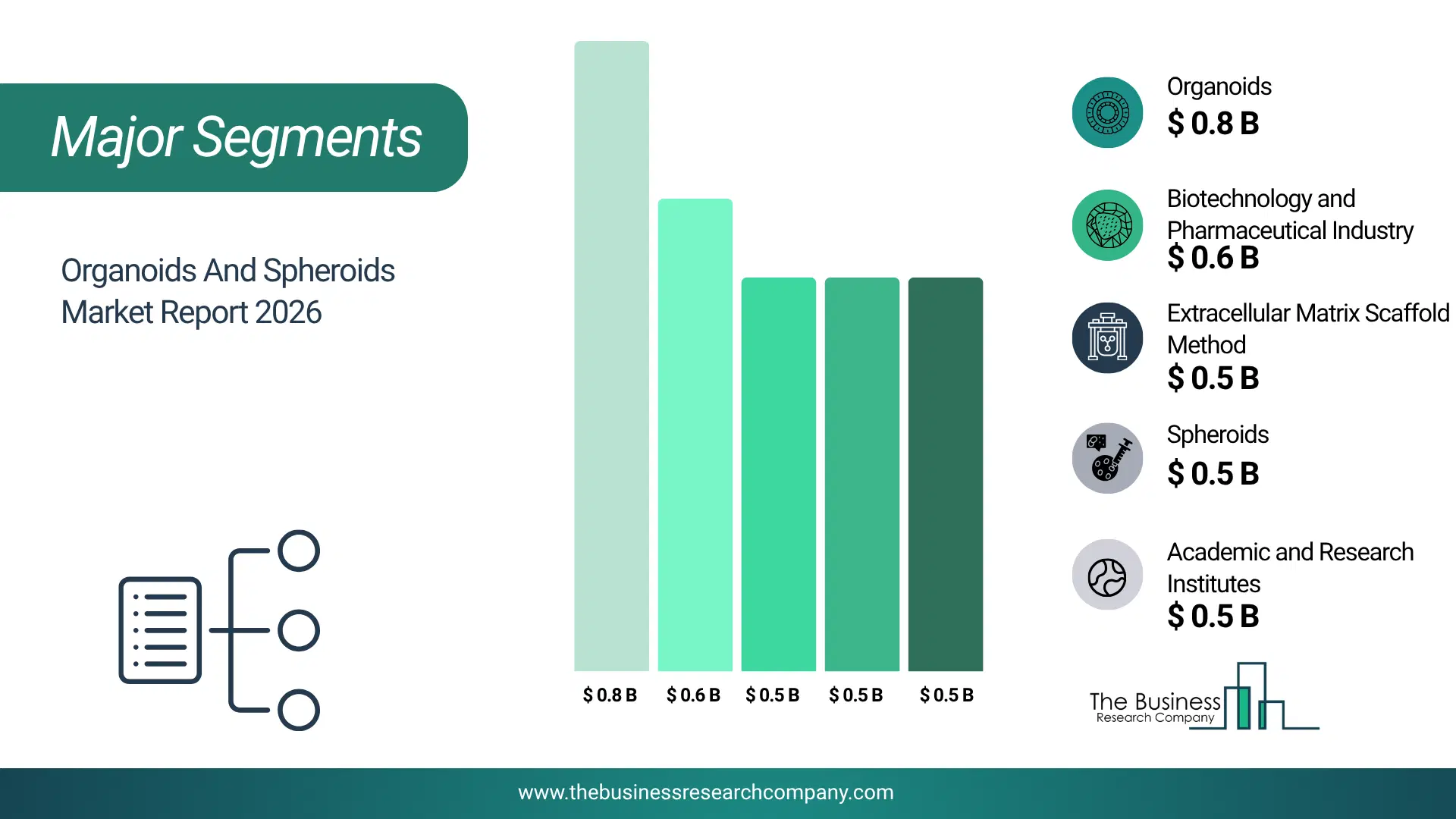
1) By Type: Organoids, Spheroids 2) By Method: Extracellular Matrix Scaffold Method, Spinning Bioreactor Method, Hanging Drop Method, Low Adherent Culture Plate Method, Magnetic levitation Method, Other Methods 3) By Application: Developmental Biology, Personalized Medicine, Regenerative Medicine, Disease Pathology Studies, Drug Toxicity And Efficacy Testing 4) By End User: Biotechnology And Pharmaceutical Industry, Academic And Research Institutes, Hospitals And Diagnostic Centers Subsegments: 1) By Organoids: Intestinal Organoids, Liver Organoids, Brain Organoids, Kidney Organoids, Lung Organoids, Pancreatic Organoids, Cardiac Organoids, Retinal Organoids, Tumor Organoids, Organoids For Disease Modeling 2) By Spheroids: Cancer Spheroids, Neural Spheroids, Cardiac Spheroids, Liver Spheroids, Muscle Spheroids, Endothelial Spheroids, Stem Cell-Derived Spheroids, 3D Cell Culture Spheroids The top segments in the organoids and spheroids market will be: • Organoids will reach $819.48 Million by 2025. • Biotechnology and Pharmaceutical Industry will reach $649.81 Million by 2025. • Extracellular Matrix Scaffold Method will reach $593.42 Million by 2025. • Spheroids will reach $573.55 Million by 2025. • Academic and Research Institutes will reach $548.72 Million by 2025.What Is The Driver Of The Organoids And Spheroids Market?
The increase in demand for cell therapy and tissue engineering is expected to propel the growth of the organoids and spheroids market going forward. Cell therapy and tissue engineering involve using living cells or engineered tissues to replace, repair, or regenerate damaged tissues and organs in the body. The demand for cell therapy and tissue engineering is rising due to their potential to regenerate damaged tissues and treat previously incurable conditions, offering innovative solutions in regenerative medicine. Organoids and spheroids are utilized in cell therapy and tissue engineering for modeling complex tissues and testing therapeutic approaches in vitro. For instance, in February 2025, according to Cell & Gene, a US-based online resource for research scholars, in 2023–2024, there were reported to be more than 2,500 active INDs for CGTs and around 1,300 active INDs for gene therapies on file with the Office of Therapeutic Products (OTP).This rising demand for cell therapy and tissue engineering is anticipated to fuel the growth of the organoids and spheroids industry.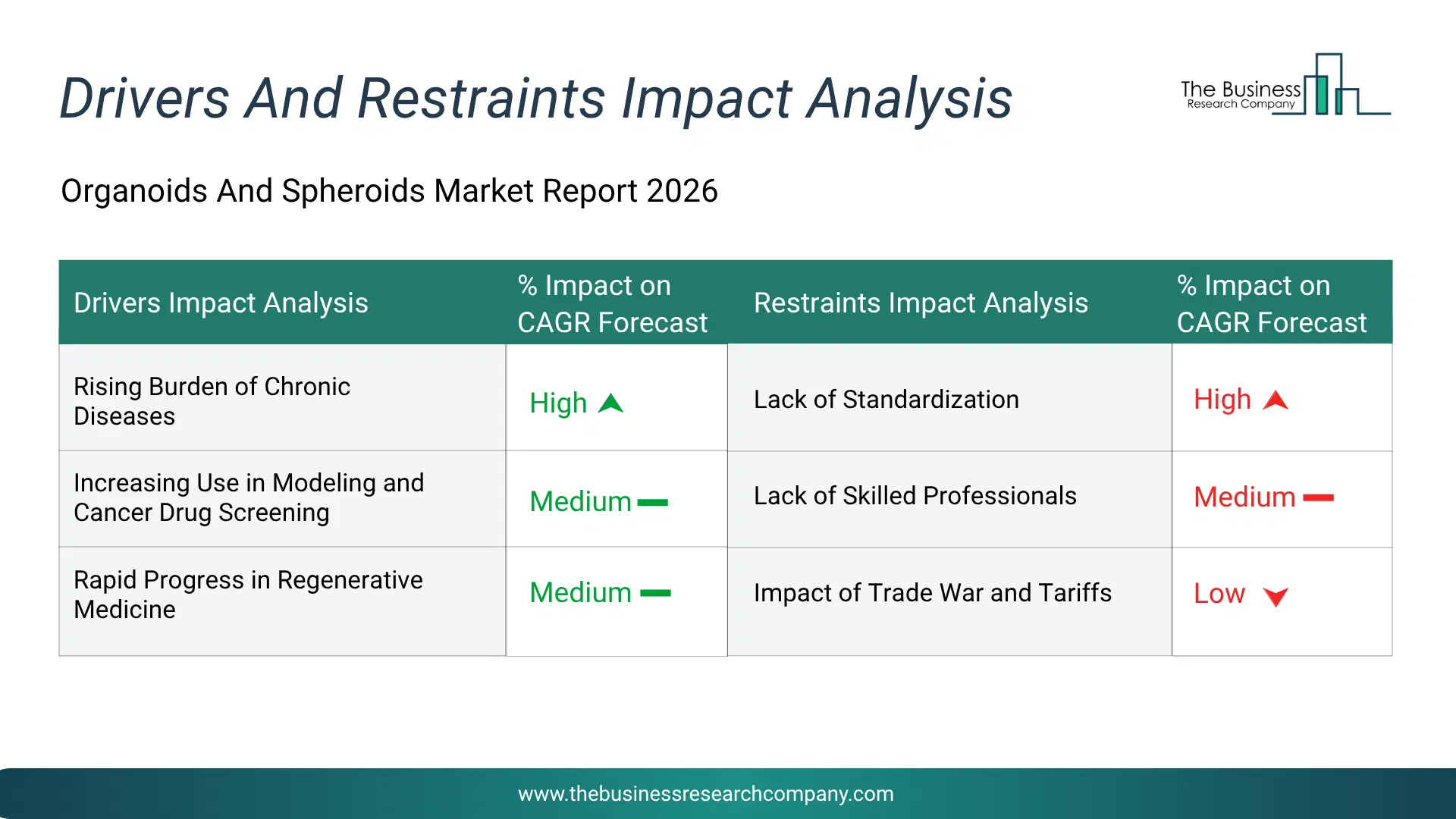
Infographic Chart Showing Key Market Drivers Analysis And Restraints For Organoids And Spheroids Market
The chart presents an impact analysis of key drivers and restraints, quantifying their relative influence on the market's growth rate and helping assess the balance between growth enablers and limiting factors. This chart offers a high-level perspective; the full report contains more detailed insights.
How Will The Drivers Impact Growth In The Global Organoids And Spheroids Market?
• Rising Burden of Chronic Diseases (High) – The rising burden of chronic diseases will become a key driver of growth in the organoids and spheroids market by 2030. As conditions such as cancer, diabetes, and neurodegenerative disorders continue to rise, there is a growing demand for advanced, physiologically relevant models that can accurately replicate human tissues. Organoids and spheroids offer highly predictive platforms for drug discovery, disease modeling, and personalized medicine, enabling pharmaceutical and biotech companies to accelerate R&D while reducing costs and failure rates. Consequently, the expanding burden of chronic diseases is expected to act as a key catalyst, fueling investments and adoption in this high-potential segment. As a result, the rising burden of chronic diseases is anticipated to contributing to a 2.0% annual growth in the market. • Increasing Use in Modeling and Cancer Drug Screening (Medium) – The increasing use in modeling and cancer drug screening will emerge as a major factor driving the expansion of the organoids and spheroids market by 2030. These three-dimensional cell culture systems closely replicate the architecture and function of human tissues, providing highly predictive platforms for evaluating therapeutic efficacy and safety. Pharmaceutical and biotechnology companies are increasingly adopting organoids and spheroids to streamline preclinical testing, reduce drug development timelines, and improve success rates in clinical trials. As demand for more accurate, human-relevant models continues to rise, their integration into cancer research and drug discovery workflows is expected to accelerate. Consequently, the increasing use in modeling and cancer drug screening is projected to contributing to a 1.8% annual growth in the market. • Rapid Progress in Regenerative Medicine (Medium) – The rapid progress in regenerative medicine will serve as a key growth catalyst for the organoids and spheroids market by 2030. Innovations in stem cell research and tissue engineering are creating new opportunities for developing organoids and spheroids that closely mimic human tissues, enabling more effective disease modeling, drug testing, and personalized therapies. These models are increasingly adopted by pharmaceutical and biotech companies to accelerate R&D, reduce development costs, and improve clinical success rates. As regenerative medicine continues to evolve, the demand for reliable, human-relevant models is set to rise, positioning organoids and spheroids as essential tools in next-generation healthcare solutions. Therefore, this rapid progress in regenerative medicine is projected to supporting to a 1.5% annual growth in the market. • Rising Development of Biobanking and Patient-Derived Models (Low) – The rising development of biobanking and patient-derived models will become a significant driver contributing to the growth of the organoids and spheroids market by 2030. Biobanks storing diverse biological samples, along with patient-derived models, provide more accurate and clinically relevant platforms for disease research, drug screening, and personalized therapies. These advancements enable pharmaceutical and biotechnology companies to develop targeted treatments more efficiently, reduce preclinical failures, and enhance translational research. As demand for precise, human-relevant models rises, the integration of organoids and spheroids into drug discovery and development pipelines is expected to expand significantly. Consequently, the rising development of biobanking and patient-derived models is projected to contributing to a 0.8% annual growth in the market.How Will The Restraints Impact Growth In The Global Organoids And Spheroids Market?
• Lack of Standardization (Medium) – Lack of Standardization will restrict the growth of the Organoids And Spheroids market during the forecast period. Organoid and spheroid cultures lack standardized protocols for generation, maintenance, and characterization. Variability in culture methods affects reproducibility and comparability of research results. Standardization gaps can limit the adoption of organoid technology in drug discovery and clinical applications. • Lack of Skilled Professionals (Medium) – Lack of Skilled Professionals will restrict the growth of the Organoids And Spheroids market during the forecast period. Organoid and spheroid culture require specialized skills in cell biology and tissue engineering. The shortage of qualified professionals with expertise in 3D cell culture limits research capacity and technology adoption. Skill gaps can affect the quality and reproducibility of organoid studies. • Impact of Trade War and Tariffs (Low) – Impact of Trade War and Tariffs will restrict the growth of the Organoids And Spheroids market during the forecast period. Organoid research and products rely on imported reagents, growth factors, and culture supplies subject to trade tariffs. Trade barriers can increase research costs and affect supply chain reliability. Trade tensions may also impact international collaboration in organoid research.Key Players In The Global Organoids And Spheroids Market
Major companies operating in the organoids and spheroids market are Thermo Fisher Scientific Inc., Merck KGaA, Corning Incorporated, Lonza Group AG, StemCell Technologies Canada Inc., Greiner Bio-One International AG, Promega Corporation, Molecular Devices LLC, American Type Culture Collection (ATCC), Mimetas B.V., InSphero AG, HUB Organoids, Emulate Inc., 3D Biomatrix Inc., Prellis Biologics Inc., 3D Biotek LLC, DefiniGEN Limited, Visikol Inc., Organovo Holdings Inc., Cellesce Ltd., AMS Biotechnology (Europe) Limited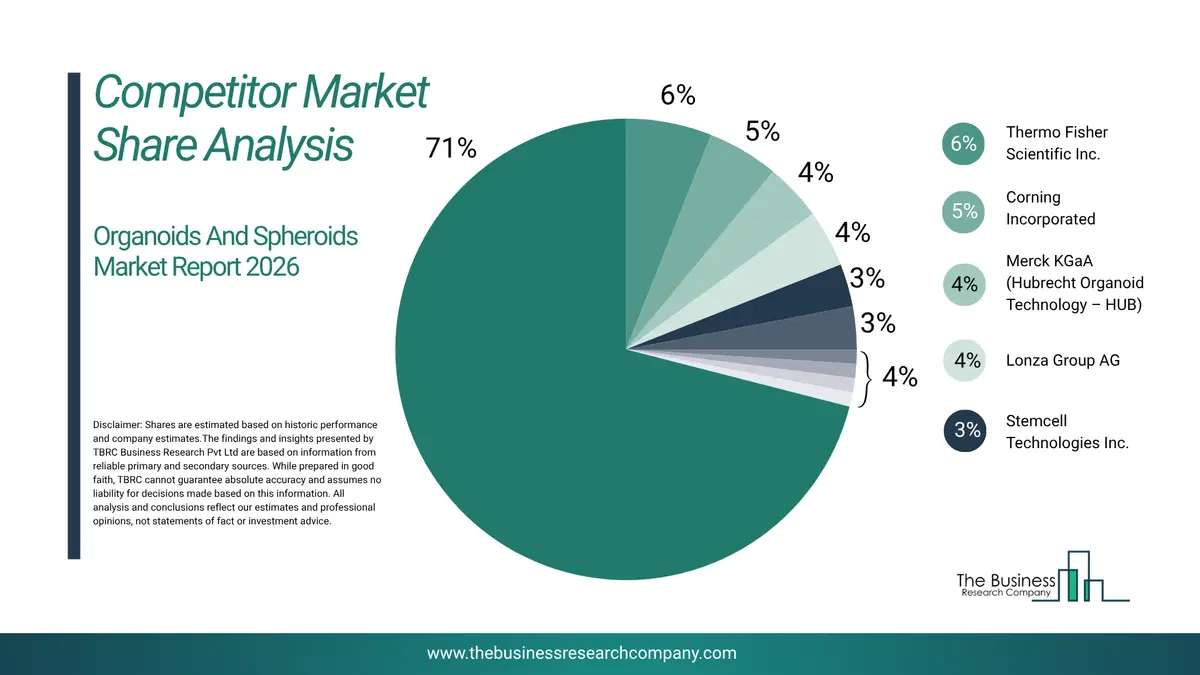
This chart is for illustrative purposes; the full report includes a detailed competitor analysis and comprehensive overview of the top 10 companies in the market.
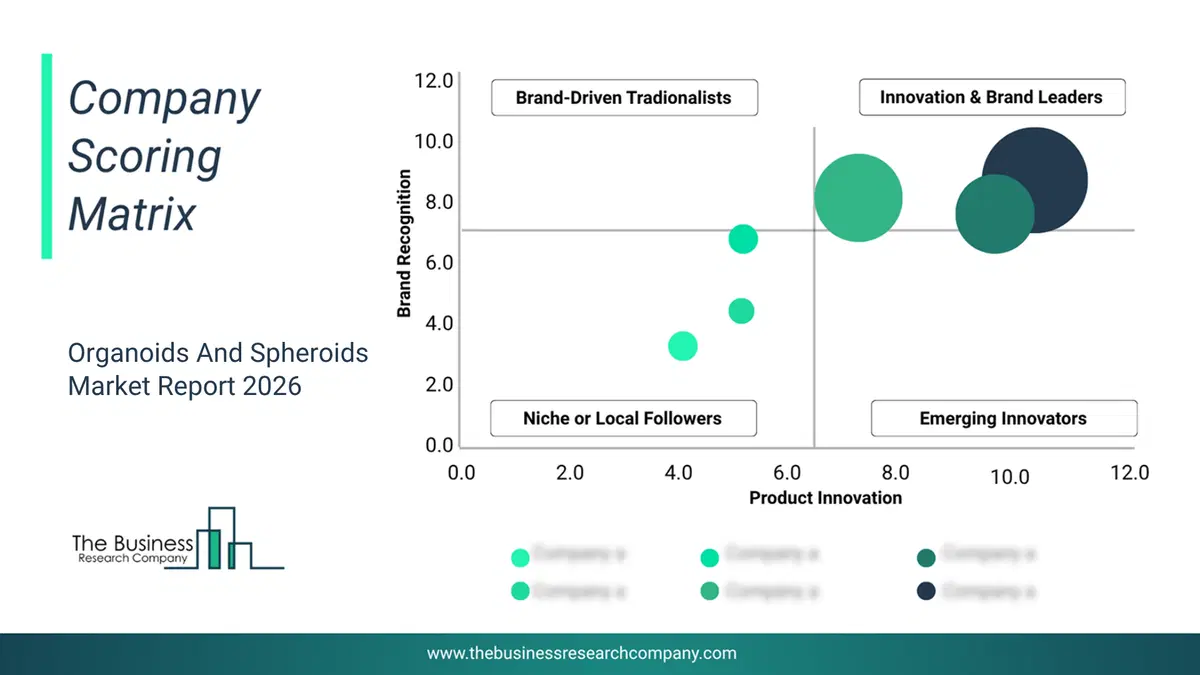
This chart maps companies by product innovation and brand strength, with bubble size indicating relative revenue, helping identify market leaders, challengers, and niche players. This is an illustrative chart; the full report provides a complete and accurate competitive analysis.
Global Organoids And Spheroids Market Trends and Insights
Major companies operating in the organoids and spheroids market are focused on developing advanced solutions, such as single-particle dispensers, to improve precision in cell handling and enhance the reproducibility of research outcomes. Single-particle dispensers are precision instruments designed to isolate and dispense individual cells or particles, enabling accurate control and handling in research and diagnostic applications. For instance, in July 2024, SEED Biosciences, a Switzerland-based biotechnology company, introduced Dispen3D, a revolutionary tool designed for the accurate dispensing of individual spheroids and organoids, marking a significant breakthrough in the handling of 3D cellular models. Researchers can now swiftly and precisely transfer single spheroids into multi-well plates with this novel dispenser, which automates the procedure and ensures monoclonality, which is crucial for drug discovery and customized treatment. Dispen3D delicately treats fragile cells while maintaining their structural integrity and vitality by operating at low pressures. Its user-friendly design makes it simple to implement in a variety of research contexts, satisfying the growing need for cutting-edge instruments in the biological sciences.What Are Latest Mergers And Acquisitions In The Organoids And Spheroids Market?
In February 2024, Cell Microsystems, a US-based biotechnology company, established a strategic partnership with OMNI Life Science. This collaboration aims to significantly enhance life science research in North America through the introduction of advanced cell analysis tools. Specifically, the partnership will focus on launching three innovative products: the TIGR Tissue Grinder & Dissociator, the CASY Cell Counter and Analyzer, and the CERO 3D Cell Culture Incubator & Bioreactor. OMNI Life Science is a Germany-based company that specializes in laboratory instrumentation and solutions for life sciences research.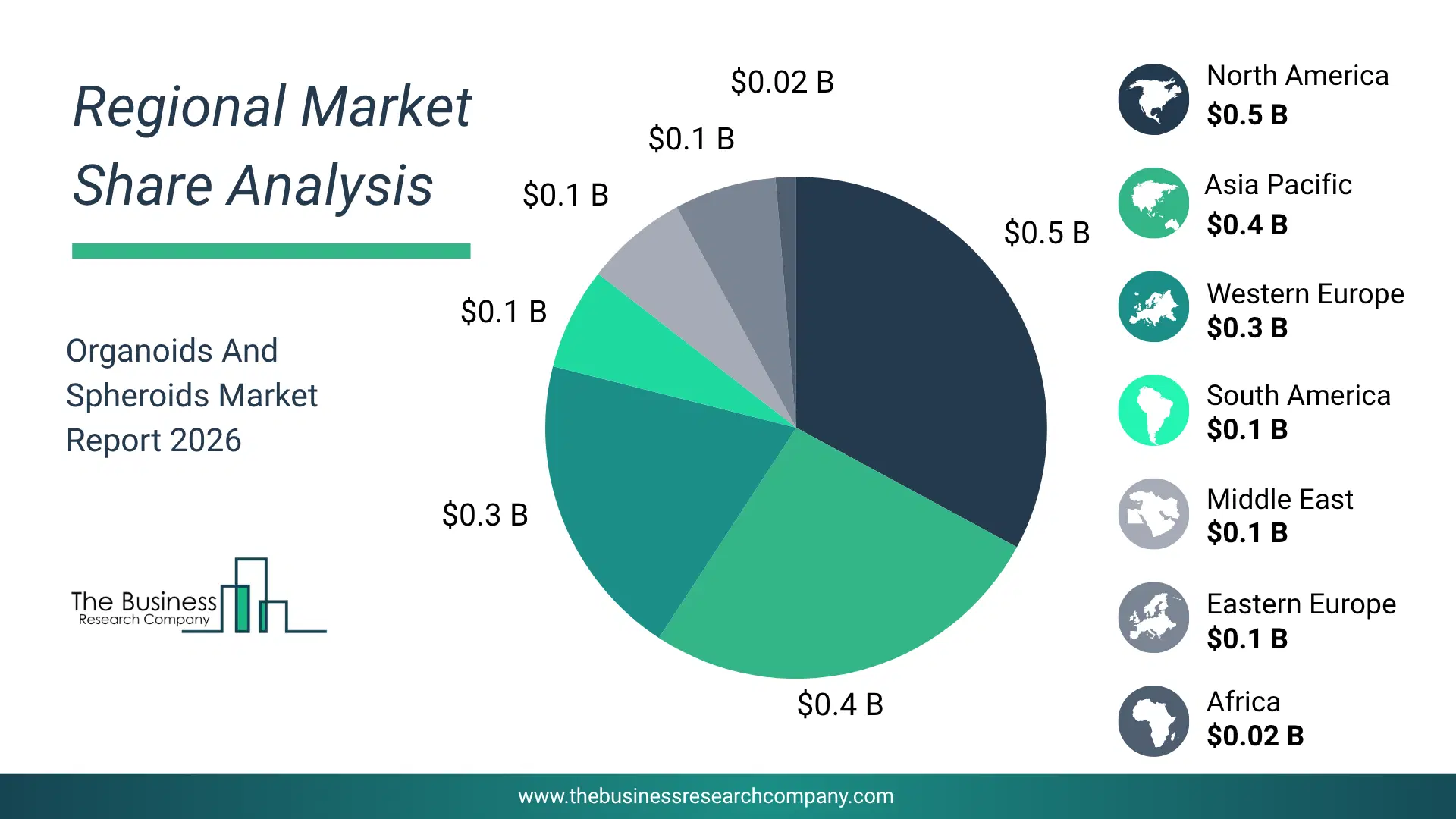
Regional Outlook
North America was the largest region in the organoids and spheroids market in 2025. Asia-Pacific is expected to be the fastest-growing region in the forecast period. The regions covered in this market report are Asia-Pacific, South East Asia, Western Europe, Eastern Europe, North America, South America, Middle East, Africa. The countries covered in this market report are Australia, Brazil, China, France, Germany, India, Indonesia, Japan, Taiwan, Russia, South Korea, UK, USA, Canada, Italy, Spain.What Defines the Organoids And Spheroids Market?
The organoids and spheroids market includes revenues earned by entities by providing services such as drug discovery and testing, toxicology screening, personalized medicine, regenerative medicine research, cancer research, stem cell research, and gene editing studies. The market value includes the value of related goods sold by the service provider or included within the service offering. Only goods and services traded between entities or sold to end consumers are included.How is Market Value Defined and Measured?
The market value is defined as the revenues that enterprises gain from the sale of goods and/or services within the specified market and geography through sales, grants, or donations in terms of the currency (in USD unless otherwise specified). The revenues for a specified geography are consumption values that are revenues generated by organizations in the specified geography within the market, irrespective of where they are produced. It does not include revenues from resales along the supply chain, either further along the supply chain or as part of other products.
This chart presents market attractiveness based on a quantitative evaluation of growth, competition, strategic alignment, and risk, offering a clear view of opportunity areas for decision-making. This chart is for illustrative purposes; the full report contains the complete analysis.

This chart highlights the Total Addressable Market (TAM) by estimating the maximum revenue opportunity using an assumption-driven approach, supporting strategic planning and opportunity sizing across markets. The chart is illustrative; the full report provides a more comprehensive analysis.
What Key Data and Analysis Are Included in the Organoids And Spheroids Market Report 2026?
The organoids and spheroids market research report is one of a series of new reports from The Business Research Company that provides market statistics, including industry global market size, regional shares, competitors with the market share, detailed market segments, market trends and opportunities, and any further data you may need to thrive in the organoids and spheroids industry. The market research report delivers a complete perspective of everything you need, with an in-depth analysis of the current and future state of the industry.Organoids And Spheroids Market Report Forecast Analysis
| Report Attribute | Details |
|---|---|
| Market Size Value In 2026 | $1.67 billion |
| Revenue Forecast In 2030 | $3.44 billion |
| Growth Rate | CAGR of 20.0% from 2026 to 2030 |
| Base Year For Estimation | 2025 |
| Actual Estimates/Historical Data | 2020-2025 |
| Forecast Period | 2026 - 2030 |
| Market Representation | Revenue in USD Billion and CAGR from 2026 to 2030 |
| Segments Covered | Type, Method, Application, End User |
| Regional Scope | Asia-Pacific, Western Europe, Eastern Europe, North America, South America, Middle East, Africa |
| Country Scope | The countries covered in the report are Australia, Brazil, China, France, Germany, India, Indonesia, Japan, Taiwan, Russia, South Korea, UK, USA, Canada, Italy, Spain. |
| Key Companies Profiled | Thermo Fisher Scientific Inc., Merck KGaA, Corning Incorporated, Lonza Group AG, StemCell Technologies Canada Inc., Greiner Bio-One International AG, Promega Corporation, Molecular Devices LLC, American Type Culture Collection (ATCC), Mimetas B.V., InSphero AG, HUB Organoids, Emulate Inc., 3D Biomatrix Inc., Prellis Biologics Inc., 3D Biotek LLC, DefiniGEN Limited, Visikol Inc., Organovo Holdings Inc., Cellesce Ltd., AMS Biotechnology (Europe) Limited |
| Customization Scope | Request for Customization |
| Pricing And Purchase Options | Explore Purchase Options |