
Organoids Market Report 2026
Global Outlook – By Product (Hepatic Organoid, Colorectal Organoid, Intestinal Organoid, Other Products), By Application (Developmental Biology, Disease Pathology Of Infectious Disease, Regenerative Medicine, Drug Toxicity And Efficacy Testing, Drug Discovery And Personalized Medicine, Other Applications), By End-User (Hospitals And Diagnostic Centers, Biotechnology And Pharmaceutical Companies, Other End-Users) - Market Size, Trends, And Global Forecast 2026-2030
Organoids Market Overview
• Organoids market size has reached to $4.82 billion in 2025 • Expected to grow to $13.13 billion in 2030 at a compound annual growth rate (CAGR) of 22.2% • Growth Driver: Increase In Chronic And Infectious Diseases Spurs Growth Of Organoid Market • Market Trend: Revolutionary Platform To Accelerate Preclinical Oncology Drug Discovery • North America was the largest region in 2025 and Asia-Pacific is the fastest growing region.Market Gains By 2030 – Top Opportunities By Segment
Market Gain identifies the most promising market opportunities by highlighting the segments or products expected to generate the highest incremental revenue growth over the next five years.
What Is Covered Under Organoids Market?
Organoids refer to three-dimensional and tiny tissue cultures derived from stem cells. Organoids are used for customized, regenerative medicine, gene repair, and transplantation therapy. The main products of organoids are hepatic organoids, colorectal organoids, intestinal organoids, and others. Hepatic organoid refers to three-dimensional in vitro models of the liver that are functional. Hepatic organoids are used to address the various research questions related to hepatic development and regeneration, disease modeling, and others. The various sources of organoids include pluripotent stem cells and organ-specific adult stem cells that are typically applied in developmental biology, disease pathology of infectious disease, regenerative medicine, drug toxicity and efficacy testing, drug discovery and personalized medicine, and others. These are used by hospitals and diagnostic centers, biotechnology and pharmaceutical companies, and others.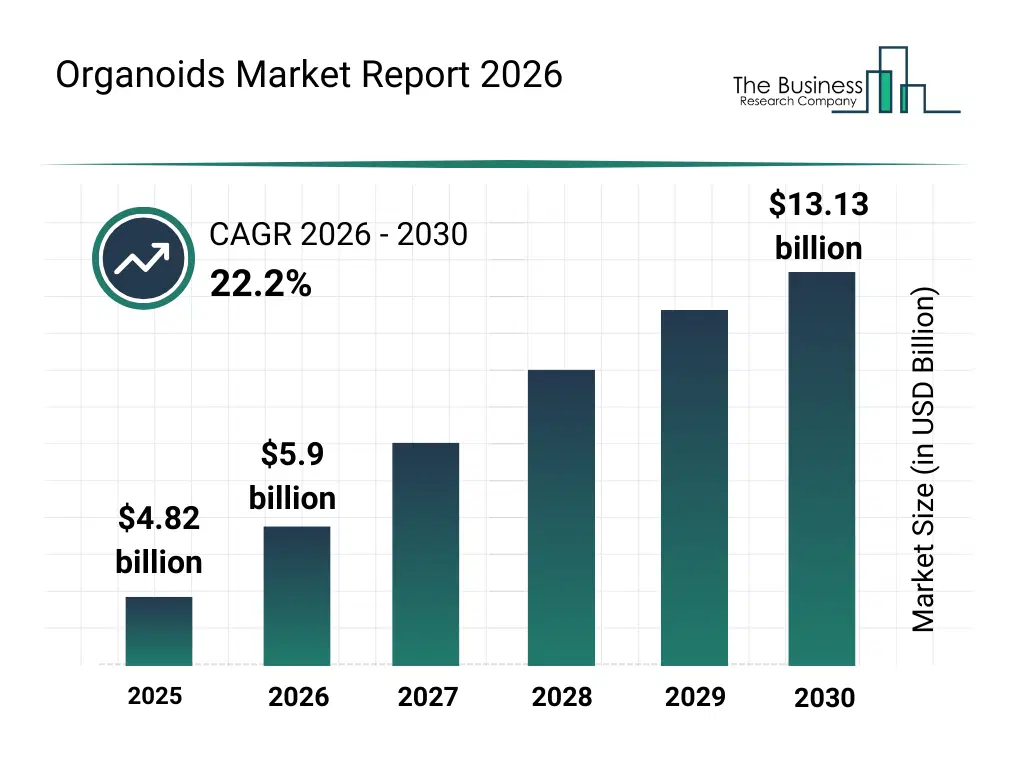
What Is The Organoids Market Size and Share 2026?
The organoids market size has grown exponentially in recent years. It will grow from $4.82 billion in 2025 to $5.9 billion in 2026 at a compound annual growth rate (CAGR) of 22.3%. The growth in the historic period can be attributed to advancements in stem cell technology, rising demand for alternative models to animal testing, increasing research in tissue engineering, growing investments in biotechnology R&D, early adoption of organoid models by academic research institutes.What Is The Organoids Market Growth Forecast?
The organoids market size is expected to see exponential growth in the next few years. It will grow to $13.13 billion in 2030 at a compound annual growth rate (CAGR) of 22.2%. The growth in the forecast period can be attributed to expansion of personalized medicine applications, increasing pharmaceutical industry collaborations with organoid research companies, growth in regenerative medicine initiatives, rising government and private funding for organoid-based research, development of organoid biobanks for disease modeling. Major trends in the forecast period include rising adoption of organoids in drug discovery and personalized medicine, increasing use of organoids in regenerative medicine and tissue engineering, growing applications of organoids in infectious disease pathology studies, increasing development of disease-specific organoids for targeted therapeutics, rising integration of organoid models in preclinical drug efficacy and toxicity testing.
Global Organoids Market Segmentation
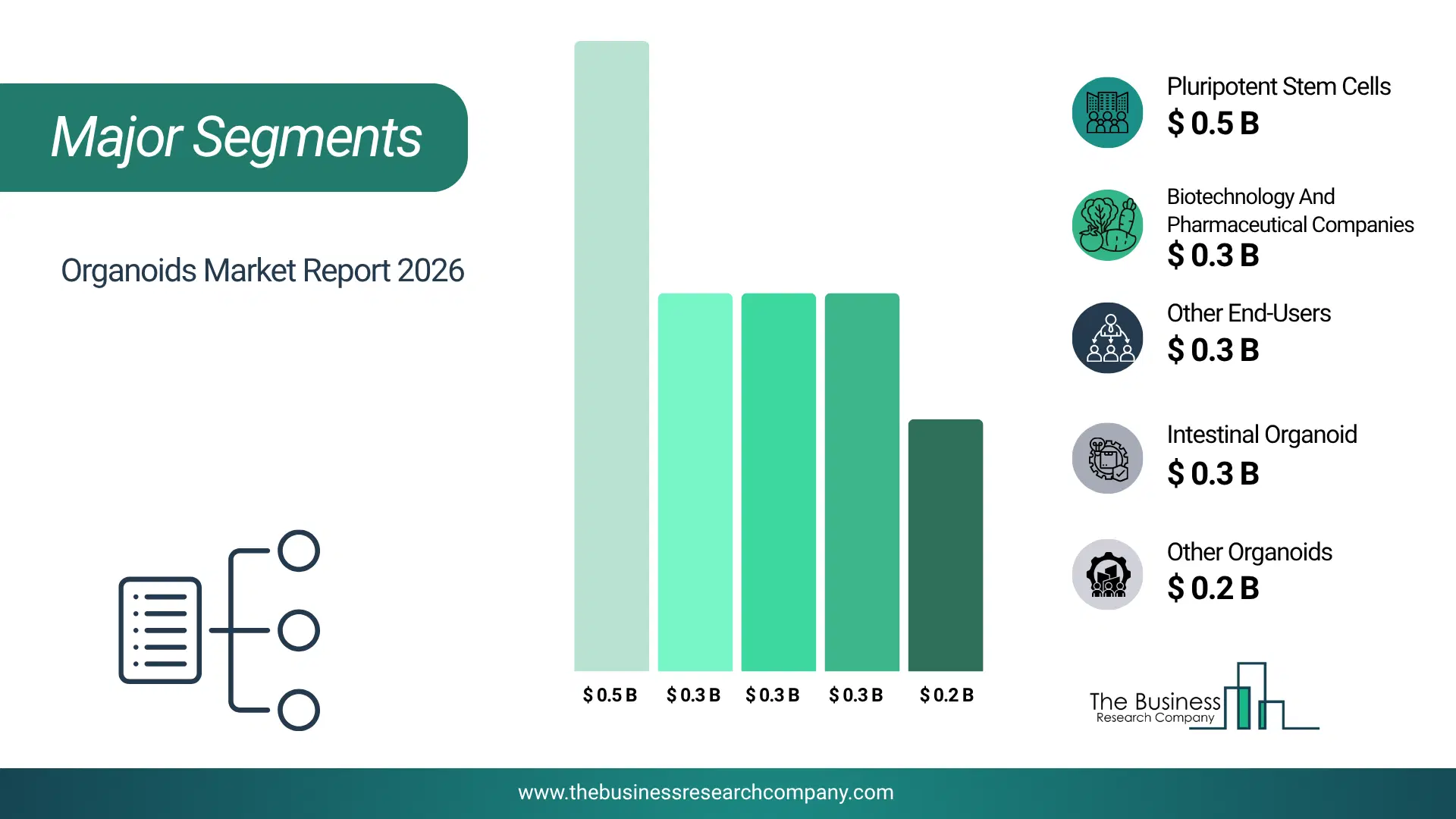
1) By Product: Hepatic Organoid, Colorectal Organoid, Intestinal Organoid, Other Products 2) By Application: Developmental Biology, Disease Pathology Of Infectious Disease, Regenerative Medicine, Drug Toxicity And Efficacy Testing, Drug Discovery And Personalized Medicine, Other Applications 3) By End-User: Hospitals And Diagnostic Centers, Biotechnology And Pharmaceutical Companies, Other End-Users Subsegments: 1) By Hepatic Organoid: Hepatic Stem Cell-Derived Organoids, Primary Liver Cell-Derived Organoids, Liver Tumor Organoids 2) By Colorectal Organoid: Colonic Organoids, Rectal Organoids, Colorectal Cancer Organoids 3) By Intestinal Organoid: Small Intestinal Organoids, Enteroid Organoids, Intestinal Stem Cell-Derived Organoids 4) By Other Products: Pancreatic Organoids, Brain Organoids, Kidney Organoids, Lung Organoids The top segments in the organoids market will be: • Pluripotent Stem Cells will reach $589.53 Million by 2025. • Biotechnology And Pharmaceutical Companies will reach $394.34 Million by 2025. • Other End-Users will reach $319.13 Million by 2025. • Intestinal Organoid will reach $304.74 Million by 2025. • Other Organoids will reach $264.91 Million by 2025.What Is The Driver Of The Organoids Market?
An increase in the incidence and prevalence of chronic and infectious diseases is expected to propel the growth of the organoid market going forward. Chronic disease is a condition that lasts more than a year and requires ongoing medical treatment. Organoids have been used to study various chronic diseases and their treatments as they give immediate and dependable information on pathogen biology and drug screening. Hence, the increase in the incidence and prevalence of chronic and infectious diseases will support the organoid market. For instance, in June 2024, according to the National Health Service, a UK-based publicly funded healthcare system, there were 3,615,330 people registered with a GP who were found to have non-diabetic hyperglycemia also known as pre-diabetes, in 2023, compared to 3,065,825 in 2022 an increase of almost a fifth (18%). Therefore, the rising prevalence of chronic diseases will drive the organoids industry.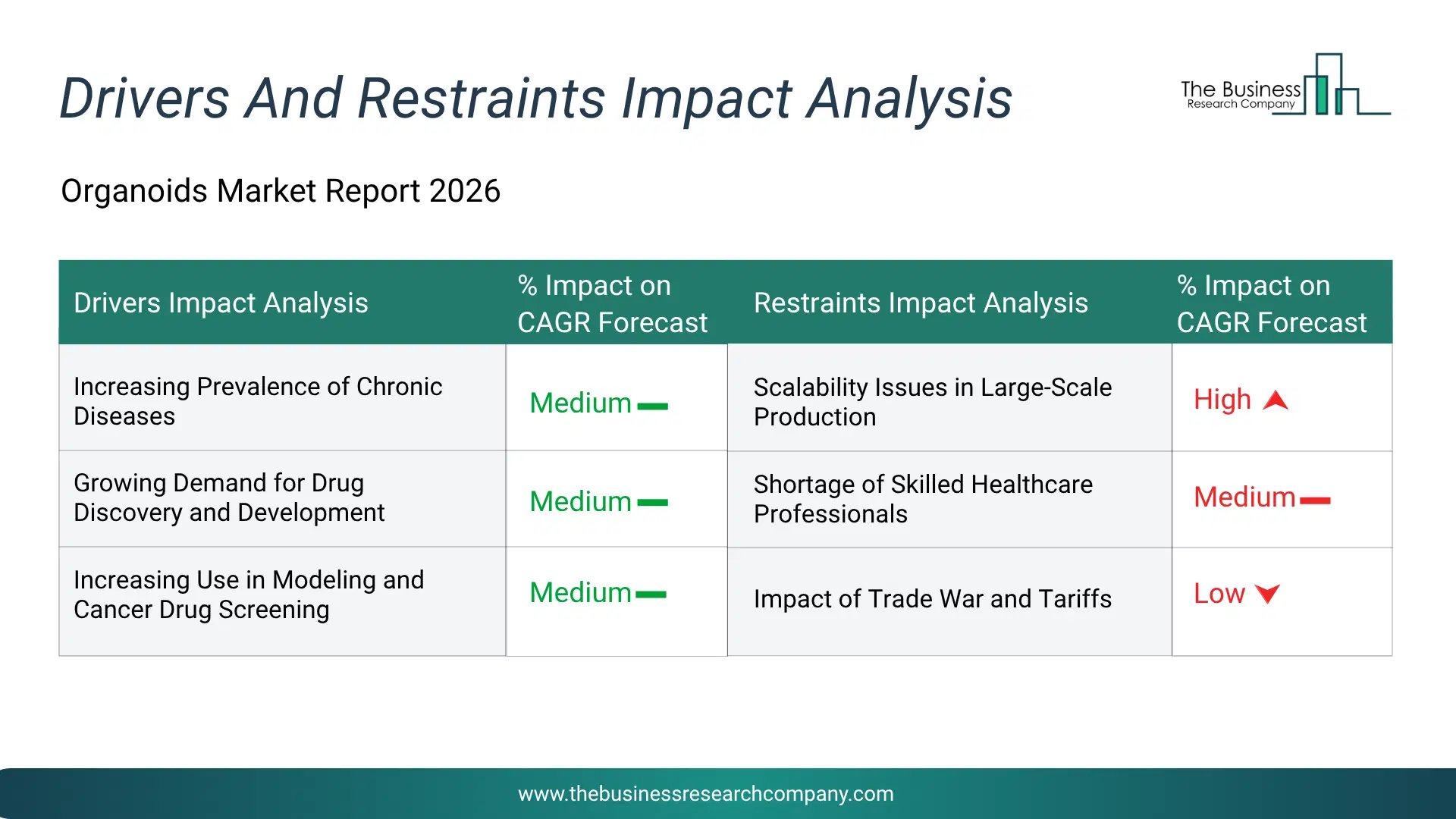
Infographic Chart Showing Key Market Drivers Analysis And Restraints For Organoids Market
The chart presents an impact analysis of key drivers and restraints, quantifying their relative influence on the market's growth rate and helping assess the balance between growth enablers and limiting factors. This chart offers a high-level perspective; the full report contains more detailed insights.
How Will The Drivers Impact Growth In The Global Organoids Market?
• Increasing Prevalence of Chronic Diseases (Medium) – The increasing prevalence of chronic diseases will become a key driver of growth in the organoids market by 2030. Chronic illnesses such as cardiovascular disorders, liver diseases, metabolic syndromes, and neurodegenerative conditions cannot be accurately studied using conventional 2D (two-dimensional) cell cultures or animal models. Organoids offer a more realistic representation of human tissue architecture and disease progression, enabling deeper insights into mechanisms behind long-term, progressive disorders. As chronic diseases continue to burden populations worldwide, research institutions, pharmaceutical companies, and clinicians will increasingly rely on organoids to design predictive models, assess therapeutic strategies, and identify early biomarkers. This shift toward more precise and efficient disease research will expand the application scope of organoids, leading to sustained market growth. As a result, the increasing prevalence of chronic diseases is anticipated to contributing to a 1.8% annual growth in the market. • Growing Demand for Drug Discovery and Development (Medium) – The growing demand for drug discovery and development will emerge as a major factor driving the expansion of the organoids market by 2030. Pharmaceutical companies face increasing pressure to reduce development timelines, lower research costs, and improve therapeutic success rates. Organoids provide a powerful solution by serving as predictive human models that bridge the gap between preclinical testing and clinical trials. Their ability to reproduce functional characteristics of human organs helps researchers identify ineffective compounds earlier and better evaluate toxicity, dosage, and pharmacodynamics. As regulatory bodies and industry stakeholders increasingly encourage the use of human-relevant systems, organoids will play an expanding role in screening pipelines, mechanism-of-action studies, and validation of new molecular targets. Consequently, the accelerating growing demand for drug discovery and development capabilities is projected to contributing to a 1.3% annual growth in the market. • Increasing Use in Modeling and Cancer Drug Screening (Medium) – The increasing use in modelling and cancer drug screening will serve as a key growth catalyst for the organoids market by 2030. Cancer research requires systems that closely mimic tumor microenvironments, cellular heterogeneity, and genetic variability, characteristics that organoids can replicate with high fidelity. Their ability to model cancer progression and drug response at a patient-specific level makes them invaluable for preclinical testing. As oncology continues to dominate global drug development pipelines, the need for accurate models that reduce failure rates and improve therapeutic precision will intensify. Organoids enable rapid, scalable testing of multiple drug combinations, allowing researchers to evaluate efficacy, toxicity, and resistance patterns more efficiently than traditional methods. This broadening use in cancer modelling and drug screening will increasingly position organoids as essential tools for personalized oncology and next-generation cancer treatment development. Therefore, this increasing use in modelling and cancer drug screening operations is projected to supporting to a 1.0% annual growth in the market. • Rising Development of Biobanking and Patient-Derived Models (Low) – The rising development of biobanking and patient-derived models will become a significant driver contributing to the growth of the organoids market by 2030. Biobanks that store diverse and well-characterized organoids provide researchers with access to large repositories of biological material representing different diseases, genetic backgrounds, and demographic groups. These collections support high-throughput studies and enable companies to test drugs across a wide variety of patient types without requiring fresh tissue samples for every project. Patient-derived organoids offer unmatched relevance for precision medicine, as they preserve individual molecular signatures and allow for personalized treatment evaluation. As more institutions invest in systematically developing and maintaining these biobanks, the availability, standardization, and accessibility of organoids will improve dramatically. This infrastructure expansion will support collaborative research, accelerate clinical translation efforts, and ultimately fuel the market’s long-term scalability. Consequently, the rising development of biobanking and patient-derived models strategies is projected to contributing to a 0.8% annual growth in the market.How Will The Restraints Impact Growth In The Global Organoids Market?
• Scalability Issues in Large-Scale Production (Medium) – Scalability Issues in Large-Scale Production will restrict the growth of the Organoids market during the forecast period. Organoid production faces scalability challenges in terms of uniformity, reproducibility, and manufacturing capacity. Scalability limitations can restrict the use of organoids in high-throughput screening and therapeutic applications. Large-scale production challenges can affect market growth and commercial viability. • Shortage of Skilled Healthcare Professionals (Medium) – Shortage of Skilled Healthcare Professionals will restrict the growth of the Organoids market during the forecast period. Organoid research and clinical applications require skilled professionals with expertise in cell biology and tissue engineering. The shortage of qualified researchers and technicians limits research capacity and clinical adoption. Skill gaps can affect the quality and reproducibility of organoid studies. • Impact of Trade War and Tariffs (Low) – Impact of Trade War and Tariffs will restrict the growth of the Organoids market during the forecast period. Organoid research relies on imported reagents and supplies subject to trade tariffs. Trade barriers can increase research costs and affect supply chain reliability. Trade tensions may also impact international collaboration in organoid research.Key Players In The Global Organoids Market
Major companies operating in the organoids market are Cellesce Ltd., STEMCELL Technologies, HUB Organoids, DefiniGEN, OcellO B.V., Organoid Therapeutics, InSphero AG, Axol Bioscience Ltd., TissUse GmbH, Epithelix Sàrl, SUN Bioscience, Prellis Biologics, Epistem, MIMETAS BV, Organoidsciences Ltd., Zenit Science, Biomorgan, TheWell Bioscience Inc., CN Bio Innovations Ltd., TARA Biosystems, Nortis Inc., Newcells Biotech, Known Medicine, Dynomics Inc., CHA Biotech Co Ltd, Tempus AI Inc.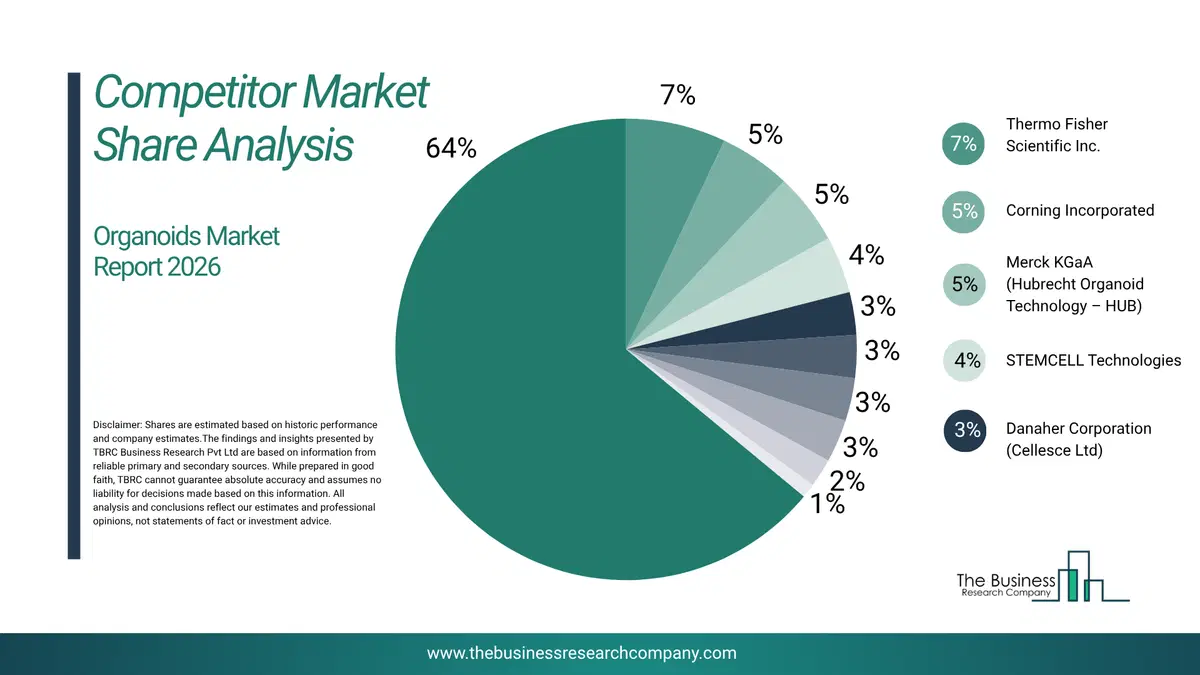
This chart is for illustrative purposes; the full report includes a detailed competitor analysis and comprehensive overview of the top 10 companies in the market.
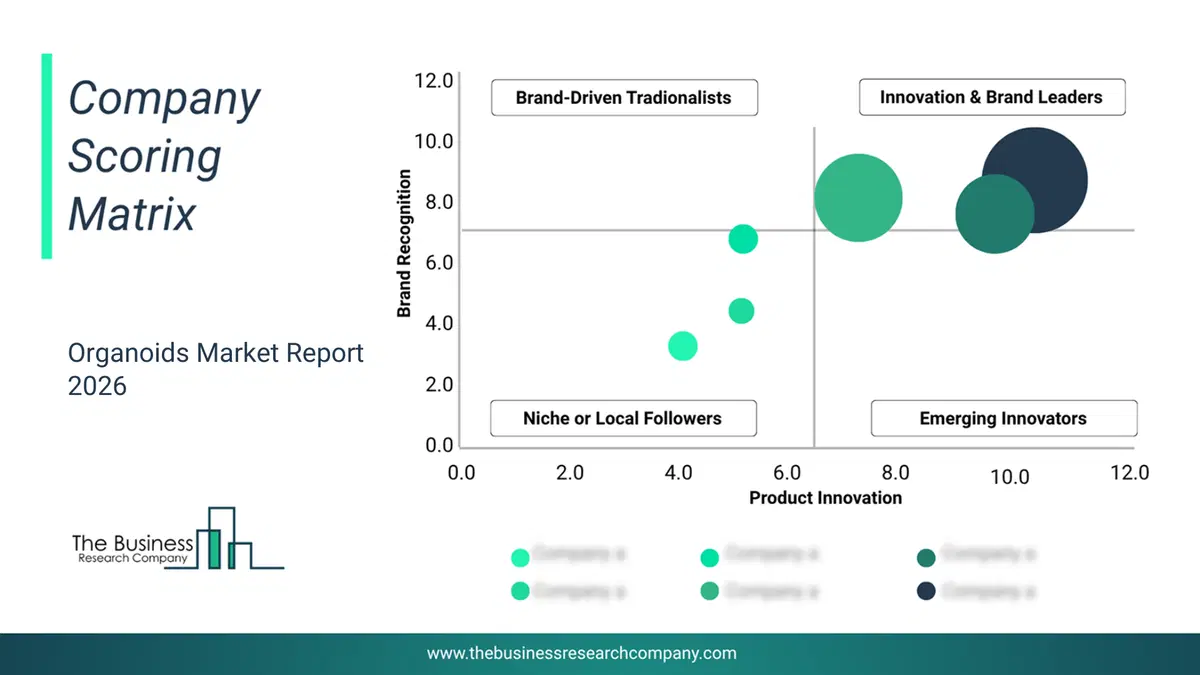
This chart maps companies by product innovation and brand strength, with bubble size indicating relative revenue, helping identify market leaders, challengers, and niche players. This is an illustrative chart; the full report provides a complete and accurate competitive analysis.
Global Organoids Market Trends and Insights
Major companies in the organoids market are focusing on developing revolutionary platforms, such as organoid panel screening platforms, to accelerate preclinical oncology drug discovery and gain a competitive edge in the market. An organoid panel screening platform refers to a system that allows the screening of a collection of organoids. For instance, in November 2023, Crown Bioscience, a US-based contract research organization (CRO) and JSR Life Sciences company, launched the OrganoidXplore, a revolutionary large-scale organoid panel screening platform for accelerated preclinical oncology drug discovery. This platform utilizes Crown Bioscience's unique assay-ready (AR) organoid technology, demonstrating highly robust performance, accelerated project timelines, and reduced costs compared to traditional methods. OrganoidXplore provides reliable and reproducible drug response comparisons, offering a significant advancement in preclinical drug screening by accurately replicating the genomic, morphological, and pathophysiological attributes of original tumors.What Are Latest Mergers And Acquisitions In The Organoids Market?
In December 2024, Merck KGaA, a Germany-based life sciences company, acquired HUB Organoids Holding B.V. for an undisclosed amount. Through this acquisition, Merck aims to expand its next-generation biology portfolio by integrating HUB Organoids’ proprietary organoid technology, including model generation, assay development, and high-throughput screening capabilities. HUB Organoids Holding B.V. is a Netherlands-based company that provides organoid technology services and holds foundational patents in organoid biology.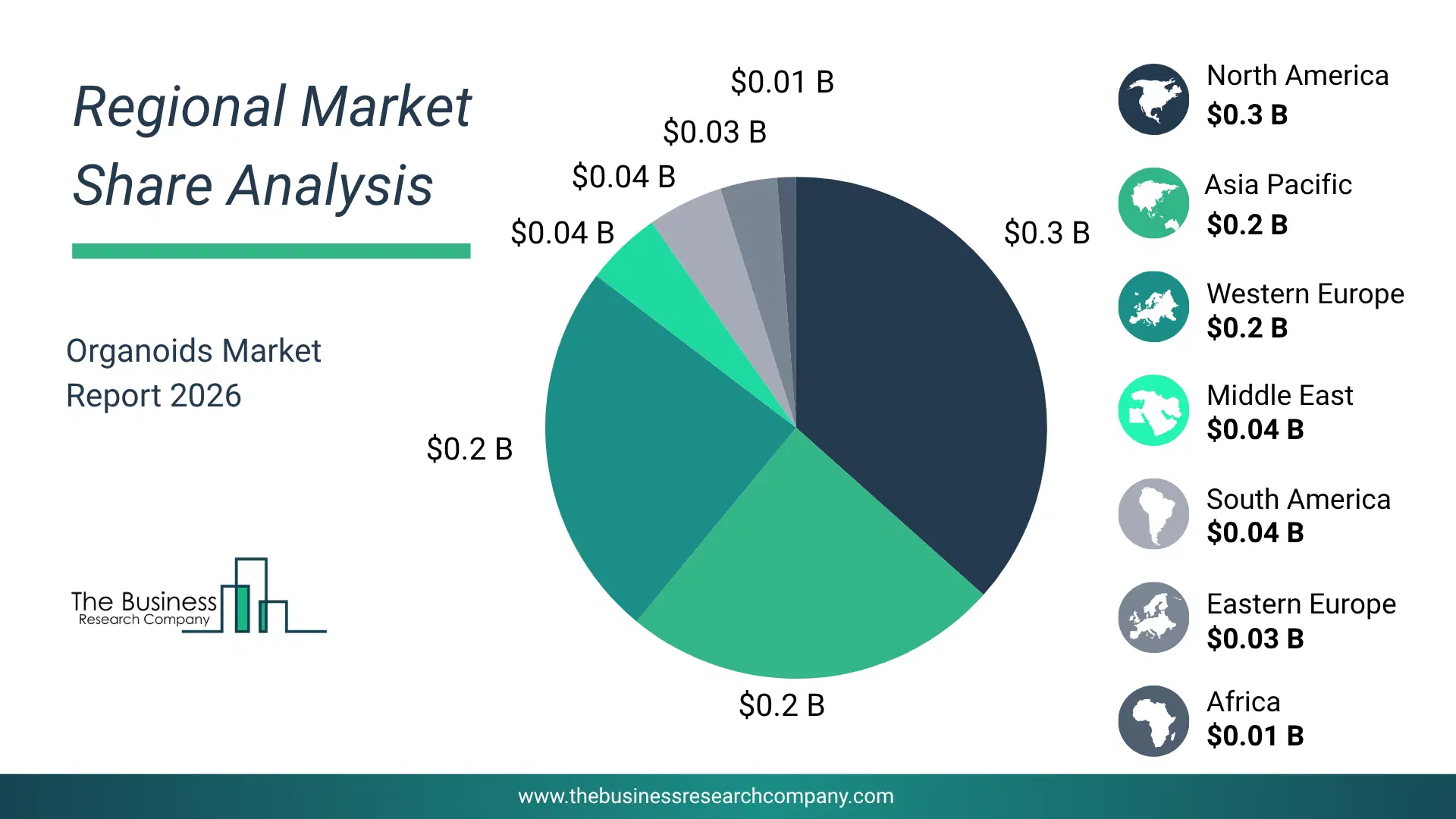
Regional Outlook
North America was the largest region in the organoids market in 2025. Asia-Pacific is expected to be the fastest-growing region in the global organoids market size forecast period. The regions covered in this market report are Asia-Pacific, South East Asia, Western Europe, Eastern Europe, North America, South America, Middle East, Africa. The countries covered in this market report are Australia, Brazil, China, France, Germany, India, Indonesia, Japan, Taiwan, Russia, South Korea, UK, USA, Canada, Italy, Spain.What Defines the Organoids Market?
The organoids market consists of sales of epithelial organoid, embryonic organoid, and cerebral organoid. Values in this market are ‘factory gate’ values, that is the value of goods sold by the manufacturers or creators of the goods, whether to other entities (including downstream manufacturers, wholesalers, distributors, and retailers) or directly to end customers. The value of goods in this market includes related services sold by the creators of the goods.How is Market Value Defined and Measured?
The market value is defined as the revenues that enterprises gain from the sale of goods and/or services within the specified market and geography through sales, grants, or donations in terms of the currency (in USD unless otherwise specified). The revenues for a specified geography are consumption values that are revenues generated by organizations in the specified geography within the market, irrespective of where they are produced. It does not include revenues from resales along the supply chain, either further along the supply chain or as part of other products.
This chart presents market attractiveness based on a quantitative evaluation of growth, competition, strategic alignment, and risk, offering a clear view of opportunity areas for decision-making. This chart is for illustrative purposes; the full report contains the complete analysis.

This chart highlights the Total Addressable Market (TAM) by estimating the maximum revenue opportunity using an assumption-driven approach, supporting strategic planning and opportunity sizing across markets. The chart is illustrative; the full report provides a more comprehensive analysis.
What Key Data and Analysis Are Included in the Organoids Market Report 2026?
The organoids market research report is one of a series of new reports from The Business Research Company that provides market statistics, including industry global market size, regional shares, competitors with the market share, detailed market segments, market trends and opportunities, and any further data you may need to thrive in the organoids industry. The market research report delivers a complete perspective of everything you need, with an in-depth analysis of the current and future state of the industry.Organoids Market Report Forecast Analysis
| Report Attribute | Details |
|---|---|
| Market Size Value In 2026 | $5.9 billion |
| Revenue Forecast In 2030 | $13.13 billion |
| Growth Rate | CAGR of 22.3% from 2026 to 2030 |
| Base Year For Estimation | 2025 |
| Actual Estimates/Historical Data | 2020-2025 |
| Forecast Period | 2026 - 2030 |
| Market Representation | Revenue in USD Billion and CAGR from 2026 to 2030 |
| Segments Covered | Product, Application, End-User |
| Regional Scope | Asia-Pacific, Western Europe, Eastern Europe, North America, South America, Middle East, Africa |
| Country Scope | The countries covered in the report are Australia, Brazil, China, France, Germany, India, Indonesia, Japan, Taiwan, Russia, South Korea, UK, USA, Canada, Italy, Spain. |
| Key Companies Profiled | Cellesce Ltd., STEMCELL Technologies, HUB Organoids, DefiniGEN, OcellO B.V., Organoid Therapeutics, InSphero AG, Axol Bioscience Ltd., TissUse GmbH, Epithelix Sàrl, SUN Bioscience, Prellis Biologics, Epistem, MIMETAS BV, Organoidsciences Ltd., Zenit Science, Biomorgan, TheWell Bioscience Inc., CN Bio Innovations Ltd., TARA Biosystems, Nortis Inc., Newcells Biotech, Known Medicine, Dynomics Inc., CHA Biotech Co Ltd, Tempus AI Inc. |
| Customization Scope | Request for Customization |
| Pricing And Purchase Options | Explore Purchase Options |