
Organosulfur Biocides Market Report 2026
Global Outlook – By Product Type (Dithiocarbamates, Isothiazolinones, Thiocyanates, Thiocarbamates, Other Product Types), By Function (Bactericides, Fungicides, Algaecides, Slimicides, Broad Spectrum Biocides), By Formulation Type (Liquid Concentrates, Solid Or Powder Formulations, Encapsulated Or Controlled Release), By Distribution Channel (Direct Sales, Distributors And Dealers, Online Channels), By Application (Water Treatment, Paints And Coatings, Wood Preservation, Personal Care, Food And Beverage, Oil And Gas) – Market Size, Trends, Strategies, and Forecast to 2030
Organosulfur Biocides Market Overview
• Organosulfur Biocides market size has reached to $1.35 billion in 2025 • Expected to grow to $2 billion in 2030 at a compound annual growth rate (CAGR) of 8.2% • Growth Driver: Rising Demand For Industrial And Municipal Water Treatment Fueling The Growth Of The Market Due To Increasing Need For Effective Antimicrobial Solutions • Market Trend: Partnership Expansion In Biocides Portfolio Strengthens Organosulfur Biocide Distribution • North America was the largest region in 2025 and Asia-Pacific is the fastest growing region.What Is Covered Under Organosulfur Biocides Market?
Organosulfur biocides are sulfur-containing chemical compounds designed to control and inhibit the growth of unwanted microorganisms. They provide antimicrobial protection by disrupting microbial activity and preventing harmful biological growth. Organosulfur biocides offer effective preservation, reliable microbial control, and long-lasting performance across industrial processes and chemical formulations. The main product types of organosulfur biocides include dithiocarbamates, isothiazolinones, thiocyanates, thiocarbamates, and other product types. Dithiocarbamates refer to organosulfur compounds used as biocidal agents to control microorganisms across various industrial applications. These biocides provide functions such as bactericides, fungicides, algaecides, slimicides, and broad spectrum biocides, and are available as liquid concentrates, solid or powder formulations, and encapsulated or controlled release formulations. They are distributed through direct sales, distributors and dealers, and online channels and key applications include water treatment, paints and coatings, wood preservation, personal care, food and beverage, and oil and gas.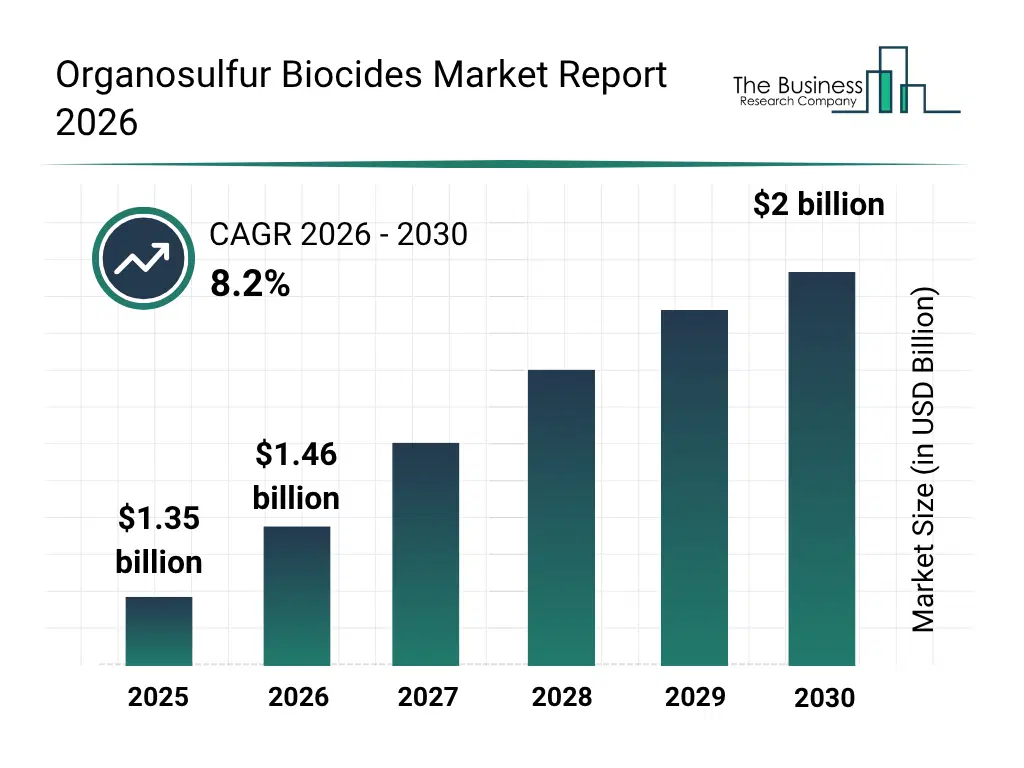
What Is The Organosulfur Biocides Market Size and Share 2026?
The organosulfur biocides market size has grown strongly in recent years. It will grow from $1.35 billion in 2025 to $1.46 billion in 2026 at a compound annual growth rate (CAGR) of 8.7%. The growth in the historic period can be attributed to growing demand for industrial water treatment, expansion of paints and coatings production, rising wood preservation activities, increasing use of antimicrobial additives in formulations, growth of oil and gas processing activities.What Is The Organosulfur Biocides Market Growth Forecast?
The organosulfur biocides market size is expected to see strong growth in the next few years. It will grow to $2 billion in 2030 at a compound annual growth rate (CAGR) of 8.2%. The growth in the forecast period can be attributed to increasing demand for advanced microbial control solutions, rising industrial water reuse and treatment requirements, expanding infrastructure and construction activities, increasing demand for durable material preservation, growing consumption of processed food and beverages. Major trends in the forecast period include development of broad-spectrum organosulfur biocide formulations, rising adoption of controlled-release biocide formulations, increasing demand for long-lasting microbial protection, growing use of multifunctional organosulfur biocide blends, expansion of organosulfur biocides in water treatment applications.Tariff Impact On Organosulfur Biocides Market
Tariffs are impacting the organosulfur biocides market by increasing the cost of imported sulfur-based raw materials, chemical intermediates, specialty additives, and biocide formulations required across industrial applications. This is increasing production costs and affecting water treatment, paints and coatings, wood preservation, and oil and gas applications, particularly in import-dependent regions such as Asia-Pacific and Latin America. Hardware-intensive? No—chemical-intensive segments such as formulated biocides and specialty organosulfur compounds are most affected due to global raw-material and supply-chain dependencies. However, tariffs are also encouraging local chemical production, regional supplier diversification, and increased investment in domestic manufacturing capacity, creating long-term resilience in the market.
Global Organosulfur Biocides Market Segmentation
1) By Product Type: Dithiocarbamates, Isothiazolinones, Thiocyanates, Thiocarbamates, Other Product Types 2) By Function: Bactericides, Fungicides, Algaecides, Slimicides, Broad Spectrum Biocides 3) By Formulation Type: Liquid Concentrates, Solid Or Powder Formulations, Encapsulated Or Controlled Release 4) By Distribution Channel: Direct Sales, Distributors And Dealers, Online Channels 5) By Application: Water Treatment, Paints And Coatings, Wood Preservation, Personal Care, Food And Beverage, Oil And Gas Subsegments: 1) By Dithiocarbamates: Sodium Dimethyldithiocarbamate, Zinc Dimethyldithiocarbamate, Manganese Ethylene Bisdithiocarbamate, Propineb, Zineb 2) By Isothiazolinones: Methylisothiazolinone, Benzisothiazolinone, Octylisothiazolinone, Dichlorooctylisothiazolinone, Chloromethylisothiazolinone 3) By Thiocyanates: Sodium Thiocyanate, Potassium Thiocyanate, Ammonium Thiocyanate, Calcium Thiocyanate, Organic Thiocyanates 4) By Thiocarbamates: Metham Sodium, Metam Potassium, Dazomet, Triallate, Pebulate 5) By Other Product Types: Sulfones, Sulfoxides, Thiadiazoles, Thiazoles, Organosulfur Biocide BlendsWhat Is The Driver Of The Organosulfur Biocides Market?
The rising demand for industrial and municipal water treatment is expected to propel the growth of the organosulfur biocides market going forward. The industrial and municipal water treatment sector refers to the industry involved in treating wastewater and potable water to remove contaminants, control microbial growth, and ensure compliance with environmental and public health standards. The rising demand for industrial and municipal water treatment is driven by increasing water pollution, which requires effective treatment to ensure safe and usable water supplies. The rising demand for industrial and municipal water treatment supports the organosulfur biocides by increasing the need for effective antimicrobial solutions that control bacteria, fungi, algae, and biofilm formation in water systems, thereby improving operational efficiency, protecting infrastructure, and ensuring regulatory compliance. For instance, in November 2025, according to the U.S. Environmental Protection Agency, a US-based government department, the agency announced $7 billion in Water Infrastructure Finance and Innovation Act (WIFIA) funding, including $6.5 billion for water infrastructure projects and an additional $550 million for state water programs. Therefore, the rising demand for industrial and municipal water treatment is driving the growth of the organosulfur biocides industry.Key Players In The Global Organosulfur Biocides Market
Major companies operating in the organosulfur biocides market are BASF SE, Dow Inc., LANXESS AG, Evonik Industries AG, Syensqo SA, Ecolab Inc., Thor Group Limited, Albemarle Corporation, Clariant AG, Eastman Chemical Company, Nouryon Chemicals Holding B.V., UPL Limited, Kemira Oyj, Arxada AG, Baker Hughes Company, PI Industries Ltd., Italmatch Chemicals S.p.A., Limin Group Co. Ltd., Jiangsu Flag Chemical Industry Co. Ltd., American Vanguard Corporation, NOCIL Limited, Accepta Ltd., Mubychem Group, Vink Chemicals GmbH & Co. KG, Sanitized AG, Shandong IRO Biocide Co. Ltd., Sidchem, Dalian Bio-Chem Co. Ltd.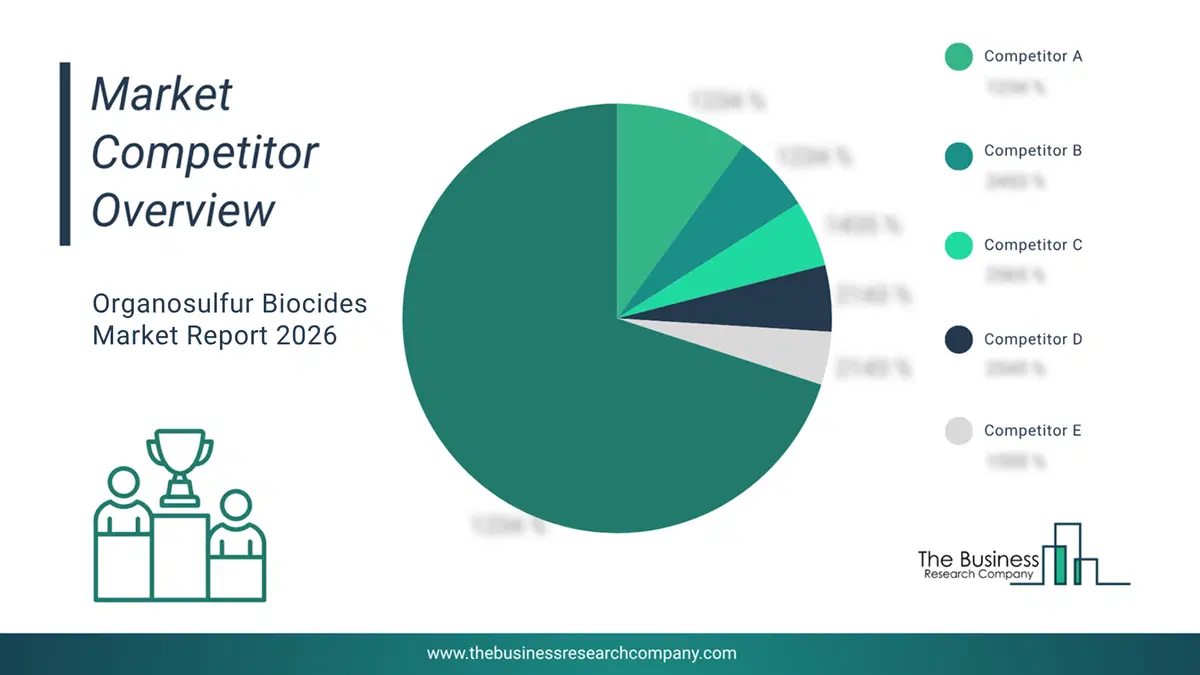
This chart is for illustrative purposes; the full report includes a detailed competitor analysis and comprehensive overview of the top 10 companies in the market.
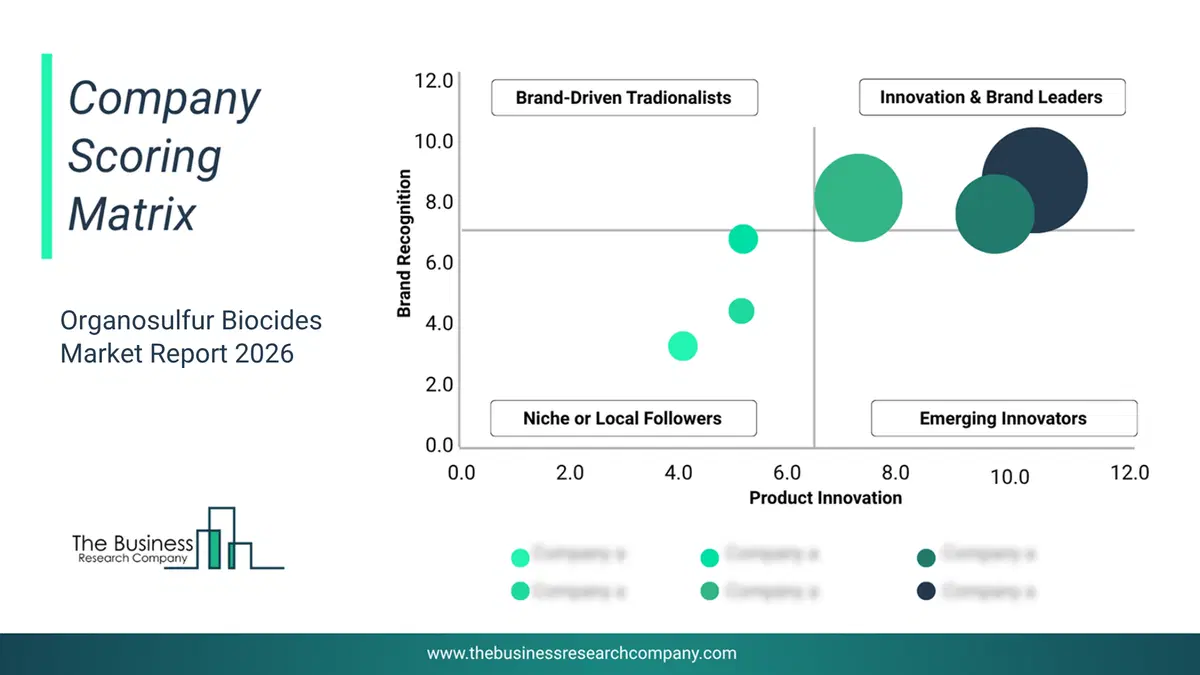
This chart maps companies by product innovation and brand strength, with bubble size indicating relative revenue, helping identify market leaders, challengers, and niche players. This is an illustrative chart; the full report provides a complete and accurate competitive analysis.
Global Organosulfur Biocides Market Trends and Insights
Major companies operating in the organosulfur biocides market are focusing on expanding distribution partnerships to improve the availability of advanced biocidal solutions and strengthen their reach across key application markets. Distribution partnerships are agreements in which companies collaborate to distribute and sell products through established channels, expanding market reach and improving product availability. For instance, in January 2026, Lintech International, a US-based specialty chemical distributor, expanded its partnership with LANXESS Material Protection Products (MPP), a Germany-based company that develops and manufactures biocides, preservatives, and antimicrobial solutions, becoming the industrial preservation and biocides distribution partner for LANXESS across the Northeast, Southeast, and Southwest regions of the United States. The expanded portfolio includes KATHON CG/ICP and KATHON CG/ICP II containing 1.5% chloromethylisothiazolinone and methylisothiazolinone (CMIT/MIT), alongside glutaraldehyde-based products, strengthening Lintech’s ability to distribute high-performance biocides for microbial preservation and control across multiple markets.What Are Latest Mergers And Acquisitions In The Organosulfur Biocides Market?
In May 2026, Azelis, a Belgium-based specialty chemicals distributor, expanded its partnership with Arxada to provide French customers with access to Arxada’s industrial biocide portfolio, including organosulfur biocides such as benzisothiazolinone, while offering technical and regulatory support for coatings and other industrial applications. Arxada is a Switzerland-based specialty chemicals company that develops microbial control solutions and biocides for paints and coatings, including benzisothiazolinone-based products.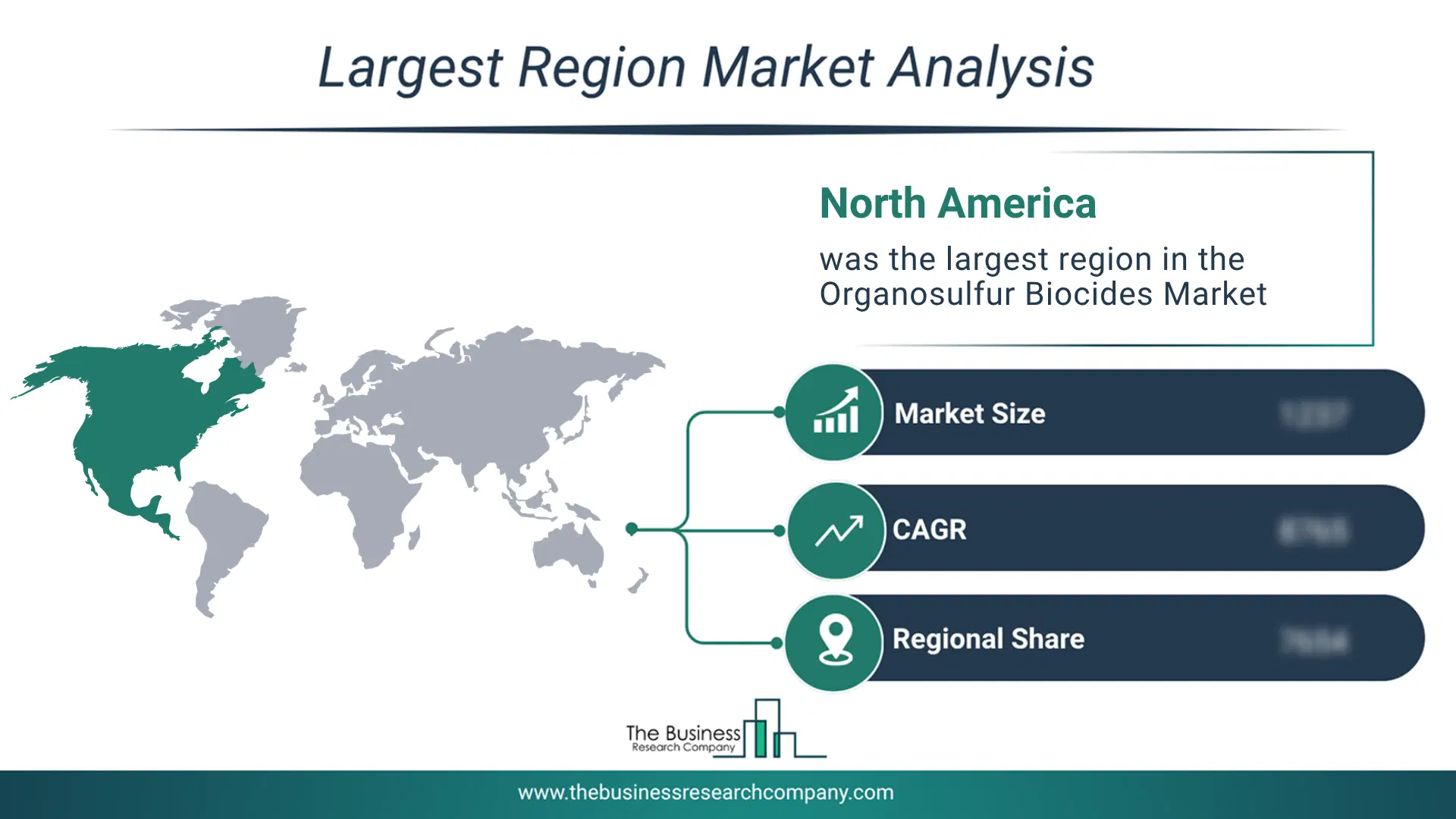
Regional Outlook
North America was the largest region in the organosulfur biocides market in 2025. Asia-Pacific is expected to be the fastest-growing region in the forecast period. The regions covered in this market report are Asia-Pacific, South East Asia, Western Europe, Eastern Europe, North America, South America, Middle East, Africa. The countries covered in this market report are Australia, Brazil, China, France, Germany, India, Indonesia, Japan, Taiwan, Russia, South Korea, UK, USA, Canada, Italy, Spain.What Defines the Organosulfur Biocides Market?
The organosulfur biocides market consists of sales of copper dimethyldithiocarbamate, nickel dimethyldithiocarbamate, sodium ethylene bis (dithiocarbamate), thiuram monosulfide, and thiuram disulfide. Values in this market are ‘factory gate’ values, that is, the value of goods sold by the manufacturers or creators of the goods, whether to other entities (including downstream manufacturers, wholesalers, distributors, and retailers) or directly to end customers. The value of goods in this market includes related services sold by the creators of the goods.How is Market Value Defined and Measured?
The market value is defined as the revenues that enterprises gain from the sale of goods and/or services within the specified market and geography through sales, grants, or donations in terms of the currency (in USD unless otherwise specified). The revenues for a specified geography are consumption values that are revenues generated by organizations in the specified geography within the market, irrespective of where they are produced. It does not include revenues from resales along the supply chain, either further along the supply chain or as part of other products.
This chart presents market attractiveness based on a quantitative evaluation of growth, competition, strategic alignment, and risk, offering a clear view of opportunity areas for decision-making. This chart is for illustrative purposes; the full report contains the complete analysis.

This chart highlights the Total Addressable Market (TAM) by estimating the maximum revenue opportunity using an assumption-driven approach, supporting strategic planning and opportunity sizing across markets. The chart is illustrative; the full report provides a more comprehensive analysis.
What Key Data and Analysis Are Included in the Organosulfur Biocides Market Report 2026?
The organosulfur biocides market research report is one of a series of new reports from The Business Research Company that provides market statistics, including industry global market size, regional shares, competitors with the market share, detailed market segments, market trends and opportunities, and any further data you may need to thrive in the organosulfur biocides industry. The market research report delivers a complete perspective of everything you need, with an in-depth analysis of the current and future state of the industry.Organosulfur Biocides Market Report Forecast Analysis
| Report Attribute | Details |
|---|---|
| Market Size Value In 2026 | $1.46 billion |
| Revenue Forecast In 2030 | $2 billion |
| Growth Rate | CAGR of 8.2% from 2026 to 2030 |
| Base Year For Estimation | 2025 |
| Actual Estimates/Historical Data | 2020-2025 |
| Forecast Period | 2026 - 2030 |
| Market Representation | Revenue in USD Billion and CAGR from 2026 to 2030 |
| Segments Covered | Product Type, Function, Formulation Type, Distribution Channel, Application |
| Regional Scope | Asia-Pacific, Western Europe, Eastern Europe, North America, South America, Middle East, Africa |
| Country Scope | The countries covered in the report are Australia, Brazil, China, France, Germany, India, Indonesia, Japan, Taiwan, Russia, South Korea, UK, USA, Canada, Italy, Spain. |
| Key Companies Profiled | BASF SE, Dow Inc., LANXESS AG, Evonik Industries AG, Syensqo SA, Ecolab Inc., Thor Group Limited, Albemarle Corporation, Clariant AG, Eastman Chemical Company, Nouryon Chemicals Holding B.V., UPL Limited, Kemira Oyj, Arxada AG, Baker Hughes Company, PI Industries Ltd., Italmatch Chemicals S.p.A., Limin Group Co. Ltd., Jiangsu Flag Chemical Industry Co. Ltd., American Vanguard Corporation, NOCIL Limited, Accepta Ltd., Mubychem Group, Vink Chemicals GmbH & Co. KG, Sanitized AG, Shandong IRO Biocide Co. Ltd., Sidchem, Dalian Bio-Chem Co. Ltd. |
| Customization Scope | Request for Customization |
| Pricing And Purchase Options | Explore Purchase Options |