
Orphan Drugs Market Report 2026
Global Outlook – By Therapy Area (Oncology, Blood, Central Nervous System, Endocrine, Cardiovascular, Respiratory, Immunomodulatory), By Diseases Type (Oncology, Hematology, Neurology, Cardiovascular, Other Disease Types), By Drug Type (Biological, Non-Biological), By Distribution Channel (Hospital Pharmacy, Retail Pharmacy, Online Sales) – Market Size, Trends, Strategies, and Forecast to 2030
Orphan Drugs Market Overview
• Orphan Drugs market size has reached to $229.71 billion in 2025 • Expected to grow to $794.12 billion in 2030 at a compound annual growth rate (CAGR) of 28.2% • Growth Driver: Surging Prevalence Of Rare Diseases Powers Growth Of The Orphan Drugs Market • Market Trend: Advancements in Orphan Drugs: CAR T-Cell Therapy and Regulatory Innovations for Rare Diseases • North America was the largest region in 2025 and Middle East is the fastest growing region.What Is Covered Under Orphan Drugs Market?
Orphan drugs refer to drugs that are specifically designed to treat an uncommon medical problem. It might be characterized as medicines that address public health needs but are not produced by the pharmaceutical industry due to financial constraints. Since a chemical may be used to treat a common condition but not have been designed for another, more rare indication, the indications of a medicine may likewise be called orphan. The main types of orphan drugs are biological and non-biological. The various therapy areas include oncology, blood, the central nervous system, endocrine, cardiovascular, respiratory, and immunomodulatory use for the treatment of oncology, hematology, neurology, cardiovascular, and others. Hematology is the study of blood and blood disorders. The drugs are distributed through hospital pharmacies, retail pharmacies, and online sales.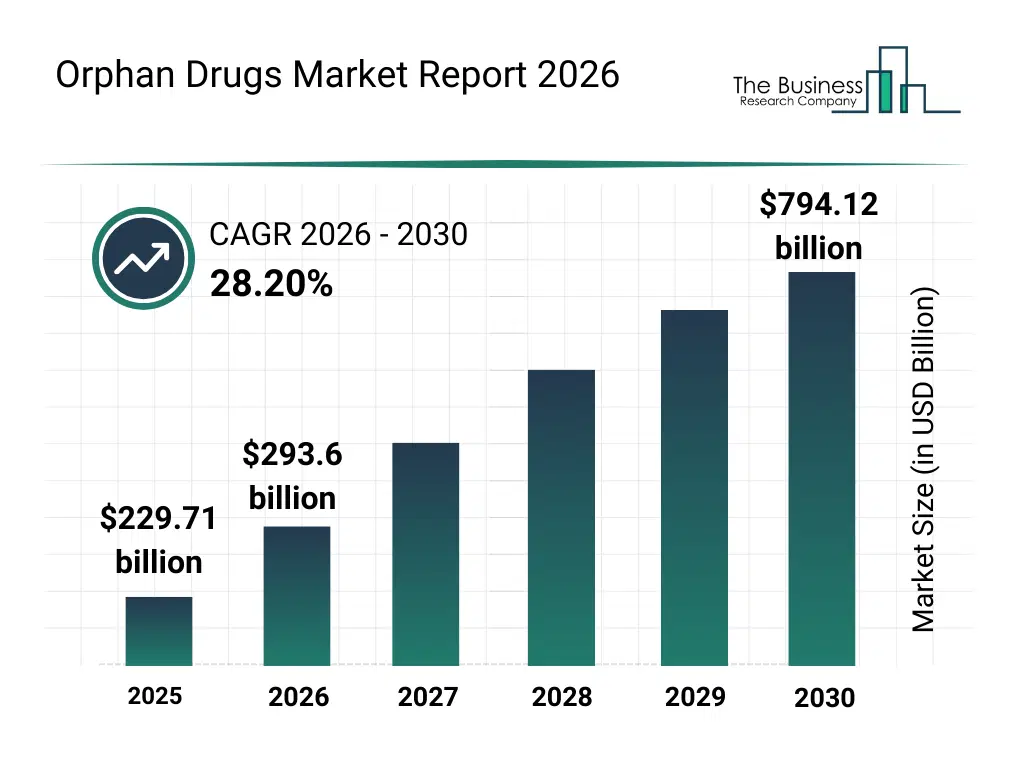
What Is The Orphan Drugs Market Size and Share 2026?
The orphan drugs market size has grown exponentially in recent years. It will grow from $229.71 billion in 2025 to $293.6 billion in 2026 at a compound annual growth rate (CAGR) of 27.8%. The growth in the historic period can be attributed to implementation of orphan drug acts, unmet needs in rare diseases, limited treatment availability, government incentives and grants, growing patient advocacy efforts.What Is The Orphan Drugs Market Growth Forecast?
The orphan drugs market size is expected to see exponential growth in the next few years. It will grow to $794.12 billion in 2030 at a compound annual growth rate (CAGR) of 28.2%. The growth in the forecast period can be attributed to advancements in genomics research, increased rare disease diagnosis rates, growth of biologic orphan drugs, expansion of specialty distribution channels, higher investment in niche therapeutics. Major trends in the forecast period include rising development of drugs for rare diseases, increased regulatory incentives for orphan drug approval, growth of precision medicine in rare disorders, expansion of gene and cell therapies, strategic collaborations between pharma and biotech firms.
Global Orphan Drugs Market Segmentation
1) By Therapy Area: Oncology, Blood, Central Nervous System, Endocrine, Cardiovascular, Respiratory, Immunomodulatory 2) By Diseases Type: Oncology, Hematology, Neurology, Cardiovascular, Other Disease Types 3) By Drug Type: Biological, Non-Biological 4) By Distribution Channel: Hospital Pharmacy, Retail Pharmacy, Online Sales Subsegments: 1) By Oncology: Targeted Therapies, Chemotherapy Agents, Immunotherapy Drugs, Hormonal Therapies 2) By Blood: Hematopoietic Growth Factors, Coagulation Factor Concentrates, Treatments for Rare Blood Disorders 3) By Central Nervous System: Medications for Rare Neurological Disorders, Antiepileptic Drugs for Rare Epilepsy Syndromes, Treatments for Rare Neurodegenerative Diseases 4) By Endocrine: Hormonal Replacement Therapies, Treatments for Rare Endocrine Disorders 5) By Cardiovascular: Medications for Rare Cardiovascular Conditions, Treatments for Rare Genetic Heart Disorders 6) By Respiratory: Therapies for Rare Respiratory Diseases, Medications for Rare Allergic Conditions 7) By Immunomodulatory: Treatments for Rare Autoimmune Disorders, Immunotherapies for Rare Inflammatory ConditionsWhat Is The Driver Of The Orphan Drugs Market?
The rising prevalence of rare diseases is a key factor driving the growth of the orphan drugs market. Any disease that affects a small percentage of the population is rare. Rare disease treatments often require a cold chain, a supply chain regulated by the temperature that is not readily accessible in all countries. Orphan diseases or rare diseases occur rarely among people (i.e., 7 out of 10,000). However, globally, the prevalence of rare diseases has been increasing in recent years. For instance, in January 2025, according to the The American Cancer Society, a US-based professional organization, in 2025, an estimated 59,660 new cases of oral cavity and oropharyngeal cancer are expected to be diagnosed, and approximately 12,770 people are projected to die from these cancers. Thus, the rising prevalence of rare diseases is driving the growth of the orphan drugs industry.Key Players In The Global Orphan Drugs Market
Major companies operating in the orphan drugs market are Pfizer Inc., Johnson & Johnson Services Inc., F Hoffmann-La Roche Ltd., Farbenfabriken Bayer AG, Novartis AG, Sanofi SA, Bristol-Myers Squibb Co., AstraZeneca plc, GlaxoSmithKline plc, Takeda Pharmaceutical Company Limited, Eli Lilly and Company, Gilead Sciences Inc., Applied Molecular Genetics Inc., Novo Nordisk A/S, Merck & Co. KG, AbbVie Inc., Teva Pharmaceutical Industries Ltd., Regeneron Pharmaceuticals Inc., CSL Limited, Biogen Inc., Celgene Corporation, Vertex Pharmaceuticals Inc., Eisai Co. Ltd., Grifols SA, Alexion Pharmaceuticals Inc., BioMarin Pharmaceutical Inc., Aegerion Pharmaceuticals Inc., Sankyo Co. Ltd.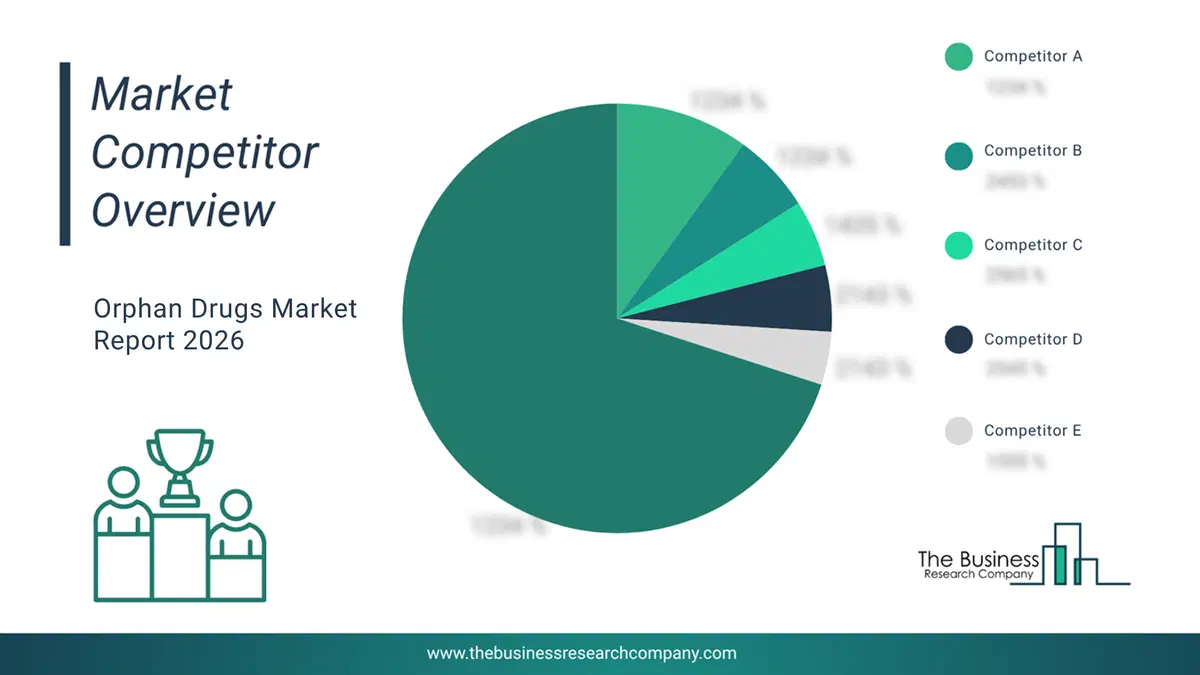
This chart is for illustrative purposes; the full report includes a detailed competitor analysis and comprehensive overview of the top 10 companies in the market.
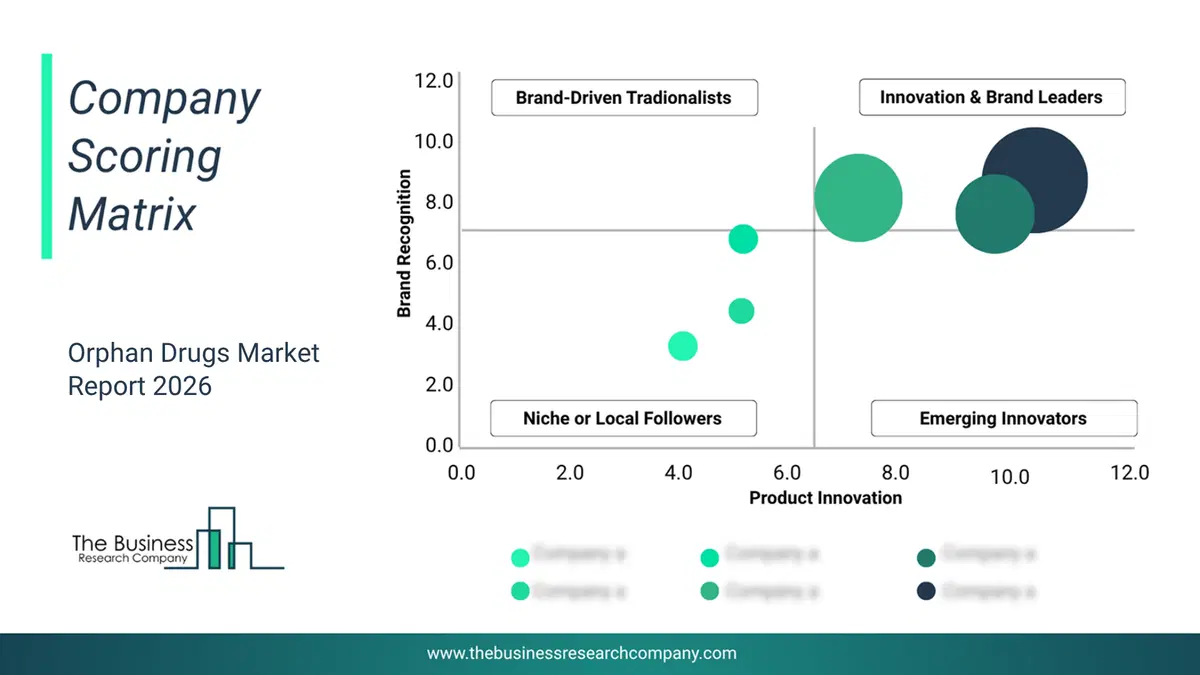
This chart maps companies by product innovation and brand strength, with bubble size indicating relative revenue, helping identify market leaders, challengers, and niche players. This is an illustrative chart; the full report provides a complete and accurate competitive analysis.
Global Orphan Drugs Market Trends and Insights
Major companies operating in the orphan drugs market are focusing on product approvals such as CAR T-cell therapy to meet the urgent needs of rare diseases. This approach enhances patient outcomes while capitalizing on regulatory incentives for innovative treatments. CAR T-cell therapy is a personalized immunotherapy that involves modifying a patient's T cells to target and attack cancer cells. It has shown significant effectiveness in treating certain blood cancers. For instance, in March 2024, Cabaletta Bio, a US-based biotechnology company, launched an FDA-granted orphan drug designation to CABA-201. CABA-201 is an investigational CAR T-cell therapy targeting CD19-positive B-cells designed to induce durable remission in autoimmune diseases like systemic sclerosis. Its potential benefits include a targeted approach, a favorable safety profile, and the possibility of long-lasting effects from a single infusion.What Are Latest Mergers And Acquisitions In The Orphan Drugs Market?
In May 2024, Sanofi S.A a France-based pharmaceutical industry company, that develops, discovers, and delivers medicines and vaccines acquired Inhibrx Inc for an $1.7 billion amount. With this acquisition, Sanofi aims to enhance its rare disease pipeline by targeting alpha-1 antitrypsin deficiency and addressing unmet medical needs in this underserved patient population. Inhibrx, is a US-based biotechnology company, focuses on developing novel therapies, including orphan drugs, to address unmet medical needs in rare diseases.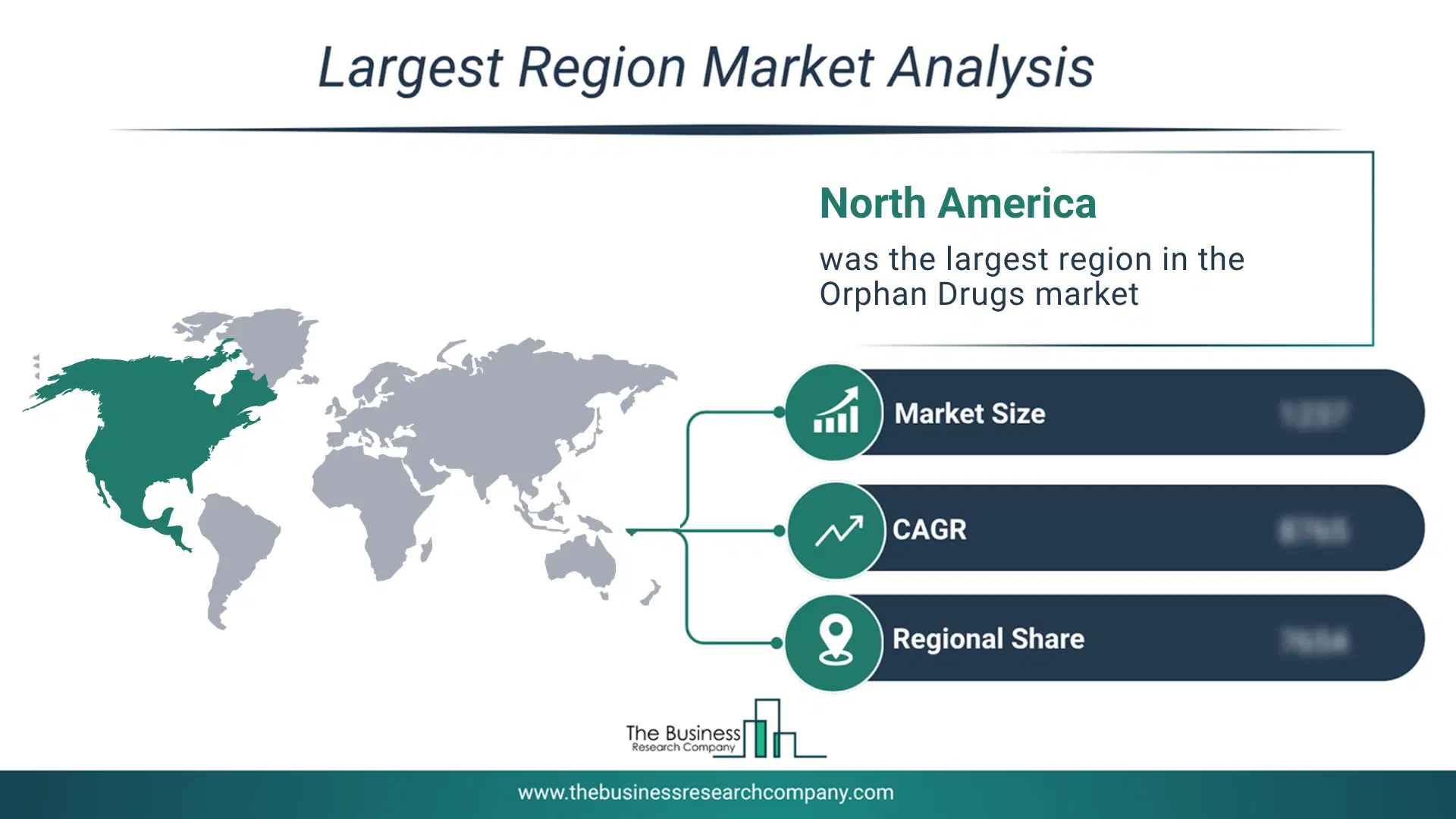
Regional Insights
North America was the largest region in the global orphan drugs market in 2025. Middle East is expected to be the fastest growing region in the orphan drugs market report during the forecast period. The regions covered in this market report are Asia-Pacific, South East Asia, Western Europe, Eastern Europe, North America, South America, Middle East, Africa. The countries covered in this market report are Australia, Brazil, China, France, Germany, India, Indonesia, Japan, Taiwan, Russia, South Korea, UK, USA, Canada, Italy, Spain.What Defines the Orphan Drugs Market?
The orphan drugs market consists of sales of ivacaftor and alglucerase. Values in this market are factory gate values, that is the value of goods sold by the manufacturers or creators of the goods, whether to other entities (including downstream manufacturers, wholesalers, distributors, and retailers) or directly to end customers. The value of goods in this market includes related services sold by the creators of the goods.How is Market Value Defined and Measured?
The market value is defined as the revenues that enterprises gain from the sale of goods and/or services within the specified market and geography through sales, grants, or donations in terms of the currency (in USD unless otherwise specified). The revenues for a specified geography are consumption values that are revenues generated by organizations in the specified geography within the market, irrespective of where they are produced. It does not include revenues from resales along the supply chain, either further along the supply chain or as part of other products.
This chart presents market attractiveness based on a quantitative evaluation of growth, competition, strategic alignment, and risk, offering a clear view of opportunity areas for decision-making. This chart is for illustrative purposes; the full report contains the complete analysis.

This chart highlights the Total Addressable Market (TAM) by estimating the maximum revenue opportunity using an assumption-driven approach, supporting strategic planning and opportunity sizing across markets. The chart is illustrative; the full report provides a more comprehensive analysis.
What Key Data and Analysis Are Included in the Orphan Drugs Market Report 2026?
The orphan drugs market research report is one of a series of new reports from The Business Research Company that provides market statistics, including industry global market size, regional shares, competitors with the market share, detailed market segments, market trends and opportunities, and any further data you may need to thrive in the orphan drugs industry. The market research report delivers a complete perspective of everything you need, with an in-depth analysis of the current and future state of the industry.Orphan Drugs Market Report Forecast Analysis
| Report Attribute | Details |
|---|---|
| Market Size Value In 2026 | $293.6 billion |
| Revenue Forecast In 2030 | $794.12 billion |
| Growth Rate | CAGR of 27.8% from 2026 to 2030 |
| Base Year For Estimation | 2025 |
| Actual Estimates/Historical Data | 2020-2025 |
| Forecast Period | 2026 - 2030 |
| Market Representation | Revenue in USD Billion and CAGR from 2026 to 2030 |
| Segments Covered | Therapy Area, Diseases Type, Drug Type, Distribution Channel |
| Regional Scope | Asia-Pacific, Western Europe, Eastern Europe, North America, South America, Middle East, Africa |
| Country Scope | The countries covered in the report are Australia, Brazil, China, France, Germany, India, Indonesia, Japan, Taiwan, Russia, South Korea, UK, USA, Canada, Italy, Spain. |
| Key Companies Profiled | Pfizer Inc., Johnson & Johnson Services Inc., F Hoffmann-La Roche Ltd., Farbenfabriken Bayer AG, Novartis AG, Sanofi SA, Bristol-Myers Squibb Co., AstraZeneca plc, GlaxoSmithKline plc, Takeda Pharmaceutical Company Limited, Eli Lilly and Company, Gilead Sciences Inc., Applied Molecular Genetics Inc., Novo Nordisk A/S, Merck & Co. KG, AbbVie Inc., Teva Pharmaceutical Industries Ltd., Regeneron Pharmaceuticals Inc., CSL Limited, Biogen Inc., Celgene Corporation, Vertex Pharmaceuticals Inc., Eisai Co. Ltd., Grifols SA, Alexion Pharmaceuticals Inc., BioMarin Pharmaceutical Inc., Aegerion Pharmaceuticals Inc., Sankyo Co. Ltd. |
| Customization Scope | Request for Customization |
| Pricing And Purchase Options | Explore Purchase Options |