
Orthopedic Soft Tissue Repair Market Report 2026
Global Outlook – By Procedure (Cruciate Ligaments Repair, Rotator Cuff Repair, Lateral Epicondylitis, Achilles Tendinosis Repair, Pelvic Organ Prolapse, Gluteal Tendon Repair, Hip Arthroscopy, Biceps Tenodesis, Other Procedures), By Injury Location (Knee, Shoulder, Hip, Small Joints), By End User (Hospitals, Ambulatory Centers, Orthopedic Clinics) - Market Size, Trends, And Global Forecast 2026-2030
Orthopedic Soft Tissue Repair Market Overview
• Orthopedic Soft Tissue Repair market size has reached to $6.52 billion in 2025 • Expected to grow to $9.68 billion in 2030 at a compound annual growth rate (CAGR) of 8.1% • Growth Driver: Rising Orthopedic Soft Tissue Repair Demand Driven By Sports Injuries Surge • Market Trend: Adoption of Advanced Soft Tissue Stabilization Systems in Orthopedic Surgery to Improve Ligament Repair • North America was the largest region in 2025.Market Gains By 2030 – Top Opportunities By Segment
Market Gain identifies the most promising market opportunities by highlighting the segments or products expected to generate the highest incremental revenue growth over the next five years.
What Is Covered Under Orthopedic Soft Tissue Repair Market?
Orthopedic soft tissue repair is the process of replacing the injured or damaged tissues with healthy tissues. It comprises nerves, ligaments, blood vessels, muscles, tendons and synovial membranes. Orthopedic soft tissue injuries often occur during sports and physical activities but can also be caused by simple everyday tasks and continuous use of a particular body part. The main procedures of orthopedic soft tissue repair include cruciate ligaments repair, rotator cuff repair, lateral epicondylitis, achilles tendinosis repair, pelvic organ prolapse, gluteal tendon repair, hip arthroscopy, biceps tenodesis, and others. Cruciate ligament repair is a surgical procedure that replaces the anterior cruciate ligament in the knee with a tissue graft to restore function after an injury. The injury locations include knee, shoulder, hip, and small joints and the end users include hospitals, ambulatory centers, and orthopedic clinics.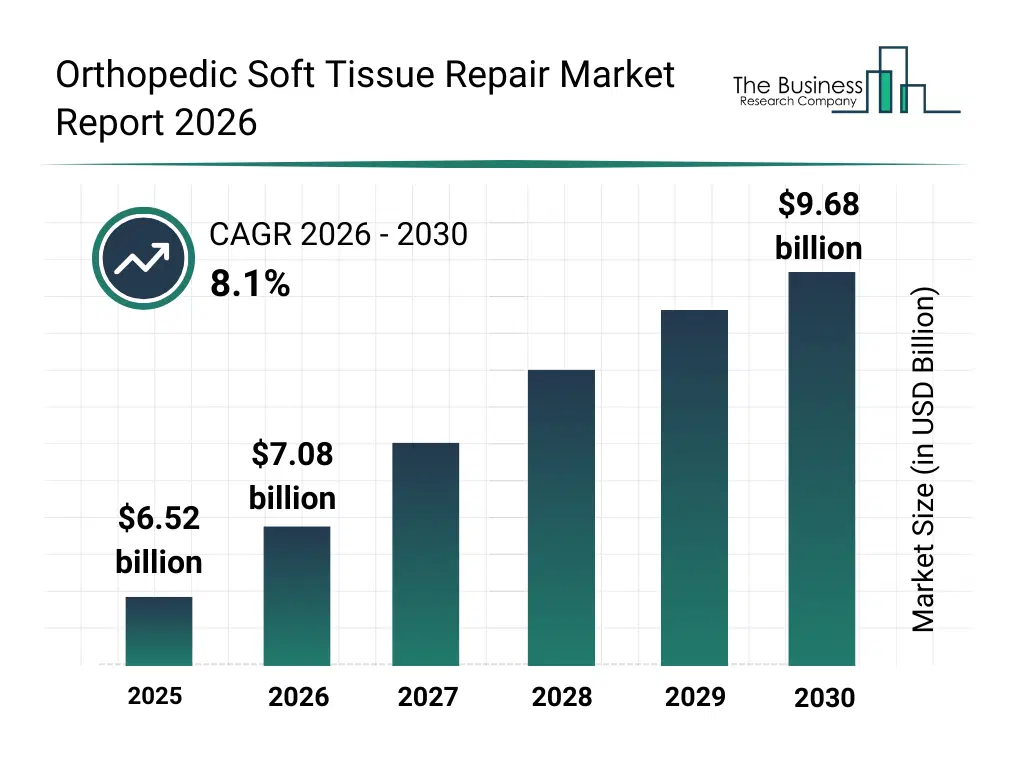
What Is The Orthopedic Soft Tissue Repair Market Size and Share 2026?
The orthopedic soft tissue repair market size has grown strongly in recent years. It will grow from $6.52 billion in 2025 to $7.08 billion in 2026 at a compound annual growth rate (CAGR) of 8.5%. The growth in the historic period can be attributed to high prevalence of sports-related soft tissue injuries, limited availability of advanced soft tissue repair techniques, increasing incidence of musculoskeletal injuries in aging population, early adoption of open surgical procedures, growing demand for improved surgical outcomes.What Is The Orthopedic Soft Tissue Repair Market Growth Forecast?
The orthopedic soft tissue repair market size is expected to see strong growth in the next few years. It will grow to $9.68 billion in 2030 at a compound annual growth rate (CAGR) of 8.1%. The growth in the forecast period can be attributed to rising preference for minimally invasive techniques, increasing use of biologics and regenerative therapies, expanding hospital and orthopedic clinic infrastructure, growing investment in surgical robotics and simulation, increasing focus on patient-specific repair and rehabilitation protocols. Major trends in the forecast period include rising adoption of minimally invasive soft tissue repair procedures, increasing use of biologic scaffolds and growth factors, growing integration of robotic assistance in soft tissue surgeries, rising focus on accelerated recovery and rehabilitation programs, increasing investment in surgeon training and surgical simulation.
Global Orthopedic Soft Tissue Repair Market Segmentation
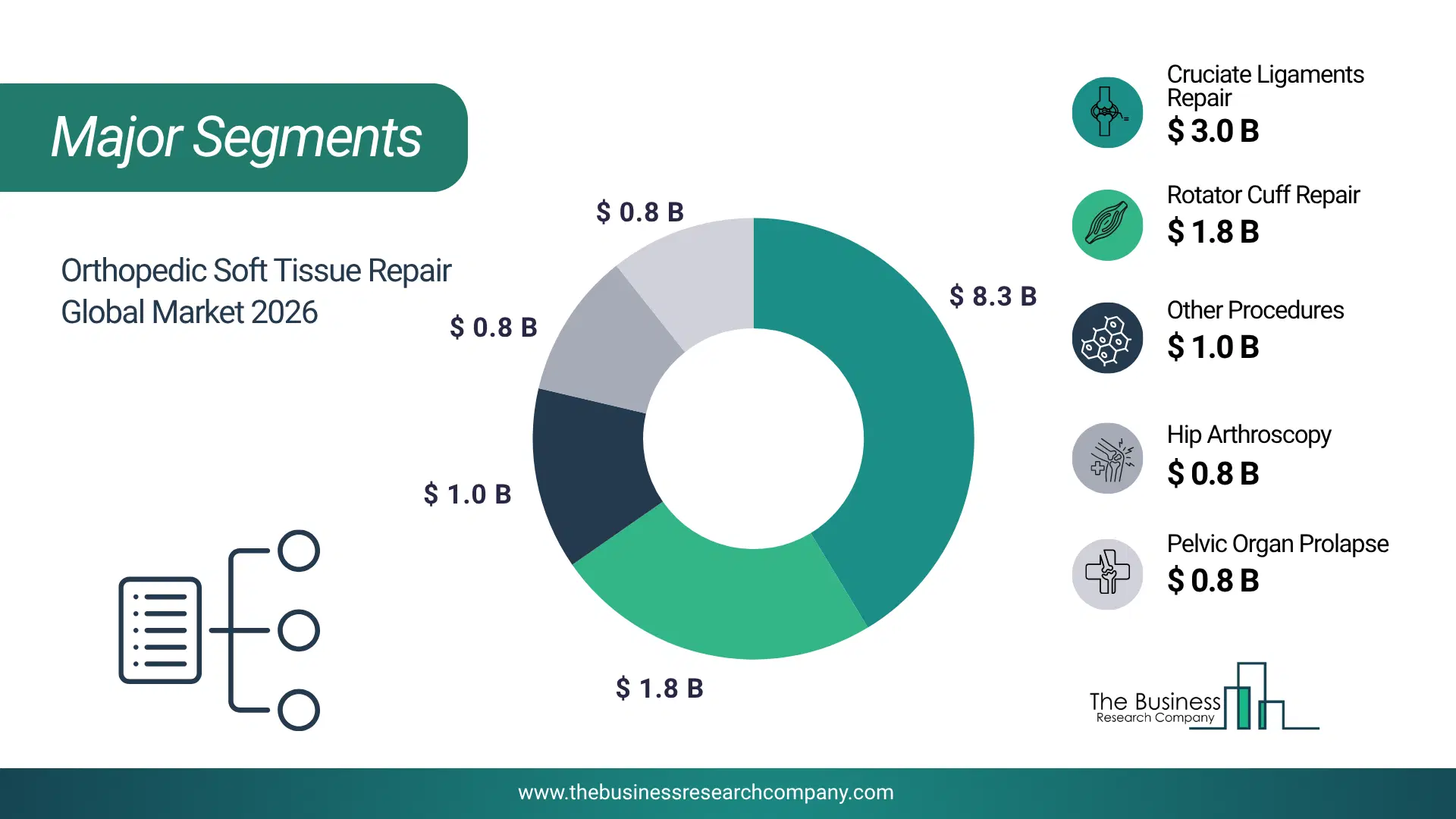
1) By Procedure: Cruciate Ligaments Repair, Rotator Cuff Repair, Lateral Epicondylitis, Achilles Tendinosis Repair, Pelvic Organ Prolapse, Gluteal Tendon Repair, Hip Arthroscopy, Biceps Tenodesis, Other Procedures 2) By Injury Location: Knee, Shoulder, Hip, Small Joints 3) By End User: Hospitals, Ambulatory Centers, Orthopedic Clinics Subsegments: 1) By Cruciate Ligaments Repair: Anterior Cruciate Ligament (ACL) Repair, Posterior Cruciate Ligament (PCL) Repair 2) By Rotator Cuff Repair: Partial Thickness Repair, Full Thickness Repair 3) By Lateral Epicondylitis: Open Surgery, Arthroscopic Surgery 4) By Achilles Tendinosis Repair: Open Repair, Percutaneous Repair 5) By Pelvic Organ Prolapse: Anterior Vaginal Wall Repair, Posterior Vaginal Wall Repair, Sacrocolpopexy 6) By Gluteal Tendon Repair: Open Repair, Arthroscopic Repair 7) By Hip Arthroscopy: Labral Repair, Femoroacetabular Impingement (FAI) Surgery 8) By Biceps Tenodesis: Open Biceps Tenodesis, Arthroscopic Biceps Tenodesis 9) By Other Procedures: Tennis Elbow Repair, Shoulder Instability Repair The top segments in the orthopedic soft tissue repair market will be: • Cruciate Ligaments Repair will reach $3.05 billion by 2030. • Rotator Cuff Repair will reach $1.78 billion by 2030. • Other Procedures will reach $0.95 billion by 2030. • Hip Arthroscopy will reach $0.85 billion by 2030. • Pelvic Organ Prolapse will reach $0.82 billion by 2030.What Is The Driver Of The Orthopedic Soft Tissue Repair Market?
The increasing incidence of sports-related injuries is expected to propel the growth of the orthopedic soft tissue repair market going forward. Sports injuries are those sustained while participating in sports or exercising events. Orthopedic soft tissue repair is used in the repair of muscle, blood vessels, fibrous tissue, and other supporting connective tissues that are injured during sports. For instance, in July 2025, according to the Australian Institute of Health and Welfare, an Australia-based government agency, in Australia, in 2023–24, about 62,100 sports injuries led to a hospital admission in Australia. Further, males accounted for 70% of all hospitalizations (or 43,800 cases), while females accounted for nearly 30% (or 18,300 cases). Therefore, the increasing incidence of sports-related injuries is driving the growth of the orthopedic soft tissue repair industry.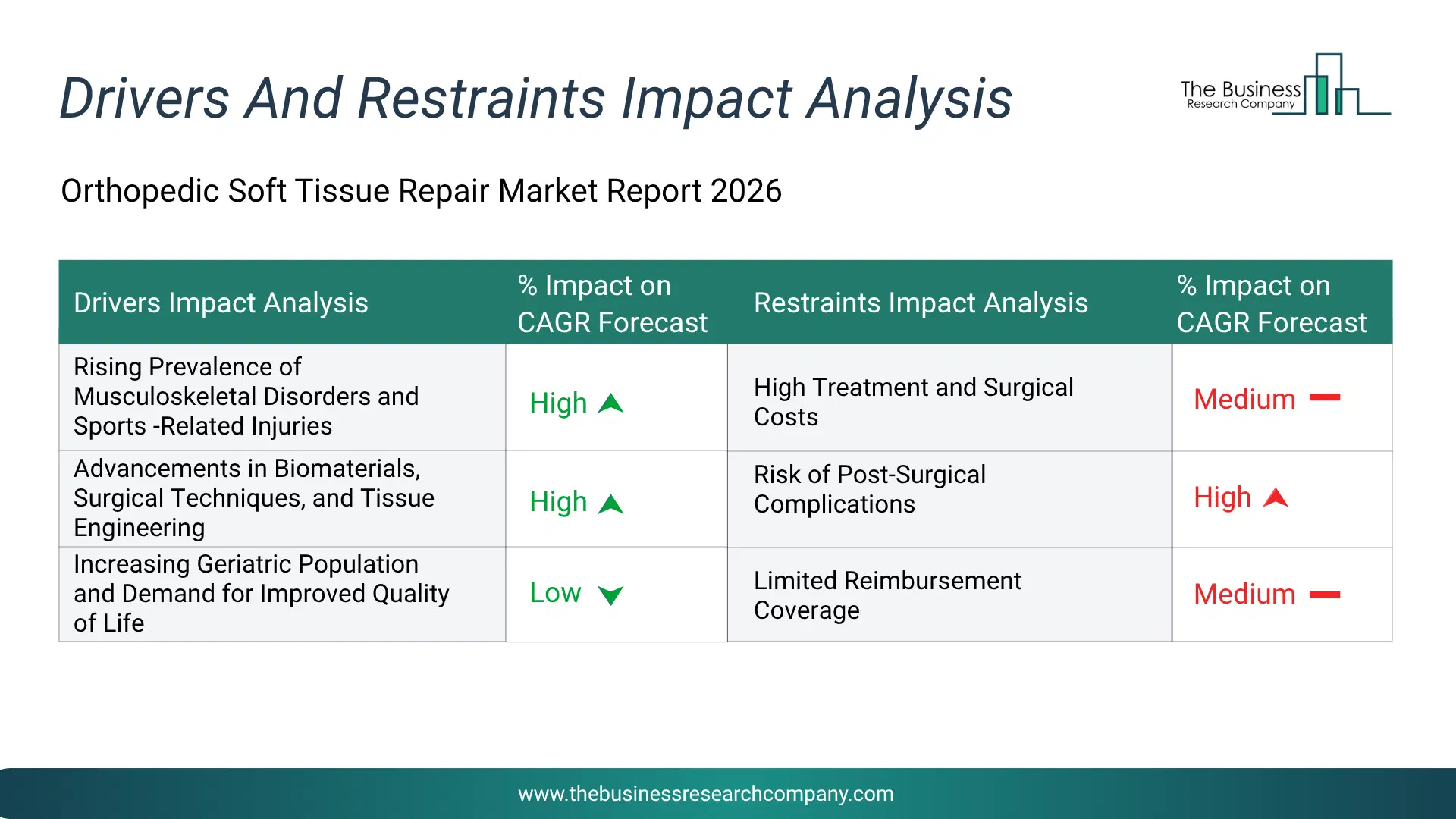
Infographic Chart Showing Key Market Drivers Analysis And Restraints For Orthopedic Soft Tissue Repair Market
The chart presents an impact analysis of key drivers and restraints, quantifying their relative influence on the market's growth rate and helping assess the balance between growth enablers and limiting factors. This chart offers a high-level perspective; the full report contains more detailed insights.
How Will The Drivers Impact Growth In The Global Orthopedic Soft Tissue Repair Market?
• Rising Prevalence of Musculoskeletal Disorders and Sports -Related Injuries (High) – During the forecast period, the rising prevalence of musculoskeletal disorders and sports -related injuries is expected to become a key growth driver for the orthopedic soft tissue repair market by 2030. The global increase in musculoskeletal disorders, ligament injuries, tendon ruptures, and sports -related trauma is driving strong demand for orthopedic soft tissue repair solutions. Aging populations, sedentary lifestyles, and increased participation in high -intensity sports are contributing to a higher incidence of injuries requiring surgical intervention. Advanced repair techniques, including arthroscopic surgeries, bioengineered grafts, and minimally invasive procedures, are increasingly preferred, fueling adoption of soft tissue repair devices and implants. The growing clinical need for effective treatment options positions injury prevalence as the primary structural growth driver for the market. • Advancements in Biomaterials, Surgical Techniques, and Tissue Engineering (High) – During the forecast period, the advancements in biomaterials, surgical techniques, and tissue engineering are expected to emerge as a major factor driving the expansion of the orthopedic soft tissue repair market by 2030. Technological innovation in biomaterials, bioresorbable implants, allografts, synthetic grafts, and tissue engineering is significantly boosting the market for orthopedic soft tissue repair. Improved surgical techniques, such as robot-assisted surgeries, arthroscopy, and minimally invasive procedures, enhance patient outcomes and reduce recovery time, making these solutions more attractive to both surgeons and patients. The convergence of advanced biomaterials with regenerative medicine is enabling more durable and biologically compatible repair solutions, accelerating adoption across hospitals, orthopedic clinics, and sports medicine centers worldwide. • Increasing Geriatric Population and Demand for Improved Quality of Life (Low) – During the forecast period, the increasing geriatric population and demand for improved quality of life is expected to act as a key growth catalyst for the orthopedic soft tissue repair market by 2030. The global rise in the aging population is contributing to an increased prevalence of degenerative orthopedic conditions, such as rotator cuff tears, tendon degeneration, and ligament injuries. Older patients are increasingly seeking surgical interventions to maintain mobility, independence, and overall quality of life, driving demand for effective soft tissue repair solutions. Coupled with rising healthcare awareness and access to advanced orthopedic care, the geriatric demographic represents a sustainable and growing market segment for soft tissue repair products and associated surgical services.How Will The Restraints Impact Growth In The Global Orthopedic Soft Tissue Repair Market?
• High Treatment and Surgical Costs (Medium) – During the forecast period, the high treatment and surgical costs act as a restraint for the orthopedic soft tissue repair market because advanced surgical procedures, biologics, implants, and rehabilitation services are often expensive. These costs can place a significant financial burden on patients, especially in regions with limited insurance coverage. Hospitals also face high procurement costs for specialized materials and equipment, which can limit accessibility and adoption of advanced treatment options. • Risk of Post-Surgical Complications (High) – During the forecast period, the risk of post-surgical complications acts as a restraint because procedures involving soft tissue repair carry potential risks such as infections, graft failure, stiffness, or delayed healing. These complications can affect patient recovery outcomes and may require additional corrective treatments. Concerns over surgical risks can reduce patient willingness to opt for advanced procedures and impact overall market growth. • Limited Reimbursement Coverage (Medium) – During the forecast period, the limited reimbursement coverage acts as a restraint since many insurance providers do not fully cover advanced orthopedic procedures, biologics, or minimally invasive repair techniques. This increases out-of-pocket expenses for patients and can discourage treatment adoption. In regions with weaker healthcare funding systems, this limitation significantly restricts access to advanced orthopedic care.Key Players In The Global Orthopedic Soft Tissue Repair Market
Major companies operating in the orthopedic soft tissue repair market are Arthrex Inc., DePuy Synthes Inc. Johnson & Johnson, Stryker Corporation, Wright Medical Group N V, Zimmer Biomet, CONMED Corporation, Integra LifeSciences Holding Corporation, Smith & Nephew plc, LifeNet Health, MTF Biologics, Tissue Regenix Group plc, Bioventus Inc., Mitek Corporation, Aesculap AG & Co KG, OsteoMed Ltd., Exactech Inc., Medtronic plc, RTI Surgical Holdings Inc., Acera Surgical Inc., AlloSource, Orthofix International NV, Parcus Medical LLC, Breg Inc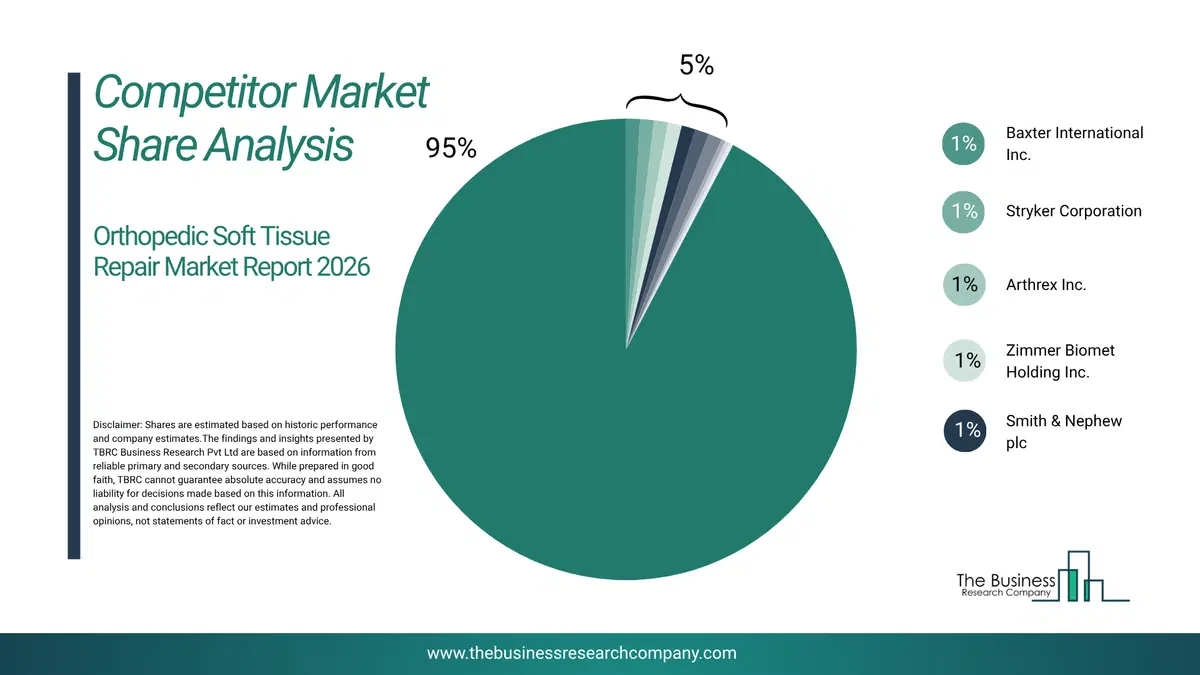
This chart is for illustrative purposes; the full report includes a detailed competitor analysis and comprehensive overview of the top 10 companies in the market.
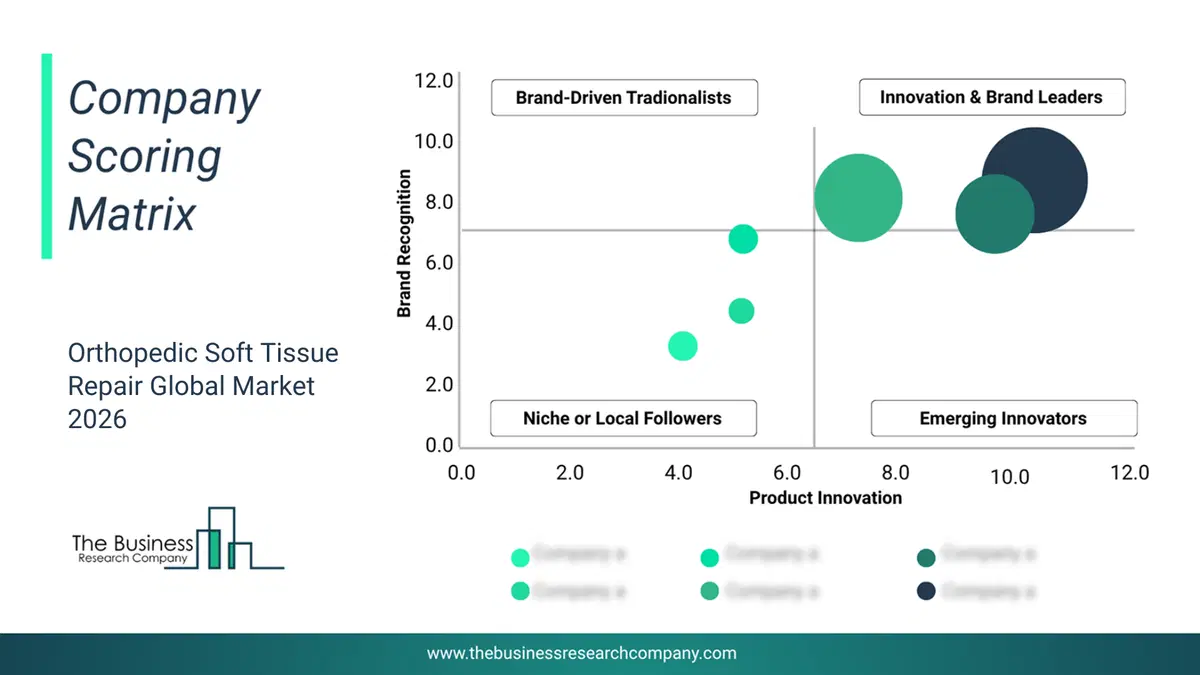
This chart maps companies by product innovation and brand strength, with bubble size indicating relative revenue, helping identify market leaders, challengers, and niche players. This is an illustrative chart; the full report provides a complete and accurate competitive analysis.
Global Orthopedic Soft Tissue Repair Market Trends and Insights
Major companies are operating in the orthopedic soft tissue repair market, focusing on developing technological advancements such as dynamic soft tissue stabilization systems to enhance surgical precision, support physiological ligament motion, and reduce complications associated with rigid fixation. A dynamic soft tissue stabilization system uses a flexible construct that allows controlled micromotion while securing ligaments, closely mimicking natural biomechanics and supporting biological healing, unlike traditional rigid screw-based fixation devices that can limit movement and require removal. For instance, in September 2024, Paragon 28, Inc., a U.S.-based medical device company, rolled out the R3FLEX Stabilization System designed to anatomically repair ankle syndesmotic (soft-tissue) injuries after fractures or high ankle sprains. The R3FLEX Stabilization System combines a titanium fibular component with a tibial all-suture anchor connected by a short suture loop and a thermoplastic polyurethane (TPU) bumper, allowing controlled micromotion while providing initial stability. The system features a turn-handle mechanism for intraoperative tension adjustment and visualization, supporting a wide range of patient anatomies.What Are Latest Mergers And Acquisitions In The Orthopedic Soft Tissue Repair Market?
In June 2024, Stryker, a US-based medical equipment manufacturing company, acquired Artelon for an undisclosed amount. This acquisition aims to enhance its product portfolio in the field of joint preservation and soft tissue reconstruction. Artelon specializes in innovative biomaterials designed for soft tissue reinforcement and repair, particularly in sports medicine and extremities procedures. Artelon is a Georgia-based medical equipment manufacturing company, developing innovative products designed to enhance the healing and reconstruction of ligaments and tendons.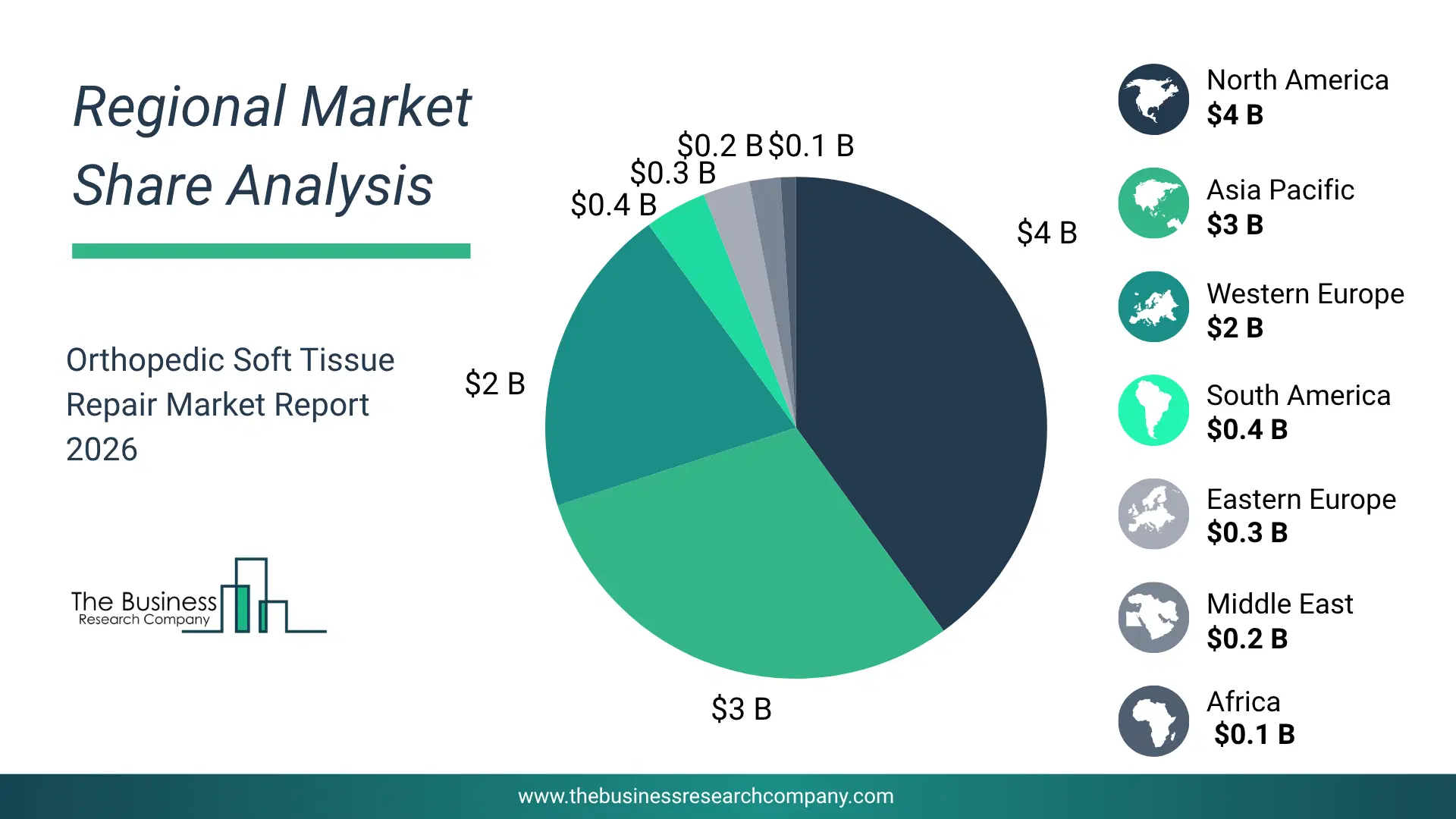
Regional Outlook
North America was the largest region in the orthopedic soft tissue repair market in 2025. The regions covered in this market report are Asia-Pacific, South East Asia, Western Europe, Eastern Europe, North America, South America, Middle East, Africa. The countries covered in this market report are Australia, Brazil, China, France, Germany, India, Indonesia, Japan, Taiwan, Russia, South Korea, UK, USA, Canada, Italy, Spain.What Defines the Orthopedic Soft Tissue Repair Market?
The orthopedic soft tissue repair market includes revenues earned by entities by providing vaginal prolapse, meniscal repair, and shoulder labrum procedures. The market value includes the value of related goods sold by the service provider or included within the service offering. Only goods and services traded between entities or sold to end consumers are included.How is Market Value Defined and Measured?
The market value is defined as the revenues that enterprises gain from the sale of goods and/or services within the specified market and geography through sales, grants, or donations in terms of the currency (in USD unless otherwise specified). The revenues for a specified geography are consumption values that are revenues generated by organizations in the specified geography within the market, irrespective of where they are produced. It does not include revenues from resales along the supply chain, either further along the supply chain or as part of other products.
This chart presents market attractiveness based on a quantitative evaluation of growth, competition, strategic alignment, and risk, offering a clear view of opportunity areas for decision-making. This chart is for illustrative purposes; the full report contains the complete analysis.

This chart highlights the Total Addressable Market (TAM) by estimating the maximum revenue opportunity using an assumption-driven approach, supporting strategic planning and opportunity sizing across markets. The chart is illustrative; the full report provides a more comprehensive analysis.
What Key Data and Analysis Are Included in the Orthopedic Soft Tissue Repair Market Report 2026?
The orthopedic soft tissue repair market research report is one of a series of new reports from The Business Research Company that provides market statistics, including industry global market size, regional shares, competitors with the market share, detailed market segments, market trends and opportunities, and any further data you may need to thrive in the orthopedic soft tissue repair industry. The market research report delivers a complete perspective of everything you need, with an in-depth analysis of the current and future state of the industry.Orthopedic Soft Tissue Repair Market Report Forecast Analysis
| Report Attribute | Details |
|---|---|
| Market Size Value In 2026 | $7.08 billion |
| Revenue Forecast In 2030 | $9.68 billion |
| Growth Rate | CAGR of 8.5% from 2026 to 2030 |
| Base Year For Estimation | 2025 |
| Actual Estimates/Historical Data | 2020-2025 |
| Forecast Period | 2026 - 2030 |
| Market Representation | Revenue in USD Billion and CAGR from 2026 to 2030 |
| Segments Covered | Procedure, Injury Location, End User |
| Regional Scope | Asia-Pacific, Western Europe, Eastern Europe, North America, South America, Middle East, Africa |
| Country Scope | The countries covered in the report are Australia, Brazil, China, France, Germany, India, Indonesia, Japan, Taiwan, Russia, South Korea, UK, USA, Canada, Italy, Spain. |
| Key Companies Profiled | Arthrex Inc., DePuy Synthes Inc. Johnson & Johnson, Stryker Corporation, Wright Medical Group N V, Zimmer Biomet, CONMED Corporation, Integra LifeSciences Holding Corporation, Smith & Nephew plc, LifeNet Health, MTF Biologics, Tissue Regenix Group plc, Bioventus Inc., Mitek Corporation, Aesculap AG & Co KG, OsteoMed Ltd., Exactech Inc., Medtronic plc, RTI Surgical Holdings Inc., Acera Surgical Inc., AlloSource, Orthofix International NV, Parcus Medical LLC, Breg Inc |
| Customization Scope | Request for Customization |
| Pricing And Purchase Options | Explore Purchase Options |