

Padcev Market Report 2026
Epidemiology, Pipeline Analysis, Market Insights & Forecasts
Padcev Market Overview
• The Padcev market growth in the historic period has been driven by increasing prevalence of urothelial cancer, limitations of conventional chemotherapy • Market expansion is supported by expansion of adc-based oncology pipelines, increasing investment in targeted cancer therapies • Growth Driver: The Growing Incidence Of Bladder Cancer Fuels Growth In The Market • Market Trend: Introduction Of Combination Therapies In The PADCEV Market To Enhance Cancer Treatment Efficacy • North America was the largest region in 2025 and Asia-Pacific is the fastest growing region.Market Gains By 2030 – Top Opportunities By Segment
Market Gain identifies the most promising market opportunities by highlighting the segments or products expected to generate the highest incremental revenue growth over the next five years.
What Is Covered Under Padcev Market?
Padcev (enfortumab vedotin) is a medication used to treat certain types of cancer, specifically metastatic urothelial carcinoma (a form of bladder cancer). It is an antibody-drug conjugate (ADC), that combines a targeted antibody with a chemotherapy drug. The antibody specifically targets and binds to the Nectin-4 protein, found on the surface of cancer cells. Once bound, the chemotherapy drug is released into the cancer cell, leading to its destruction. Padcev is typically used in patients who have received prior treatments, including chemotherapy or immune checkpoint inhibitors. The main types of clinical indications for padcev are urothelial cancer and bladder cancer. Urothelial cancer, the most common form of bladder cancer, is effectively treated with Padcev (enfortumab vedotin-ejfv), a targeted therapy that targets specific proteins in cancer cells. It is distributed by several distribution channels, such as retail pharmacies and online pharmacies, and used by various end users, including hospitals, clinics, ambulatory care, and home care.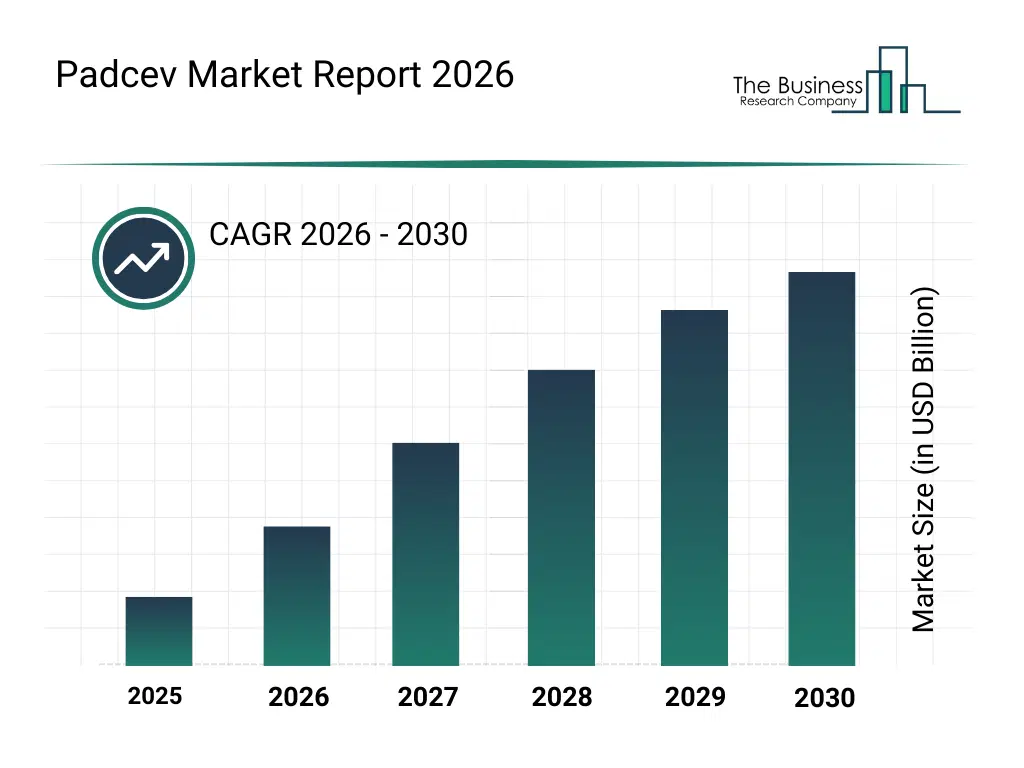
What Is The Padcev Market Size and Share 2026?
The growth in the historic period can be attributed to increasing prevalence of urothelial cancer, limitations of conventional chemotherapy, advancements in monoclonal antibody engineering, expansion of oncology clinical trials, regulatory approvals for novel cancer drugs.What Is The Padcev Market Growth Forecast?
The growth in the forecast period can be attributed to expansion of adc-based oncology pipelines, increasing investment in targeted cancer therapies, rising adoption of personalized oncology treatments, growing integration of companion diagnostics, advancement of combination cancer therapy approaches. Major trends in the forecast period include increasing adoption of antibody-drug conjugate therapies, rising use of targeted oncology treatments, expansion of precision cancer therapeutics, growing focus on biomarker-driven drug development, enhanced oncology manufacturing capabilities.
Global Padcev Market Segmentation
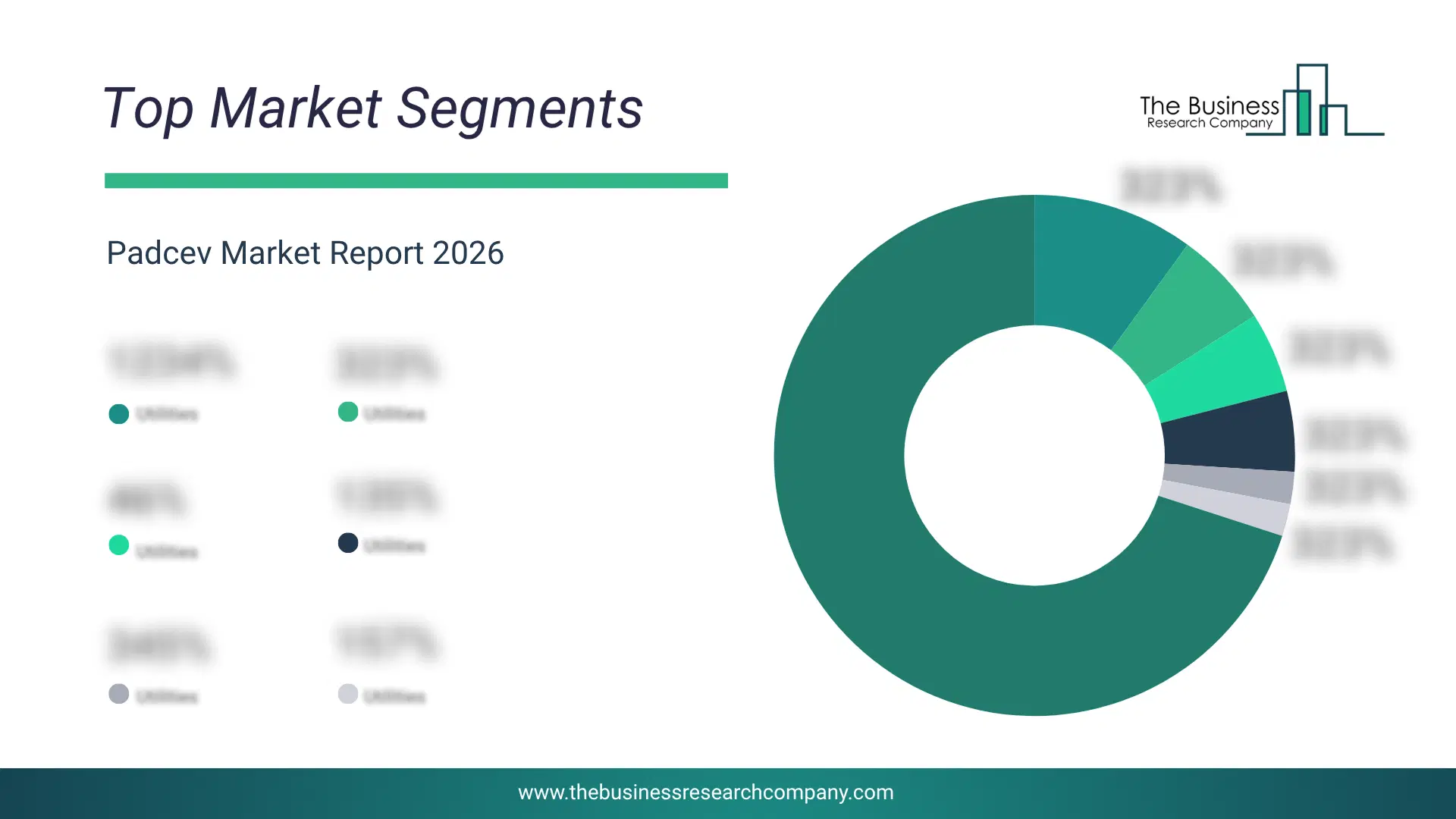
1) By Clinical Indication: Urothelial Cancer, Bladder Cancer 2) By Distribution Channel: Retail Pharmacies, Online Pharmacies 3) By End-User: Hospitals, Clinics, Ambulatory Care, Home Care The top segments in the padcev market will be: • Urothelial Cancer will reach $2.98 Billion by 2030. • Bladder Cancer will reach $0.44 Billion by 2030.What Is The Driver Of The Padcev Market?
The growing incidence of bladder cancer is expected to propel the growth of the padcev market going forward. Bladder cancer refers to the abnormal growth of cells in the bladder, which can form tumors and disrupt normal urinary function. The prevalence of bladder cancer is attributed to factors such as smoking, exposure to industrial chemicals, chronic bladder infections, and a family history of the disease. Padcev assists in treating bladder cancer by targeting a specific protein in cancer cells and delivering a chemotherapy drug directly to the tumor, thereby aiding in the destruction of cancer cells and enhancing patient outcomes in the advanced stages of the disease. For instance, in March 2024, according to the American Cancer Society Facts and Figures, a US-based professional organization company, in 2024, an estimated 83,190 new cases of urinary bladder cancer are expected, showing a slight increase from the 82,290 new cases reported in 2023. Therefore, the growing incidence of bladder cancer is driving the growth of the padcev industry.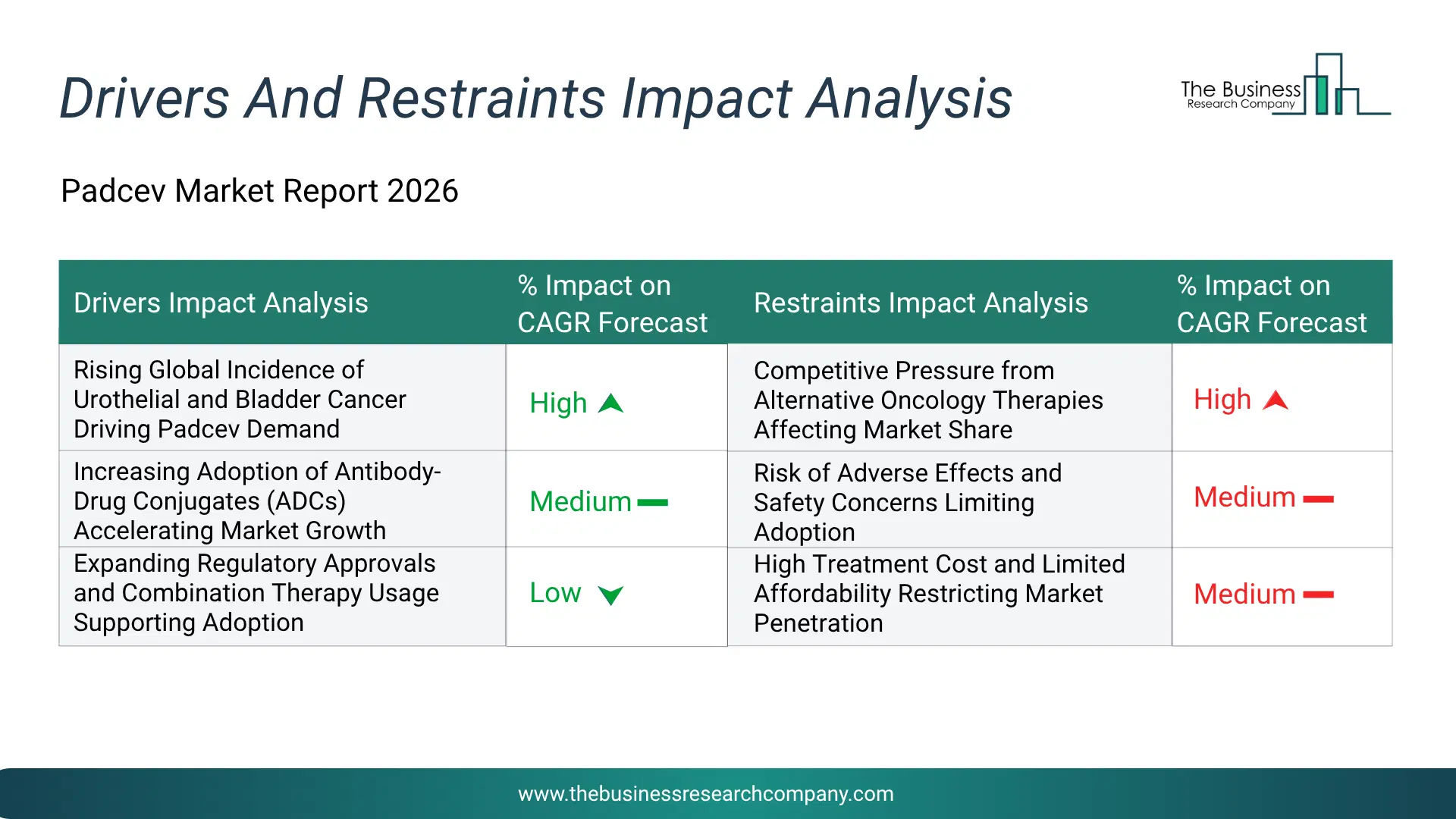
Infographic Chart Showing Key Market Drivers Analysis And Restraints For Padcev Market
The chart presents an impact analysis of key drivers and restraints, quantifying their relative influence on the market's growth rate and helping assess the balance between growth enablers and limiting factors. This chart offers a high-level perspective; the full report contains more detailed insights.
How Will The Drivers Impact Growth In The Global Padcev Market?
• Rising Global Incidence of Urothelial and Bladder Cancer Driving Padcev Demand (High) – During the forecast period, the rising global incidence of urothelial and bladder cancer is expected to become a key growth driver for the padcev market by 2030. Increasing disease burden associated with aging populations, smoking exposure, and lifestyle-related risk factors is contributing to a larger treatment-eligible patient pool. Healthcare systems are focusing on expanding access to advanced oncology therapies capable of improving disease management outcomes in patients with difficult-to-treat cancers. Growing awareness regarding early diagnosis and treatment intervention is further supporting therapy adoption. • Increasing Adoption of Antibody-Drug Conjugates (ADCs) Accelerating Market Growth (Medium) – During the forecast period, the increasing adoption of antibody-drug conjugates (ADCs) is expected to emerge as a major factor driving the expansion of the padcev market by 2030. Oncology treatment paradigms are increasingly shifting toward targeted therapies designed to enhance efficacy while minimizing systemic toxicity. ADC platforms are gaining strong clinical acceptance due to their ability to selectively deliver cytotoxic agents to cancer cells while improving therapeutic precision. Growing investments in oncology drug innovation and expanding physician familiarity with ADC technologies are further strengthening market expansion. • Expanding Regulatory Approvals and Combination Therapy Usage Supporting Adoption (Low) – During the forecast period, the expanding regulatory approvals and combination therapy usage are expected to act as a key growth catalyst for the padcev market by 2030. Broader therapeutic indications and increasing utilization alongside immunotherapy regimens are improving treatment flexibility across oncology care settings. Clinical advancements supporting multi-therapy treatment approaches are strengthening physician confidence and expanding patient access to novel oncology solutions. The increasing incorporation of combination treatment strategies into cancer management pathways is expected to further reinforce market demand.How Will The Restraints Impact Growth In The Global Padcev Market?
• Competitive Pressure from Alternative Oncology Therapies Affecting Market Share (High) – During the forecast period, the urothelial cancer treatment landscape is becoming increasingly competitive with the introduction of new immunotherapies, targeted therapies, biosimilars, and next-generation ADCs. Several pharmaceutical companies are actively developing innovative bladder cancer treatments with improved efficacy, safety, or cost profiles. Competition from immune checkpoint inhibitors and pipeline ADC therapies may reduce the long-term market dominance of Padcev. In addition, treatment guidelines may evolve as new clinical data emerges from competing therapies. This acts as a restraint because increasing therapeutic competition can limit pricing power, reduce market share growth, and create pressure on long-term commercial expansion. • Risk of Adverse Effects and Safety Concerns Limiting Adoption (Medium) – During the forecast period, the although Padcev has demonstrated strong efficacy, it is associated with several serious adverse effects including peripheral neuropathy, skin reactions, hyperglycemia, fatigue, and ocular toxicity. Some patients may require dose reductions, treatment interruptions, or discontinuation because of safety-related complications. Physicians must closely monitor patients during therapy, which increases treatment complexity and healthcare resource utilization. Safety concerns can also influence prescribing decisions, especially in elderly or medically fragile patients with advanced cancer. This acts as a restraint because the potential for severe side effects may reduce physician confidence and limit broader utilization in certain patient populations. • High Treatment Cost and Limited Affordability Restricting Market Penetration (Low) – During the forecast period, the padcev is a premium oncology biologic therapy with high treatment costs, which limits accessibility for many patients, especially in low- and middle-income countries. The overall therapy expense includes drug acquisition, hospital administration, monitoring, and management of treatment-related side effects, creating a substantial financial burden on healthcare systems and patients. In countries with limited reimbursement support, affordability challenges significantly reduce patient access to advanced ADC therapies. Even in developed markets, healthcare providers and insurers carefully evaluate cost-effectiveness before broad adoption. This acts as a restraint because high pricing limits widespread accessibility and slows commercial penetration in price-sensitive healthcare markets.Key Players In The Global Padcev Market
Major companies operating in the padcev market are Astellas Pharma Inc.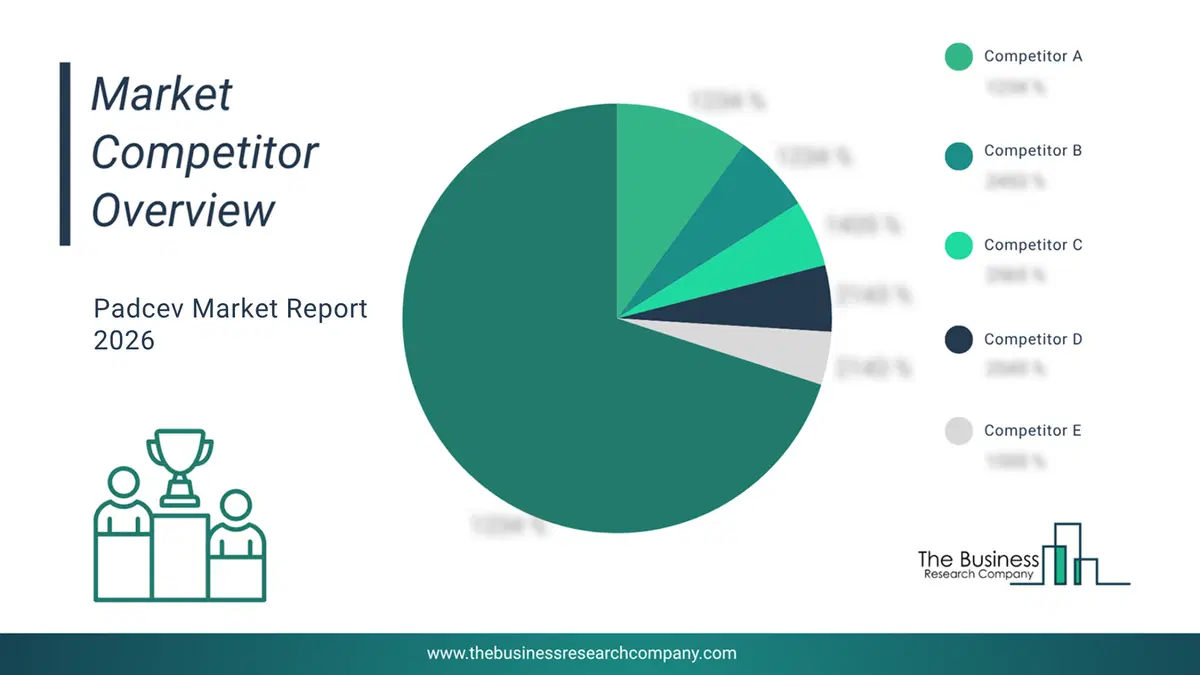
This chart is for illustrative purposes; the full report includes a detailed competitor analysis and comprehensive overview of the top 10 companies in the market.
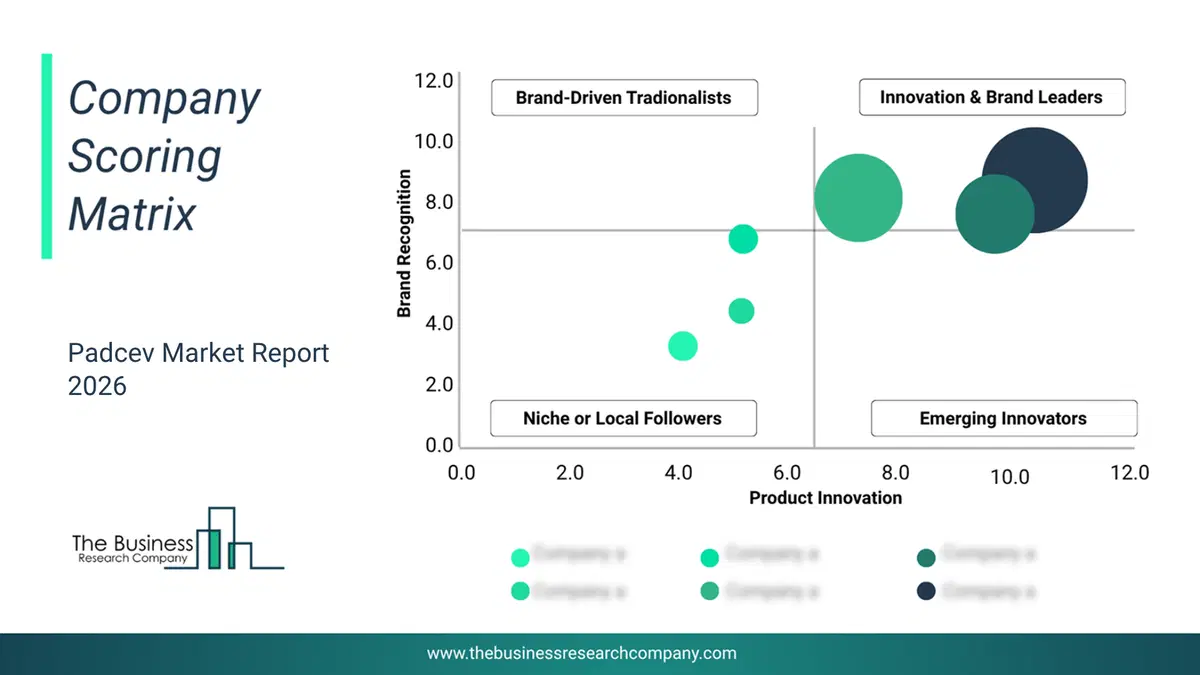
This chart maps companies by product innovation and brand strength, with bubble size indicating relative revenue, helping identify market leaders, challengers, and niche players. This is an illustrative chart; the full report provides a complete and accurate competitive analysis.
Global Padcev Market Trends and Insights
The key trend in the padcev market is the development of innovative therapies, such as combination therapy, to improve treatment efficacy and enhance patient outcomes in cancer care. Combination therapy involves using two or more treatments or drugs together to target a specific condition, thereby enhancing the overall therapeutic effect. For instance, in August 2024, Astellas Pharma Inc., a Japan-based pharmaceutical company, received approval from the European Commission for PADCEV (enfortumab vedotin, an antibody-drug conjugate [ADC]) in combination with KEYTRUDA (pembrolizumab, a PD-1 inhibitor). PADCEV (enfortumab vedotin) in combination with KEYTRUDA (pembrolizumab) is a treatment for advanced urothelial cancer. This combination leverages enfortumab vedotin's targeted therapy and KEYTRUDA's immune checkpoint inhibition to enhance anti-cancer efficacy.What Are Latest Mergers And Acquisitions In The Padcev Market?
In December 2023, Pfizer Inc., a US-based pharmaceutical company, acquired Seagen Inc. for $43 billion. The acquisition allows Pfizer to significantly expand its oncology portfolio by integrating Seagen's innovative cancer therapies, including four commercial drugs Adcetris, Padcev, Tukysa, and Tivdak. Seagen Inc. is a US-based biotechnology company specializing in innovative cancer treatments, including PADCEV (enfortumab vedotin).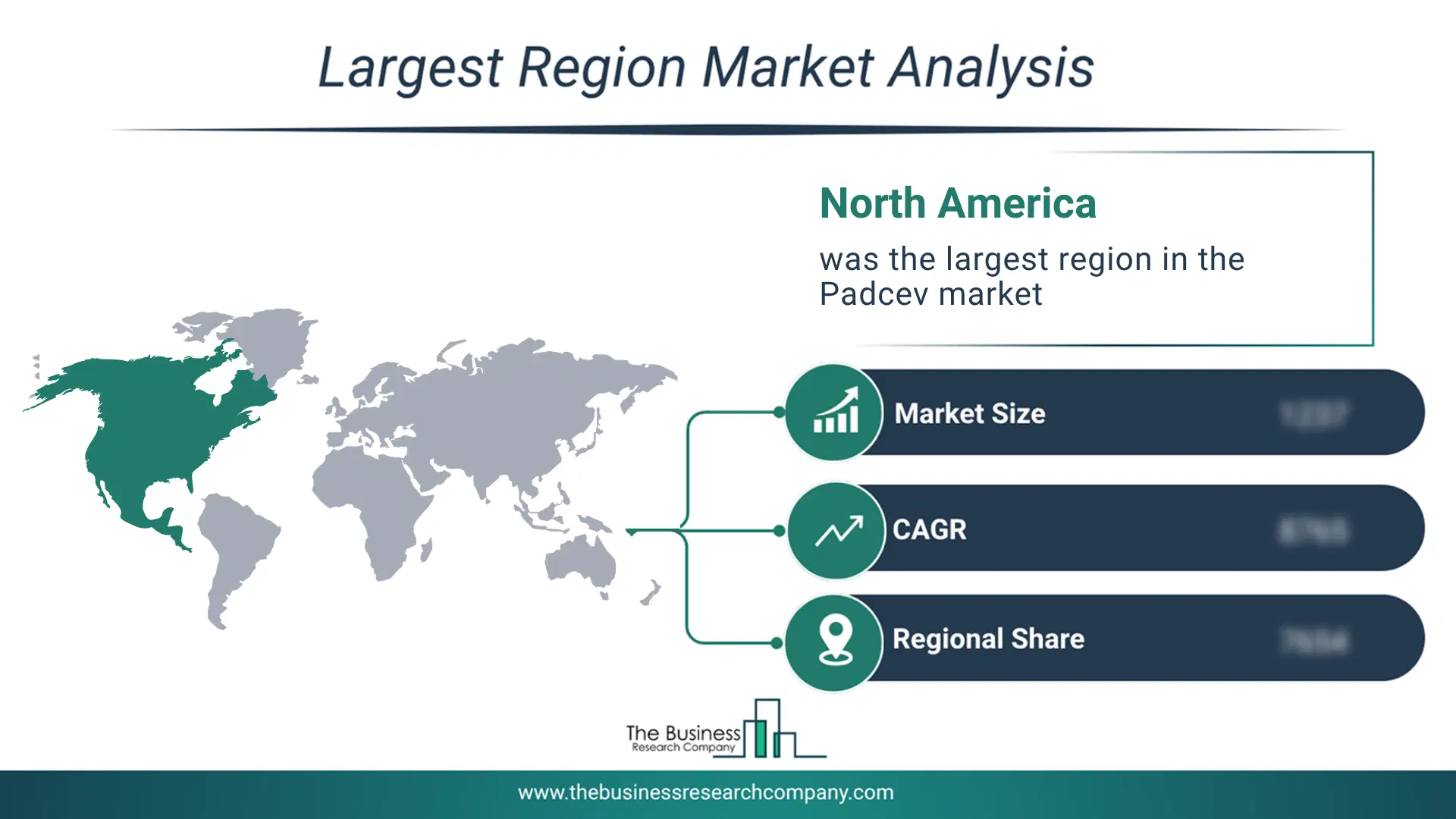
Regional Insights
North America was the largest region in the padcev market in 2025. Asia-Pacific is expected to be the fastest-growing region in the forecast period. The regions covered in this market report are Asia-Pacific, Western Europe, Eastern Europe, North America, South America, Middle East, Africa. The countries covered in this market report are Australia, India, China, South Korea, Japan, UK, France, Germany, USA, Canada.What Defines the Padcev Market?
The padcev market consists of sales of single-dose vials and multi-dose vials. Values in this market are ‘factory gate’ values, that is, the value of goods sold by the manufacturers or creators of the goods, whether to other entities (including downstream manufacturers, wholesalers, distributors, and retailers) or directly to end customers. The value of goods in this market includes related services sold by the creators of the goodsHow is Market Value Defined and Measured?
The market value is defined as the revenues that enterprises gain from the sale of goods and/or services within the specified market and geography through sales, grants, or donations in terms of the currency (in USD unless otherwise specified). The revenues for a specified geography are consumption values that are revenues generated by organizations in the specified geography within the market, irrespective of where they are produced. It does not include revenues from resales along the supply chain, either further along the supply chain or as part of other products.
This chart presents market attractiveness based on a quantitative evaluation of growth, competition, strategic alignment, and risk, offering a clear view of opportunity areas for decision-making. This chart is for illustrative purposes; the full report contains the complete analysis.

This chart highlights the Total Addressable Market (TAM) by estimating the maximum revenue opportunity using an assumption-driven approach, supporting strategic planning and opportunity sizing across markets. The chart is illustrative; the full report provides a more comprehensive analysis.
What Key Data and Analysis Are Included in the Padcev Market Report 2026?
The padcev market research report is one of a series of new reports from The Business Research Company that provides market statistics, including industry global market size, regional shares, competitors with the market share, detailed market segments, market trends and opportunities, and any further data you may need to thrive in the padcev industry. The market research report delivers a complete perspective of everything you need, with an in-depth analysis of the current and future state of the industry.Padcev Market Report Forecast Analysis
| Report Attribute | Details |
|---|---|
| Market Size Value In 2026 | $ billion |
| Revenue Forecast In 2030 | $ billion |
| Growth Rate | No CAGR found from 2026 to 2030 |
| Base Year For Estimation | 2025 |
| Actual Estimates/Historical Data | 2020-2025 |
| Forecast Period | 2026 - 2030 |
| Market Representation | Revenue in USD Billion and CAGR from 2026 to 2030 |
| Segments Covered | Clinical Indication, Distribution Channel, End-User |
| Regional Scope | Asia-Pacific, Western Europe, Eastern Europe, North America, South America, Middle East, Africa |
| Country Scope | The countries covered in the report are Australia, Brazil, China, France, Germany, India, Indonesia, Japan, Taiwan, Russia, South Korea, UK, USA, Canada, Italy, Spain. |
| Key Companies Profiled | Astellas Pharma Inc. |
| Customization Scope | Request for Customization |
| Pricing And Purchase Options | Explore Purchase Options |