
Palm Oil Market Report 2026
Global Outlook – By Product (Crude Palm Oil, RBD Palm Oil), By Nature (Organic, Conventional), By End Use (Food And Beverage, Personal Care And Cosmetics, Biofuel And Energy, Pharmaceutical, Industrial) – Market Size, Trends, Strategies, and Forecast to 2030
Palm Oil Market Overview
• Palm Oil market size has reached to $69.46 billion in 2025 • Expected to grow to $88.15 billion in 2030 at a compound annual growth rate (CAGR) of 4.9% • Growth Driver: Increasing Demand From The Biofuel Industry Fuels The Palm Oil Market Growth • Asia-Pacific was the largest region in 2025 and North America is the fastest growing region.Market Gains By 2030 – Top Opportunities By Segment
Market Gain identifies the most promising market opportunities by highlighting the segments or products expected to generate the highest incremental revenue growth over the next five years.
What Is Covered Under Palm Oil Market?
Palm oil is an edible vegetable oil that is extracted from palm fruits that are used as a moisturizing solution and also for cooking healthy recipes. It is also utilized in detergents, cosmetics, biodiesel, and culinary goods. The main types of palm oil are crude palm oil and RBD palm oil. Crude palm oil refers to a type of edible oil that is obtained from the pulp of palm fruit. They are produced by methods including organic and conventional that are used in various industries such as food and beverage, personal care and cosmetics, biofuel and energy, pharmaceuticals, and industrial.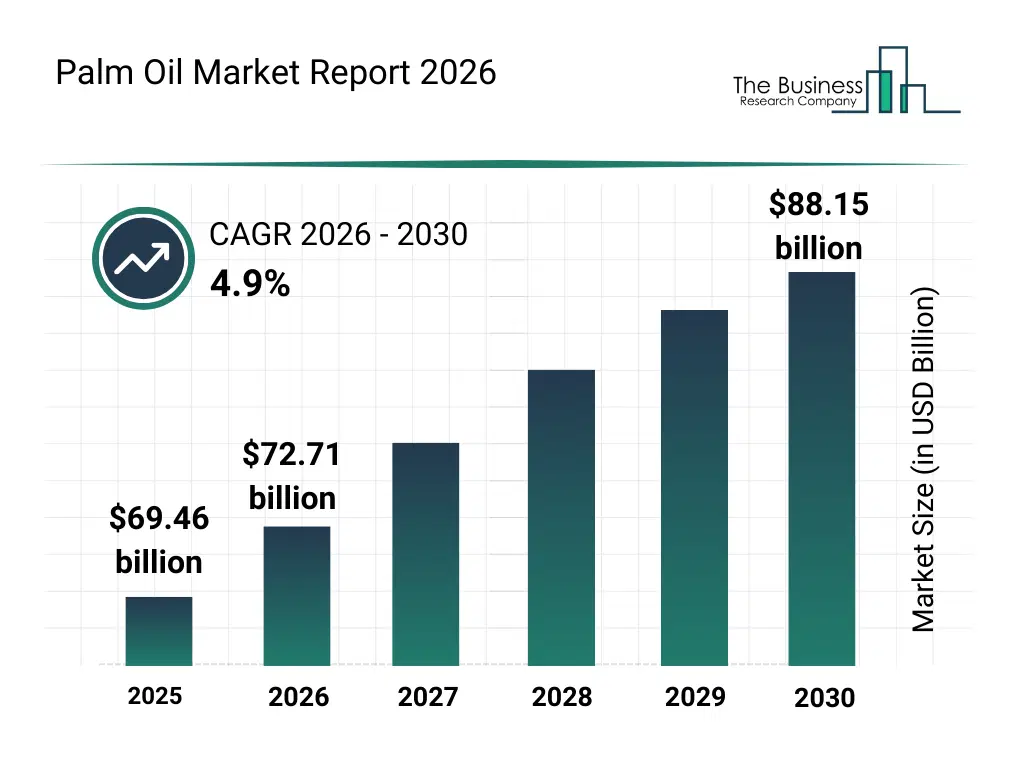
What Is The Palm Oil Market Size and Share 2026?
The palm oil market size has grown steadily in recent years. It will grow from $69.46 billion in 2025 to $72.71 billion in 2026 at a compound annual growth rate (CAGR) of 4.7%. The growth in the historic period can be attributed to expansion of palm plantation acreage, rising global edible oil consumption, growth in personal care product manufacturing, increasing use in industrial applications, development of large-scale refining infrastructure.What Is The Palm Oil Market Growth Forecast?
The palm oil market size is expected to see steady growth in the next few years. It will grow to $88.15 billion in 2030 at a compound annual growth rate (CAGR) of 4.9%. The growth in the forecast period can be attributed to increasing demand for sustainable oils, rising biofuel blending mandates, expansion of certified supply chains, growing investments in plantation modernization, increasing adoption of digital plantation management tools. Major trends in the forecast period include increasing adoption of certified sustainable palm oil, rising demand for biofuel-grade palm oil, growing integration of traceability systems, expansion of downstream refining capacity, enhanced focus on yield optimization.
Global Palm Oil Market Segmentation
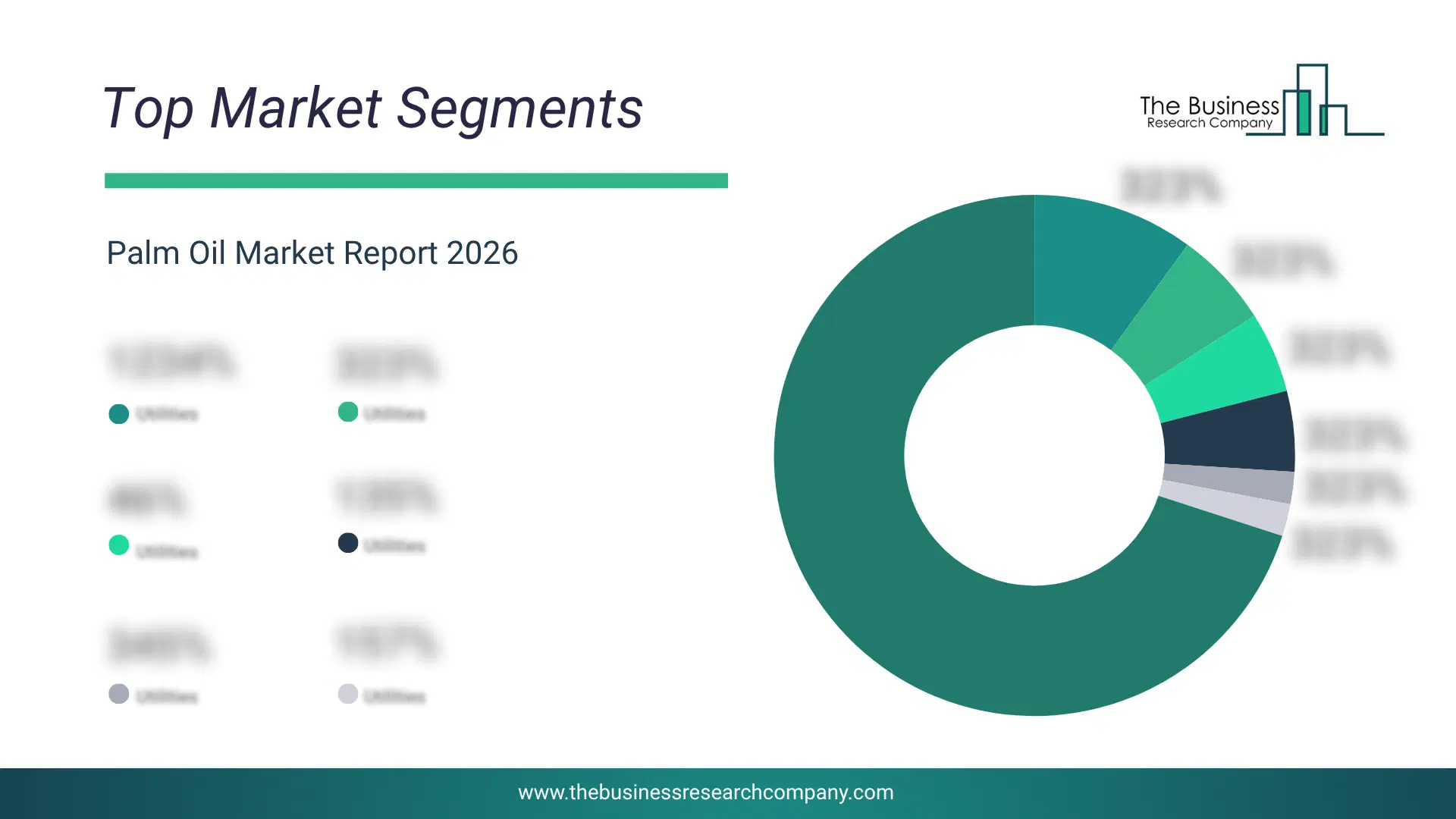
1) By Product: Crude Palm Oil, RBD Palm Oil 2) By Nature: Organic, Conventional 3) By End Use: Food And Beverage, Personal Care And Cosmetics, Biofuel And Energy, Pharmaceutical, Industrial Subsegments: 1) By Crude Palm Oil (CPO): Raw Crude Palm Oil, Unrefined Crude Palm Oil 2) By RBD Palm Oil: RBD Palm Olein, RBD Palm Stearin The top segments in the palm oil market will be: • Crude Palm Oil (CPO) will reach $48.7 Billion by 2030. • RBD Palm Oil (Refined, Bleached & Deodorized Palm Oil) will reach $39.08 Billion by 2030.What Are The Drivers Of The Palm Oil Market?
Increasing demand from the biofuel industry is expected to propel the growth of the palm oil market going forward. Biofuel is the same as any type of fuel that is produced from biomass, also known as organic matter. Biofuel can be produced from palm oil through a process called transesterification, in which the oil is converted into biodiesel, palm oil is a popular feedstock for biodiesel production due to its high yield and availability, which improves air quality. For instance, in September 2025, according to GOV.UK, a UK-based public sector website, in 2023, 153 million liters of biofuel for the UK road transport market were produced from UK-grown crops. Therefore, increasing demand from the biofuel industry is driving the growth of the palm oil industry. The increasing global trade is expected to boost the growth of the palm oil market going forward. Global trade refers to the exchange of goods, services, and capital across international borders, involving the import and export activities of countries, businesses, and individuals on a global scale. Global trade broadens the customer base for palm oil producers, reducing reliance on specific markets, thereby promoting market stability and fostering economic growth, job creation, and sectoral investment in producing countries. For instance, in September 2023, according to a report published by the United Nations Conference on Trade and Development, a Switzerland-based intergovernmental organization, maritime trade is anticipated to increase by 2.4% in 2023 and by more than 2% from 2024 to 2028. As pandemic constraints loosened the oil and gas trades in the energy sector increased by 6.0% and 4.6%, respectively, in 2022. Therefore, the increasing global trade is driving the growth of the palm oil industry.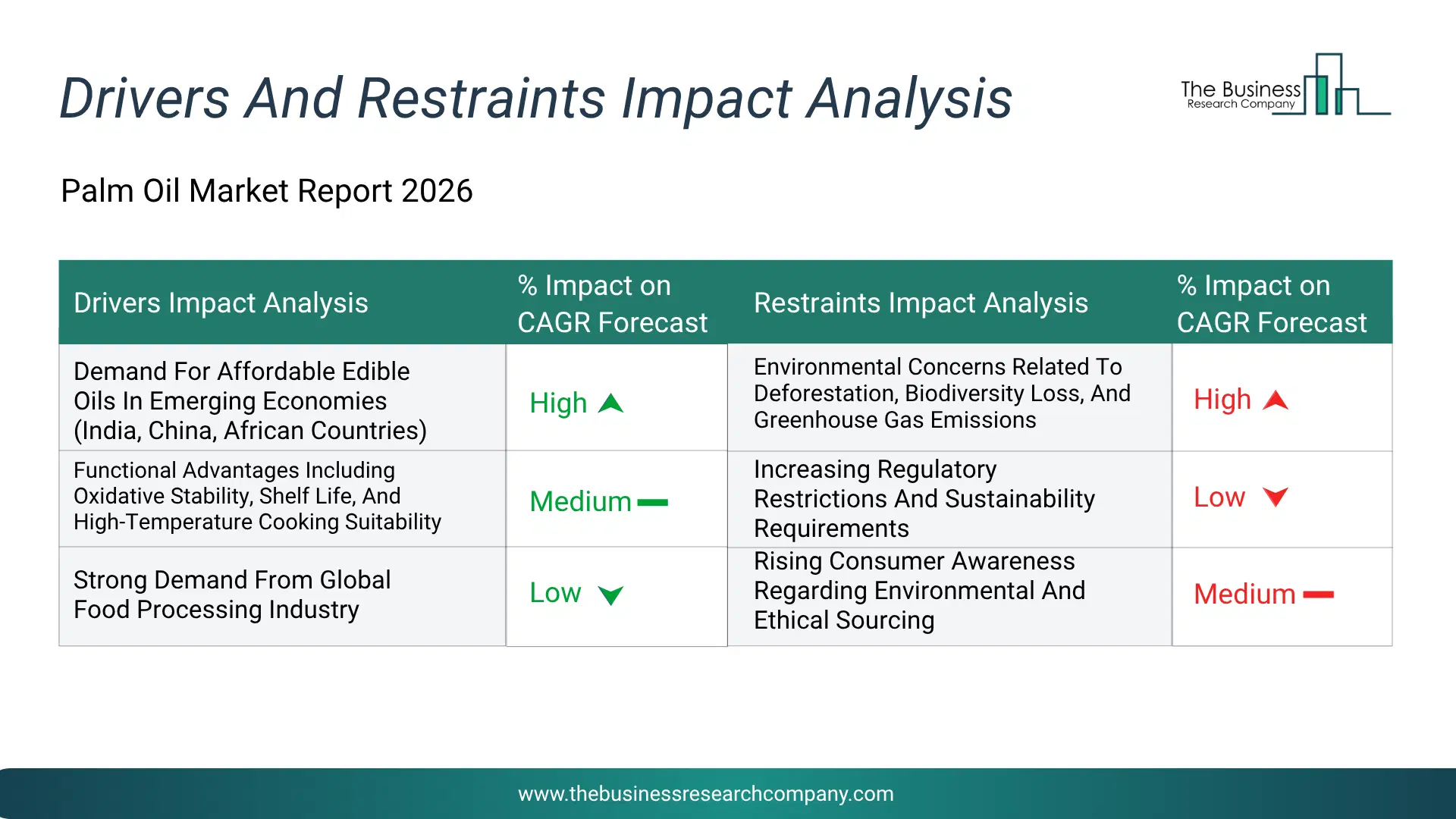
Infographic Chart Showing Key Market Drivers Analysis And Restraints For Palm Oil Market
The chart presents an impact analysis of key drivers and restraints, quantifying their relative influence on the market's growth rate and helping assess the balance between growth enablers and limiting factors. This chart offers a high-level perspective; the full report contains more detailed insights.
How Will The Drivers Impact Growth In The Global Palm Oil Market?
• Demand For Affordable Edible Oils In Emerging Economies (India, China, African Countries) (High) – During the forecast period, the increasing demand for affordable edible oils in emerging economies is expected to become a key growth driver for the palm oil market by 2030. Rapid population growth, rising urbanization, and improving disposable incomes in countries such as India, China, and several African nations are increasing consumption of low-cost cooking oils and processed food products. Palm oil remains one of the most economical vegetable oils due to its high yield efficiency and competitive pricing compared to soybean and sunflower oils. Food manufacturers and households are therefore increasingly adopting palm oil to manage production and consumption costs. This rising preference for affordable edible oils is reinforcing stable market expansion. • Functional Advantages Including Oxidative Stability, Shelf Life, And High-Temperature Cooking Suitability (Medium) – During the forecast period, the functional advantages including oxidative stability, shelf life, and high-temperature cooking suitability are expected to emerge as major factors driving the expansion of the palm oil market by 2030. Palm oil offers superior heat resistance and longer storage stability compared to several alternative vegetable oils, making it highly suitable for frying, bakery, confectionery, and packaged food applications. Its semi-solid nature and versatile composition also enable efficient use across multiple industrial and food processing operations. Manufacturers are increasingly utilizing palm oil to improve product consistency, reduce spoilage risks, and enhance operational efficiency in large-scale production environments. • Strong Demand From Global Food Processing Industry (Low) – During the forecast period, the strong demand from the global food processing industry is expected to act as a key growth catalyst for the palm oil market by 2030. The expanding production of packaged foods, instant snacks, bakery products, confectionery items, and ready-to-eat meals is increasing the requirement for versatile and cost-efficient vegetable oils in manufacturing operations. Palm oil is widely preferred by food processors due to its consistent texture, neutral flavor profile, and suitability for large-scale industrial applications. In addition, rising investments in food manufacturing facilities across developing economies are further strengthening procurement demand for palm-based ingredients. As processed food consumption continues to expand globally, industrial utilization of palm oil is expected to rise steadily.How Will The Restraints Impact Growth In The Global Palm Oil Market?
• Environmental Concerns Related To Deforestation, Biodiversity Loss, And Greenhouse Gas Emissions (High) – During the forecast period, the environmental concerns pose a significant challenge to the edible oils market, particularly in the production of certain oil crops. Large-scale cultivation often leads to deforestation, which disrupts ecosystems and contributes to biodiversity loss. This environmental degradation raises serious sustainability issues and attracts criticism from environmental organizations and global institutions. Additionally, the production process is associated with greenhouse gas emissions, contributing to climate change. Increasing global focus on sustainability intensifies scrutiny on such practices. Companies face pressure to adopt environmentally responsible sourcing and production methods, which can increase operational costs. Negative public perception may also reduce consumer trust and demand. As a result, these environmental concerns act as a restraint on market expansion. • Increasing Regulatory Restrictions And Sustainability Requirements (Medium) – During the forecast period, the governments and international bodies are implementing stricter regulations to ensure sustainable production and sourcing of edible oils. These regulations often include certifications, traceability requirements, and environmental compliance standards. While these measures aim to promote sustainability, they also increase the complexity and cost of production for manufacturers. Companies must invest in compliance systems, audits, and sustainable sourcing practices. Smaller producers, in particular, may struggle to meet these requirements, limiting their market participation. Additionally, regulatory inconsistencies across regions can create trade barriers and supply chain disruptions. Compliance delays can also impact product availability. Therefore, increasing regulatory pressure acts as a restraint on market growth. • Rising Consumer Awareness Regarding Environmental And Ethical Sourcing (Low) – During the forecast period, the consumers are becoming more informed and conscious about the environmental and ethical implications of their purchasing decisions. This shift in awareness influences demand patterns, as consumers increasingly prefer sustainably sourced and ethically produced products. Negative perceptions associated with unsustainable practices can lead to reduced consumption of certain edible oils. Brands that fail to demonstrate transparency and responsibility may lose market share. This trend also forces companies to invest in sustainable certifications and marketing strategies, increasing overall costs. Additionally, misinformation or negative publicity can amplify consumer concerns. As consumer expectations continue to evolve, companies must adapt quickly to maintain competitiveness. Hence, rising awareness acts as a restraint by challenging traditional production practices.Key Players In The Global Palm Oil Market
Major companies operating in the palm oil market are Wilmar International Ltd, Sime Darby Plantation Berhad, IOI Corporation Berhad, Kuala Lumpur Kepong Berhad, United Plantations Berhad, Kulim Berhad, PP London Sumatra Indonesia, The Archer-Daniels-Midland Company, Asian Agri, Cargill Inc., Godrej Agrovet Limited, Golden Agri Resources Limited, IJM Corporation Berhad, Boustead Plantations, Asiatic Development Berhad, PT Sampoerna Agro Tbk, Univanich Palm Oil Public Company Ltd., PT. Bakrie Sumatera Plantations tbk, Musim Mas Group, Astra Agro Lestari Tbk, Genting Plantations Berhad, Felda Global Ventures Holdings Berhad, First Resources Limited, PT Astra Agro Lestari Tbk, Darmex Agro Group, Salim Ivomas Pratama Tbk, Sipef, Bumitama Agri Ltd., PT Dharma Satya Nusantara Tbk, Fuji Oil Holdings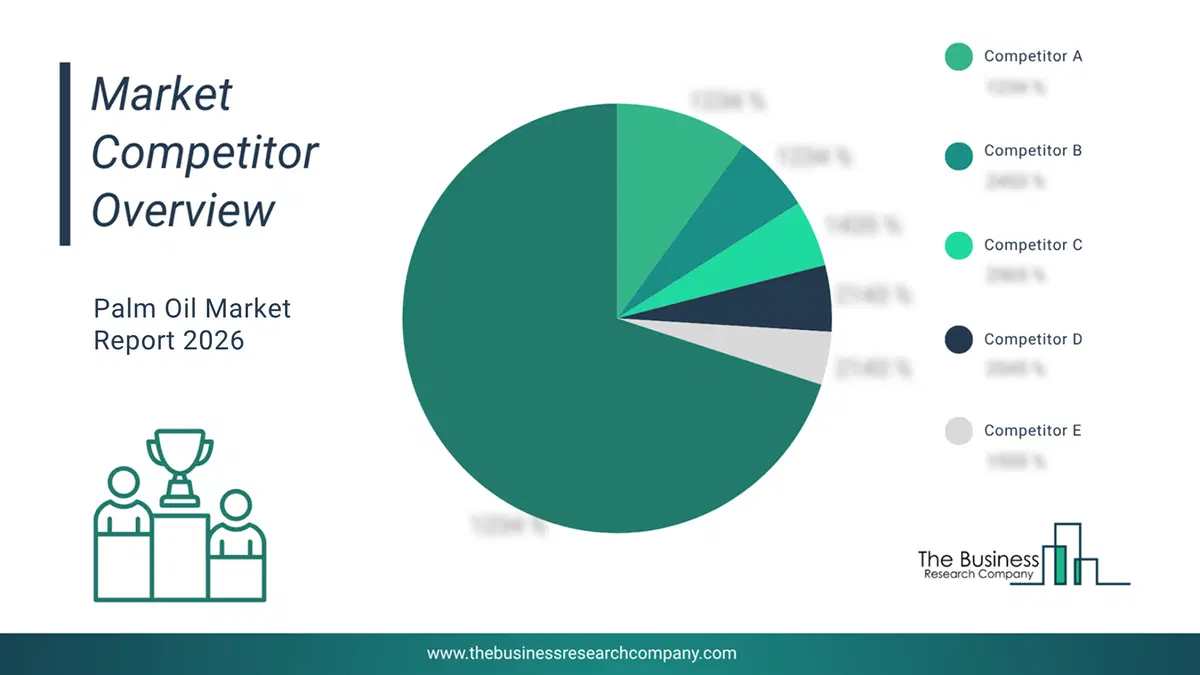
This chart is for illustrative purposes; the full report includes a detailed competitor analysis and comprehensive overview of the top 10 companies in the market.
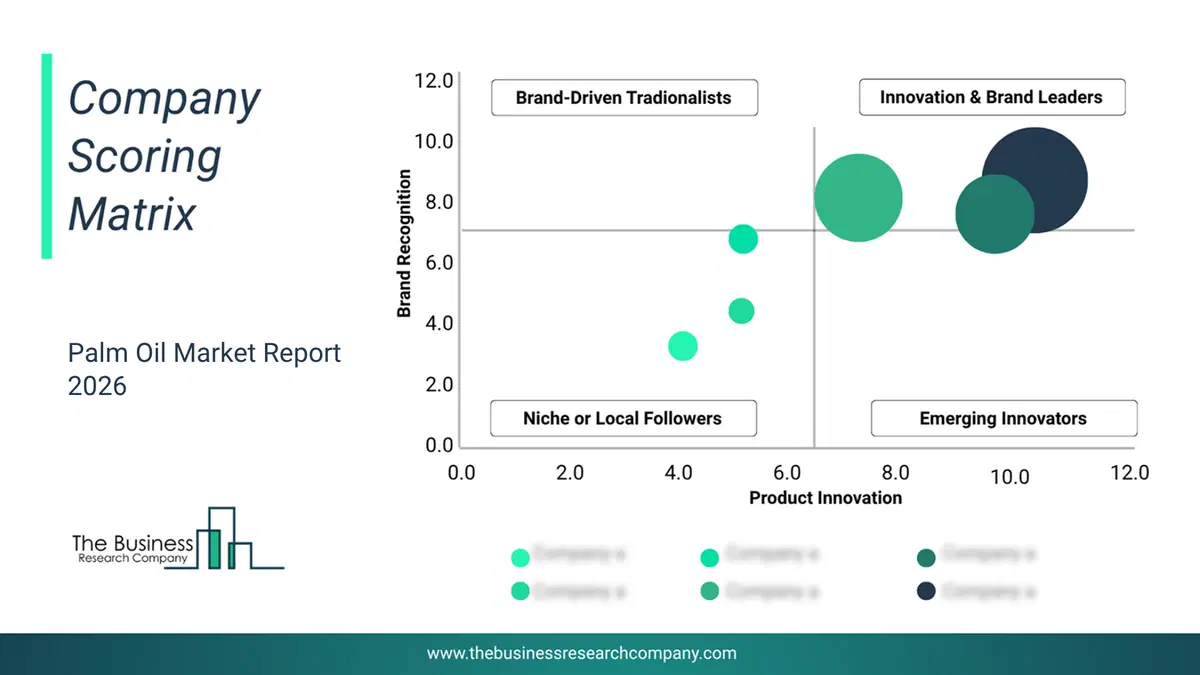
This chart maps companies by product innovation and brand strength, with bubble size indicating relative revenue, helping identify market leaders, challengers, and niche players. This is an illustrative chart; the full report provides a complete and accurate competitive analysis.
What Are Latest Mergers And Acquisitions In The Palm Oil Market?
In April 2024, IRGA, a Malaysia-based agritech company that provides solutions for plantation crops and organic farms, acquired Kingoya Enterprise Sdn. Bhd. for an undisclosed amount. With this acquisition, IRGA aims to enhance its market position, expand its product offerings, and leverage synergies to drive innovation in the agricultural sector. Kingoya Enterprise Sdn. is a Malaysia-based company manufacturing a variety of products, often focusing on agricultural and industrial supplies.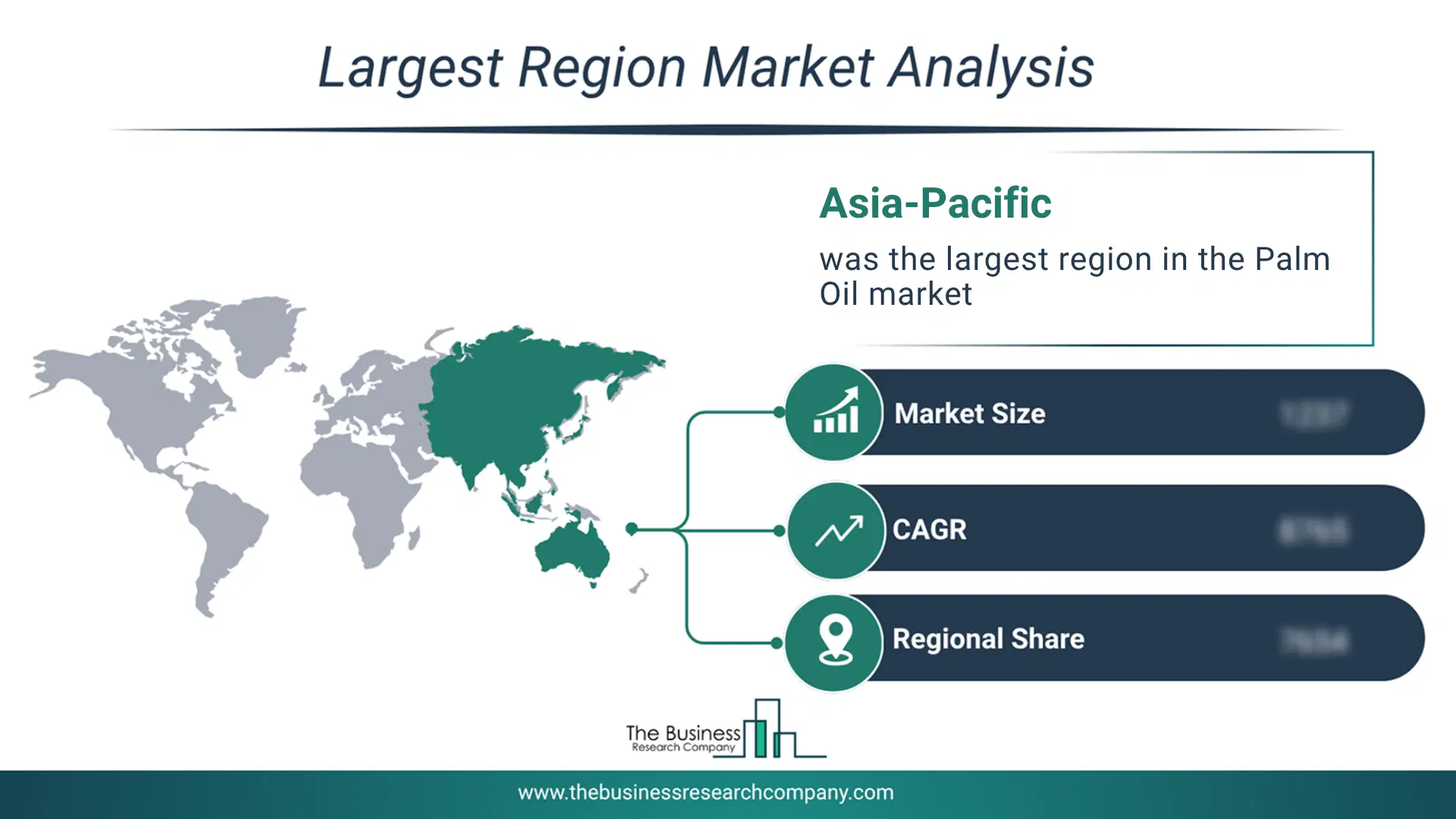
Regional Outlook
Asia-Pacific was the largest region in the palm oil market in 2025. North America is expected to be the fastest-growing region in the palm oil market report during the forecast period. The regions covered in this market report are Asia-Pacific, South East Asia, Western Europe, Eastern Europe, North America, South America, Middle East and Africa. The countries covered in this market report are Australia, Brazil, China, France, Germany, India, Indonesia, Japan, Taiwan, Russia, South Korea, UK, USA, Italy, Spain, CanadaWhat Defines the Palm Oil Market?
The palm oil market consists of sales of palm kernel oil, and fractionated palm oil. Values in this market are ‘factory gate’ values, that is the value of goods sold by the manufacturers or creators of the goods, whether to other entities (including downstream manufacturers, wholesalers, distributors, and retailers) or directly to end customers. The value of goods in this market includes related services sold by the creators of the goods.How is Market Value Defined and Measured?
The market value is defined as the revenues that enterprises gain from the sale of goods and/or services within the specified market and geography through sales, grants, or donations in terms of the currency (in USD unless otherwise specified). The revenues for a specified geography are consumption values that are revenues generated by organizations in the specified geography within the market, irrespective of where they are produced. It does not include revenues from resales along the supply chain, either further along the supply chain or as part of other products.
This chart presents market attractiveness based on a quantitative evaluation of growth, competition, strategic alignment, and risk, offering a clear view of opportunity areas for decision-making. This chart is for illustrative purposes; the full report contains the complete analysis.

This chart highlights the Total Addressable Market (TAM) by estimating the maximum revenue opportunity using an assumption-driven approach, supporting strategic planning and opportunity sizing across markets. The chart is illustrative; the full report provides a more comprehensive analysis.
What Key Data and Analysis Are Included in the Palm Oil Market Report 2026?
The palm oil market research report is one of a series of new reports from The Business Research Company that provides market statistics, including industry global market size, regional shares, competitors with the market share, detailed market segments, market trends and opportunities, and any further data you may need to thrive in the palm oil industry. The market research report delivers a complete perspective of everything you need, with an in-depth analysis of the current and future state of the industry.Palm Oil Market Report Forecast Analysis
| Report Attribute | Details |
|---|---|
| Market Size Value In 2026 | $72.71 billion |
| Revenue Forecast In 2030 | $88.15 billion |
| Growth Rate | CAGR of 4.7% from 2026 to 2030 |
| Base Year For Estimation | 2025 |
| Actual Estimates/Historical Data | 2020-2025 |
| Forecast Period | 2026 - 2030 |
| Market Representation | Revenue in USD Billion and CAGR from 2026 to 2030 |
| Segments Covered | Product, Nature, End Use |
| Regional Scope | Asia-Pacific, Western Europe, Eastern Europe, North America, South America, Middle East, Africa |
| Country Scope | The countries covered in the report are Australia, Brazil, China, France, Germany, India, Indonesia, Japan, Taiwan, Russia, South Korea, UK, USA, Canada, Italy, Spain. |
| Key Companies Profiled | Wilmar International Ltd, Sime Darby Plantation Berhad, IOI Corporation Berhad, Kuala Lumpur Kepong Berhad, United Plantations Berhad, Kulim Berhad, PP London Sumatra Indonesia, The Archer-Daniels-Midland Company, Asian Agri, Cargill Inc., Godrej Agrovet Limited, Golden Agri Resources Limited, IJM Corporation Berhad, Boustead Plantations, Asiatic Development Berhad, PT Sampoerna Agro Tbk, Univanich Palm Oil Public Company Ltd., PT. Bakrie Sumatera Plantations tbk, Musim Mas Group, Astra Agro Lestari Tbk, Genting Plantations Berhad, Felda Global Ventures Holdings Berhad, First Resources Limited, PT Astra Agro Lestari Tbk, Darmex Agro Group, Salim Ivomas Pratama Tbk, Sipef, Bumitama Agri Ltd., PT Dharma Satya Nusantara Tbk, Fuji Oil Holdings |
| Customization Scope | Request for Customization |
| Pricing And Purchase Options | Explore Purchase Options |