
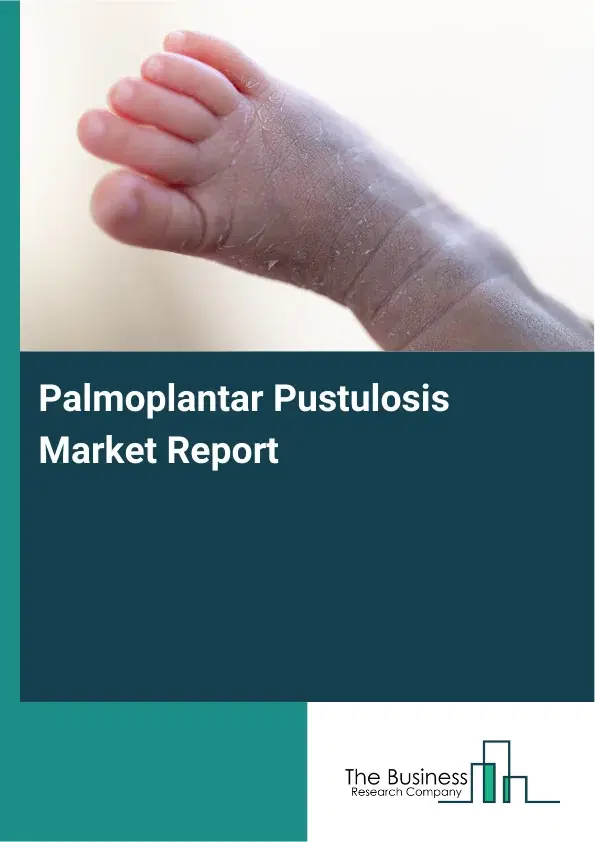
Palmoplantar Pustulosis Market Report 2026
Global Outlook – By Treatment Type (Topical Treatments, Systemic Treatments, Biologics, Phototherapy), By Distribution Channel (Online Pharmacies, Retail Pharmacies), By Application (Hospitals, Dermatology Clinics, Homecare Settings) - Market Size, Trends, Strategies, and Forecast to 2030
Palmoplantar Pustulosis Market Overview
• Palmoplantar Pustulosis market size has reached to $2.09 billion in 2025 • Expected to grow to $3.03 billion in 2030 at a compound annual growth rate (CAGR) of 7.6% • Growth Driver: Rising Incidence Of Skin Disorders Driving Growth In The Market Due To Environmental And Lifestyle Factors • Market Trend: Advancements In Monoclonal Antibody Therapies For Inflammatory Skin Conditions • North America was the largest region in 2025.What Is Covered Under Palmoplantar Pustulosis Market?
Palmoplantar pustulosis is a chronic skin condition characterized by the formation of pustules (small, pus-filled blisters) on the palms of the hands and soles of the feet. It often leads to redness, scaling, and thickened skin in these areas. The condition can be painful and is usually associated with other skin diseases, like psoriasis. The main treatment types of palmoplantar pustulosis are topical treatments, systemic treatments, biologics, and phototherapy. Topical treatments help reduce inflammation, control symptoms, and prevent flare-ups using corticosteroids, vitamin D analogs, calcineurin inhibitors, keratolytics, or coal tar. These treatments are used in various settings, including hospitals, dermatology clinics, and homecare settings, and are distributed through multiple channels such as online pharmacies, retail pharmacies, and hospitals.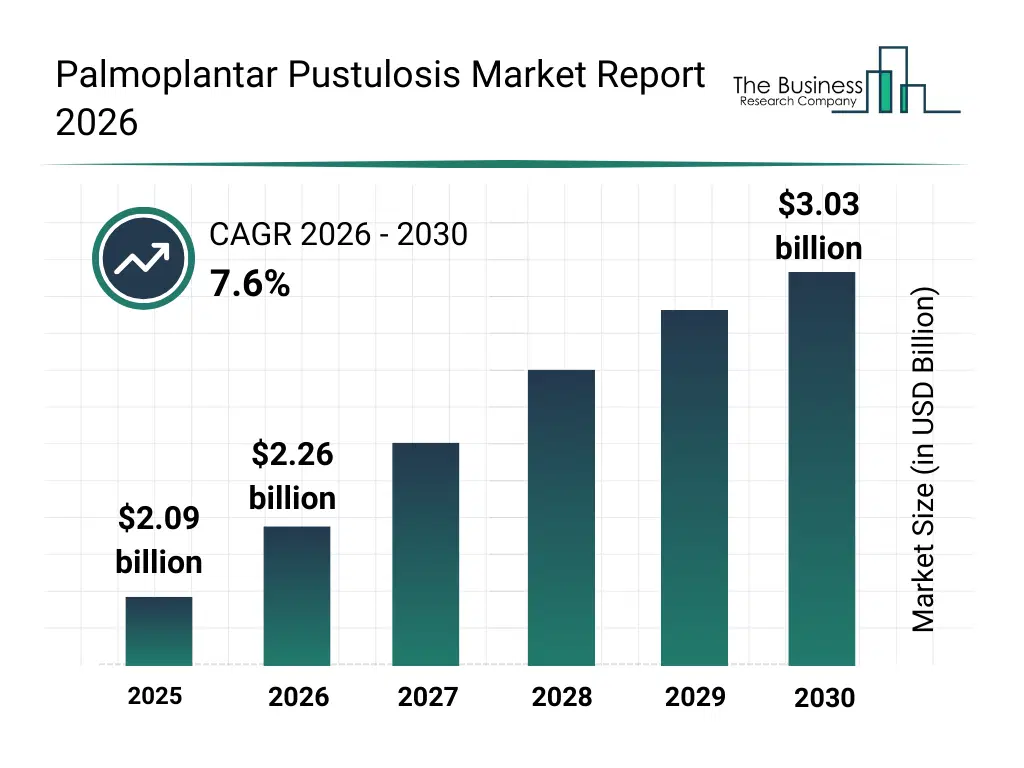
What Is The Palmoplantar Pustulosis Market Size and Share 2026?
The palmoplantar pustulosis market size has grown strongly in recent years. It will grow from $2.09 billion in 2025 to $2.26 billion in 2026 at a compound annual growth rate (CAGR) of 7.8%. The growth in the historic period can be attributed to limited treatment options for chronic skin conditions, reliance on corticosteroids and topical agents, delayed diagnosis of pustular psoriasis, low patient awareness about disease management, hospital-centric care delivery.What Is The Palmoplantar Pustulosis Market Growth Forecast?
The palmoplantar pustulosis market size is expected to see strong growth in the next few years. It will grow to $3.03 billion in 2030 at a compound annual growth rate (CAGR) of 7.6%. The growth in the forecast period can be attributed to emergence of novel biologics and systemic therapies, increasing adoption of targeted immunomodulators, growth in teledermatology and digital health platforms, expansion of home-based phototherapy adoption, increasing online and retail pharmacy penetration. Major trends in the forecast period include rising adoption of biologic therapies, increasing use of targeted immunomodulators, expansion of home-based phototherapy solutions, integration of teledermatology for chronic skin disorders, growth in online pharmacy access for treatments.
Global Palmoplantar Pustulosis Market Segmentation
1) By Treatment Type: Topical Treatments, Systemic Treatments, Biologics, Phototherapy 2) By Distribution Channel: Online Pharmacies, Retail Pharmacies 3) By Application: Hospitals, Dermatology Clinics, Homecare Settings Subsegments: 1) By Topical Treatments: Corticosteroids, Vitamin D Analogues, Calcineurin Inhibitors, Keratolytics 2) By Systemic Treatments: Retinoids, Immunosuppressants, Phosphodiesterase-4 (PDE4) Inhibitors, Corticosteroids 3) By Biologics: Tumor Necrosis Factor (TNF) Inhibitors, Interleukin-17 (IL-17) Inhibitors, Interleukin-23 (IL-23) Inhibitors, Interleukin-12/23 (IL-12/23) Inhibitors 4) By Phototherapy: Narrowband UVB Therapy (NB-UVB), Psoralen plus Ultraviolet A (PUVA) Therapy, Excimer Laser Therapy, Targeted PhototherapyWhat Is The Driver Of The Palmoplantar Pustulosis Market?
The increasing incidence of skin disorders is expected to propel the growth of the palmoplantar pustulosis market going forward. Skin disorders refer to conditions that affect the skin's structure, function, or appearance. The increasing incidence of skin disorders is due to environmental changes, lifestyle habits, and genetic predisposition. Environmental factors such as air pollution, extreme weather conditions, and exposure to harmful chemicals can irritate the skin and lead to conditions like eczema or acne. Palmoplantar pustulosis is a chronic skin disorder that can significantly affect the skin on the palms of the hands and soles of the feet, leading to pustules, redness, and scaling, which can be managed through various treatments to improve skin health and alleviate discomfort. For instance, in December 2023, according to the National Institutes of Health (NIH), a U.S.-based organization operating as the U.S. government’s primary medical research agency, the global prevalence of atopic dermatitis reached 2.6%, affecting about 204 million people worldwide. Therefore, the increasing incidence of skin disorders drives growth in the palmoplantar pustulosis industry.Key Players In The Global Palmoplantar Pustulosis Market
Major companies operating in the palmoplantar pustulosis market are Pfizer Inc., AbbVie Inc., Sanofi S.A., Bristol‑Myers Squibb Company, Novartis International AG, GlaxoSmithKline PLC (GSK), Amgen Inc., Chugai Pharmaceutical Co. Ltd., Janssen Pharmaceuticals Inc., Kyowa Kirin Co. Ltd., Almirall S.A., MorphoSys AG, MoonLake Immunotherapeutics AG, Aristea Therapeutics Inc., AnaptysBio Inc., Kamari Pharma Ltd., Johnson & Johnson, AstraZeneca, Eli Lilly and Company, Bayer AG, Merck & Co. Inc., UCB S.A., Boehringer Ingelheim International GmbH, Arcutis Biotherapeutics, Affibody AB, LEO Pharma A/S, Galderma, Incyte Corporation, Takeda Pharmaceutical Company Ltd., Roivant Sciences
This chart is for illustrative purposes; the full report includes a detailed competitor analysis and comprehensive overview of the top 10 companies in the market.
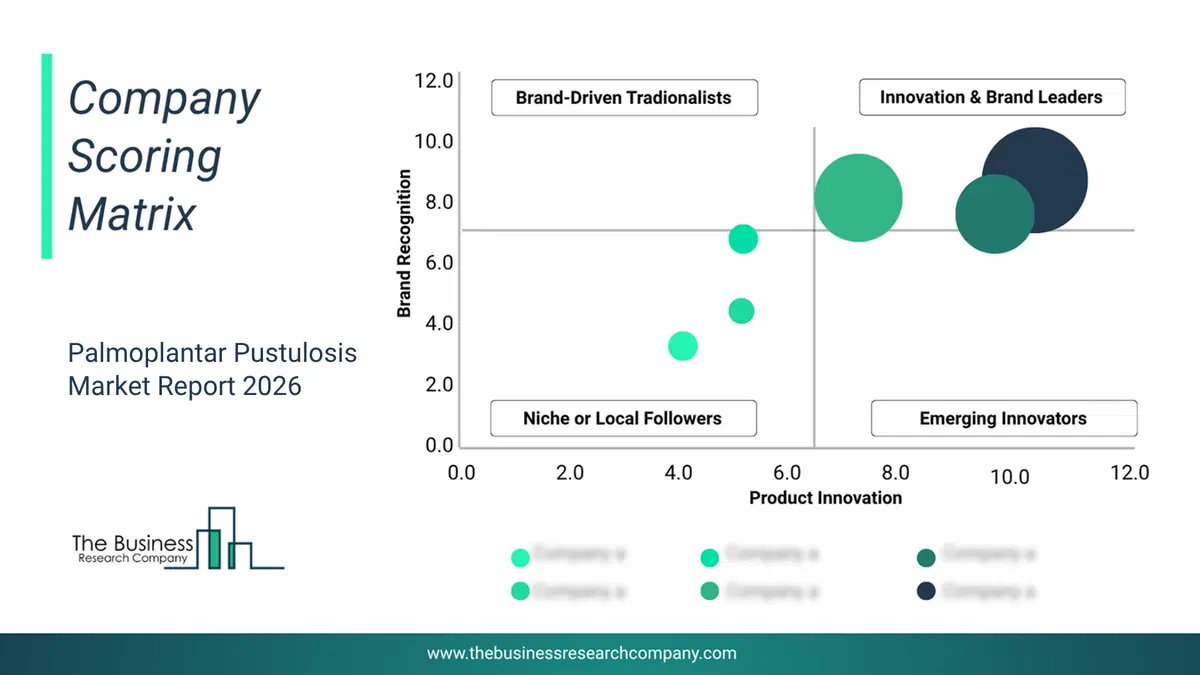
This chart maps companies by product innovation and brand strength, with bubble size indicating relative revenue, helping identify market leaders, challengers, and niche players. This is an illustrative chart; the full report provides a complete and accurate competitive analysis.
Global Palmoplantar Pustulosis Market Trends and Insights
Major companies operating in the palmoplantar pustulosis market are focusing on developing novel treatments, such as monoclonal antibodies targeting inflammatory pathways, to improve patient outcomes. A monoclonal antibody (mAb) is an identical antibody produced by a single clone of B cells, targeting a specific antigen for therapeutic or diagnostic use. For instance, in August 2023, Kyowa Kirin Co., Ltd., a Japan-based pharmaceutical company, received a partial change approval of LUMICEF for palmoplantar pustulosis in Japan. LUMICEF is a targeted therapy that blocks IL-17, offering rapid and sustained relief for inflammatory conditions such as psoriasis and palmoplantar pustulosis. Its purpose is to reduce inflammation and improve the quality of life for patients with these chronic diseases.What Are Latest Mergers And Acquisitions In The Palmoplantar Pustulosis Market?
In October 2024, Organon & Co., a US-based pharmaceutical company, acquired Dermavant Sciences Ltd. for an undisclosed amount. With this acquisition, Organon aims to enhance its dermatology portfolio and improve women's health by providing innovative treatments for chronic skin conditions. Dermavant Sciences Ltd. is a US-based pharma company focused on developing innovative treatments for immuno-dermatological conditions, mainly targeting unmet needs in areas like plaque psoriasis and atopic dermatitis.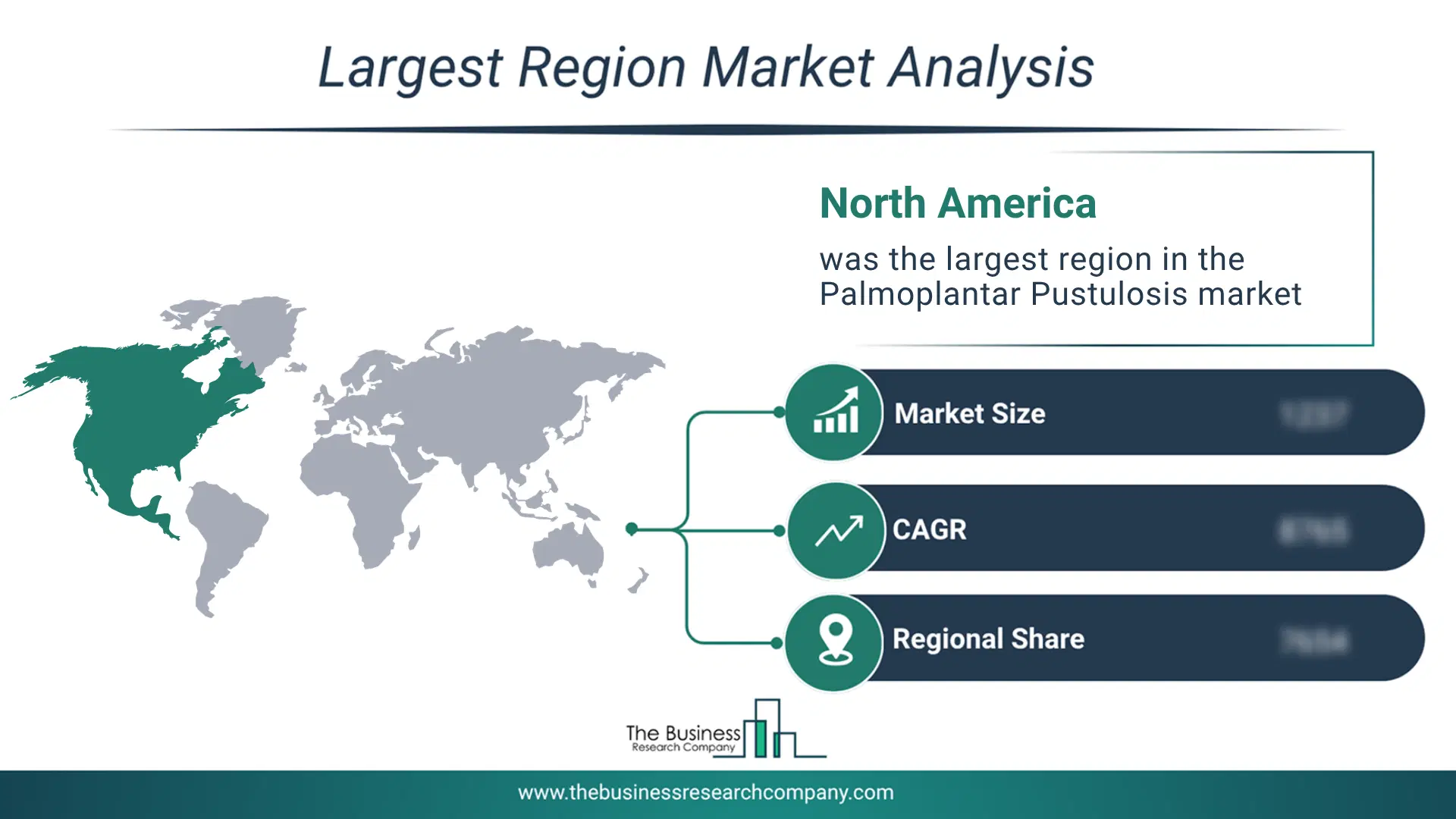
Regional Outlook
North America was the largest region in the palmoplantar pustulosis market in 2025. The regions covered in this market report are Asia-Pacific, South East Asia, Western Europe, Eastern Europe, North America, South America, Middle East, Africa. The countries covered in this market report are Australia, Brazil, China, France, Germany, India, Indonesia, Japan, Taiwan, Russia, South Korea, UK, USA, Canada, Italy, Spain.What Defines the Palmoplantar Pustulosis Market?
The palmoplantar pustulosis market consists of revenues earned by entities by providing services such as personalized skincare and counseling, phototherapy services, pharmacological treatment services, and diagnosis services. The market value includes the value of related goods sold by the service provider or included within the service offering. The palmoplantar pustulosis market also includes sales of phototherapy devices, oral systemic therapies, medicated skincare products, topical corticosteroids. Values in this market are ‘factory gate’ values, that is the value of goods sold by the manufacturers or creators of the goods, whether to other entities (including downstream manufacturers, wholesalers, distributors and retailers) or directly to end customers. The value of goods in this market includes related services sold by the creators of the goods.How is Market Value Defined and Measured?
The market value is defined as the revenues that enterprises gain from the sale of goods and/or services within the specified market and geography through sales, grants, or donations in terms of the currency (in USD unless otherwise specified). The revenues for a specified geography are consumption values that are revenues generated by organizations in the specified geography within the market, irrespective of where they are produced. It does not include revenues from resales along the supply chain, either further along the supply chain or as part of other products.
This chart presents market attractiveness based on a quantitative evaluation of growth, competition, strategic alignment, and risk, offering a clear view of opportunity areas for decision-making. This chart is for illustrative purposes; the full report contains the complete analysis.

This chart highlights the Total Addressable Market (TAM) by estimating the maximum revenue opportunity using an assumption-driven approach, supporting strategic planning and opportunity sizing across markets. The chart is illustrative; the full report provides a more comprehensive analysis.
What Key Data and Analysis Are Included in the Palmoplantar Pustulosis Market Report 2026?
The palmoplantar pustulosis market research report is one of a series of new reports from The Business Research Company that provides market statistics, including industry global market size, regional shares, competitors with the market share, detailed market segments, market trends and opportunities, and any further data you may need to thrive in the palmoplantar pustulosis industry. The market research report delivers a complete perspective of everything you need, with an in-depth analysis of the current and future state of the industry.Palmoplantar Pustulosis Market Report Forecast Analysis
| Report Attribute | Details |
|---|---|
| Market Size Value In 2026 | $2.26 billion |
| Revenue Forecast In 2030 | $3.03 billion |
| Growth Rate | CAGR of 7.6% from 2026 to 2030 |
| Base Year For Estimation | 2025 |
| Actual Estimates/Historical Data | 2020-2025 |
| Forecast Period | 2026 - 2030 |
| Market Representation | Revenue in USD Billion and CAGR from 2026 to 2030 |
| Segments Covered | Treatment Type, Distribution Channel, Application |
| Regional Scope | Asia-Pacific, Western Europe, Eastern Europe, North America, South America, Middle East, Africa |
| Country Scope | The countries covered in the report are Australia, Brazil, China, France, Germany, India, Indonesia, Japan, Taiwan, Russia, South Korea, UK, USA, Canada, Italy, Spain |
| Key Companies Profiled | Pfizer Inc., AbbVie Inc., Sanofi S.A., Bristol‑Myers Squibb Company, Novartis International AG, GlaxoSmithKline PLC (GSK), Amgen Inc., Chugai Pharmaceutical Co. Ltd., Janssen Pharmaceuticals Inc., Kyowa Kirin Co. Ltd., Almirall S.A., MorphoSys AG, MoonLake Immunotherapeutics AG, Aristea Therapeutics Inc., AnaptysBio Inc., Kamari Pharma Ltd., Johnson & Johnson, AstraZeneca, Eli Lilly and Company, Bayer AG, Merck & Co. Inc., UCB S.A., Boehringer Ingelheim International GmbH, Arcutis Biotherapeutics, Affibody AB, LEO Pharma A/S, Galderma, Incyte Corporation, Takeda Pharmaceutical Company Ltd., Roivant Sciences |
| Customization Scope | Request for Customization |
| Pricing And Purchase Options | Explore Purchase Options |