
Pan-Ethnic Carrier Screening Programs Market Report 2026
Global Outlook – By Test Type (Expanded Carrier Screening, Targeted Carrier Screening), By Technology (Deoxyribonucleic Acid (DNA) Sequencing, Polymerase Chain Reaction (PCR), Microarray, Other Technologies), By Application (Preconception, Prenatal, Newborn), By End-User (Hospitals And Clinics, Diagnostic Laboratories, Research Institutes, Other End-Users) – Market Size, Trends, Strategies, and Forecast to 2030
Pan-Ethnic Carrier Screening Programs Market Overview
• Pan-Ethnic Carrier Screening Programs market size has reached to $1.82 billion in 2025 • Expected to grow to $3.51 billion in 2030 at a compound annual growth rate (CAGR) of 14.1% • Growth Driver: Rising Prevalence Of Inherited Genetic Disorders Driving The Market Growth Due To Increasing Identification Of Genetic Conditions • Market Trend: Innovative Expanded Genetic Panels Enhance Comprehensive Carrier Screening • North America was the largest region in 2025 and Asia-Pacific is the fastest growing region.What Is Covered Under Pan-Ethnic Carrier Screening Programs Market?
Pan-ethnic carrier screening programs are genetic testing initiatives that assess individuals for a wide range of inherited conditions regardless of their ancestral background. These programs aim to identify carriers of recessive or X-linked genetic disorders to inform reproductive decision-making and reduce the incidence of certain genetic diseases. They offer comprehensive screening across diverse populations, providing equitable access to genetic risk information for multiple conditions simultaneously. The main test types of pan-ethnic carrier screening programs include expanded carrier screening and targeted carrier screening. Expanded carrier screening is a comprehensive genetic test that identifies carrier status for multiple inherited conditions across diverse populations, helping prospective parents assess the risk of passing genetic disorders to their children. They utilize technologies such as deoxyribonucleic acid (DNA) sequencing, polymerase chain reaction (PCR), microarray, and other technologies. The various applications involved are preconception, prenatal, and newborn screening, and they are utilized by end users including hospitals and clinics, diagnostic laboratories, research institutes, and other end-users.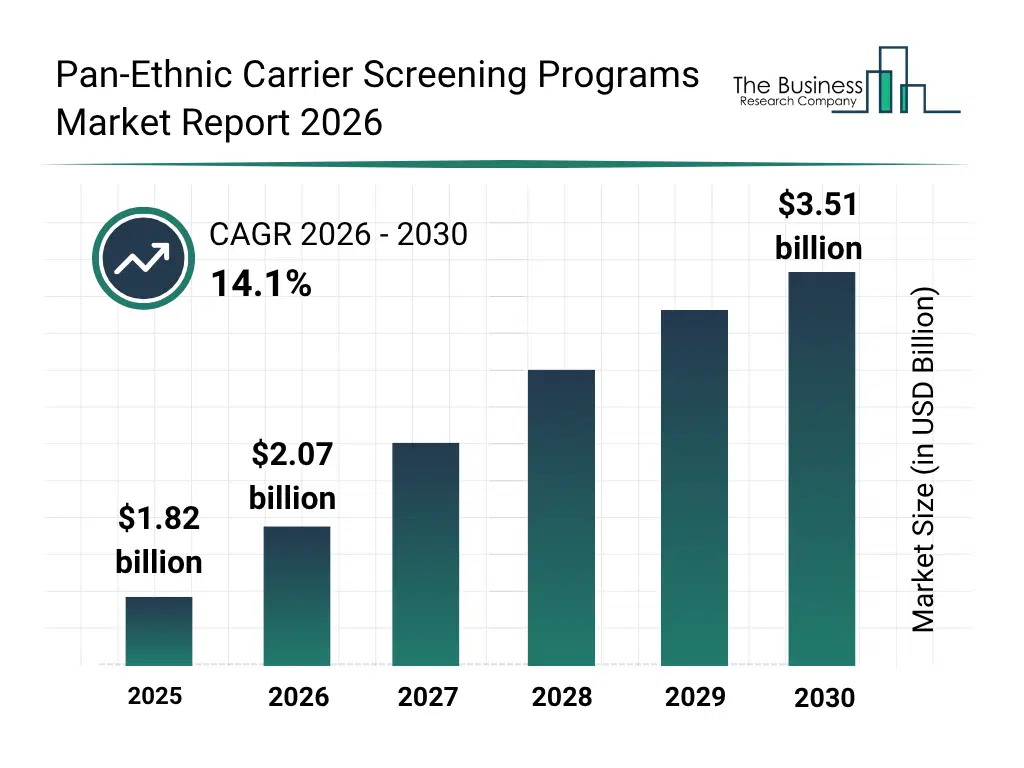
What Is The Pan-Ethnic Carrier Screening Programs Market Size and Share 2026?
The pan-ethnic carrier screening programs market size has grown rapidly in recent years. It will grow from $1.82 billion in 2025 to $2.07 billion in 2026 at a compound annual growth rate (CAGR) of 13.9%. The growth in the historic period can be attributed to declining cost of genetic sequencing technologies, increasing awareness of inherited genetic disorders, growth in prenatal and preconception testing programs, expansion of diagnostic laboratory infrastructure, rising demand for early disease risk identification.What Is The Pan-Ethnic Carrier Screening Programs Market Growth Forecast?
The pan-ethnic carrier screening programs market size is expected to see rapid growth in the next few years. It will grow to $3.51 billion in 2030 at a compound annual growth rate (CAGR) of 14.1%. The growth in the forecast period can be attributed to increasing adoption of comprehensive genomic panels, rising integration of AI in variant interpretation, expansion of tele-genetic counseling services, growing government support for preventive healthcare programs, increasing focus on personalized reproductive planning. Major trends in the forecast period include increasing adoption of expanded multi-gene carrier screening panels, rising demand for preconception genetic risk assessment, growing integration of carrier screening into routine prenatal care, expansion of universal population-based screening programs, rising focus on equitable access to Genetic Testing Services.
Global Pan-Ethnic Carrier Screening Programs Market Segmentation
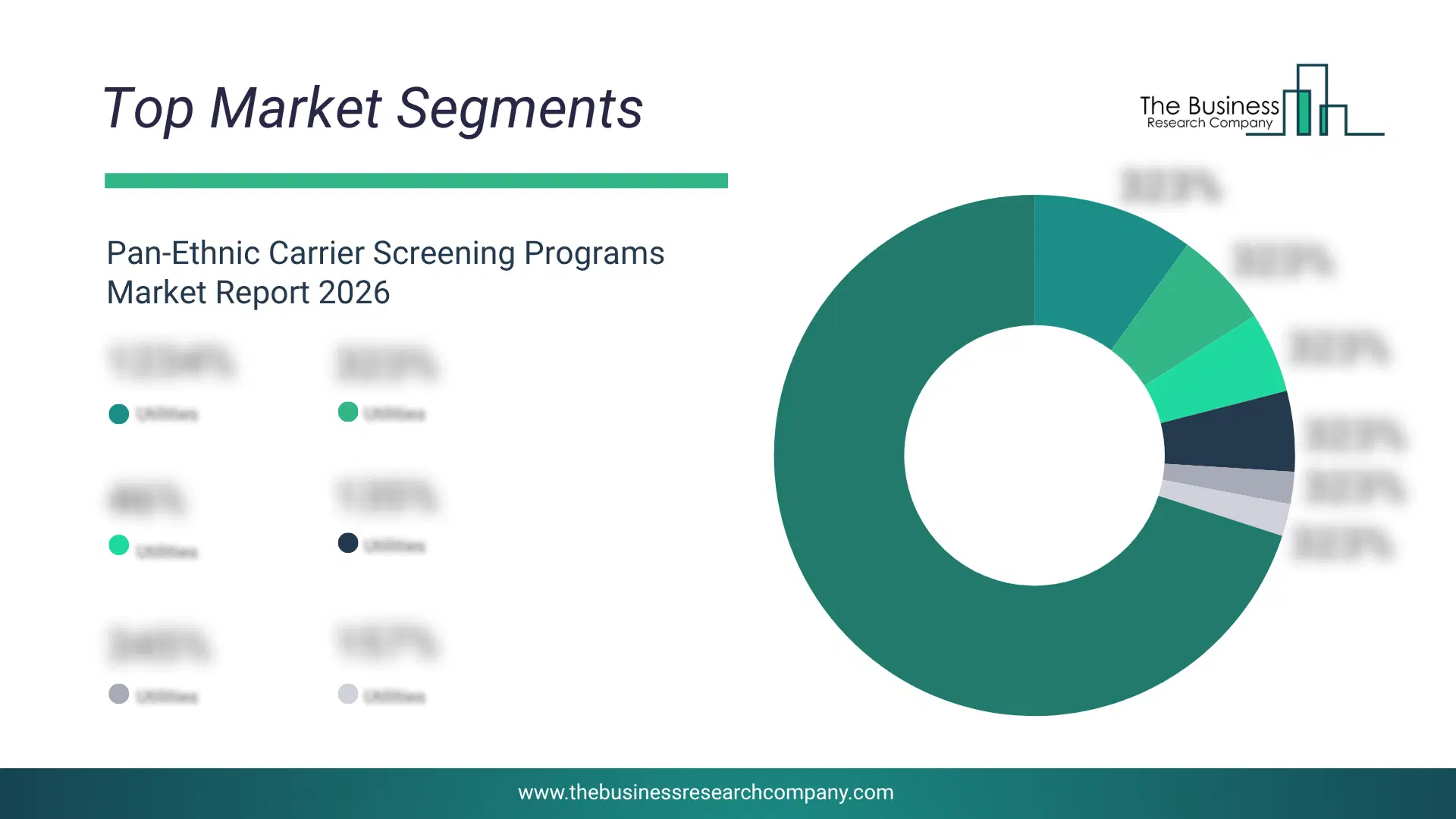
1) By Test Type: Expanded Carrier Screening, Targeted Carrier Screening 2) By Technology: Deoxyribonucleic Acid (DNA) Sequencing, Polymerase Chain Reaction (PCR), Microarray, Other Technologies 3) By Application: Preconception, Prenatal, Newborn 4) By End-User: Hospitals And Clinics, Diagnostic Laboratories, Research Institutes, Other End-Users Subsegments: 1) By Expanded Carrier Screening: Comprehensive Multi Gene Panels, Disease Specific Expanded Panels, Preconception Expanded Panels, Prenatal Expanded Panels, Universal Population Based Panels 2) By Targeted Carrier Screening: Ethnicity Based Screening Panels, Family History Based Panels, Single Condition Carrier Testing, High Risk Population Panels, Condition Specific Targeted PanelsWhat Is The Driver Of The Pan-Ethnic Carrier Screening Programs Market?
The rising prevalence of inherited genetic disorders is expected to propel the growth of the pan ethnic carrier screening programs market going forward. Inherited genetic disorders refer to medical conditions caused by changes or mutations in a person’s genes that are passed down from their parents to their children. The prevalence of inherited genetic disorders is growing due to advances in genetic testing and screening, which are identifying more cases that were previously undiagnosed. Pan‑ethnic carrier screening programs help manage inherited genetic disorders by offering comprehensive genetic testing to individuals and couples across diverse populations, enabling early identification of carriers, informed reproductive decisions, and proactive healthcare planning to reduce the risk of passing on genetic conditions. For instance, in October 2024, according to the National Health Service (NHS) England, a UK-based government department, as part of a pioneering study in NHS hospitals, hundreds of newborns are now being tested for more than 200 rare genetic conditions, with the project aiming to screen up to 100,000 babies across England. Therefore, the rising prevalence of inherited genetic disorders is driving the growth of the pan ethnic carrier screening programs market.Key Players In The Global Pan-Ethnic Carrier Screening Programs Market
Major companies operating in the pan-ethnic carrier screening programs market are Thermo Fisher Scientific Inc., Laboratory Corporation of America Holdings (LabCorp), Quest Diagnostics Incorporated, Eurofins Scientific SE, Illumina Inc., Natera Inc., Myriad Genetics Inc., Fulgent Genetics Inc., BillionToOne Inc., Ambry Genetics Corp, PathGroup LLC, 23andMe Inc., Color Health Inc., Centogene N.V., Baylor Genetics LLC, PreventionGenetics LLC, FamilyTreeDNA, Sema4 Inc., BGI Genomics Co, MedGenome Labs Ltd.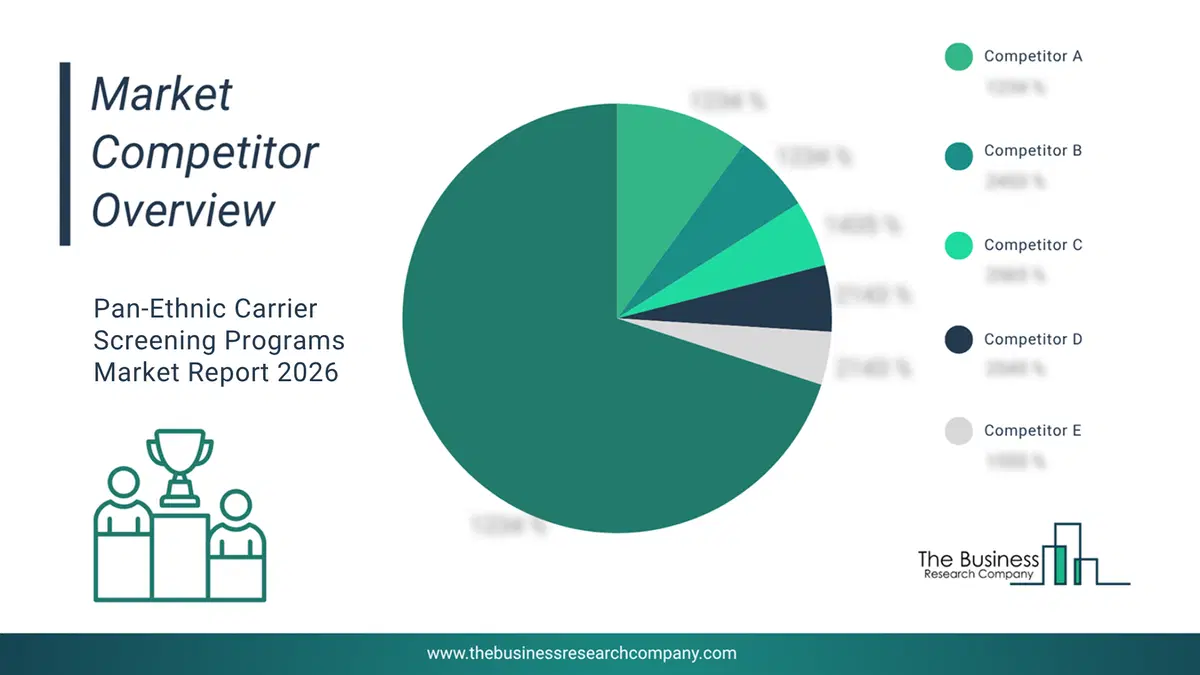
This chart is for illustrative purposes; the full report includes a detailed competitor analysis and comprehensive overview of the top 10 companies in the market.
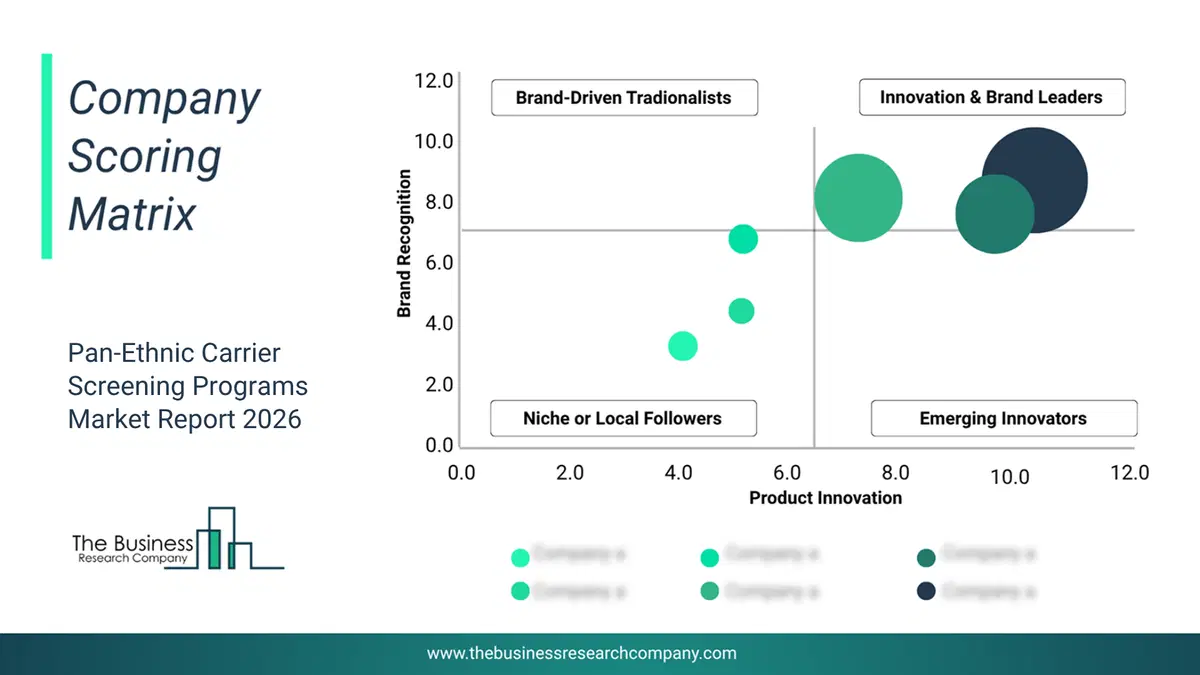
This chart maps companies by product innovation and brand strength, with bubble size indicating relative revenue, helping identify market leaders, challengers, and niche players. This is an illustrative chart; the full report provides a complete and accurate competitive analysis.
Global Pan-Ethnic Carrier Screening Programs Market Trends and Insights
Major companies operating in the pan-ethnic carrier screening programs market are focusing on developing innovative products such as, expanded genetic panels to enhance early detection of inherited conditions across diverse populations. Expanded genetic panels are comprehensive tests that screen hundreds of genes for inherited conditions, helping identify carrier status early and guide informed reproductive decisions across diverse populations. For instance, in February 2023, Fulgent Genetics, a U.S.-based technology and clinical diagnostics company, launched the Beacon787 expanded genetic panels for carrier screening, an innovative solution that includes 787 genes, encompassing all American College of Medical Genetics and Genomics (ACMG) tier 3 genes recommended for universal carrier screening. Beacon787 leverages Fulgent’s proprietary platform and bioinformatics algorithms to detect pseudogenes, accurately call copy number variants, and optimize turnaround time, reducing the need for redundant confirmatory testing. The expanded genetic panels provide actionable insights for women and couples planning pregnancy by identifying previously unknown carrier risks, supporting informed reproductive decisions. Its high analytical sensitivity and pan-ethnic design make it a next-generation alternative to conventional panels with limited gene coverage.What Are Latest Mergers And Acquisitions In The Pan-Ethnic Carrier Screening Programs Market?
In January 2024, Invitae Corporation, a US based healthcare technology company, sold certain reproductive health assets to Natera Inc. for $52.5 million. With this sale, Invitae Corporation aimed to streamline its operations, reduce operational complexity, and reallocate resources toward accelerating innovation in its core clinical germline genetic testing and variant interpretation capabilities, ultimately enhancing the accuracy, speed, and accessibility of its genetic testing services for patients and healthcare providers. Natera Inc. is a US-based healthcare technology company that specializes in providing pan-ethnic carrier screening programs.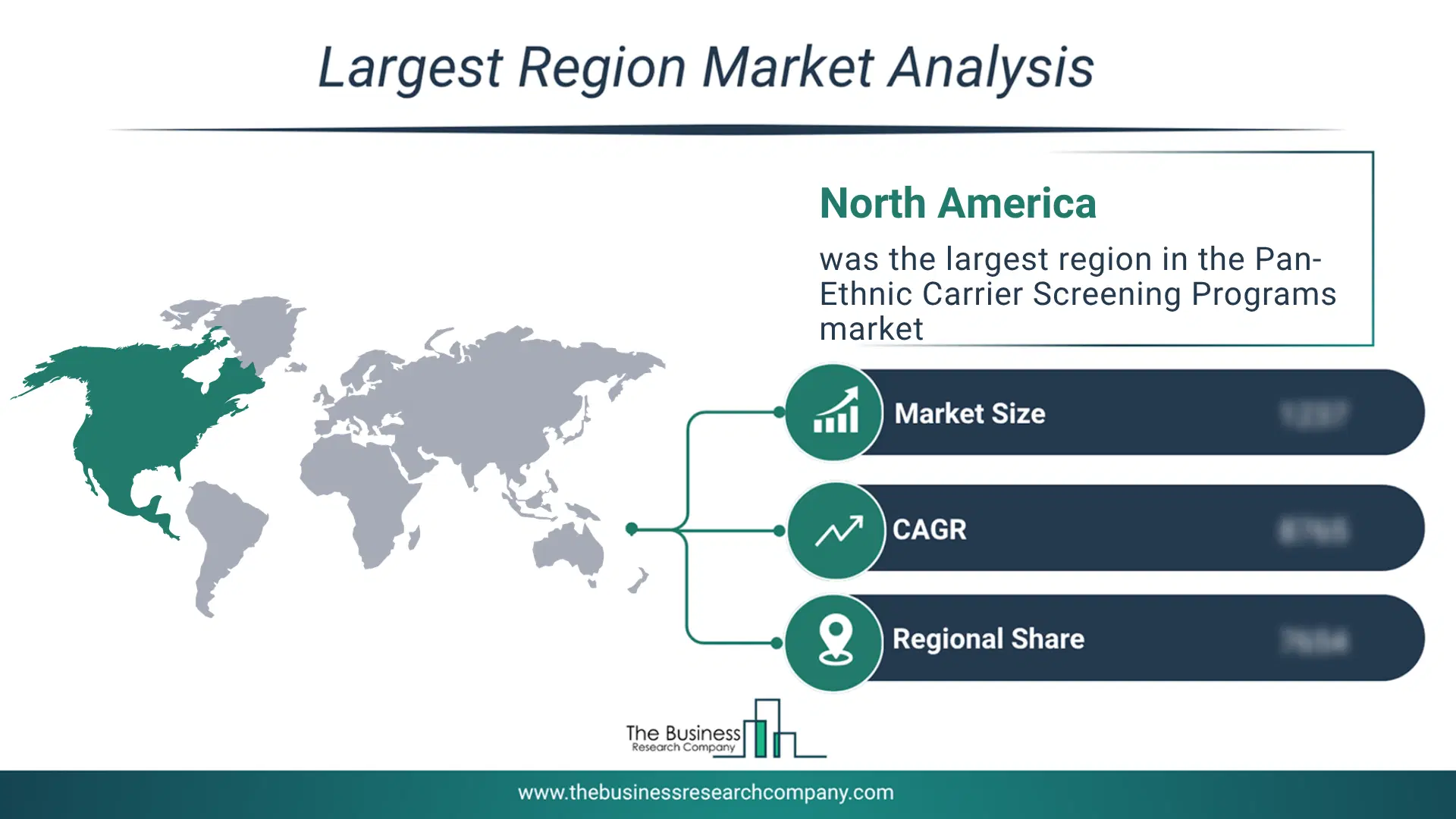
Regional Insights
North America was the largest region in the pan-ethnic carrier screening programs market in 2025. Asia-Pacific is expected to be the fastest-growing region in the forecast period. The regions covered in this market report are Asia-Pacific, South East Asia, Western Europe, Eastern Europe, North America, South America, Middle East, Africa. The countries covered in this market report are Australia, Brazil, China, France, Germany, India, Indonesia, Japan, Taiwan, Russia, South Korea, UK, USA, Canada, Italy, Spain.What Defines the Pan-Ethnic Carrier Screening Programs Market?
The pan-ethnic carrier screening programs market includes revenues earned by entities by providing services such as expanded carrier screening services, targeted carrier screening services, preconception carrier screening services, prenatal carrier screening services, newborn carrier screening services, and genetic counseling services. The market value includes the value of related goods sold by the service provider or included within the service offering. Only goods and services traded between entities or sold to end consumers are included.How is Market Value Defined and Measured?
The market value is defined as the revenues that enterprises gain from the sale of goods and/or services within the specified market and geography through sales, grants, or donations in terms of the currency (in USD unless otherwise specified). The revenues for a specified geography are consumption values that are revenues generated by organizations in the specified geography within the market, irrespective of where they are produced. It does not include revenues from resales along the supply chain, either further along the supply chain or as part of other products.
This chart presents market attractiveness based on a quantitative evaluation of growth, competition, strategic alignment, and risk, offering a clear view of opportunity areas for decision-making. This chart is for illustrative purposes; the full report contains the complete analysis.

This chart highlights the Total Addressable Market (TAM) by estimating the maximum revenue opportunity using an assumption-driven approach, supporting strategic planning and opportunity sizing across markets. The chart is illustrative; the full report provides a more comprehensive analysis.
What Key Data And Analysis Are Included In The Pan-Ethnic Carrier Screening Programs Market Report 2026?
The pan-ethnic carrier screening programs market research report is one of a series of new reports from The Business Research Company that provides market statistics, including industry global market size, regional shares, competitors with the market share, detailed market segments, market trends and opportunities, and any further data you may need to thrive in the pan-ethnic carrier screening programs industry. The market research report delivers a complete perspective of everything you need, with an in-depth analysis of the current and future state of the industry.Pan-Ethnic Carrier Screening Programs Market Report Forecast Analysis
| Report Attribute | Details |
|---|---|
| Market Size Value In 2026 | $2.07 billion |
| Revenue Forecast In 2030 | $3.51 billion |
| Growth Rate | CAGR of 14.1% from 2026 to 2030 |
| Base Year For Estimation | 2025 |
| Actual Estimates/Historical Data | 2020-2025 |
| Forecast Period | 2026 - 2030 |
| Market Representation | Revenue in USD Billion and CAGR from 2026 to 2030 |
| Segments Covered | Test Type, Technology, Application, End-User |
| Regional Scope | Asia-Pacific, Western Europe, Eastern Europe, North America, South America, Middle East, Africa |
| Country Scope | The countries covered in the report are Australia, Brazil, China, France, Germany, India, Indonesia, Japan, Taiwan, Russia, South Korea, UK, USA, Canada, Italy, Spain |
| Key Companies Profiled | Thermo Fisher Scientific Inc., Laboratory Corporation of America Holdings (LabCorp), Quest Diagnostics Incorporated, Eurofins Scientific SE, Illumina Inc., Natera Inc., Myriad Genetics Inc., Fulgent Genetics Inc., BillionToOne Inc., Ambry Genetics Corp, PathGroup LLC, 23andMe Inc., Color Health Inc., Centogene N.V., Baylor Genetics LLC, PreventionGenetics LLC, FamilyTreeDNA, Sema4 Inc., BGI Genomics Co, MedGenome Labs Ltd. |
| Customization Scope | Request for Customization |
| Pricing And Purchase Options | Explore Purchase Options |