
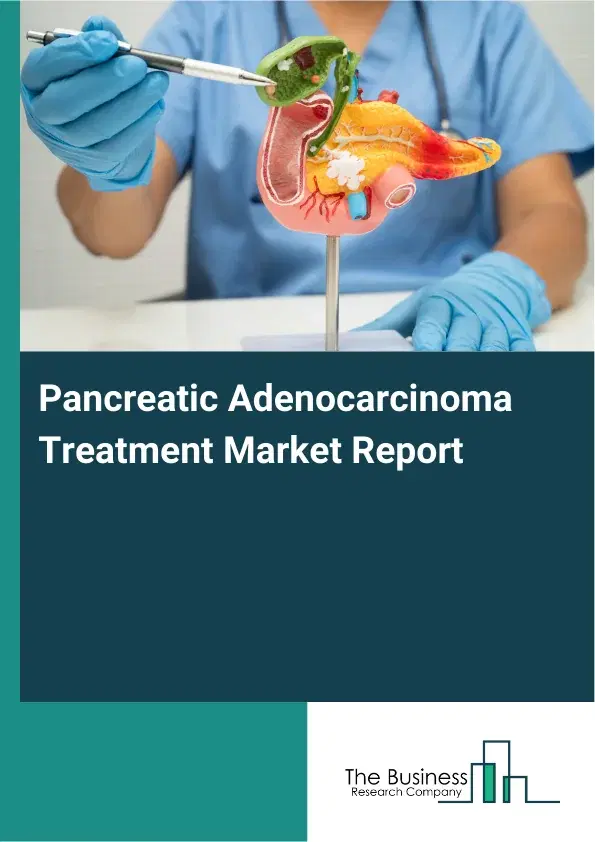
Pancreatic Adenocarcinoma Treatment Market Report 2026
Global Outlook – By Type (Chemotherapy, Targeted Therapy, Other Types), By Affected Area (Exocrine, Endocrine), By Distribution Channel (Hospital Pharmacies, Retail Pharmacies, Other Distribution Channels) - Market Size, Trends, Strategies, and Forecast to 2030
Pancreatic Adenocarcinoma Treatment Market Overview
• Pancreatic Adenocarcinoma Treatment market size has reached to $2.41 billion in 2025 • Expected to grow to $4.45 billion in 2030 at a compound annual growth rate (CAGR) of 13% • Growth Driver: Rising Incidence Of Digestive System Cancers Driving Growth In The Market • Market Trend: Advancements In Liposomal Chemotherapy Enhance Pancreatic Adenocarcinoma Treatment • North America was the largest region in 2025.What Is Covered Under Pancreatic Adenocarcinoma Treatment Market?
Pancreatic adenocarcinoma treatment refers to the various medical strategies used to manage and combat pancreatic adenocarcinoma, the most common type of pancreatic cancer. Treatment depends on factors such as cancer stage, tumor location, and patient health. It typically involves a combination of surgery, chemotherapy, radiation therapy, and targeted treatments to improve survival and quality of life. The main types of pancreatic adenocarcinoma treatment are chemotherapy, targeted therapy, and others. Chemotherapy uses drugs to kill or inhibit the growth of cancer cells. In pancreatic adenocarcinoma, it is used to shrink tumors before surgery, prevent recurrence after surgery, or manage advanced stages by relieving symptoms. The different affected areas include exocrine, and endocrine and various channel include hospital pharmacies, retail pharmacies, and others.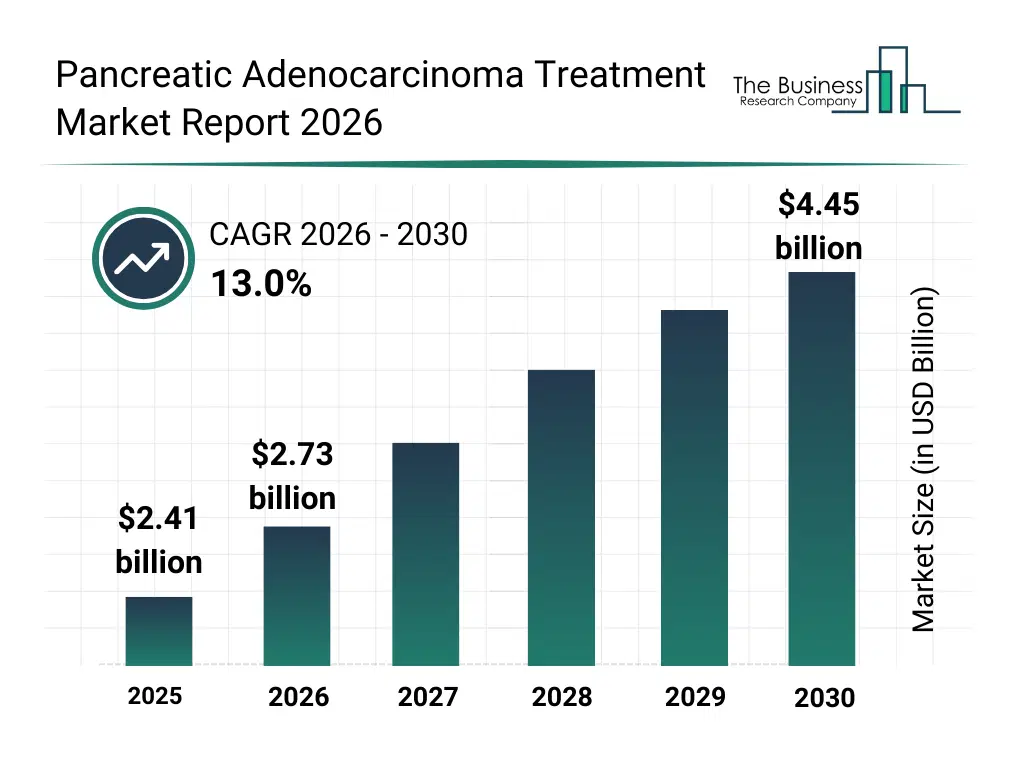
What Is The Pancreatic Adenocarcinoma Treatment Market Size and Share 2026?
The pancreatic adenocarcinoma treatment market size has grown rapidly in recent years. It will grow from $2.41 billion in 2025 to $2.73 billion in 2026 at a compound annual growth rate (CAGR) of 13.3%. The growth in the historic period can be attributed to limited treatment options for pancreatic adenocarcinoma, reliance on conventional chemotherapy, low early-stage diagnosis rates, high mortality and poor prognosis, hospital-centric treatment delivery.What Is The Pancreatic Adenocarcinoma Treatment Market Growth Forecast?
The pancreatic adenocarcinoma treatment market size is expected to see rapid growth in the next few years. It will grow to $4.45 billion in 2030 at a compound annual growth rate (CAGR) of 13.0%. The growth in the forecast period can be attributed to emergence of personalized targeted therapies, increasing adoption of monoclonal antibodies and immunotherapies, growth in digital health monitoring solutions, expansion of combination therapy protocols, increasing availability through hospital and retail pharmacies. Major trends in the forecast period include increasing use of targeted therapies and small molecule inhibitors, rising adoption of monoclonal antibody treatments, expansion of immunotherapy applications, integration of digital platforms for patient monitoring, growth in hospital pharmacy distribution for cancer drugs.
Global Pancreatic Adenocarcinoma Treatment Market Segmentation
1) By Type: Chemotherapy, Targeted Therapy, Other Types 2) By Affected Area: Exocrine, Endocrine 3) By Distribution Channel: Hospital Pharmacies, Retail Pharmacies, Other Distribution Channels Subsegments: 1) By Chemotherapy: Monotherapy, Combination Therapy 2) By Targeted Therapy: Small Molecule Inhibitors, Monoclonal Antibodies 3) By Other Types: Immunotherapy, Radiation TherapyWhat Is The Driver Of The Pancreatic Adenocarcinoma Treatment Market?
The increasing incidence of cancers related to the digestive system is expected to propel the growth of the pancreatic adenocarcinoma treatment market going forward. Cancers related to the digestive system are malignancies that develop in organs involved in digestion, such as the stomach, liver, pancreas, intestines, esophagus, and colon. The increasing incidence of digestive system cancers is driven by unhealthy lifestyle choices such as poor diet, alcohol consumption, and smoking. Pancreatic adenocarcinoma treatment plays a crucial role in addressing one of the most aggressive cancers of the digestive system, aiming to improve survival rates and quality of life for affected patients. For instance, in January 2023, the American Cancer Society, a US-based non-profit organization, projected that 64,050 individuals in the United States would be diagnosed with pancreatic cancer, while 50,550 people were expected to succumb to the disease. Therefore, the increasing incidence of cancers related to the digestive system is driving the growth of the pancreatic adenocarcinoma treatment industry.Key Players In The Global Pancreatic Adenocarcinoma Treatment Market
Major companies operating in the pancreatic adenocarcinoma treatment market are Pfizer Inc., Roche AG, Merck & Co Inc., Sanofi, Bristol-Myers Squibb Company, AstraZeneca plc, Novartis AG, GlaxoSmithKline plc, Takeda Pharmaceutical Company Limited, Eli Lilly and Company, Amgen Inc., Teva Pharmaceutical Industries Ltd, Mylan N.V., Astellas Pharma Inc., Sun Pharmaceutical Industries Ltd., Ipsen SA, Clovis Oncology Inc., Oncolytics Biotech Inc., Zydus Cadila, PharmaCyte Biotech Inc., Infinity Pharmaceuticals Inc.
This chart is for illustrative purposes; the full report includes a detailed competitor analysis and comprehensive overview of the top 10 companies in the market.
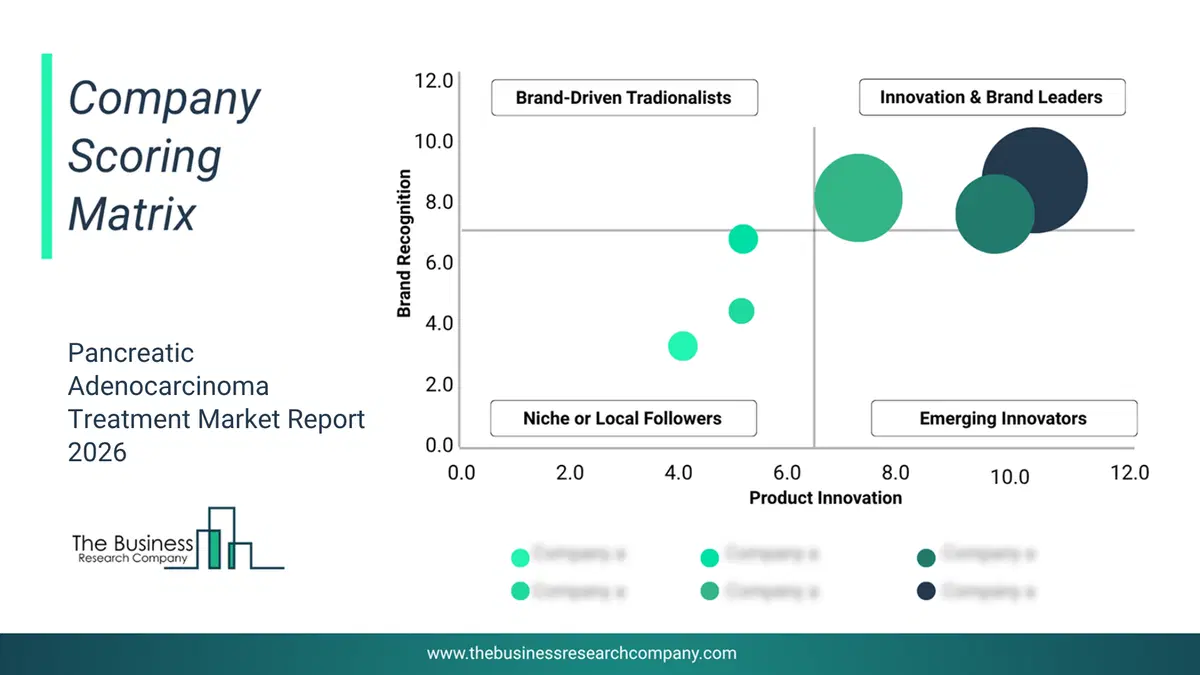
This chart maps companies by product innovation and brand strength, with bubble size indicating relative revenue, helping identify market leaders, challengers, and niche players. This is an illustrative chart; the full report provides a complete and accurate competitive analysis.
Global Pancreatic Adenocarcinoma Treatment Market Trends and Insights
Major companies operating in the pancreatic adenocarcinoma treatment market are focusing on developing innovative solutions such as irinotecan liposome injection to improve treatment efficacy, reduce side effects, and overcome the challenges associated with tumor resistance. Irinotecan liposome injection is a chemotherapy drug encapsulated in liposomes designed to improve the drug's delivery to cancer cells, enhance its effectiveness, and reduce side effects in the treatment of pancreatic adenocarcinoma. For instance, in February 2024, Ipsen SA, a France-based biopharmaceutical company, announced that the U.S. Food and Drug Administration (FDA) approved the supplemental new drug application for Onivyde (irinotecan liposome injection) in combination with oxaliplatin. The combination of Onivyde (irinotecan liposome injection) with oxaliplatin offers enhanced tumor targeting through improved drug delivery, reducing side effects compared to traditional therapies. This regimen leverages a liposomal formulation that increases the bioavailability and sustained release of irinotecan, while oxaliplatin contributes additional efficacy against pancreatic cancer cells. The approval underscores the regimen’s potential to address the unmet need for more effective treatment options for this aggressive cancer.What Are Latest Mergers And Acquisitions In The Pancreatic Adenocarcinoma Treatment Market?
In January 2024, Bristol Myers Squibb, a US-based biopharmaceutical company specializing in oncology and immunology, acquired Mirati Therapeutics for an undisclosed amount. With this acquisition, Bristol Myers Squibb advanced its oncology pipeline by integrating Mirati’s KRAS- and MAPK-pathway-targeted assets, including a candidate for the KRAS G12D mutation implicated in pancreatic adenocarcinoma, thereby expanding its capabilities in precision therapies for high-unmet-need tumor types. Mirati Therapeutics is a US-based oncology company developing next-generation targeted therapies for solid tumors, including programs directed at KRAS G12D, KRAS G12C, and MTAP or PRMT5-deleted tumors.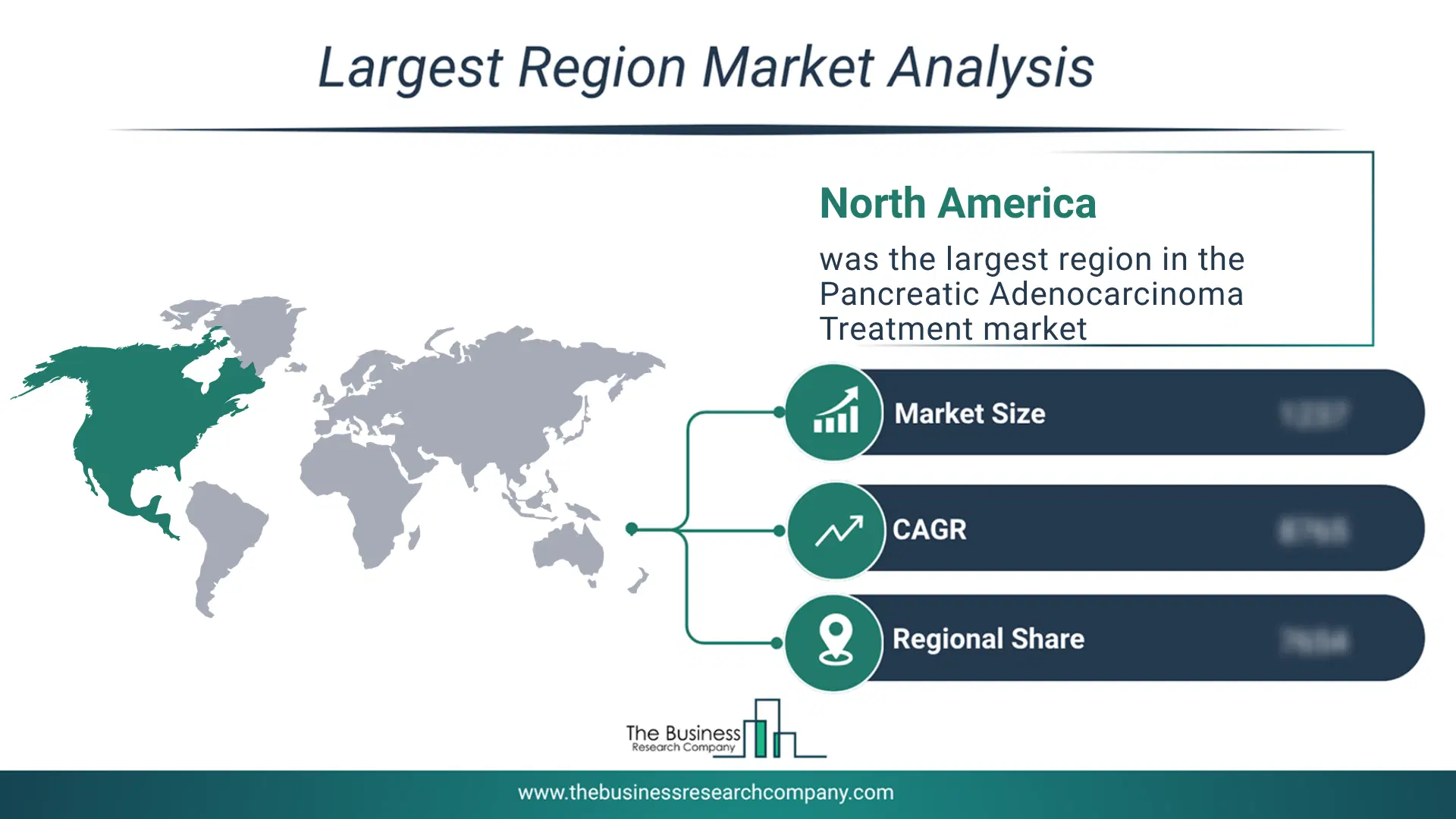
Regional Outlook
North America was the largest region in the pancreatic adenocarcinoma treatment market in 2025. The regions covered in this market report are Asia-Pacific, South East Asia, Western Europe, Eastern Europe, North America, South America, Middle East, Africa. The countries covered in this market report are Australia, Brazil, China, France, Germany, India, Indonesia, Japan, Taiwan, Russia, South Korea, UK, USA, Canada, Italy, Spain.What Defines the Pancreatic Adenocarcinoma Treatment Market?
The pancreatic adenocarcinoma treatment market includes revenues earned by entities by providing services such as chemotherapy administration, radiation therapy, surgical procedures, targeted therapy, immunotherapy, supportive care services, and diagnostic testing. The market value includes the value of related goods sold by the service provider or included within the service offering. The pancreatic adenocarcinoma treatment market also includes sales of chemotherapeutic drugs, targeted therapy drugs, immunotherapy agents, radiation therapy equipment, surgical instruments, diagnostic tools, and supportive care medications. Values in this market are ‘factory gate’ values, that is, the value of goods sold by the manufacturers or creators of the goods, whether to other entities (including downstream manufacturers, wholesalers, distributors, and retailers) or directly to end customers. The value of goods in this market includes related services sold by the creators of the goods.How is Market Value Defined and Measured?
The market value is defined as the revenues that enterprises gain from the sale of goods and/or services within the specified market and geography through sales, grants, or donations in terms of the currency (in USD unless otherwise specified). The revenues for a specified geography are consumption values that are revenues generated by organizations in the specified geography within the market, irrespective of where they are produced. It does not include revenues from resales along the supply chain, either further along the supply chain or as part of other products.
This chart presents market attractiveness based on a quantitative evaluation of growth, competition, strategic alignment, and risk, offering a clear view of opportunity areas for decision-making. This chart is for illustrative purposes; the full report contains the complete analysis.

This chart highlights the Total Addressable Market (TAM) by estimating the maximum revenue opportunity using an assumption-driven approach, supporting strategic planning and opportunity sizing across markets. The chart is illustrative; the full report provides a more comprehensive analysis.
What Key Data and Analysis Are Included in the Pancreatic Adenocarcinoma Treatment Market Report 2026?
The pancreatic adenocarcinoma treatment market research report is one of a series of new reports from The Business Research Company that provides market statistics, including industry global market size, regional shares, competitors with the market share, detailed market segments, market trends and opportunities, and any further data you may need to thrive in the pancreatic adenocarcinoma treatment industry. The market research report delivers a complete perspective of everything you need, with an in-depth analysis of the current and future state of the industry.Pancreatic Adenocarcinoma Treatment Market Report Forecast Analysis
| Report Attribute | Details |
|---|---|
| Market Size Value In 2026 | $2.73 billion |
| Revenue Forecast In 2030 | $4.45 billion |
| Growth Rate | CAGR of 13% from 2026 to 2030 |
| Base Year For Estimation | 2025 |
| Actual Estimates/Historical Data | 2020-2025 |
| Forecast Period | 2026 - 2030 |
| Market Representation | Revenue in USD Billion and CAGR from 2026 to 2030 |
| Segments Covered | Type, Affected Area, Distribution Channel |
| Regional Scope | Asia-Pacific, Western Europe, Eastern Europe, North America, South America, Middle East, Africa |
| Country Scope | The countries covered in the report are Australia, Brazil, China, France, Germany, India, Indonesia, Japan, Taiwan, Russia, South Korea, UK, USA, Canada, Italy, Spain |
| Key Companies Profiled | Pfizer Inc., Roche AG, Merck & Co Inc., Sanofi, Bristol-Myers Squibb Company, AstraZeneca plc, Novartis AG, GlaxoSmithKline plc, Takeda Pharmaceutical Company Limited, Eli Lilly and Company, Amgen Inc., Teva Pharmaceutical Industries Ltd, Mylan N.V., Astellas Pharma Inc., Sun Pharmaceutical Industries Ltd., Ipsen SA, Clovis Oncology Inc., Oncolytics Biotech Inc., Zydus Cadila, PharmaCyte Biotech Inc., Infinity Pharmaceuticals Inc. |
| Customization Scope | Request for Customization |
| Pricing And Purchase Options | Explore Purchase Options |