

Paranasal Sinus Cancer Market Report 2026
Global Outlook – By Type (Squamous Cell Carcinoma, Adenocarcinoma, Mucoepidermoid Carcinoma, Other Types), By Diagnosis (Medical History And Physical Examination, Imaging Tests, Biopsy, Other Diagnosis), By Treatment (Surgery, Radiation Therapy, Chemotherapy, Targeted Therapy, Immunotherapy), By End-User (Hospital And Clinics, Cancer Treatment And Research Center, Research Laboratories, Other End-Users) - Market Size, Trends, Strategies, and Forecast to 2030
Paranasal Sinus Cancer Market Overview
• Paranasal Sinus Cancer market size has reached to $1.1 billion in 2025 • Expected to grow to $1.51 billion in 2030 at a compound annual growth rate (CAGR) of 6.5% • Growth Driver: Rising Investments In Oncology Research And Medicine A Catalyst For Growth In The Market • Market Trend: Innovative Perioperative Therapies for Enhanced Treatment Outcomes and Immune Modulation • North America was the largest region in 2025 and Asia-Pacific is the fastest growing region.What Is Covered Under Paranasal Sinus Cancer Market?
Paranasal sinus cancer is a rare malignancy that develops in the paranasal sinuses which are air-filled cavities surrounding the nose. Addressing this cancer aims to promptly identify, diagnose, and treat the condition to enhance survival rates and improve the patient's quality of life. The main treatment objective is to eliminate or shrink the tumor, prevent its spread, and alleviate symptoms such as pain or blockage. The main types of paranasal sinus cancer are squamous cell carcinoma, adenocarcinoma, mucoepidermoid carcinoma, and other types. Squamous cell carcinoma is a type of cancer that develops from the squamous cells in the sinuses, typically causing symptoms such as nasal blockage, pain, and other localized issues. It is diagnosed with various diagnoses such as medical history and physical examination, imaging tests, biopsy, and others and treated with several treatments including surgery, radiation therapy, chemotherapy, targeted therapy, and immunotherapy. It is used by various end-users, including hospitals and clinics, cancer treatment and research centers, research laboratories, and others.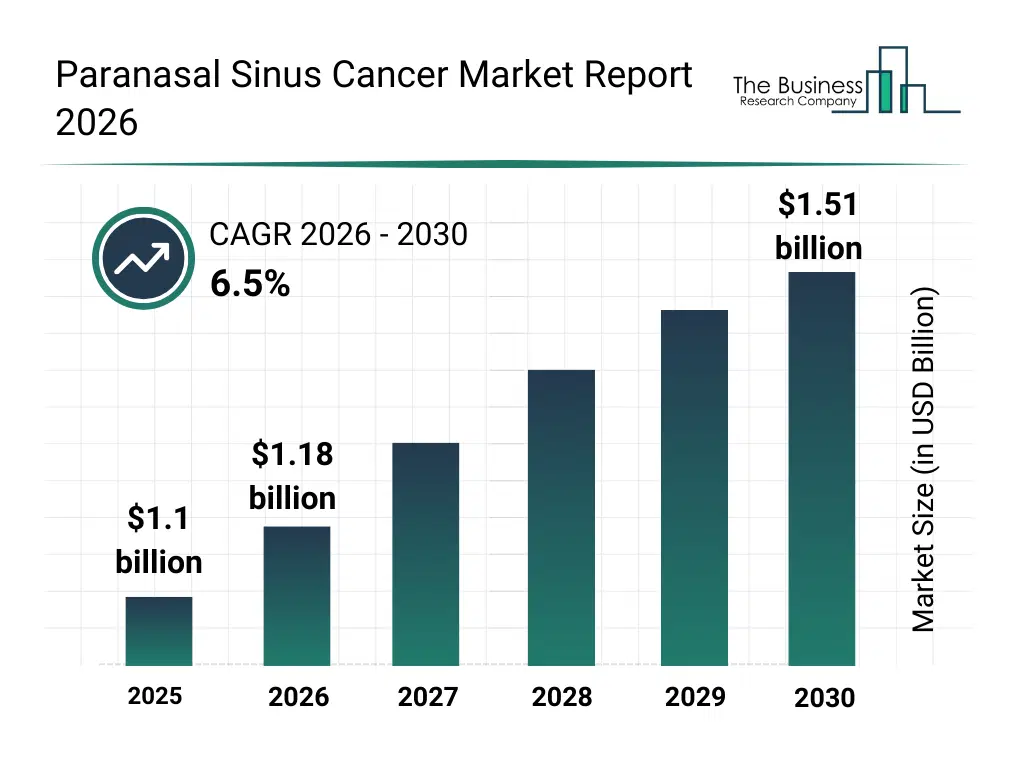
What Is The Paranasal Sinus Cancer Market Size and Share 2026?
The paranasal sinus cancer market size has grown strongly in recent years. It will grow from $1.1 billion in 2025 to $1.18 billion in 2026 at a compound annual growth rate (CAGR) of 6.7%. The growth in the historic period can be attributed to delayed diagnosis due to nonspecific symptoms, limited access to specialized oncology centers, dependence on conventional surgery and radiation therapy, low awareness of rare sinonasal cancers, fragmented diagnostic and referral pathways.What Is The Paranasal Sinus Cancer Market Growth Forecast?
The paranasal sinus cancer market size is expected to see strong growth in the next few years. It will grow to $1.51 billion in 2030 at a compound annual growth rate (CAGR) of 6.5%. The growth in the forecast period can be attributed to advancements in targeted therapy and immunotherapy, increasing adoption of ai-supported diagnostic imaging, rising investments in rare cancer research, expansion of multidisciplinary cancer care models, growth of hospital-based oncology infrastructure. Major trends in the forecast period include increasing use of precision oncology approaches, adoption of minimally invasive surgical techniques, growth of multimodal treatment strategies, expansion of advanced imaging for early diagnosis, rising focus on quality of life–centered cancer care.
Global Paranasal Sinus Cancer Market Segmentation
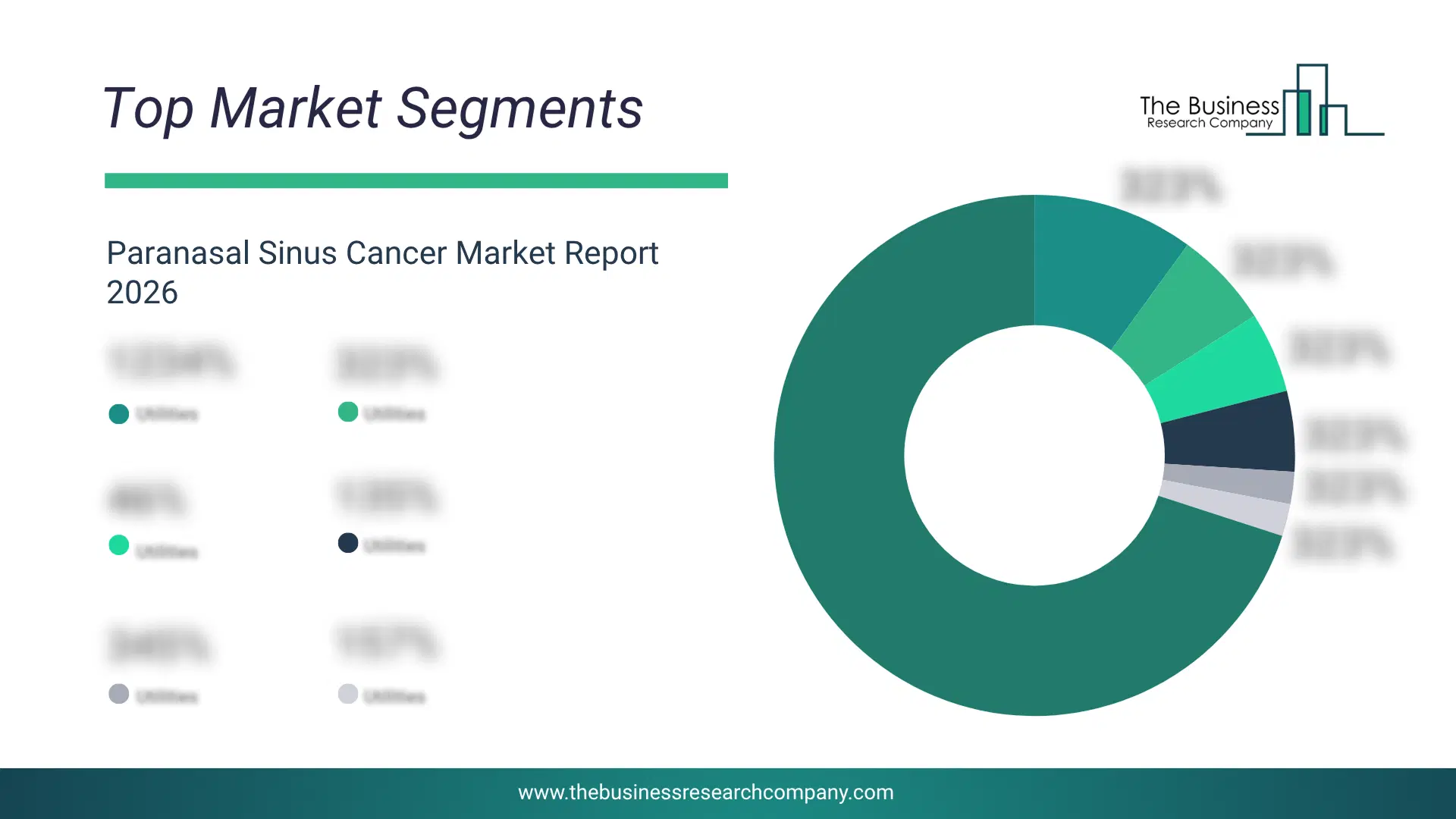
1) By Type: Squamous Cell Carcinoma, Adenocarcinoma, Mucoepidermoid Carcinoma, Other Types 2) By Diagnosis: Medical History And Physical Examination, Imaging Tests, Biopsy, Other Diagnosis 3) By Treatment: Surgery, Radiation Therapy, Chemotherapy, Targeted Therapy, Immunotherapy 4) By End-User: Hospital And Clinics, Cancer Treatment And Research Center, Research Laboratories, Other End-Users Subsegments: 1) By Squamous Cell Carcinoma: Keratinizing Squamous Cell Carcinoma, Non-Keratinizing Squamous Cell Carcinoma, Basaloid Squamous Cell Carcinoma 2) By Adenocarcinoma: Intestinal-Type Adenocarcinoma, Non-Intestinal-Type Adenocarcinoma 3) By Mucoepidermoid Carcinoma: Low-Grade Mucoepidermoid Carcinoma, Intermediate-Grade Mucoepidermoid Carcinoma, High-Grade Mucoepidermoid Carcinoma 4) By Other Types: Sinonasal Undifferentiated Carcinoma, Neuroendocrine Carcinoma, Adenoid Cystic Carcinoma, Melanoma, Sarcomas, LymphomaWhat Are The Drivers Of The Paranasal Sinus Cancer Market?
The increasing investments in oncology research and medicine are expected to propel the growth of the paranasal sinus cancer market going forward. Investments in oncology research and medicine refer to financial allocations made by governments, pharmaceutical companies, research institutions, and private investors to advance the understanding, prevention, diagnosis, and treatment of cancer. The increasing investments in oncology research and medicine are due to the rising global cancer burden, advancements in precision medicine, growing demand for innovative therapies, expanding clinical trials, government and private funding initiatives, and the development of targeted and immunotherapy treatments. Investments in oncology research and medicine support paranasal sinus cancer by driving advancements in early diagnosis, enhancing treatment options such as targeted therapies and immunotherapy, funding clinical trials for more effective drugs, improving pediatric cancer care infrastructure, and fostering innovative research to better understand the disease’s biology and progression. For instance, in May 2024, according to IQVIA, an India-based information technology company providing advanced analytics, global spending on cancer medicine rose to $223 billion in 2023, marking a $25 billion increase from 2022, and is expected to reach $409 billion by 2028. Therefore, the increasing investments in oncology research and medicine drive the paranasal sinus cancer industry. The surge in clinical trials is expected to propel the growth of the paranasal sinus cancer market going forward. Clinical trials are research investigations conducted to evaluate the safety, effectiveness, and potential advantages of new treatments or therapies in people. The surge in clinical trials is primarily driven by factors such as advancements in medical research, the need for innovative treatments, the increasing prevalence of chronic diseases, regulatory support, and growing investments in biotechnology and pharmaceutical industries. The rise in clinical trials for paranasal sinus cancer accelerates the development of better treatments, enhancing understanding of the disease and testing innovative therapies. This leads to improved outcomes, fewer side effects, and advancements in patient care. For instance, in December 2024, according to the Association of the British Pharmaceutical Industry, a UK-based nonprofit organization, the number of industry-initiated clinical trials in the UK grew from 411 trials in 2022 to 426 trials in 2023, marking a 3.7% increase. Therefore, the surge in clinical trials is driving the growth of the paranasal sinus cancer industry.Key Players In The Global Paranasal Sinus Cancer Market
Major companies operating in the paranasal sinus cancer market are Bristol-Myers Squibb, Penn Medicine, MD Anderson Cancer Center, RWJBarnabas Health, Mayo Foundation for Medical Education and Research, Stanford Health Care, Memorial Sloan Kettering Cancer Center, Massachusetts General Hospital, The University of Chicago Medical Center, City of Hope, Moffitt Cancer Center, Northwestern Medicine, UK Markey Cancer Center, Karmanos Cancer Institute, Dana-Farber Cancer Institute Inc., VCU Massey Cancer Center, Vanderbilt-Ingram Cancer Center, Fulgent Pharma, Duke University Health System
This chart is for illustrative purposes; the full report includes a detailed competitor analysis and comprehensive overview of the top 10 companies in the market.
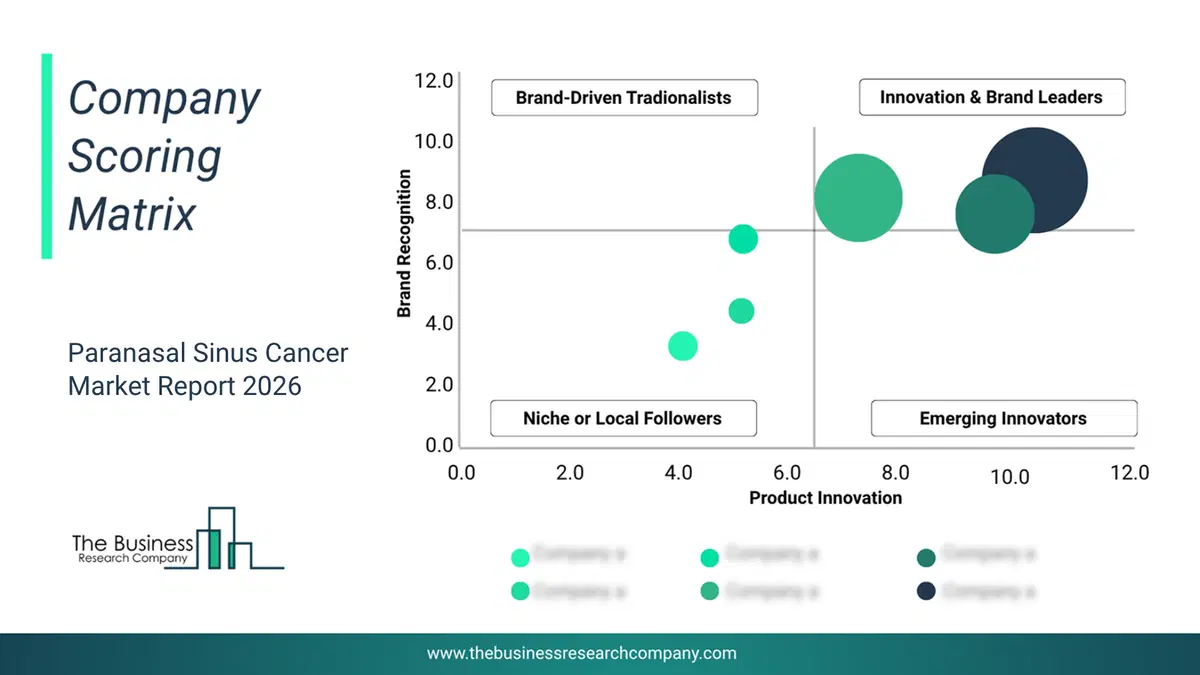
This chart maps companies by product innovation and brand strength, with bubble size indicating relative revenue, helping identify market leaders, challengers, and niche players. This is an illustrative chart; the full report provides a complete and accurate competitive analysis.
Global Paranasal Sinus Cancer Market Trends and Insights
Major companies operating in the paranasal sinus cancer market are focusing on developing advanced innovations, such as perioperative chemo immunotherapy regimens, to gain a competitive advantage. This approach combines immune checkpoint inhibition (e.g., PD-1 antibodies) with traditional chemotherapy before surgery, aiming to reduce tumor burden and improve surgical outcomes. For instance, in June 2025, Coherus Biosciences, a US-based biopharma company, initiated a Phase II trial of toripalimab plus carboplatin and docetaxel in patients with sinonasal cancers. The regimen offers preoperative tumor shrinkage potential, real-time immune monitoring, and integration with standard treatment pathways. This trend could expand the therapeutic toolkit for rare paranasal sinus malignancies and improve patient outcomes, although long-term efficacy and regulatory approvals remain to be demonstrated.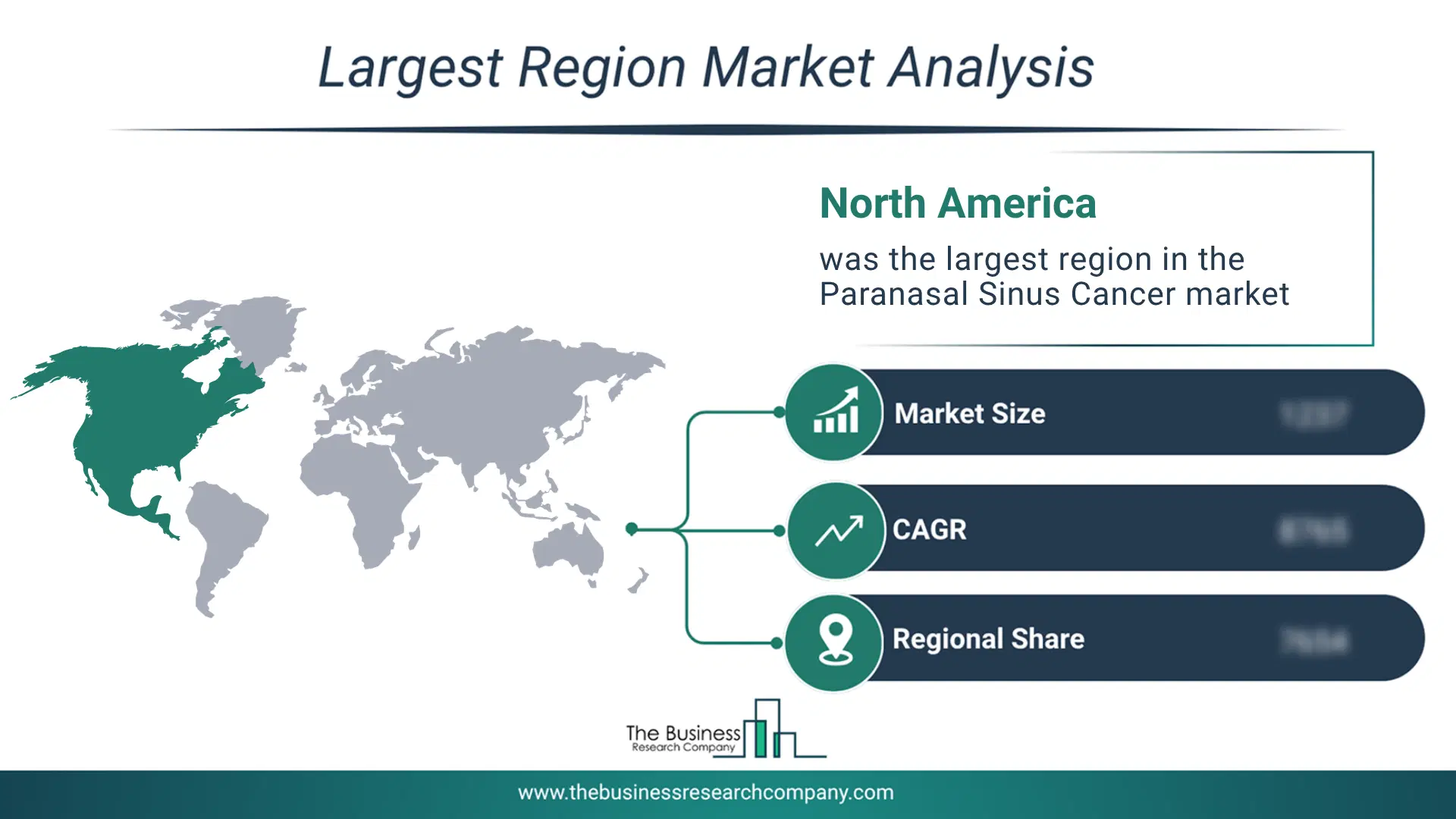
Regional Outlook
North America was the largest region in the paranasal sinus cancer market in 2025. Asia-Pacific is expected to be the fastest-growing region in the forecast period. The regions covered in this market report are Asia-Pacific, South East Asia, Western Europe, Eastern Europe, North America, South America, Middle East, Africa. The countries covered in this market report are Australia, Brazil, China, France, Germany, India, Indonesia, Japan, Taiwan, Russia, South Korea, UK, USA, Canada, Italy, Spain.What Defines the Paranasal Sinus Cancer Market?
The paranasal sinus cancer market consists of revenues earned by entities providing services such as palliative and supportive care, and follow-up care. The market value includes the value of related goods sold by the service provider or included within the service offering. The paranasal sinus cancer market also includes sales of chemotherapy agents, radiopharmaceuticals, and supportive care products. Values in this market are ‘factory gate’ values, that is, the value of goods sold by the manufacturers or creators of the goods, whether to other entities (including downstream manufacturers, wholesalers, distributors, and retailers) or directly to end customers. The value of goods in this market includes related services sold by the creators of the goods.How is Market Value Defined and Measured?
The market value is defined as the revenues that enterprises gain from the sale of goods and/or services within the specified market and geography through sales, grants, or donations in terms of the currency (in USD unless otherwise specified). The revenues for a specified geography are consumption values that are revenues generated by organizations in the specified geography within the market, irrespective of where they are produced. It does not include revenues from resales along the supply chain, either further along the supply chain or as part of other products.
This chart presents market attractiveness based on a quantitative evaluation of growth, competition, strategic alignment, and risk, offering a clear view of opportunity areas for decision-making. This chart is for illustrative purposes; the full report contains the complete analysis.

This chart highlights the Total Addressable Market (TAM) by estimating the maximum revenue opportunity using an assumption-driven approach, supporting strategic planning and opportunity sizing across markets. The chart is illustrative; the full report provides a more comprehensive analysis.
What Key Data and Analysis Are Included in the Paranasal Sinus Cancer Market Report 2026?
The paranasal sinus cancer market research report is one of a series of new reports from The Business Research Company that provides market statistics, including industry global market size, regional shares, competitors with the market share, detailed market segments, market trends and opportunities, and any further data you may need to thrive in the paranasal sinus cancer industry. The market research report delivers a complete perspective of everything you need, with an in-depth analysis of the current and future state of the industry.Paranasal Sinus Cancer Market Report Forecast Analysis
| Report Attribute | Details |
|---|---|
| Market Size Value In 2026 | $1.18 billion |
| Revenue Forecast In 2030 | $1.51 billion |
| Growth Rate | CAGR of 6.5% from 2026 to 2030 |
| Base Year For Estimation | 2025 |
| Actual Estimates/Historical Data | 2020-2025 |
| Forecast Period | 2026 - 2030 |
| Market Representation | Revenue in USD Billion and CAGR from 2026 to 2030 |
| Segments Covered | Type, Diagnosis, Treatment, End-User |
| Regional Scope | Asia-Pacific, Western Europe, Eastern Europe, North America, South America, Middle East, Africa |
| Country Scope | The countries covered in the report are Australia, Brazil, China, France, Germany, India, Indonesia, Japan, Taiwan, Russia, South Korea, UK, USA, Canada, Italy, Spain |
| Key Companies Profiled | Bristol-Myers Squibb, Penn Medicine, MD Anderson Cancer Center, RWJBarnabas Health, Mayo Foundation for Medical Education and Research, Stanford Health Care, Memorial Sloan Kettering Cancer Center, Massachusetts General Hospital, The University of Chicago Medical Center, City of Hope, Moffitt Cancer Center, Northwestern Medicine, UK Markey Cancer Center, Karmanos Cancer Institute, Dana-Farber Cancer Institute Inc., VCU Massey Cancer Center, Vanderbilt-Ingram Cancer Center, Fulgent Pharma, Duke University Health System |
| Customization Scope | Request for Customization |
| Pricing And Purchase Options | Explore Purchase Options |