

Passive Authentication Market Report 2026
Global Outlook – By Offering (Solution, Services), By Deployment (On-premises, Cloud), By Technology (Behavioral Biometrics, Device Fingerprinting, Machine Learning (ML) And Artificial Intelligence (AI), Multi-Factor Authentication (MFA) , By Organization Size (Small And Medium Enterprises (SMEs), Large Enterprises), By Industry Vertical (Banking, Financial Services, And Insurance, Government, Information Technology (IT) And Telecommunications, Retail And consumer goods, Healthcare, Media And Entertainment, Other Industry Verticals) – Market Size, Trends, Strategies, and Forecast to 2030
Passive Authentication Market Overview
• Passive Authentication market size has reached to $2.42 billion in 2025 • Expected to grow to $7.12 billion in 2030 at a compound annual growth rate (CAGR) of 24% • Growth Driver: Growing Emphasis On Cybersecurity And Fraud Prevention Fueling The Growth Of The Market Due To Rising Need For Secure And Seamless User Authentication • Market Trend: Next-Generation Cryptographic Key Solutions Enable Seamless And Continuous User Verification • North America was the largest region in 2025 and Asia-Pacific is the fastest growing region.What Is Covered Under Passive Authentication Market?
Passive authentication is a security method that verifies identity or credentials without requiring explicit input from the individual. It relies on analyzing behavioral patterns, device characteristics, or contextual data to confirm authenticity seamlessly in the background. This approach enhances security while minimizing disruption to normal activities and interactions. The main offerings of the passive authentication include solutions and services. Solutions form the core of passive authentication systems, enabling continuous and frictionless user verification by analyzing behavioral patterns, device attributes, and contextual signals without requiring active user input. These solutions leverage technologies such as behavioral biometrics, device fingerprinting, and artificial intelligence to detect anomalies, prevent fraud, and enhance security across digital channels. The deployment into on-premises and cloud. The technology, it includes behavioral biometrics, device fingerprinting, machine learning (ML) and artificial intelligence (AI), and multi-factor authentication (MFA). The organization size, the market is categorized into small and medium enterprises (SMEs) and large enterprises, and the industry vertical are banking, financial services, and insurance; government; information technology (IT) and telecommunications; retail and consumer goods; healthcare; media and entertainment; and others.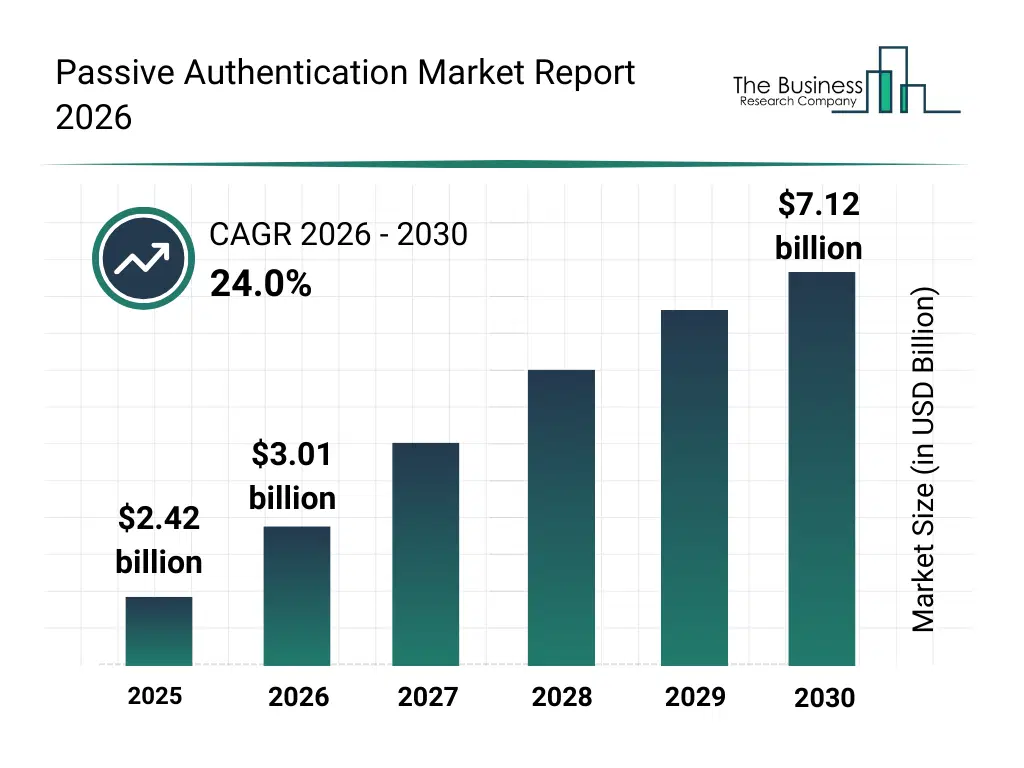
What Is The Passive Authentication Market Size and Share 2026?
The passive authentication market size has grown exponentially in recent years. It will grow from $2.42 billion in 2025 to $3.01 billion in 2026 at a compound annual growth rate (CAGR) of 24.3%. The growth in the historic period can be attributed to rising cyber fraud and identity theft, increasing adoption of digital banking and e-commerce, growing demand for secure authentication, rising use of mobile devices, and increasing regulatory compliance requirements.What Is The Passive Authentication Market Growth Forecast?
The passive authentication market size is expected to see exponential growth in the next few years. It will grow to $7.12 billion in 2030 at a compound annual growth rate (CAGR) of 24.0%. The growth in the forecast period can be attributed to growing adoption of AI and ML in authentication, rising demand for frictionless user experiences, increasing integration with cloud-based solutions, growing need for continuous and adaptive authentication, and rising focus on multi-factor and behavioral biometrics. Major trends in the forecast period include technology advancements in behavioral biometrics, innovations in AI-driven anomaly detection, developments in continuous authentication systems, research and developments in passwordless standards, and innovation integration in multi-modal biometric fusion.
Global Passive Authentication Market Segmentation
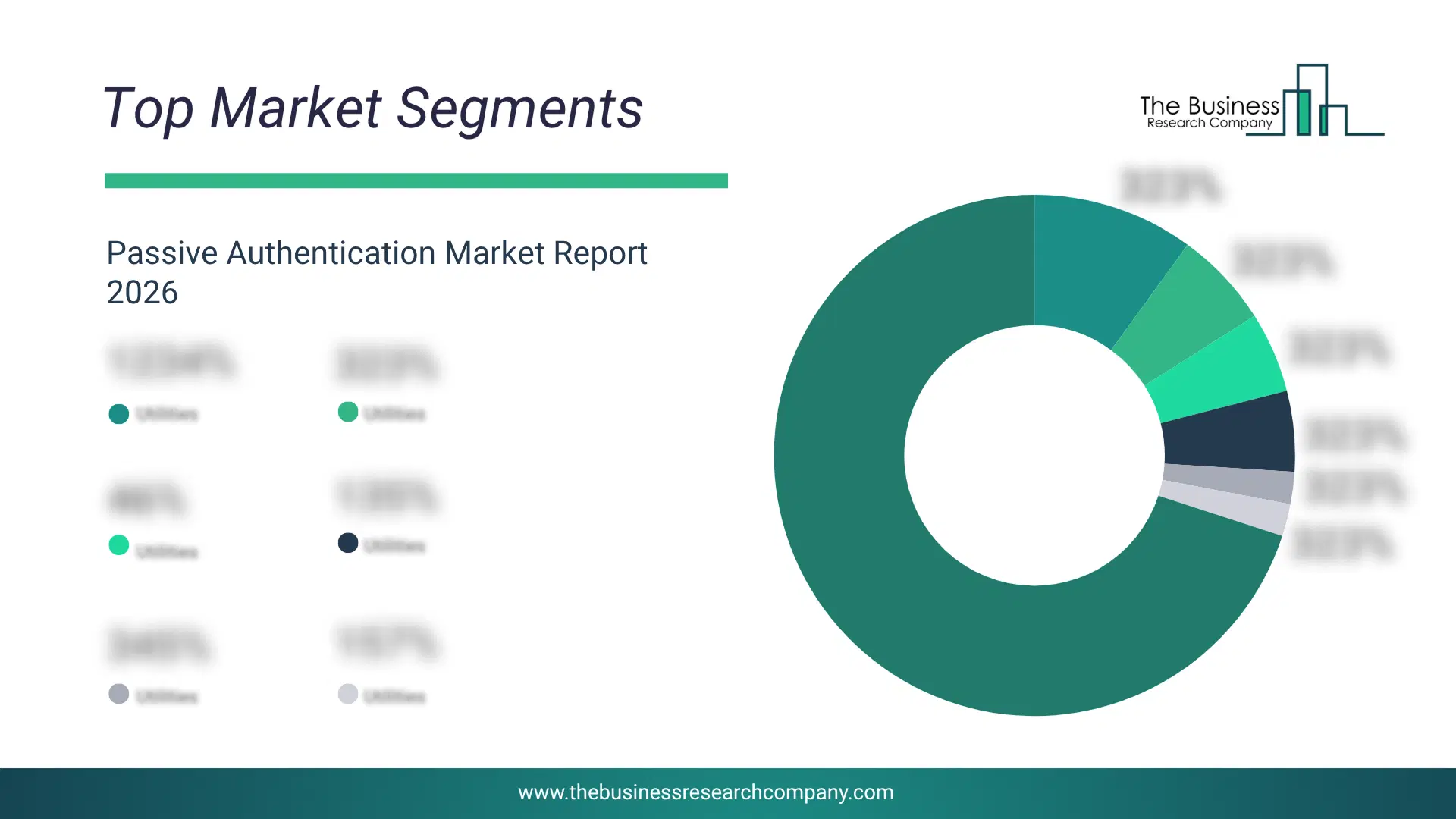
1) By Offering: Solution, Services 2) By Deployment: On-premises, Cloud 3) By Technology: Behavioral Biometrics, Device Fingerprinting, Machine Learning (ML) And Artificial Intelligence (AI), Multi-Factor Authentication (MFA) 4) By Organization Size: Small And Medium Enterprises (SMEs), Large Enterprises 5) By Industry Vertical: Banking, Financial Services, And Insurance, Government, Information Technology (IT) And Telecommunications, Retail And consumer goods, Healthcare, Media And Entertainment, Other Industry Verticals Subsegments: 1) By Solution: Behavioral Biometric Authentication, Contextual Analysis Authentication, Device Fingerprinting, Risk Scoring Platforms, Multi Modal Authentication 2) By Services: Consulting Services, Integration Services, Monitoring And Management Services, Maintenance And Support Services, Training And Education ServicesWhat Is The Driver Of The Passive Authentication Market?
The growing emphasis on cybersecurity and fraud prevention is expected to propel the growth of the passive authentication market going forward. Cybersecurity and fraud prevention refer to the strategies, technologies, and practices implemented to protect digital systems, applications, and data from unauthorized access, identity theft, financial fraud, and cyberattacks. The rise in emphasis on cybersecurity and fraud prevention is due to the increasing frequency and sophistication of cyberattacks targeting sensitive data and financial systems. Passive authentication supports cybersecurity and fraud prevention by enabling continuous, non-intrusive verification of user identity based on behavioral biometrics, device patterns, and contextual signals, improving security without disrupting the user experience. For instance, in December 2024, according to the Internet Crime Complaint Center (IC3), a US-based division of the Federal Bureau of Investigation (FBI), cybercrime complaints totaled 859,532 with losses reaching $16.6 billion in 2024, representing a 33% increase in losses from 2023. Therefore, the growing emphasis on cybersecurity and fraud prevention is driving the growth of the passive authentication industry.Key Players In The Global Passive Authentication Market
Major companies operating in the passive authentication market are NuData Security Inc., ThreatMetrix, NEC Corporation, Forter Inc., Callsign Inc., BioCatch Ltd., Pindrop Security Inc., BehavioAnalytics, Plurilock Security Inc., SpyCloud Inc., SecureAuth Corporation, Arkose Labs Inc., Acuant Inc., BehavioSec Inc., SentiLink Inc., Zighra Inc., TypingDNA Inc., SecuredTouch Ltd.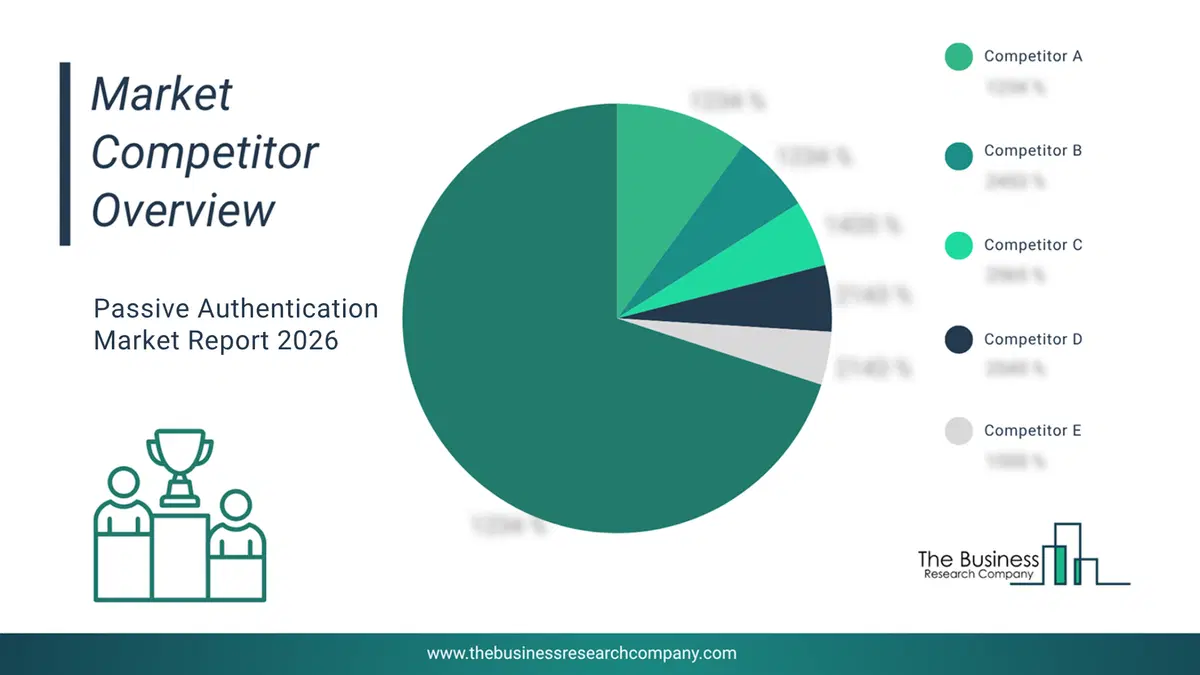
This chart is for illustrative purposes; the full report includes a detailed competitor analysis and comprehensive overview of the top 10 companies in the market.
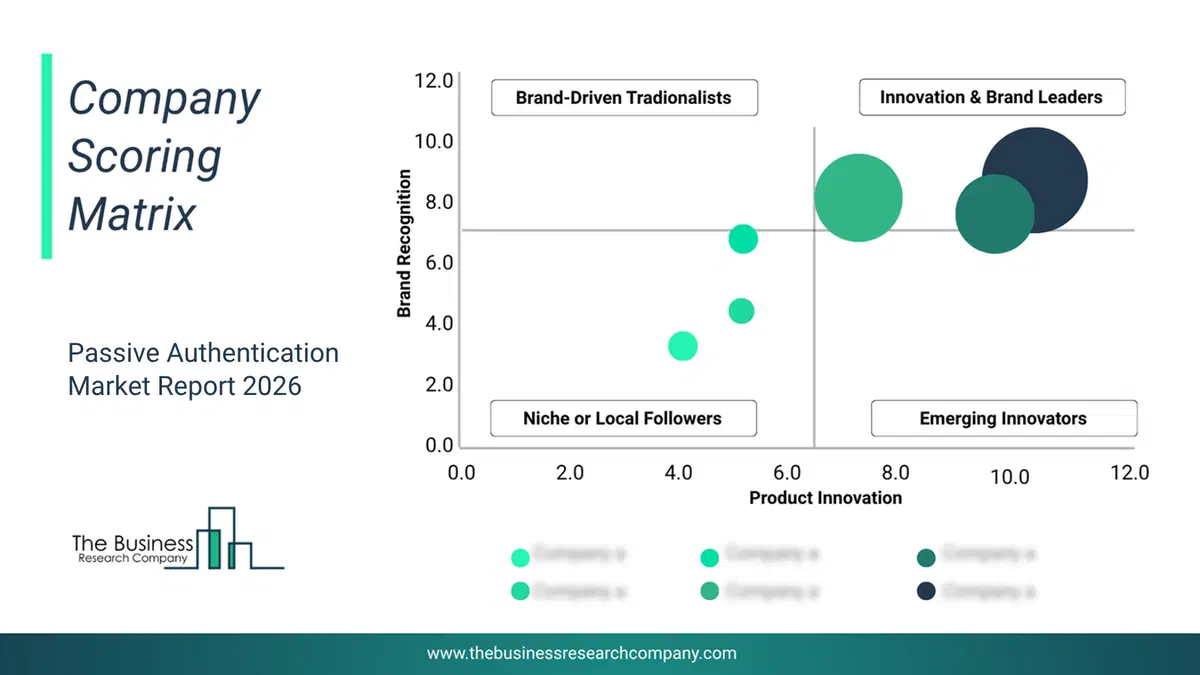
This chart maps companies by product innovation and brand strength, with bubble size indicating relative revenue, helping identify market leaders, challengers, and niche players. This is an illustrative chart; the full report provides a complete and accurate competitive analysis.
Global Passive Authentication Market Trends and Insights
Major companies operating in the passive authentication market are focusing on developing advanced features, such as next-generation cryptographic keys, to ensure secure and seamless user authentication across digital platforms. Next-generation cryptographic keys refer to an encryption key designed for modern and post‑quantum cryptography that uses stronger algorithms and larger key sizes to protect data against emerging cyber and quantum-computer attacks over the coming decades. For instance, in August 2025, Prove Identity Inc., a US-based identity and authentication company, launched its Unified Authentication platform, which persistently and continuously recognizes users across multiple devices and digital channels. It is a layered, orchestrated platform that uses its next‑generation proof-of-key cryptographic credential, bound to a user’s identity and stored on their device to deliver continuous, cross‑channel authentication throughout the customer lifecycle. The launch brings compliant multi‑factor authentication that passively blends device fingerprinting, behavioral biometrics, and passkeys; seamless, identity‑bound key management that survives device and number changes; omnichannel coverage spanning apps, web, desktops, kiosks, and call centers; and real‑time risk defense against synthetic identities, stolen credentials, and social‑engineering attacks, helping organizations cut fraud, lower costs, reduce abandonment, and boost loyalty through smoother digital experiences.What Are Latest Mergers And Acquisitions In The Passive Authentication Market?
In December 2024, SecureAuth Corporation, a US‑based identity security solutions provider, acquired SessionGuardian for an undisclosed amount. Through this acquisition, SecureAuth Corporation aims to strengthen its passive authentication capabilities by integrating SessionGuardian’s advanced biometric verification and continuous identity monitoring technologies, enabling enhanced protection of sensitive information in remote‑first and hybrid work environments. SessionGuardian is a US‑based cybersecurity company providing passive and biometric continuous authentication and identity assurance solutions.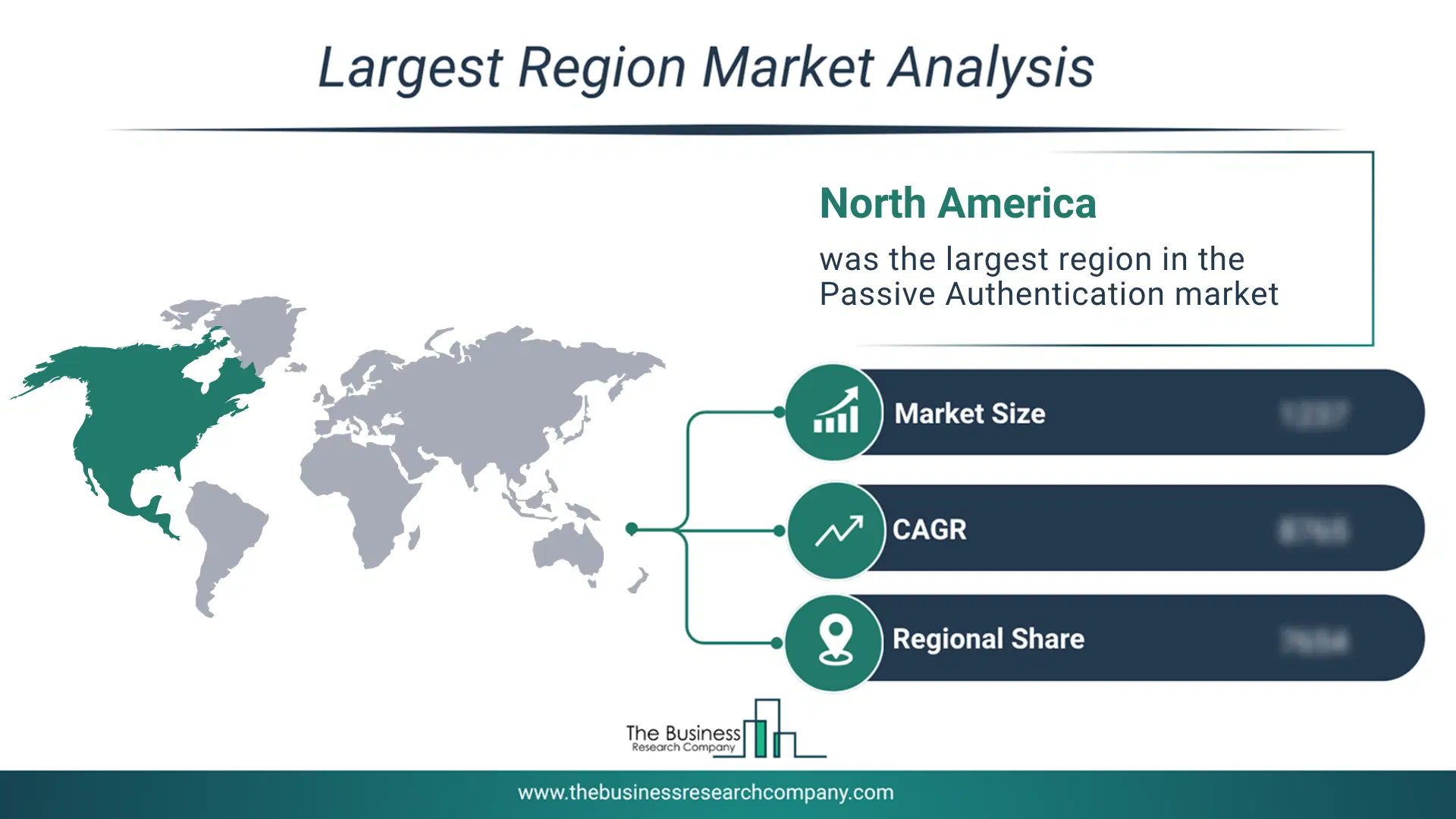
Regional Insights
North America was the largest region in the passive authentication market in 2025. Asia-Pacific is expected to be the fastest-growing region in the forecast period. The regions covered in this market report are Asia-Pacific, South East Asia, Western Europe, Eastern Europe, North America, South America, Middle East, Africa. The countries covered in this market report are Australia, Brazil, China, France, Germany, India, Indonesia, Japan, Taiwan, Russia, South Korea, UK, USA, Canada, Italy, Spain.What Defines the Passive Authentication Market?
The passive authentication market consists of revenues earned by entities by providing services such as behavioral analytics, risk assessment, fraud detection, continuous monitoring, device profiling, and transaction analysis. The market value includes the value of related goods sold by the service provider or included within the service offering. The passive authentication market includes sales of facial recognition cameras, iris scanners, smart cards, security tokens, and mobile authentication devices. Values in this market are ‘factory gate’ values, that is, the value of goods sold by the manufacturers or creators of the goods, whether to other entities (including downstream manufacturers, wholesalers, distributors, and retailers) or directly to end customers. The value of goods in this market includes related services sold by the creators of the goods.How is Market Value Defined and Measured?
The market value is defined as the revenues that enterprises gain from the sale of goods and/or services within the specified market and geography through sales, grants, or donations in terms of the currency (in USD unless otherwise specified). The revenues for a specified geography are consumption values that are revenues generated by organizations in the specified geography within the market, irrespective of where they are produced. It does not include revenues from resales along the supply chain, either further along the supply chain or as part of other products.
This chart presents market attractiveness based on a quantitative evaluation of growth, competition, strategic alignment, and risk, offering a clear view of opportunity areas for decision-making. This chart is for illustrative purposes; the full report contains the complete analysis.

This chart highlights the Total Addressable Market (TAM) by estimating the maximum revenue opportunity using an assumption-driven approach, supporting strategic planning and opportunity sizing across markets. The chart is illustrative; the full report provides a more comprehensive analysis.
What Key Data and Analysis Are Included in the Passive Authentication Market Report 2026?
The passive authentication market research report is one of a series of new reports from The Business Research Company that provides market statistics, including industry global market size, regional shares, competitors with the market share, detailed market segments, market trends and opportunities, and any further data you may need to thrive in the passive authentication industry. The market research report delivers a complete perspective of everything you need, with an in-depth analysis of the current and future state of the industry.Passive Authentication Market Report Forecast Analysis
| Report Attribute | Details |
|---|---|
| Market Size Value In 2026 | $3.01 billion |
| Revenue Forecast In 2030 | $7.12 billion |
| Growth Rate | CAGR of 24% from 2026 to 2030 |
| Base Year For Estimation | 2025 |
| Actual Estimates/Historical Data | 2020-2025 |
| Forecast Period | 2026 - 2030 |
| Market Representation | Revenue in USD Billion and CAGR from 2026 to 2030 |
| Segments Covered | Offering, Deployment, Technology, Organization Size, Industry Vertical |
| Regional Scope | Asia-Pacific, Western Europe, Eastern Europe, North America, South America, Middle East, Africa |
| Country Scope | The Countries Covered In This Market Report Are Australia, Brazil, China, France, Germany, India, Indonesia, Japan, Taiwan, Russia, South Korea, Uk, Usa, Canada, Italy, Spain. |
| Key Companies Profiled | NuData Security Inc., ThreatMetrix, NEC Corporation, Forter Inc., Callsign Inc., BioCatch Ltd., Pindrop Security Inc., BehavioAnalytics, Plurilock Security Inc., SpyCloud Inc., SecureAuth Corporation, Arkose Labs Inc., Acuant Inc., BehavioSec Inc., SentiLink Inc., Zighra Inc., TypingDNA Inc., SecuredTouch Ltd. |
| Customization Scope | Request for Customization |
| Pricing And Purchase Options | Explore Purchase Options |