

Patient Risk Stratification Market Report 2026
Global Outlook – By Type (Predictive Risk Stratification Model, Retrospective Risk Stratification Model, Prospective Risk Stratification Model, Concurrent Risk Stratification Model), By Component (Software, Services), By Delivery Model (On-Premise, Cloud-Based), By Application (Risk Adjustment, Clinical Workflow, Revenue Cycle Management, Other Applications), By End User (Healthcare Providers, Healthcare Payers, Other End Users) - Market Size, Trends, Strategies, and Forecast to 2030
Patient Risk Stratification Market Overview
• Patient Risk Stratification market size has reached to $2.81 billion in 2025 • Expected to grow to $10.64 billion in 2030 at a compound annual growth rate (CAGR) of 30.4% • Growth Driver: Impact Of Rising Chronic Disease Burden On The Growth Of The Patient Risk Stratification Market • Market Trend: Technological Advancements In AI-Driven Disease Screening For Enhancing Patient Risk Stratification And Care • North America was the largest region in 2025 and Asia-Pacific is the fastest growing region.What Is Covered Under Patient Risk Stratification Market?
Patient risk stratification is the process of assessing and categorizing patients based on their risk of experiencing adverse health outcomes. It is used to identify high-risk patients for targeted interventions, optimize resource allocation, facilitate preventive care, improve care coordination, enhance patient outcomes, reduce costs, and support population health management. The main types of patient risk stratification are predictive risk stratification models, retrospective risk stratification models, prospective risk stratification models, and concurrent risk stratification models. Predictive risk stratification models use historical and current patient data to forecast future health outcomes and identify individuals at high risk of developing specific conditions or complications. The components are software and services, and the delivery models include on-premise and cloud-based. The various applications are risk adjustment, clinical workflow, revenue cycle management, and others, and they are used by various end users such as healthcare providers, healthcare payers, and others.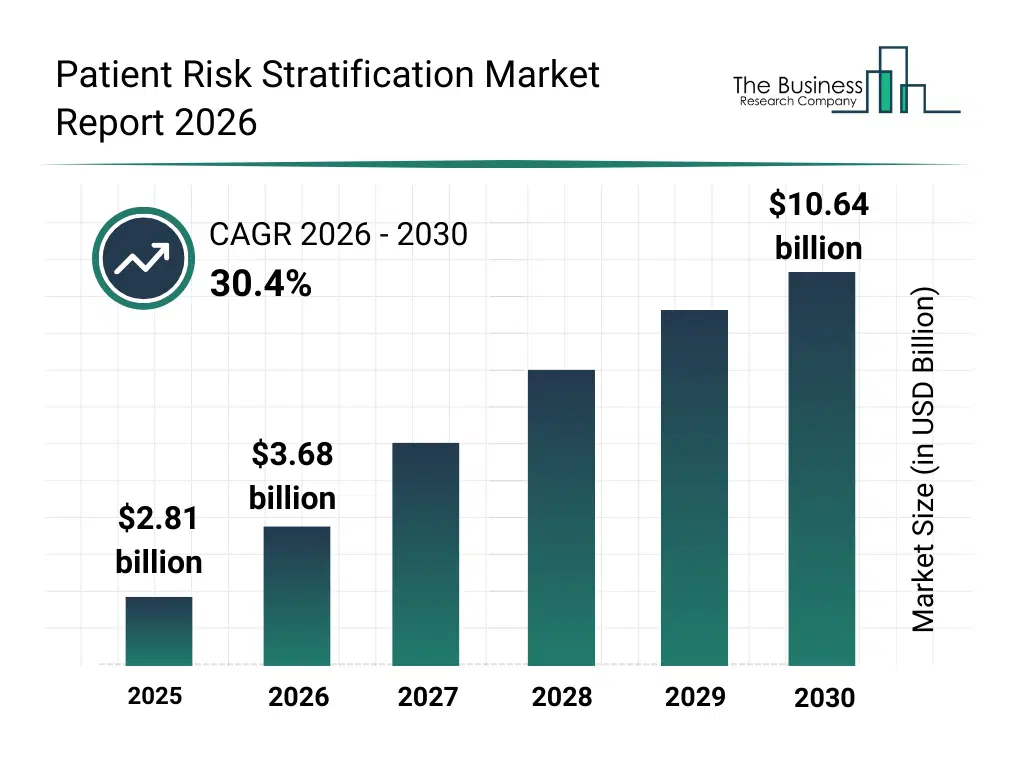
What Is The Patient Risk Stratification Market Size and Share 2026?
The patient risk stratification market size has grown exponentially in recent years. It will grow from $2.81 billion in 2025 to $3.68 billion in 2026 at a compound annual growth rate (CAGR) of 31.0%. The growth in the historic period can be attributed to manual patient risk assessments, reliance on historical patient data, fragmented healthcare information systems, limited use of predictive analytics, lack of standardized risk models.What Is The Patient Risk Stratification Market Growth Forecast?
The patient risk stratification market size is expected to see exponential growth in the next few years. It will grow to $10.64 billion in 2030 at a compound annual growth rate (CAGR) of 30.4%. The growth in the forecast period can be attributed to integration of machine learning and ai in risk stratification, increasing adoption among healthcare providers and payers, growth of cloud-based risk stratification solutions, rising demand for real-time clinical decision support, expansion of population health management initiatives. Major trends in the forecast period include increasing adoption of ai-based risk prediction models, rising deployment of cloud-based risk stratification platforms, growing integration of risk stratification with clinical workflows, increasing focus on real-time patient risk monitoring, rising utilization of data analytics for population health management.
Global Patient Risk Stratification Market Segmentation
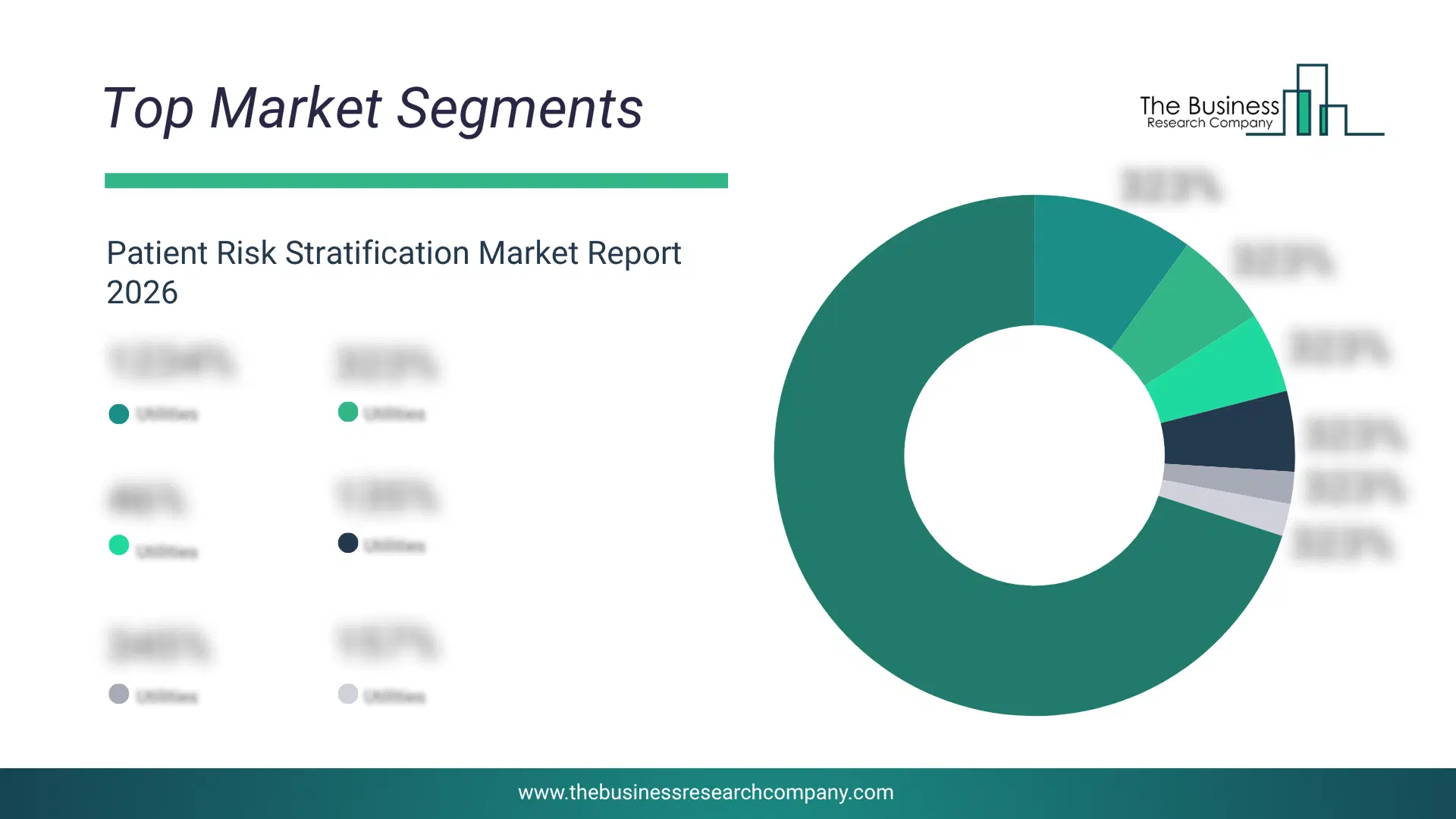
1) By Type: Predictive Risk Stratification Model, Retrospective Risk Stratification Model, Prospective Risk Stratification Model, Concurrent Risk Stratification Model 2) By Component: Software, Services 3) By Delivery Model: On-Premise, Cloud-Based 4) By Application: Risk Adjustment, Clinical Workflow, Revenue Cycle Management, Other Applications 5) By End User: Healthcare Providers, Healthcare Payers, Other End Users Subsegments: 1) By Predictive Risk Stratification Model: Machine Learning-Based Predictive Models, Statistical Predictive Models, AI-Powered Predictive Models 2) By Retrospective Risk Stratification Model: Historical Data-Based Risk Models, Data Mining Retrospective Models 3) By Prospective Risk Stratification Model: Longitudinal Cohort-Based Models, Real-Time Risk Assessment Models 4) By Concurrent Risk Stratification Model: In-Hospital Risk Assessment Models, Real-Time Clinical Decision Support ModelsWhat Is The Driver Of The Patient Risk Stratification Market?
The growing burden of chronic diseases is expected to propel the growth of the patient risk stratification market going forward. Chronic diseases are long-lasting health conditions that persist for extended periods, typically three months or longer. The growing burden of chronic diseases can be attributed to an aging population, unhealthy lifestyles, urbanization, environmental factors, limited healthcare access, economic disparities, and increased stress levels. Patient risk stratification helps identify individuals at different risk levels for chronic diseases, allowing for personalized care, early intervention, better resource allocation, and improved health outcomes. For instance, in June 2025, according to the World Health Organization, a Switzerland-based international specialized agency, reported that noncommunicable diseases (NCDs) remain the leading cause of death and disability in the world, including in the WHO European Region. Here, 1 in 5 men and 1 in 10 women die before 70 years of age because of NCDs such as cardiovascular diseases, cancers, chronic respiratory diseases, and diabetes. Therefore, the growing burden of chronic diseases drives the patient risk stratification industry.Key Players In The Global Patient Risk Stratification Market
Major companies operating in the patient risk stratification market are NextGen Healthcare Inc., Health Catalyst, Freenome, Strive Health, Medeanalytics Inc., Lightbeam Health Solutions, Graphnet Health Ltd., Equipo Health Inc., Epic Systems Corporation, Cerner Corporation, IBM Corporation, Allscripts Healthcare Solutions Inc., Medecision Inc., Cotiviti Inc., SAS Institute Inc., SCIO Health Analytics, Arcadia io, HealthEC LLC, Conifer Health Solutions LLC, Wellcentive Inc., ZeOmega Inc., LexisNexis Risk Solutions, Milliman Inc., NVision Health, RLDatix, Verisk Analytics Inc., Innovaccer Inc., eClinicalWorks, Enli Health Intelligence, Athenahealth Inc., i2i Population Health, 3M Health Information Systems, Change Healthcare, Cognizant Technology Solutions, McKesson Corporation, Evolent Health Inc.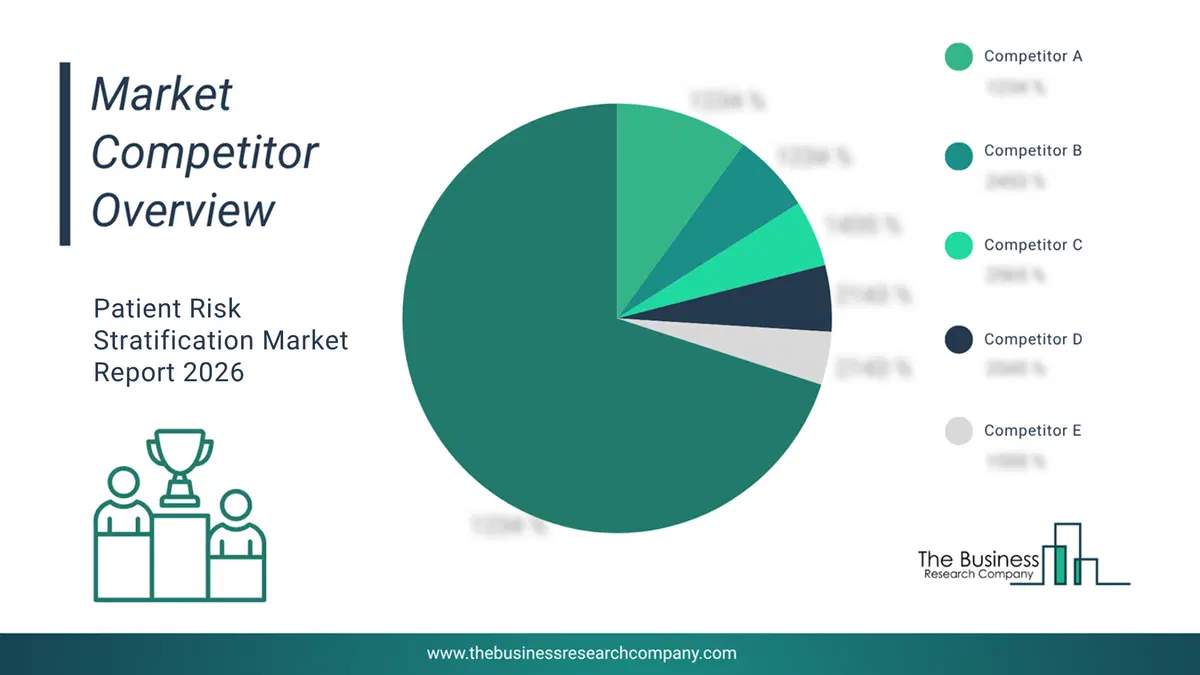
This chart is for illustrative purposes; the full report includes a detailed competitor analysis and comprehensive overview of the top 10 companies in the market.
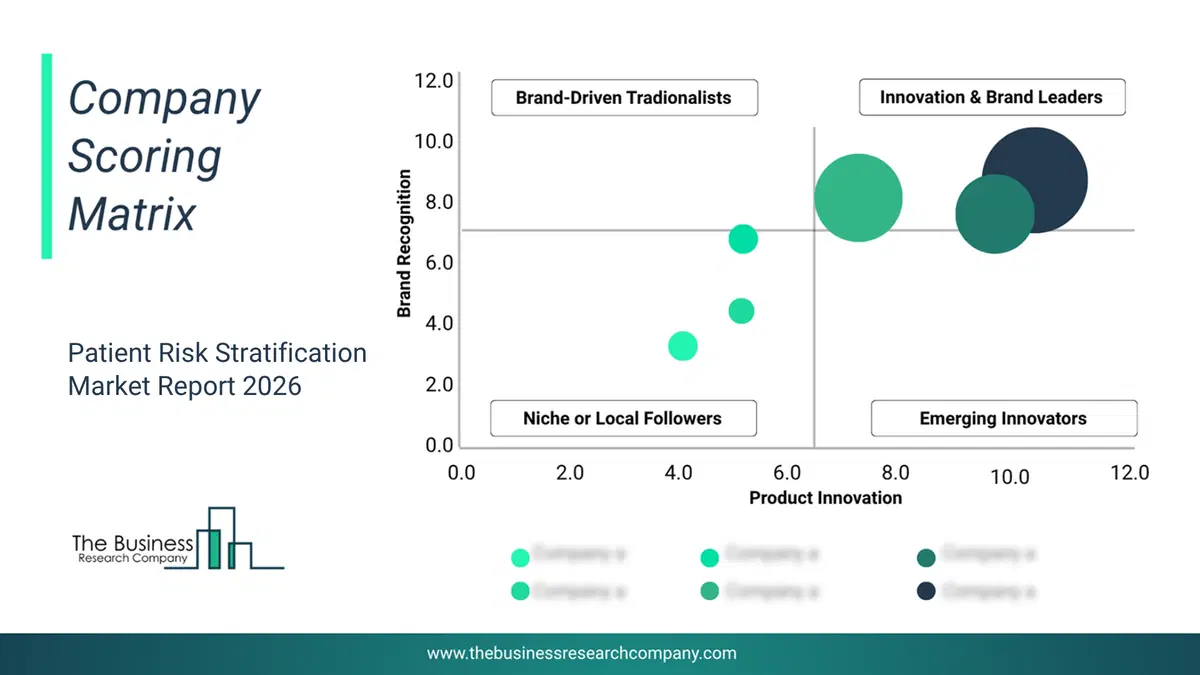
This chart maps companies by product innovation and brand strength, with bubble size indicating relative revenue, helping identify market leaders, challengers, and niche players. This is an illustrative chart; the full report provides a complete and accurate competitive analysis.
Global Patient Risk Stratification Market Trends and Insights
Major companies operating in the patient risk stratification market are focusing on technological advancements in healthcare, such as artificial intelligence (AI) in disease screening, to improve early detection, enhance patient outcomes, and reduce healthcare costs by enabling more accurate risk assessments and personalized treatment plans. AI in disease screening utilizes sophisticated algorithms and machine learning to examine medical data, enabling early disease detection and improving diagnostic accuracy by quickly analyzing large amounts of information. For instance, in May 2024, WELL Health Technologies Corporation, a Canada-based healthcare company, and its investee company HEALWELL AI, a Canada-based healthcare company focused on AI and data science for preventative care, launched WELL AI Decision Support (WAIDS). It is aimed at rare diseases and now includes screening for chronic conditions such as kidney disease, hypertension, and diabetes. It can detect over 100 diseases and provide risk stratification, helping clinicians identify care gaps and access actionable data at the point of care.What Are Latest Mergers And Acquisitions In The Patient Risk Stratification Market?
In December 2023, Healthcare Outcomes Performance Company (HOPCo), a US-based provider of healthcare performance improvement solutions focusing on data analytics and patient outcomes, acquired MyACTome for an undisclosed amount. With this acquisition, HOPCo aims to improve patient outcomes and enhance the efficiency of healthcare delivery. MyACTome is a US-based company smartphone-based platform that specializes in assessing fall risk and frailty, playing a crucial role in patient risk stratification.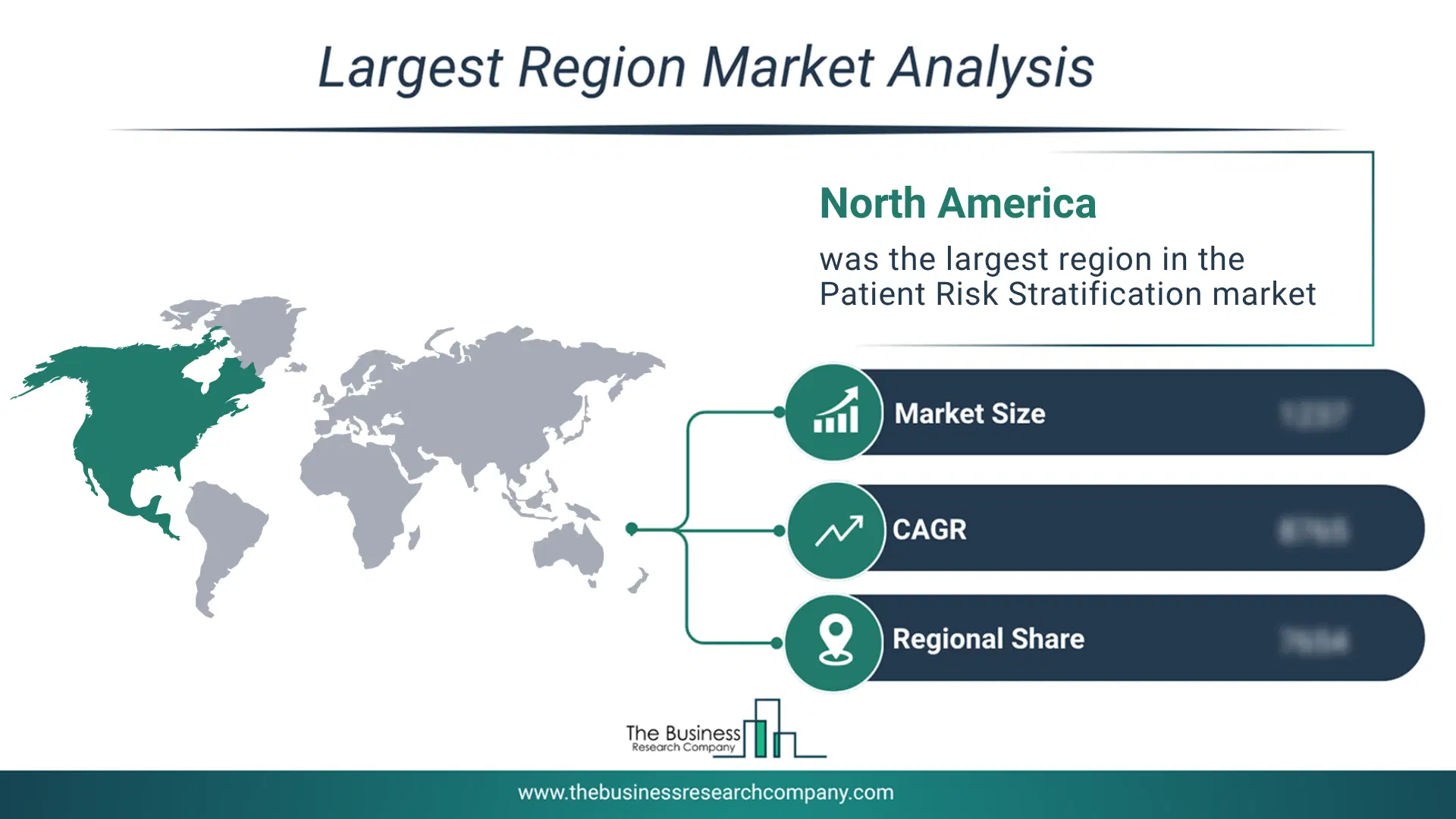
Regional Outlook
North America was the largest region in the patient risk stratification market in 2025. Asia-Pacific is expected to be the fastest-growing region in the forecast period. The regions covered in this market report are Asia-Pacific, South East Asia, Western Europe, Eastern Europe, North America, South America, Middle East, Africa. The countries covered in this market report are Australia, Brazil, China, France, Germany, India, Indonesia, Japan, Taiwan, Russia, South Korea, UK, USA, Canada, Italy, Spain.What Defines the Patient Risk Stratification Market?
The patient risk stratification market includes revenues earned by entities by risk assessment and stratification services, telehealth services, medication management services, chronic disease risk assessment services, and genomic risk stratification services. The market value includes the value of related goods sold by the service provider or included within the service offering. Only goods and services traded between entities or sold to end consumers are included.How is Market Value Defined and Measured?
The market value is defined as the revenues that enterprises gain from the sale of goods and/or services within the specified market and geography through sales, grants, or donations in terms of the currency (in USD unless otherwise specified). The revenues for a specified geography are consumption values that are revenues generated by organizations in the specified geography within the market, irrespective of where they are produced. It does not include revenues from resales along the supply chain, either further along the supply chain or as part of other products.
This chart presents market attractiveness based on a quantitative evaluation of growth, competition, strategic alignment, and risk, offering a clear view of opportunity areas for decision-making. This chart is for illustrative purposes; the full report contains the complete analysis.

This chart highlights the Total Addressable Market (TAM) by estimating the maximum revenue opportunity using an assumption-driven approach, supporting strategic planning and opportunity sizing across markets. The chart is illustrative; the full report provides a more comprehensive analysis.
What Key Data and Analysis Are Included in the Patient Risk Stratification Market Report 2026?
The patient risk stratification market research report is one of a series of new reports from The Business Research Company that provides market statistics, including industry global market size, regional shares, competitors with the market share, detailed market segments, market trends and opportunities, and any further data you may need to thrive in the patient risk stratification industry. The market research report delivers a complete perspective of everything you need, with an in-depth analysis of the current and future state of the industry.Patient Risk Stratification Market Report Forecast Analysis
| Report Attribute | Details |
|---|---|
| Market Size Value In 2026 | $3.68 billion |
| Revenue Forecast In 2030 | $10.64 billion |
| Growth Rate | CAGR of 30.4% from 2026 to 2030 |
| Base Year For Estimation | 2025 |
| Actual Estimates/Historical Data | 2020-2025 |
| Forecast Period | 2026 - 2030 |
| Market Representation | Revenue in USD Billion and CAGR from 2026 to 2030 |
| Segments Covered | Type, Component, Delivery Model, Application, End User |
| Regional Scope | Asia-Pacific, Western Europe, Eastern Europe, North America, South America, Middle East, Africa |
| Country Scope | The countries covered in the report are Australia, Brazil, China, France, Germany, India, Indonesia, Japan, Taiwan, Russia, South Korea, UK, USA, Canada, Italy, Spain |
| Key Companies Profiled | NextGen Healthcare Inc., Health Catalyst, Freenome, Strive Health, Medeanalytics Inc., Lightbeam Health Solutions, Graphnet Health Ltd., Equipo Health Inc., Epic Systems Corporation, Cerner Corporation, IBM Corporation, Allscripts Healthcare Solutions Inc., Medecision Inc., Cotiviti Inc., SAS Institute Inc., SCIO Health Analytics, Arcadia io, HealthEC LLC, Conifer Health Solutions LLC, Wellcentive Inc., ZeOmega Inc., LexisNexis Risk Solutions, Milliman Inc., NVision Health, RLDatix, Verisk Analytics Inc., Innovaccer Inc., eClinicalWorks, Enli Health Intelligence, Athenahealth Inc., i2i Population Health, 3M Health Information Systems, Change Healthcare, Cognizant Technology Solutions, McKesson Corporation, Evolent Health Inc. |
| Customization Scope | Request for Customization |
| Pricing And Purchase Options | Explore Purchase Options |