

Pedestrian Detection System Market Report 2026
Global Outlook – By Component (Hardware, Software), By Technology (Vision-Based Systems, Sensor Fusion Systems, Infrared Systems, Ultrasonic Systems), By Distribution Channel (Original Equipment Manufacturers (OEMs), Aftermarket), By Vehicle Type (Passenger Vehicles, Commercial Vehicles) – Market Size, Trends, Strategies, and Forecast to 2030
Pedestrian Detection System Market Overview
• Pedestrian Detection System market size has reached to $9.77 billion in 2025 • Expected to grow to $20.35 billion in 2030 at a compound annual growth rate (CAGR) of 15.8% • Growth Driver: Rising Road Fatalities Propel Growth In The Pedestrian Detection System Market • Market Trend: AI-Driven Predictive Analytics To Boost Safety And Optimize Decision-Making • Asia-Pacific was the largest region in 2025 and Europe is the fastest growing region.What Is Covered Under Pedestrian Detection System Market?
A pedestrian detection system is an advanced safety feature in vehicles that uses sensors, cameras, and AI to identify and track pedestrians in the vehicle's path. It alerts the driver or automatically applies the brakes to prevent collisions, enhancing road safety in urban and crowded environments. The main component types of pedestrian detection systems are hardware and software. Hardware refers to the physical devices and equipment used in pedestrian detection systems, including sensors, cameras, and control units, which work together to detect pedestrians and provide alerts to enhance safety. The technologies are categorized into vision-based systems, sensor fusion systems, infrared systems, and ultrasonic systems, and distribution channels include original equipment manufacturers (OEMs), aftermarket for vehicle types such as passenger vehicles, and commercial vehicles. The applications include traffic management, surveillance, and others.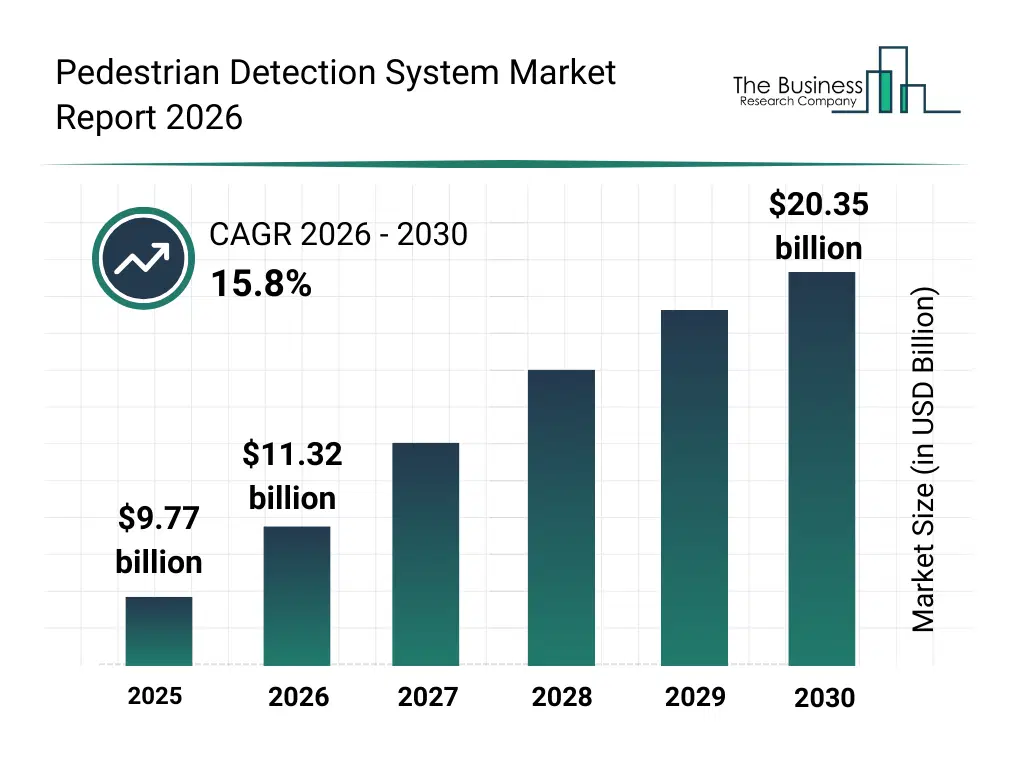
What Is The Pedestrian Detection System Market Size and Share 2026?
The pedestrian detection system market size has grown rapidly in recent years. It will grow from $9.77 billion in 2025 to $11.32 billion in 2026 at a compound annual growth rate (CAGR) of 15.9%. The growth in the historic period can be attributed to urban accident rates, pedestrian safety regulations, adas feature adoption, camera and sensor advancements, government safety ratings.What Is The Pedestrian Detection System Market Growth Forecast?
The pedestrian detection system market size is expected to see rapid growth in the next few years. It will grow to $20.35 billion in 2030 at a compound annual growth rate (CAGR) of 15.8%. The growth in the forecast period can be attributed to mandatory safety system regulations, autonomous vehicle development, smart city integration, declining sensor costs, growth of electric passenger vehicles. Major trends in the forecast period include growing adoption of vision based detection systems, rising integration with automatic emergency braking, expansion of sensor fusion technologies, increasing deployment in urban vehicles, higher focus on vulnerable road user safety.
Global Pedestrian Detection System Market Segmentation
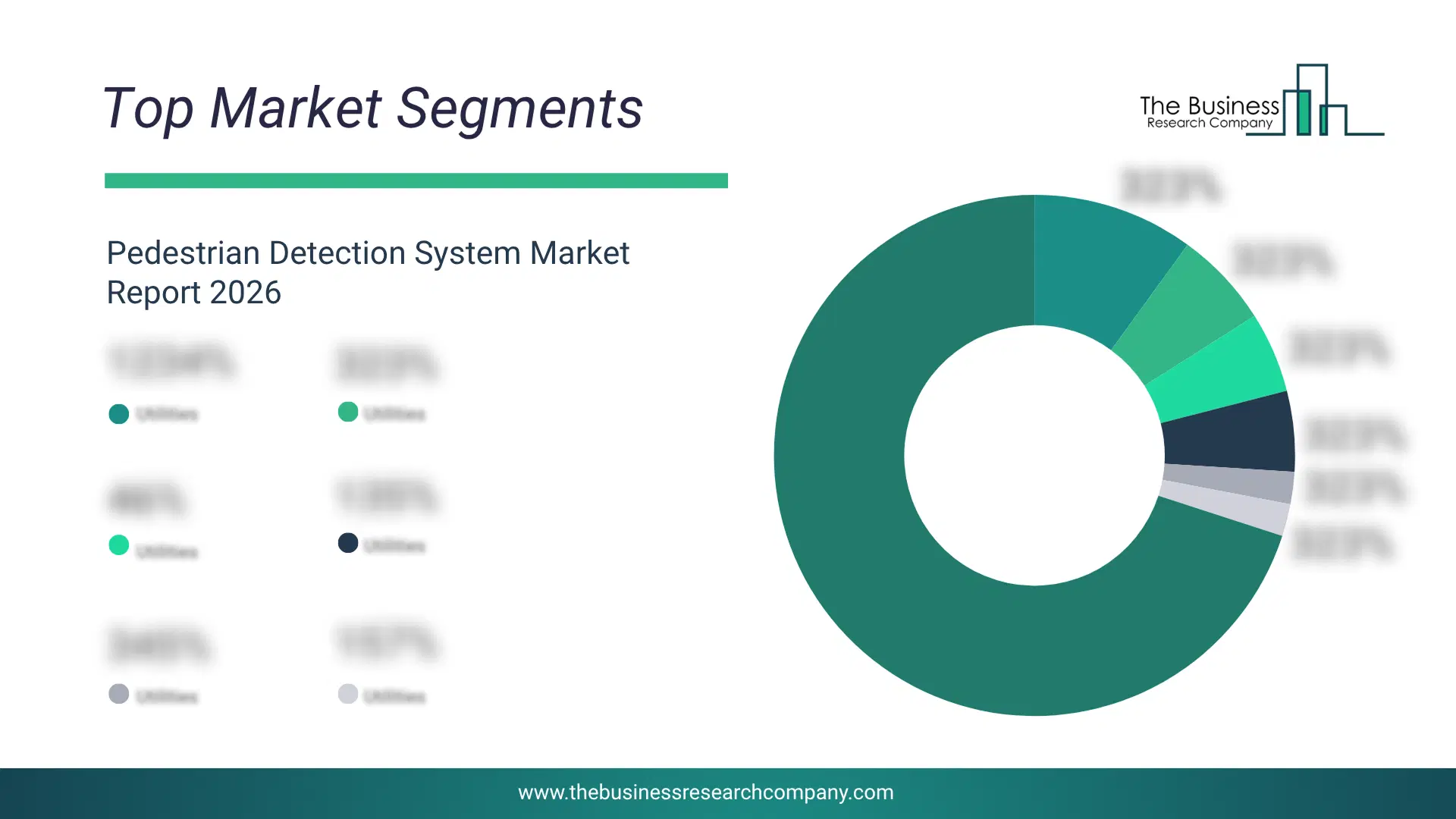
1) By Component: Hardware, Software 2) By Technology: Vision-Based Systems, Sensor Fusion Systems, Infrared Systems, Ultrasonic Systems 3) By Distribution Channel: Original Equipment Manufacturers (OEMs), Aftermarket 4) By Vehicle Type: Passenger Vehicles, Commercial Vehicles Subsegments: 1) By Hardware: Cameras, Sensors, Processing Units, Communication Modules, Display Units, Mounting Accessories 2) By Software: Image Processing Software, Machine Learning Algorithms, Data Fusion Software, Real-Time Processing Software, Simulation And Testing Software, User Interface Software, Integration Software For Vehicle SystemsWhat Is The Driver Of The Pedestrian Detection System Market?
The increasing number of road fatalities is expected to propel the growth of the pedestrian detection system market. Road fatalities refer to deaths that occur as a direct result of injuries sustained in traffic accidents or road-related incidents. The increase in road fatalities can be attributed to factors such as higher vehicle speeds, distracted driving due to mobile phone usage, and insufficient road safety measures. Additionally, growing urbanization and the rising number of vehicles on the road contribute to more frequent and severe traffic accidents. Pedestrian detection systems use AI, sensors, and cameras in vehicles and road infrastructure to identify pedestrians and prevent accidents, thereby reducing road fatalities. For instance, in November 2025, according to the National Highway Traffic Safety Administration (NHTSA), a US-based government agency, in 2023, estimated injuries from traffic crashes rose to 2,442,581, a 2.5% increase over the 2.38 million injured in 2022. Therefore, the increasing number of road fatalities is driving the growth of the pedestrian detection system industry.Key Players In The Global Pedestrian Detection System Market
Major companies operating in the pedestrian detection system market report include Robert Bosch GmbH, Denso Corporation, Continental AG, Valeo S.A., ZF Friedrichshafen AG, Magna International Inc., Aptiv PLC, Autoliv Inc., HELLA GmbH & Co. KGaA, Mobileye, Veoneer, NVIDIA Corporation, Intel Corporation, Panasonic Corporation, Hitachi Ltd., Magneti Marelli S.p.A., Velodyne Lidar Inc., LeddarTech, Teledyne Technologies, Infineon Technologies AG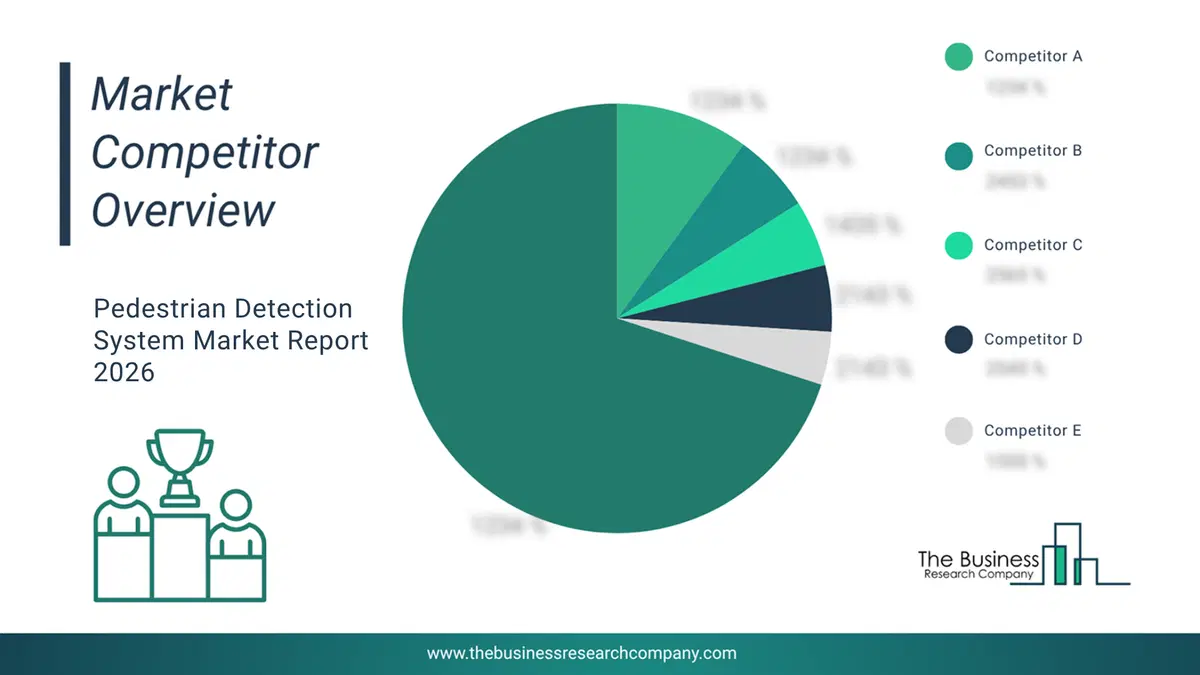
This chart is for illustrative purposes; the full report includes a detailed competitor analysis and comprehensive overview of the top 10 companies in the market.
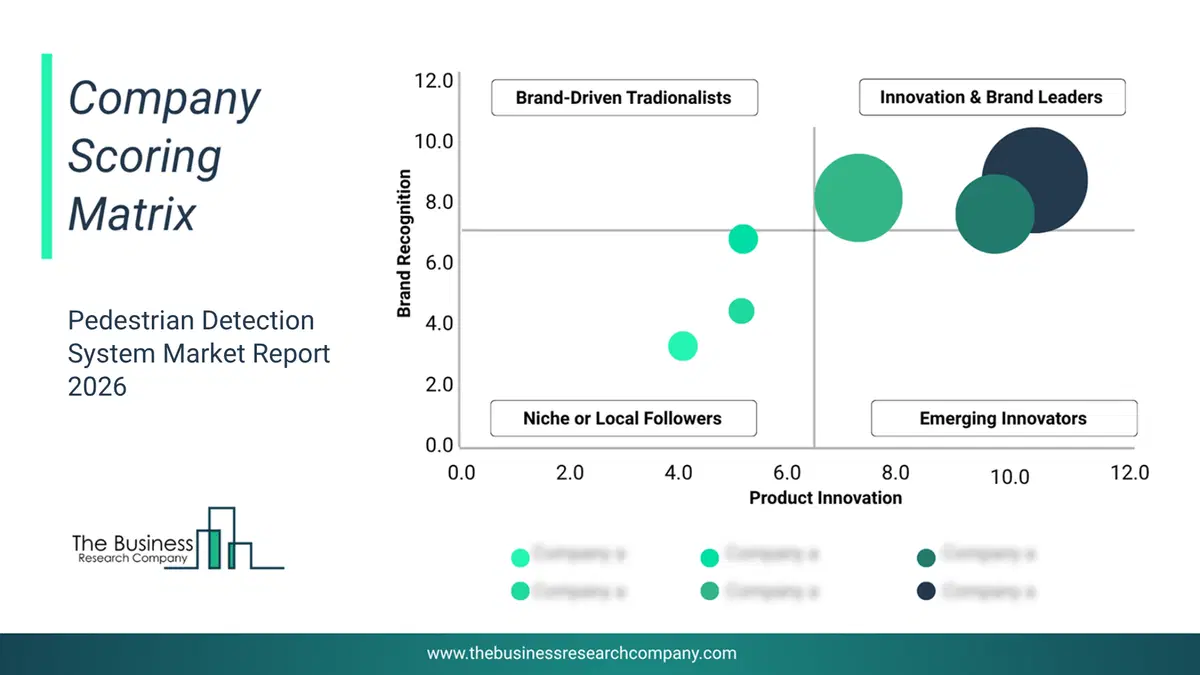
This chart maps companies by product innovation and brand strength, with bubble size indicating relative revenue, helping identify market leaders, challengers, and niche players. This is an illustrative chart; the full report provides a complete and accurate competitive analysis.
Global Pedestrian Detection System Market Trends and Insights
Major companies operating in the pedestrian detection system market are focusing on AI integration in proactive safety measures, such as AI-powered object detection, to enhance safety, reduce accidents, and provide real-time insights for better decision-making. The AI-powered object detection identifies people and material handling equipment (MHE), offering visual and audio alerts for potential hazards. For instance, in December 2023, Powerfleet Inc., a US-based technology company, launched its advanced pedestrian proximity detection solution, leveraging AI technology to enhance safety in warehouses and manufacturing facilities. It features three vehicle-mounted cameras and real-time analytics. The solution aims to address the growing demand for effective safety measures in environments with increasing labor and safety challenges.What Are Latest Mergers And Acquisitions In The Pedestrian Detection System Market?
In June 2023, Magna International, a Canada-based mobility and automotive parts supplier offering advanced driver-assistance systems (ADAS), vehicle electronics, and full active safety systems, acquired Veoneer Active Safety from SSW Partners for an undisclosed amount. With this acquisition, Magna aimed to broaden its active safety portfolio by integrating Veoneer’s sensor, software, and system engineering capabilities, thereby enhancing its ability to supply comprehensive ADAS and pedestrian detection systems to automakers at scale. Veoneer Active Safety is a US-based provider of automotive sensors, software modules, and complete active safety systems, including cameras, radars, and lidar/vision based detection suites used for pedestrian detection, collision avoidance, and other ADAS functions.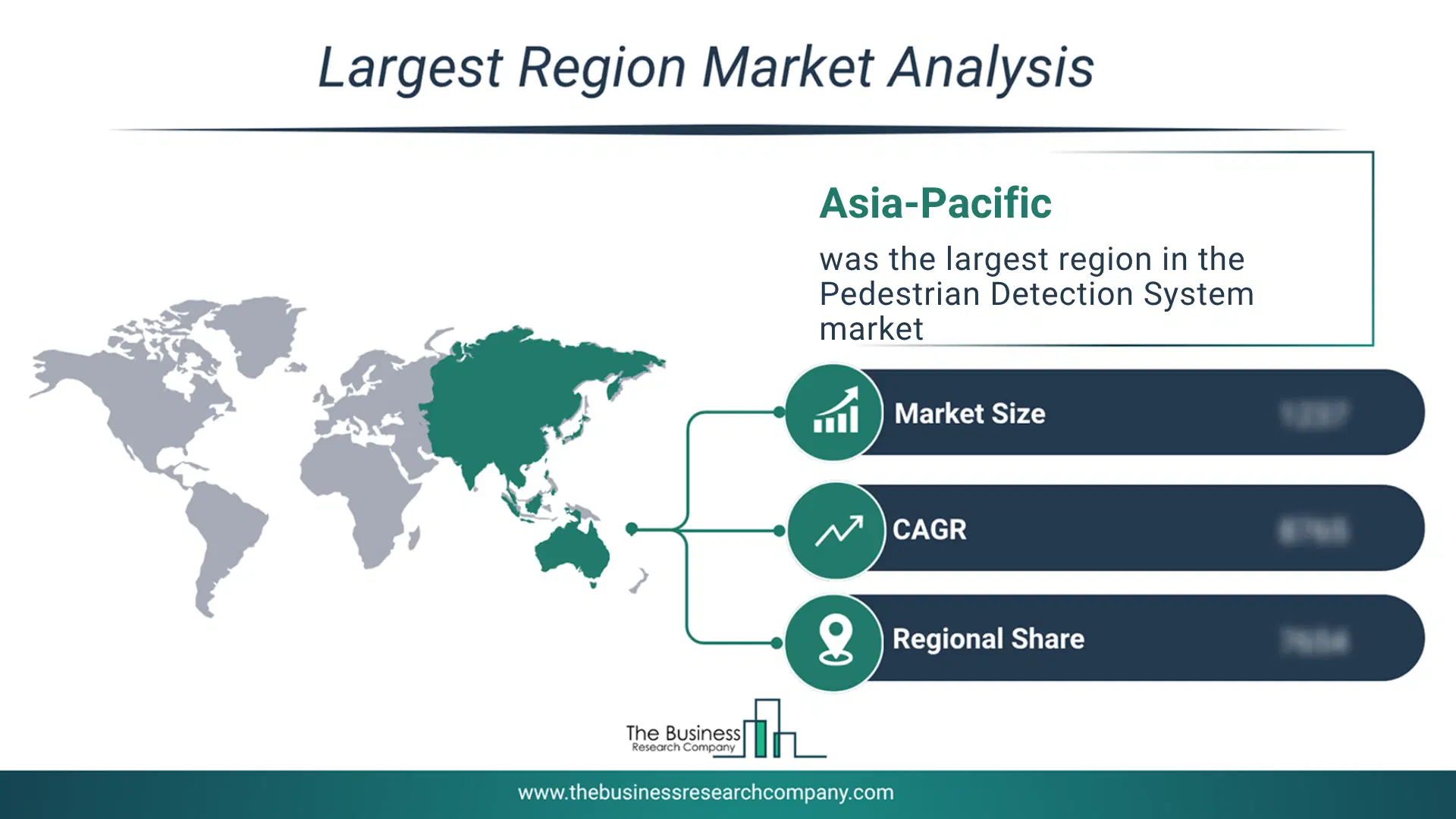
Regional Outlook
Asia-Pacific was the largest region in the pedestrian detection system market in 2025. Europe is expected to be the fastest-growing region in the forecast period. The regions covered in this market report include Asia-Pacific, South East Asia, Western Europe, Eastern Europe, North America, South America, Middle East, Africa. The countries covered in this market report include Australia, Brazil, China, France, Germany, India, Indonesia, Japan, Taiwan, Russia, South Korea, UK, USA, Canada, Italy, SpainWhat Defines the Pedestrian Detection System Market?
The pedestrian detection system market consists of revenues earned by entities by providing services such as sensor integration, software development, AI-based analytics, and real-time monitoring solutions. The market value includes the value of related goods sold by the service provider or included within the service offering. The pedestrian detection system market also includes sales of cameras, radar sensors, LiDAR systems, and control units. Values in this market are ‘factory gate’ values, that is, the value of goods sold by the manufacturers or creators of the goods, whether to other entities (including downstream manufacturers, wholesalers, distributors, and retailers) or directly to end customers. The value of goods in this market includes related services sold by the creators of the goods.How is Market Value Defined and Measured?
The market value is defined as the revenues that enterprises gain from the sale of goods and/or services within the specified market and geography through sales, grants, or donations in terms of the currency (in USD unless otherwise specified). The revenues for a specified geography are consumption values that are revenues generated by organizations in the specified geography within the market, irrespective of where they are produced. It does not include revenues from resales along the supply chain, either further along the supply chain or as part of other products.
This chart presents market attractiveness based on a quantitative evaluation of growth, competition, strategic alignment, and risk, offering a clear view of opportunity areas for decision-making. This chart is for illustrative purposes; the full report contains the complete analysis.

This chart highlights the Total Addressable Market (TAM) by estimating the maximum revenue opportunity using an assumption-driven approach, supporting strategic planning and opportunity sizing across markets. The chart is illustrative; the full report provides a more comprehensive analysis.
What Key Data and Analysis Are Included in the Pedestrian Detection System Market Report 2026?
The pedestrian detection system market research report is one of a series of new reports from The Business Research Company that provides market statistics, including industry global market size, regional shares, competitors with the market share, detailed market segments, market trends and opportunities, and any further data you may need to thrive in the pedestrian detection system industry. The market research report delivers a complete perspective of everything you need, with an in-depth analysis of the current and future state of the industry.Pedestrian Detection System Market Report Forecast Analysis
| Report Attribute | Details |
|---|---|
| Market Size Value In 2026 | $11.32 billion |
| Revenue Forecast In 2030 | $20.35 billion |
| Growth Rate | CAGR of 15.9% from 2026 to 2030 |
| Base Year For Estimation | 2025 |
| Actual Estimates/Historical Data | 2020-2025 |
| Forecast Period | 2026 - 2030 - 2030 |
| Market Representation | Revenue in USD Billion and CAGR from 2026 to 2030 |
| Segments Covered | Component, Technology, Distribution Channel, Vehicle Type |
| Regional Scope | Asia-Pacific, Western Europe, Eastern Europe, North America, South America, Middle East, Africa |
| Country Scope | The countries covered in the report are Australia, Brazil, China, France, Germany, India, Indonesia, Japan, Taiwan, Russia, South Korea, UK, USA, Canada, Italy, Spain. |
| Key Companies Profiled | Robert Bosch GmbH, Denso Corporation, Continental AG, Valeo S.A., ZF Friedrichshafen AG, Magna International Inc., Aptiv PLC, Autoliv Inc., HELLA GmbH & Co. KGaA, Mobileye, Veoneer, NVIDIA Corporation, Intel Corporation, Panasonic Corporation, Hitachi Ltd., Magneti Marelli S.p.A., Velodyne Lidar Inc., LeddarTech, Teledyne Technologies, Infineon Technologies AG |
| Customization Scope | Request for Customization |
| Pricing And Purchase Options | Explore Purchase Options |