

Pediatric Asthma Treatment Market Report 2026
Global Outlook – By Type (Long-Term Control Medications, Quick-Relief Medications, Other Types), By Drug Class (Inhaled Corticosteroids, Long-Acting Beta Agonists, Leukotriene Modifiers, Antihistamines, Biologics), By Route Of Administration (Oral Route, Nasal Route, Injectable Route), By Distribution Channel (Hospital Pharmacies, Retail Pharmacies, Online Pharmacies), By End User (Hospitals, Clinics, Home Care, Other End users) – Market Size, Trends, Strategies, and Forecast to 2030
Pediatric Asthma Treatment Market Overview
• Pediatric Asthma Treatment market size has reached to $11.65 billion in 2025 • Expected to grow to $15.14 billion in 2030 at a compound annual growth rate (CAGR) of 5.3% • Growth Driver: The Increase In Respiratory Infections Drives The Growth Of The Market Due To Rising Air Pollution And Vulnerability In Children • Market Trend: Innovative Biologic Therapies Advance Care For Children With Severe Asthma • North America was the largest region in 2025 and Asia-Pacific is the fastest growing region.What Is Covered Under Pediatric Asthma Treatment Market?
Pediatric asthma treatment refers to the medical management and therapeutic interventions designed to control and relieve asthma symptoms in children. It includes the use of medications, lifestyle modifications, and monitoring strategies to reduce inflammation, prevent flare-ups, and improve breathing function. The main types of pediatric asthma treatment are long-term control medications, quick-relief medications, and other types. Long-term control medications refer to drugs that are taken daily over an extended period to reduce inflammation, prevent asthma symptoms, and maintain stable lung function. This drug class includes inhaled corticosteroids, long-acting beta agonists, leukotriene modifiers, antihistamines, and biologics. These medications are administered through various routes, such as the oral route, nasal route, and injectable route. They are distributed through hospital pharmacies, retail pharmacies, and online pharmacies. are used across different settings, including hospitals, clinics, home care, and other end users.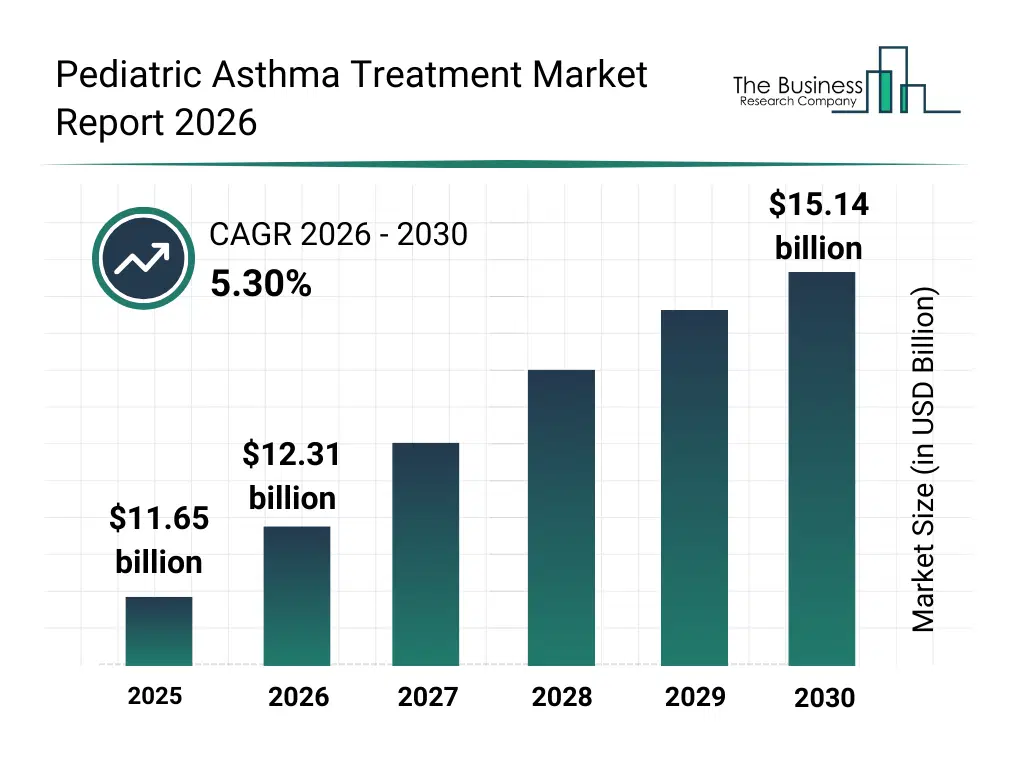
What Is The Pediatric Asthma Treatment Market Size and Share 2026?
The pediatric asthma treatment market size has grown strongly in recent years. It will grow from $11.65 billion in 2025 to $12.31 billion in 2026 at a compound annual growth rate (CAGR) of 5.7%. The growth in the historic period can be attributed to limited availability of pediatric-specific asthma medications, reliance on hospital-based treatment, growing prevalence of childhood asthma, increasing awareness among caregivers, adoption of conventional inhalers and short-acting beta agonists.What Is The Pediatric Asthma Treatment Market Growth Forecast?
The pediatric asthma treatment market size is expected to see strong growth in the next few years. It will grow to $15.14 billion in 2030 at a compound annual growth rate (CAGR) of 5.3%. The growth in the forecast period can be attributed to development of biologics and combination therapies, integration of digital health monitoring devices, expansion of home care services, rising online pharmacy adoption, increasing regulatory approvals for pediatric asthma drugs. Major trends in the forecast period include increasing adoption of personalized pediatric asthma therapies, rising use of biologic treatments and combination inhalers, growth in home care and remote patient monitoring, expansion of online and retail pharmacy distribution channels, focus on early diagnosis and preventive asthma management.
Global Pediatric Asthma Treatment Market Segmentation
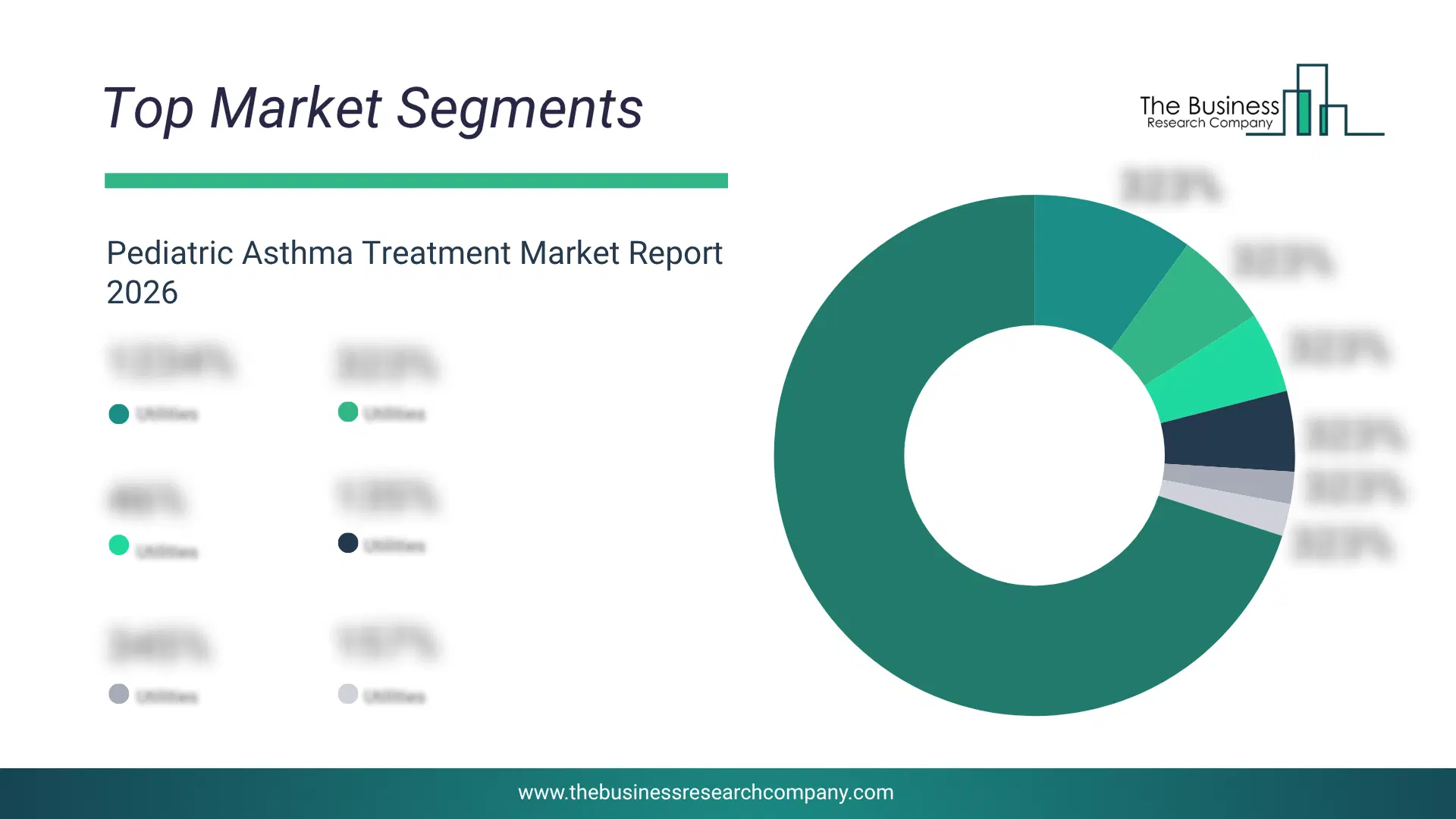
1) By Type: Long-Term Control Medications, Quick-Relief Medications, Other Types 2) By Drug Class: Inhaled Corticosteroids, Long-Acting Beta Agonists, Leukotriene Modifiers, Antihistamines, Biologics 3) By Route Of Administration: Oral Route, Nasal Route, Injectable Route 4) By Distribution Channel: Hospital Pharmacies, Retail Pharmacies, Online Pharmacies 5) By End User: Hospitals, Clinics, Home Care, Other End users Subsegments: 1) By Long-Term Control Medications: Inhaled Corticosteroids, Leukotriene Modifiers, Long-Acting Beta Agonists, Combination Inhalers, Biologic Therapies 2) By Quick-Relief Medications: Short-Acting Beta Agonists, Anticholinergics, Systemic Corticosteroids 3) By Other Types: Immunotherapy, Methylxanthines, Alternative TherapiesWhat Is The Driver Of The Pediatric Asthma Treatment Market?
The increasing prevalence of respiratory infections is expected to propel the growth of the pediatric asthma treatment market going forward. Respiratory infections refer to illnesses caused by viruses, bacteria, or other pathogens that affect the respiratory tract, including the nose, throat, airways, and lungs. The rising prevalence of respiratory infections is primarily due to rising air pollution, as exposure to pollutants such as particulate matter and nitrogen dioxide weakens the respiratory system and makes individuals more susceptible to infections. Pediatric asthma treatment helps reduce the frequency and severity of respiratory infections by improving airway function and minimizing inflammation, which lowers vulnerability to infectious triggers. For instance, in June 2024, according to the Australian Institute of Health and Welfare, an Australia-based government agency, in 2023, chronic obstructive pulmonary disease contributed to 3.6% of the total disease burden and accounted for 50% of the total burden of respiratory conditions. Therefore, the increasing prevalence of respiratory infections drives the growth of the pediatric asthma treatment industry.Key Players In The Global Pediatric Asthma Treatment Market
Major companies operating in the pediatric asthma treatment market are Pfizer Inc., Merck And Co Inc., Novartis AG, Sanofi S.A., AstraZeneca plc, GlaxoSmithKline plc, Takeda Pharmaceutical Company Limited, Amgen Inc., Boehringer Ingelheim International GmbH, Viatris Inc., Teva Pharmaceutical Industries Limited, Regeneron Pharmaceuticals Inc., Sun Pharmaceutical Industries Limited, Genentech Inc., Chiesi Farmaceutici S.p.A, Dr. Reddy's Laboratories Ltd, Cipla Ltd, Lupin Limited, Zydus Lifesciences Ltd.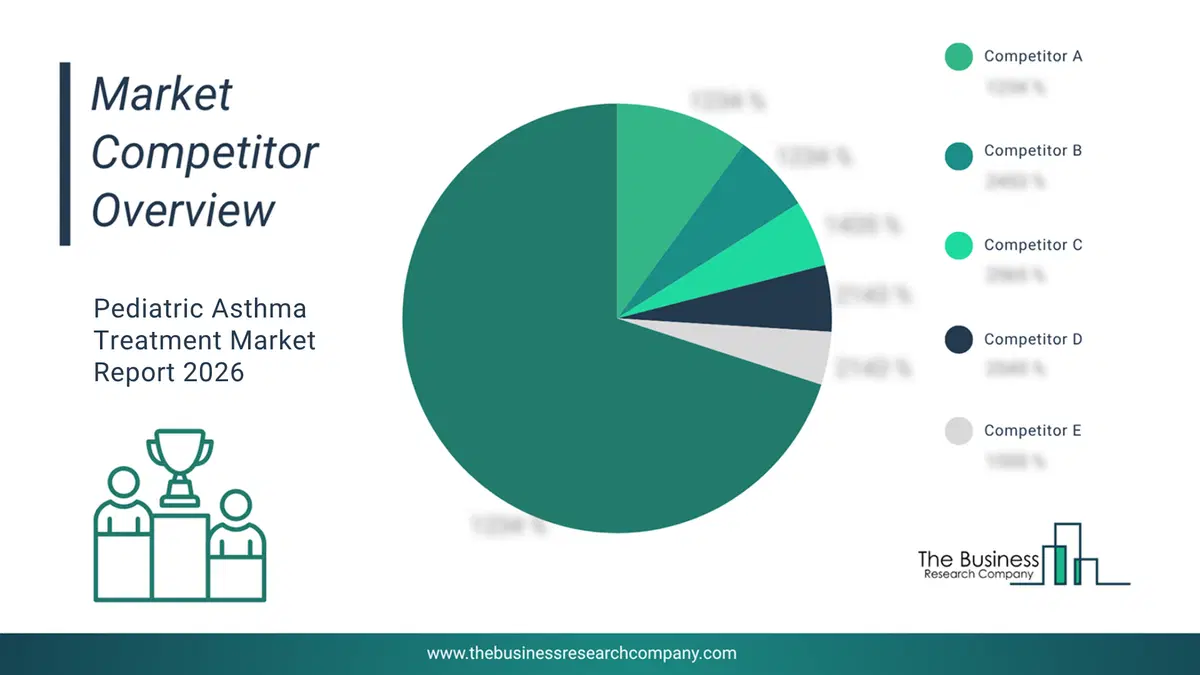
This chart is for illustrative purposes; the full report includes a detailed competitor analysis and comprehensive overview of the top 10 companies in the market.
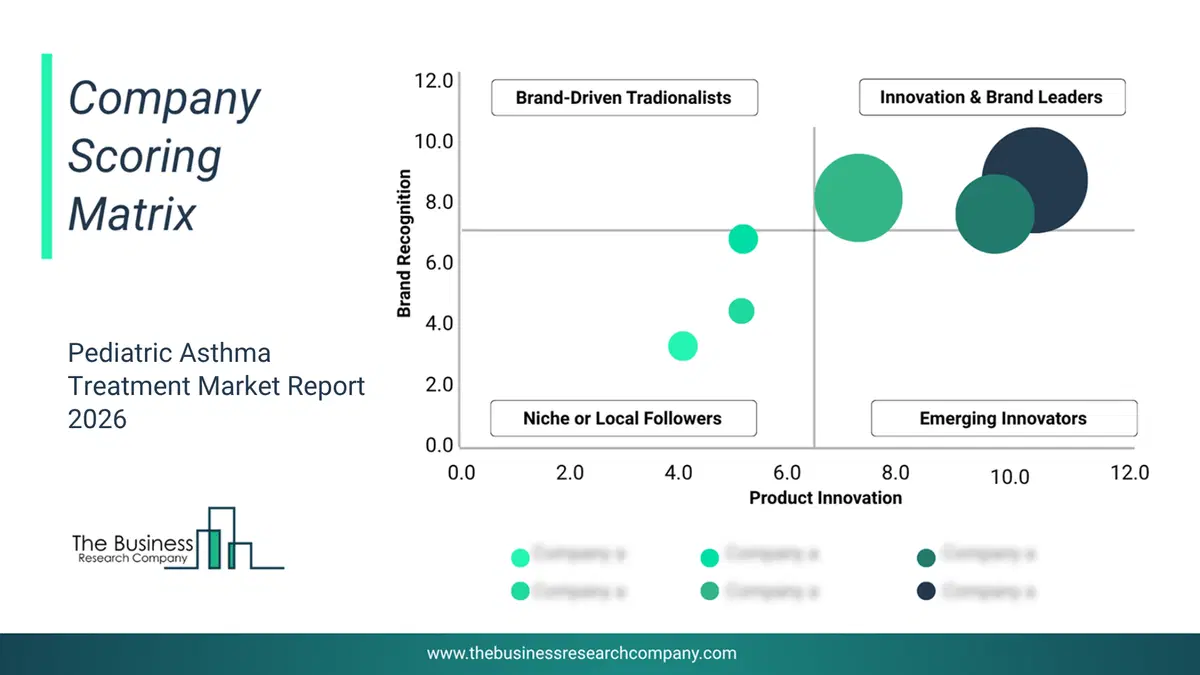
This chart maps companies by product innovation and brand strength, with bubble size indicating relative revenue, helping identify market leaders, challengers, and niche players. This is an illustrative chart; the full report provides a complete and accurate competitive analysis.
Global Pediatric Asthma Treatment Market Trends and Insights
Major companies operating in the pediatric asthma treatment market, focusing on developing innovative therapies, such as monoclonal antibodies, to target and reduce airway inflammation in children. Monoclonal antibodies are laboratory-made proteins designed to mimic the immune system's ability to fight off harmful pathogens by specifically targeting certain cells or substances. For instance, in April 2024, AstraZeneca PLC, a UK-based pharmaceutical and biotechnology company, received approval from the U.S. Food and Drug Administration for FASENRA (benralizumab) as an add-on maintenance treatment for children aged 6 to 11 years with severe asthma characterized by an eosinophilic phenotype. This antibody is designed to reduce asthma exacerbations and improve symptom control by targeting and eliminating eosinophils. Fasenra is administered via subcutaneous injection once every 4 weeks for the first three doses, followed by once every 8 weeks, with pediatric dosing adjusted based on body weight.What Are Latest Mergers And Acquisitions In The Pediatric Asthma Treatment Market?
In January 2025, Molex LLC, a US-based consumer electronics company, acquired Vectura Group plc for an undisclosed amount. With this acquisition, Molex LLC aims to expand its capabilities in inhalation drug delivery and strengthen its position as a leading provider of end-to-end solutions for respiratory and non-respiratory therapies. Vectura Group Services Limited is a UK-based company that is developing a pediatric asthma treatment, a smart budesonide delivery system known as VR647.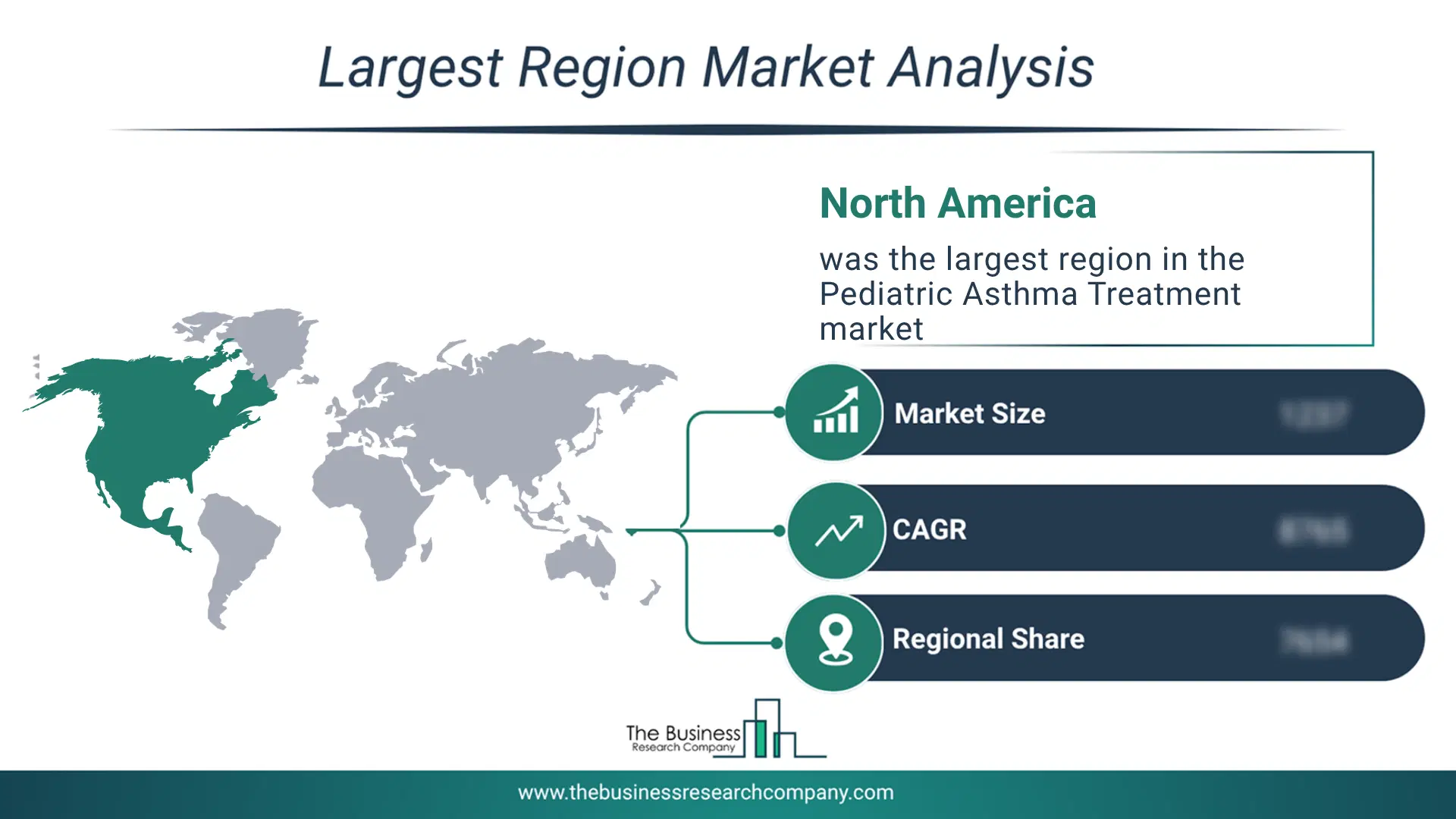
Regional Insights
North America was the largest region in the pediatric asthma treatment market in 2025. Asia-Pacific is expected to be the fastest-growing region in the forecast period. The regions covered in this market report are Asia-Pacific, South East Asia, Western Europe, Eastern Europe, North America, South America, Middle East, Africa. The countries covered in this market report are Australia, Brazil, China, France, Germany, India, Indonesia, Japan, Taiwan, Russia, South Korea, UK, USA, Canada, Italy, Spain.What Defines the Pediatric Asthma Treatment Market?
The pediatric asthma treatment market consists of sales of nebulizers and soft-mist inhalers, oral medications, biologic injectables, and smart monitoring tools. Values in this market are ‘factory gate’ values, that is the value of goods sold by the manufacturers or creators of the goods, whether to other entities (including downstream manufacturers, wholesalers, distributors and retailers) or directly to end customers. The value of goods in this market includes related services sold by the creators of the goods.How is Market Value Defined and Measured?
The market value is defined as the revenues that enterprises gain from the sale of goods and/or services within the specified market and geography through sales, grants, or donations in terms of the currency (in USD unless otherwise specified). The revenues for a specified geography are consumption values that are revenues generated by organizations in the specified geography within the market, irrespective of where they are produced. It does not include revenues from resales along the supply chain, either further along the supply chain or as part of other products.
This chart presents market attractiveness based on a quantitative evaluation of growth, competition, strategic alignment, and risk, offering a clear view of opportunity areas for decision-making. This chart is for illustrative purposes; the full report contains the complete analysis.

This chart highlights the Total Addressable Market (TAM) by estimating the maximum revenue opportunity using an assumption-driven approach, supporting strategic planning and opportunity sizing across markets. The chart is illustrative; the full report provides a more comprehensive analysis.
What Key Data and Analysis Are Included in the Pediatric Asthma Treatment Market Report 2026?
The pediatric asthma treatment market research report is one of a series of new reports from The Business Research Company that provides market statistics, including industry global market size, regional shares, competitors with the market share, detailed market segments, market trends and opportunities, and any further data you may need to thrive in the pediatric asthma treatment industry. The market research report delivers a complete perspective of everything you need, with an in-depth analysis of the current and future state of the industry.Pediatric Asthma Treatment Market Report Forecast Analysis
| Report Attribute | Details |
|---|---|
| Market Size Value In 2026 | $12.31 billion |
| Revenue Forecast In 2030 | $15.14 billion |
| Growth Rate | CAGR of 5.7% from 2026 to 2030 |
| Base Year For Estimation | 2025 |
| Actual Estimates/Historical Data | 2020-2025 |
| Forecast Period | 2026 - 2030 |
| Market Representation | Revenue in USD Billion and CAGR from 2026 to 2030 |
| Segments Covered | Type, Drug Class, Route Of Administration, Distribution Channel, End User |
| Regional Scope | Asia-Pacific, Western Europe, Eastern Europe, North America, South America, Middle East, Africa |
| Country Scope | The countries covered in the report are Australia, Brazil, China, France, Germany, India, Indonesia, Japan, Taiwan, Russia, South Korea, UK, USA, Canada, Italy, Spain. |
| Key Companies Profiled | Pfizer Inc., Merck And Co Inc., Novartis AG, Sanofi S.A., AstraZeneca plc, GlaxoSmithKline plc, Takeda Pharmaceutical Company Limited, Amgen Inc., Boehringer Ingelheim International GmbH, Viatris Inc., Teva Pharmaceutical Industries Limited, Regeneron Pharmaceuticals Inc., Sun Pharmaceutical Industries Limited, Genentech Inc., Chiesi Farmaceutici S.p.A, Dr. Reddy's Laboratories Ltd, Cipla Ltd, Lupin Limited, Zydus Lifesciences Ltd. |
| Customization Scope | Request for Customization |
| Pricing And Purchase Options | Explore Purchase Options |