

Pediatric Bladder Treatment Market Report 2026
Global Outlook – By Type (Diurnal Incontinence, Enuresis, Other Types), By Treatment (Urotherapy, Medication, Surgical Reconstruction, Other Treatments), By Route Of Administration (Oral, Parenteral, Other Route Of Administrations), By Distribution Channel (Hospital Pharmacy, Online Pharmacy, Retail Pharmacy), By End User (Hospitals, Homecare, Specialty Clinics, Other End-Users) - Market Size, Trends, Strategies, and Forecast to 2030
Pediatric Bladder Treatment Market Overview
• Pediatric Bladder Treatment market size has reached to $3.72 billion in 2025 • Expected to grow to $4.74 billion in 2030 at a compound annual growth rate (CAGR) of 5.2% • Growth Driver: Rising Prevalence Of Pediatric Bladder Disorders Fuels Growth In The Pediatric Bladder Treatment Market • North America was the largest region in 2025 and Asia-Pacific is the fastest growing region.What Is Covered Under Pediatric Bladder Treatment Market?
Pediatric bladder disorders refer to a spectrum of medical issues affecting the urinary bladder in children, encompassing conditions that impact bladder function, control and structure. Pediatric bladder treatment refers to managing and treating bladder dysfunction, where treatment options vary depending on age, overall health, medical history, bladder symptoms and the cause of the nerve damage or neurologic condition. The main types of pediatric bladder treatment for disorders include diurnal incontinence, enuresis and others. Diurnal incontinence refers to the involuntary loss of urine during the day when a person should be able to control their bladder and the treatment of diurnal incontinence in children often involves behavioral and lifestyle modifications such as teaching the child to recognize and respond to the sensation of a full bladder, encouraging regular bathroom breaks and addressing any constipation issues. These types of disorders are also treated with urotherapy, medication, surgical reconstruction and other treatments administered orally, parenterally and through other routes. The treatment products are distributed through hospital pharmacy, online pharmacy and retail pharmacy channels for end users such as hospitals, homecare, specialty clinics and others.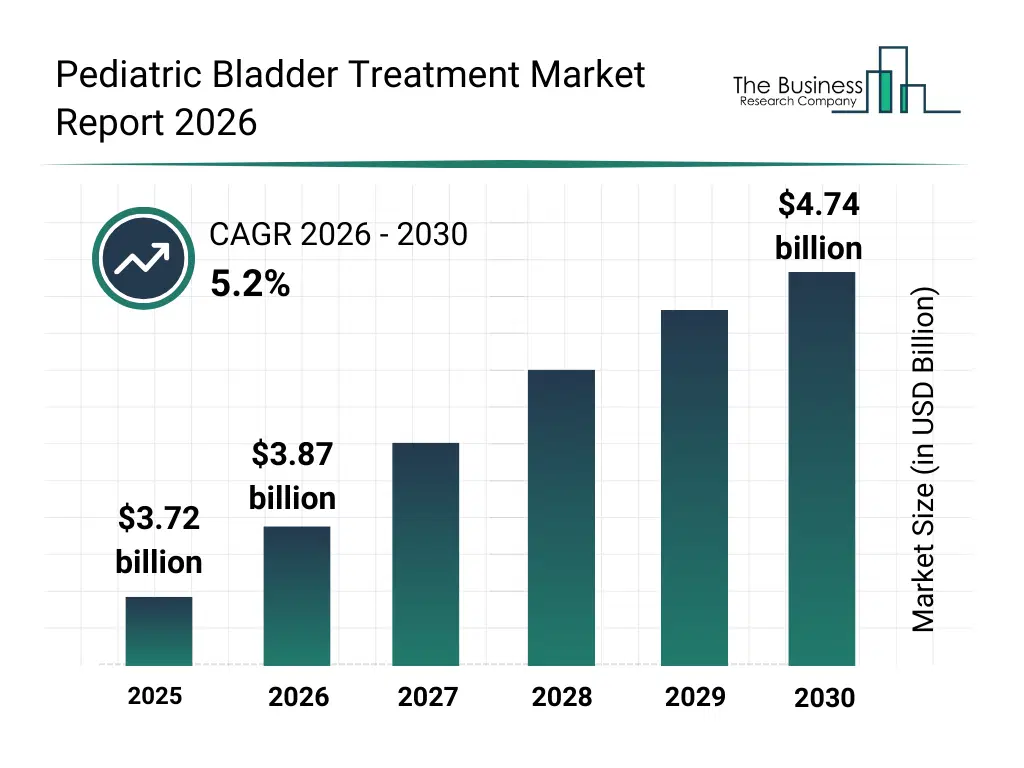
What Is The Pediatric Bladder Treatment Market Size and Share 2026?
The pediatric bladder treatment market size has grown steadily in recent years. It will grow from $3.72 billion in 2025 to $3.87 billion in 2026 at a compound annual growth rate (CAGR) of 4.3%. The growth in the historic period can be attributed to limited awareness of pediatric bladder disorders, reliance on traditional therapies, lack of specialized pediatric urology centers, limited access to advanced medications, low adoption of digital monitoring tools.What Is The Pediatric Bladder Treatment Market Growth Forecast?
The pediatric bladder treatment market size is expected to see strong growth in the next few years. It will grow to $4.74 billion in 2030 at a compound annual growth rate (CAGR) of 5.2%. The growth in the forecast period can be attributed to growing incidence of pediatric bladder disorders, increasing adoption of advanced treatment modalities, rising investments in pediatric healthcare infrastructure, growing integration of digital health and monitoring solutions, increasing focus on personalized pediatric treatment approaches. Major trends in the forecast period include increasing adoption of advanced urotherapy solutions, rising use of minimally invasive surgical techniques, growing integration of digital health monitoring in pediatric care, increasing demand for targeted pediatric medications, rising focus on personalized treatment plans for pediatric bladder disorders.
Global Pediatric Bladder Treatment Market Segmentation
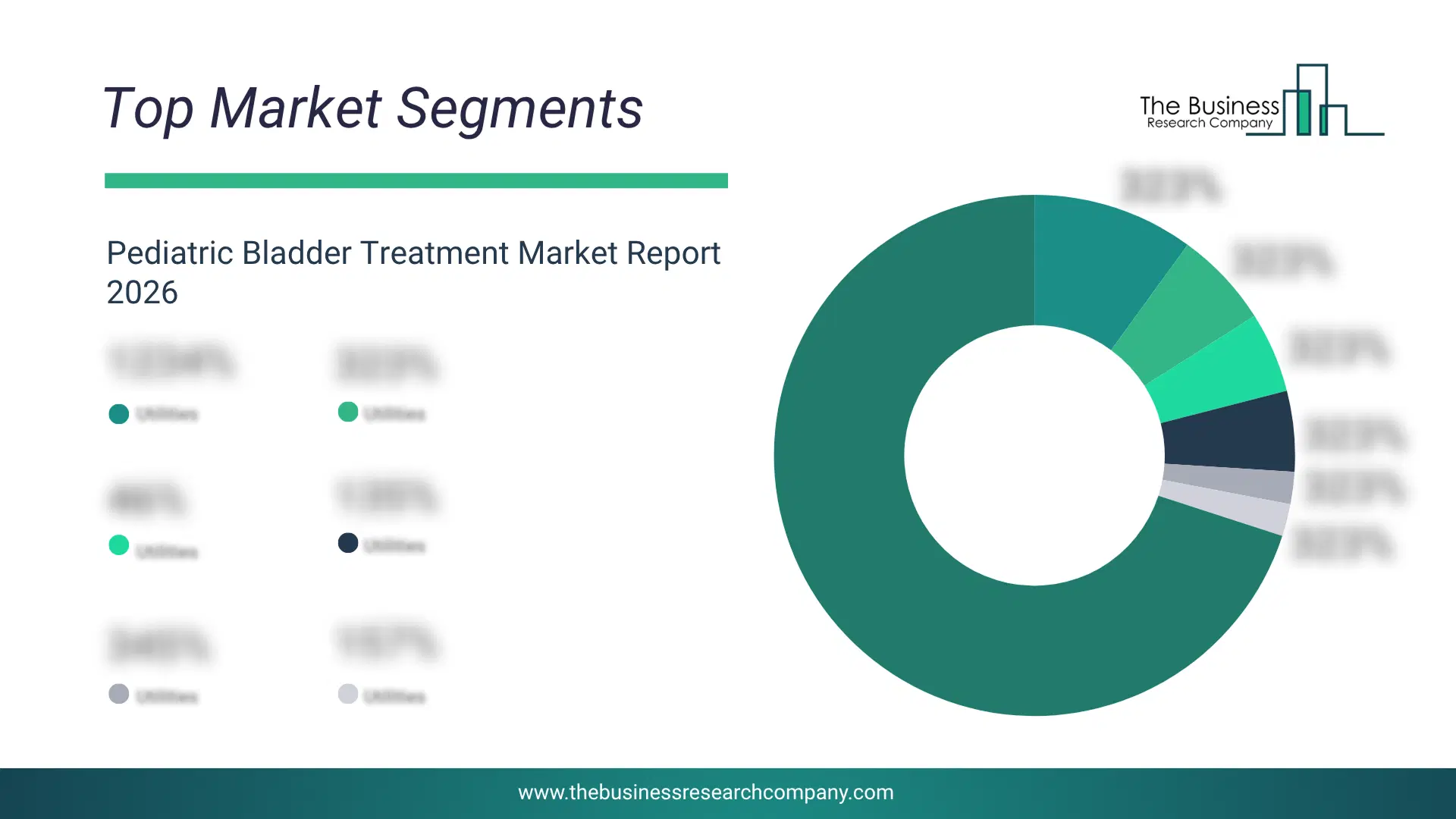
1) By Type: Diurnal Incontinence, Enuresis, Other Types 2) By Treatment: Urotherapy, Medication, Surgical Reconstruction, Other Treatments 3) By Route Of Administration: Oral, Parenteral, Other Route Of Administrations 4) By Distribution Channel: Hospital Pharmacy, Online Pharmacy, Retail Pharmacy 5) By End User: Hospitals, Homecare, Specialty Clinics, Other End-Users Subsegments: 1) By Diurnal Incontinence: Overactive Bladder, Urge Incontinence 2) By Enuresis: Primary Enuresis, Secondary Enuresis, Nocturnal Enuresis 3) By Other Types: Neurogenic Bladder, Structural AbnormalitiesWhat Are The Drivers Of The Pediatric Bladder Treatment Market?
The increasing prevalence of pediatric bladder disorders is expected to propel the growth of the pediatric bladder treatment market going forward. Pediatric bladder disorders refer to various medical conditions that impact the normal functioning of the urinary bladder in children. Conditions such as spina bifida and neurological disorders contribute to urinary problems in children, necessitating effective treatments. For instance, in March 2023, according to a journal published by the Multidisciplinary Digital Publishing Institute (MDPI), a Switzerland-based publishing company, in a study involving 1,065 pediatric patients with neurogenic bladder (NGB), 38.9% of patients had spina bifida. The primary complication observed was lower urinary tract infection (18.1%), particularly prevalent among patients with open spina bifida (54.1%). Moreover, over a 12-month follow-up, common prevalent complications included lower urinary tract infections (18.1%), urinary incontinence (8.0%) and hydronephrosis (5.6%), with 7.9% of patients facing four or more recurring lower urinary tract infections. Therefore, the increasing prevalence of pediatric bladder disorders will drive the growth of the pediatric bladder treatment industry. The rising healthcare expenditures are expected to propel the growth of the pediatric bladder treatment market going forward. Healthcare expenditures refer to the total sum of resources spent by individuals, organizations, and governments on healthcare services, goods, and infrastructure, including hospital care, physician services, nursing care, and other health-related activities. Healthcare expenditure is rising due to factors such as an aging population, advances in medical technology, increased prevalence of chronic diseases, and higher costs of healthcare services and prescription drugs. Increased healthcare expenditure supports the development of pediatric bladder treatments by funding research, improving access to advanced therapies, and enabling specialized training for healthcare providers ultimately enhancing treatment effectiveness and availability. For instance, in May 2024, according to the Office for National Statistics, a UK-based government department, total healthcare expenditure in the UK rose by 5.6% in nominal terms from 2022 to 2023, a significant increase compared to the 0.9% growth in 2022. In 2023, government funding accounted for $309 billion (£239 billion) or 81.9% of the nation's healthcare spending, making it the primary source of healthcare financing. Therefore, the rising healthcare expenditures are driving the growth of the pediatric bladder treatment industry.Key Players In The Global Pediatric Bladder Treatment Market
Major companies operating in the pediatric bladder treatment market are Pfizer Inc., F. Hoffmann‑La Roche Ltd, AbbVie Inc., Novartis AG, Sanofi S.A., AstraZeneca Plc, Takeda Pharmaceutical Company Limited, Medtronic Plc, Teva Pharmaceutical Industries Ltd., Boston Scientific Corporation, Astellas Pharma Inc, Cook Medical Inc., Laborie Medical Technologies Corp., Coloplast AIS, UroGen Pharma, Johnson & Johnson, Olympus Corporation, Stryker Corporation, Teleflex Incorporated, B Braun Melsungen AG, Intuitive Surgical Inc, Richard Wolf GmbH, Nipro Corporation, Dornier MedTech, Fresenius Medical Care AG & Co KGaA, Ambu A S, Neuspera Medical, UroMems, Zenflow, Siemens Healthineers, Procter & Gamble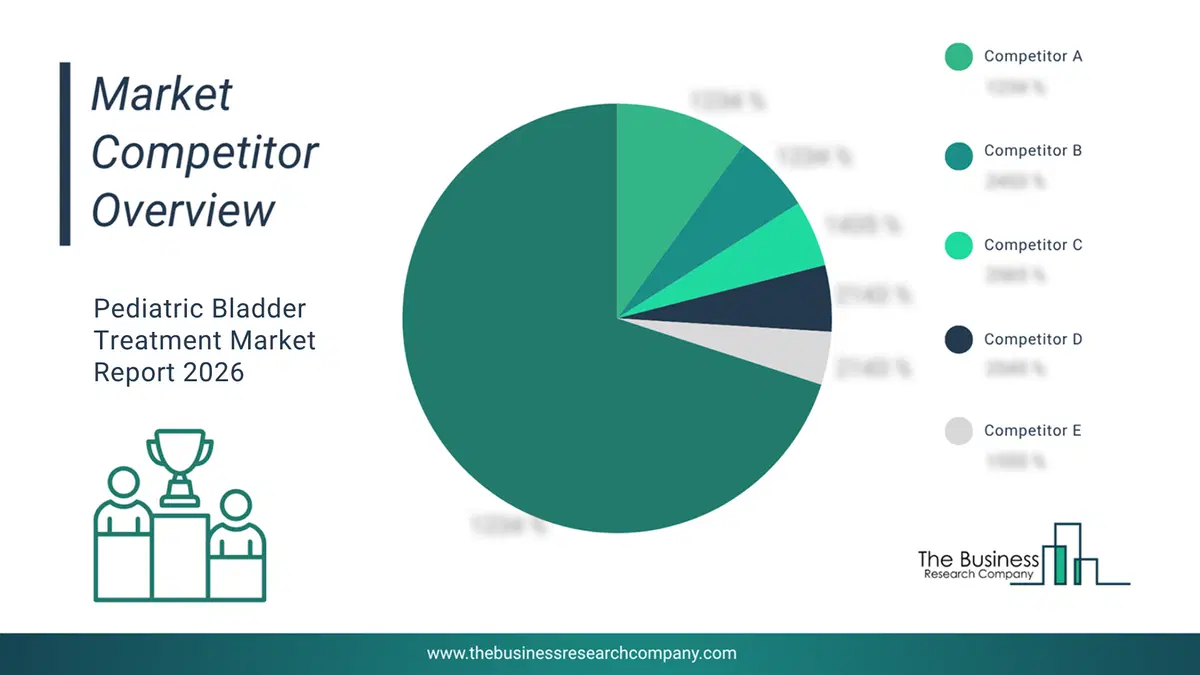
This chart is for illustrative purposes; the full report includes a detailed competitor analysis and comprehensive overview of the top 10 companies in the market.
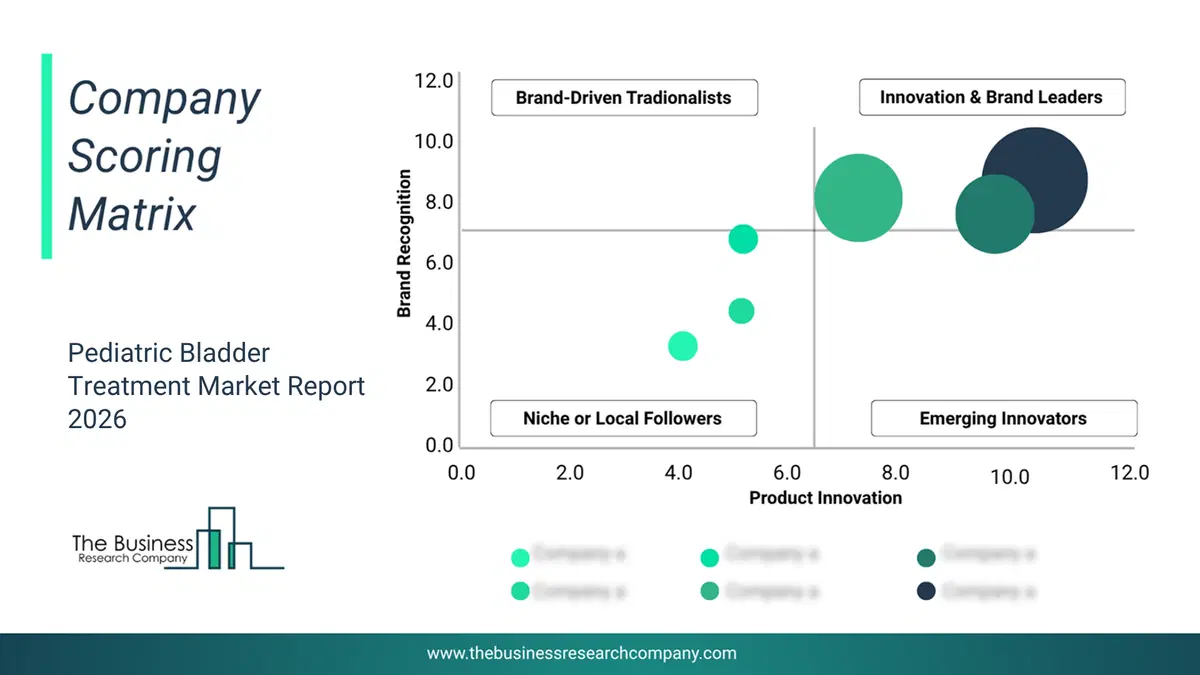
This chart maps companies by product innovation and brand strength, with bubble size indicating relative revenue, helping identify market leaders, challengers, and niche players. This is an illustrative chart; the full report provides a complete and accurate competitive analysis.
What Are Latest Mergers And Acquisitions In The Pediatric Bladder Treatment Market?
In November 2023, NYU Langone Health, a US-based medical center acquired Pediatric Urology Associates for an undisclosed amount. As a result of the acquisition, Pediatric Urology Associates will merge with NYU Langone, expanding the pediatric urology care team by three times with 10 additional practice locations. This integration will also enable the adoption of NYU Langone's Epic electronic health record system, improving patient care coordination. Pediatric Urology Associates is a US-based company that provides treatment for pediatric bladder conditions.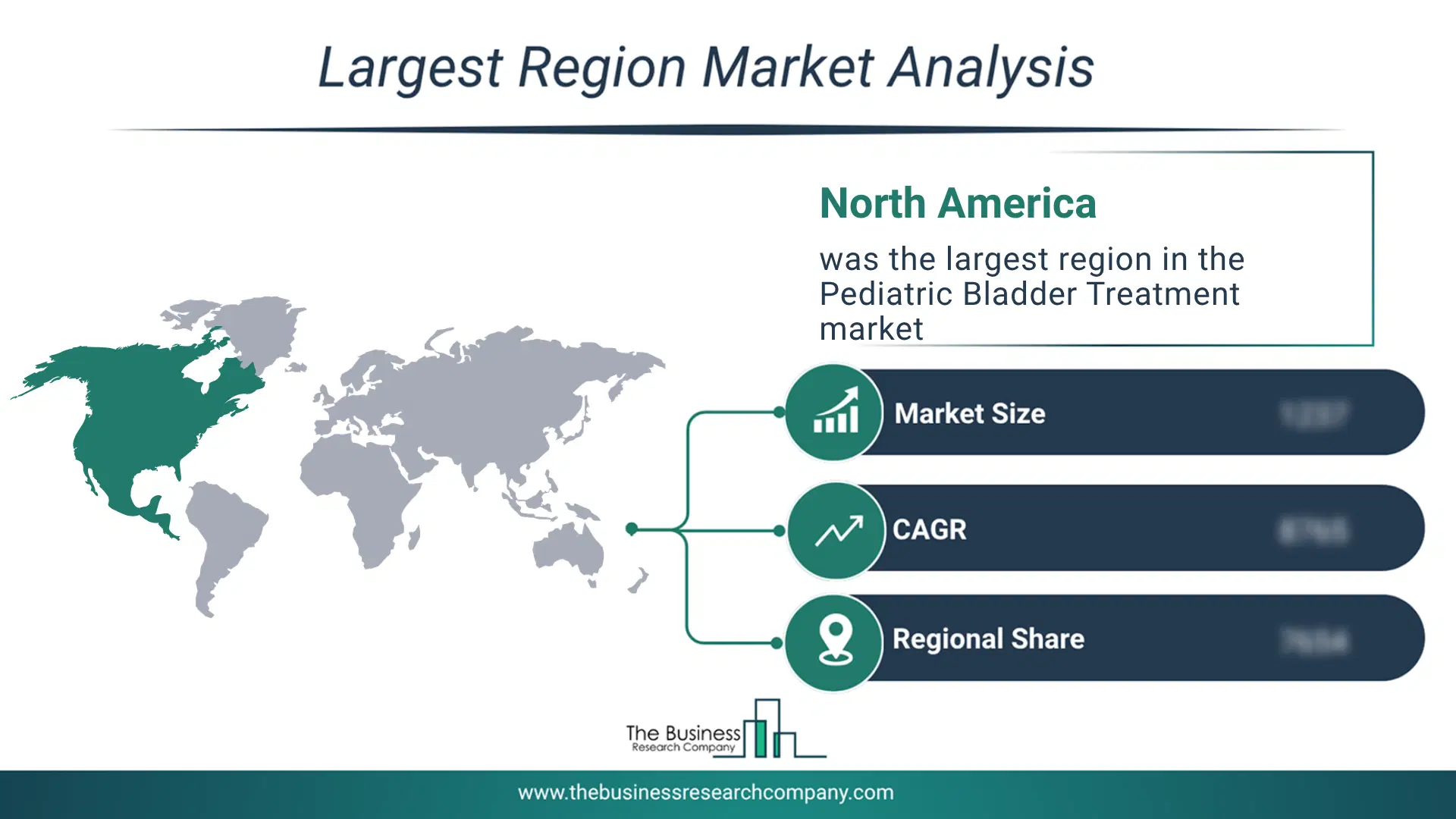
Regional Outlook
North America was the largest region in the pediatric bladder treatment market in 2025. Asia-Pacific is expected to be the fastest-growing region in the forecast period. The regions covered in this market report are Asia-Pacific, South East Asia, Western Europe, Eastern Europe, North America, South America, Middle East, Africa. The countries covered in this market report are Australia, Brazil, China, France, Germany, India, Indonesia, Japan, Taiwan, Russia, South Korea, UK, USA, Canada, Italy, Spain.What Defines the Pediatric Bladder Treatment Market?
The pediatric bladder treatment market consists of revenues earned by entities by providing medical consultations, nutritional counseling, catheterization and therapies. The market value includes the value of related goods sold by the service provider or included within the service offering. The pediatric bladder treatment market also includes sales of ultrasound devices, cystoscopes, antibiotics, urinary catheters, incontinence products and surgical instruments. Values in this market are ‘factory gate’ values, that is the value of goods sold by the manufacturers or creators of the goods, whether to other entities (including downstream manufacturers, wholesalers, distributors and retailers) or directly to end customers. The value of goods in this market includes related services sold by the creators of the goods.How is Market Value Defined and Measured?
The market value is defined as the revenues that enterprises gain from the sale of goods and/or services within the specified market and geography through sales, grants, or donations in terms of the currency (in USD unless otherwise specified). The revenues for a specified geography are consumption values that are revenues generated by organizations in the specified geography within the market, irrespective of where they are produced. It does not include revenues from resales along the supply chain, either further along the supply chain or as part of other products.
This chart presents market attractiveness based on a quantitative evaluation of growth, competition, strategic alignment, and risk, offering a clear view of opportunity areas for decision-making. This chart is for illustrative purposes; the full report contains the complete analysis.

This chart highlights the Total Addressable Market (TAM) by estimating the maximum revenue opportunity using an assumption-driven approach, supporting strategic planning and opportunity sizing across markets. The chart is illustrative; the full report provides a more comprehensive analysis.
What Key Data and Analysis Are Included in the Pediatric Bladder Treatment Market Report 2026?
The pediatric bladder treatment market research report is one of a series of new reports from The Business Research Company that provides market statistics, including industry global market size, regional shares, competitors with the market share, detailed market segments, market trends and opportunities, and any further data you may need to thrive in the pediatric bladder treatment industry. The market research report delivers a complete perspective of everything you need, with an in-depth analysis of the current and future state of the industry.Pediatric Bladder Treatment Market Report Forecast Analysis
| Report Attribute | Details |
|---|---|
| Market Size Value In 2026 | $3.87 billion |
| Revenue Forecast In 2030 | $4.74 billion |
| Growth Rate | CAGR of 5.2% from 2026 to 2030 |
| Base Year For Estimation | 2025 |
| Actual Estimates/Historical Data | 2020-2025 |
| Forecast Period | 2026 - 2030 |
| Market Representation | Revenue in USD Billion and CAGR from 2026 to 2030 |
| Segments Covered | Type, Treatment, Route Of Administration, Distribution Channel, End User |
| Regional Scope | Asia-Pacific, Western Europe, Eastern Europe, North America, South America, Middle East, Africa |
| Country Scope | The countries covered in the report are Australia, Brazil, China, France, Germany, India, Indonesia, Japan, Taiwan, Russia, South Korea, UK, USA, Canada, Italy, Spain |
| Key Companies Profiled | Pfizer Inc., F. Hoffmann‑La Roche Ltd, AbbVie Inc., Novartis AG, Sanofi S.A., AstraZeneca Plc, Takeda Pharmaceutical Company Limited, Medtronic Plc, Teva Pharmaceutical Industries Ltd., Boston Scientific Corporation, Astellas Pharma Inc, Cook Medical Inc., Laborie Medical Technologies Corp., Coloplast AIS, UroGen Pharma, Johnson & Johnson, Olympus Corporation, Stryker Corporation, Teleflex Incorporated, B Braun Melsungen AG, Intuitive Surgical Inc, Richard Wolf GmbH, Nipro Corporation, Dornier MedTech, Fresenius Medical Care AG & Co KGaA, Ambu A S, Neuspera Medical, UroMems, Zenflow, Siemens Healthineers, Procter & Gamble |
| Customization Scope | Request for Customization |
| Pricing And Purchase Options | Explore Purchase Options |