

Pediatric Medical Devices Market Report 2026
Global Outlook – By Product (Cardiology Devices, In Vitro Diagnostic (IVD) Devices, Diagnostic Imaging Devices, Anesthesia And Respiratory Care Devices, Neonatal Intensive Care Unit (ICU) Devices, Other Products), By Age Group (Infants, Children, Adolescents), By End-User (Hospitals, Diagnostic Laboratories, Ambulatory Surgical Centers, Other End-Users) – Market Size, Trends, Strategies, and Forecast to 2030
Pediatric Medical Devices Market Overview
• Pediatric Medical Devices market size has reached to $36.42 billion in 2025 • Expected to grow to $51.97 billion in 2030 at a compound annual growth rate (CAGR) of 7.2% • Growth Driver: The Growing Demand For Minimally Invasive Procedures Accelerating Adoption Of Pediatric Medical Devices • Market Trend: Innovative Orthopedic Implants For Pediatric Patients • North America was the largest region in 2025 and Asia-Pacific is the fastest growing region.What Is Covered Under Pediatric Medical Devices Market?
Pediatric medical devices are specialized healthcare products designed and tailored specifically for infants, children, and adolescents, addressing their unique anatomical, physiological, and developmental needs to diagnose, treat, monitor, or manage various pediatric conditions and diseases. These devices are tailored to meet the unique physiological and developmental needs of pediatric patients, ensuring their safety, efficacy, and comfort. The main products of pediatric medical devices are cardiology devices, in vitro diagnostic (IVD) devices, diagnostic imaging devices, anesthesia and respiratory care devices, neonatal intensive care unit (ICU) devices, and others. Cardiology devices refer to a range of medical instruments and equipment used in the diagnosis, treatment, and monitoring of heart-related conditions, including cardiac rhythm management devices, such as pacemakers and defibrillators, as well as cardiac imaging systems and cardiovascular stents. They are used for different age groups including infants (0-2 years), children (2-12 years), and adolescents (12-18 years) for various end-users including hospitals, diagnostic laboratories, ambulatory surgical centers, and others.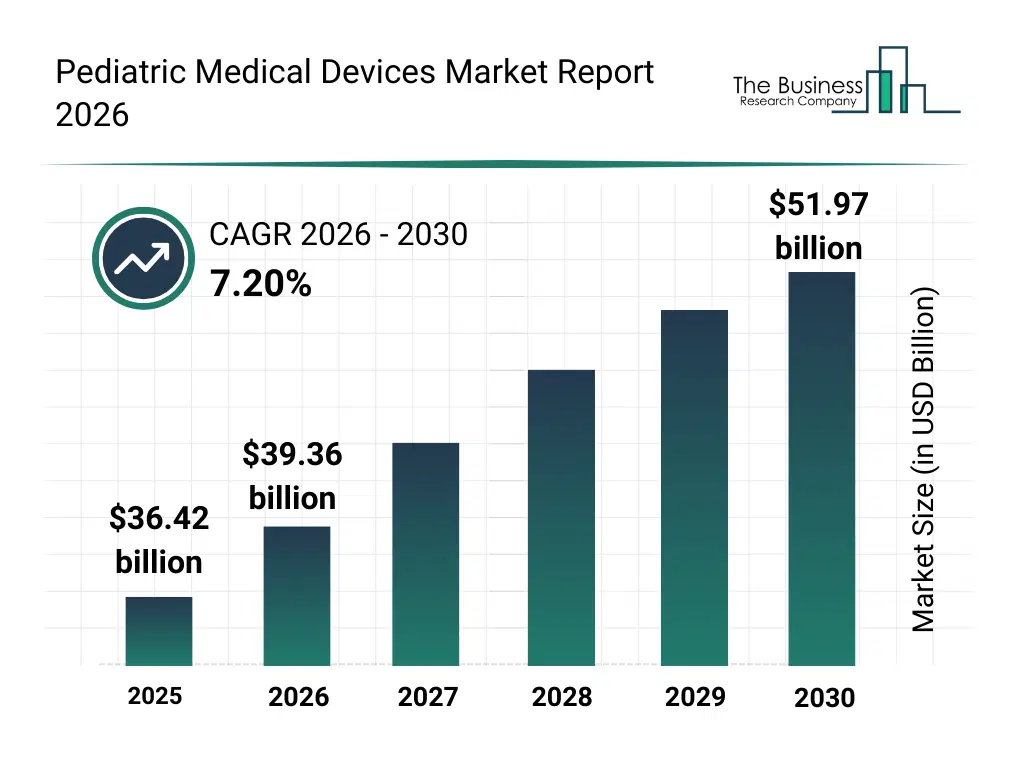
What Is The Pediatric Medical Devices Market Size and Share 2026?
The pediatric medical devices market size has grown strongly in recent years. It will grow from $36.42 billion in 2025 to $39.36 billion in 2026 at a compound annual growth rate (CAGR) of 8.1%. The growth in the historic period can be attributed to expansion of pediatric healthcare services, rising prevalence of chronic pediatric conditions, improvements in neonatal survival rates, growth of specialized children’s hospitals, increased regulatory focus on pediatric device safety.What Is The Pediatric Medical Devices Market Growth Forecast?
The pediatric medical devices market size is expected to see strong growth in the next few years. It will grow to $51.97 billion in 2030 at a compound annual growth rate (CAGR) of 7.2%. The growth in the forecast period can be attributed to growing demand for connected pediatric monitoring devices, rising investments in neonatal intensive care units, expansion of home-based pediatric care solutions, increasing adoption of AI-assisted diagnostics, growing focus on personalized pediatric treatment. Major trends in the forecast period include increasing development of child-specific device designs, rising integration of smart monitoring in pediatric devices, growing adoption of portable pediatric diagnostic equipment, expansion of neonatal and infant care technologies, enhanced focus on patient safety and comfort.
Global Pediatric Medical Devices Market Segmentation
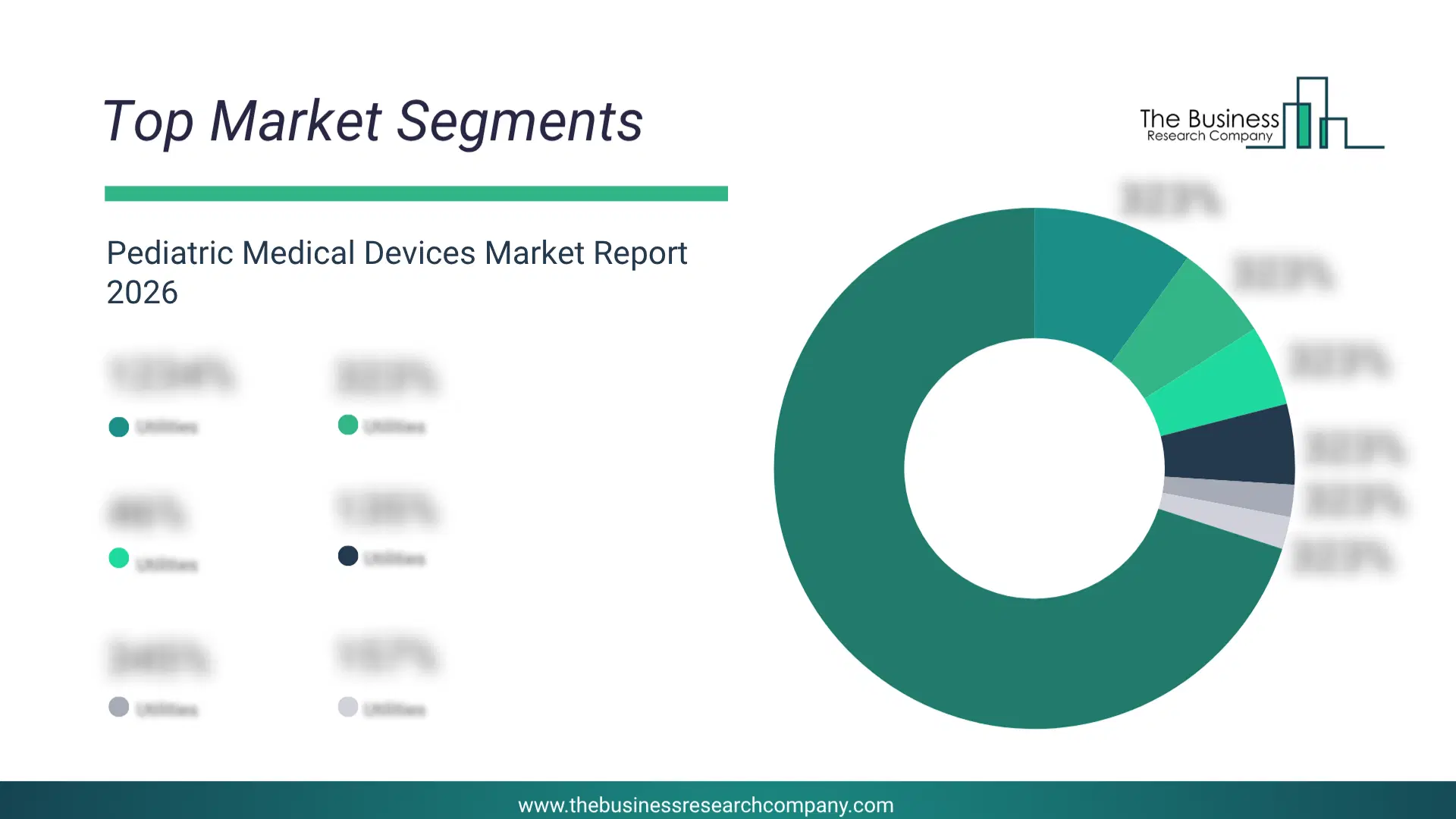
1) By Product: Cardiology Devices, In Vitro Diagnostic (IVD) Devices, Diagnostic Imaging Devices, Anesthesia And Respiratory Care Devices, Neonatal Intensive Care Unit (ICU) Devices, Other Products 2) By Age Group: Infants, Children, Adolescents 3) By End-User: Hospitals, Diagnostic Laboratories, Ambulatory Surgical Centers, Other End-Users Subsegments: 1) By Cardiology Devices: Pediatric ECG Machines, Pediatric Defibrillators, Pediatric Pacemakers, Pediatric Stethoscopes 2) By In Vitro Diagnostic (IVD) Devices: Blood Glucose Monitoring Devices, Point-Of-Care Testing Devices, Molecular Diagnostic Devices, Immunoassay Analyzers 3) By Diagnostic Imaging Devices: Pediatric Ultrasound Machines, Pediatric X-Ray Machines, Pediatric MRI Machines, Pediatric CT Scanners 4) By Anesthesia And Respiratory Care Devices: Pediatric Ventilators, Pediatric Anesthesia Machines, CPAP Devices For Pediatrics, Oxygen Concentrators For Pediatrics 5) By Neonatal Intensive Care Unit (ICU) Devices: Neonatal Incubators, Neonatal Ventilators, Neonatal Monitoring Devices, Phototherapy Devices 6) By Other Products: Pediatric Surgical Instruments, Pediatric Infusion Pumps, Pediatric Monitoring Devices, Pediatric Rehabilitation DevicesWhat Is The Driver Of The Pediatric Medical Devices Market?
The growing demand for minimally invasive pediatric surgical procedures is expected to propel the growth of the pediatric medical devices market going forward. Minimally invasive pediatric surgical procedures involve using small incisions or natural body openings, along with specialized instruments and imaging technology, to diagnose, treat, or manage pediatric health conditions with less trauma and quicker recovery compared to traditional open surgeries. The rising demand for minimally invasive pediatric surgical procedures is fueled by advancements in technology, enabling safer and more precise interventions with reduced post-operative complications. Pediatric medical devices are utilized in minimally invasive surgical procedures to facilitate precise access, visualization, and manipulation of pediatric anatomy through small incisions, aiding in the safe and effective treatment of pediatric conditions with minimal trauma to surrounding tissues. For instance, in June 2024, according to the American Society of Plastic Surgeons, a US-based non-profit organization, minimally invasive procedures increased by 7% in 2023, outpacing the growth rate of surgical procedures by 2%. Hand surgeries such as carpal tunnel, arthritis, and trigger finger totaled 207,887 procedures, a 2% rise from 2022. Therefore, the growing demand for minimally invasive procedures is driving the growth of the pediatric medical devices industry.Key Players In The Global Pediatric Medical Devices Market
Major companies operating in the pediatric medical devices market are Cardinal Health Inc., Johnson And Johnson, Siemens AG, F. Hoffmann-La Roche Ltd., Abbott Laboratories, Medtronic plc, Siemens Healthineers, Koninklijke Philips N.V., Becton Dickinson And Company, GE HealthCare Technologies, Baxter International Inc., Boston Scientific Corporation, Zimmer Biomet Holdings Inc., Olympus Corporation, Terumo Corporation, Smith And Nephew plc, Hamilton Medical, Ningbo David Medical Device Co. Ltd, Phoenix Medical Systems Pvt Ltd, Fritz Stephan GmbH, Atom Medical Corporation, Novonate Inc.
This chart is for illustrative purposes; the full report includes a detailed competitor analysis and comprehensive overview of the top 10 companies in the market.
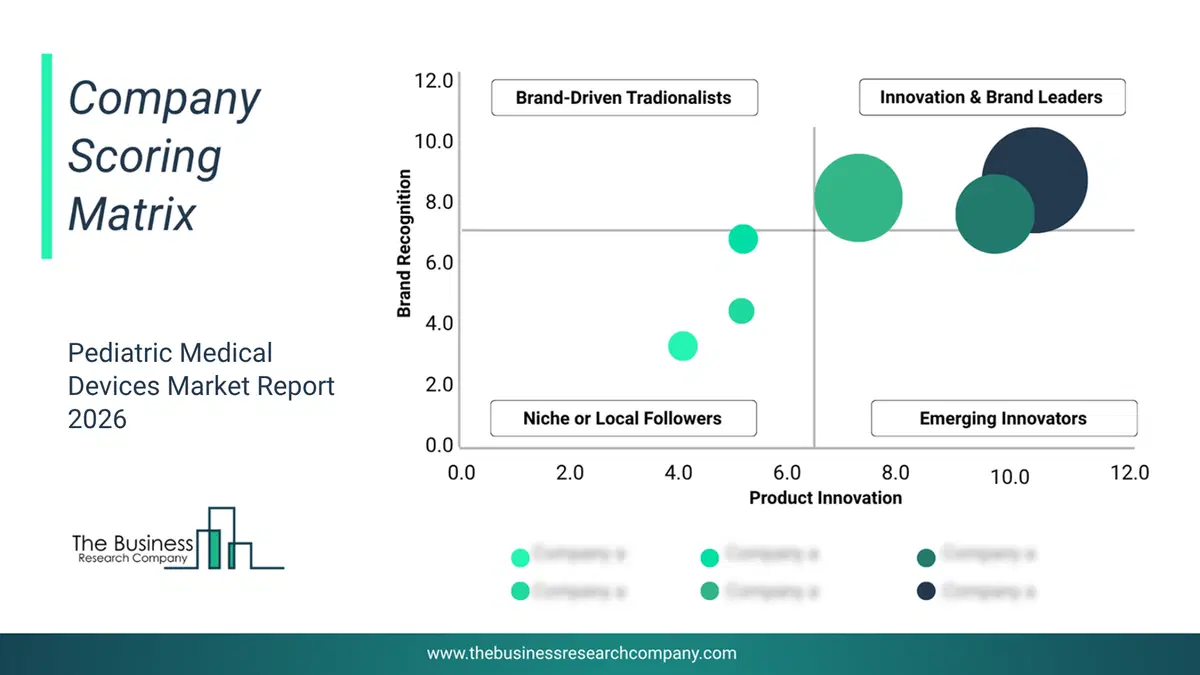
This chart maps companies by product innovation and brand strength, with bubble size indicating relative revenue, helping identify market leaders, challengers, and niche players. This is an illustrative chart; the full report provides a complete and accurate competitive analysis.
Global Pediatric Medical Devices Market Trends and Insights
Major companies operating in the pediatric medical devices market are developing orthopedic implants to address the unique healthcare needs of pediatric patients, ranging from musculoskeletal conditions to congenital abnormalities. Orthopedic implants are medical devices used to replace or support damaged or missing bone or joint structures in the musculoskeletal system. For instance, in March 2024, OrthoPediatrics Corporation, a US-based medical device company, launched the RESPONSE Rib and Pelvic Fixation system, tailored for pediatric patients with Early Onset Scoliosis (EOS). This comprehensive system comprises implants, instruments, and connecting devices, providing surgeons with a versatile solution for rib and pelvic fixation, including options for patients at risk of Thoracic Insufficiency Syndrome. With features such as a range of implant options, low-profile designs, and locking mechanisms, this system enhances precision and flexibility in treating EOS cases.What Are Latest Mergers And Acquisitions In The Pediatric Medical Devices Market?
In January 2024, OrthoPediatrics Corp., a US-based pediatric orthopedic medical‑device company, acquired Boston Orthotics And Prosthetics for an undisclosed amount. With this acquisition, OrthoPediatrics aimed to expand its Specialty Bracing division and strengthen its non‑surgical pediatric orthotic care capabilities, thereby broadening its continuum of care across pediatric orthopedic treatment. Boston Orthotics & Prosthetics is a US-based orthotics and prosthetics firm specializing in pediatric bracing and prosthetic solutions particularly custom braces for scoliosis, lower‑limb orthoses, dynamic movement orthoses, and cranial bands for plagiocephaly.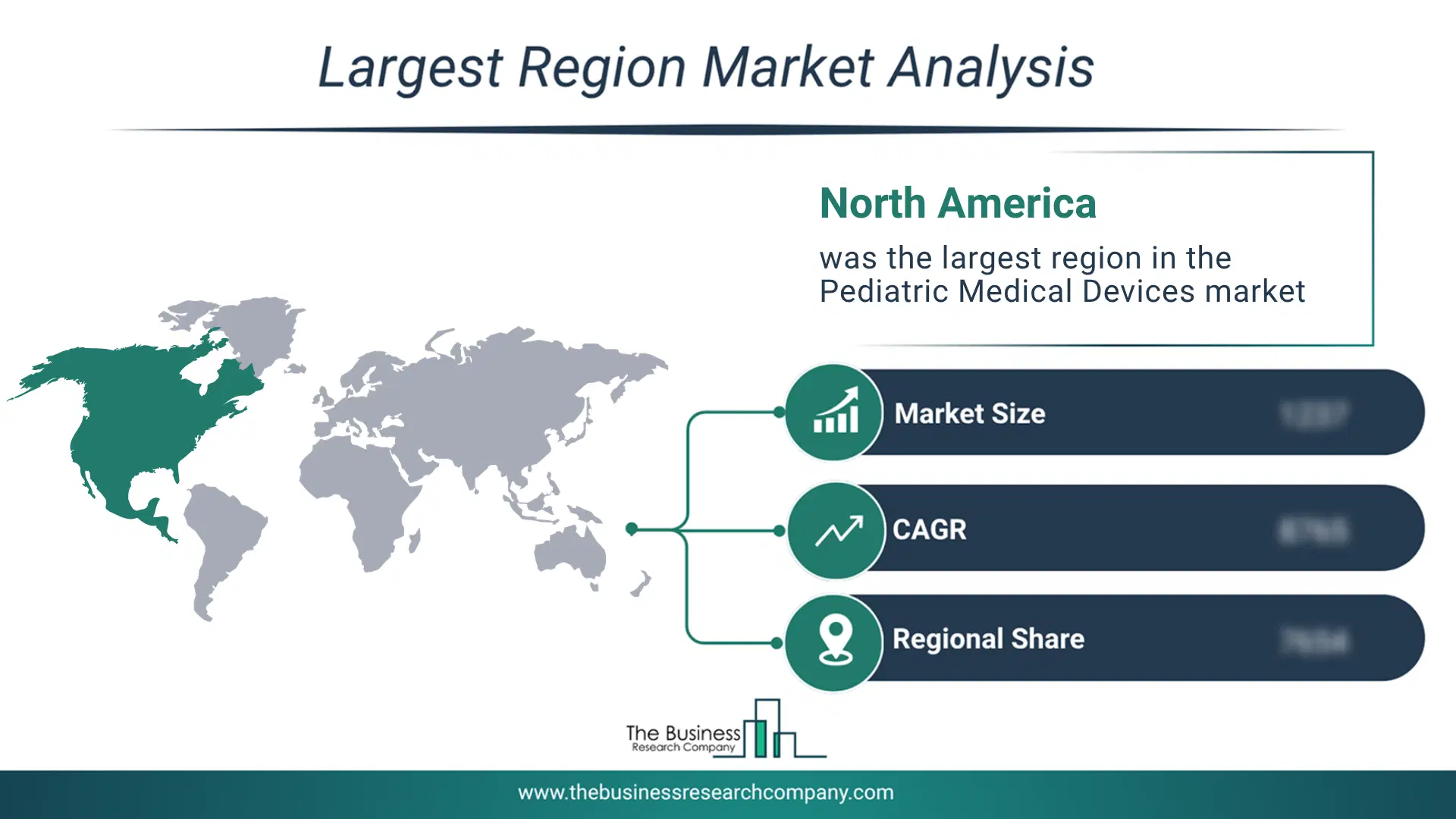
Regional Outlook
North America was the largest region in the pediatric medical devices market in 2025. Asia-Pacific is expected to be the fastest-growing region in the forecast period. The regions covered in this market report are Asia-Pacific, South East Asia, Western Europe, Eastern Europe, North America, South America, Middle East, Africa. The countries covered in this market report are Australia, Brazil, China, France, Germany, India, Indonesia, Japan, Taiwan, Russia, South Korea, UK, USA, Canada, Italy, SpainWhat Defines the Pediatric Medical Devices Market?
The pediatric medical devices market consists of sales of imaging equipment, ventilators, blood pressure monitors, nebulizers, and wheelchairs. Values in this market are ‘factory gate’ values, that is the value of goods sold by the manufacturers or creators of the goods, whether to other entities (including downstream manufacturers, wholesalers, distributors and retailers) or directly to end customers. The value of goods in this market includes related services sold by the creators of the goods.How is Market Value Defined and Measured?
The market value is defined as the revenues that enterprises gain from the sale of goods and/or services within the specified market and geography through sales, grants, or donations in terms of the currency (in USD unless otherwise specified). The revenues for a specified geography are consumption values that are revenues generated by organizations in the specified geography within the market, irrespective of where they are produced. It does not include revenues from resales along the supply chain, either further along the supply chain or as part of other products.
This chart presents market attractiveness based on a quantitative evaluation of growth, competition, strategic alignment, and risk, offering a clear view of opportunity areas for decision-making. This chart is for illustrative purposes; the full report contains the complete analysis.

This chart highlights the Total Addressable Market (TAM) by estimating the maximum revenue opportunity using an assumption-driven approach, supporting strategic planning and opportunity sizing across markets. The chart is illustrative; the full report provides a more comprehensive analysis.
What Key Data and Analysis Are Included in the Pediatric Medical Devices Market Report 2026?
The pediatric medical devices market research report is one of a series of new reports from The Business Research Company that provides market statistics, including industry global market size, regional shares, competitors with the market share, detailed market segments, market trends and opportunities, and any further data you may need to thrive in the pediatric medical devices industry. The market research report delivers a complete perspective of everything you need, with an in-depth analysis of the current and future state of the industry.Pediatric Medical Devices Market Report Forecast Analysis
| Report Attribute | Details |
|---|---|
| Market Size Value In 2026 | $39.36 billion |
| Revenue Forecast In 2030 | $51.97 billion |
| Growth Rate | CAGR of 7.2% from 2026 to 2030 |
| Base Year For Estimation | 2025 |
| Actual Estimates/Historical Data | 2020-2025 |
| Forecast Period | 2026 - 2030 |
| Market Representation | Revenue in USD Billion and CAGR from 2026 to 2030 |
| Segments Covered | Product, Age Group, End-User |
| Regional Scope | Asia-Pacific, Western Europe, Eastern Europe, North America, South America, Middle East, Africa |
| Country Scope | The countries covered in the report are Australia, Brazil, China, France, Germany, India, Indonesia, Japan, Taiwan, Russia, South Korea, UK, USA, Canada, Italy, Spain. |
| Key Companies Profiled | Cardinal Health Inc., Johnson And Johnson, Siemens AG, F. Hoffmann-La Roche Ltd., Abbott Laboratories, Medtronic plc, Siemens Healthineers, Koninklijke Philips N.V., Becton Dickinson And Company, GE HealthCare Technologies, Baxter International Inc., Boston Scientific Corporation, Zimmer Biomet Holdings Inc., Olympus Corporation, Terumo Corporation, Smith And Nephew plc, Hamilton Medical, Ningbo David Medical Device Co. Ltd, Phoenix Medical Systems Pvt Ltd, Fritz Stephan GmbH, Atom Medical Corporation, Novonate Inc. |
| Customization Scope | Request for Customization |
| Pricing And Purchase Options | Explore Purchase Options |