
Pelvic Cancer Induced Hemorrhagic Cystitis Market Report 2026
Global Outlook – By Treatment Type (Bone Marrow Transplant, Chemotherapy, Radiation Therapy, Other Treatment Types), By Route Of Administration (Oral, Injectable, Intravesical), By Distribution Channel (Hospital Pharmacies, Retail Pharmacies, Online Pharmacies) - Market Size, Trends, Strategies, and Forecast to 2030
Pelvic Cancer Induced Hemorrhagic Cystitis Market Overview
• Pelvic Cancer Induced Hemorrhagic Cystitis market size has reached to $3.1 billion in 2025 • Expected to grow to $7.98 billion in 2030 at a compound annual growth rate (CAGR) of 20.7% • Growth Driver: Surge In Cervical Cancer Prevalence Fueling The Growth Of The Market Due To Increasing Treatments Leading To Bladder Inflammation And Bleeding • Market Trend: Innovative Liposomal Therapy Enhances Targeted Drug Delivery For Hemorrhagic Cystitis • North America was the largest region in 2025 and Asia-Pacific is the fastest growing region.What Is Covered Under Pelvic Cancer Induced Hemorrhagic Cystitis Market?
Pelvic cancer-induced hemorrhagic cystitis refers to inflammation and bleeding of the bladder (cystitis) caused by pelvic cancer or its treatments (such as radiation therapy or chemotherapy). It occurs due to direct tumor invasion, radiation-induced damage, or chemotherapy agents such as cyclophosphamide and ifosfamide, which can irritate the bladder lining. Treatment typically involves supportive care like hydration and bladder irrigation, medications to manage pain and protect the bladder, and, in severe cases, procedures such as cystoscopy or surgery to manage complications. The main treatments for pelvic cancer induced hemorrhagic cystitis are bone marrow transplant, chemotherapy, radiation therapy, and others. A bone marrow transplant is a medical procedure that replaces damaged or destroyed bone marrow with healthy stem cells to restore the body's ability to produce blood cells, typically used to treat conditions such as leukemia, lymphoma, and severe blood disorders. The related drugs are given through routes of administration including oral, injectable, and intravesical, which are distributed by various channels such as hospital pharmacies, retail pharmacies, and online pharmacies.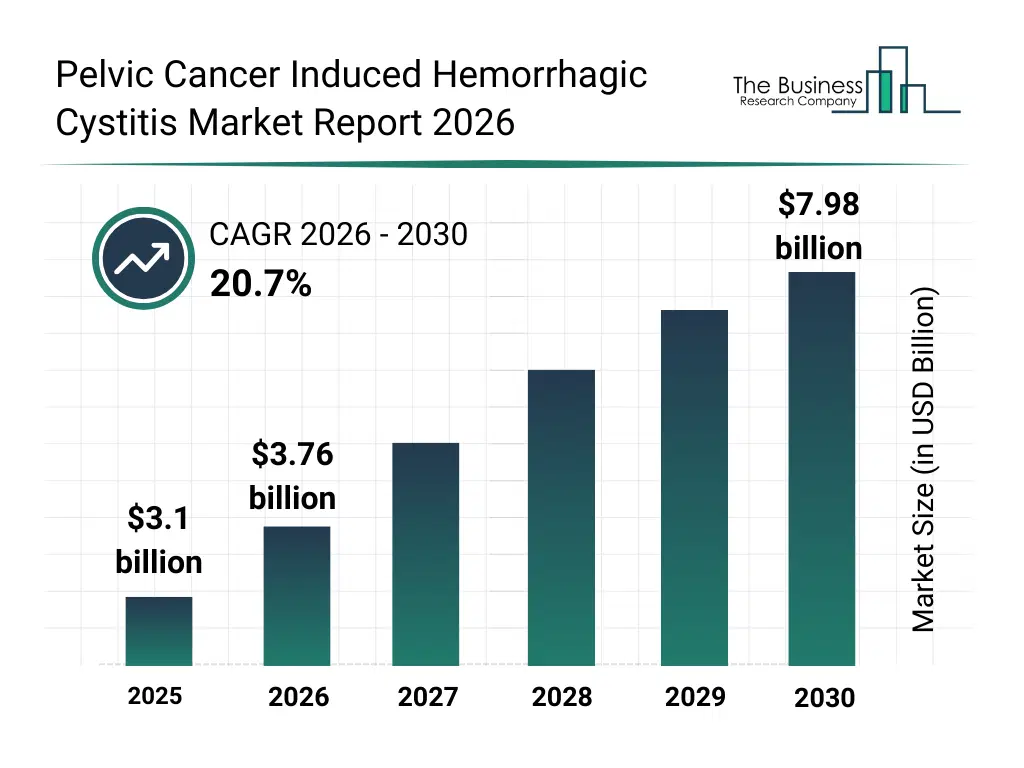
What Is The Pelvic Cancer Induced Hemorrhagic Cystitis Market Size and Share 2026?
The pelvic cancer induced hemorrhagic cystitis market size has grown exponentially in recent years. It will grow from $3.1 billion in 2025 to $3.76 billion in 2026 at a compound annual growth rate (CAGR) of 21.1%. The growth in the historic period can be attributed to high incidence of radiation-induced cystitis, use of cyclophosphamide and ifosfamide, limited availability of targeted bladder therapies, reliance on supportive care and bladder irrigation, low adoption of intravesical therapies.What Is The Pelvic Cancer Induced Hemorrhagic Cystitis Market Growth Forecast?
The pelvic cancer induced hemorrhagic cystitis market size is expected to see exponential growth in the next few years. It will grow to $7.98 billion in 2030 at a compound annual growth rate (CAGR) of 20.7%. The growth in the forecast period can be attributed to advancements in personalized medicine, rising r&d in bladder-protective drugs, increasing use of regenerative medicine approaches, growing adoption of minimally invasive interventions, expanding awareness and early detection programs. Major trends in the forecast period include increasing use of ai for early detection and risk prediction, rising adoption of genomics-based personalized cancer treatments, integration of cloud and big data for patient monitoring, implementation of smart manufacturing in drug production, growing use of iot-enabled devices for remote patient management.
Global Pelvic Cancer Induced Hemorrhagic Cystitis Market Segmentation
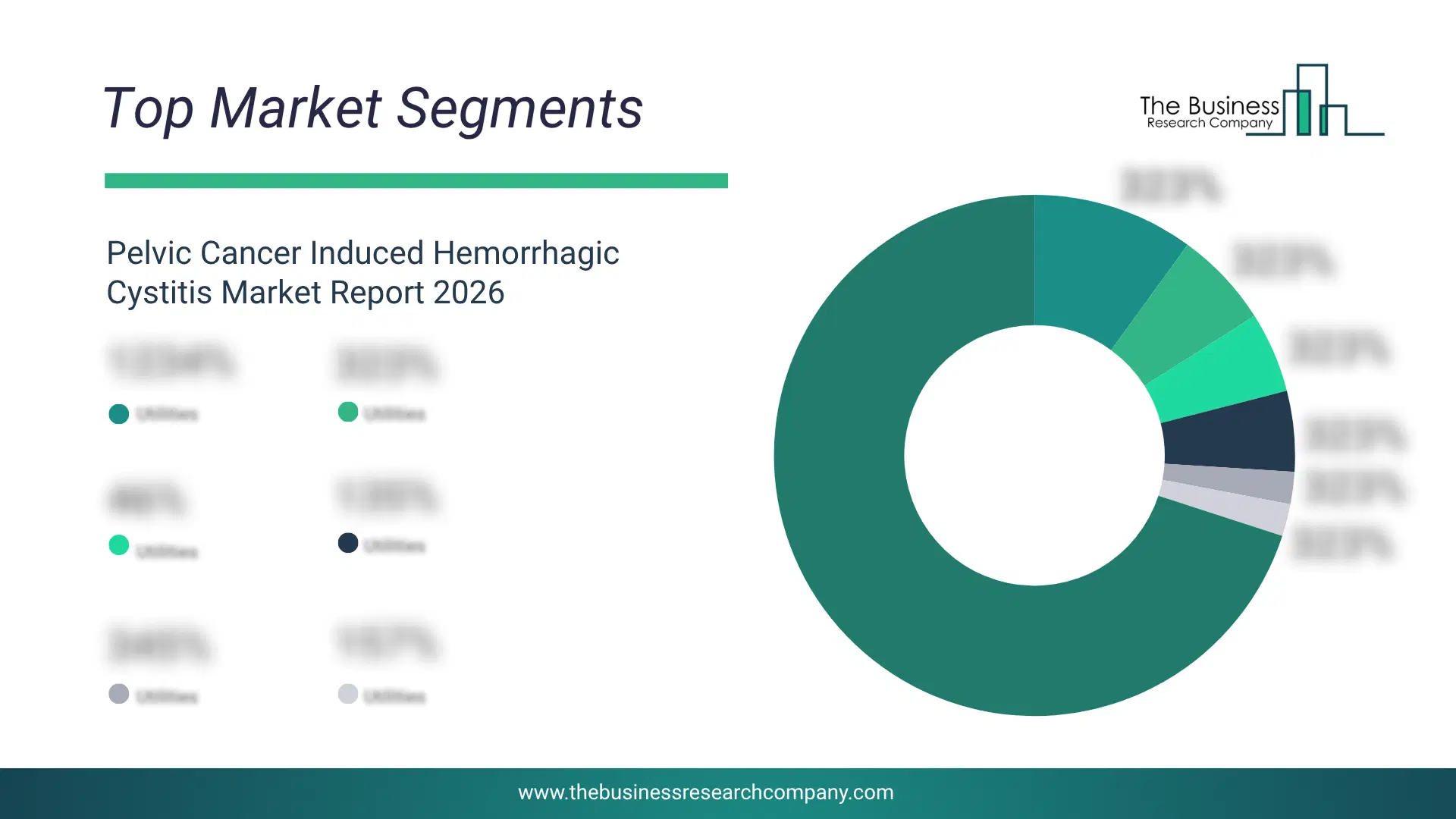
1) By Treatment Type: Bone Marrow Transplant, Chemotherapy, Radiation Therapy, Other Treatment Types 2) By Route Of Administration: Oral, Injectable, Intravesical 3) By Distribution Channel: Hospital Pharmacies, Retail Pharmacies, Online Pharmacies Subsegments: 1) By Bone Marrow Transplant: Autologous Bone Marrow Transplant, Allogeneic Bone Marrow Transplant, Haploidentical Bone Marrow Transplant 2) By Chemotherapy: Cyclophosphamide, Ifosfamide, Systemic Chemotherapy, Intravesical Chemotherapy, Targeted Chemotherapy 3) By Radiation Therapy: External Beam Radiation Therapy (EBRT), Brachytherapy, Intensity-Modulated Radiation Therapy (IMRT) 4) By Other Treatments: Hyperbaric Oxygen Therapy (HBOT), Intravesical Therapy, Bladder Irrigation And Catheterization, Surgical Interventions, Regenerative Medicine And Palliative CareWhat Are The Drivers Of The Pelvic Cancer Induced Hemorrhagic Cystitis Market?
The rise in cervical cancer cases is expected to propel the growth of the pelvic cancer-induced hemorrhagic cystitis market going forward. Cervical cancer is a malignant neoplasm originating in the cervix, primarily caused by persistent infection with high-risk human papillomavirus (HPV) strains, leading to uncontrolled cellular proliferation, invasion of surrounding tissues, and potential metastasis if left untreated. The rise in cervical cancer cases is due to limited access to preventive healthcare, with inadequate cervical screening programs playing a critical role. Pelvic cancer-induced hemorrhagic cystitis contributes positively to cervical cancer by increasing clinical awareness and surveillance in affected patients, prompting early diagnosis and timely intervention, which can ultimately improve patient outcomes and drive advancements in oncological care. For instance, in January 2025, according to the American Cancer Society, a US-based non-profit organization, in the United States for 2025, approximately 13,360 new cases of invasive cervical cancer are expected to be diagnosed, with an estimated 4,320 women projected to succumb to the disease. Therefore, the rise in cervical cancer cases is driving the growth of the pelvic cancer-induced hemorrhagic cystitis market. The shift towards unhealthy diets and sedentary lifestyles is expected to boost the growth of the pelvic cancer-induced hemorrhagic cystitis market going forward. An unhealthy diet and sedentary lifestyle refer to a pattern of consuming nutrient-poor, high-calorie foods while engaging in minimal physical activity, leading to adverse health outcomes such as obesity, cardiovascular diseases, and metabolic disorders. The shift towards unhealthy diets and sedentary lifestyles is due to the increasing consumption of processed foods, which encourages poor dietary choices and contributes to long-term health risks. Pelvic cancer-induced hemorrhagic cystitis highlights the importance of maintaining a healthy lifestyle, as proactive dietary and activity modifications support overall well-being, improve treatment outcomes, and enhance the quality of life for affected individuals. For instance, in June 2024, according to the data published by the American Heart Association, Inc., a US-based non-profit organization, more than 150 million people in the U.S. will have a poor diet by 2050, contributing to a nearly 40% increase in adult obesity. Therefore, the shift towards unhealthy diets and sedentary lifestyles is driving the pelvic cancer-induced hemorrhagic cystitis market.Key Players In The Global Pelvic Cancer Induced Hemorrhagic Cystitis Market
Major companies operating in the pelvic cancer induced hemorrhagic cystitis market are Pfizer Inc., Johnson & Johnson Services Inc., F. Hoffmann-La Roche Ltd, Merck & Co. Inc., AbbVie Inc., Bayer AG, Sanofi SA, Bristol-Myers Squibb Company, AstraZeneca PLC, Novartis AG, Amgen Inc., Mayo Clinic, Cleveland Clinic Foundation, Astellas Pharma Inc., Fresenius Kabi AG, Bausch Health Companies Inc., Medicover Hospitals, Urigen Pharmaceuticals Inc., Lipella Pharmaceuticals Inc., Hemogenyx Pharmaceuticals plc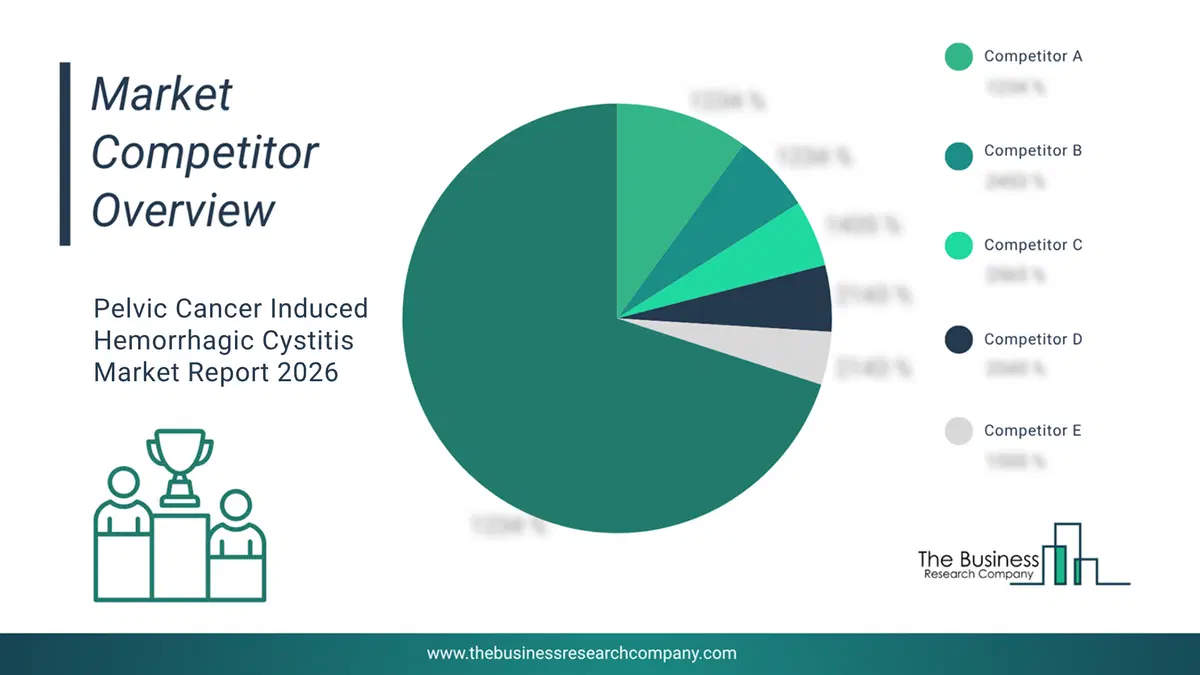
This chart is for illustrative purposes; the full report includes a detailed competitor analysis and comprehensive overview of the top 10 companies in the market.
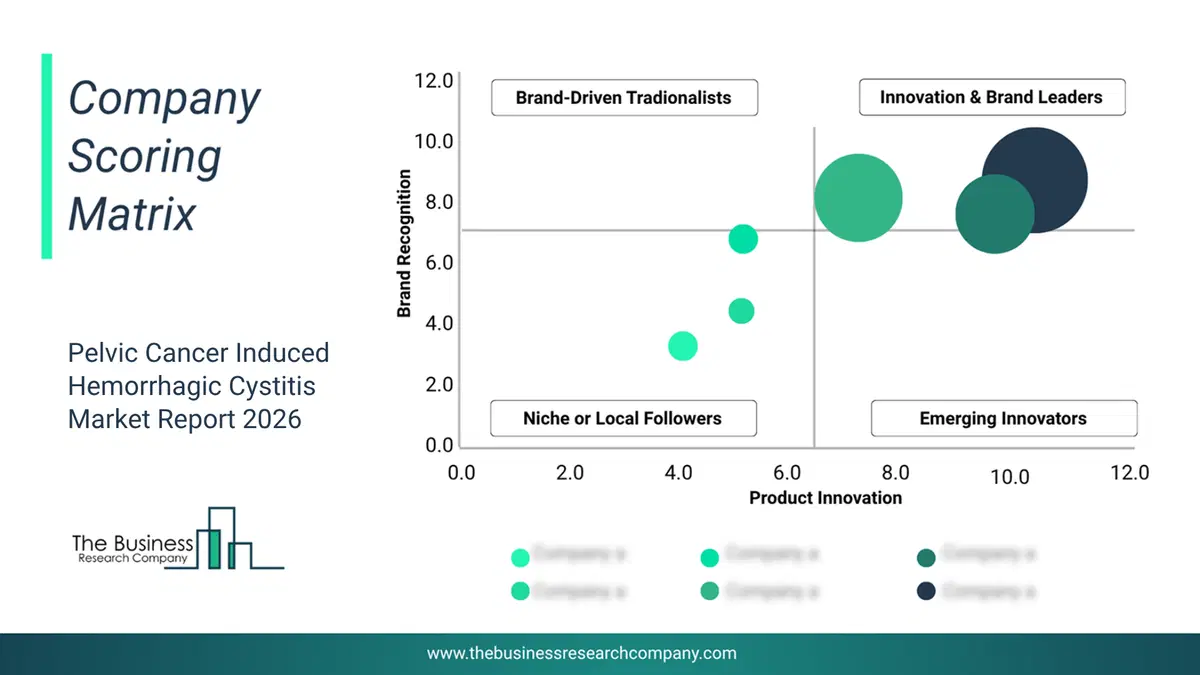
This chart maps companies by product innovation and brand strength, with bubble size indicating relative revenue, helping identify market leaders, challengers, and niche players. This is an illustrative chart; the full report provides a complete and accurate competitive analysis.
Global Pelvic Cancer Induced Hemorrhagic Cystitis Market Trends and Insights
Major companies operating in the pelvic cancer-induced hemorrhagic cystitis market are focusing on developing innovative drug developments, such as liposomal tacrolimus therapy, and introducing an advanced drug formulation that enhances targeted treatment delivery while improving safety and efficacy. Liposomal tacrolimus therapy is a drug delivery approach that encapsulates tacrolimus in liposomes to enhance its bioavailability, improve targeted immunosuppression, and reduce systemic toxicity in treating autoimmune diseases and organ transplant rejection. For instance, in October 2024, Lipella Pharmaceuticals Inc., a US-based biotechnology company, announced the United States patent allowance for its innovative liposomal drug delivery platform, which enhances the targeted administration of therapeutic agents for various medical conditions, including hemorrhagic cystitis. This advanced liposomal technology optimizes drug delivery to epithelial tissues such as the bladder, mouth, colon, and urethra, ensuring higher efficacy and reduced systemic side effects. Additionally, the market exclusivity granted through this patent strengthens Lipella’s competitive position and supports the development of its lead clinical asset, LP-10, a promising intravesical therapy for hemorrhagic cystitis.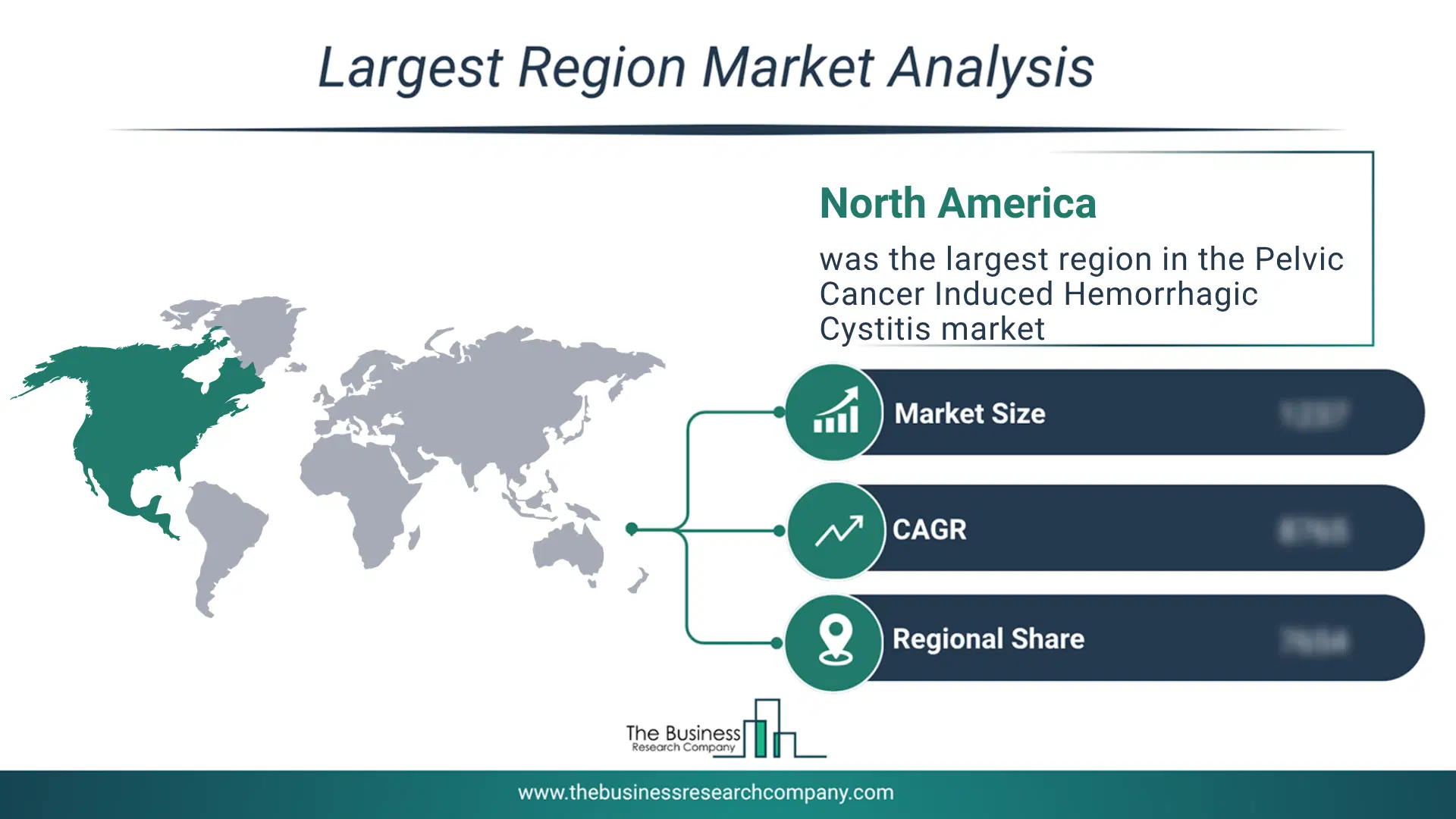
Regional Outlook
North America was the largest region in the pelvic cancer induced hemorrhagic cystitis market in 2025. Asia-Pacific is expected to be the fastest-growing region in the forecast period. The regions covered in this market report are Asia-Pacific, South East Asia, Western Europe, Eastern Europe, North America, South America, Middle East, Africa. The countries covered in this market report are Australia, Brazil, China, France, Germany, India, Indonesia, Japan, Taiwan, Russia, South Korea, UK, USA, Canada, Italy, Spain.What Defines the Pelvic Cancer Induced Hemorrhagic Cystitis Market?
The pelvic cancer induced hemorrhagic cystitis market consists of revenues earned by entities by providing services such as hyperbaric oxygen therapy, intravesical drug instillation, surgical interventions, catheterization and bladder irrigation services, and immunotherapy-based treatments. The market value includes the value of related goods sold by the service provider or included within the service offering. The urticaria market includes sales of products such as corticosteroids, biologic therapies, anti-itch creams, hypoallergenic skincare products, and diagnostic kits for allergy and immune system testing. Values in this market are ‘factory gate’ values, that is, the value of goods sold by the manufacturers or creators of the goods, whether to other entities (including downstream manufacturers, wholesalers, distributors, and retailers) or directly to end customers. The value of goods in this market includes related services sold by the creators of the goods.How is Market Value Defined and Measured?
The market value is defined as the revenues that enterprises gain from the sale of goods and/or services within the specified market and geography through sales, grants, or donations in terms of the currency (in USD unless otherwise specified). The revenues for a specified geography are consumption values that are revenues generated by organizations in the specified geography within the market, irrespective of where they are produced. It does not include revenues from resales along the supply chain, either further along the supply chain or as part of other products.
This chart presents market attractiveness based on a quantitative evaluation of growth, competition, strategic alignment, and risk, offering a clear view of opportunity areas for decision-making. This chart is for illustrative purposes; the full report contains the complete analysis.

This chart highlights the Total Addressable Market (TAM) by estimating the maximum revenue opportunity using an assumption-driven approach, supporting strategic planning and opportunity sizing across markets. The chart is illustrative; the full report provides a more comprehensive analysis.
What Key Data and Analysis Are Included in the Pelvic Cancer Induced Hemorrhagic Cystitis Market Report 2026?
The pelvic cancer induced hemorrhagic cystitis market research report is one of a series of new reports from The Business Research Company that provides market statistics, including industry global market size, regional shares, competitors with the market share, detailed market segments, market trends and opportunities, and any further data you may need to thrive in the pelvic cancer induced hemorrhagic cystitis industry. The market research report delivers a complete perspective of everything you need, with an in-depth analysis of the current and future state of the industry.Pelvic Cancer Induced Hemorrhagic Cystitis Market Report Forecast Analysis
| Report Attribute | Details |
|---|---|
| Market Size Value In 2026 | $3.76 billion |
| Revenue Forecast In 2030 | $7.98 billion |
| Growth Rate | CAGR of 20.7% from 2026 to 2030 |
| Base Year For Estimation | 2025 |
| Actual Estimates/Historical Data | 2020-2025 |
| Forecast Period | 2026 - 2030 |
| Market Representation | Revenue in USD Billion and CAGR from 2026 to 2030 |
| Segments Covered | Treatment Type, Route Of Administration, Distribution Channel |
| Regional Scope | Asia-Pacific, Western Europe, Eastern Europe, North America, South America, Middle East, Africa |
| Country Scope | The countries covered in the report are Australia, Brazil, China, France, Germany, India, Indonesia, Japan, Taiwan, Russia, South Korea, UK, USA, Canada, Italy, Spain |
| Key Companies Profiled | Pfizer Inc., Johnson & Johnson Services Inc., F. Hoffmann-La Roche Ltd, Merck & Co. Inc., AbbVie Inc., Bayer AG, Sanofi SA, Bristol-Myers Squibb Company, AstraZeneca PLC, Novartis AG, Amgen Inc., Mayo Clinic, Cleveland Clinic Foundation, Astellas Pharma Inc., Fresenius Kabi AG, Bausch Health Companies Inc., Medicover Hospitals, Urigen Pharmaceuticals Inc., Lipella Pharmaceuticals Inc., Hemogenyx Pharmaceuticals plc |
| Customization Scope | Request for Customization |
| Pricing And Purchase Options | Explore Purchase Options |