
Per-And Polyfluoroalkyl Substances (PFAS)-Free Medical Device Materials Market Report 2026
Global Outlook – By Material Type (Per- And Polyfluoroalkyl Substances-Free Medical-Grade Silicone, Per- And Polyfluoroalkyl Substances-Free Thermoplastic Elastomers, Per- And Polyfluoroalkyl Substances-Free Polyurethane And Polyolefins, Other Per- And Polyfluoroalkyl Substances-Free Polymers And Elastomers), By Product Type (Tubing And Hoses, Seals And Gaskets, Films And Membranes, Catheter Components, Other Per- And Polyfluoroalkyl Substances-Free Medical Components), By Distribution Channel (Direct Sales, Distributors And Suppliers, Online Sales, Other Distribution Channels), By Application (Cardiovascular Devices, Respiratory And Anesthesia Devices, Drug Delivery Systems, Surgical Instruments And Implants, Other Medical Devices), By End User (Medical Device Manufacturers, Medical Component Manufacturers, Contract Development And Manufacturing Organizations, Research And Development Organizations, Other End Users) – Market Size, Trends, Strategies, and Forecast to 2030
Per-And Polyfluoroalkyl Substances (PFAS)-Free Medical Device Materials Market Overview
• Per-And Polyfluoroalkyl Substances (PFAS)-Free Medical Device Materials market size has reached to $0.94 billion in 2025 • Expected to grow to $2.16 billion in 2030 at a compound annual growth rate (CAGR) of 18.2% • Growth Driver: Increasing Regulatory Scrutiny Of PFAS Across Medical-Device Supply Chains Fueling Market Growth Due To Growing Environmental And Health Concerns • Market Trend: Innovations In High-Performance PFAS-Free Polymers Enhance Medical-Device Safety And Long-Term Component Reliability • North America was the largest region in 2025 and Asia-Pacific is the fastest growing region.What Is Covered Under Per-And Polyfluoroalkyl Substances (PFAS)-Free Medical Device Materials Market?
Per-and polyfluoroalkyl substances (PFAS)-free medical device materials refer to next-generation polymers and coatings engineered for healthcare applications without the use of per- and polyfluoroalkyl substances (PFAS). These materials are designed to provide the necessary chemical resistance, lubricity, and non-stick properties critical for surgical tools and fluid handling systems, ensuring patient safety and environmental sustainability. The main material types of PFAS-free medical device materials include per- and polyfluoroalkyl substances-free medical-grade silicone, per- and polyfluoroalkyl substances-free thermoplastic elastomers, per- and polyfluoroalkyl substances-free polyurethane and polyolefins, and other per- and polyfluoroalkyl substances-free polymers and elastomers. Per- and polyfluoroalkyl substances-free medical-grade silicone refers to silicone materials formulated without intentionally added per- and polyfluoroalkyl substances for use in medical devices and components. These materials are used to manufacture tubing and hoses, seals and gaskets, films and membranes, catheter components, and other per- and polyfluoroalkyl substances-free medical components and are distributed through direct sales, distributors and suppliers, online sales, and other distribution channels. They find application in cardiovascular devices, respiratory and anesthesia devices, drug delivery systems, surgical instruments and implants, and others, serving end users including medical device manufacturers, medical component manufacturers, contract development and manufacturing organizations, research and development organizations, and others.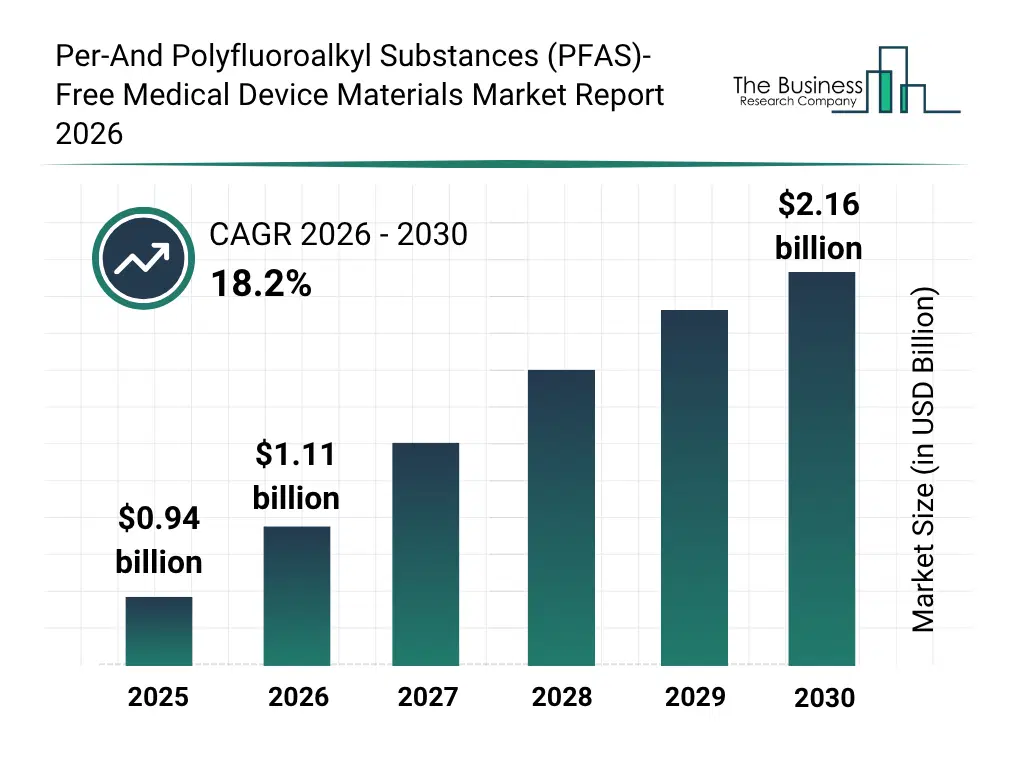
What Is The Per-And Polyfluoroalkyl Substances (PFAS)-Free Medical Device Materials Market Size and Share 2026?
The per-and polyfluoroalkyl substances (PFAS)-free medical device materials market size has grown rapidly in recent years. It will grow from $0.94 billion in 2025 to $1.11 billion in 2026 at a compound annual growth rate (CAGR) of 18.0%. The growth in the historic period can be attributed to increasing regulatory scrutiny of PFAS use, rising awareness of PFAS-related health concerns, growing demand for safer medical device materials, increasing need for chemical-resistant medical components, rising adoption of environmentally preferable healthcare materials.What Is The Per-And Polyfluoroalkyl Substances (PFAS)-Free Medical Device Materials Market Growth Forecast?
The per-and polyfluoroalkyl substances (PFAS)-free medical device materials market size is expected to see rapid growth in the next few years. It will grow to $2.16 billion in 2030 at a compound annual growth rate (CAGR) of 18.2%. The growth in the forecast period can be attributed to growing demand for PFAS-free medical polymers and coatings, increasing adoption of sustainable medical device materials, rising demand for non-stick alternatives in surgical applications, expanding use of PFAS-free materials in fluid handling systems, growing preference for environmentally sustainable healthcare products. Major trends in the forecast period include increasing adoption of pfas-free medical device materials, rising demand for non-toxic medical material alternatives, growing use of pfas-free polymers in surgical instruments, increasing demand for chemical-resistant medical materials, rising adoption of pfas-free coatings for fluid handling systems.
Global Per-And Polyfluoroalkyl Substances (PFAS)-Free Medical Device Materials Market Segmentation
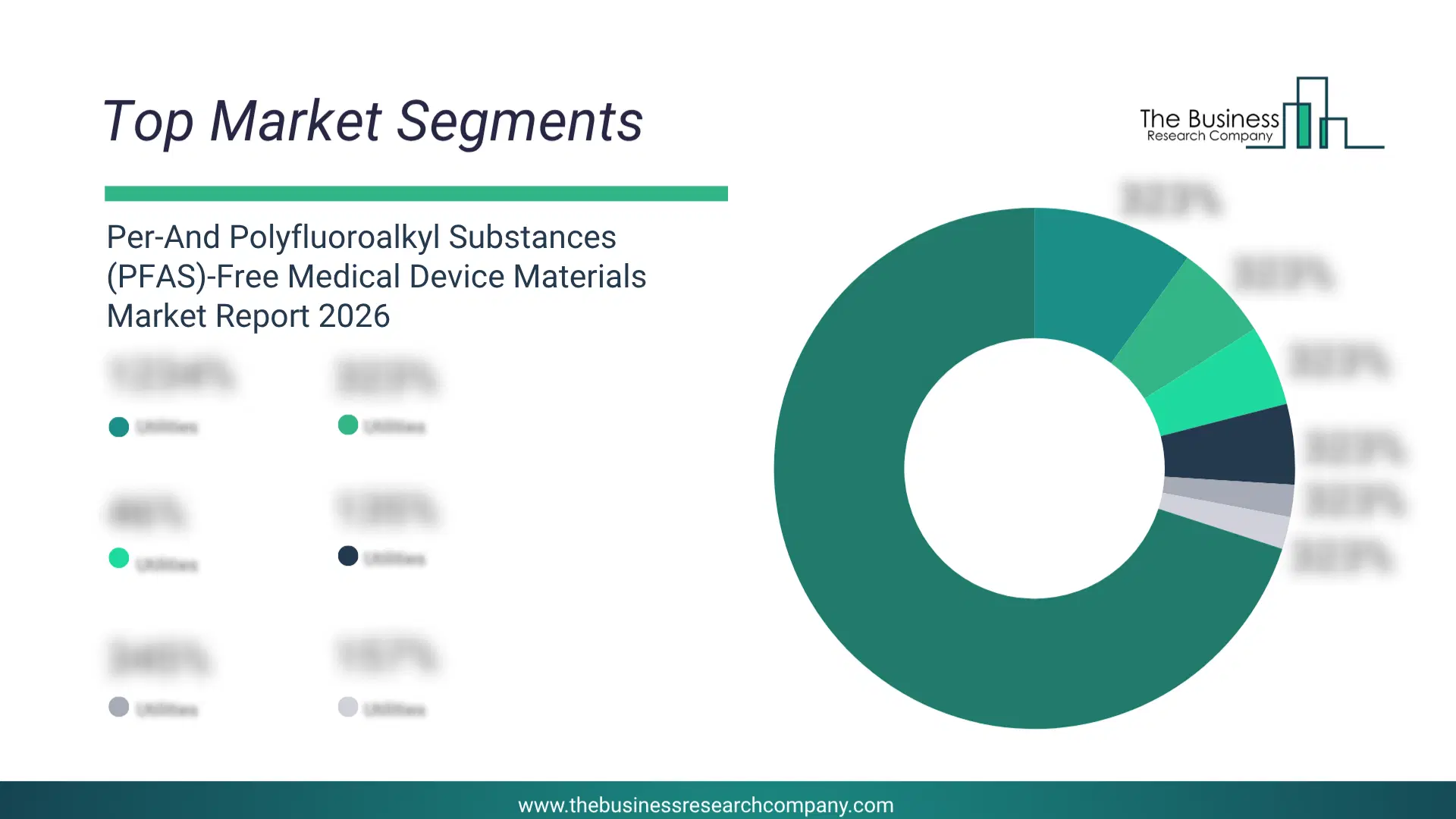
1) By Material Type: Per- And Polyfluoroalkyl Substances-Free Medical-Grade Silicone, Per- And Polyfluoroalkyl Substances-Free Thermoplastic Elastomers, Per- And Polyfluoroalkyl Substances-Free Polyurethane And Polyolefins, Other Per- And Polyfluoroalkyl Substances-Free Polymers And Elastomers 2) By Product Type: Tubing And Hoses, Seals And Gaskets, Films And Membranes, Catheter Components, Other Per- And Polyfluoroalkyl Substances-Free Medical Components 3) By Distribution Channel: Direct Sales, Distributors And Suppliers, Online Sales, Other Distribution Channels 4) By Application: Cardiovascular Devices, Respiratory And Anesthesia Devices, Drug Delivery Systems, Surgical Instruments And Implants, Other Medical Devices 5) By End User: Medical Device Manufacturers, Medical Component Manufacturers, Contract Development And Manufacturing Organizations, Research And Development Organizations, Other End Users Subsegments: 1) By Per- And Polyfluoroalkyl Substances-Free Medical-Grade Silicone: High-Consistency Silicone Rubber, Liquid Silicone Rubber, Room-Temperature Vulcanizing Silicone 2) By Per- And Polyfluoroalkyl Substances-Free Thermoplastic Elastomers: Thermoplastic Polyurethane, Thermoplastic Styrenic Elastomers, Thermoplastic Polyolefin, Thermoplastic Vulcanizates 3) By Per- And Polyfluoroalkyl Substances-Free Polyurethane And Polyolefins: Polyurethane, Polyethylene, Polypropylene, High-Density Polyethylene 4) By Other Per- And Polyfluoroalkyl Substances-Free Polymers And Elastomers: Polycarbonate, Polyether Ether Ketone, Ethylene-Vinyl AcetateWhat Is The Driver Of The Per-And Polyfluoroalkyl Substances (PFAS)-Free Medical Device Materials Market?
The increasing regulatory scrutiny of PFAS across medical-device supply chains is expected to propel the growth of the per-and polyfluoroalkyl substances (PFAS)-free medical device materials market going forward. Regulatory scrutiny of PFAS refers to stronger government oversight of the production, use, import, disclosure and disposal of materials containing per- and polyfluoroalkyl substances. The scrutiny is increasing due to concerns about environmental persistence, potential health effects and PFAS emissions throughout product life cycles. PFAS-free medical device materials help manufacturers replace fluorinated substances in tubing, seals, membranes, coatings and device housings while reducing regulatory and supply risks. For instance, in August 2025, according to the European Chemicals Agency, a Finland-based government agency, the updated PFAS restriction proposal addressed 22 sector categories, including medical devices and other medical applications, compared with 14 categories under evaluation in 2024, representing an increase of approximately 57%. Therefore, the increasing regulatory scrutiny of PFAS across medical-device supply chains is driving the growth of the per-and polyfluoroalkyl substances (PFAS)-free medical device materials industry.Key Players In The Global Per-And Polyfluoroalkyl Substances (PFAS)-Free Medical Device Materials Market
Major companies operating in the per-and polyfluoroalkyl substances (PFAS)-free medical device materials market are Compagnie de Saint-Gobain S.A., SABIC, Celanese Corporation, Kuraray Co. Ltd., Evonik Industries AG, Syensqo SA, Avient Corporation, Victrex plc, Trinseo PLC, Nordson Corporation, Freudenberg Medical LLC, Zeus Company Inc., Teknor Apex Company, Ensinger GmbH, RAUMEDIC AG, Optinova AB, One Medical Extrusion, BioInteractions Ltd., Harland Medical Systems Inc., Medical Surface Inc., Surface Solutions Group LLC, LipoCoat B.V., DynaFlex Technologies Inc.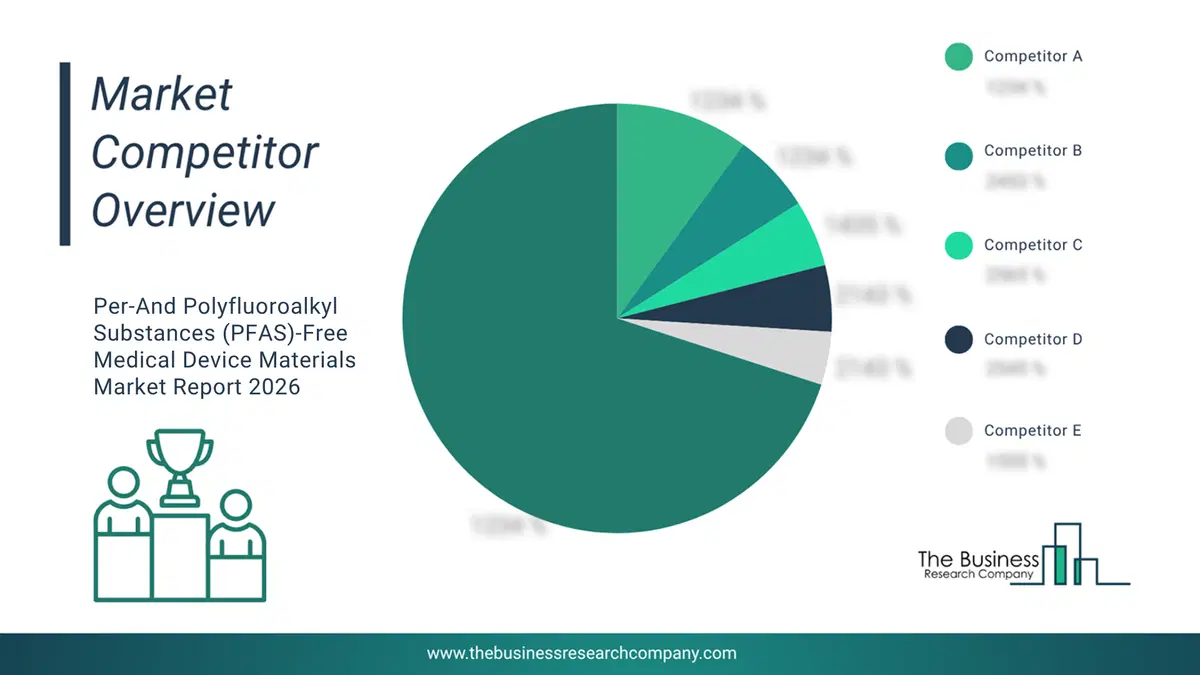
This chart is for illustrative purposes; the full report includes a detailed competitor analysis and comprehensive overview of the top 10 companies in the market.
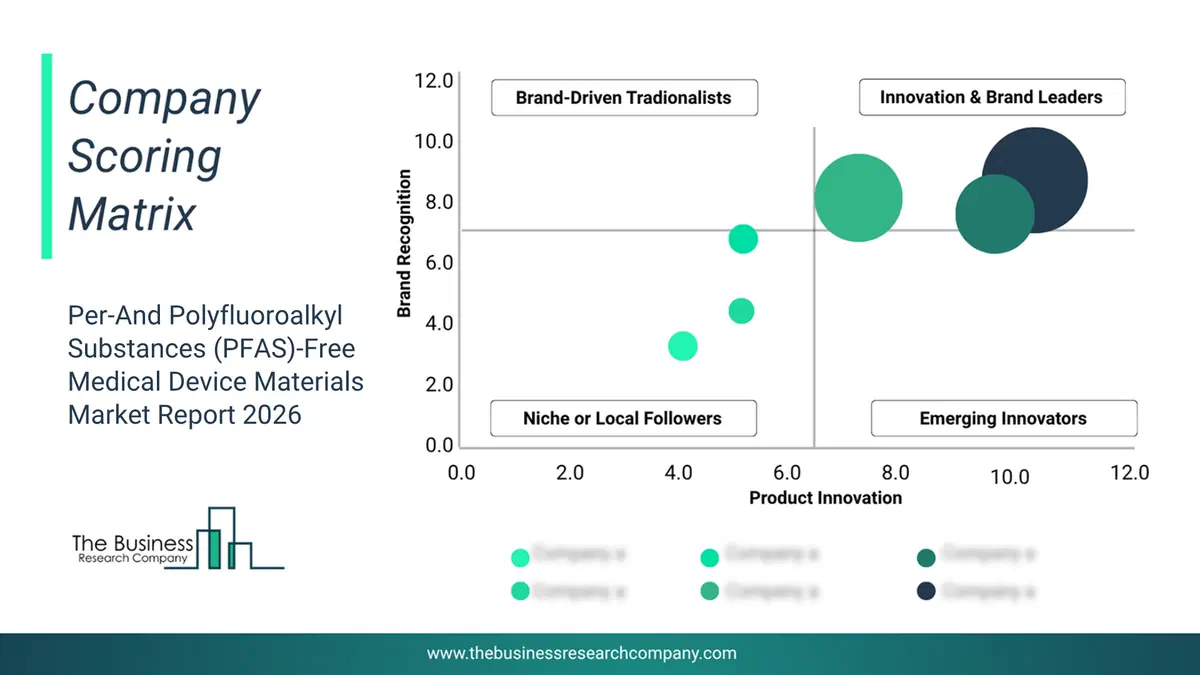
This chart maps companies by product innovation and brand strength, with bubble size indicating relative revenue, helping identify market leaders, challengers, and niche players. This is an illustrative chart; the full report provides a complete and accurate competitive analysis.
Global Per-And Polyfluoroalkyl Substances (PFAS)-Free Medical Device Materials Market Trends and Insights
Major companies operating in the per-and polyfluoroalkyl substances (PFAS)-free medical device materials market are focusing on developing advanced solutions, such as internally lubricated PFAS-free engineering compounds, to reduce friction, improve wear resistance and maintain reliable performance in moving medical-device components. Internally lubricated PFAS-free compounds incorporate non-fluorinated functional additives directly into the polymer matrix to provide long-lasting lubrication without polytetrafluoroethylene or other PFAS components. For instance, in January 2025, Americhem, a US-based polymer materials manufacturer, launched EcoLube MD, a line of PFAS-free internally lubricated compounds developed for medical devices and healthcare applications. The compounds reduce friction, component wear and operating noise in minimally invasive surgical devices, syringe pumps, prosthetics and surgical robots while supporting plastic-to-plastic and plastic-to-metal applications. Additionally, EcoLube MD underwent ISO 10993-5 biocompatibility testing, helping medical-device manufacturers improve regulatory readiness, material safety and long-term component performance.What Are Latest Mergers And Acquisitions In The Per-And Polyfluoroalkyl Substances (PFAS)-Free Medical Device Materials Market?
In January 2025, GEON Performance Solutions, a US-based provider of performance polymer formulations, vinyl and polyolefin technologies, engineered compounds and contract manufacturing services, acquired Foster Corporation for an undisclosed amount. With this acquisition, GEON aims to expand its presence in medical materials, add PFAS-free and specialty biomedical polymer capabilities and extend its production and distribution reach. Foster Corporation is a US-based provider of custom medical compounds, implantable materials, engineered polymers, thermoplastic polyurethane elastomers and PFAS-free low-friction additive technologies for medical devices.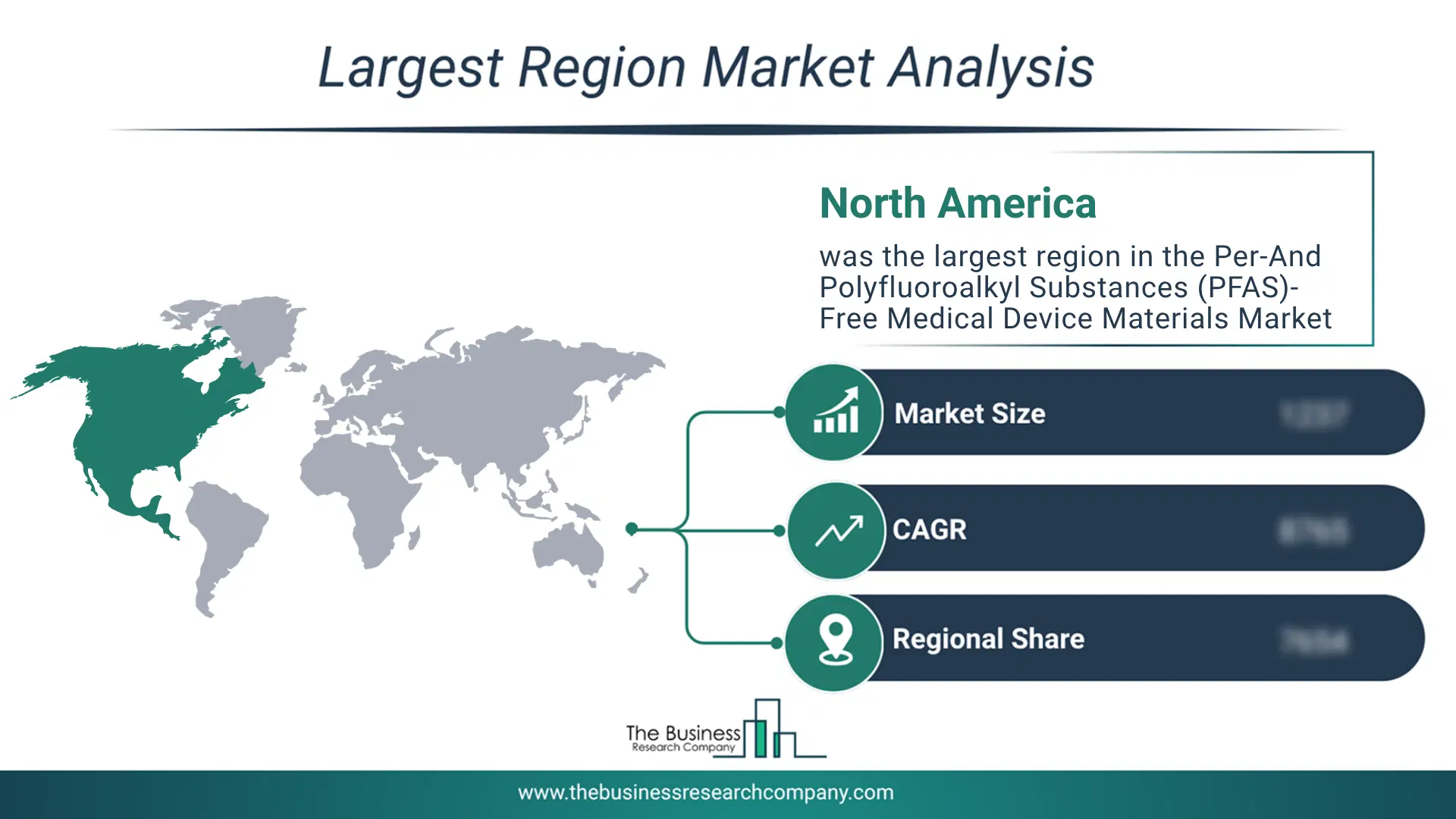
Regional Insights
North America was the largest region in the per-and polyfluoroalkyl substances (PFAS)-free medical device materials market in 2025. Asia-Pacific is expected to be the fastest-growing region in the forecast period. The regions covered in this market report are Asia-Pacific, South East Asia, Western Europe, Eastern Europe, North America, South America, Middle East, Africa. The countries covered in this market report are Australia, Brazil, China, France, Germany, India, Indonesia, Japan, Taiwan, Russia, South Korea, UK, USA, Canada, Italy, Spain.What Defines the Per-And Polyfluoroalkyl Substances (PFAS)-Free Medical Device Materials Market?
The per-and polyfluoroalkyl substances (PFAS)-free medical device materials market consists of sales of PFAS-free polycarbonate (PC), PFAS-free PEEK, PFAS-free polyamide (PA) and PFAS-free polyesters (PET/PBT). Values in this market are ‘factory gate’ values, that is, the value of goods sold by the manufacturers or creators of the goods, whether to other entities (including downstream manufacturers, wholesalers, distributors, and retailers) or directly to end customers. The value of goods in this market includes related services sold by the creators of the goodsHow is Market Value Defined and Measured?
The market value is defined as the revenues that enterprises gain from the sale of goods and/or services within the specified market and geography through sales, grants, or donations in terms of the currency (in USD unless otherwise specified). The revenues for a specified geography are consumption values that are revenues generated by organizations in the specified geography within the market, irrespective of where they are produced. It does not include revenues from resales along the supply chain, either further along the supply chain or as part of other products.
This chart presents market attractiveness based on a quantitative evaluation of growth, competition, strategic alignment, and risk, offering a clear view of opportunity areas for decision-making. This chart is for illustrative purposes; the full report contains the complete analysis.

This chart highlights the Total Addressable Market (TAM) by estimating the maximum revenue opportunity using an assumption-driven approach, supporting strategic planning and opportunity sizing across markets. The chart is illustrative; the full report provides a more comprehensive analysis.
What Key Data and Analysis Are Included in the Per-And Polyfluoroalkyl Substances (PFAS)-Free Medical Device Materials Market Report 2026?
The per-and polyfluoroalkyl substances (pfas)-free medical device materials market research report is one of a series of new reports from The Business Research Company that provides market statistics, including industry global market size, regional shares, competitors with the market share, detailed market segments, market trends and opportunities, and any further data you may need to thrive in the per-and polyfluoroalkyl substances (pfas)-free medical device materials industry. The market research report delivers a complete perspective of everything you need, with an in-depth analysis of the current and future state of the industry.Per-And Polyfluoroalkyl Substances (PFAS)-Free Medical Device Materials Market Report Forecast Analysis
| Report Attribute | Details |
|---|---|
| Market Size Value In 2026 | $1.11 billion |
| Revenue Forecast In 2030 | $2.16 billion |
| Growth Rate | CAGR of 18.2% from 2026 to 2030 |
| Base Year For Estimation | 2025 |
| Actual Estimates/Historical Data | 2020-2025 |
| Forecast Period | 2026 - 2030 |
| Market Representation | Revenue in USD Billion and CAGR from 2026 to 2030 |
| Segments Covered | Material Type, Product Type, Distribution Channel, Application, End User |
| Regional Scope | Asia-Pacific, Western Europe, Eastern Europe, North America, South America, Middle East, Africa |
| Country Scope | The countries covered in the report are Australia, Brazil, China, France, Germany, India, Indonesia, Japan, Taiwan, Russia, South Korea, UK, USA, Canada, Italy, Spain. |
| Key Companies Profiled | Compagnie de Saint-Gobain S.A., SABIC, Celanese Corporation, Kuraray Co. Ltd., Evonik Industries AG, Syensqo SA, Avient Corporation, Victrex plc, Trinseo PLC, Nordson Corporation, Freudenberg Medical LLC, Zeus Company Inc., Teknor Apex Company, Ensinger GmbH, RAUMEDIC AG, Optinova AB, One Medical Extrusion, BioInteractions Ltd., Harland Medical Systems Inc., Medical Surface Inc., Surface Solutions Group LLC, LipoCoat B.V., DynaFlex Technologies Inc. |
| Customization Scope | Request for Customization |
| Pricing And Purchase Options | Explore Purchase Options |