

Peripheral Vasodilator Drugs Market Report 2026
Global Outlook – By Drug Type (Calcium Channel Blockers, Direct-Acting Vasodilators, Alpha-Adrenergic Blockers, Potassium Channel Activators, Nitrates, Other Types), By Indication (Hypertension, Angina, Heart Failure, Other Indications), By Application (Hospital, Retail Pharmacies, Other Applications) – Market Size, Trends, Strategies, and Forecast to 2030
Peripheral Vasodilator Drugs Market Overview
• Peripheral Vasodilator Drugs market size has reached to $6.61 billion in 2025 • Expected to grow to $8.56 billion in 2030 at a compound annual growth rate (CAGR) of 5.2% • Growth Driver: Rising Cardiovascular Disease Prevalence Fuels Growth in Peripheral Vasodilator Drugs Market • Market Trend: Innovation In Peripheral Vasodilator Market With Advanced Drug Development • North America was the largest region in 2025.What Is Covered Under Peripheral Vasodilator Drugs Market?
Peripheral vasodilator drugs refer to medications that primarily act on blood vessels outside of the heart and brain, specifically targeting the peripheral circulation. These drugs are used to widen (dilate) blood vessels, thereby reducing resistance to blood flow and lowering blood pressure. The main types of peripheral vasodilator drugs include calcium channel blockers, direct-acting vasodilators, alpha-adrenergic blockers, potassium channel activators, nitrates, and others. Calcium channel blockers are medications that relax and widen blood vessels by inhibiting calcium from entering the cells of the heart and arterial wall and helps reduce blood pressure and improve blood flow. The indications include hypertension, angina, heart failure, and others for application in hospitals, retail pharmacies, and others.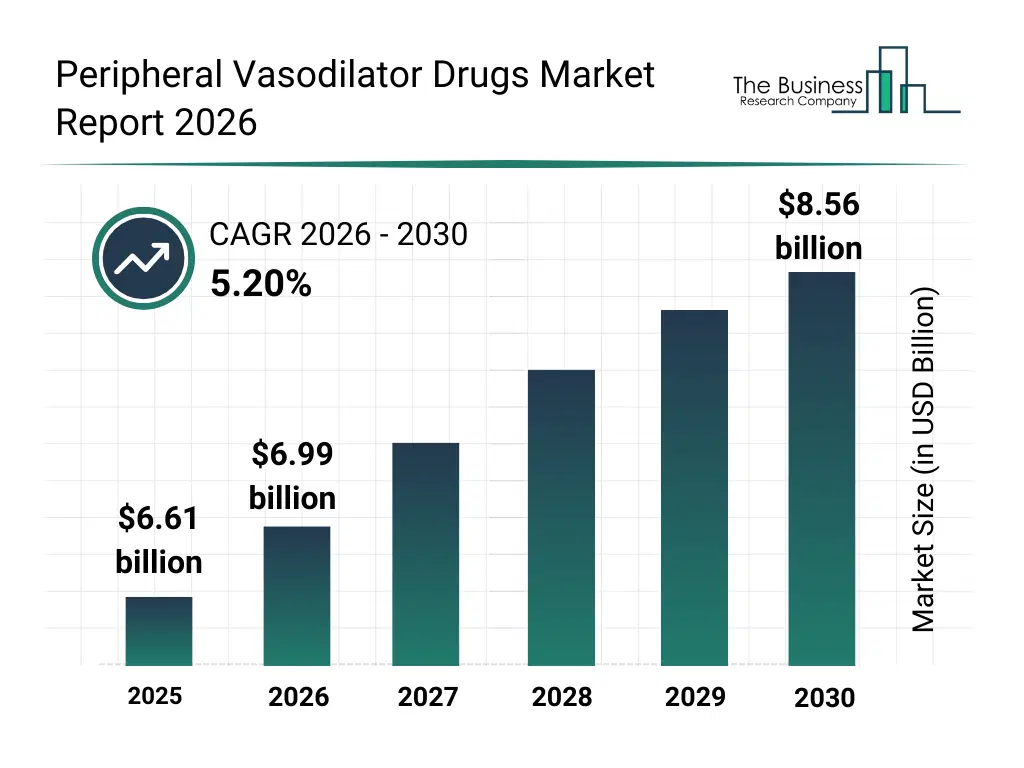
What Is The Peripheral Vasodilator Drugs Market Size and Share 2026?
The peripheral vasodilator drugs market size has grown strongly in recent years. It will grow from $6.61 billion in 2025 to $6.99 billion in 2026 at a compound annual growth rate (CAGR) of 5.7%. The growth in the historic period can be attributed to rising prevalence of hypertension, increased incidence of peripheral vascular diseases, long-term clinical use of nitrates and calcium channel blockers, growing cardiovascular disease burden, expanding hospital-based cardiovascular treatment.What Is The Peripheral Vasodilator Drugs Market Growth Forecast?
The peripheral vasodilator drugs market size is expected to see strong growth in the next few years. It will grow to $8.56 billion in 2030 at a compound annual growth rate (CAGR) of 5.2%. The growth in the forecast period can be attributed to aging global population, rising cases of heart failure and angina, growing demand for outpatient cardiovascular management, increasing adoption of generic vasodilator drugs, improved diagnosis of peripheral circulation disorders. Major trends in the forecast period include growing use of vasodilators in chronic hypertension management, increased preference for combination cardiovascular therapies, rising adoption of long-acting vasodilator formulations, expansion of peripheral vasodilator use in heart failure care, shift toward improved safety and tolerability profiles.
Global Peripheral Vasodilator Drugs Market Segmentation
1) By Drug Type: Calcium Channel Blockers, Direct-Acting Vasodilators, Alpha-Adrenergic Blockers, Potassium Channel Activators, Nitrates, Other Types 2) By Indication: Hypertension, Angina, Heart Failure, Other Indications 3) By Application: Hospital, Retail Pharmacies, Other Applications Subsegments: 1) By Calcium Channel Blockers: Dihydropyridines, Non-Dihydropyridines 2) By Direct-Acting Vasodilators: Hydralazine, Minoxidil, Nitroprusside 3) By Alpha-Adrenergic Blockers: Prazosin, Doxazosin, Terazosin 4) By Potassium Channel Activators: Nicorandil, Diazoxide 5) By Nitrates: Nitroglycerin, Isosorbide Dinitrate, Isosorbide Mononitrate 6) By Other Types: Phosphodiesterase Inhibitors, Endothelin Receptor AntagonistsWhat Are The Drivers Of The Peripheral Vasodilator Drugs Market?
An increase in the prevalence of cardiovascular diseases is expected to propel the growth of the peripheral vasodilator drug market going forward. Cardiovascular diseases (CVDs) are a group of disorders affecting the heart and blood vessels, often caused by atherosclerosis, leading to conditions like heart attacks, strokes, hypertension, and heart failure. The cases of cardiovascular diseases arise primarily due to sedentary lifestyles, unhealthy diets, aging populations, rising rates of obesity, and related health conditions such as diabetes and hypertension. Peripheral vasodilators in cardiovascular diseases improve blood flow, reduce blood pressure, decrease the heart’s workload, and alleviate symptoms of conditions such as peripheral arterial disease. For instance, in October 2024, according to the Centers for Disease Control and Prevention, a US-based government agency, in 2023, cardiovascular disease claimed 919,032 lives, accounting for one in every three deaths. Coronary heart disease remained the most prevalent form of heart disease, and notably, about one in 6 deaths from cardiovascular diseases occurred among adults younger than 65 years. Therefore, the increase in the prevalence of cardiovascular diseases is driving the growth of the peripheral vasodilator drug industry. The increasing geriatric population is expected to propel the growth of the peripheral vasodilator drug market going forward. Geriatric population refers to the group of individuals who are typically aged 65 years and older, representing older adults who may have unique healthcare, social, and physiological needs associated with aging. The increasing geriatric population is primarily due to rising life expectancy, which allows more people to live longer as a result of improved healthcare, better disease management, and enhanced living conditions. The peripheral vasodilator drugs support the geriatric population by improving blood flow to aging tissues, helping manage age-related circulatory disorders, and reducing complications associated with reduced vascular elasticity. For instance, in July 2024, according to the UK Parliament's House of Commons Library, a UK-based government administration, in 2022, there were 12.7 million people aged 65 or older in the UK, representing 19% of the total population. This number is projected to rise to 22.1 million by 2072, accounting for 27% of the population. Therefore, the increasing geriatric population is driving the growth of the peripheral vasodilator drug industry.Key Players In The Global Peripheral Vasodilator Drugs Market
Major companies operating in the peripheral vasodilator drugs market are Pfizer Inc., Bayer AG, Sanofi S.A., AstraZeneca PLC, Abbott Laboratories, Novartis AG, GSK plc, Takeda Pharmaceutical Company, Gilead Sciences Inc, Amgen Inc, Boehringer Ingelheim International GmbH, Merck & Co, Viatris Inc., Teva Pharmaceutical Industries, Astellas Pharma, Daiichi Sankyo Company Limited, Sun Pharmaceutical Industries, Mitsubishi Tanabe Pharma, Cipla Limited, Hikma Pharmaceuticals, Lupin Pharmaceuticals, Glenmark Pharmaceuticals Ltd, Torrent Pharmaceuticals, Ipca Laboratories, Alembic Pharmaceuticals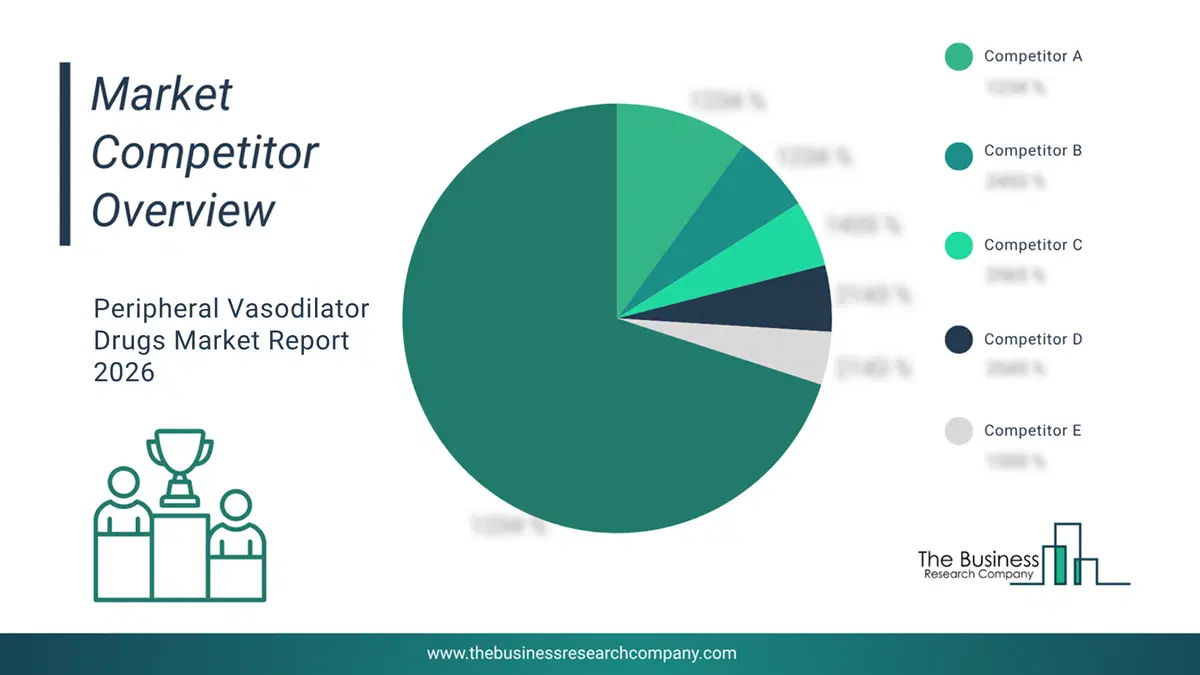
This chart is for illustrative purposes; the full report includes a detailed competitor analysis and comprehensive overview of the top 10 companies in the market.
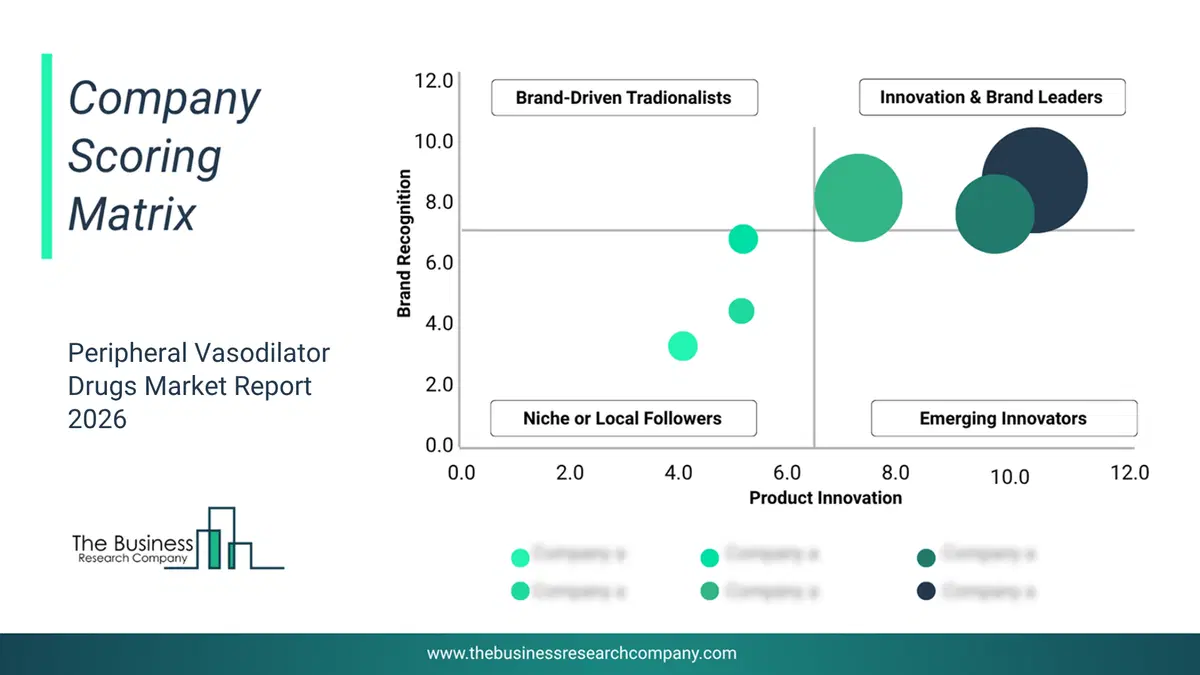
This chart maps companies by product innovation and brand strength, with bubble size indicating relative revenue, helping identify market leaders, challengers, and niche players. This is an illustrative chart; the full report provides a complete and accurate competitive analysis.
Global Peripheral Vasodilator Drugs Market Trends and Insights
Major companies operating in the peripheral vasodilator drugs market are focusing on drug development with triple-drug combination therapies to optimize treatment outcomes and expand market share in cardiovascular therapeutics. Triple-drug combination therapy is an antihypertensive FDC that targets patients who have not achieved adequate blood pressure control with dual-drug therapies or are unable to tolerate diuretic-based combinations. For instance, in August 2023, Ajanta Pharma Limited, an India-based pharmaceutical company specializing in cardiology, introduced Met XL AMT, a novel triple-drug combination to manage hypertension among Indian patients. It is a fixed-dose combination (FDC) of three antihypertensive agents, including Telmisartan, Amlodipine, and Metoprolol. These agents work together to lower blood pressure by relaxing blood vessels, which is a characteristic of peripheral vasodilators. The drug is specifically approved by DCGI for managing uncontrolled hypertension alongside stable coronary artery disease, making IT the world's first fixed-dose combination (FDC) of metoprolol succinate (extended-release) 50 mg, amlodipine 5 mg, and telmisartan 40 mg.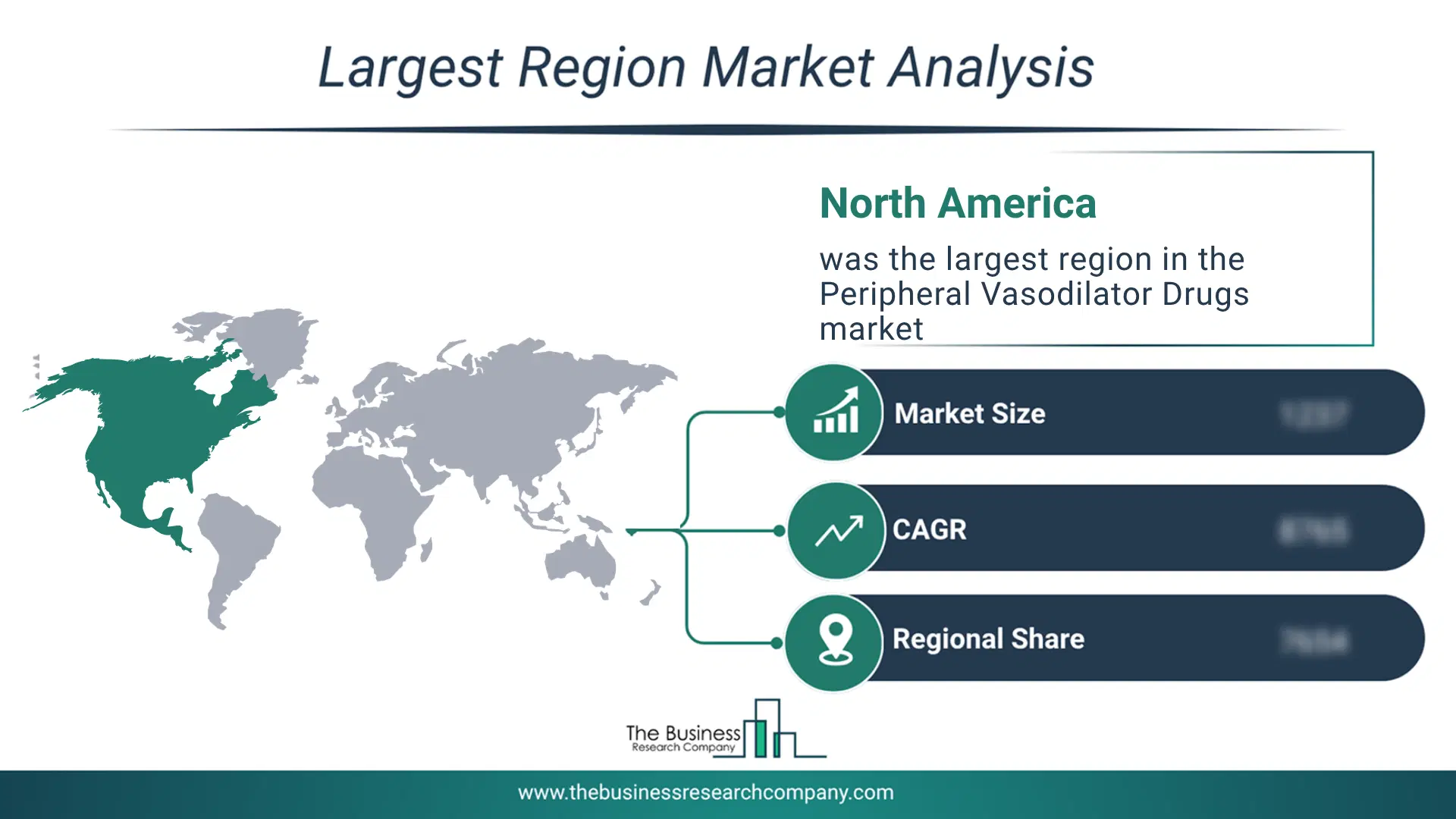
Regional Insights
North America was the largest region in the peripheral vasodilator drugs market in 2025. The regions covered in this market report are Asia-Pacific, South East Asia, Western Europe, Eastern Europe, North America, South America, Middle East, Africa. The countries covered in this market report are Australia, Brazil, China, France, Germany, India, Indonesia, Japan, Taiwan, Russia, South Korea, UK, USA, Canada, Italy, Spain.What Defines the Peripheral Vasodilator Drugs Market?
The peripheral vasodilator drugs market consists of sales of angiotensin II receptor blockers (ARBs), nitric oxide donors, direct renin inhibitors, and endothelin receptor antagonists. Values in this market are ‘factory gate’ values, that is the value of goods sold by the manufacturers or creators of the goods, whether to other entities (including downstream manufacturers, wholesalers, distributors and retailers) or directly to end customers. The value of goods in this market includes related services sold by the creators of the goods.How is Market Value Defined and Measured?
The market value is defined as the revenues that enterprises gain from the sale of goods and/or services within the specified market and geography through sales, grants, or donations in terms of the currency (in USD unless otherwise specified). The revenues for a specified geography are consumption values that are revenues generated by organizations in the specified geography within the market, irrespective of where they are produced. It does not include revenues from resales along the supply chain, either further along the supply chain or as part of other products.
This chart presents market attractiveness based on a quantitative evaluation of growth, competition, strategic alignment, and risk, offering a clear view of opportunity areas for decision-making. This chart is for illustrative purposes; the full report contains the complete analysis.

This chart highlights the Total Addressable Market (TAM) by estimating the maximum revenue opportunity using an assumption-driven approach, supporting strategic planning and opportunity sizing across markets. The chart is illustrative; the full report provides a more comprehensive analysis.
What Key Data and Analysis Are Included in the Peripheral Vasodilator Drugs Market Report 2026?
The peripheral vasodilator drugs market research report is one of a series of new reports from The Business Research Company that provides market statistics, including industry global market size, regional shares, competitors with the market share, detailed market segments, market trends and opportunities, and any further data you may need to thrive in the peripheral vasodilator drugs industry. The market research report delivers a complete perspective of everything you need, with an in-depth analysis of the current and future state of the industry.Peripheral Vasodilator Drugs Market Report Forecast Analysis
| Report Attribute | Details |
|---|---|
| Market Size Value In 2026 | $6.99 billion |
| Revenue Forecast In 2030 | $8.56 billion |
| Growth Rate | CAGR of 5.7% from 2026 to 2030 |
| Base Year For Estimation | 2025 |
| Actual Estimates/Historical Data | 2020-2025 |
| Forecast Period | 2026 - 2030 |
| Market Representation | Revenue in USD Billion and CAGR from 2026 to 2030 |
| Segments Covered | Drug Type, Indication, Application |
| Regional Scope | Asia-Pacific, Western Europe, Eastern Europe, North America, South America, Middle East, Africa |
| Country Scope | The countries covered in the report are Australia, Brazil, China, France, Germany, India, Indonesia, Japan, Taiwan, Russia, South Korea, UK, USA, Canada, Italy, Spain. |
| Key Companies Profiled | Pfizer Inc., Bayer AG, Sanofi S.A., AstraZeneca PLC, Abbott Laboratories, Novartis AG, GSK plc, Takeda Pharmaceutical Company, Gilead Sciences Inc, Amgen Inc, Boehringer Ingelheim International GmbH, Merck & Co, Viatris Inc., Teva Pharmaceutical Industries, Astellas Pharma, Daiichi Sankyo Company Limited, Sun Pharmaceutical Industries, Mitsubishi Tanabe Pharma, Cipla Limited, Hikma Pharmaceuticals, Lupin Pharmaceuticals, Glenmark Pharmaceuticals Ltd, Torrent Pharmaceuticals, Ipca Laboratories, Alembic Pharmaceuticals |
| Customization Scope | Request for Customization |
| Pricing And Purchase Options | Explore Purchase Options |