

Persistent Epithelial Defect Management Market Report 2026
Global Outlook – By Disease Type (Epithelial Or Limbal, Inflammatory Disease, Neurotrophic Disease, Other Disease Types), By Distribution Channel (Direct Sales, Online Pharmacy, Retail Pharmacy, Hospitals), By End User (Hospitals And Specialty Eye Clinics, Physician Offices, Ophthalmology Specialty Centers, Other End Users) - Market Size, Trends, Strategies, and Forecast to 2030
Persistent Epithelial Defect Management Market Overview
• Persistent Epithelial Defect Management market size has reached to $9.26 billion in 2025 • Expected to grow to $19.94 billion in 2030 at a compound annual growth rate (CAGR) of 16.5% • Growth Driver: Increasing Prevalence Of Eye Disorders Driving Growth In The Market • Market Trend: Secretome Therapy Advancements In The Market • North America was the largest region in 2025 and Asia-Pacific is the fastest growing region.What Is Covered Under Persistent Epithelial Defect Management Market?
Persistent Epithelial Defect (PED) Management refers to the medical strategies used to promote corneal healing in cases where the corneal epithelium fails to regenerate and close within two weeks despite standard treatment. It involves identifying and addressing underlying causes using therapeutic approaches such as lubricating eye drops, autologous serum tears, amniotic membrane transplantation, bandage contact lenses, and biologic therapies to facilitate epithelial healing and prevent corneal complications like ulcers or perforation. The main types of diseases in the persistent epithelial defect management are epithelial or limbal conditions, inflammatory diseases, neurotrophic diseases, and other disease types. Epithelial and limbal conditions affect the corneal epithelium and limbal stem cells, leading to vision-threatening defects due to impaired corneal regeneration. Drugs are distributed through various channels, such as direct sales, online pharmacies, retail pharmacies, and hospitals. These drugs are used by various end users, including hospital or clinical laboratories, physician offices, reference laboratories, and other end users.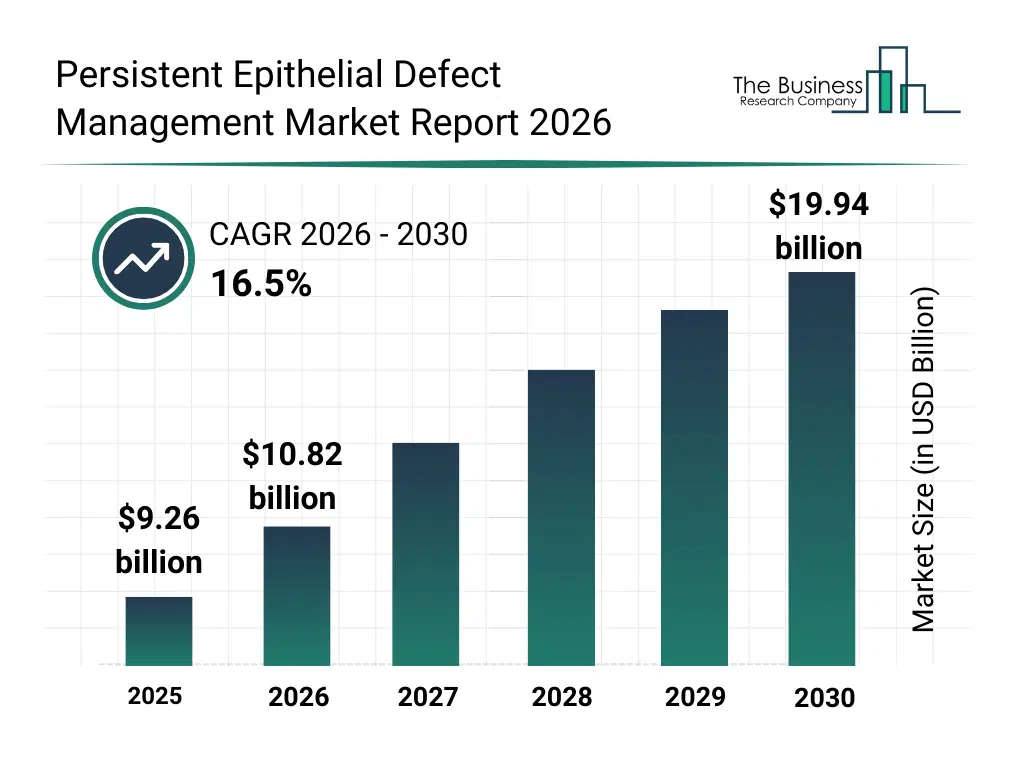
What Is The Persistent Epithelial Defect Management Market Size and Share 2026?
The persistent epithelial defect management market size has grown rapidly in recent years. It will grow from $9.26 billion in 2025 to $10.82 billion in 2026 at a compound annual growth rate (CAGR) of 16.9%. The growth in the historic period can be attributed to limited awareness of persistent epithelial defects, reliance on conventional lubricating eye drops, slow adoption of autologous serum therapy, inadequate access to corneal specialists, inconsistent follow-up and patient monitoring.What Is The Persistent Epithelial Defect Management Market Growth Forecast?
The persistent epithelial defect management market size is expected to see rapid growth in the next few years. It will grow to $19.94 billion in 2030 at a compound annual growth rate (CAGR) of 16.5%. The growth in the forecast period can be attributed to advancements in stem cell and biologic therapies, rising adoption of amniotic membrane transplantation, increasing preference for bandage contact lenses, growing awareness about early corneal defect management, expansion of hospital and specialized eye care centers. Major trends in the forecast period include rising adoption of ai-powered diagnostic and imaging tools, increasing use of biologics and stem cell therapies, integration of cloud-based patient monitoring systems, development of iot-enabled eye care devices, advancements in automated manufacturing of ocular therapeutics.
Global Persistent Epithelial Defect Management Market Segmentation
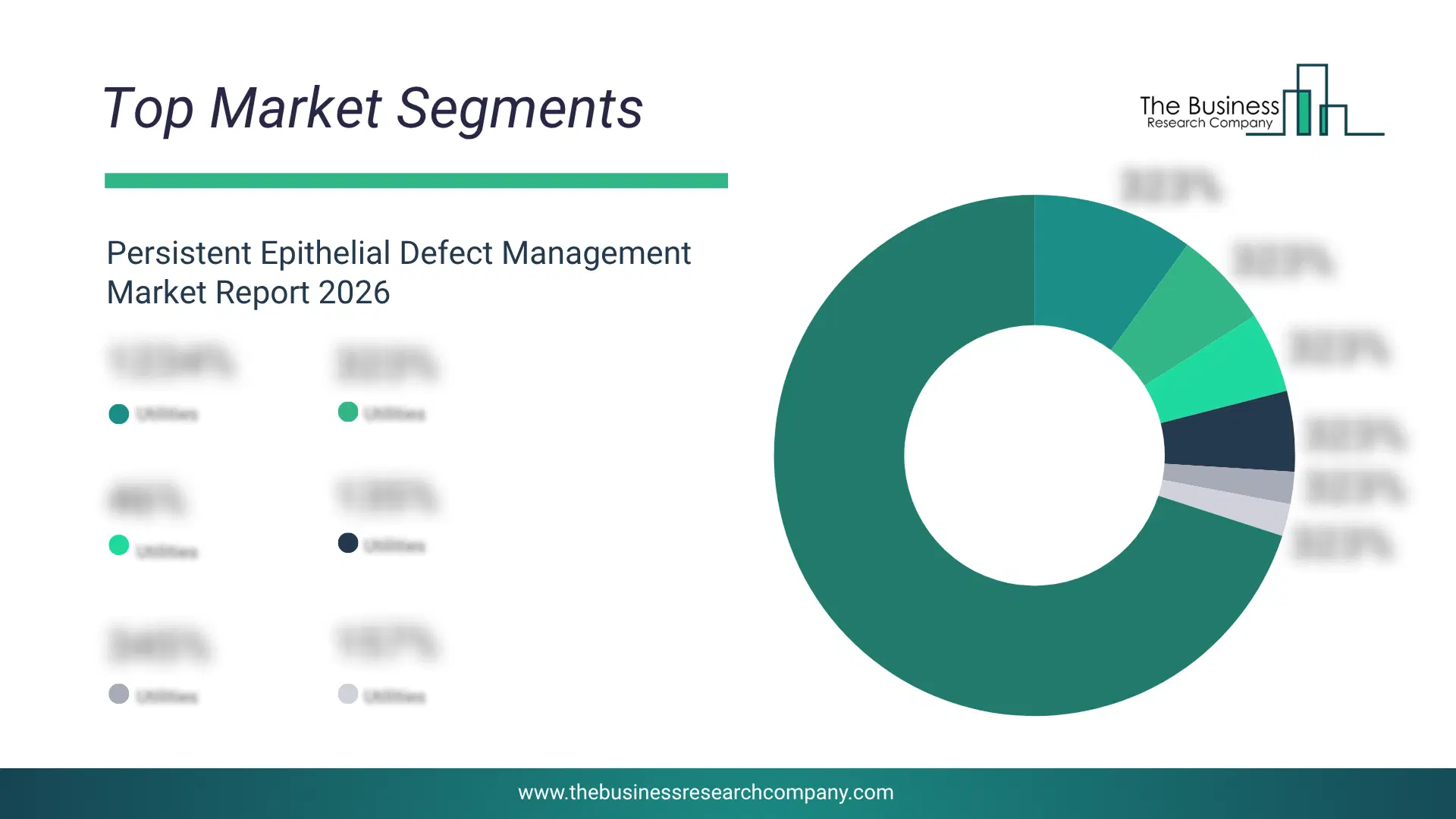
1) By Disease Type: Epithelial Or Limbal, Inflammatory Disease, Neurotrophic Disease, Other Disease Types 2) By Distribution Channel: Direct Sales, Online Pharmacy, Retail Pharmacy, Hospitals 3) By End User: Hospitals And Specialty Eye Clinics, Physician Offices, Ophthalmology Specialty Centers, Other End Users Subsegments: 1) By Epithelial Or Limbal: Limbal Stem Cell Deficiency (LSCD), Limbal Transplantation, Conjunctival Transplantation 2) By Inflammatory Disease: Dry Eye Syndrome, Allergic Conjunctivitis, Uveitis 3) By Neurotrophic Disease: Herpes Simplex Virus (HSV) Keratitis, Corneal Nerve Damage Associated Keratopathy, Neurotrophic Keratopathy 4) By Other Disease Types: Chemical Burns, Trauma-Induced Defects, Congenital Corneal OpacitiesWhat Are The Drivers Of The Persistent Epithelial Defect Management Market?
The increasing prevalence of eye disorders is expected to propel the growth of the persistent epithelial defect management market going forward. Eye disorders refer to a broad range of medical conditions that affect the structure, function, or health of the eyes, leading to vision impairment, discomfort, or potential blindness. The prevalence of eye disorders is driven by factors such as aging populations, prolonged screen time, and environmental changes. Persistent epithelial defect management is essential for treating eye disorders, as it promotes healing, alleviates inflammation, and prevents complications such as infection or scarring. For instance, in December 2024, according to the World Health Organization, a Switzerland-based intergovernmental organization, the overall pooled prevalence of childhood myopia was 5.23% in 2023, with a significantly higher rate among females (4.90%) compared to males (3.94%). Therefore, the increasing prevalence of eye disorders drives the growth of the persistent epithelial defect management industry. The rise in eye surgeries is expected to propel the growth of the persistent epithelial defect management market going forward. Eye surgeries refer to medical procedures performed on the eye to correct vision problems, treat diseases, or repair injuries. The rise in eye surgeries is attributed to the increasing prevalence of eye disorders such as cataracts, glaucoma, and refractive errors; advancements in surgical techniques; and the growing adoption of minimally invasive procedures. Persistent epithelial defect management enhances eye surgeries by promoting corneal healing, reducing complications, and improving visual outcomes through targeted treatments that support epithelial regeneration. For instance, in 2023, according to the Eye Bank Association of America, a US-based transplant association, domestic keratoplasty procedures grew by 2.7%, increasing from 49,597 in 2022 to 50,925 in 2023. Therefore, the rise in eye surgeries is driving the growth of the persistent epithelial defect management industry.Key Players In The Global Persistent Epithelial Defect Management Market
Major companies operating in the persistent epithelial defect management market are AbbVie Inc., Novartis AG, Johnson & Johnson Vision, RegeneRx Biopharmaceuticals Inc., Regeneron Pharmaceuticals Inc., Alcon Inc., Bausch Health Companies Inc., Hoya Vision Care, Santen Pharmaceutical Co. Ltd., Recordati Rare Diseases Inc., Dompé Farmaceutici S.p.A., TissueTech Inc., Ocular Therapeutix Inc., Amber Ophthalmics Inc., Noveome Biotherapeutics Inc., OcuNexus Therapeutics Inc., Lux Bio Inc., Eyenovia Inc., Kala Pharmaceuticals Inc., Aerie Pharmaceuticals Inc., EyePoint Pharmaceuticals Inc., Aldeyra Therapeutics Inc.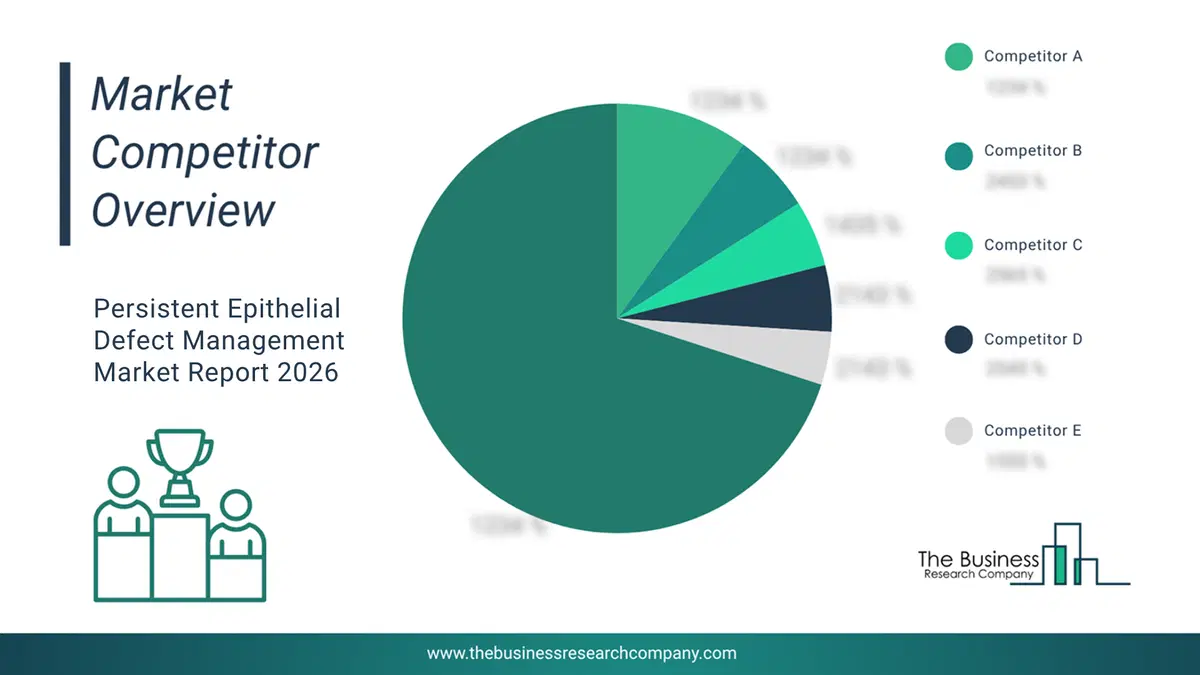
This chart is for illustrative purposes; the full report includes a detailed competitor analysis and comprehensive overview of the top 10 companies in the market.
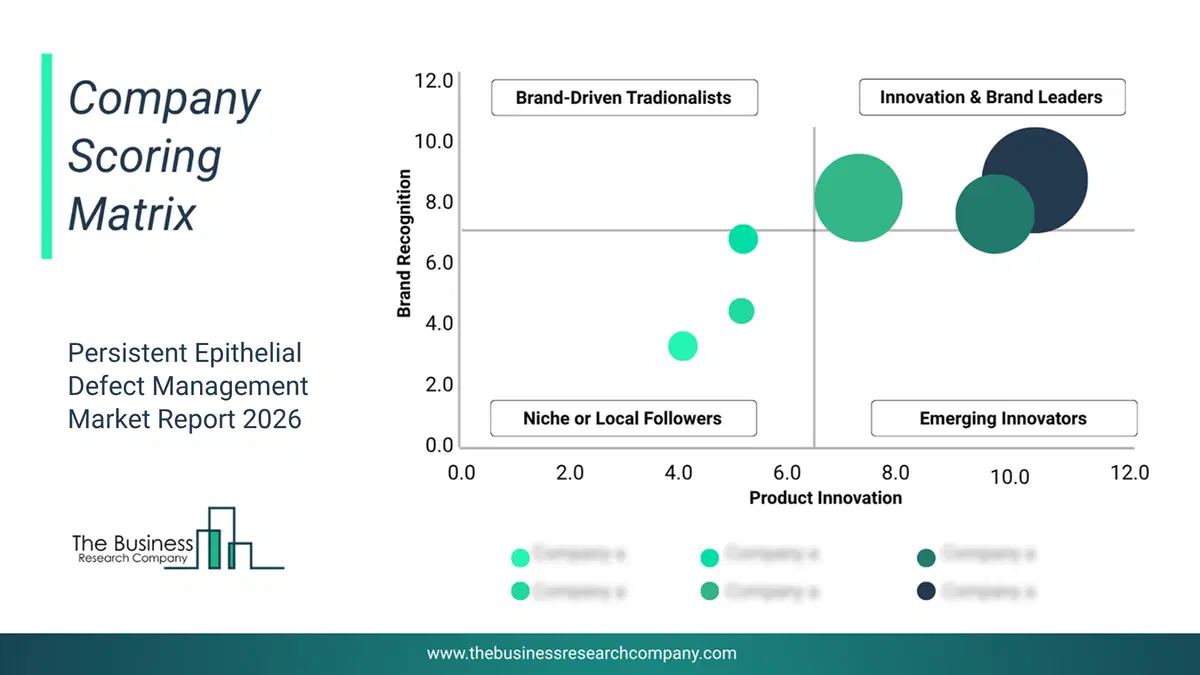
This chart maps companies by product innovation and brand strength, with bubble size indicating relative revenue, helping identify market leaders, challengers, and niche players. This is an illustrative chart; the full report provides a complete and accurate competitive analysis.
Global Persistent Epithelial Defect Management Market Trends and Insights
Major companies operating in the persistent epithelial defect management market are focusing on developing innovative therapies, such as secretome therapy, to accelerate healing and improve treatment outcomes for persistent epithelial defects. Secretome therapy refers to using bioactive molecules secreted by cells, such as proteins, lipids, and extracellular vesicles, to promote tissue repair, modulate immune responses, and treat various diseases. For instance, in April 2023, Kala Pharmaceuticals Inc., a US-based biopharmaceutical company, received U.S. Food and Drug Administration (FDA) Fast Track Designation for KPI-012, a human MSC-S therapy for persistent corneal epithelial defect. The drug's multifactorial mechanism of action aims to address all underlying etiologies of persistent epithelial defect management by promoting corneal healing through bioactive molecules such as growth factors, protease inhibitors, and neurotrophic factors.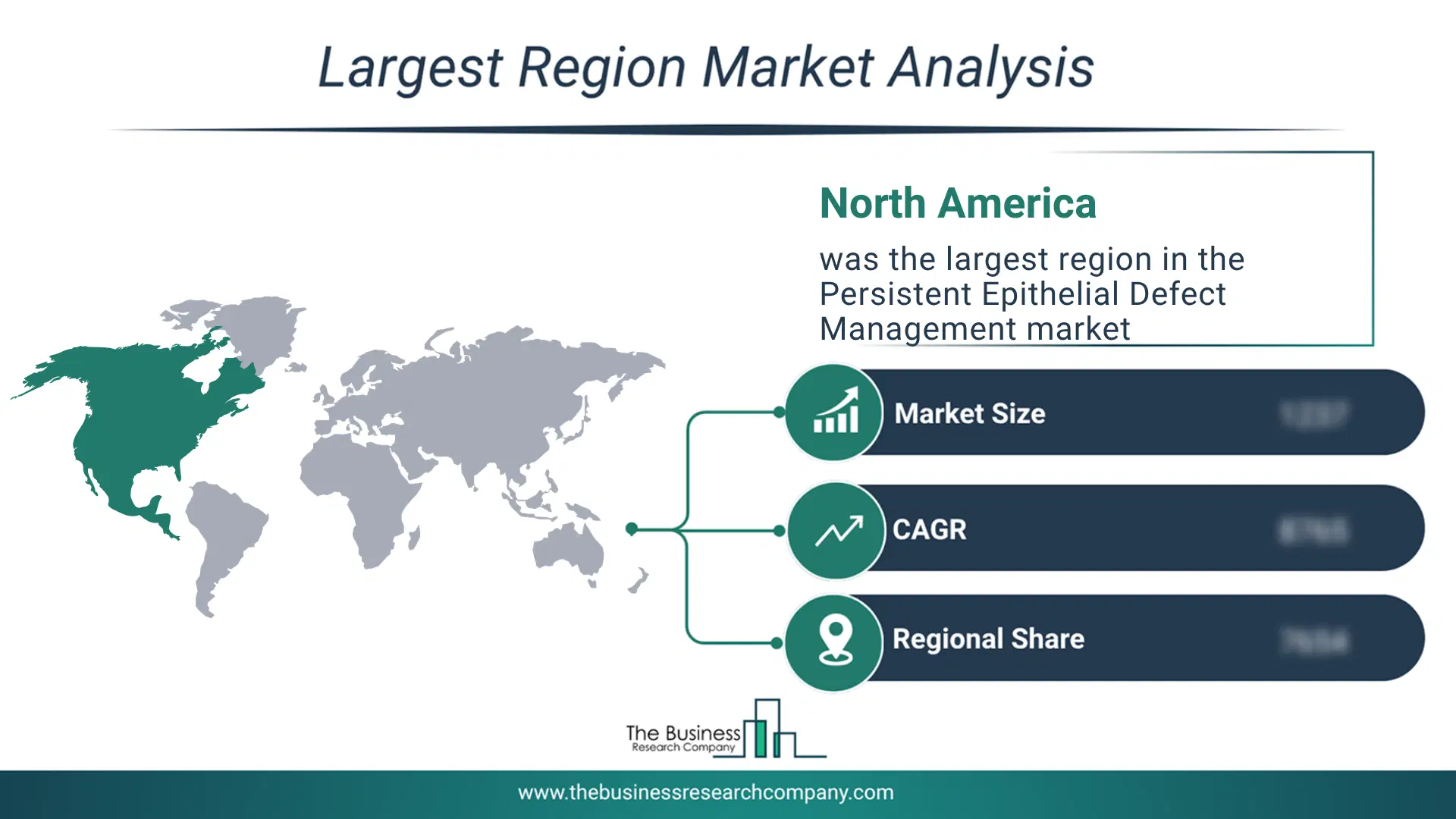
Regional Outlook
North America was the largest region in the persistent epithelial defect management market in 2025. Asia-Pacific is expected to be the fastest-growing region in the forecast period. The regions covered in this market report are Asia-Pacific, South East Asia, Western Europe, Eastern Europe, North America, South America, Middle East, Africa. The countries covered in this market report are Australia, Brazil, China, France, Germany, India, Indonesia, Japan, Taiwan, Russia, South Korea, UK, USA, Canada, Italy, Spain.What Defines the Persistent Epithelial Defect Management Market?
The persistent epithelial defect management market consists of revenues earned by entities by providing services such as pharmacological treatments, amniotic membrane transplantation, bandage contact lenses, and tarsorrhaphy procedures. The market value includes the value of related goods sold by the service provider or included within the service offering. The persistent epithelial defect management market also includes sales of autologous serum eye drops, regenerative biologic eye drops, bandage contact lenses, and amniotic membrane grafts. Values in this market are ‘factory gate’ values, that is the value of goods sold by the manufacturers or creators of the goods, whether to other entities (including downstream manufacturers, wholesalers, distributors and retailers) or directly to end customers. The value of goods in this market includes related services sold by the creators of the goods.How is Market Value Defined and Measured?
The market value is defined as the revenues that enterprises gain from the sale of goods and/or services within the specified market and geography through sales, grants, or donations in terms of the currency (in USD unless otherwise specified). The revenues for a specified geography are consumption values that are revenues generated by organizations in the specified geography within the market, irrespective of where they are produced. It does not include revenues from resales along the supply chain, either further along the supply chain or as part of other products.
This chart presents market attractiveness based on a quantitative evaluation of growth, competition, strategic alignment, and risk, offering a clear view of opportunity areas for decision-making. This chart is for illustrative purposes; the full report contains the complete analysis.

This chart highlights the Total Addressable Market (TAM) by estimating the maximum revenue opportunity using an assumption-driven approach, supporting strategic planning and opportunity sizing across markets. The chart is illustrative; the full report provides a more comprehensive analysis.
What Key Data and Analysis Are Included in the Persistent Epithelial Defect Management Market Report 2026?
The persistent epithelial defect management market research report is one of a series of new reports from The Business Research Company that provides market statistics, including industry global market size, regional shares, competitors with the market share, detailed market segments, market trends and opportunities, and any further data you may need to thrive in the persistent epithelial defect management industry. The market research report delivers a complete perspective of everything you need, with an in-depth analysis of the current and future state of the industry.Persistent Epithelial Defect Management Market Report Forecast Analysis
| Report Attribute | Details |
|---|---|
| Market Size Value In 2026 | $10.82 billion |
| Revenue Forecast In 2030 | $19.94 billion |
| Growth Rate | CAGR of 16.5% from 2026 to 2030 |
| Base Year For Estimation | 2025 |
| Actual Estimates/Historical Data | 2020-2025 |
| Forecast Period | 2026 - 2030 |
| Market Representation | Revenue in USD Billion and CAGR from 2026 to 2030 |
| Segments Covered | Disease Type, Distribution Channel, End User |
| Regional Scope | Asia-Pacific, Western Europe, Eastern Europe, North America, South America, Middle East, Africa |
| Country Scope | The countries covered in the report are Australia, Brazil, China, France, Germany, India, Indonesia, Japan, Taiwan, Russia, South Korea, UK, USA, Canada, Italy, Spain |
| Key Companies Profiled | AbbVie Inc., Novartis AG, Johnson & Johnson Vision, RegeneRx Biopharmaceuticals Inc., Regeneron Pharmaceuticals Inc., Alcon Inc., Bausch Health Companies Inc., Hoya Vision Care, Santen Pharmaceutical Co. Ltd., Recordati Rare Diseases Inc., Dompé Farmaceutici S.p.A., TissueTech Inc., Ocular Therapeutix Inc., Amber Ophthalmics Inc., Noveome Biotherapeutics Inc., OcuNexus Therapeutics Inc., Lux Bio Inc., Eyenovia Inc., Kala Pharmaceuticals Inc., Aerie Pharmaceuticals Inc., EyePoint Pharmaceuticals Inc., Aldeyra Therapeutics Inc. |
| Customization Scope | Request for Customization |
| Pricing And Purchase Options | Explore Purchase Options |