
Personal Care Contract Manufacturing Market Report 2026
Global Outlook – By Product Type (Skin Care, Hair Care, Make-Up And Cosmetics, Other Product Types), By Service Type (Research And Development And Formulation, Manufacturing, Packaging And Allied Services), By Formulation (Liquids, Creams, Lotions, Oils, Gels) – Market Size, Trends, Strategies, and Forecast to 2030
Personal Care Contract Manufacturing Market Overview
• Personal Care Contract Manufacturing market size has reached to $24.72 billion in 2025 • Expected to grow to $39.35 billion in 2030 at a compound annual growth rate (CAGR) of 9.9% • Growth Driver: Expanding Cosmetic Industry Drives Surge In Personal Care Contract Manufacturing Market • Market Trend: Innovative Trends In Personal Care Contract Manufacturing • Asia-Pacific was the largest region in 2025 and Europe is the fastest growing region.Market Gains By 2030 – Top Opportunities By Segment
Market Gain identifies the most promising market opportunities by highlighting the segments or products expected to generate the highest incremental revenue growth over the next five years.
What Is Covered Under Personal Care Contract Manufacturing Market?
Personal care contract manufacturing is when two businesses come to an arrangement to create parts or goods for personal care products over a certain period. The main product types included in the personal care contract manufacturing include skin care, hair care, make-up and cosmetics and other product types. Skincare products refer to products that are used on the skin to prevent acne, dark spots, and early signs of aging. The services included are research and development and formulation, manufacturing, packaging and allied services and the formulations include liquids, creams, lotions, oils and gels.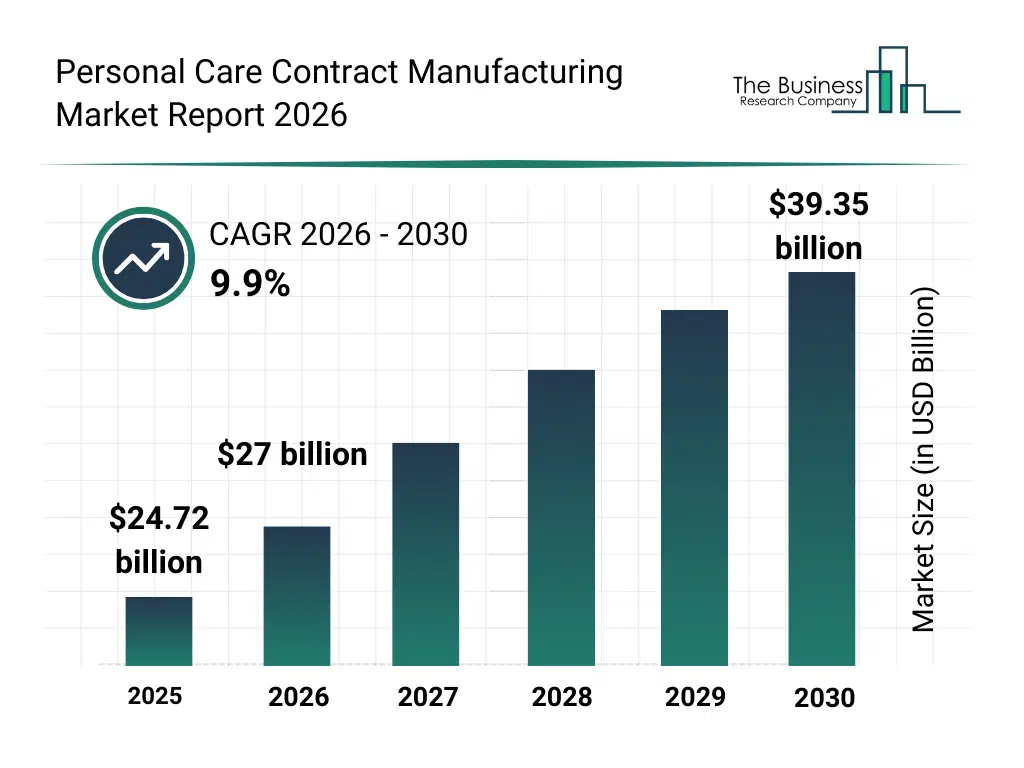
What Is The Personal Care Contract Manufacturing Market Size and Share 2026?
The personal care contract manufacturing market size has grown strongly in recent years. It will grow from $24.72 billion in 2025 to $27 billion in 2026 at a compound annual growth rate (CAGR) of 9.2%. The growth in the historic period can be attributed to growing personal care awareness, rising urbanization, increasing disposable income, expansion of retail and e-commerce channels, technological advancements in manufacturing.What Is The Personal Care Contract Manufacturing Market Growth Forecast?
The personal care contract manufacturing market size is expected to see strong growth in the next few years. It will grow to $39.35 billion in 2030 at a compound annual growth rate (CAGR) of 9.9%. The growth in the forecast period can be attributed to increasing demand for natural and organic products, growth in private label brands, adoption of sustainable packaging solutions, rise in multi-functional personal care products, expansion of contract manufacturing in emerging markets. Major trends in the forecast period include rising demand for private label personal care products, increasing adoption of outsourced manufacturing services, custom formulation and r&d services expansion, growth in eco-friendly and organic product manufacturing, enhanced packaging and branding solutions.
Global Personal Care Contract Manufacturing Market Segmentation
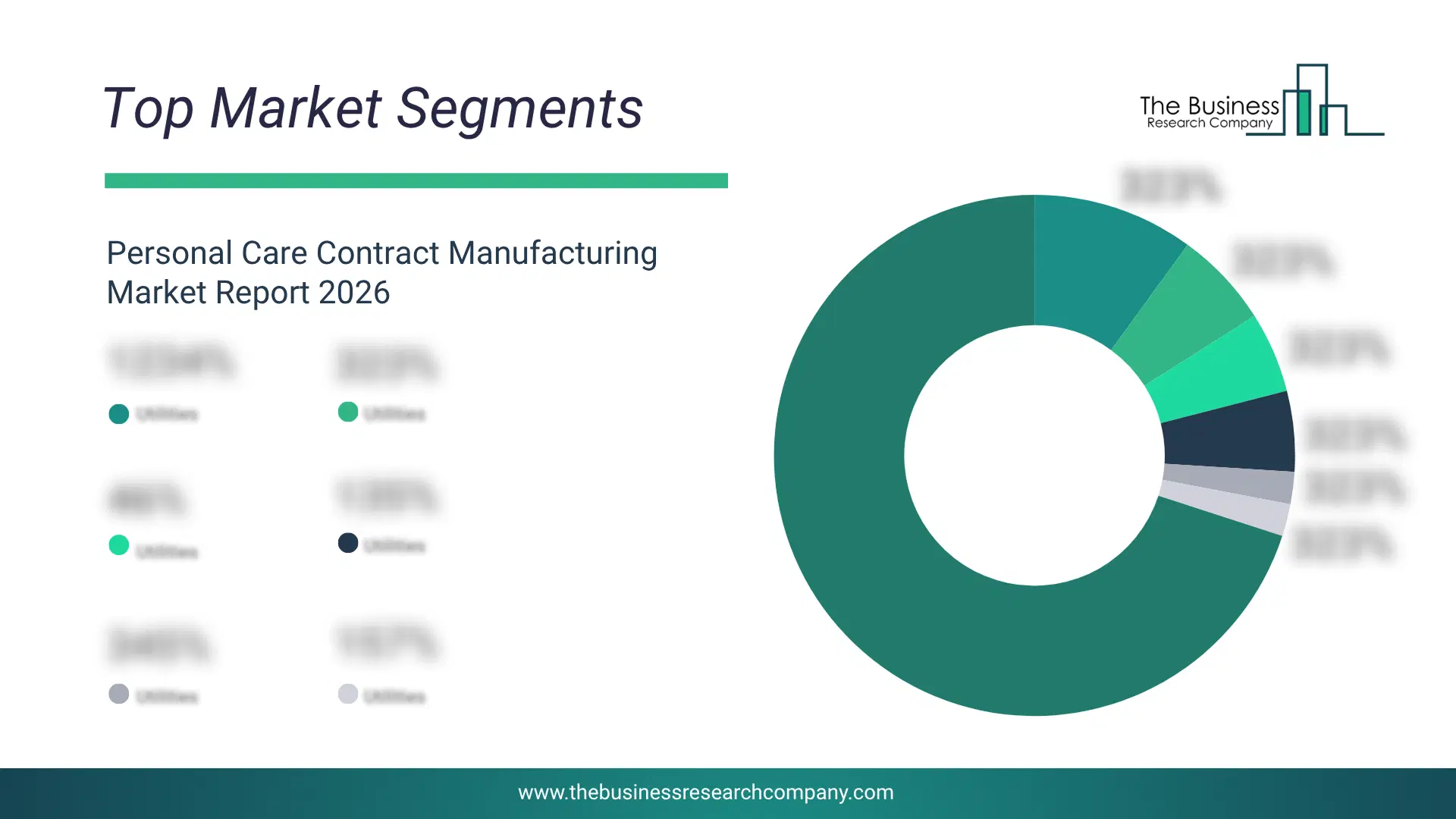
1) By Product Type: Skin Care, Hair Care, Make-Up And Cosmetics, Other Product Types 2) By Service Type: Research And Development And Formulation, Manufacturing, Packaging And Allied Services 3) By Formulation: Liquids, Creams, Lotions, Oils, Gels Subsegments: 1) By Skin Care: Moisturizers, Cleansers, Sunscreens, Anti-Aging Products 2) By Hair Care: Shampoos, Conditioners, Hair Treatments, Styling Products 3) By Make-Up And Cosmetics: Foundations, Lip Products, Eye Makeup, Blush And Highlighters 4) By Other Product Types: Fragrances, Oral Care Products, Bath And Body Products The top segments in the personal care contract manufacturing market will be: • Skin Care will reach $14.27 Billion by 2030. • Other Product Types will reach $11.41 Billion by 2030. • Hair Care will reach $7.79 Billion by 2030. • Make-Up And Cosmetics will reach $5.66 Billion by 2030.What Is The Driver Of The Personal Care Contract Manufacturing Market?
The growth in the cosmetic industry is expected to propel the growth of the personal care contract manufacturing market going forward. Cosmetic industry deals with the production and sale of cosmetics, which are broadly defined as any kind of goods or concoctions intended to improve or complement a person's aesthetic or physical appearance. The increase in growth boosts the cosmetic industry as contract manufacturing makes cosmetic production easier to outsource, either completely or partially. For instance, in 2023, according to Cosmetics Europe, a Belgium-based trade group, the cosmetics and personal care market in Europe reached $104 billion (€96 billion) at retail sales price in 2023, up from about $95 billion (€88 billion) in 2022. Therefore, growth in the cosmetic industry is driving the growth of personal care contract manufacturing industry.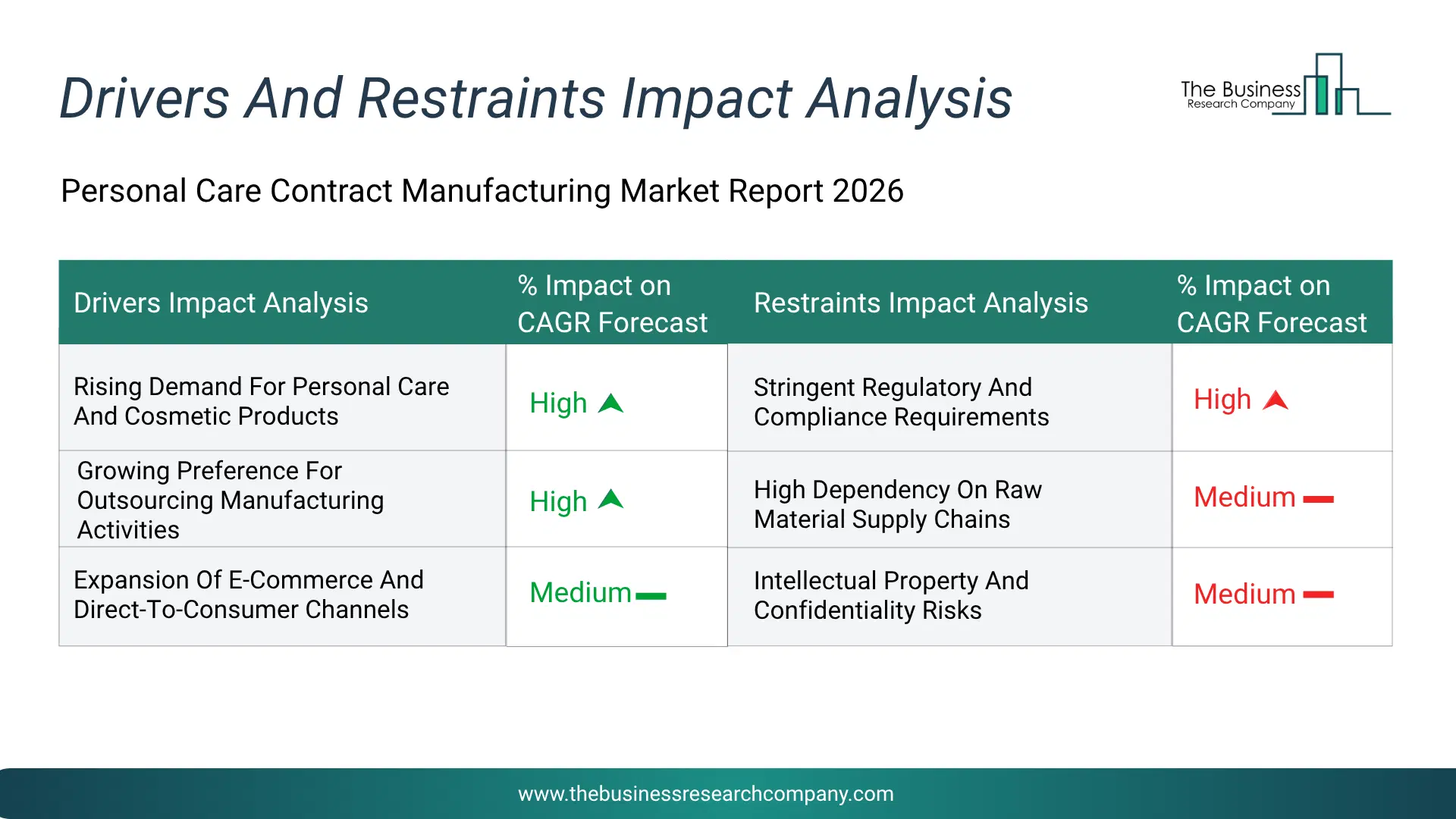
Infographic Chart Showing Key Market Drivers Analysis And Restraints For Personal Care Contract Manufacturing Market
The chart presents an impact analysis of key drivers and restraints, quantifying their relative influence on the market's growth rate and helping assess the balance between growth enablers and limiting factors. This chart offers a high-level perspective; the full report contains more detailed insights.
How Will The Drivers Impact Growth In The Global Personal Care Contract Manufacturing Market?
• Rising Demand For Personal Care And Cosmetic Products (High) – During the forecast period, the rising demand for personal care and cosmetic products is expected to become a key growth driver for the personal care contract manufacturing market by 2030. Consumers are increasingly seeking specialized skin care, hair care, and beauty products tailored to diverse lifestyle and wellness preferences. This growing demand is encouraging brands to expand product portfolios and accelerate product launches across multiple categories. Contract manufacturers play a critical role by providing flexible production capacity, formulation expertise, and speed-to-market advantages. Their ability to support evolving consumer trends is strengthening outsourcing adoption throughout the industry. • Growing Preference For Outsourcing Manufacturing Activities (High) – During the forecast period, the growing preference for outsourcing manufacturing activities is expected to emerge as a major factor driving the expansion of the personal care contract manufacturing market by 2030. Brand owners are increasingly relying on external manufacturing partners to reduce capital expenditure, improve operational efficiency, and focus resources on marketing and brand development. Contract manufacturers offer integrated capabilities spanning formulation, production, quality control, and packaging, enabling companies to streamline operations and scale efficiently. This shift toward asset-light business models is accelerating demand for specialized manufacturing partners worldwide. • Expansion Of E-Commerce And Direct-To-Consumer Channels (Medium) – During the forecast period, the expansion of e-commerce and direct-to-consumer channels is expected to act as a key growth catalyst for the personal care contract manufacturing market by 2030. Digital retail platforms are enabling brands to reach broader consumer bases and launch niche products with greater speed and precision. The rapid emergence of online-first beauty and personal care brands is increasing demand for agile production, low-volume manufacturing, and customized packaging solutions. Contract manufacturers are responding by offering flexible manufacturing services that support frequent product introductions and shorter production cycles.How Will The Restraints Impact Growth In The Global Personal Care Contract Manufacturing Market?
• Stringent Regulatory And Compliance Requirements (High) – During the forecast period, the personal care contract manufacturing operates under strict regulatory frameworks that vary across regions, making compliance a complex and resource-intensive process. Manufacturers must adhere to guidelines related to product safety, ingredient restrictions, labeling, and quality standards set by authorities such as the FDA or the European Commission. Meeting these requirements often involves extensive documentation, testing, and certification, which increases operational costs and lengthens production timelines. Frequent updates in regulations further add uncertainty, requiring continuous monitoring and adaptation. Smaller contract manufacturers may struggle to keep up with these evolving standards, limiting their ability to compete. Additionally, non-compliance can result in product recalls, legal penalties, or reputational damage, discouraging new entrants. These regulatory burdens can slow innovation and delay product launches, ultimately restraining overall market growth. • High Dependency On Raw Material Supply Chains (High) – During the forecast period, the personal care contract manufacturing market heavily depends on a stable and consistent supply of raw materials such as essential oils, chemicals, and botanical extracts. Disruptions in global supply chains—caused by geopolitical tensions, natural disasters, or transportation issues—can lead to shortages or price volatility. This dependency makes it difficult for manufacturers to maintain consistent production schedules and cost structures. Fluctuating raw material prices can compress profit margins or force manufacturers to increase prices, reducing competitiveness. In addition, sourcing high-quality and sustainable ingredients has become increasingly important, further complicating procurement processes. Any delay or inconsistency in raw material supply can directly impact production timelines and client commitments. As a result, supply chain vulnerabilities act as a significant restraint on the market’s efficiency and scalability. • Intellectual Property And Confidentiality Risks (Medium) – During the forecast period, the contract manufacturing involves sharing proprietary formulations, processes, and brand strategies between clients and manufacturers, which raises concerns about intellectual property (IP) protection. Companies may hesitate to outsource production due to fears of formula replication, data leaks, or misuse of confidential information. This lack of trust can limit partnerships and reduce the willingness of brands to collaborate with third-party manufacturers. Even with legal agreements such as non-disclosure agreements (NDAs), enforcing IP protection across different jurisdictions can be challenging. Any breach of confidentiality can lead to financial losses, competitive disadvantage, and damaged brand reputation. These risks are particularly critical for innovative or premium product segments where unique formulations are key differentiators. Consequently, concerns over IP security and confidentiality act as a barrier to market expansion and collaboration.Key Players In The Global Personal Care Contract Manufacturing Market
Major companies operating in the personal care contract manufacturing market are VVF Limited, Sarvotham Care Limited, Nutrix International LLC, Formula Corporation, Mansfield-King LLC, Tropical Products Inc., Sensible Organics Inc., Apollo Health and Beauty Care Inc., McBride plc, KIK Consumer Products Inc., Fareva Group, Skinlys, Tokiwa Cosmetics Corporation, Wormser Corporation, Bradford Soap Works Inc., Albea SA, Colep Portugal SA, PLZ Aeroscience Corporation, Voyant Beauty Holdings LLC, Intercos Group, Cosmax Inc., HCT Group, Lubrizol Life Science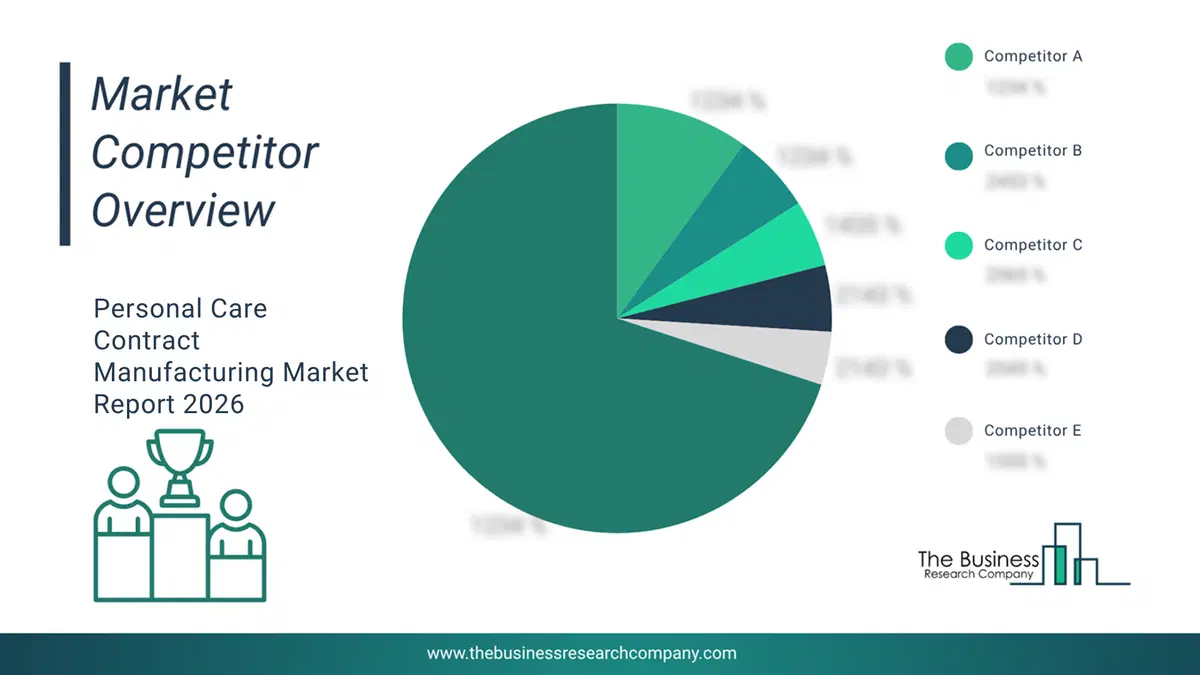
This chart is for illustrative purposes; the full report includes a detailed competitor analysis and comprehensive overview of the top 10 companies in the market.
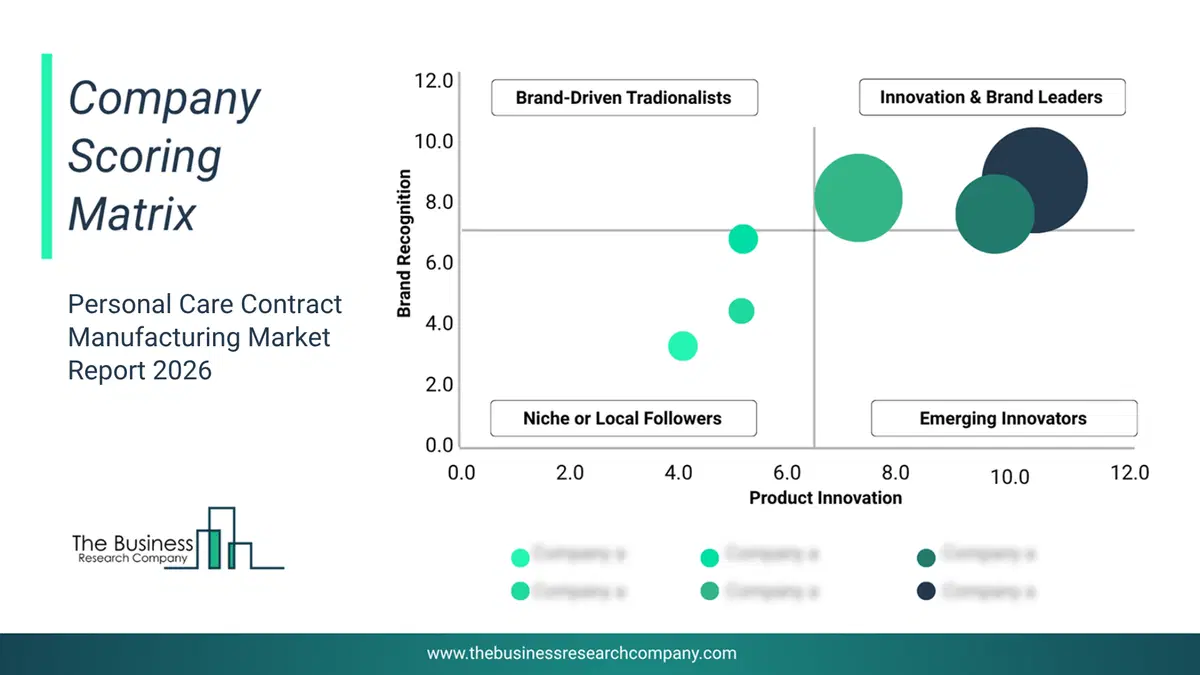
This chart maps companies by product innovation and brand strength, with bubble size indicating relative revenue, helping identify market leaders, challengers, and niche players. This is an illustrative chart; the full report provides a complete and accurate competitive analysis.
Global Personal Care Contract Manufacturing Market Trends and Insights
Major companies operating in the personal care contract manufacturing market are focused on developing new innovations, such as non-stop shops, to gain a competitive edge in the market. A non-stop shop aims to provide everything a customer needs without any interruptions or limitations. For instance, in September 2023, Crafted, a UK-based mini contract manufacturing hub, launched YourCrafted. It is a new platform that allows customers to create their very own personal care brand in just a few simple clicks. With YourCrafted, customers can choose from a wide variety of tried, tested, and approved personal care products, including everything from skincare and haircare to body care and fragrances. Customers can also customize the products with own branding and packaging.What Are Latest Mergers And Acquisitions In The Personal Care Contract Manufacturing Market?
In August 2023, Mitsui & Co., Ltd., a Japan-based trade company, acquired Dermaceutical Laboratories Limited Liability Company for an undisclosed amount. With this acquisition, Mitsui & Co., Ltd. aims to enhance its strategic positioning in key markets, diversify its portfolio, and leverage synergies for growth. Dermaceutical Laboratories Limited Liability Company is a US-based manufacturing company for skincare products, pharmaceuticals, and cosmetic formulations.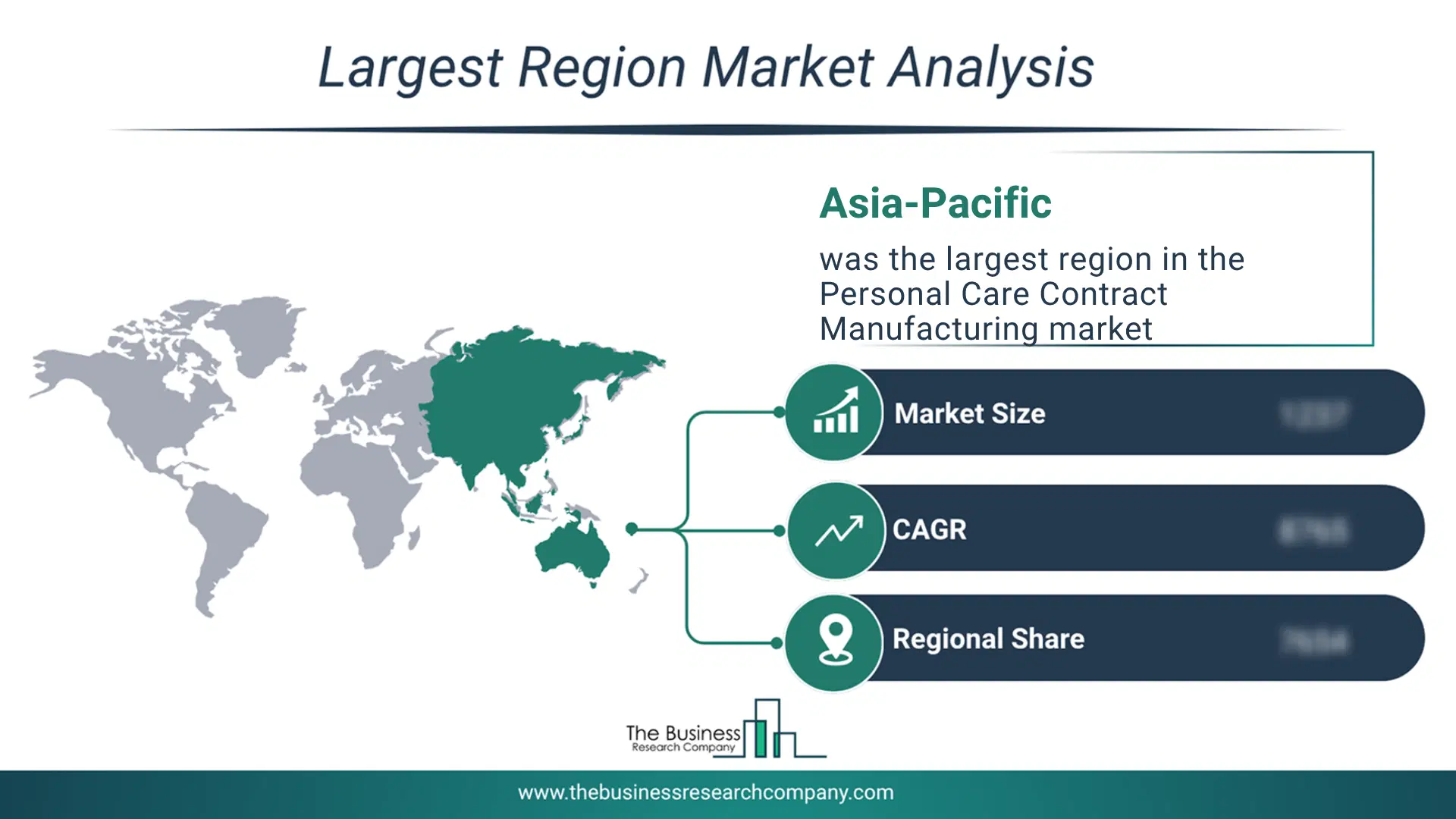
Regional Outlook
Asia-Pacific was the largest region in the personal care contract manufacturing market in 2025. Europe is expected to be the fastest-growing region in the personal care contract manufacturing market report during the forecast period. The regions covered in this market report are Asia-Pacific, South East Asia, Western Europe, Eastern Europe, North America, South America, Middle East and Africa. The countries covered in this market report are Australia; Brazil; China; France; Germany; India; Indonesia; Japan; Taiwan; Russia; South Korea; UK; USA; Canada; Italy; Spain.What Defines the Personal Care Contract Manufacturing Market?
The personal care contract manufacturing market consists of revenues earned by entities by providing personal care contract manufacturing services such as formulation development, product manufacturing and packaging. The market value includes the value of related goods sold by the service provider or included within the service offering. The Information technology market also includes sales of body care, oral care, sun care, and perfumes which are used in providing personal care contract manufacturing services. Values in this market are ‘factory gate’ values, that is the value of goods sold by the manufacturers or creators of the goods, whether to other entities (including downstream manufacturers, wholesalers, distributors and retailers) or directly to end customers. The value of goods in this market includes related services sold by the creators of the goods.How is Market Value Defined and Measured?
The market value is defined as the revenues that enterprises gain from the sale of goods and/or services within the specified market and geography through sales, grants, or donations in terms of the currency (in USD unless otherwise specified). The revenues for a specified geography are consumption values that are revenues generated by organizations in the specified geography within the market, irrespective of where they are produced. It does not include revenues from resales along the supply chain, either further along the supply chain or as part of other products.
This chart presents market attractiveness based on a quantitative evaluation of growth, competition, strategic alignment, and risk, offering a clear view of opportunity areas for decision-making. This chart is for illustrative purposes; the full report contains the complete analysis.

This chart highlights the Total Addressable Market (TAM) by estimating the maximum revenue opportunity using an assumption-driven approach, supporting strategic planning and opportunity sizing across markets. The chart is illustrative; the full report provides a more comprehensive analysis.
What Key Data and Analysis Are Included in the Personal Care Contract Manufacturing Market Report 2026?
The personal care contract manufacturing market research report is one of a series of new reports from The Business Research Company that provides market statistics, including industry global market size, regional shares, competitors with the market share, detailed market segments, market trends and opportunities, and any further data you may need to thrive in the personal care contract manufacturing industry. The market research report delivers a complete perspective of everything you need, with an in-depth analysis of the current and future state of the industry.Personal Care Contract Manufacturing Market Report Forecast Analysis
| Report Attribute | Details |
|---|---|
| Market Size Value In 2026 | $27 billion |
| Revenue Forecast In 2030 | $39.35 billion |
| Growth Rate | CAGR of 9.9% from 2026 to 2030 |
| Base Year For Estimation | 2025 |
| Actual Estimates/Historical Data | 2020-2025 |
| Forecast Period | 2026 - 2030 |
| Market Representation | Revenue in USD Billion and CAGR from 2026 to 2030 |
| Segments Covered | Product Type, Service Type, Formulation |
| Regional Scope | Asia-Pacific, Western Europe, Eastern Europe, North America, South America, Middle East, Africa |
| Country Scope | The countries covered in the report are Australia, Brazil, China, France, Germany, India, Indonesia, Japan, Taiwan, Russia, South Korea, UK, USA, Canada, Italy, Spain. |
| Key Companies Profiled | VVF Limited, Sarvotham Care Limited, Nutrix International LLC, Formula Corporation, Mansfield-King LLC, Tropical Products Inc., Sensible Organics Inc., Apollo Health and Beauty Care Inc., McBride plc, KIK Consumer Products Inc., Fareva Group, Skinlys, Tokiwa Cosmetics Corporation, Wormser Corporation, Bradford Soap Works Inc., Albea SA, Colep Portugal SA, PLZ Aeroscience Corporation, Voyant Beauty Holdings LLC, Intercos Group, Cosmax Inc., HCT Group, Lubrizol Life Science |
| Customization Scope | Request for Customization |
| Pricing And Purchase Options | Explore Purchase Options |