
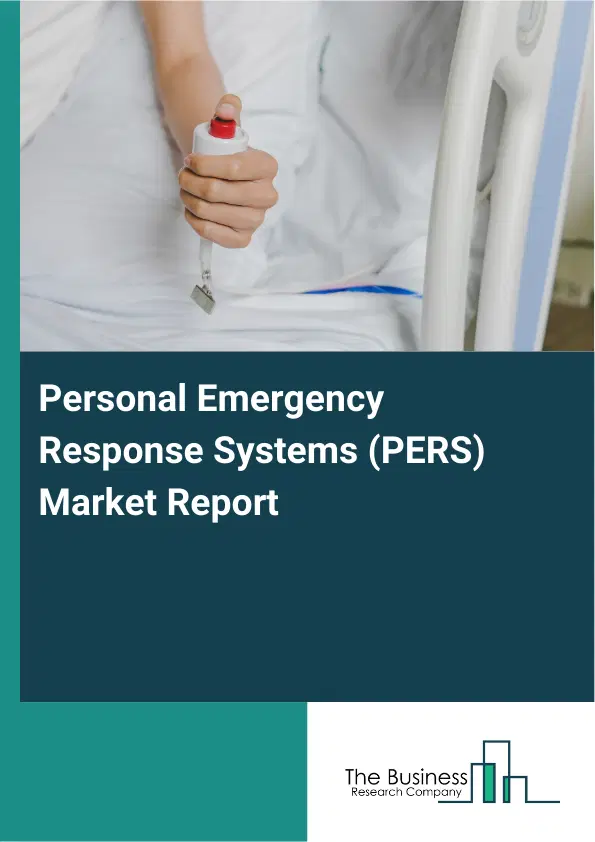
Personal Emergency Response Systems (PERS) Market Report 2026
Global Outlook – By Type (Landline Personal Emergency Response System (PERS), Mobile Personal Emergency Response System (PERS)), By Component (Smoke Detectors, Bed Sensors, Pull-Cord Residential, Fall Detection Sensors, Flood Detectors), By End-User (Nursing Home, Home-Based User, Assisted Living Facilities, Hospices, Senior Living Facilities) – Market Size, Trends, Strategies, and Forecast to 2030
Personal Emergency Response Systems (PERS) Market Overview
• Personal Emergency Response Systems (PERS) market size has reached to $8.23 billion in 2025 • Expected to grow to $12.6 billion in 2030 at a compound annual growth rate (CAGR) of 8.8% • Growth Driver: Rising Prevalence Of Chronic Diseases Driving The Growth Of The Market Due To Increasing Need For Continuous Care And Monitoring • Market Trend: Advanced Medical Alert Devices Enhancing Emergency Response And Healthcare Management • North America was the largest region in 2025.What Is Covered Under Personal Emergency Response Systems (PERS) Market?
Personal emergency response systems (PERS) refer to wearable or home-based devices that enable users, especially older people or individuals with medical conditions, to call for emergency assistance with a button. These systems typically use wireless communication and GPS technology to connect users with caregivers or emergency services for immediate support. The main types of personal emergency response systems (PERS) are landline personal emergency response systems (PERS) and mobile personal emergency response systems (PERS). Landline-based PERS uses fixed phone lines to transmit emergency alerts from homes to monitoring centers reliably. It consists of various components such as smoke detectors, bed sensors, pull-cord residential, fall detection sensors, and flood detectors. It is used by several end-users, including nursing homes, home-based users, assisted living facilities, hospices, and senior living facilities.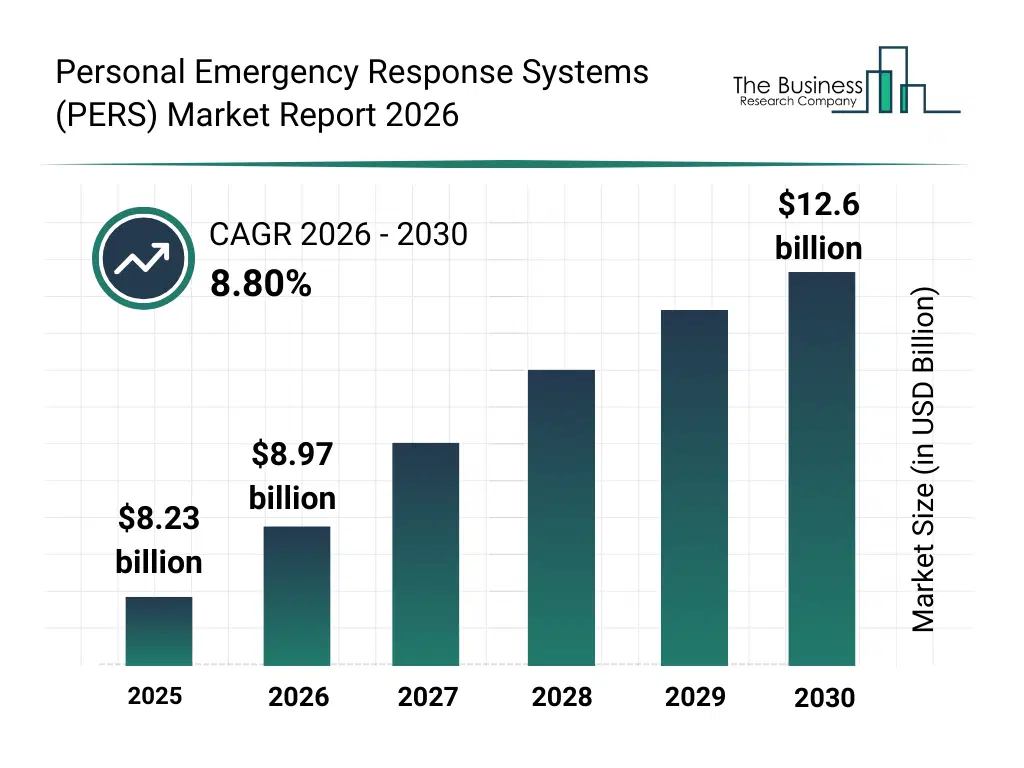
What Is The Personal Emergency Response Systems (PERS) Market Size and Share 2026?
The personal emergency response systems (pers) market size has grown strongly in recent years. It will grow from $8.23 billion in 2025 to $8.97 billion in 2026 at a compound annual growth rate (CAGR) of 9.0%. The growth in the historic period can be attributed to aging population growth, rise in independent living seniors, emergency healthcare demand, caregiver shortage, awareness of elderly safety.What Is The Personal Emergency Response Systems (PERS) Market Growth Forecast?
The personal emergency response systems (pers) market size is expected to see strong growth in the next few years. It will grow to $12.6 billion in 2030 at a compound annual growth rate (CAGR) of 8.8%. The growth in the forecast period can be attributed to smart home integration, AI-based emergency detection, expansion of home healthcare, government elderly care programs, mobile health adoption. Major trends in the forecast period include growth of wearable emergency devices, GPS-enabled mobile PERS adoption, fall detection sensor integration, home-based elderly safety solutions, voice-activated emergency systems.
Global Personal Emergency Response Systems (PERS) Market Segmentation
1) By Type: Landline Personal Emergency Response System (PERS), Mobile Personal Emergency Response System (PERS) 2) By Component: Smoke Detectors, Bed Sensors, Pull-Cord Residential, Fall Detection Sensors, Flood Detectors 3) By End-User: Nursing Home, Home-Based User, Assisted Living Facilities, Hospices, Senior Living Facilities Subsegments: 1) By Landline Personal Emergency Response System (PERS): Basic Landline PERS, Auto-Alert Landline PERS, Voice-Activated Landline PERS 2) By Mobile Personal Emergency Response System (PERS): GPS-enabled Mobile PERS, Non-GPS Mobile PERS, Wearable Mobile PERS, Smartphone-based Mobile PERSWhat Is The Driver Of The Personal Emergency Response Systems (PERS) Market?
The rising prevalence of chronic diseases is expected to propel the growth of the personal emergency response systems (PERS) market going forward. Chronic diseases are persistent health conditions that develop gradually and necessitate continuous care, including diabetes, heart disease, and arthritis. The rising prevalence of chronic diseases can be attributed to unhealthy lifestyle choices and an aging population. These unhealthy behaviors increase the risk of obesity, insulin resistance, and inflammation, all of which play a key role in the onset of chronic conditions. The increasing prevalence of chronic diseases fuels the demand for personal emergency response systems (PERS), as they provide constant monitoring and quick access to medical help. PERS offers a vital solution, allowing users to alert emergency services or caregivers during health crises, ensuring patient safety and peace of mind. For instance, in June 2024, according to the National Health Service, a UK-based government department, in 2023, half a million (549,000) additional individuals in England at risk of developing type 2 diabetes, bringing the total number of people with non-diabetic hyperglycemia, or pre-diabetes, registered with a GP to 3,615,330. This represents a significant increase compared to 3,065,825 in 2022, highlighting a rise of nearly 20%. Therefore, the rising prevalence of chronic diseases drives the growth of the personal emergency response systems (PERS) industry.Key Players In The Global Personal Emergency Response Systems (PERS) Market
Major companies operating in the personal emergency response systems (pers) market are ADT Inc, Tunstall Healthcare, Lifeline Systems Company, Medical Guardian, LifeStation, LifeFone Medical Alert Services, LifeWatch, Rescue Alert, AlertOne Services LLC, GreatCall, Bay Alarm Medical, Lifelink USA, Galaxy Medical Alert Systems, Alarm Systems, MediPendant, QMedic, Life Guardian LLC, Philips Lifeline, Bay Alarm Medical (Expanded Division), Philips Personal Emergency Response Solutions
This chart is for illustrative purposes; the full report includes a detailed competitor analysis and comprehensive overview of the top 10 companies in the market.
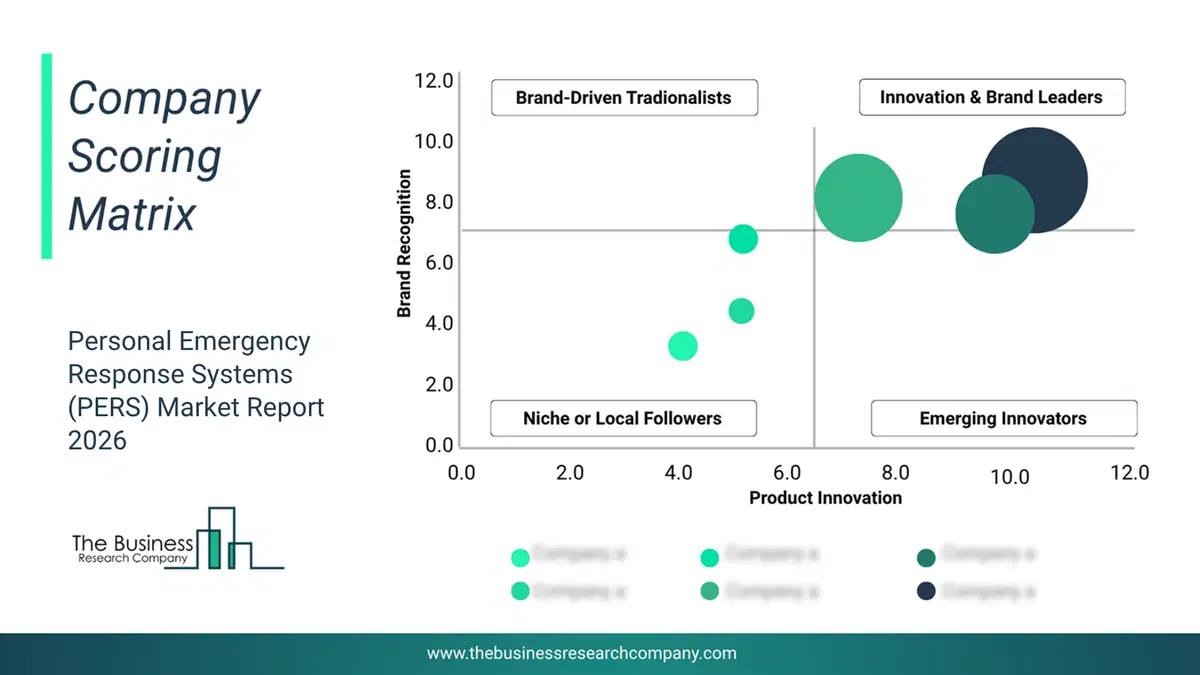
This chart maps companies by product innovation and brand strength, with bubble size indicating relative revenue, helping identify market leaders, challengers, and niche players. This is an illustrative chart; the full report provides a complete and accurate competitive analysis.
Global Personal Emergency Response Systems (PERS) Market Trends and Insights
Major companies operating in the personal emergency response systems (PERS) market are focusing on developing advanced products, such as medical alert devices, to improve real-time monitoring for better emergency response and proactive healthcare management. A medical alert device is an electronic system that offers immediate assistance during medical emergencies and includes a wearable help button that links users to emergency response services. For instance, in February 2025, LogicMark, Inc., a US-based medical equipment manufacturing company, launched the next-generation Guardian Alert 911 Plus. This advanced personal emergency response device features fall detection, 4G LTE technology, and a sleek, discreet design, providing critical, hands-free fall detection and direct access to emergency services, offering aging adults and individuals with medical conditions enhanced safety and independence without the burden of recurring costs.What Are Latest Mergers And Acquisitions In The Personal Emergency Response Systems (PERS) Market?
In May 2024, Medical Guardian, a US-based provider of personal emergency response systems (PERS), acquired MobileHelp for an undisclosed amount. With this acquisition, Medical Guardian combines PERS and RPM into a cohesive solution to better support aging adults and the chronically ill across various environments, enhancing care and empowering members to live independently. MobileHelp is a US-based technology company that provides mobile-personal emergency response systems (M-PERS).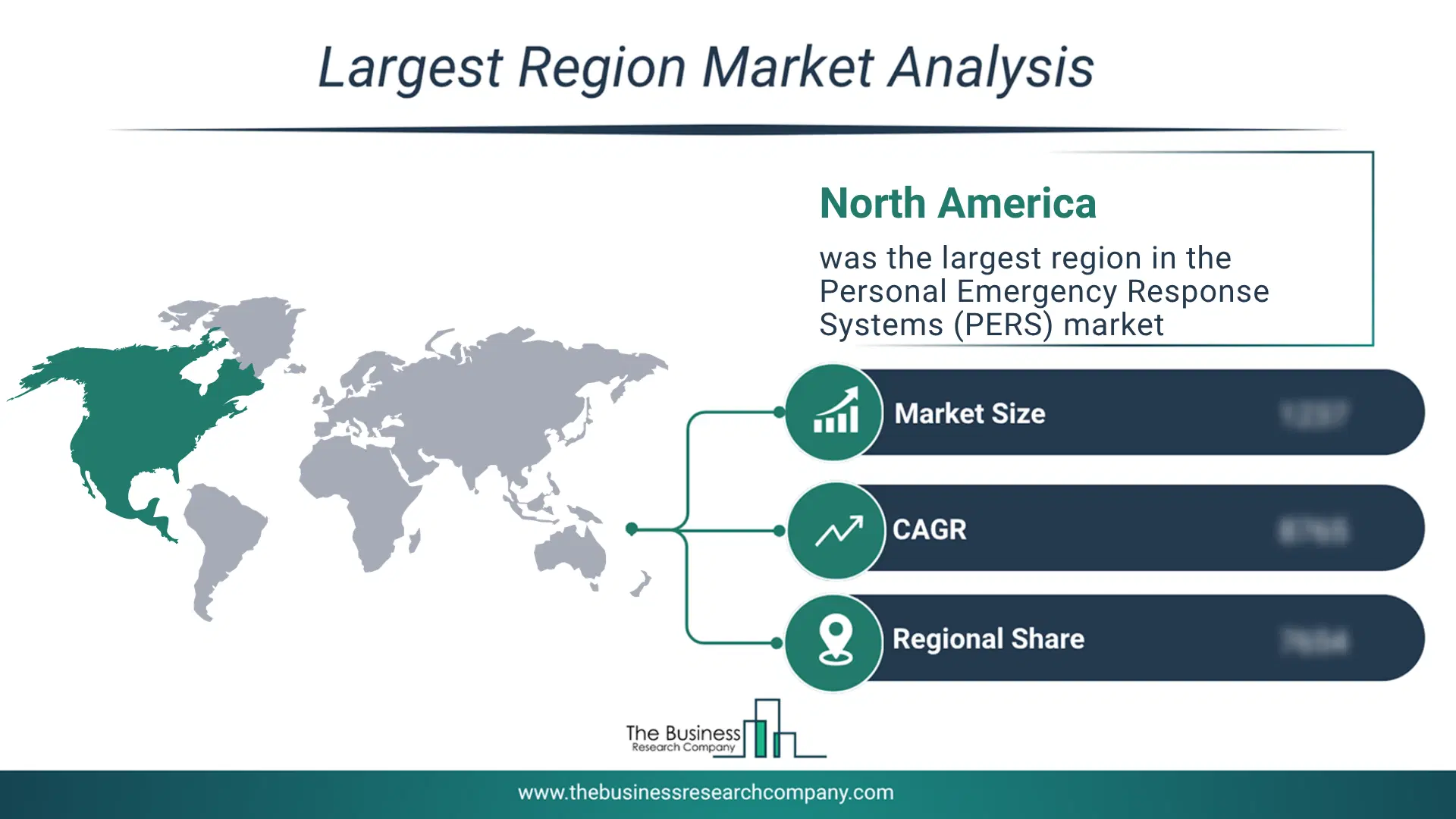
Regional Outlook
North America was the largest region in the personal emergency response systems market in 2025. The regions covered in this market report are Asia-Pacific, South East Asia, Western Europe, Eastern Europe, North America, South America, Middle East, Africa. The countries covered in this market report are Australia, Brazil, China, France, Germany, India, Indonesia, Japan, Taiwan, Russia, South Korea, UK, USA, Canada, Italy, SpainWhat Defines the Personal Emergency Response Systems (PERS) Market?
The personal emergency response systems (PERS) market consists of revenues earned by entities by providing services such as GPS tracking and location services, medication reminders, and personalized emergency plans. The market value includes the value of related goods sold by the service provider or included within the service offering. The personal emergency response systems (PERS) market includes sales of wearable emergency buttons, home-based systems, and R-cube monitoring systems. Values in this market are ‘factory gate’ values, that is, the value of goods sold by the manufacturers or creators of the goods, whether to other entities (including downstream manufacturers, wholesalers, distributors, and retailers) or directly to end customers. The value of goods in this market includes related services sold by the creators of the goods.How is Market Value Defined and Measured?
The market value is defined as the revenues that enterprises gain from the sale of goods and/or services within the specified market and geography through sales, grants, or donations in terms of the currency (in USD unless otherwise specified). The revenues for a specified geography are consumption values that are revenues generated by organizations in the specified geography within the market, irrespective of where they are produced. It does not include revenues from resales along the supply chain, either further along the supply chain or as part of other products.
This chart presents market attractiveness based on a quantitative evaluation of growth, competition, strategic alignment, and risk, offering a clear view of opportunity areas for decision-making. This chart is for illustrative purposes; the full report contains the complete analysis.

This chart highlights the Total Addressable Market (TAM) by estimating the maximum revenue opportunity using an assumption-driven approach, supporting strategic planning and opportunity sizing across markets. The chart is illustrative; the full report provides a more comprehensive analysis.
What Key Data and Analysis Are Included in the Personal Emergency Response Systems (PERS) Market Report 2026?
The personal emergency response systems (pers) market research report is one of a series of new reports from The Business Research Company that provides market statistics, including industry global market size, regional shares, competitors with the market share, detailed market segments, market trends and opportunities, and any further data you may need to thrive in the personal emergency response systems (pers) industry. The market research report delivers a complete perspective of everything you need, with an in-depth analysis of the current and future state of the industry.Personal Emergency Response Systems (PERS) Market Report Forecast Analysis
| Report Attribute | Details |
|---|---|
| Market Size Value In 2026 | $8.97 billion |
| Revenue Forecast In 2030 | $12.6 billion |
| Growth Rate | CAGR of 8.8% from 2026 to 2030 |
| Base Year For Estimation | 2025 |
| Actual Estimates/Historical Data | 2020-2025 |
| Forecast Period | 2026 - 2030 |
| Market Representation | Revenue in USD Billion and CAGR from 2026 to 2030 |
| Segments Covered | Type, Component, End-User |
| Regional Scope | Asia-Pacific, Western Europe, Eastern Europe, North America, South America, Middle East, Africa |
| Country Scope | The countries covered in the report are Australia, Brazil, China, France, Germany, India, Indonesia, Japan, Taiwan, Russia, South Korea, UK, USA, Canada, Italy, Spain. |
| Key Companies Profiled | ADT Inc, Tunstall Healthcare, Lifeline Systems Company, Medical Guardian, LifeStation, LifeFone Medical Alert Services, LifeWatch, Rescue Alert, AlertOne Services LLC, GreatCall, Bay Alarm Medical, Lifelink USA, Galaxy Medical Alert Systems, Alarm Systems, MediPendant, QMedic, Life Guardian LLC, Philips Lifeline, Bay Alarm Medical (Expanded Division), Philips Personal Emergency Response Solutions |
| Customization Scope | Request for Customization |
| Pricing And Purchase Options | Explore Purchase Options |