

Personalized Cancer Treatment Market Report 2026
Global Outlook – By Treatment Type (Targeted Therapy, Immunotherapy, Hormone Therapy, Chemotherapy, Radiation Therapy, Other Treatment Type), By Diagnostic Techniques (Genomic Sequencing, Liquid Biopsy, Immunohistochemistry, In Situ Hybridization, Biomarker Testing, Other Diagnostic Techniques), By Cancer Type (Breast Cancer, Lung Cancer, Colorectal Cancer, Prostate Cancer, Melanoma, Other Cancer Types), By End-Users (Hospitals And Clinics, Research Institutes, Other End Users) - Market Size, Trends, Strategies, and Forecast to 2030
Personalized Cancer Treatment Market Overview
• Personalized Cancer Treatment market size has reached to $200.98 billion in 2025 • Expected to grow to $332.37 billion in 2030 at a compound annual growth rate (CAGR) of 10.5% • Growth Driver: Surge In Cancer Prevalence Fuels Expansion Of Personalized Cancer Treatment Market • Market Trend: AI-Driven Analytics Revolutionizing Personalized Cancer Treatment • North America was the largest region in 2025 and Asia-Pacific is the fastest growing region.What Is Covered Under Personalized Cancer Treatment Market?
Personalized cancer treatment customizes therapies based on an individual's unique genetic profile and tumor characteristics, to achieve more effective and targeted interventions. This approach enhances treatment plans and improves patient outcomes by examining genetic mutations and biomarkers, compared to traditional one-size-fits-all methods. The main types of personalized cancer treatment include targeted therapy, immunotherapy, hormone therapy, chemotherapy, radiation therapy, and others. Targeted therapy uses drugs or other substances to precisely identify and attack cancer cells without harming normal cells. Diagnostic techniques such as genomic sequencing, liquid biopsy, immunohistochemistry, in situ hybridization, biomarker testing, and other diagnostic techniques are used for cancer types including breast cancer, lung cancer, colorectal cancer, prostate cancer, melanoma, and others, and are used by end-users including hospitals and clinics; research institutes; others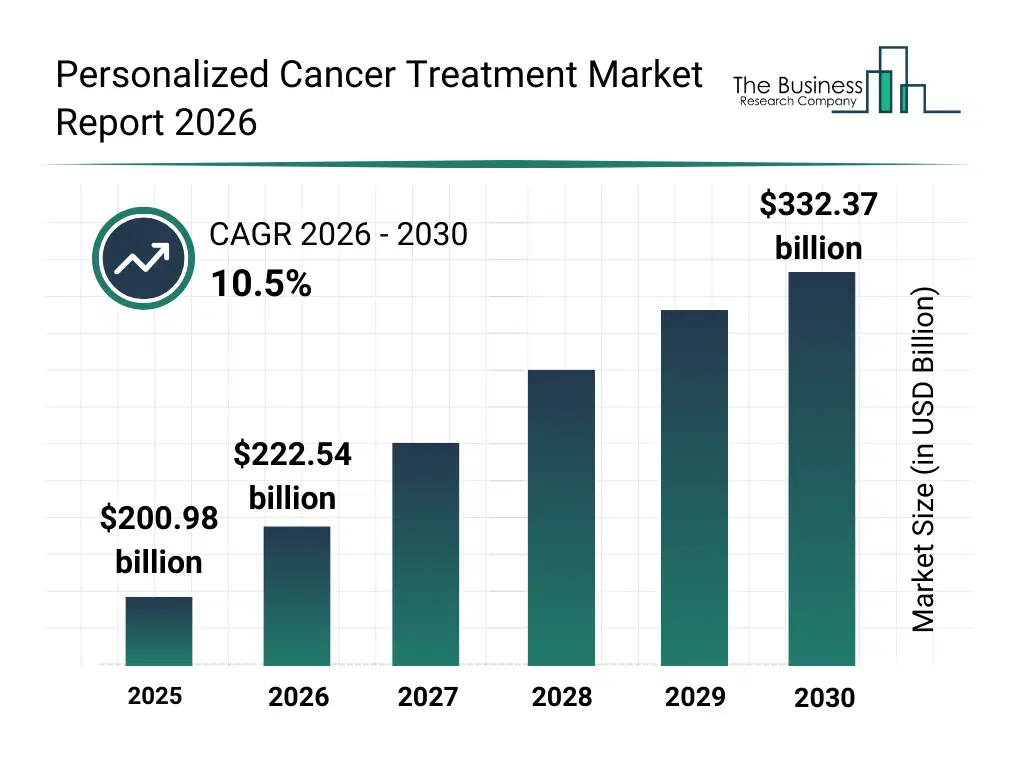
What Is The Personalized Cancer Treatment Market Size and Share 2026?
The personalized cancer treatment market size has grown rapidly in recent years. It will grow from $200.98 billion in 2025 to $222.54 billion in 2026 at a compound annual growth rate (CAGR) of 10.7%. The growth in the historic period can be attributed to limited access to genetic testing, reliance on conventional chemotherapy, low awareness of personalized medicine benefits, fragmented oncology healthcare infrastructure, lack of targeted therapy approvals.What Is The Personalized Cancer Treatment Market Growth Forecast?
The personalized cancer treatment market size is expected to see rapid growth in the next few years. It will grow to $332.37 billion in 2030 at a compound annual growth rate (CAGR) of 10.5%. The growth in the forecast period can be attributed to growing investment in genomics research, increasing adoption of liquid biopsy and biomarker testing, rising demand for targeted therapies and immunotherapies, integration of ai and big data in treatment planning, expansion of precision oncology clinical trials. Major trends in the forecast period include increasing adoption of ai-based genomic analytics for cancer treatment, rising implementation of precision medicine platforms, growing use of biomarker-based diagnostic techniques, increasing integration of digital health solutions in oncology, rising adoption of immersive technologies for patient monitoring and education.
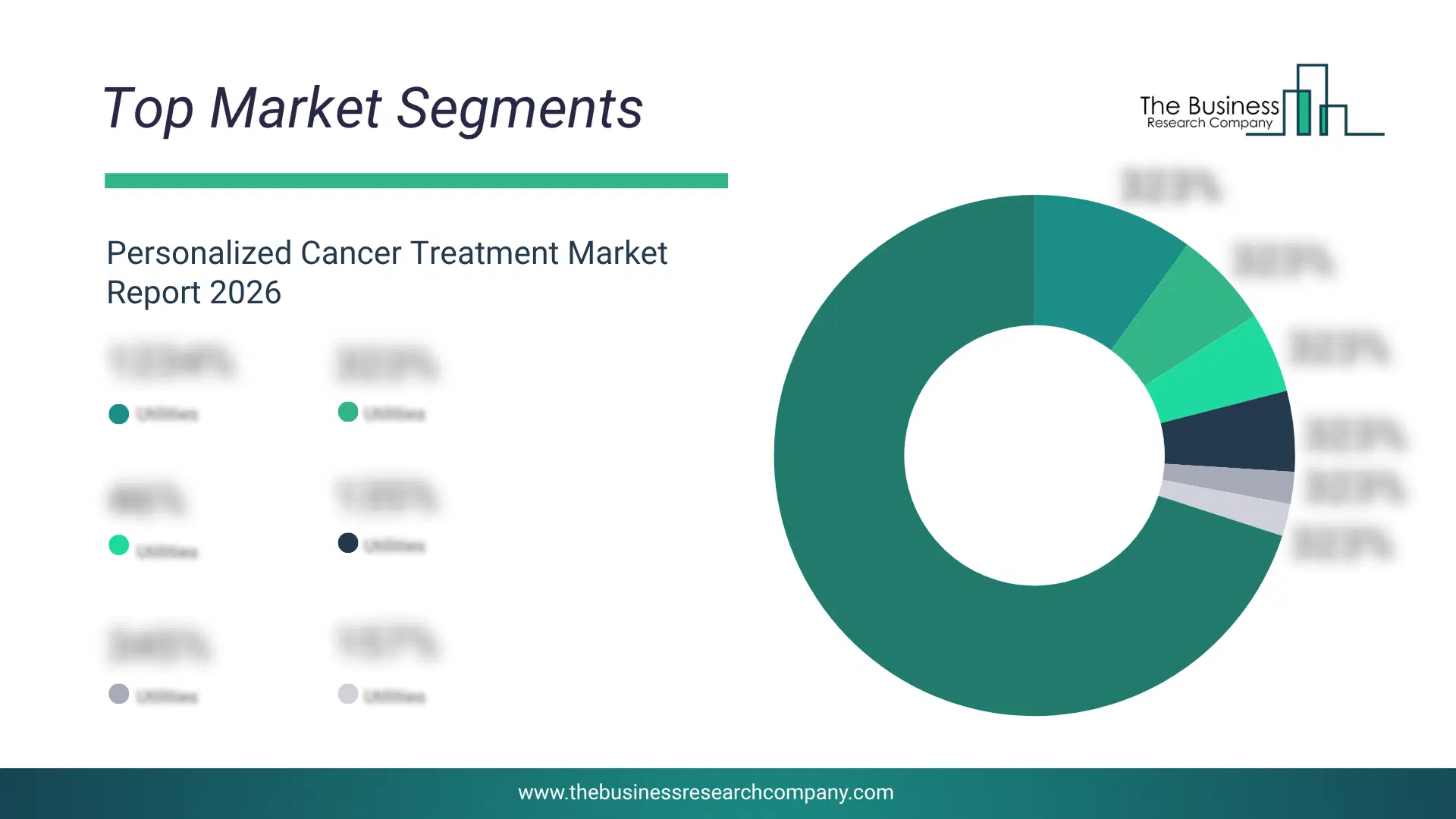
Global Personalized Cancer Treatment Market Segmentation
1) By Treatment Type: Targeted Therapy, Immunotherapy, Hormone Therapy, Chemotherapy, Radiation Therapy, Other Treatment Type 2) By Diagnostic Techniques: Genomic Sequencing, Liquid Biopsy, Immunohistochemistry, In Situ Hybridization, Biomarker Testing, Other Diagnostic Techniques 3) By Cancer Type: Breast Cancer, Lung Cancer, Colorectal Cancer, Prostate Cancer, Melanoma, Other Cancer Types 4) By End-Users: Hospitals And Clinics, Research Institutes, Other End Users Subsegments: 1) By Targeted Therapy: Monoclonal Antibodies, Small Molecule Inhibitors, Angiogenesis Inhibitors, Signal Transduction Inhibitors 2) By Immunotherapy: Checkpoint Inhibitors, CAR T-Cell Therapy, Cancer Vaccines, Monoclonal Antibodies For Immunotherapy 3) By Hormone Therapy: Anti-Estrogens, Aromatase Inhibitors, Progestins, LHRH Agonists 4) By Chemotherapy: Alkylating Agents, Antimetabolites, Anthracyclines, Taxanes 5) By Radiation Therapy: External Beam Radiation Therapy (EBRT), Brachytherapy, Radioimmunotherapy, Stereotactic Radiosurgery (SRS) 6) By Other Treatment Types: Gene Therapy, Stem Cell Transplantation, Metabolic Therapy, NanomedicineWhat Is The Driver Of The Personalized Cancer Treatment Market?
The increasing cancer prevalence is expected to propel the growth of the personalized cancer treatment market going forward. The rise in cancer is largely attributed to increasing life expectancy, which leads to more people reaching an age where cancer is more common, and growing exposure to risk factors such as tobacco, alcohol, and obesity. Personalized cancer treatments provide targeted and effective therapies to manage diverse cancer types and stages, and this growing burden stimulates investment and innovation in precision medicine, aiming to improve patient outcomes through customized treatment plans. For instance, in February 2024, according to the World Health Organization, a Switzerland-based United Nations agency dedicated to global health and safety, the global cancer burden is projected to rise significantly, with an anticipated 77% increase in new cancer cases, reaching over 35 million by 2050 compared to 20 million in 2022. Therefore, increasing cancer prevalence is driving the growth of the personalized cancer treatment industry.Key Players In The Global Personalized Cancer Treatment Market
Major companies operating in the personalized cancer treatment market are Pfizer Inc., Johnson & Johnson, F. Hoffmann-La Roche, Merck & Co. Inc., Bristol Myers Squibb Company, Thermo Fisher Scientific Inc., AstraZeneca Plc, Novartis AG, BioNTech SE, Illumina Inc., Artera, Exact Sciences Corporation., Moffitt Cancer Center, Myriad Genetics, NeoGenomics Laboratories, Guardant Health, Caris Life Sciences, Tempus AI Inc., Foundation Medicine, Immatics, Fate Therapeutics, CureVac AG, TScan Therapeutics, CureMetrix, PDC*line Pharma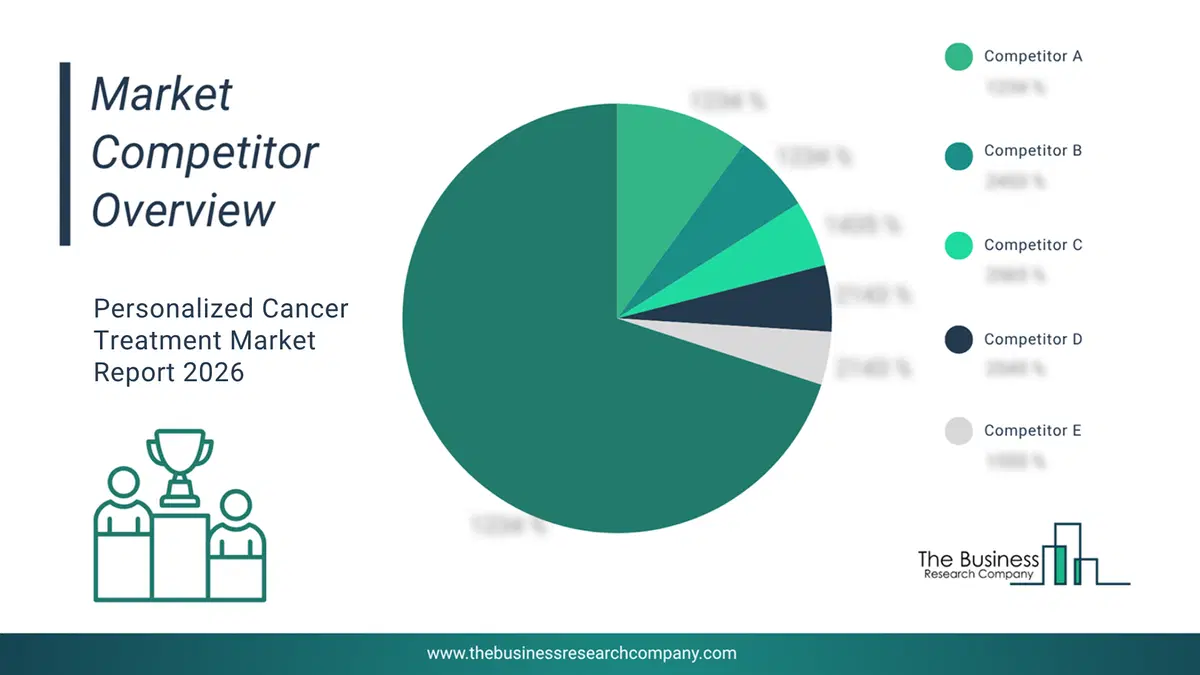
This chart is for illustrative purposes; the full report includes a detailed competitor analysis and comprehensive overview of the top 10 companies in the market.
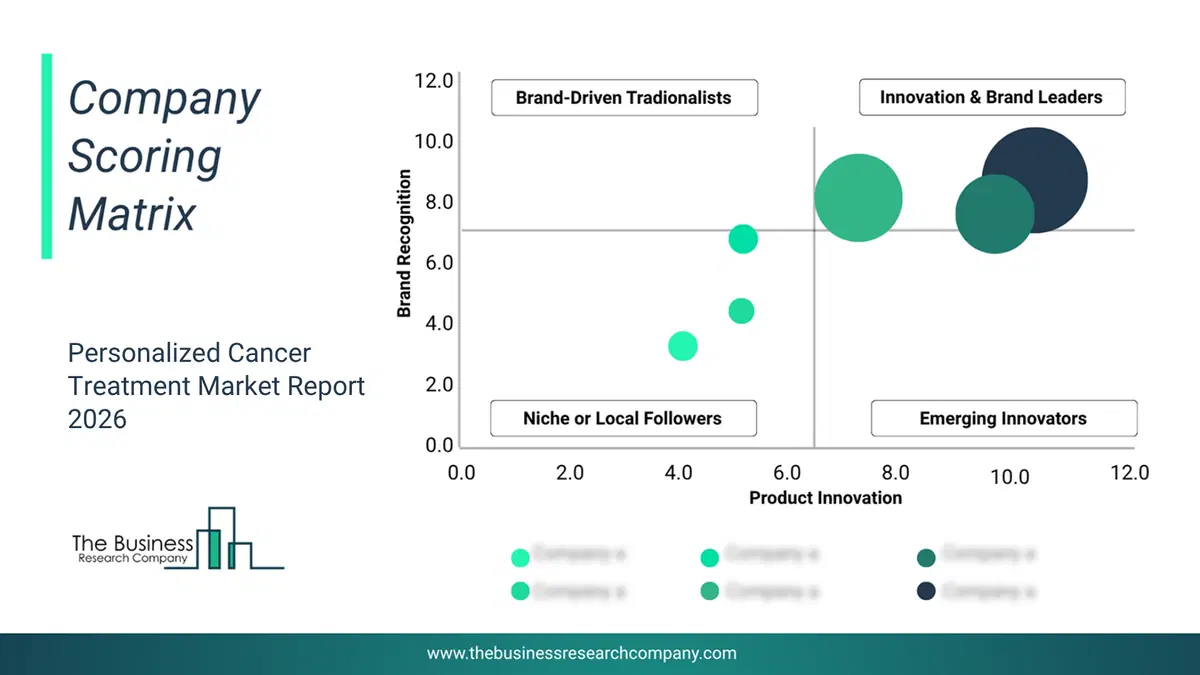
This chart maps companies by product innovation and brand strength, with bubble size indicating relative revenue, helping identify market leaders, challengers, and niche players. This is an illustrative chart; the full report provides a complete and accurate competitive analysis.
Global Personalized Cancer Treatment Market Trends and Insights
Major companies operating in the personalized cancer treatment market are focusing on developing innovative solutions, such as artificial intelligence (AI)-enabled multimodal immune profile algorithmic tests, to predict patient responses to immunotherapy and improve personalized treatment strategies. An AI-enabled multimodal immune profile algorithmic test analyzes multiple types of data, including genomic, transcriptomic, and clinical biomarkers, to assess a patient's immune profile and predict their response to immunotherapy to help stratify patients and guide personalized cancer treatments. For instance, in July 2024, Tempus AI, Inc., a US-based health technology company, launched its AI-enabled multimodal immune profile algorithmic test (IPS), marking its first offering in the immunotherapy diagnostics space. The test, available for research use only (RUO), assesses a range of immunotherapy-related biomarkers to generate a score that helps predict patient response to immunotherapy, supporting personalized cancer treatment. The AI-driven, immunotherapy-focused diagnostics enhance patient stratification and treatment selection in oncology.What Are Latest Mergers And Acquisitions In The Personalized Cancer Treatment Market?
In December 2023, Pfizer Inc., a US-based pharmaceutical and biotechnology corporation, acquired Seagen Inc. for $43 billion. With this acquisition, Pfizer aims to leverage its cutting-edge antibody-drug conjugate technology, enhancing its capabilities in developing targeted cancer therapies. This strategic move aims to accelerate Pfizer's growth in the oncology market, addressing the urgent need for more effective cancer treatments. Seagen Inc. is a US-based biotechnology company focused on developing monoclonal antibody-based therapies for the treatment of cancer.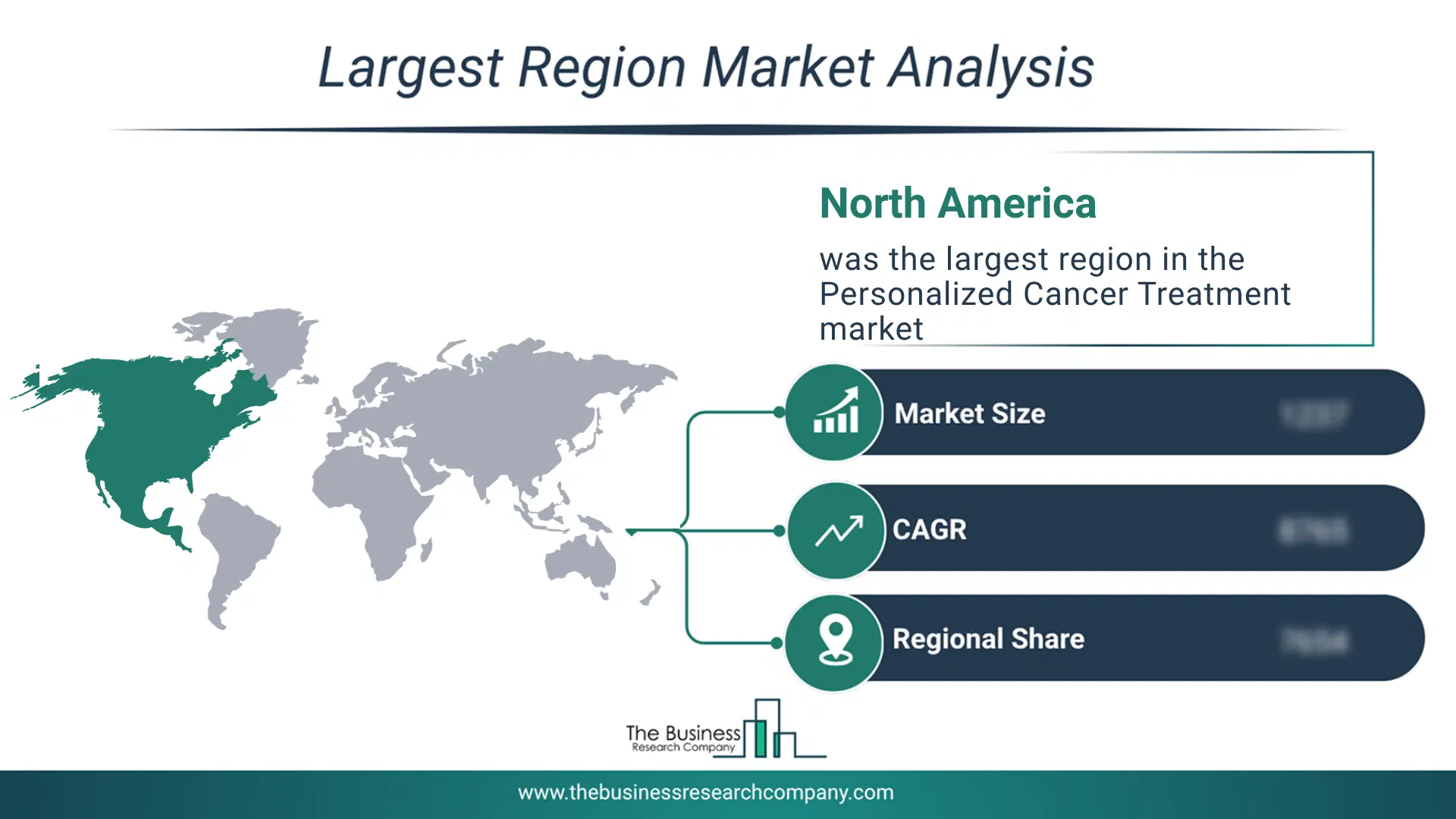
Regional Outlook
North America was the largest region in the personalized cancer treatment market in 2025. Asia-Pacific is expected to be the fastest-growing region in the forecast period. The regions covered in this market report are Asia-Pacific, South East Asia, Western Europe, Eastern Europe, North America, South America, Middle East, Africa. The countries covered in this market report are Australia, Brazil, China, France, Germany, India, Indonesia, Japan, Taiwan, Russia, South Korea, UK, USA, Canada, Italy, Spain.What Defines the Personalized Cancer Treatment Market?
The personalized cancer treatment market consists of revenues earned by entities by providing services such as genetic testing, biomarker analysis, personalized therapy formulation, and targeted drug delivery. The market value includes the value of related goods sold by the service provider or included within the service offering. The personalized cancer treatment market also includes sales of products including targeted therapy drugs, genomic profiling kits, and companion diagnostics. Values in this market are ‘factory gate’ values, that is, the value of goods sold by the manufacturers or creators of the goods, whether to other entities (including downstream manufacturers, wholesalers, distributors, and retailers) or directly to end customers. The value of goods in this market includes related services sold by the creators of the goods.How is Market Value Defined and Measured?
The market value is defined as the revenues that enterprises gain from the sale of goods and/or services within the specified market and geography through sales, grants, or donations in terms of the currency (in USD unless otherwise specified). The revenues for a specified geography are consumption values that are revenues generated by organizations in the specified geography within the market, irrespective of where they are produced. It does not include revenues from resales along the supply chain, either further along the supply chain or as part of other products.
This chart presents market attractiveness based on a quantitative evaluation of growth, competition, strategic alignment, and risk, offering a clear view of opportunity areas for decision-making. This chart is for illustrative purposes; the full report contains the complete analysis.

This chart highlights the Total Addressable Market (TAM) by estimating the maximum revenue opportunity using an assumption-driven approach, supporting strategic planning and opportunity sizing across markets. The chart is illustrative; the full report provides a more comprehensive analysis.
What Key Data and Analysis Are Included in the Personalized Cancer Treatment Market Report 2026?
The personalized cancer treatment market research report is one of a series of new reports from The Business Research Company that provides market statistics, including industry global market size, regional shares, competitors with the market share, detailed market segments, market trends and opportunities, and any further data you may need to thrive in the personalized cancer treatment industry. The market research report delivers a complete perspective of everything you need, with an in-depth analysis of the current and future state of the industry.Personalized Cancer Treatment Market Report Forecast Analysis
| Report Attribute | Details |
|---|---|
| Market Size Value In 2026 | $222.54 billion |
| Revenue Forecast In 2030 | $332.37 billion |
| Growth Rate | CAGR of 10.5% from 2026 to 2030 |
| Base Year For Estimation | 2025 |
| Actual Estimates/Historical Data | 2020-2025 |
| Forecast Period | 2026 - 2030 |
| Market Representation | Revenue in USD Billion and CAGR from 2026 to 2030 |
| Segments Covered | Treatment Type, Diagnostic Techniques, Cancer Type, End-Users |
| Regional Scope | Asia-Pacific, Western Europe, Eastern Europe, North America, South America, Middle East, Africa |
| Country Scope | The countries covered in the report are Australia, Brazil, China, France, Germany, India, Indonesia, Japan, Taiwan, Russia, South Korea, UK, USA, Canada, Italy, Spain |
| Key Companies Profiled | Pfizer Inc., Johnson & Johnson, F. Hoffmann-La Roche, Merck & Co. Inc., Bristol Myers Squibb Company, Thermo Fisher Scientific Inc., AstraZeneca Plc, Novartis AG, BioNTech SE, Illumina Inc., Artera, Exact Sciences Corporation., Moffitt Cancer Center, Myriad Genetics, NeoGenomics Laboratories, Guardant Health, Caris Life Sciences, Tempus AI Inc., Foundation Medicine, Immatics, Fate Therapeutics, CureVac AG, TScan Therapeutics, CureMetrix, PDC*line Pharma |
| Customization Scope | Request for Customization |
| Pricing And Purchase Options | Explore Purchase Options |