
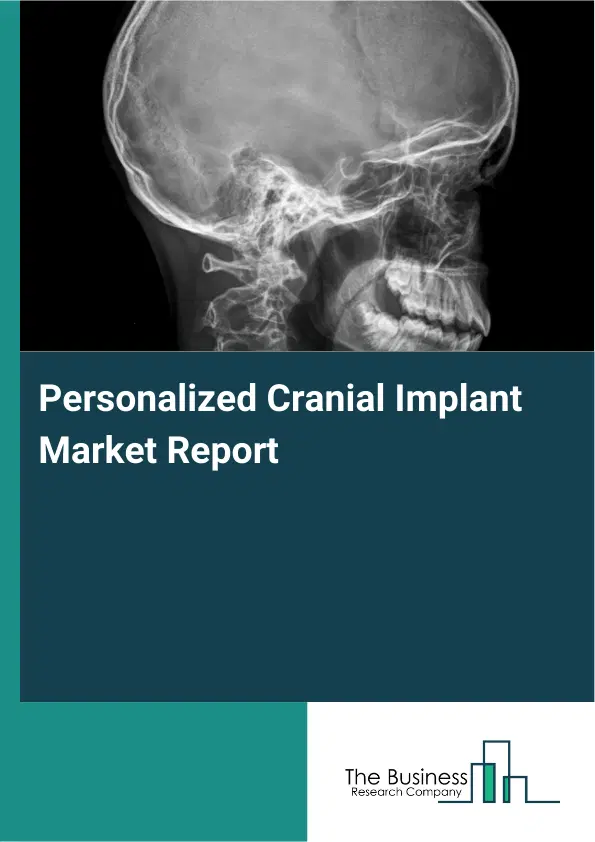
Personalized Cranial Implant Market Report 2026
Global Outlook – By Implant Material (Titanium, Polymethylmethacrylate (PMMA), Polyether Ether Ketone (PEEK), Other Implant Materials), By Indication (Traumatic Brain Injury, Oncology (Tumor Resection), Congenital Disorders, Infections, Cosmetic Or Deformity Correction), By End Use (Hospitals, Ambulatory Surgical Centers, Other End Uses) – Market Size, Trends, Strategies, and Forecast to 2030
Personalized Cranial Implant Market Overview
• Personalized Cranial Implant market size has reached to $0.96 billion in 2025 • Expected to grow to $1.34 billion in 2030 at a compound annual growth rate (CAGR) of 6.8% • Growth Driver: Rising Incidence Of Traumatic Brain Injuries (TBIs) Driving Market Growth Due To Increasing Awareness And Improved Diagnostic Techniques • Market Trend: Advancements In Sterile Additive Manufacturing Transform Personalized Cranial Implant Solutions • North America was the largest region in 2025 and Asia-Pacific is the fastest growing region.What Is Covered Under Personalized Cranial Implant Market?
A personalized cranial implant is a custom-designed medical device created to replace or reconstruct a section of a patient’s skull that has been removed or damaged due to trauma, surgery, or congenital conditions. Personalized cranial implants are tailored using advanced imaging and 3D printing technologies to precisely fit the individual’s skull anatomy, ensuring improved functional and aesthetic outcomes in cranial reconstruction procedures. The main implant materials of personalized cranial implants are titanium, polymethylmethacrylate (PMMA), polyether ether ketone (PEEK), and others. Titanium is a strong, lightweight, and corrosion-resistant metal commonly used in aerospace, medical implants, and industrial applications. These are used for different indications such as traumatic brain injury, oncology (tumor resection), congenital disorders, infections, and cosmetic or deformity correction, and they have several end uses such as hospitals, ambulatory surgical centers, and others.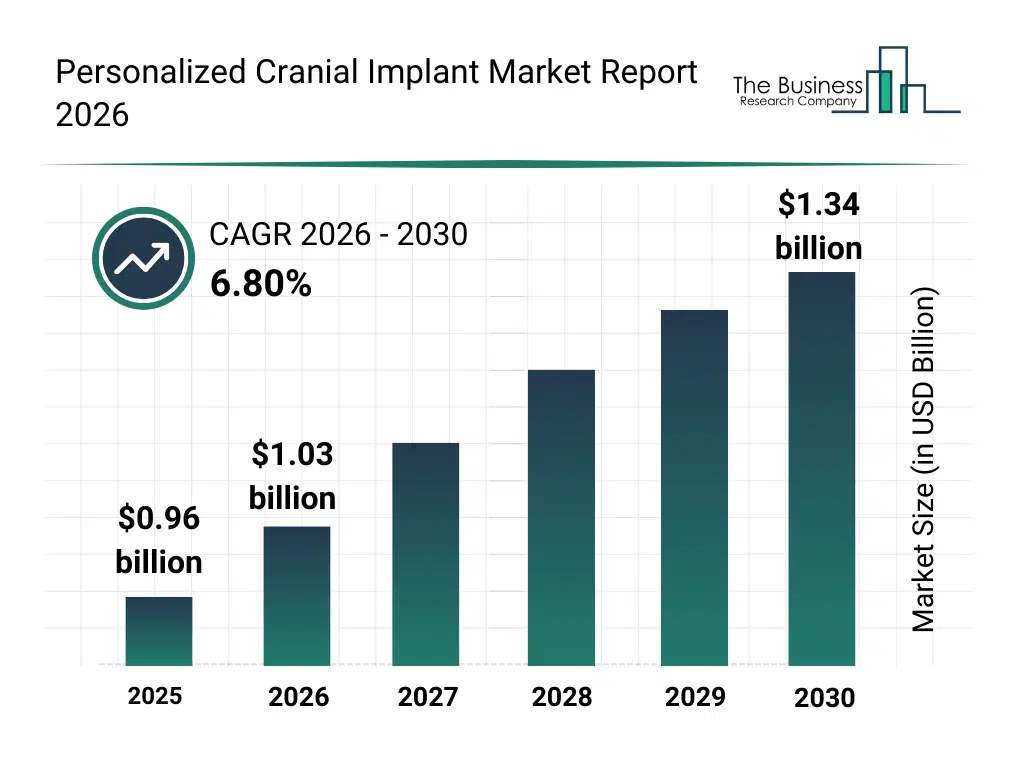
What Is The Personalized Cranial Implant Market Size and Share 2026?
The personalized cranial implant market size has grown strongly in recent years. It will grow from $0.96 billion in 2025 to $1.03 billion in 2026 at a compound annual growth rate (CAGR) of 7.3%. The growth in the historic period can be attributed to increase in traumatic brain injury cases, rising number of tumor resection surgeries, advancements in cranial imaging technologies, growing neurosurgical procedure volumes, improved availability of biocompatible implant materials.What Is The Personalized Cranial Implant Market Growth Forecast?
The personalized cranial implant market size is expected to see strong growth in the next few years. It will grow to $1.34 billion in 2030 at a compound annual growth rate (CAGR) of 6.8%. The growth in the forecast period can be attributed to adoption of personalized medicine approaches, expansion of 3D printing infrastructure in hospitals, increasing demand for custom cosmetic correction, technological improvements in implant design software, growing healthcare expenditure on advanced neurosurgery. Major trends in the forecast period include growing adoption of patient-specific cranial reconstruction, increasing use of 3D printing in neurosurgical implants, rising demand for minimally invasive cranial procedures, expansion of personalized implants in complex trauma cases, improved aesthetic and functional outcomes driving surgeon preference.
Global Personalized Cranial Implant Market Segmentation
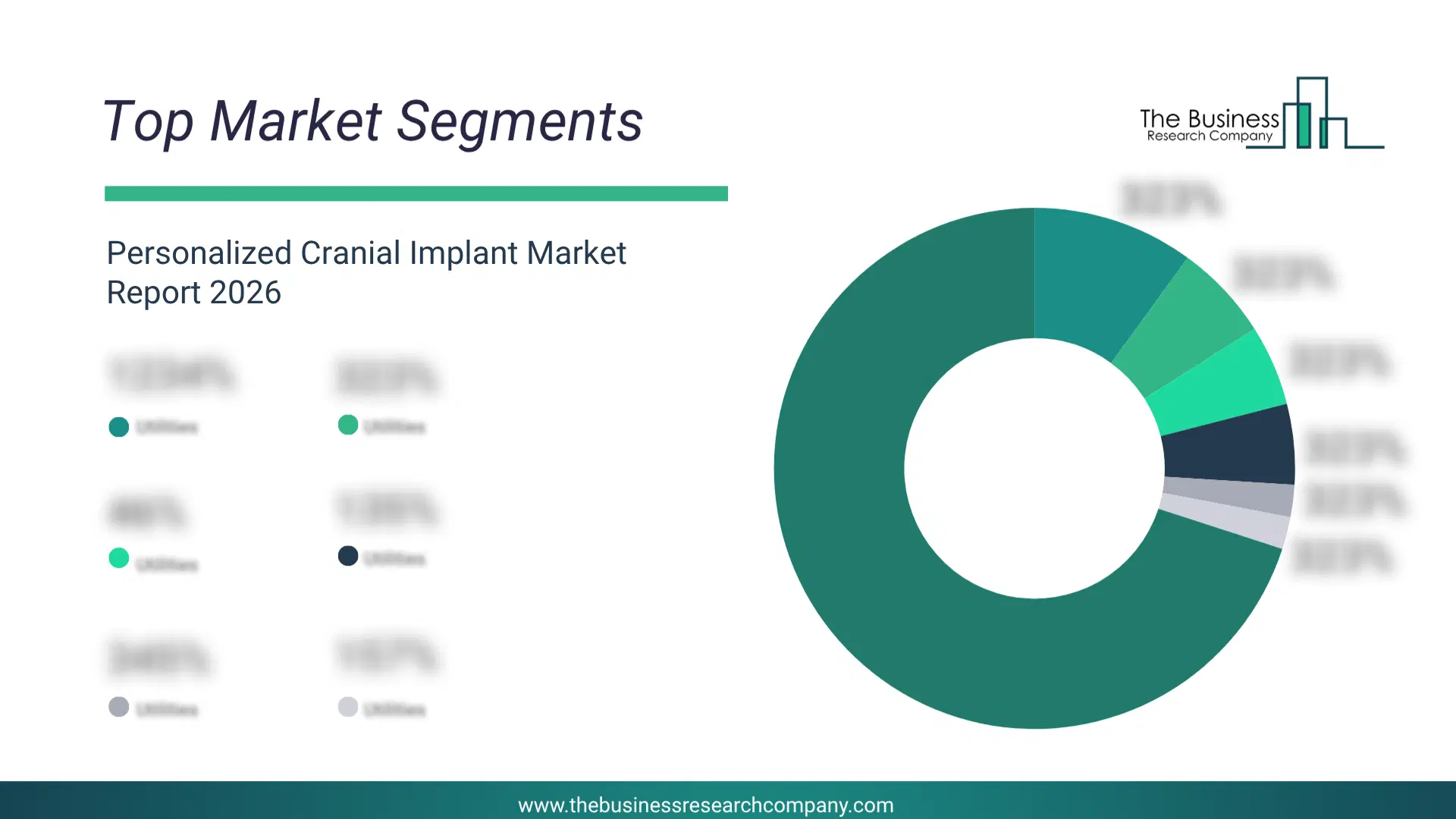
1) By Implant Material: Titanium, Polymethylmethacrylate (PMMA), Polyether Ether Ketone (PEEK), Other Implant Materials 2) By Indication: Traumatic Brain Injury, Oncology (Tumor Resection), Congenital Disorders, Infections, Cosmetic Or Deformity Correction 3) By End Use: Hospitals, Ambulatory Surgical Centers, Other End Uses Subsegments: 1) By Titanium: Pure Titanium, Titanium Alloy, Mesh Titanium Implants, Solid Titanium Plates 2) By Polymethylmethacrylate: Preformed Polymethylmethacrylate Implants, Hand-Molded Polymethylmethacrylate, Custom Molded Polymethylmethacrylate, Antibiotic-Impregnated Polymethylmethacrylate 3) By Polyether Ether Ketone: Standard Polyether Ether Ketone Implants, Reinforced Polyether Ether Ketone Implants, Three-Dimensionally Printed Polyether Ether Ketone Implants, Patient-Specific Polyether Ether Ketone Implants 4) By Other Implant Materials: Ceramic Implants, Composite Material Implants, Bioactive Glass Implants, Bioresorbable Polymer ImplantsWhat Is The Driver Of The Personalized Cranial Implant Market?
The rising incidence of traumatic brain injuries (TBIs) is expected to propel the growth of the personalized cranial implant market going forward. Traumatic brain injuries (TBIs) are damage to the brain caused by external mechanical forces. The rising incidence of traumatic brain injuries is due to greater public awareness of head injury risks and advances in medical diagnostics. Personalized cranial implants are essential for traumatic brain injuries, as they offer precise, custom-fit skull reconstruction, improving brain protection, appearance, and patient recovery. For instance, in 2024, according to the Tennessee Department of Health, a US-based government agency, the number of patients in the traumatic brain injury (TBI) registry rose by 2.4% in 2023 over 2022. Therefore, the rising incidence of traumatic brain injuries (TBIs) and cranial defects is driving the growth in the personalized cranial implants industry.Key Players In The Global Personalized Cranial Implant Market
Major companies operating in the personalized cranial implant market are Medtronic PLC, Stryker Corporation, Zimmer Biomet Holdings Inc., Renishaw PLC, KLS Martin Group, B. Braun Melsungen AAG, Medartis Holding AG, CranioTech GmbH, evonos GmbH & Co. KG, Matrix Surgical USA LLC, Jeil Medical Corporation, Anatomics Pty Ltd., Calavera Surgical Design Inc., KELYNIAM Global Incorporated, Xilloc Medical B.V., INCREDIBLE AM Private Limited, LUCID Implants Private Limited, Ortho Baltic Joint Stock Company, OssDsign AB, 3D Systems Healthcare, Materialise NV, Oxford Performance Materials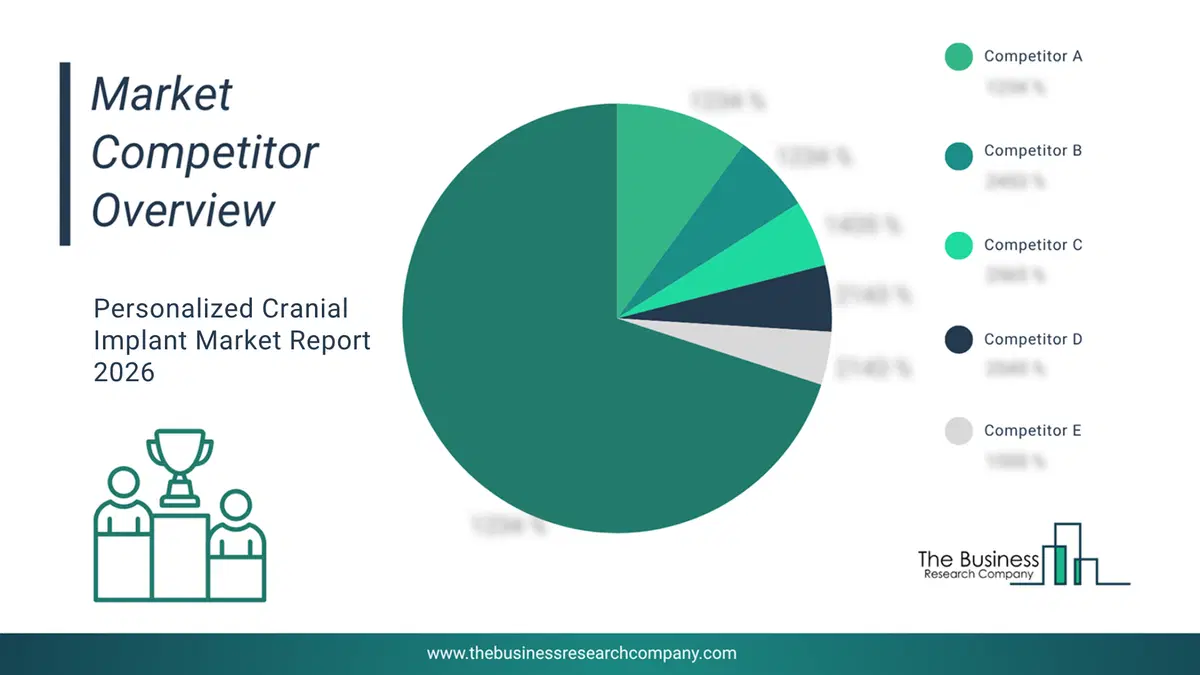
This chart is for illustrative purposes; the full report includes a detailed competitor analysis and comprehensive overview of the top 10 companies in the market.
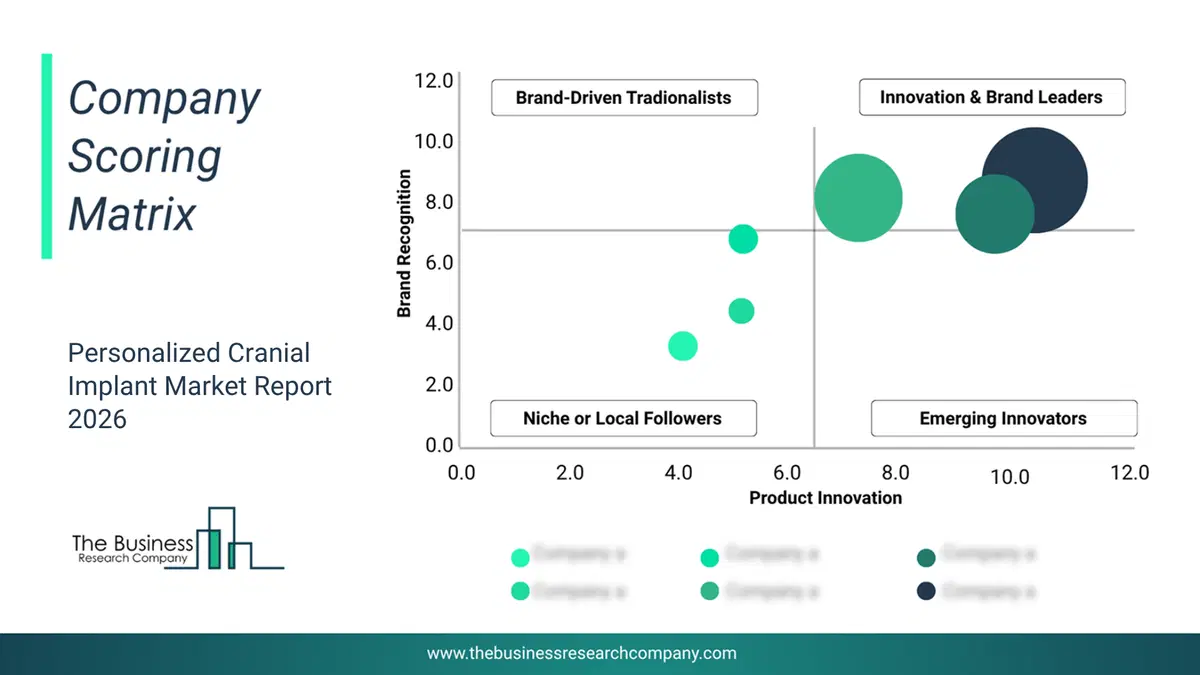
This chart maps companies by product innovation and brand strength, with bubble size indicating relative revenue, helping identify market leaders, challengers, and niche players. This is an illustrative chart; the full report provides a complete and accurate competitive analysis.
Global Personalized Cranial Implant Market Trends and Insights
Major companies operating in the personalized cranial implant market are focusing on advanced technologies such as hospital-site sterile 3D printing to streamline production and enhance patient-specific implant delivery. Hospital-site sterile 3D printing technology involves the use of specialized cleanroom-compatible 3D printers capable of fabricating medical-grade implants directly within healthcare facilities, minimizing contamination risk and improving turnaround time. For instance, in April 2024, 3D Systems, a US-based additive manufacturing company, launched the VSP PEEK Cranial Implant. It is a patient-specific cranial implant solution utilizing high-performance PEEK material and an FDA-cleared 3D printing workflow, including modeling software, a sterile-environment 3D printer, and a streamlined post-processing system. It is designed to replicate the mechanical properties of human bone. The implant offers superior biocompatibility, radiolucency, and resistance to bodily fluids. The system reduces material usage by up to 85% compared to traditional machining, significantly lowering costs. Its sterile, hospital-site deployment enables faster surgical planning and improved outcomes, making it a transformative tool in neurosurgery and cranioplasty.What Are Latest Mergers And Acquisitions In The Personalized Cranial Implant Market?
In May 2025, Kelyniam Global Inc., a US–based medical device manufacturing company, partnership with Osteopore Limited. With this partnership, Kelyniam Global Inc., aims to expand its U.S. craniofacial product portfolio and accelerate market penetration by distributing Osteopore’s bioresorbable craniofacial implants to U.S. hospitals and surgeons. Osteopore Limited is a Singapore-based medical technology company that specializes in 3D-printed biomimetic, bioresorbable regenerative implants.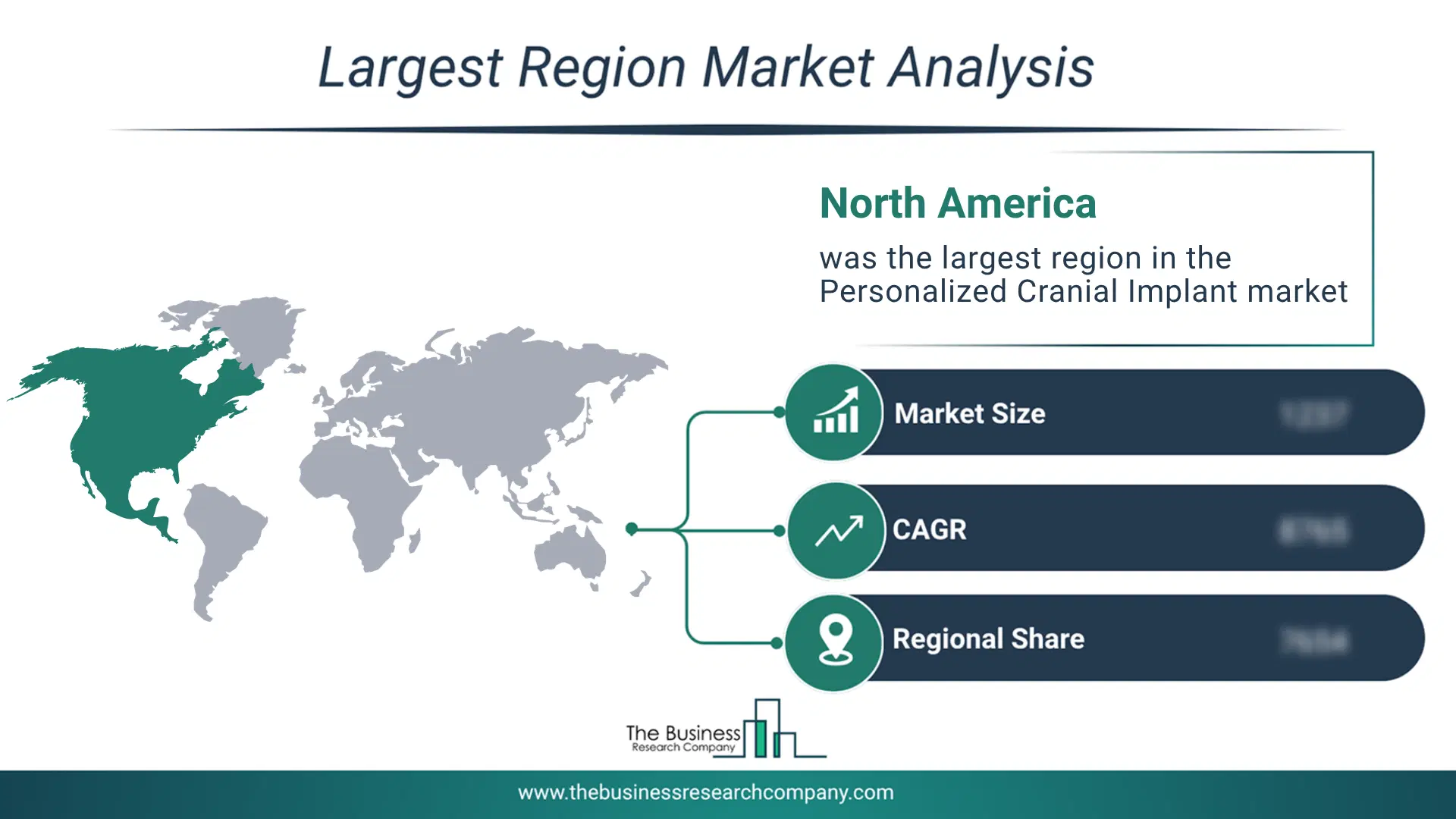
Regional Outlook
North America was the largest region in the personalized cranial implant market in 2025. Asia-Pacific is expected to be the fastest-growing region in the forecast period. The regions covered in this market report are Asia-Pacific, South East Asia, Western Europe, Eastern Europe, North America, South America, Middle East, Africa. The countries covered in this market report are Australia, Brazil, China, France, Germany, India, Indonesia, Japan, Taiwan, Russia, South Korea, UK, USA, Canada, Italy, SpainWhat Defines the Personalized Cranial Implant Market?
The personalized cranial implant market consists of sales of computer numerical control (CNC) milling, full skull reconstruction, contour correction implants, hybrid techniques, and cranioplasty mesh. Values in this market are ‘factory gate’ values, that is, the value of goods sold by the manufacturers or creators of the goods, whether to other entities (including downstream manufacturers, wholesalers, distributors, and retailers) or directly to end customers. The value of goods in this market includes related services sold by the creators of the goods.How is Market Value Defined and Measured?
The market value is defined as the revenues that enterprises gain from the sale of goods and/or services within the specified market and geography through sales, grants, or donations in terms of the currency (in USD unless otherwise specified). The revenues for a specified geography are consumption values that are revenues generated by organizations in the specified geography within the market, irrespective of where they are produced. It does not include revenues from resales along the supply chain, either further along the supply chain or as part of other products.
This chart presents market attractiveness based on a quantitative evaluation of growth, competition, strategic alignment, and risk, offering a clear view of opportunity areas for decision-making. This chart is for illustrative purposes; the full report contains the complete analysis.

This chart highlights the Total Addressable Market (TAM) by estimating the maximum revenue opportunity using an assumption-driven approach, supporting strategic planning and opportunity sizing across markets. The chart is illustrative; the full report provides a more comprehensive analysis.
What Key Data and Analysis Are Included in the Personalized Cranial Implant Market Report 2026?
The personalized cranial implant market research report is one of a series of new reports from The Business Research Company that provides market statistics, including industry global market size, regional shares, competitors with the market share, detailed market segments, market trends and opportunities, and any further data you may need to thrive in the personalized cranial implant industry. The market research report delivers a complete perspective of everything you need, with an in-depth analysis of the current and future state of the industry.Personalized Cranial Implant Market Report Forecast Analysis
| Report Attribute | Details |
|---|---|
| Market Size Value In 2026 | $1.03 billion |
| Revenue Forecast In 2030 | $1.34 billion |
| Growth Rate | CAGR of 6.8% from 2026 to 2030 |
| Base Year For Estimation | 2025 |
| Actual Estimates/Historical Data | 2020-2025 |
| Forecast Period | 2026 - 2030 |
| Market Representation | Revenue in USD Billion and CAGR from 2026 to 2030 |
| Segments Covered | Implant Material, Indication, End Use |
| Regional Scope | Asia-Pacific, Western Europe, Eastern Europe, North America, South America, Middle East, Africa |
| Country Scope | The countries covered in the report are Australia, Brazil, China, France, Germany, India, Indonesia, Japan, Taiwan, Russia, South Korea, UK, USA, Canada, Italy, Spain. |
| Key Companies Profiled | Medtronic PLC, Stryker Corporation, Zimmer Biomet Holdings Inc., Renishaw PLC, KLS Martin Group, B. Braun Melsungen AAG, Medartis Holding AG, CranioTech GmbH, evonos GmbH & Co. KG, Matrix Surgical USA LLC, Jeil Medical Corporation, Anatomics Pty Ltd., Calavera Surgical Design Inc., KELYNIAM Global Incorporated, Xilloc Medical B.V., INCREDIBLE AM Private Limited, LUCID Implants Private Limited, Ortho Baltic Joint Stock Company, OssDsign AB, 3D Systems Healthcare, Materialise NV, Oxford Performance Materials |
| Customization Scope | Request for Customization |
| Pricing And Purchase Options | Explore Purchase Options |