
Pervasive Computing Technology Market Report 2026
Global Outlook – By Component (Hardware, Software, Services), By Technology (Internet Of Things (IoT), Artificial Intelligence, Sensor Networks, Cloud Computing), By Deployment Mode (On-Premises, Cloud), By Enterprise Size (Small And Medium Enterprises, Large Enterprises), By End-User (Banking, Financial Services, And Insurance (BFSI), Healthcare, Retail, Manufacturing, Information Technology (IT) And Telecommunications, Other End-Users) – Market Size, Trends, Strategies, and Forecast to 2030
Pervasive Computing Technology Market Overview
• Pervasive Computing Technology market size has reached to $142.36 billion in 2025 • Expected to grow to $272.5 billion in 2030 at a compound annual growth rate (CAGR) of 13.8% • Growth Driver: Increasing Proliferation Of The Internet Of Things (IoT) Is Fueling The Growth Of The Market Due To A Rapidly Expanding Base Of Connected Devices • Market Trend: Introduction Of Advanced Wireless Mobility Solutions To Enhance Enterprise Connectivity • North America was the largest region in 2025 and Asia-Pacific is the fastest growing region.Market Gains By 2030 – Top Opportunities By Segment
Market Gain identifies the most promising market opportunities by highlighting the segments or products expected to generate the highest incremental revenue growth over the next five years.
What Is Covered Under Pervasive Computing Technology Market?
Pervasive computing technology is a way of designing and deploying computing so that processing power, sensing, and communication are embedded into everyday objects and environments, allowing them to work together quietly in the background with minimal human effort. Its purpose is to deliver seamless, context aware assistance making activities safer, faster, and more convenient by providing the right information or action at the right moment without requiring constant attention. The main components of pervasive computing technologies include hardware, software, and services. Hardware refers to the physical computing components and devices, such as embedded processors, sensors, gateways, connectivity modules, and edge devices, that enable data capture, processing, communication, and actuation in pervasive computing systems. It uses various technologies such as the internet of things (IoT), artificial intelligence, sensor networks, and cloud computing, and different deployment modes include on-premises and cloud. It is used by enterprises of different sizes, such as small and medium enterprises and large enterprises, and serves several end-users, including banking, financial services, and insurance (BFSI), healthcare, retail, manufacturing, information technology (IT) and telecommunications, and others.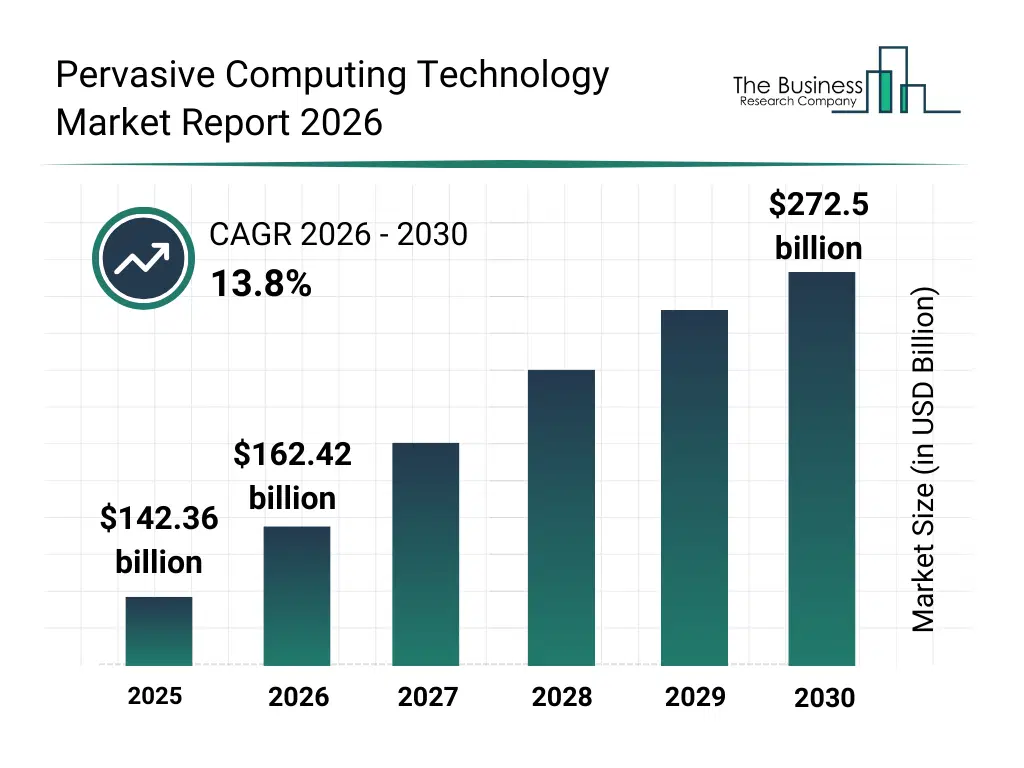
What Is The Pervasive Computing Technology Market Size and Share 2026?
The pervasive computing technology market size has grown rapidly in recent years. It will grow from $142.36 billion in 2025 to $162.42 billion in 2026 at a compound annual growth rate (CAGR) of 14.1%. The growth in the historic period can be attributed to falling cost of sensors and connectivity, expansion of iot deployments, growth of mobile computing and wearables, advances in edge analytics, increasing demand for automation in daily environments.What Is The Pervasive Computing Technology Market Growth Forecast?
The pervasive computing technology market size is expected to see rapid growth in the next few years. It will grow to $272.5 billion in 2030 at a compound annual growth rate (CAGR) of 13.8%. The growth in the forecast period can be attributed to AI at the edge for privacy and latency, standardization of interoperable device ecosystems, pervasive computing in smart cities, energy-efficient always-on computing, human-centric interfaces with ambient assistants. Major trends in the forecast period include context-aware edge computing for real-time decisions, ambient intelligence in smart spaces, sensor fusion for seamless user experiences, secure device identity and embedded cybersecurity, digital twins for pervasive system optimization.
Global Pervasive Computing Technology Market Segmentation
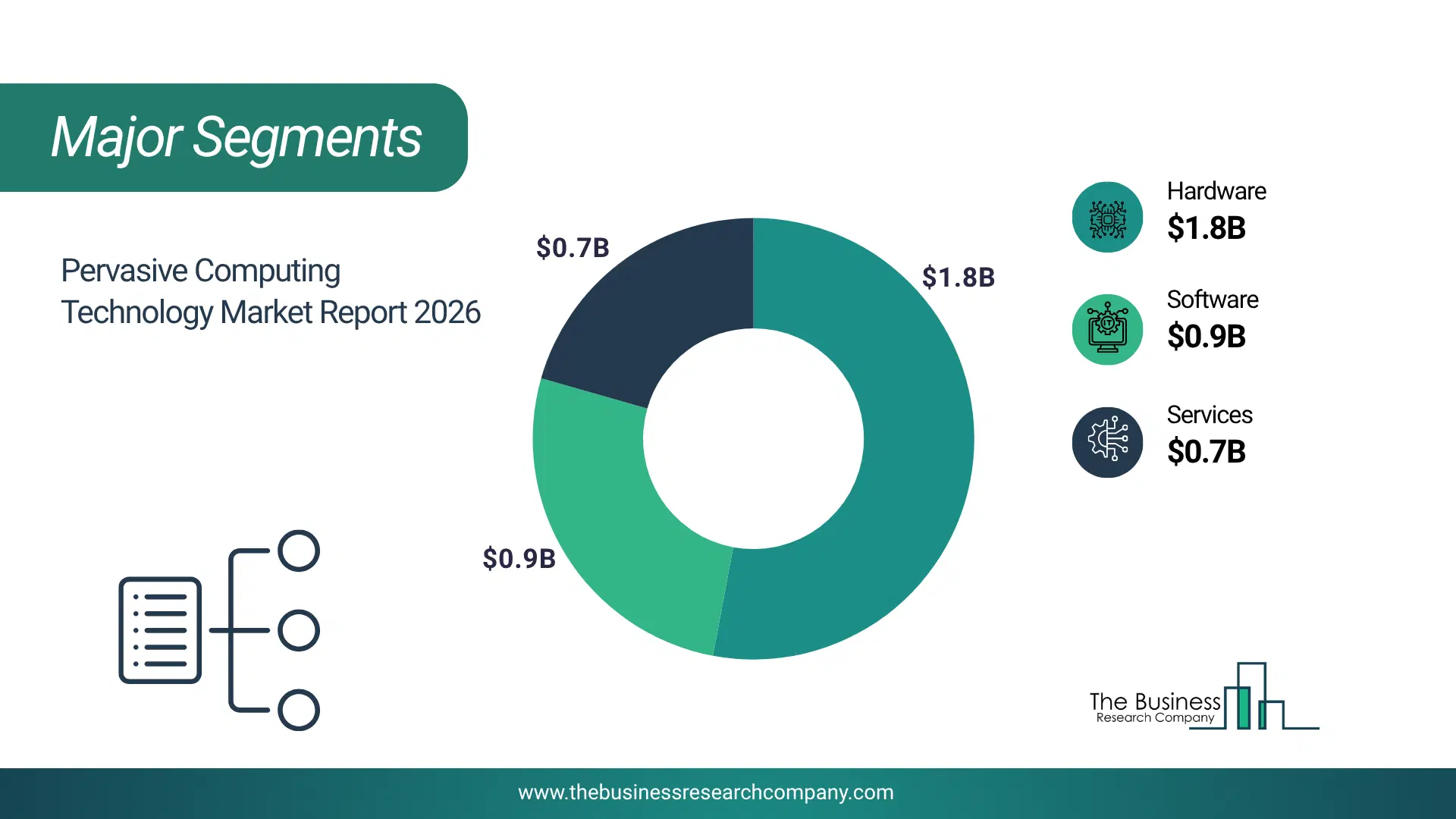
1) By Component: Hardware, Software, Services 2) By Technology: Internet Of Things (IoT), Artificial Intelligence, Sensor Networks, Cloud Computing 3) By Deployment Mode: On-Premises, Cloud 4) By Enterprise Size: Small And Medium Enterprises, Large Enterprises 5) By End-User: Banking, Financial Services, And Insurance (BFSI), Healthcare, Retail, Manufacturing, Information Technology (IT) And Telecommunications, Other End-Users Subsegments: 1) By Hardware: Embedded Microcontrollers, Edge Gateways, Sensors And Actuators, Radio Frequency Identification Readers And Tags, Global Positioning System And Global Navigation Satellite System Modules, Wireless Local Area Network Access Points, Cellular Modules And Modems, Near Field Communication Modules 2) By Software: Device Operating Systems, Middleware And Device Management Platforms, Edge Analytics Software, Digital Twin Software, Artificial Intelligence And Machine Learning Frameworks, Data Integration And Application Programming Interface Management 3) By Services: Consulting And Advisory Services, System Integration And Deployment Services, Managed Services, Support And Maintenance Services, Training And Certification Services, Cloud Hosting And Infrastructure Services, Network Design And Optimization Services, Security Assessment And Compliance Services The top segments in the pervasive computing technology market will be: • Hardware will reach $1.72 billion by 2030. • Software will reach $0.87 billion by 2030. • Services will reach $0.61 billion by 2030.What Is The Driver Of The Pervasive Computing Technology Market?
The increasing proliferation of internet of things (IoT) is expected to propel the growth of the pervasive computing technology market going forward. The internet of things (IoT) is a system of connected physical devices that communicate and share data over the internet to perform automated and intelligent functions. The proliferation of internet of things (IoT) is rising due to factors such as smart city initiatives, industrial automation, wearable devices, and improved connectivity infrastructure, creating more demand for intelligent and automated systems. Pervasive computing technology leverages internet of things (IoT) devices to enable real-time monitoring, automation, and data-driven decision-making across industries. For instance, in April 2025, according to a report published by Ericsson, a Sweden-based telecommunication company, global cellular IoT connections reached approximately 4 billion by the end of 2024, and by 2030, Broadband IoT is expected to account for about 60% of these connections. Therefore, the increasing proliferation of internet of things (IoT) is driving the growth of the pervasive computing technology industry.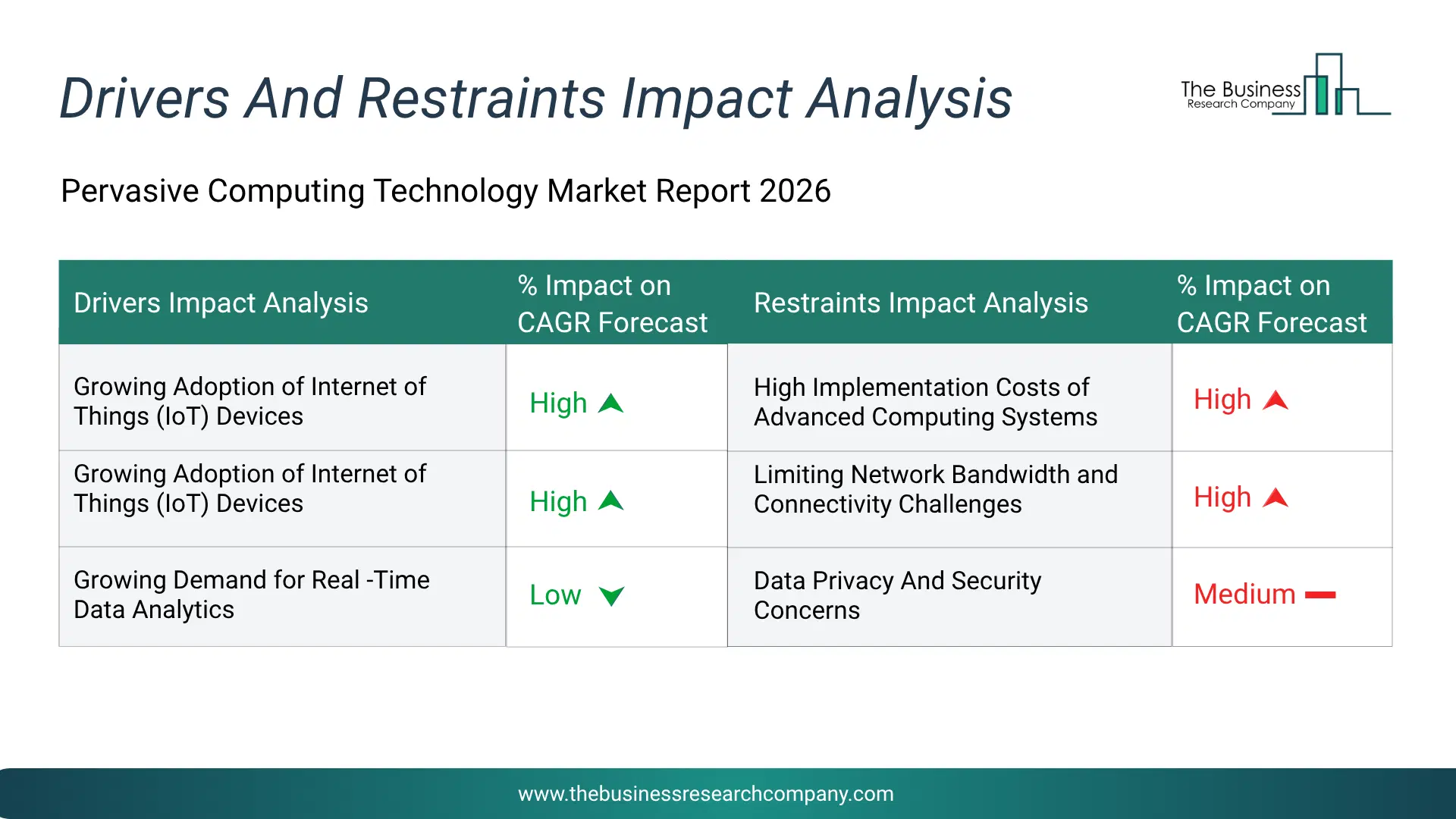
Infographic Chart Showing Key Market Drivers Analysis And Restraints For Pervasive Computing Technology Market
The chart presents an impact analysis of key drivers and restraints, quantifying their relative influence on the market's growth rate and helping assess the balance between growth enablers and limiting factors. This chart offers a high-level perspective; the full report contains more detailed insights.
How Will The Drivers Impact Growth In The Global Pervasive Computing Technology Market?
• Growing Adoption of Internet of Things (IoT) Devices (High) – During the forecast period, the increase in biomedical and pharmaceutical research is expected to become a key growth driver for the pervasive computing technology market by 2030. The increasing adoption of internet of things (iot) devices is a key driver of pervasive computing, as it facilitates continuous connectivity and seamless data exchange across diverse smart environments. With billions of interconnected sensors and intelligent devices in operation, iot fosters an ecosystem where computing capabilities are embedded into everyday objects, enabling higher levels of automation and real-time analytics. This extensive integration reinforces the fundamental principle of pervasive computing making technology seamlessly integrated, unobtrusive, and omnipresent in daily life. • Growing Adoption of Internet of Things (IoT) Devices (High) – During the forecast period, the increase in government and institutional funding is expected to emerge as a major factor driving the expansion of the pervasive computing technology market by 2030. The rising adoption of mobile and ubiquitous computing is accelerating the growth of pervasive computing by enabling continuous connectivity and on -demand access to digital services across locations. The widespread use of smartphones, wearable devices, and mobile applications allows users to interact effortlessly with smart environments. This mobility aligns with the core objective of pervasive computing embedding computing capabilities into everyday life without reliance on fixed infrastructure. Additionally, it increases data generation and supports context -aware systems, driving greater personalization and intelligent automation. • Growing Demand for Real -Time Data Analytics (Low) – During the forecast period, the growing prevalence of chronic and infectious diseases is expected to act as a key growth catalyst for the pervasive computing technology market by 2030. The rising demand for real -time data analytics is a significant driver of pervasive computing, as organizations increasingly require immediate insights from continuously generated data streams. Pervasive computing supports real -time processing by integrating intelligence directly into connected devices and network infrastructures. This capability enables faster decision -making, greater operational efficiency, and improved user experiences. Sectors such as healthcare, manufacturing, and transportation are progressively leveraging pervasive systems to monitor environments and respond to changing conditions in real time.How Will The Restraints Impact Growth In The Global Pervasive Computing Technology Market?
• High Implementation Costs of Advanced Computing Systems (High) – During the forecast period, the high implementation costs of advanced computing systems act as a major restraint for the pervasive computing market, as they require substantial investment in hardware, software, and infrastructure. The integration of sensors, iot devices, cloud platforms, and data analytics tools demands significant financial resources. Small and medium enterprises often struggle to afford these technologies, limiting large-scale adoption. Additionally, ongoing maintenance, upgrades, and energy costs further increase the financial burden. • Limiting Network Bandwidth and Connectivity Challenges (High) – During the forecast period, the limiting network bandwidth and connectivity challenges act as a key restraint for the pervasive computing market, as seamless data exchange is crucial for connected systems to function effectively. In many regions, inconsistent or low-speed internet connections hinder real-time communication between devices. These connectivity issues lead to data delays, reduced system reliability, and poor user experiences. Moreover, bandwidth limitations make it difficult to manage large volumes of data generated by pervasive networks. Consequently, inadequate network infrastructure restricts the scalability and efficiency of pervasive computing implementations across industries. • Data Privacy And Security Concerns (Medium) – During the forecast period, the data privacy and security concerns act as a restraint for the pervasive computing market by increasing risks associated with the continuous collection and exchange of sensitive information across interconnected devices. The widespread deployment of iot sensors and cloud-based systems creates multiple entry points for cyberattacks and unauthorized access. Organizations must invest heavily in advanced encryption, authentication, and cybersecurity frameworks to protect data integrity. These additional security requirements increase implementation complexity and operational costs. As a result, concerns over data protection slow down adoption and limit trust in pervasive computing solutions.Key Players In The Global Pervasive Computing Technology Market
Major companies operating in the pervasive computing technology market are Microsoft Corporation, Verizon Communications Inc., AT&T Inc., Dell Technologies Inc., Huawei Technologies Co. Ltd., Robert Bosch GmbH, Panasonic Holdings Corporation, Intel Corporation, Xiaomi Corporation, Schneider Electric SE, SAP SE, Telefonaktiebolaget LM Ericsson, NEC Corporation, MediaTek Inc., NXP Semiconductors N.V., Rockwell Automation Inc., Garmin Ltd., Samsara Inc., Exosite LLC, Eurotech S.p.A.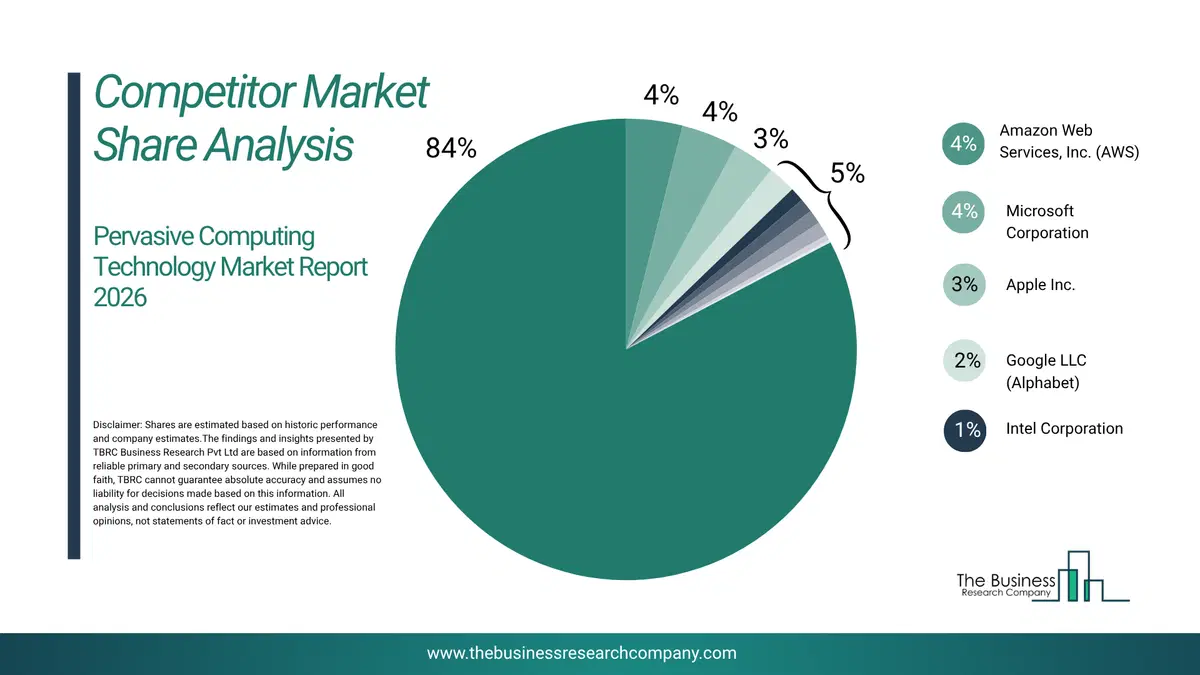
This chart is for illustrative purposes; the full report includes a detailed competitor analysis and comprehensive overview of the top 10 companies in the market.
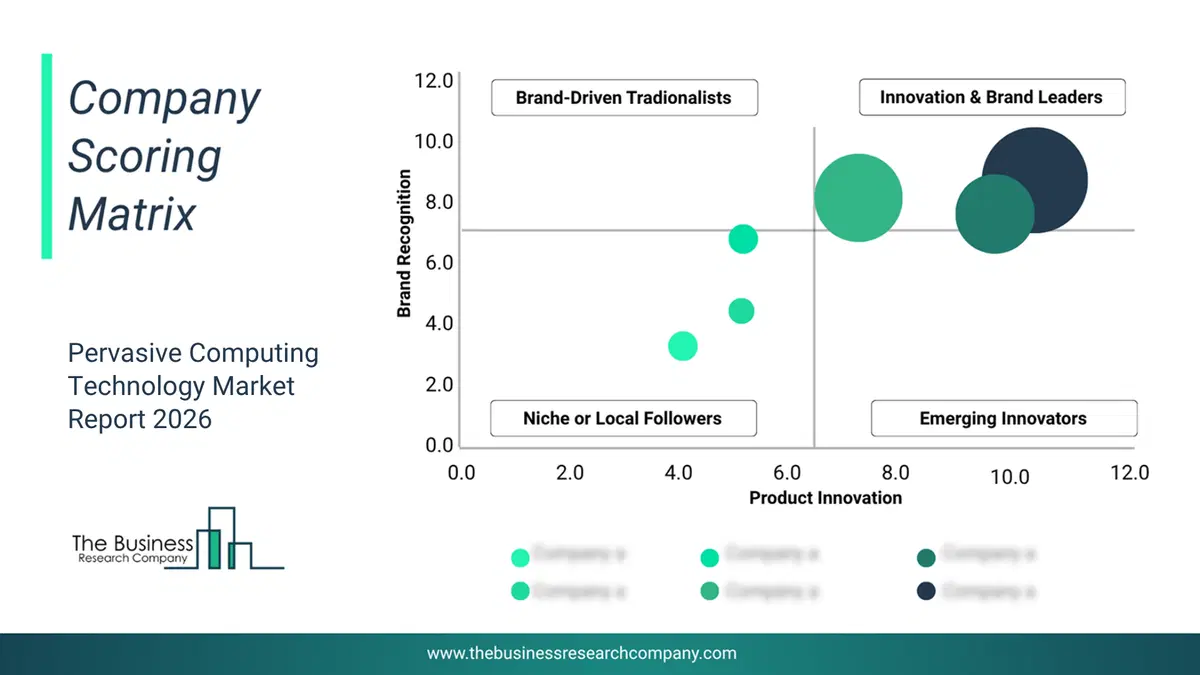
This chart maps companies by product innovation and brand strength, with bubble size indicating relative revenue, helping identify market leaders, challengers, and niche players. This is an illustrative chart; the full report provides a complete and accurate competitive analysis.
Global Pervasive Computing Technology Market Trends and Insights
Major companies operating in the pervasive computing technology market are focusing on launching innovative wireless mobility solutions to enhance enterprise connectivity and accelerate market adoption. Wireless mobility solutions involve integrating managed network services with advanced backhaul technologies to provide secure, low-latency, and seamless connectivity across diverse enterprise and industrial environments. For instance, in May 2024, HCLTech, an India-based information technology services and consulting company, in a partnership with Cisco, a US-based networking technology provider, launched the Pervasive Wireless Mobility as-a-Service. The solution combines HCLTech’s managed network services with Cisco’s Ultra-Reliable Wireless Backhaul (URWB) technology into a unified offering. It ensures secure and seamless connectivity across sectors such as manufacturing, mining, healthcare, retail, and logistics. This innovation stands out by enabling mission-critical communication, boosting operational efficiency, and supporting a scalable, resilient pervasive computing infrastructure.What Are Latest Mergers And Acquisitions In The Pervasive Computing Technology Market?
In March 2025, Qualcomm, a US-based semiconductor company, acquired Edge Impulse for an undisclosed amount. With this acquisition, Qualcomm aims to enhance its artificial intelligence and internet of things capabilities for developers, accelerate edge artificial intelligence application development and deployment, and strengthen its position in pervasive computing by integrating Edge Impulse’s platform, tools, and community with its hardware and software roadmap. Edge Impulse is a US-based company specializing in pervasive computing technologies.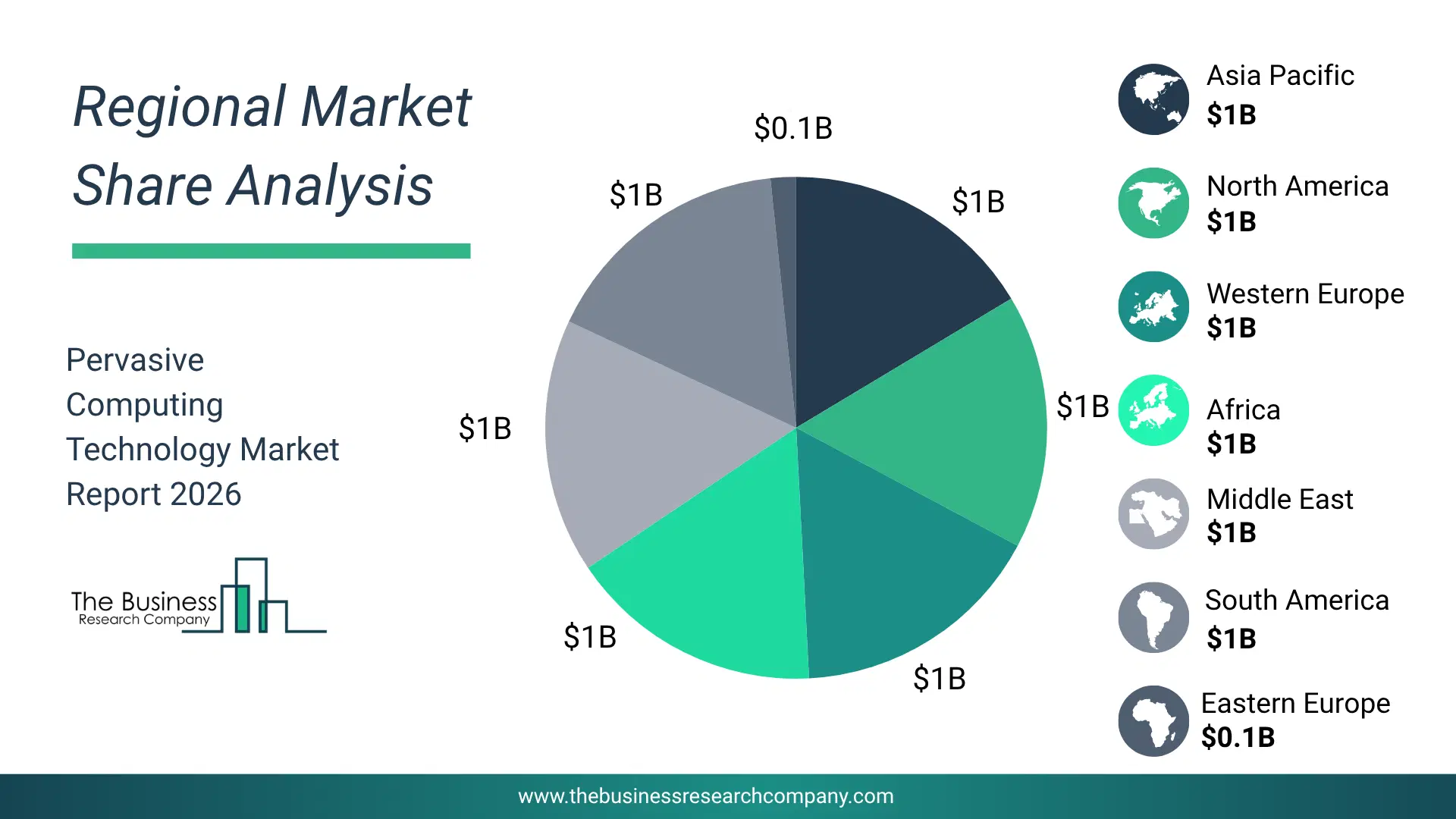
Regional Insights
North America was the largest region in the pervasive computing technology market in 2025. Asia-Pacific is expected to be the fastest-growing region in the forecast period. The regions covered in this market report are Asia-Pacific, South East Asia, Western Europe, Eastern Europe, North America, South America, Middle East, Africa. The countries covered in this market report are Australia, Brazil, China, France, Germany, India, Indonesia, Japan, Taiwan, Russia, South Korea, UK, USA, Canada, Italy, Spain.What Defines the Pervasive Computing Technology Market?
The pervasive computing technology market consists of revenues earned by entities by providing services such as internet-of-things system integration and deployment, edge computing and analytics services, context-aware application development, device provisioning, and lifecycle management. The market value includes the value of related goods sold by the service provider or included within the service offering. The pervasive computing technology market also includes sales of smart sensors and actuators, wireless connectivity systems, and wearable devices. Values in this market are ‘factory gate’ values, that is, the value of goods sold by the manufacturers or creators of the goods, whether to other entities (including downstream manufacturers, wholesalers, distributors, and retailers) or directly to end customers. The value of goods in this market includes related services sold by the creators of the goods.How is Market Value Defined and Measured?
The market value is defined as the revenues that enterprises gain from the sale of goods and/or services within the specified market and geography through sales, grants, or donations in terms of the currency (in USD unless otherwise specified). The revenues for a specified geography are consumption values that are revenues generated by organizations in the specified geography within the market, irrespective of where they are produced. It does not include revenues from resales along the supply chain, either further along the supply chain or as part of other products.
This chart presents market attractiveness based on a quantitative evaluation of growth, competition, strategic alignment, and risk, offering a clear view of opportunity areas for decision-making. This chart is for illustrative purposes; the full report contains the complete analysis.

This chart highlights the Total Addressable Market (TAM) by estimating the maximum revenue opportunity using an assumption-driven approach, supporting strategic planning and opportunity sizing across markets. The chart is illustrative; the full report provides a more comprehensive analysis.
What Key Data and Analysis Are Included in the Pervasive Computing Technology Market Report 2026?
The pervasive computing technology market research report is one of a series of new reports from The Business Research Company that provides market statistics, including industry global market size, regional shares, competitors with the market share, detailed market segments, market trends and opportunities, and any further data you may need to thrive in the pervasive computing technology industry. The market research report delivers a complete perspective of everything you need, with an in-depth analysis of the current and future state of the industry.Pervasive Computing Technology Market Report Forecast Analysis
| Report Attribute | Details |
|---|---|
| Market Size Value In 2026 | $162.42 billion |
| Revenue Forecast In 2030 | $272.5 billion |
| Growth Rate | CAGR of 13.8% from 2026 to 2030 |
| Base Year For Estimation | 2025 |
| Actual Estimates/Historical Data | 2020-2025 |
| Forecast Period | 2026 - 2030 |
| Market Representation | Revenue in USD Billion and CAGR from 2026 to 2030 |
| Segments Covered | Component, Technology, Deployment Mode, Enterprise Size, End-User |
| Regional Scope | Asia-Pacific, Western Europe, Eastern Europe, North America, South America, Middle East, Africa |
| Country Scope | The countries covered in the report are Australia, Brazil, China, France, Germany, India, ... |
| Key Companies Profiled | Microsoft Corporation, Verizon Communications Inc., AT&T Inc., Dell Technologies Inc., Huawei Technologies Co. Ltd., Robert Bosch GmbH, Panasonic Holdings Corporation, Intel Corporation, Xiaomi Corporation, Schneider Electric SE, SAP SE, Telefonaktiebolaget LM Ericsson, NEC Corporation, MediaTek Inc., NXP Semiconductors N.V., Rockwell Automation Inc., Garmin Ltd., Samsara Inc., Exosite LLC, Eurotech S.p.A. |
| Customization Scope | Request for Customization |
| Pricing And Purchase Options | Explore Purchase Options |