
Pet Cancer Therapeutics Market Report 2026
Global Outlook – By Cancer Type (Melanoma, Mast Cell Cancer, Lymphoma, Mammary And Squamous Cell Cancer), By Species (Dogs, Cats, Other Species), By Therapy (Chemotherapy, Radiation Therapy, Immunotherapy, Tomotherapy, Other Therapies), By End User (Veterinary Hospitals, Clinical Pharmacies, Retail Pharmacies, Online Pharmacies, Other End Users) – Market Size, Trends, Strategies, and Forecast to 2030
Pet Cancer Therapeutics Market Overview
• Pet Cancer Therapeutics market size has reached to $0.43 billion in 2025 • Expected to grow to $0.72 billion in 2030 at a compound annual growth rate (CAGR) of 11% • Growth Driver: Rising Prevalence Of Pet Cancer Drives Demand For Advanced Therapeutics • Market Trend: Epigenetic Technology And The Nu.Q Vet Cancer Test • North America was the largest region in 2025.What Is Covered Under Pet Cancer Therapeutics Market?
Pet cancer therapeutics involve the use of various treatments and medications to manage or cure cancer in pets. This therapeutics depends on several factors such as the type and stage of cancer, along with the pet's age and overall health. The main pet cancer therapeutics cancer types are melanoma, mast cell cancer, lymphoma, and mammary and squamous cell cancer. Melanoma refers to a type of cancer that arises from pigment-producing cells called melanocytes. The various route of administration are oral, and injection for dogs, cats, and others. The various therapies are chemotherapy, radiation therapy, immunotherapy, tomo therapy, and others used by veterinary hospitals, clinical pharmacies, retail pharmacies, online pharmacies, and others.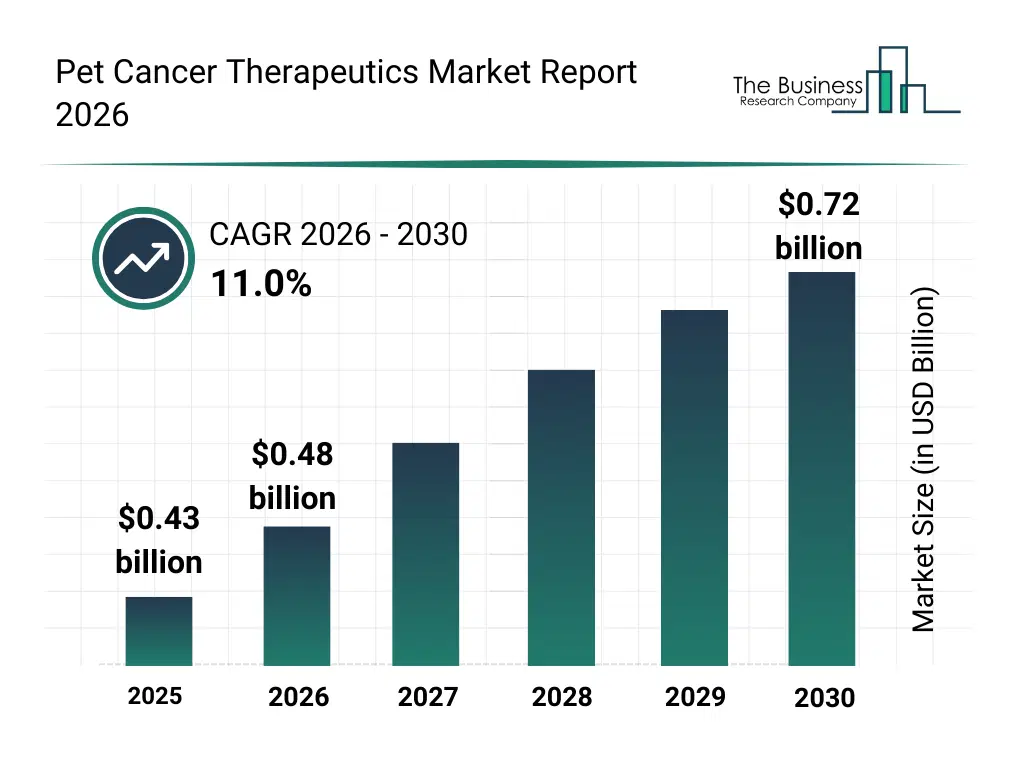
What Is The Pet Cancer Therapeutics Market Size and Share 2026?
The pet cancer therapeutics market size has grown rapidly in recent years. It will grow from $0.43 billion in 2025 to $0.48 billion in 2026 at a compound annual growth rate (CAGR) of 10.3%. The growth in the historic period can be attributed to rising incidence of cancer in companion animals, development of conventional chemotherapy protocols, increasing veterinary hospital infrastructure, advancements in diagnostic imaging for pets, growth of companion animal population.What Is The Pet Cancer Therapeutics Market Growth Forecast?
The pet cancer therapeutics market size is expected to see rapid growth in the next few years. It will grow to $0.72 billion in 2030 at a compound annual growth rate (CAGR) of 11.0%. The growth in the forecast period can be attributed to advancements in immunotherapy and targeted therapy, integration of artificial intelligence in diagnosis and treatment, expansion of online and retail pharmacy channels, increasing awareness of early cancer detection, rising investment in veterinary oncology research. Major trends in the forecast period include rising adoption of targeted therapies for pet cancer, increasing use of immunotherapy in companion animals, expansion of multi-modal cancer treatment protocols, growing focus on early cancer detection in pets, integration of palliative care in pet oncology.
Global Pet Cancer Therapeutics Market Segmentation
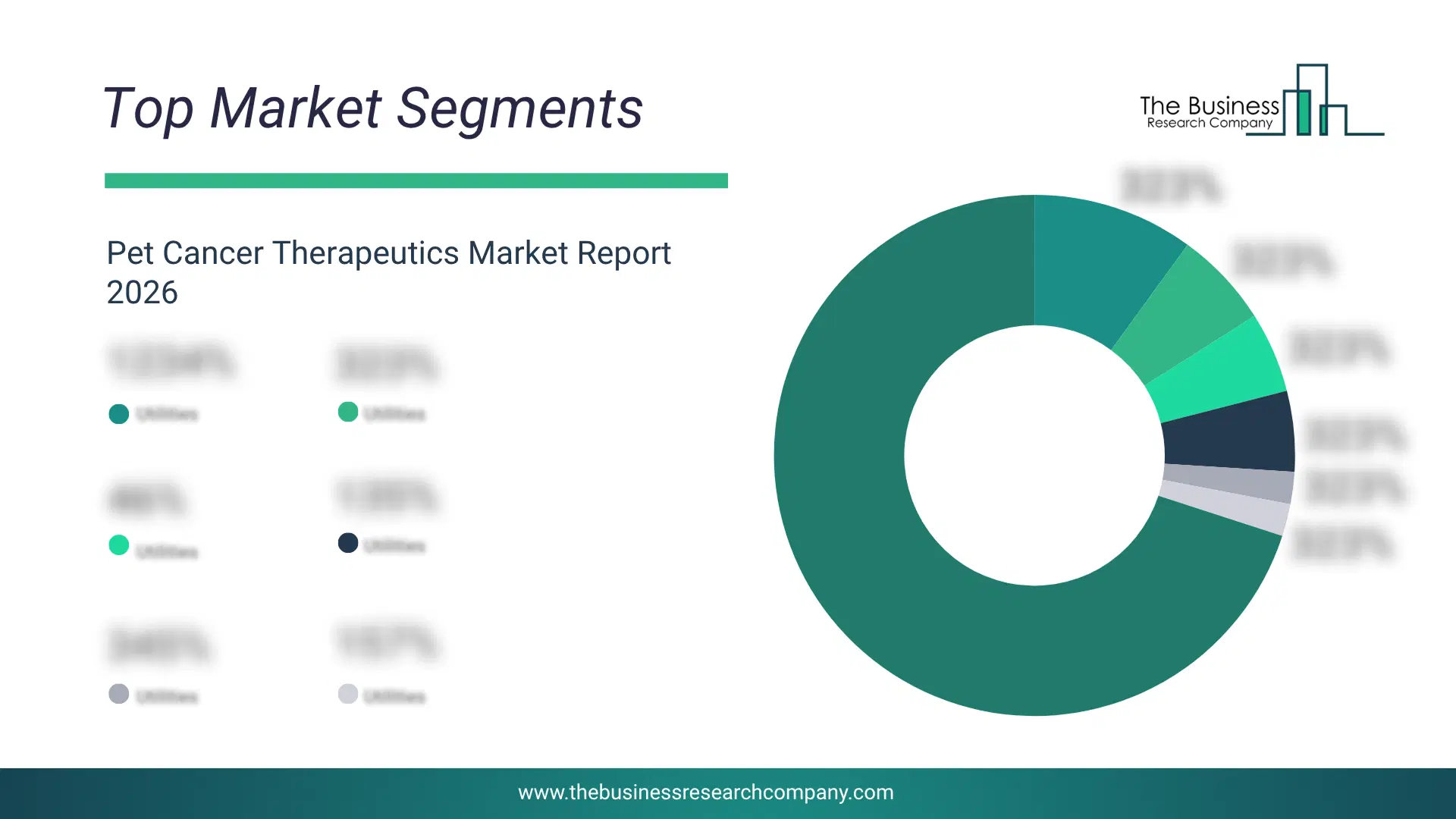
1) By Cancer Type: Melanoma, Mast Cell Cancer, Lymphoma, Mammary And Squamous Cell Cancer 2) By Species: Dogs, Cats, Other Species 3) By Therapy: Chemotherapy, Radiation Therapy, Immunotherapy, Tomotherapy, Other Therapies 4) By End User: Veterinary Hospitals, Clinical Pharmacies, Retail Pharmacies, Online Pharmacies, Other End Users Subsegments: 1) By Melanoma: Surgical Interventions, Chemotherapy, Immunotherapy, Targeted Therapy 2) By Mast Cell Cancer: Surgery, Chemotherapy, Tyrosine Kinase Inhibitors, Radiation Therapy 3) By Lymphoma: Chemotherapy Protocols, Steroid Therapy, Radiation Therapy, Immunotherapy 4) By Mammary And Squamous Cell Cancer: Surgical Treatment, Chemotherapy, Radiation Therapy, Palliative Care OptionsWhat Is The Driver Of The Pet Cancer Therapeutics Market?
The increasing prevalence of pet cancer is expected to propel the growth of the pet cancer therapeutics market going forward. Pet cancer refers to the development of abnormal and uncontrolled cell growth in the body of a domesticated animal, such as a dog or cat, leading to the formation of a tumor. The increased prevalence of pet cancer is mostly driven by exposure to environmental toxins and pollutants, whereas genetic and lifestyle factors, as a result demand for more advanced and effective cancer therapeutics for pets is expected to increase. Pet cancer therapeutics help pet cancer by targeting and destroying cancer cells or slowing tumor growth, which improves survival outcomes and reduces pain and discomfort in affected animals. For instance, in 2025, according to the American Veterinary Medical Association (AVMA), a US-based Veterinary Health Authority, approximately 1 in 4 dogs will develop cancer in their lifetime, and this risk grows to 1 in 2 for dogs aged over 10. Therefore, an increasing prevalence of pet cancer will fuel the pet cancer therapeutics industry growth.Key Players In The Global Pet Cancer Therapeutics Market
Major companies operating in the pet cancer therapeutics market are AB Science, Elanco Animal Health, ELIAS Animal Health, Zoetis Inc., Anivive Lifesciences Inc., QBiotics Group Ltd., Regeneus Ltd., VetDC Inc., PetCure Oncology at Veterinary Radiosurgery and Imaging Center, Torigen Pharmaceuticals Inc., Dechra Pharmaceuticals plc, AdvaVet Inc., Oasmia Pharmaceuticals AB, Sumitomo Pharma Animal Health Co., Vetivax, CarthroniX Inc., Boehringer Ingelheim GmbH, Nippon Zenyaku Kogyo Co. Ltd., Vivesto AB, Norbrook Laboratories Ltd., Zenoaq Co. Ltd., Morphogenesis Inc.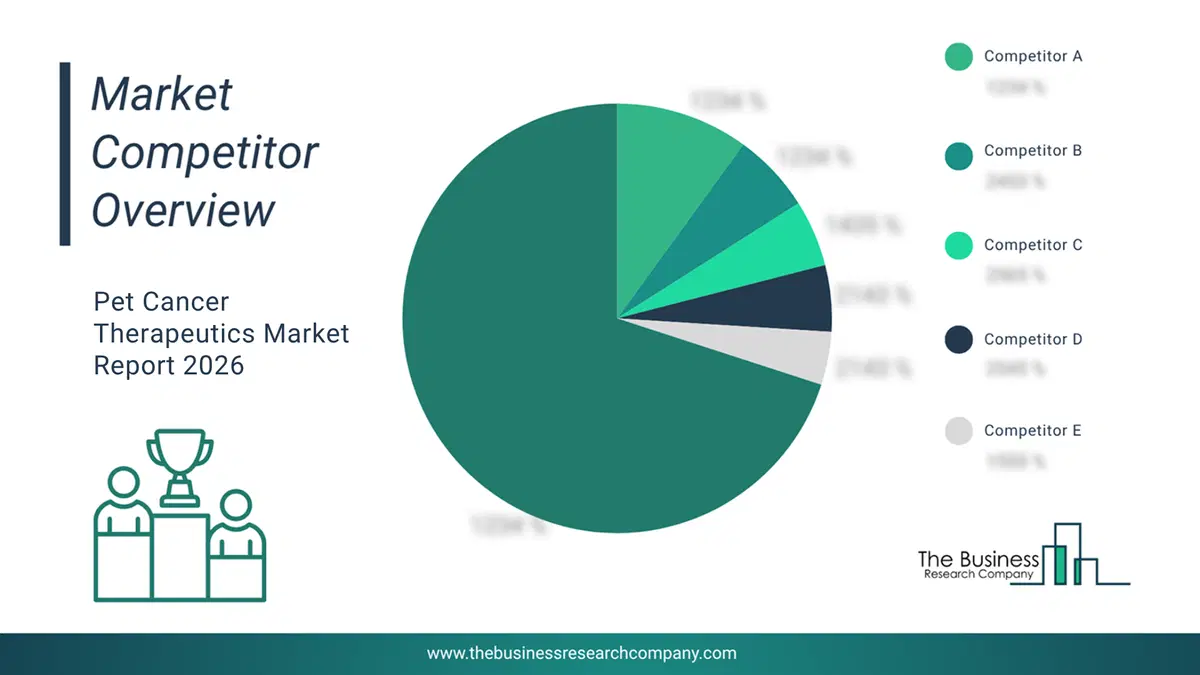
This chart is for illustrative purposes; the full report includes a detailed competitor analysis and comprehensive overview of the top 10 companies in the market.
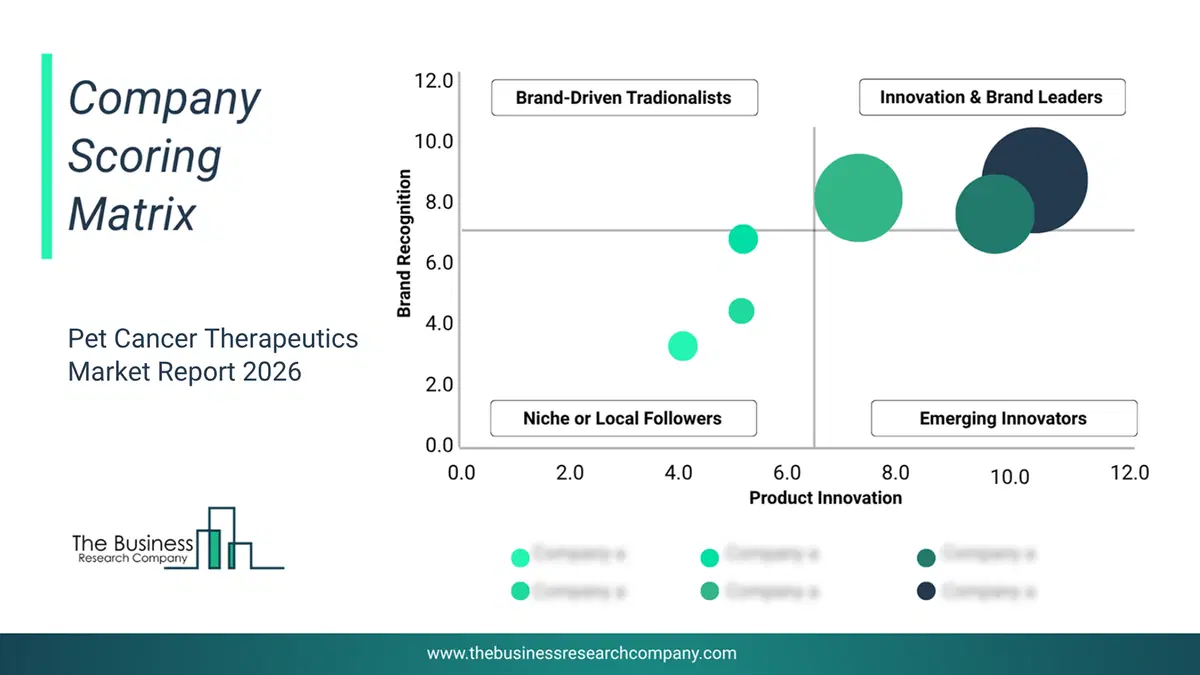
This chart maps companies by product innovation and brand strength, with bubble size indicating relative revenue, helping identify market leaders, challengers, and niche players. This is an illustrative chart; the full report provides a complete and accurate competitive analysis.
Global Pet Cancer Therapeutics Market Trends and Insights
Major companies operating in the pet cancer therapeutics market are developing technologies such as epigenetic technology to enhance treatment efficacy and precision in targeting cancer cells, ultimately improving outcomes for pets affected by cancer. Epigenetic technology refers to methods that modify gene expression without changing the underlying DNA sequence, often influencing cellular behavior and potential therapeutic outcomes. For instance, in April 2024, VolitionRx Limited, a US-based multi-national epigenetics company, launched the Nu.Q Vet Cancer Test. The Nu.Q Vet Cancer Test operates on the Element i+ Analyzer, allowing for quick results, typically within about 6 minutes. It utilizes an enzyme-linked immunosorbent assay to detect circulating nucleosomes in the blood, which can indicate the presence of cancer.What Are Latest Mergers And Acquisitions In The Pet Cancer Therapeutics Market?
In June 2024, Lantheus, a US-based company that specializes in developing and commercializing innovative imaging products and radiopharmaceuticals for diagnostic use in healthcare, acquired Life Molecular Imaging GmbH for an undisclosed amount. Through this acquisition, Lantheus aims to enhance its portfolio of diagnostic imaging solutions, expand its capabilities in molecular imaging, and strengthen its position in the healthcare market. Life Molecular Imaging GmbH is a Germany-based company focused on developing advanced imaging technologies, particularly in the field of molecular imaging.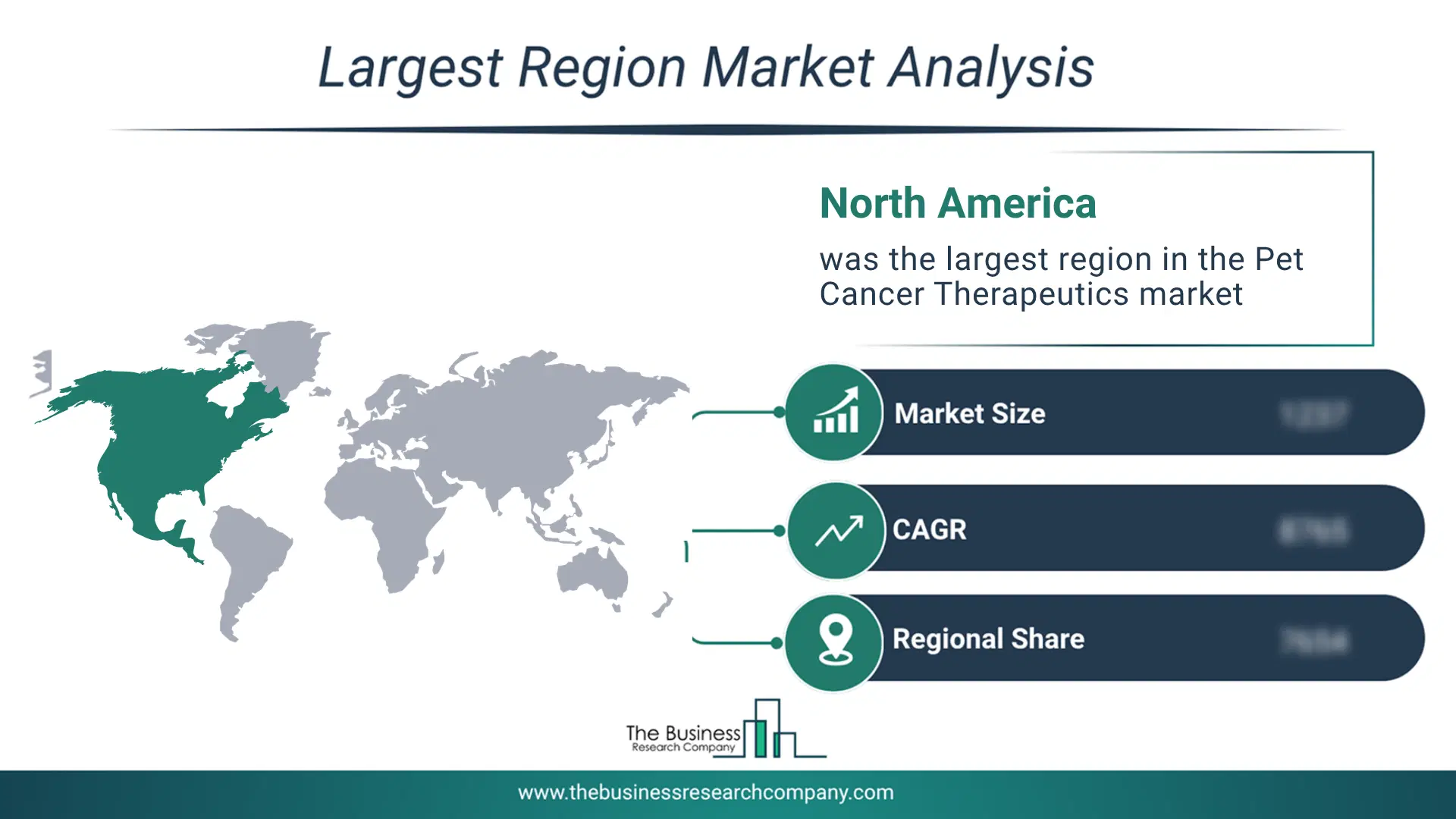
Regional Outlook
North America was the largest region in the pet cancer therapeutics market in 2025. The regions covered in this market report are Asia-Pacific, South East Asia, Western Europe, Eastern Europe, North America, South America, Middle East, Africa. The countries covered in this market report are Australia, Brazil, China, France, Germany, India, Indonesia, Japan, Taiwan, Russia, South Korea, UK, USA, Canada, Italy, SpainWhat Defines the Pet Cancer Therapeutics Market?
The pet cancer therapeutics market consists of revenues earned by entities by surgery and palliative care. The market value includes the value of related goods sold by the service provider or included within the service offering. Only goods and services traded between entities or sold to end consumers are included.How is Market Value Defined and Measured?
The market value is defined as the revenues that enterprises gain from the sale of goods and/or services within the specified market and geography through sales, grants, or donations in terms of the currency (in USD unless otherwise specified). The revenues for a specified geography are consumption values that are revenues generated by organizations in the specified geography within the market, irrespective of where they are produced. It does not include revenues from resales along the supply chain, either further along the supply chain or as part of other products.
This chart presents market attractiveness based on a quantitative evaluation of growth, competition, strategic alignment, and risk, offering a clear view of opportunity areas for decision-making. This chart is for illustrative purposes; the full report contains the complete analysis.

This chart highlights the Total Addressable Market (TAM) by estimating the maximum revenue opportunity using an assumption-driven approach, supporting strategic planning and opportunity sizing across markets. The chart is illustrative; the full report provides a more comprehensive analysis.
What Key Data and Analysis Are Included in the Pet Cancer Therapeutics Market Report 2026?
The pet cancer therapeutics market research report is one of a series of new reports from The Business Research Company that provides market statistics, including industry global market size, regional shares, competitors with the market share, detailed market segments, market trends and opportunities, and any further data you may need to thrive in the pet cancer therapeutics industry. The market research report delivers a complete perspective of everything you need, with an in-depth analysis of the current and future state of the industry.Pet Cancer Therapeutics Market Report Forecast Analysis
| Report Attribute | Details |
|---|---|
| Market Size Value In 2026 | $0.48 billion |
| Revenue Forecast In 2030 | $0.72 billion |
| Growth Rate | CAGR of 10.3% from 2026 to 2030 |
| Base Year For Estimation | 2025 |
| Actual Estimates/Historical Data | 2020-2025 |
| Forecast Period | 2026 - 2030 - 2030 |
| Market Representation | Revenue in USD Billion and CAGR from 2026 to 2030 |
| Segments Covered | Cancer Type, Species, Therapy, End User |
| Regional Scope | Asia-Pacific, Western Europe, Eastern Europe, North America, South America, Middle East, Africa |
| Country Scope | The countries covered in the report are Australia, Brazil, China, France, Germany, India, Indonesia, Japan, Taiwan, Russia, South Korea, UK, USA, Canada, Italy, Spain. |
| Key Companies Profiled | AB Science, Elanco Animal Health, ELIAS Animal Health, Zoetis Inc., Anivive Lifesciences Inc., QBiotics Group Ltd., Regeneus Ltd., VetDC Inc., PetCure Oncology at Veterinary Radiosurgery and Imaging Center, Torigen Pharmaceuticals Inc., Dechra Pharmaceuticals plc, AdvaVet Inc., Oasmia Pharmaceuticals AB, Sumitomo Pharma Animal Health Co., Vetivax, CarthroniX Inc., Boehringer Ingelheim GmbH, Nippon Zenyaku Kogyo Co. Ltd., Vivesto AB, Norbrook Laboratories Ltd., Zenoaq Co. Ltd., Morphogenesis Inc. |
| Customization Scope | Request for Customization |
| Pricing And Purchase Options | Explore Purchase Options |