
Pharmaceutical Grade Amino Acid Market Report 2026
Global Outlook – By Type (L-Form Amino Acids, D-Form Amino Acids, Non-Essential Amino Acids, Essential Amino Acids), By Formulation Type (Powders, Capsules, Tablets, Liquids, Injectables), By Distribution Channel (Online Retail, Offline Retail, Direct Sales, Wholesale Distributors, Healthcare Institutions), By Application (Hormone, Antibacterial Agents, Anti-Cancer Drugs, Nutrition, Other Applications), By End-User (Pharmaceutical Companies, Nutraceutical Companies, Food Manufacturers, Cosmetic Manufacturers, Academic And Research Institutions) – Market Size, Trends, Strategies, and Forecast to 2030
Pharmaceutical Grade Amino Acid Market Overview
• Pharmaceutical Grade Amino Acid market size has reached to $4.34 billion in 2025 • Expected to grow to $6.17 billion in 2030 at a compound annual growth rate (CAGR) of 7.2% • Growth Driver: Rising Health Consciousness Driving Market Growth Due To Increasing Demand For Nutritional Supplements • Market Trend: Innovative Amino Acid-Based Supplements Target Senior Health And Personalized Nutrition • North America was the largest region in 2025 and Asia-Pacific is the fastest growing region.What Is Covered Under Pharmaceutical Grade Amino Acid Market?
Pharmaceutical-grade amino acids are highly refined compounds that adhere to rigorous quality, purity, and safety standards established by regulatory authorities, ensuring they are free from contaminants and suitable for medical use. These amino acids are produced under tightly controlled manufacturing conditions following good manufacturing practices (GMP), which ensure consistency, traceability, and compliance with regulatory requirements for use in strictly regulated environments. The main types of pharmaceutical grade amino acids are L-form amino acids, D-form amino acids, non-essential amino acids, and essential amino acids. L‑form amino acids are naturally occurring enantiomers that possess the same stereo‑configuration found in the proteins of living organisms. It includes formulations such as powders, capsules, tablets, liquids, and injectables and is distributed through online retail, offline retail, direct sales, wholesale distributors, and healthcare institutions. It finds application in hormones, antibacterial agents, anti-cancer drugs, nutrition, and others and caters to diverse end users, including pharmaceutical companies, nutraceutical companies, food manufacturers, cosmetic manufacturers, and academic and research institutions.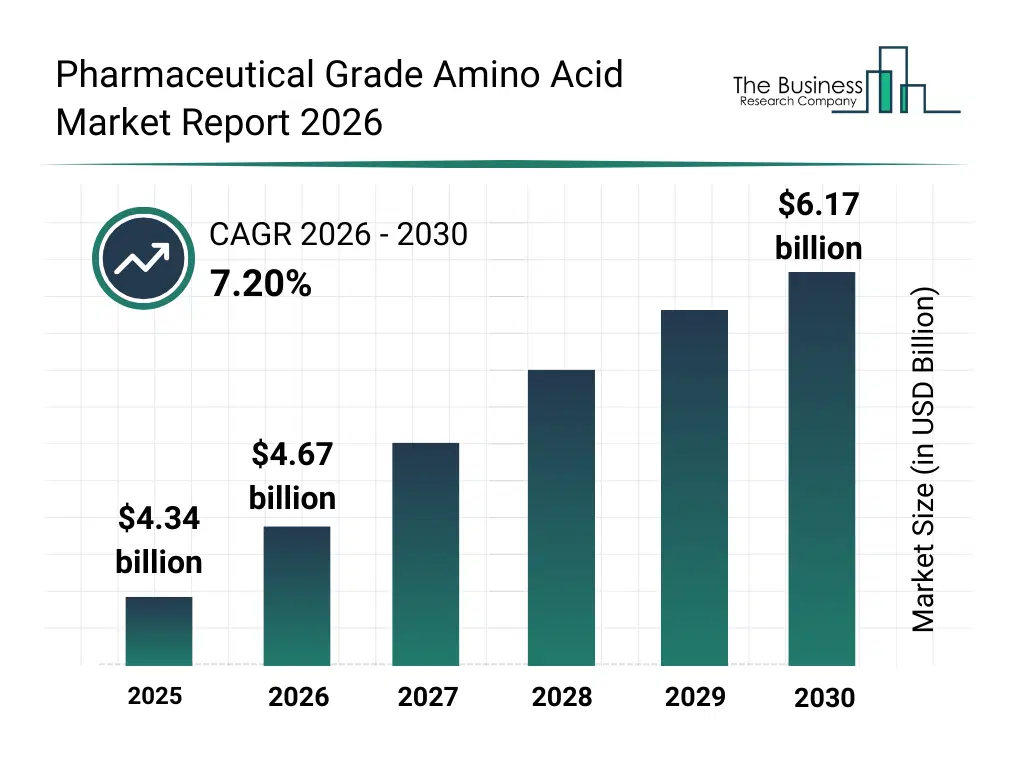
What Is The Pharmaceutical Grade Amino Acid Market Size and Share 2026?
The pharmaceutical grade amino acid market size has grown strongly in recent years. It will grow from $4.34 billion in 2025 to $4.67 billion in 2026 at a compound annual growth rate (CAGR) of 7.6%. The growth in the historic period can be attributed to limited availability of pharmaceutical-grade amino acids, reliance on conventional production processes, growing pharmaceutical manufacturing activities, increasing awareness of amino acid therapeutic benefits, adoption in basic nutrition and supplement applications.What Is The Pharmaceutical Grade Amino Acid Market Growth Forecast?
The pharmaceutical grade amino acid market size is expected to see strong growth in the next few years. It will grow to $6.17 billion in 2030 at a compound annual growth rate (CAGR) of 7.2%. The growth in the forecast period can be attributed to advancements in gmp-compliant manufacturing, development of novel injectable and capsule formulations, rising demand from nutraceutical and cosmetic sectors, increasing government regulations and quality standards, expansion of direct sales and online distribution channels. Major trends in the forecast period include growing demand for l-form and d-form amino acids in pharmaceutical applications, expansion of injectable and liquid formulations for clinical use, increasing adoption of amino acids in anti-cancer and hormone therapies, rising usage in nutraceuticals, food, and cosmetic industries, focus on high-purity amino acids for regulatory compliance and safety standards.
Global Pharmaceutical Grade Amino Acid Market Segmentation
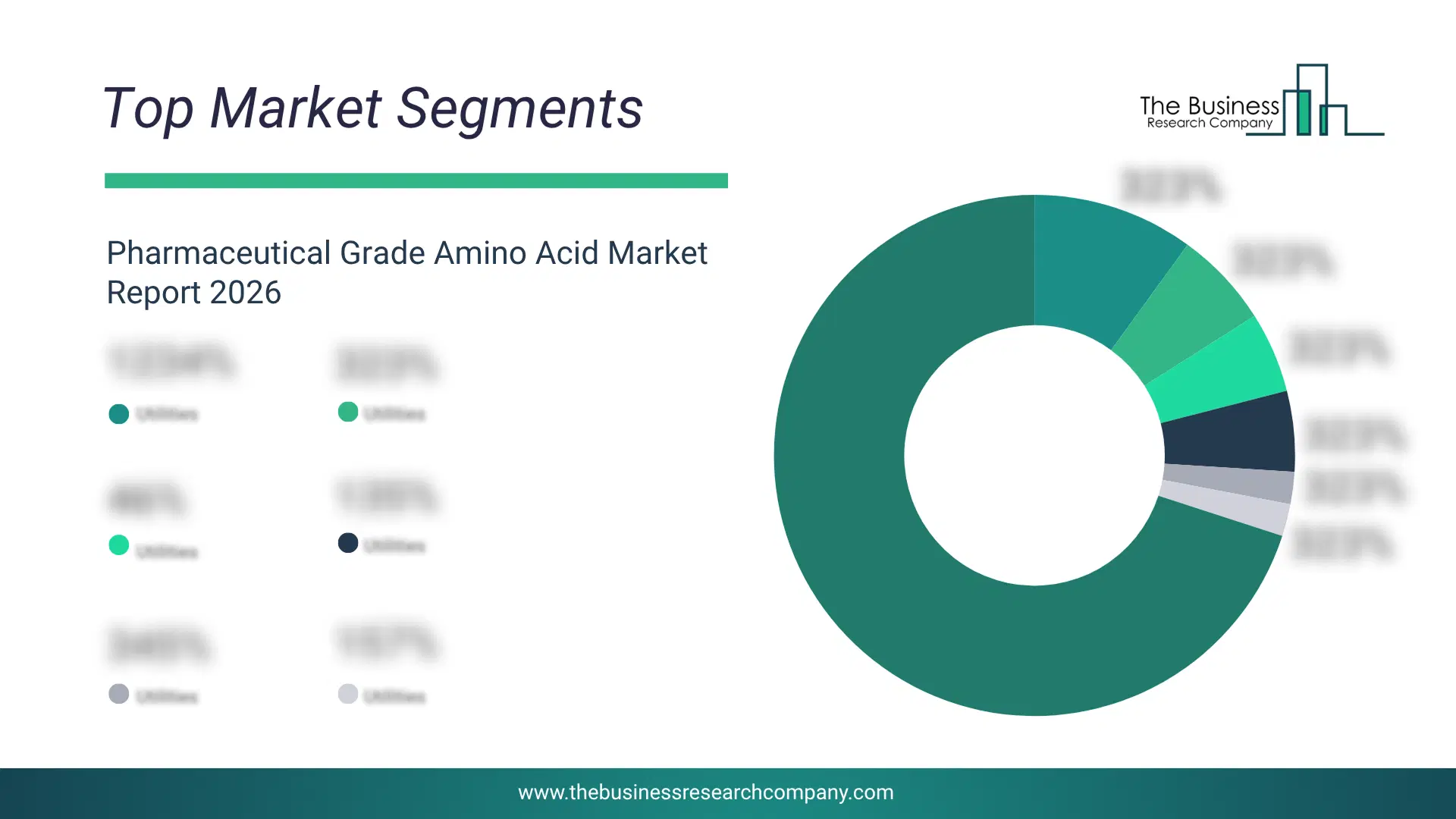
1) By Type: L-Form Amino Acids, D-Form Amino Acids, Non-Essential Amino Acids, Essential Amino Acids 2) By Formulation Type: Powders, Capsules, Tablets, Liquids, Injectables 3) By Distribution Channel: Online Retail, Offline Retail, Direct Sales, Wholesale Distributors, Healthcare Institutions 4) By Application: Hormone, Antibacterial Agents, Anti-Cancer Drugs, Nutrition, Other Applications 5) By End-User: Pharmaceutical Companies, Nutraceutical Companies, Food Manufacturers, Cosmetic Manufacturers, Academic And Research Institutions Subsegments: 1) By L-Form Amino Acids: L-Glutamine, L-Leucine, L-Arginine, L-Lysine, L-Valine 2) By D-Form Amino Acids: D-Alanine, D-Serine, D-Cysteine, D-Aspartic Acid, D-Phenylalanine 3) By Non-Essential Amino Acids: Alanine, Asparagine, Aspartic Acid, Glutamic Acid, Serine 4) By Essential Amino Acids: Histidine, Isoleucine, Leucine, Lysine, Methionine, Phenylalanine, Threonine, Tryptophan, ValineWhat Is The Driver Of The Pharmaceutical Grade Amino Acid Market?
The growing demand for nutritional supplements is expected to propel the growth of the pharmaceutical-grade amino acid market going forward. Nutritional supplements refer to products that provide essential nutrients such as vitamins, minerals, or amino acids to support health and fill dietary gaps when regular food intake is insufficient. The demand for nutritional supplements is growing due to increasing health consciousness among consumers, as more individuals proactively seek to improve their well-being and prevent lifestyle-related disorders. Nutritional supplements can serve as pharmaceutical-grade amino acids when they are produced to meet strict purity, quality, and regulatory standards required for medical use. These amino acids are highly purified, standardized for consistent potency, and manufactured under Good Manufacturing Practices (GMP) to ensure safety and efficacy. For instance, in September 2024, according to HerbalGram, a US-based international nonprofit organization, the total annual sales of herbal dietary supplements in the US rose from $12.018 billion in 2022 to $12.551 billion in 2023, reflecting a growth of 4.4%. Therefore, the growing demand for nutritional supplements is driving the growth of the pharmaceutical-grade amino acid market.Key Players In The Global Pharmaceutical Grade Amino Acid Market
Major companies operating in the pharmaceutical grade amino acid market are Archer Daniels Midland Company, Merck KGaA, Sumitomo Chemical Co. Ltd., CJ CheilJedang Corporation, Evonik Industries AG, Ajinomoto Co. Inc., Fresenius Kabi AG, Jingjing Pharmaceutical, Global Bio‑Chem Technology Group, Tokyo Chemical Industry Co. Ltd., AMINO GmbH, Hubei Bafeng Pharmaceuticals Co. Ltd., Kyowa Hakko Bio Co. Ltd., Shine Star Amino Acid Co. Ltd., Wuxi Jinghai Amino Acid Co. Ltd., Jiahe Biotech, Shijiazhuang Donghua Jinlong Chemical Co. Ltd., Sichuan Tongsheng Amino Acid Co. Ltd., Yichang Sanxia Proudin Pharmaceuticals Co. Ltd.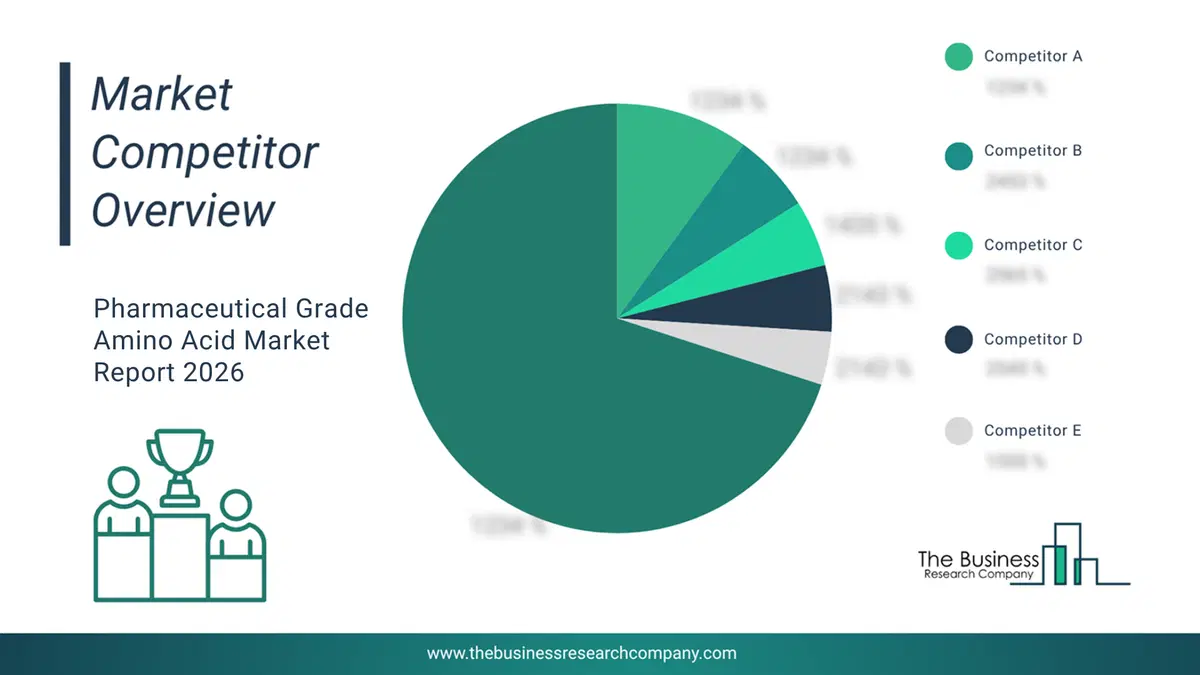
This chart is for illustrative purposes; the full report includes a detailed competitor analysis and comprehensive overview of the top 10 companies in the market.
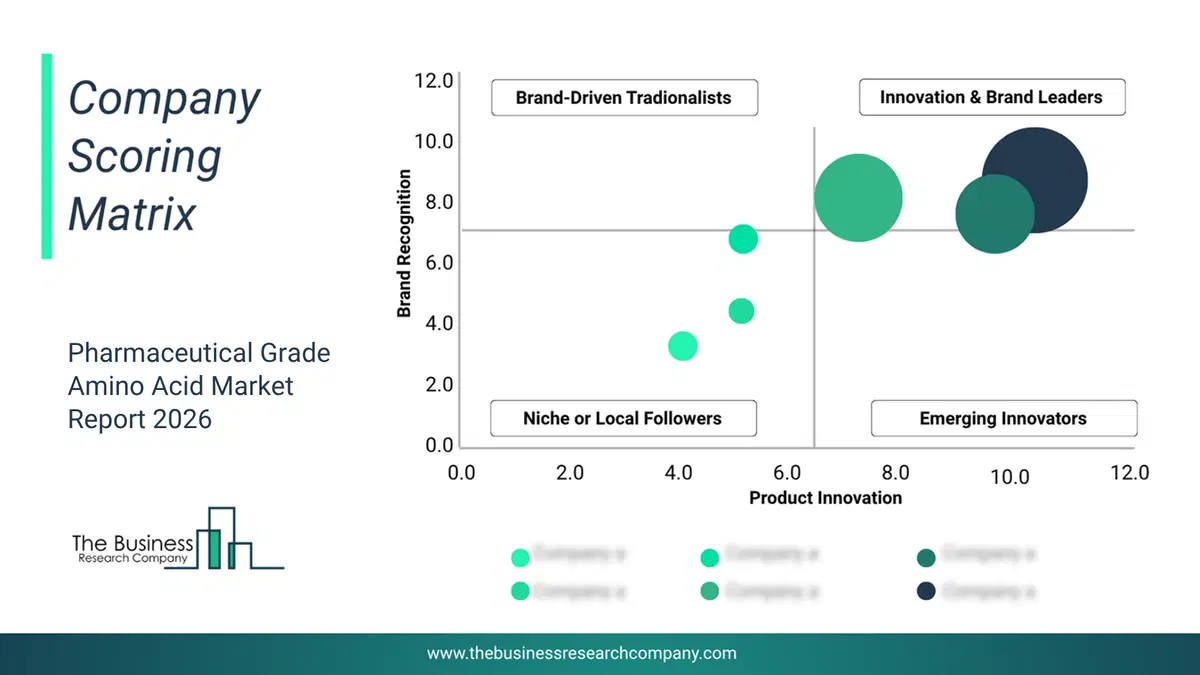
This chart maps companies by product innovation and brand strength, with bubble size indicating relative revenue, helping identify market leaders, challengers, and niche players. This is an illustrative chart; the full report provides a complete and accurate competitive analysis.
Global Pharmaceutical Grade Amino Acid Market Trends and Insights
Major companies operating in the pharmaceutical-grade amino acid market are focusing on introducing innovative formulations, such as amino acid-based specialized dietary supplements, to enhance therapeutic efficacy and cater to the growing demand for personalized nutrition. Amino acid-based specialized dietary supplements refer to high-purity formulations containing specific amino acids designed to support targeted health functions such as muscle recovery, metabolic balance, or neurological support. For instance, in December 2023, Ajinomoto (Thailand) Co., a Thailand‑based food and nutrition company, launched AminoMOF, a specialized dietary supplement aimed at seniors, designed to support muscle strength and mobility. The product is enriched with nine essential amino acids, including high levels of L-leucine and fish collagen peptides, making it especially beneficial for preventing or mitigating age-related muscle loss and joint issues. With a sugar-free, easily absorbed formula, AminoMOF helps elderly individuals maintain their independence and physical health.What Are Latest Mergers And Acquisitions In The Pharmaceutical Grade Amino Acid Market?
In February 2025, Granules India Limited, an India-based pharmaceutical manufacturing company, acquired Senn Chemicals AG for an undisclosed amount. With this acquisition, Granules India Limited aims to expand its capabilities in pharmaceutical amino acid derivatives and peptide-based intermediates by integrating Senn Chemicals’ expertise in high-purity peptides and amino acid derivative manufacturing. Senn Chemicals AG is a Switzerland-based contract development and manufacturing organization (CDMO) specializing in peptides and amino acid derivatives used as pharmaceutical building blocks and intermediates.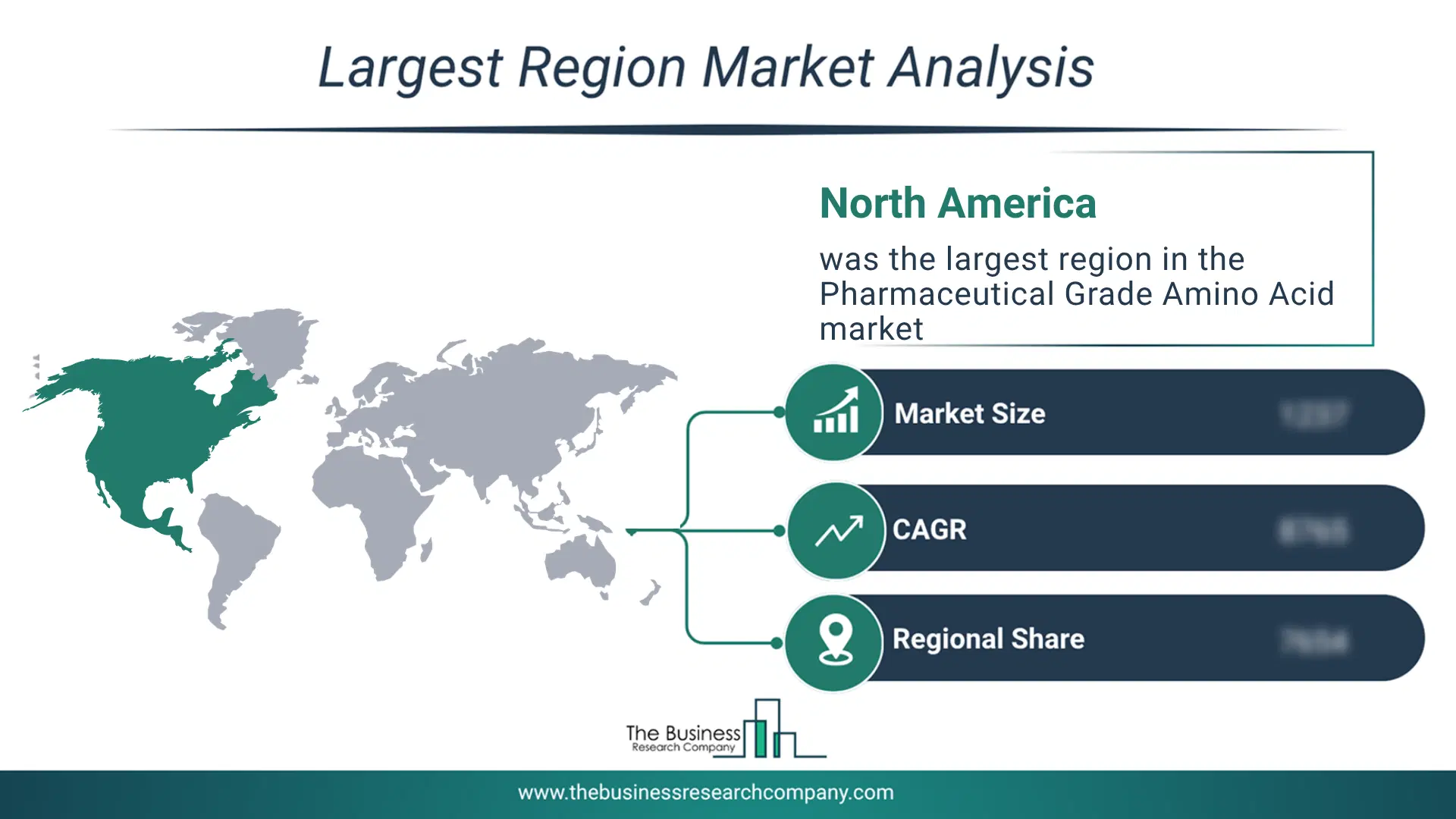
Regional Insights
North America was the largest region in the pharmaceutical grade amino acid market in 2025. Asia-Pacific is expected to be the fastest-growing region in the forecast period. The regions covered in this market report are Asia-Pacific, South East Asia, Western Europe, Eastern Europe, North America, South America, Middle East, Africa. The countries covered in this market report are Australia, Brazil, China, France, Germany, India, Indonesia, Japan, Taiwan, Russia, South Korea, UK, USA, Canada, Italy, Spain.What Defines the Pharmaceutical Grade Amino Acid Market?
The pharmaceutical grade amino acid market consists of sales of products including single amino acid products, amino acid blends, crystalline powders, derivatized amino acids, ready-to-use premixed formulas, and injectable-grade solutions. Values in this market are ‘factory gate’ values, that is, the value of goods sold by the manufacturers or creators of the goods, whether to other entities (including downstream manufacturers, wholesalers, distributors, and retailers) or directly to end customers. The value of goods in this market includes related services sold by the creators of the goods.How is Market Value Defined and Measured?
The market value is defined as the revenues that enterprises gain from the sale of goods and/or services within the specified market and geography through sales, grants, or donations in terms of the currency (in USD unless otherwise specified). The revenues for a specified geography are consumption values that are revenues generated by organizations in the specified geography within the market, irrespective of where they are produced. It does not include revenues from resales along the supply chain, either further along the supply chain or as part of other products.
This chart presents market attractiveness based on a quantitative evaluation of growth, competition, strategic alignment, and risk, offering a clear view of opportunity areas for decision-making. This chart is for illustrative purposes; the full report contains the complete analysis.

This chart highlights the Total Addressable Market (TAM) by estimating the maximum revenue opportunity using an assumption-driven approach, supporting strategic planning and opportunity sizing across markets. The chart is illustrative; the full report provides a more comprehensive analysis.
What Key Data and Analysis Are Included in the Pharmaceutical Grade Amino Acid Market Report 2026?
The pharmaceutical grade amino acid market research report is one of a series of new reports from The Business Research Company that provides market statistics, including industry global market size, regional shares, competitors with the market share, detailed market segments, market trends and opportunities, and any further data you may need to thrive in the pharmaceutical grade amino acid industry. The market research report delivers a complete perspective of everything you need, with an in-depth analysis of the current and future state of the industry.Pharmaceutical Grade Amino Acid Market Report Forecast Analysis
| Report Attribute | Details |
|---|---|
| Market Size Value In 2026 | $4.67 billion |
| Revenue Forecast In 2030 | $6.17 billion |
| Growth Rate | CAGR of 7.6% from 2026 to 2030 |
| Base Year For Estimation | 2025 |
| Actual Estimates/Historical Data | 2020-2025 |
| Forecast Period | 2026 - 2030 |
| Market Representation | Revenue in USD Billion and CAGR from 2026 to 2030 |
| Segments Covered | Type, Formulation Type, Distribution Channel, Application, End-User |
| Regional Scope | Asia-Pacific, Western Europe, Eastern Europe, North America, South America, Middle East, Africa |
| Country Scope | The countries covered in the report are Australia, Brazil, China, France, Germany, India, Indonesia, Japan, Taiwan, Russia, South Korea, UK, USA, Canada, Italy, Spain. |
| Key Companies Profiled | Archer Daniels Midland Company, Merck KGaA, Sumitomo Chemical Co. Ltd., CJ CheilJedang Corporation, Evonik Industries AG, Ajinomoto Co. Inc., Fresenius Kabi AG, Jingjing Pharmaceutical, Global Bio‑Chem Technology Group, Tokyo Chemical Industry Co. Ltd., AMINO GmbH, Hubei Bafeng Pharmaceuticals Co. Ltd., Kyowa Hakko Bio Co. Ltd., Shine Star Amino Acid Co. Ltd., Wuxi Jinghai Amino Acid Co. Ltd., Jiahe Biotech, Shijiazhuang Donghua Jinlong Chemical Co. Ltd., Sichuan Tongsheng Amino Acid Co. Ltd., Yichang Sanxia Proudin Pharmaceuticals Co. Ltd. |
| Customization Scope | Request for Customization |
| Pricing And Purchase Options | Explore Purchase Options |