
Phenolic Resins Market Report 2026
Global Outlook – By Type (Resol, Novolac, Other Types), By Application (Wood Adhesives, Molding, Insulation, Laminates, Paper Impregnation, Friction Materials, Refractory Materials, Other Applications), By End-User (Building and Construction, Furniture, Automotive, Electrical and Electronics, Other End Users) – Market Size, Trends, Strategies, and Forecast to 2030
Phenolic Resins Market Overview
• Phenolic Resins market size has reached to $14.88 billion in 2025 • Expected to grow to $20.99 billion in 2030 at a compound annual growth rate (CAGR) of 7% • Growth Driver: Phenolic Resins Powering Eco-Friendly Lightweight Automotive Solutions • Market Trend: Surge In Sustainable, Low Impact Phenolic Resin Solutions In The Resin Market • North America was the largest region in 2025 and Asia-Pacific is the fastest growing region.Market Gains By 2030 – Top Opportunities By Segment
Market Gain identifies the most promising market opportunities by highlighting the segments or products expected to generate the highest incremental revenue growth over the next five years.
What Is Covered Under Phenolic Resins Market?
Phenolic resins are resins made from the polymerization of phenol and formaldehyde. The resins are known for high chemical, water, and temperature stability. Therefore, they are used in many commercial applications such as electronic circuits, automotive tires, and other automotive parts. Phenolic resins are not re-moldable but are recyclable. The main types of phenolic resins are resol, novolac, and others. The resol is used in a variety of high-temperature and chemical concentration applications such as adhesives, abrasives, coatings, tires, foams, etc. The resol resin is made when a basic (alkaline) catalyst is used to make phenolic resin. It is high-temperature, water, and chemical-resistant. The different applications include wood adhesives, molding, insulation, laminates, paper impregnation, coatings, refractory materials, friction materials, rubber, and tire, refractory materials, and others that are used by building and construction, furniture, automotive, electrical and electronics, and other end users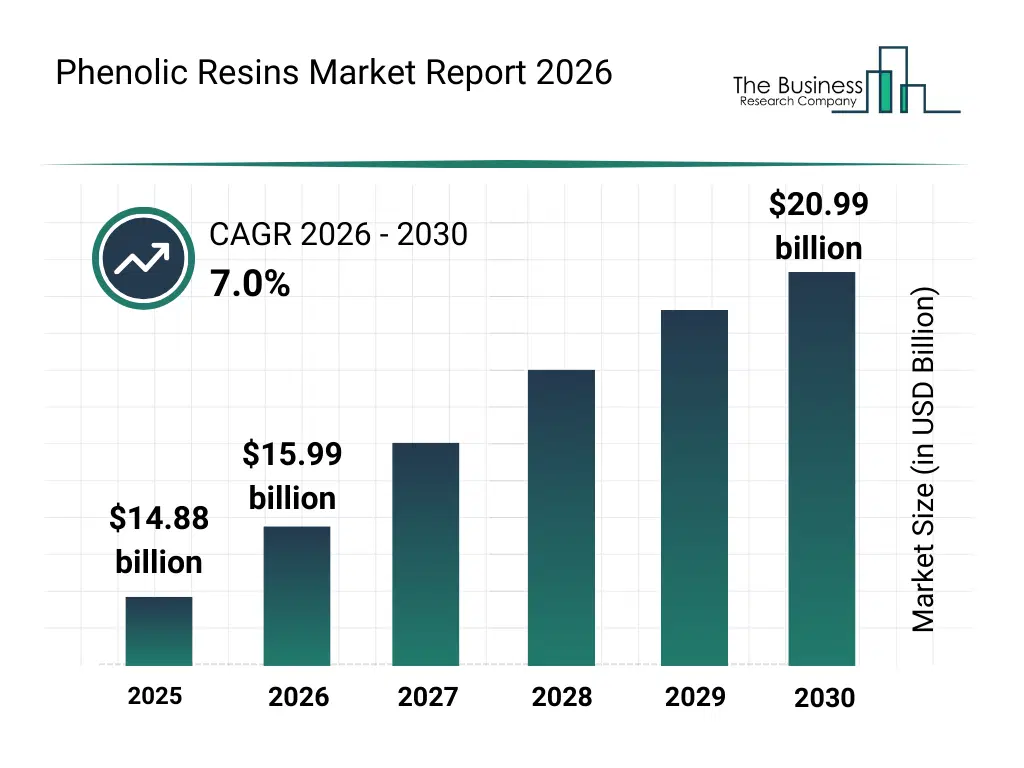
What Is The Phenolic Resins Market Size and Share 2026?
The phenolic resins market size has grown strongly in recent years. It will grow from $14.88 billion in 2025 to $15.99 billion in 2026 at a compound annual growth rate (CAGR) of 7.5%. The growth in the historic period can be attributed to expansion of automotive component manufacturing, growth of construction and insulation materials, rising use in electrical laminates, increasing demand for durable adhesives, availability of cost-effective phenolic formulations.What Is The Phenolic Resins Market Growth Forecast?
The phenolic resins market size is expected to see strong growth in the next few years. It will grow to $20.99 billion in 2030 at a compound annual growth rate (CAGR) of 7.0%. The growth in the forecast period can be attributed to increasing adoption in electric vehicle components, rising demand for sustainable resin alternatives, expansion of electronics manufacturing, growing investments in high-temperature resistant materials, increasing focus on circular material solutions. Major trends in the forecast period include increasing use of high-performance thermoset resins, rising adoption in automotive lightweighting applications, growing demand for flame-retardant materials, expansion of phenolic resins in electrical insulation, enhanced focus on recyclable thermoset materials.
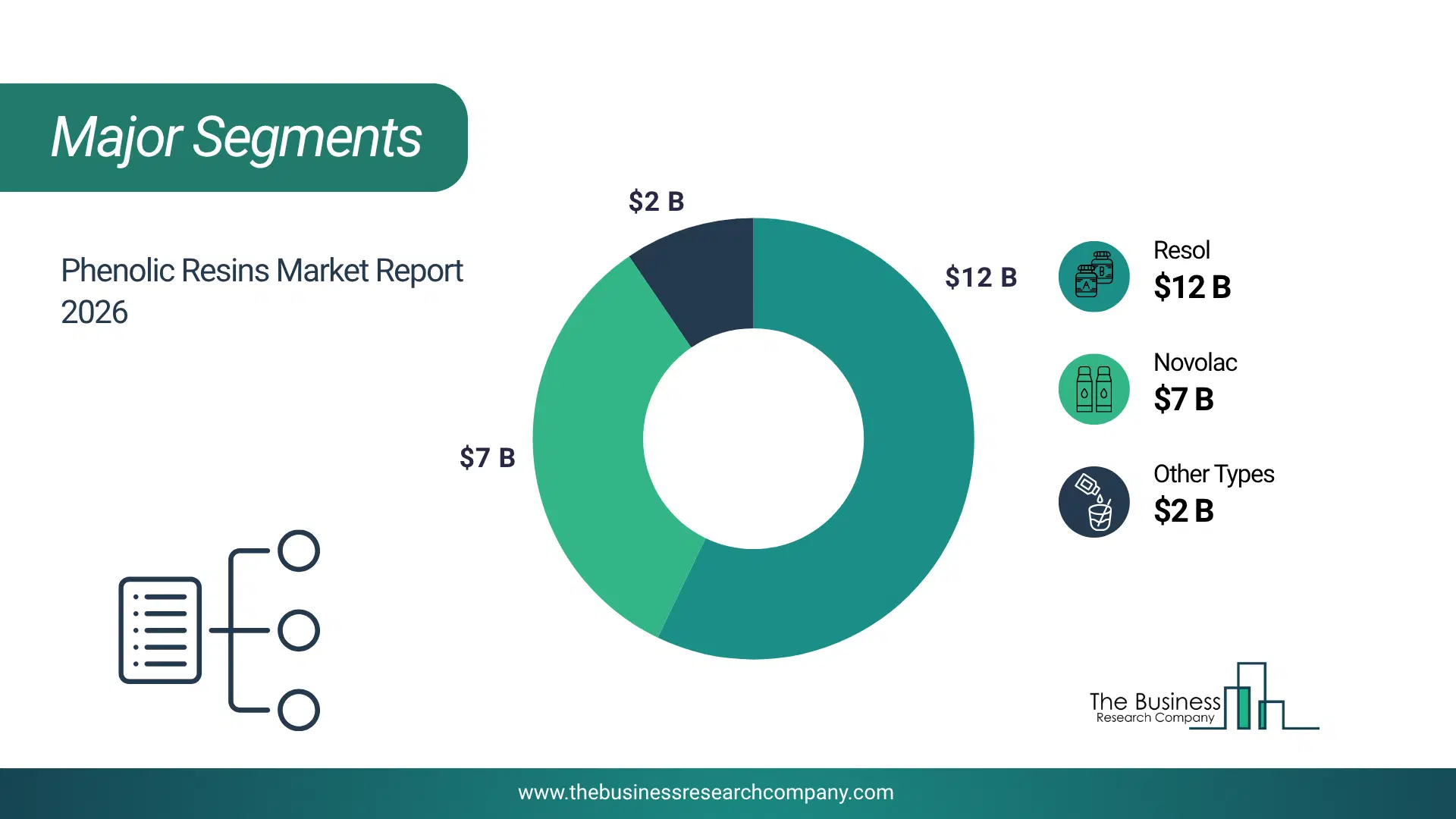
Global Phenolic Resins Market Segmentation
1) By Type: Resol, Novolac, Other Types 2) By Application: Wood Adhesives, Molding, Insulation, Laminates, Paper Impregnation, Friction Materials, Refractory Materials, Other Applications 3) By End-User: Building and Construction, Furniture, Automotive, Electrical and Electronics, Other End Users Subsegments: 1) By Resol: Low-Viscosity Resol Resins, High-Viscosity Resol Resins 2) By Novolac: Liquid Novolac Resins, Solid Novolac Resins, Thermosetting Novolac Resins 3) By Other Types: Modified Phenolic Resins, Bakelite Resins, Phenolic Foam Resins The top segments in the phenolic resins market will be: • Resol will reach $11.97 Billion by 2030. • Novolac will reach $7.42 Billion by 2030. • Other Types will reach $1.64 Billion by 2030.What Is The Driver Of The Phenolic Resins Market?
The growing need for lightweight, eco-friendly synthetic structures in the automotive industry is driving the phenolic resin market going forward. The automotive industry is concerned with designing, manufacturing, distributing, and sales of automobiles. Automotive manufacturers are constantly using lightweight materials to improve fuel efficiency. Phenolic resins are used in the manufacturing of lightweight tires, brake pedals, and other under-the-hood automotive parts. For instance, in January 2024, according to the U.S. Department of Energy, a US-based government agency, in December 2023, plug-in electric vehicles accounted for 9.8% of all light-duty vehicle sales, up from 7.8% in December 2022. Throughout 2023, plug-in vehicles consistently made up at least 8% of monthly sales, whereas in 2022 their share ranged between 5.5% and 7.8%. Therefore, the growth of lightweight materials in the automotive industry is propelling the phenolic resin industry.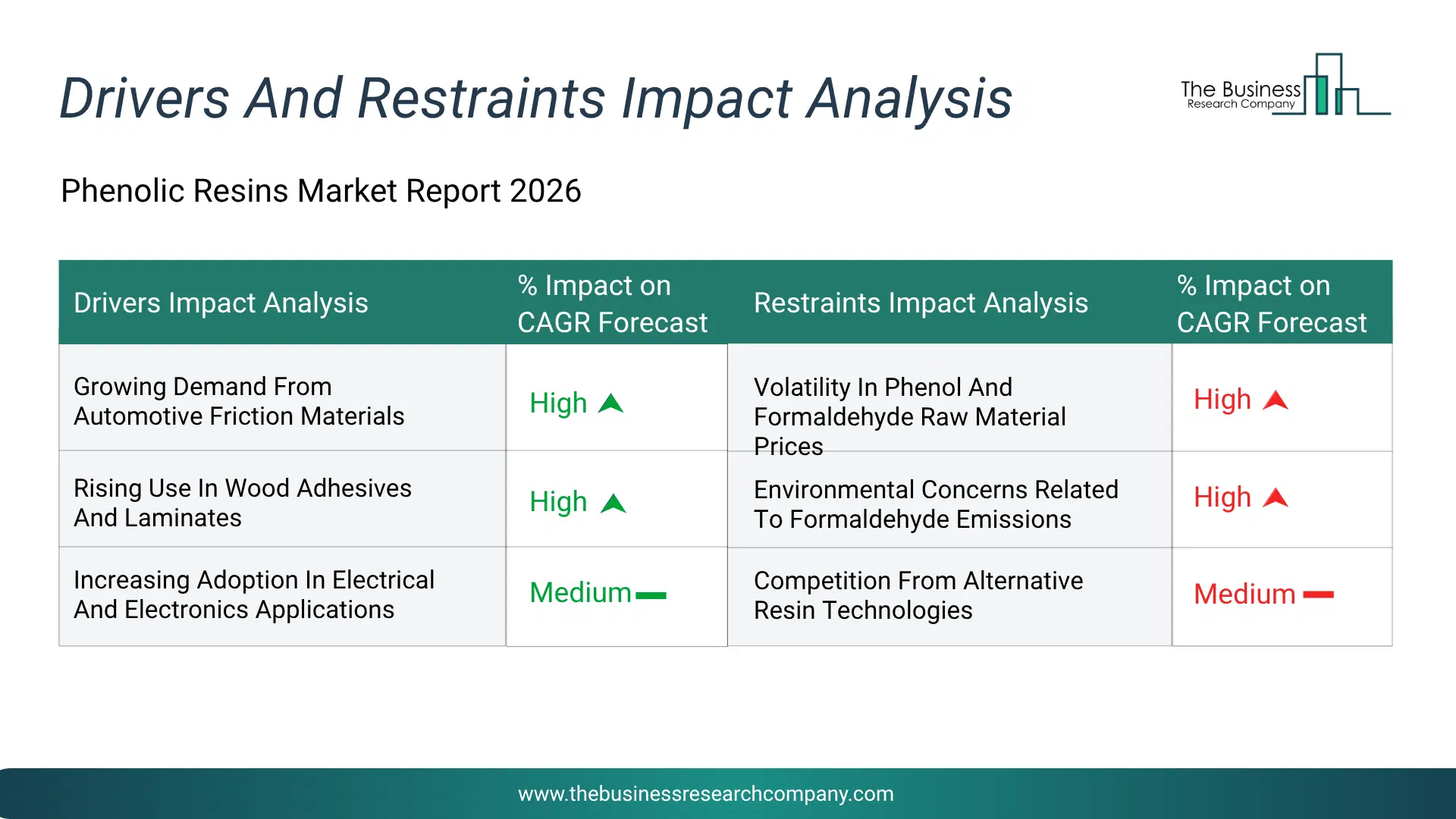
Infographic Chart Showing Key Market Drivers Analysis And Restraints For Phenolic Resins Market
The chart presents an impact analysis of key drivers and restraints, quantifying their relative influence on the market's growth rate and helping assess the balance between growth enablers and limiting factors. This chart offers a high-level perspective; the full report contains more detailed insights.
How Will The Drivers Impact Growth In The Global Phenolic Resins Market?
• Growing Demand From Automotive Friction Materials (High) – During the forecast period, the growing demand from automotive friction materials is expected to become a key growth driver for the phenolic resins market by 2030. Phenolic resins are widely used in brake pads, clutch facings, and other friction materials due to their excellent heat resistance, mechanical strength, and durability. Rising vehicle production and increasing replacement demand in the automotive aftermarket are boosting the consumption of phenolic resin-based friction products. Additionally, the shift toward high-performance and commercial vehicles further supports market growth. • Rising Use In Wood Adhesives And Laminates (High) – During the forecast period, the rising use in wood adhesives and laminates is expected to emerge as a major factor driving the expansion of the phenolic resins market by 2030. Phenolic resins are extensively used in plywood, particleboard, oriented strand board (OSB), and decorative laminates because of their strong bonding properties and moisture resistance. Growing construction activities, urbanization, and increasing demand for engineered wood products are accelerating their adoption. Their ability to enhance durability and structural integrity makes them essential in residential and commercial applications. • Increasing Adoption In Electrical And Electronics Applications (Medium) – During the forecast period, the increasing adoption in electrical and electronics applications is expected to act as a key growth catalyst for the phenolic resins market by 2030. Phenolic resins offer excellent electrical insulation, flame resistance, and thermal stability, making them suitable for circuit boards, switches, connectors, and electronic components. The growing demand for consumer electronics, industrial equipment, and electrical infrastructure is creating new opportunities for resin manufacturers. Continuous advancements in electronic devices further support market expansion.How Will The Restraints Impact Growth In The Global Phenolic Resins Market?
• Volatility In Phenol And Formaldehyde Raw Material Prices (High) – During the forecast period, the volatility in phenol and formaldehyde raw material prices is expected to act as a major restraint for the phenolic resins market. These key feedstocks are closely linked to crude oil and petrochemical market fluctuations, leading to unpredictable production costs. Price instability affects manufacturers' profit margins and makes long-term procurement planning difficult. Smaller players are particularly vulnerable to such fluctuations, which can limit investment and market growth. • Environmental Concerns Related To Formaldehyde Emissions (High) – During the forecast period, environmental concerns related to formaldehyde emissions are expected to restrain the phenolic resins market by increasing regulatory pressure on manufacturers. Governments across various regions are implementing stricter standards regarding volatile organic compounds (VOCs) and hazardous emissions. Compliance with these regulations requires investments in cleaner technologies and low-emission formulations. This increases production costs and may limit adoption in environmentally sensitive applications. • Competition From Alternative Resin Technologies (Medium) – During the forecast period, competition from alternative resin technologies is expected to act as a restraint on the phenolic resins market. Materials such as epoxy resins, polyurethane resins, melamine resins, and advanced thermoplastics are gaining popularity due to their enhanced performance characteristics in specific applications. End users often evaluate alternatives based on cost, weight, processing efficiency, and environmental profile. The growing availability of substitute materials can reduce the market share of phenolic resins in certain end-use industries.Key Players In The Global Phenolic Resins Market
Major companies operating in the phenolic resins market are Hexion Inc., Sumitomo Bakelite Co., Ltd., SI Group Inc., BASF SE, DIC Corporation, Kolon Industries, Georgia‑Pacific Chemicals, Aica Kogyo Co., Ltd., Jinan Shengquan Group Co., Ltd., Shandong Laiwu Runda New Material Co., Ltd., Prefere Resins GmbH, Metadynea International GmbH, Chang Chun Group, Sbhpp (Shanghai BHH Phenolic Polymers?), Plenco LLC, UCP Chemicals AG, Lerg SA, Mitsui Chemicals, Inc., Ashland Global Holdings Inc., Changshu South‑East Plastic Co., Ltd., Allnex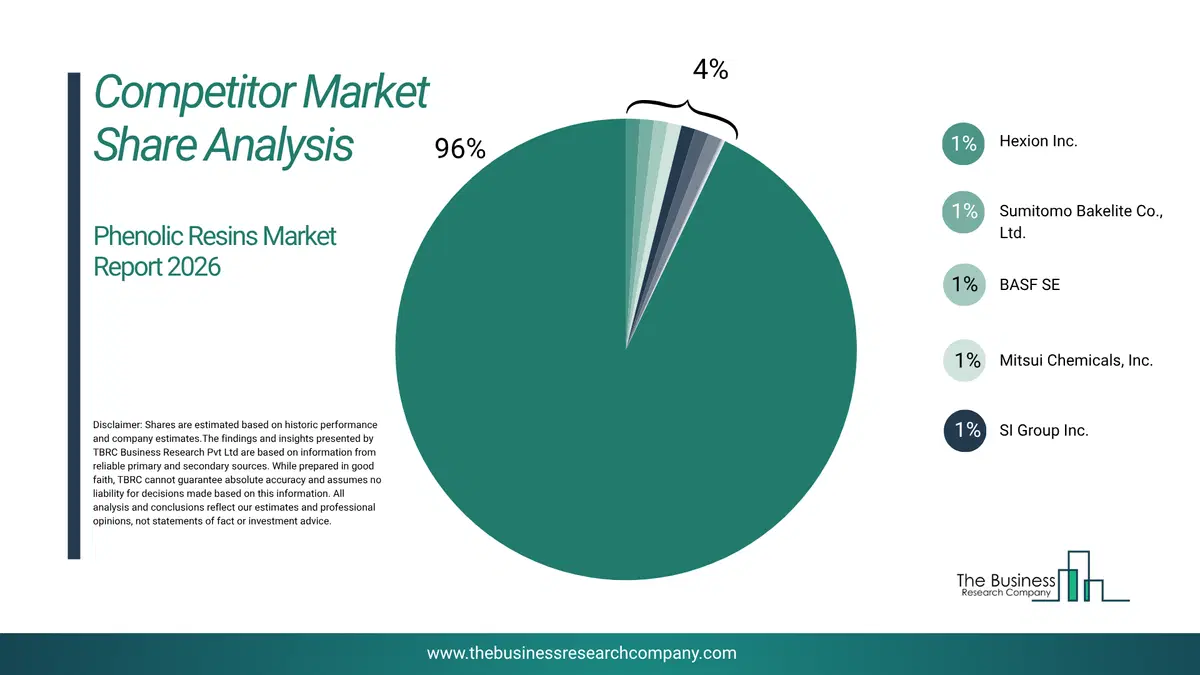
This chart is for illustrative purposes; the full report includes a detailed competitor analysis and comprehensive overview of the top 10 companies in the market.
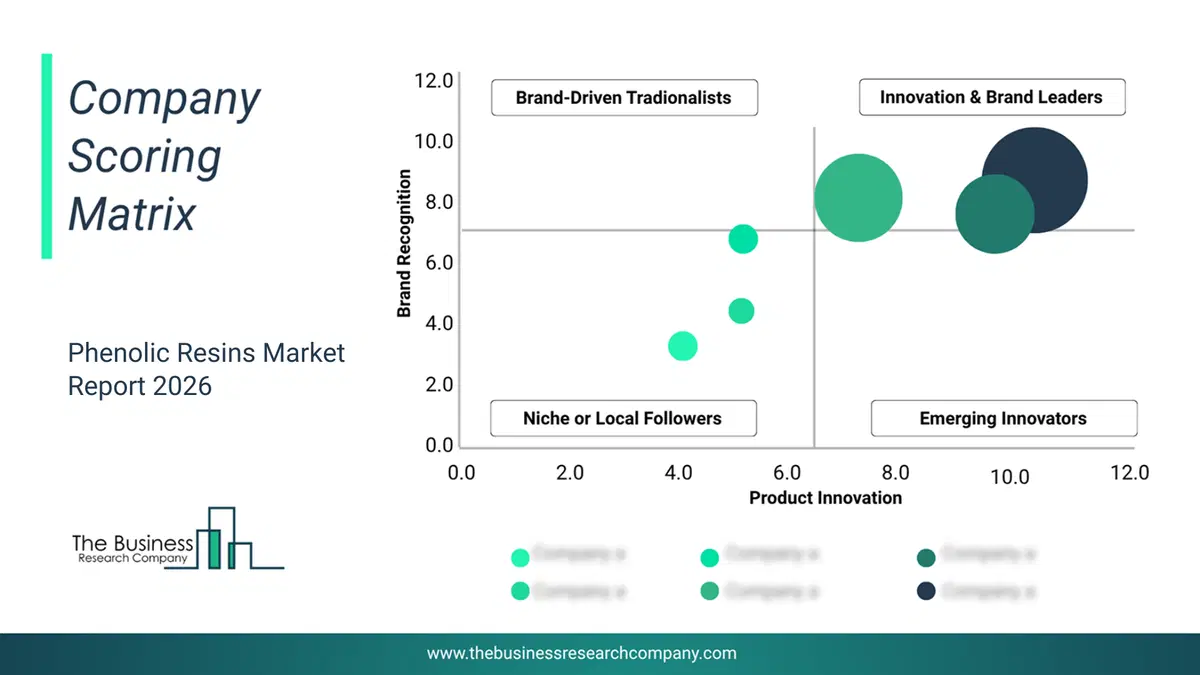
This chart maps companies by product innovation and brand strength, with bubble size indicating relative revenue, helping identify market leaders, challengers, and niche players. This is an illustrative chart; the full report provides a complete and accurate competitive analysis.
Global Phenolic Resins Market Trends and Insights
Major companies operating in the phenolic resins market are focusing on developing advanced solutions such as bio-circular epoxy resin systems to enhance environmental sustainability and reduce carbon footprint across resin-based applications. A bio circular epoxy resin system uses renewable or mass-balanced raw materials, safer chemical compositions, and waterborne or low VOC formulations to deliver the performance of traditional resins with lower environmental impact. For instance, in March 2025, Westlake Epoxy, a U.S.-based resin and epoxy manufacturer, launched EpoVIVE, a new portfolio featuring bio-circular and low-emission epoxy phenolic resins and curing agents. The EpoVIVE portfolio offers a lower carbon footprint through ISCC PLUS mass-balanced renewable raw materials, energy-efficient production, waterborne low-VOC dispersions, and safer, SVHC-free, and CMR-free materials. The suite includes resin grades such as EPIKOTE 901 and 902 and solvent-free AQUAREOUS systems suitable for flooring coatings, concrete or metal coatings, and high-performance adhesives. The portfolio supports circular economy practices with formulations designed for reuse, recycling, or repurposing, enabling industries such as automotive, aerospace, coatings, composites, and construction to meet sustainability goals without sacrificing performance.What Are Latest Mergers And Acquisitions In The Phenolic Resins Market?
In January 2024, Shrieve Chemical Company, a US-based value-added chemicals distributor, acquired TLC Ingredients for an undisclosed amount. With this acquisition, Shrieve aimed to expand its geographic footprint in the U.S. Midwest and strengthen its offerings in the growing food ingredients and specialty chemicals markets by integrating TLC’s established distribution network and product lines. TLC Ingredients is a US-based distributor of food ingredients, industrial chemicals, and phenolic resins supplying a broad portfolio of chemicals for food, industrial, and specialty resin applications.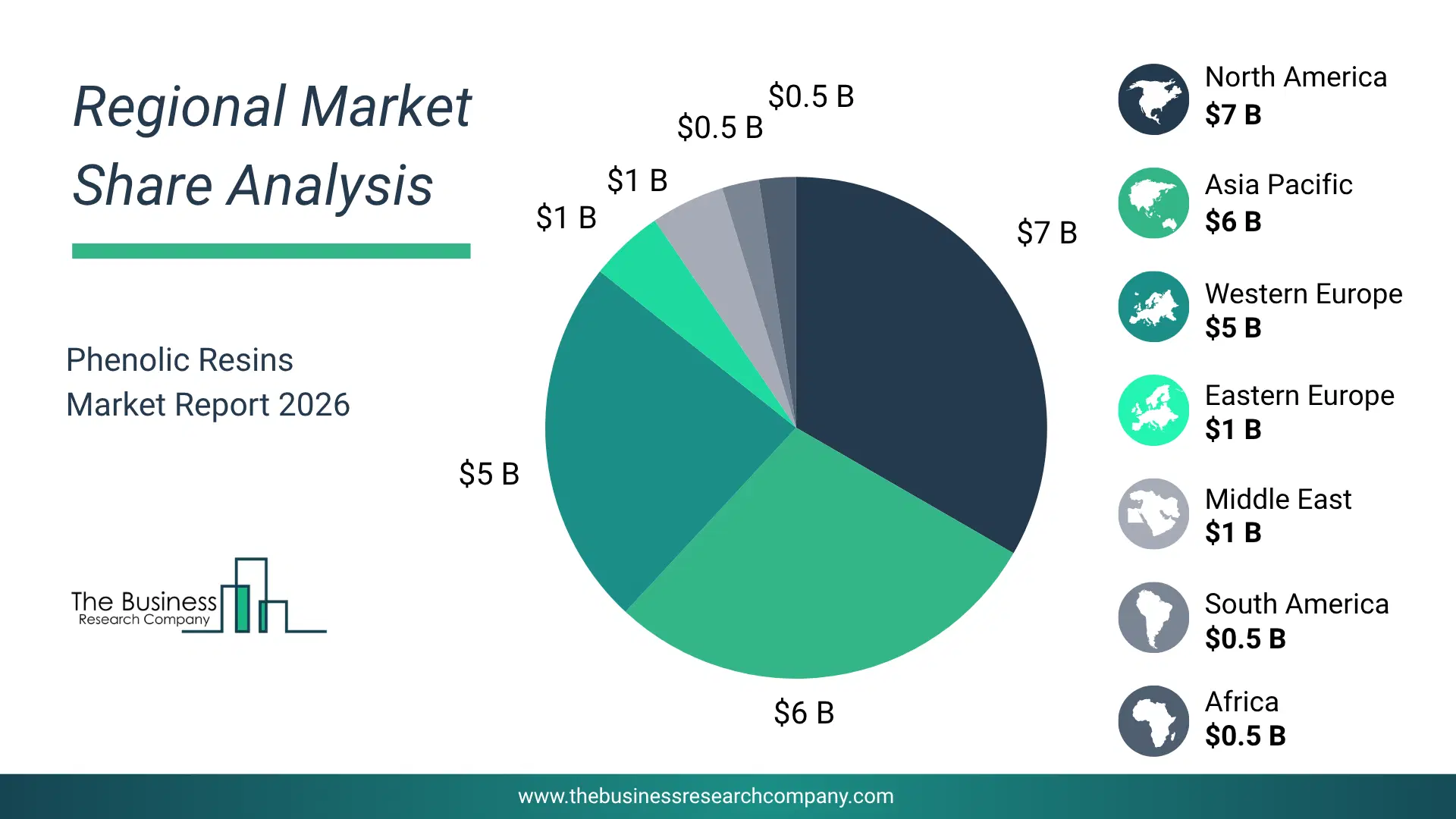
Regional Insights
North America was the largest region in the phenolic resins market in 2025. Asia-Pacific is expected to be the fastest-growing region in the forecast period. The regions covered in this market report are Asia-Pacific, South East Asia, Western Europe, Eastern Europe, North America, South America, Middle East, Africa The countries covered in this market report are Australia, Brazil, China, France, Germany, India, Indonesia, Japan, Taiwan, Russia, South Korea, UK, USA, Canada, Italy, SpainWhat Defines the Phenolic Resins Market?
The phenolic resins market consists of sales of modified resin, solid resoles and liquid resoles. Values in this market are ‘factory gate’ values, that is the value of goods sold by the manufacturers or creators of the goods, whether to other entities (including downstream manufacturers, wholesalers, distributors, and retailers) or directly to end customers. The value of goods in this market includes related services sold by the creators of the goods.How is Market Value Defined and Measured?
The market value is defined as the revenues that enterprises gain from the sale of goods and/or services within the specified market and geography through sales, grants, or donations in terms of the currency (in USD unless otherwise specified). The revenues for a specified geography are consumption values that are revenues generated by organizations in the specified geography within the market, irrespective of where they are produced. It does not include revenues from resales along the supply chain, either further along the supply chain or as part of other products.
This chart presents market attractiveness based on a quantitative evaluation of growth, competition, strategic alignment, and risk, offering a clear view of opportunity areas for decision-making. This chart is for illustrative purposes; the full report contains the complete analysis.

This chart highlights the Total Addressable Market (TAM) by estimating the maximum revenue opportunity using an assumption-driven approach, supporting strategic planning and opportunity sizing across markets. The chart is illustrative; the full report provides a more comprehensive analysis.
What Key Data and Analysis Are Included in the Phenolic Resins Market Report 2026?
The phenolic resins market research report is one of a series of new reports from The Business Research Company that provides market statistics, including industry global market size, regional shares, competitors with the market share, detailed market segments, market trends and opportunities, and any further data you may need to thrive in the phenolic resins industry. The market research report delivers a complete perspective of everything you need, with an in-depth analysis of the current and future state of the industry.Phenolic Resins Market Report Forecast Analysis
| Report Attribute | Details |
|---|---|
| Market Size Value In 2026 | $15.99 billion |
| Revenue Forecast In 2030 | $20.99 billion |
| Growth Rate | CAGR of 7.5% from 2026 to 2030 |
| Base Year For Estimation | 2025 |
| Actual Estimates/Historical Data | 2020-2025 |
| Forecast Period | 2026 - 2030 |
| Market Representation | Revenue in USD Billion and CAGR from 2026 to 2030 |
| Segments Covered | Type, Application, End-User |
| Regional Scope | Asia-Pacific, Western Europe, Eastern Europe, North America, South America, Middle East, Africa |
| Country Scope | The countries covered in the report are Australia, Brazil, China, France, Germany, India, Indonesia, Japan, Taiwan, Russia, South Korea, UK, USA, Canada, Italy, Spain. |
| Key Companies Profiled | Hexion Inc., Sumitomo Bakelite Co., Ltd., SI Group Inc., BASF SE, DIC Corporation, Kolon Industries, Georgia‑Pacific Chemicals, Aica Kogyo Co., Ltd., Jinan Shengquan Group Co., Ltd., Shandong Laiwu Runda New Material Co., Ltd., Prefere Resins GmbH, Metadynea International GmbH, Chang Chun Group, Sbhpp (Shanghai BHH Phenolic Polymers?), Plenco LLC, UCP Chemicals AG, Lerg SA, Mitsui Chemicals, Inc., Ashland Global Holdings Inc., Changshu South‑East Plastic Co., Ltd., Allnex |
| Customization Scope | Request for Customization |
| Pricing And Purchase Options | Explore Purchase Options |