
Phosphoinositide 3-Kinase (PI3K) Inhibitors Market Report 2026
Global Outlook – By Type Of Inhibitor (Isoform Selective Inhibitors, Pan-Phosphoinositide 3-Kinase (PI3K) Inhibitors, Dual Phosphoinositide 3-Kinase (PI3K) Or Mechanistic Target Of Rapamycin (mTOR) Inhibitors, Novel Targeted Inhibitors), By Distribution Channel (Hospital Pharmacies, Retail Pharmacies, Online Pharmacies, Other Distribution Channel), By Application Areas (Cancer Treatment, Metabolic Disorders, Autoimmune Diseases, Neurological Disorders), By End User (Hospitals, Research Institutes, Pharmaceutical Companies, Contract Research Organizations (CROs)) – Market Size, Trends, Strategies, and Forecast to 2030
Phosphoinositide 3-Kinase (PI3K) Inhibitors Market Overview
• Phosphoinositide 3-Kinase (PI3K) Inhibitors market size has reached to $1.56 billion in 2025 • Expected to grow to $2.88 billion in 2030 at a compound annual growth rate (CAGR) of 13.1% • Growth Driver: The Rising Prevalence Of Cancer And Autoimmune Diseases Driving The Growth Of The Market Due To Increasing Demand For Targeted Treatments • Market Trend: Advancing PI3K Delta Inhibitor Therapy for Precision Immune Disorder Treatment • North America was the largest region in 2025 and Asia-Pacific is the fastest growing region.What Is Covered Under Phosphoinositide 3-Kinase (PI3K) Inhibitors Market?
Phosphoinositide 3-Kinase (PI3K) inhibitors are a class of drugs that target the PI3K enzyme, which plays a critical role in regulating cell growth, survival, and metabolism. These inhibitors help control abnormal cell division and tumor growth, making them helpful in treating various cancers such as breast cancer, leukemia, and lymphoma. PI3K inhibitors work by blocking signaling pathways that promote the survival and proliferation of cancer cells, ultimately helping to slow down or halt tumor progression. The main types of inhibitors in phosphoinositide 3-kinase (PI3K) inhibitors are isoform-selective inhibitors, pan-phosphoinositide 3-kinase (PI3K) inhibitors, dual phosphoinositide 3-kinase (PI3K) or mechanistic target of rapamycin (mTOR) inhibitors, and novel targeted inhibitors. Isoform-selective inhibitors are specialized compounds that selectively target and inhibit specific isoforms of an enzyme or protein, minimizing off-target effects and enhancing therapeutic precision. These are distributed through various channels, including hospital pharmacies, retail pharmacies, online pharmacies, and other distribution channels, having application areas in cancer treatment, metabolic disorders, autoimmune diseases, and neurological disorders for the end users such as hospitals, research institutes, pharmaceutical companies, and contract research organizations (CROs).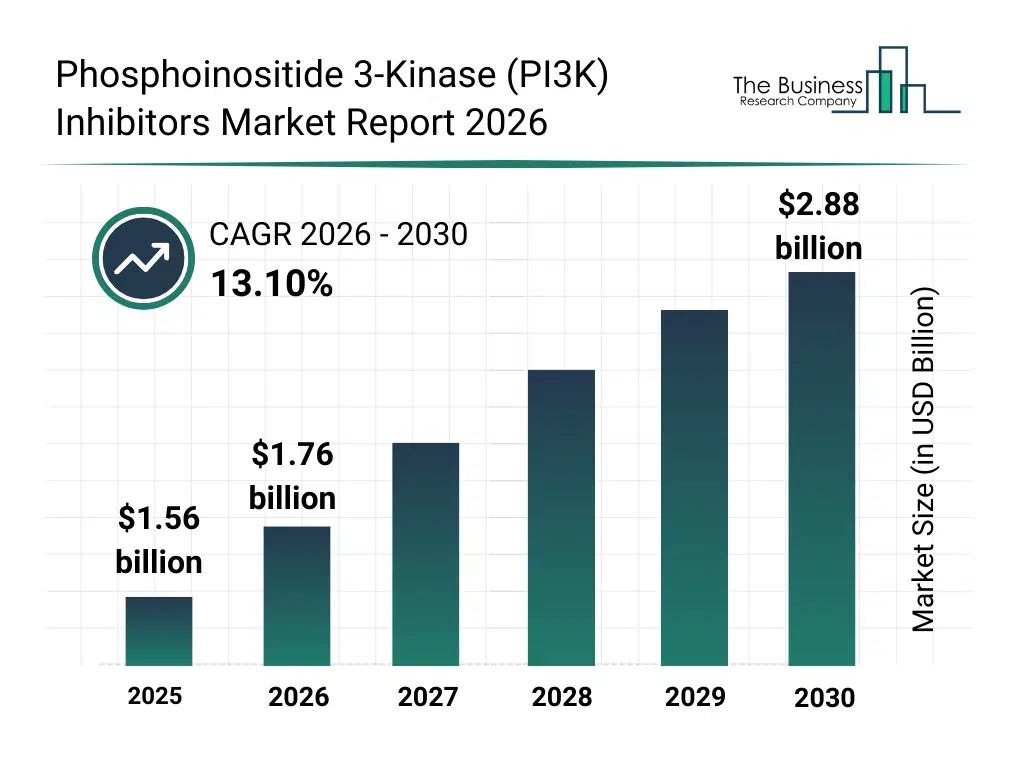
What Is The Phosphoinositide 3-Kinase (PI3K) Inhibitors Market Size and Share 2026?
The phosphoinositide 3-kinase (pi3k) inhibitors market size has grown rapidly in recent years. It will grow from $1.56 billion in 2025 to $1.76 billion in 2026 at a compound annual growth rate (CAGR) of 13.2%. The growth in the historic period can be attributed to rising cancer prevalence, approval of first-generation PI3K inhibitors, advances in molecular oncology, increased oncology R&D spending, unmet needs in hematologic malignancies.What Is The Phosphoinositide 3-Kinase (PI3K) Inhibitors Market Growth Forecast?
The phosphoinositide 3-kinase (pi3k) inhibitors market size is expected to see rapid growth in the next few years. It will grow to $2.88 billion in 2030 at a compound annual growth rate (CAGR) of 13.1%. The growth in the forecast period can be attributed to next-generation PI3K pipeline growth, expansion into autoimmune indications, improved safety profiles, personalized oncology adoption, rising combination therapy trials. Major trends in the forecast period include expansion of targeted cancer therapies, rising development of isoform selective inhibitors, growing use of combination oncology regimens, increasing focus on biomarker-based patient selection, shift toward oral targeted therapies.
Global Phosphoinositide 3-Kinase (PI3K) Inhibitors Market Segmentation
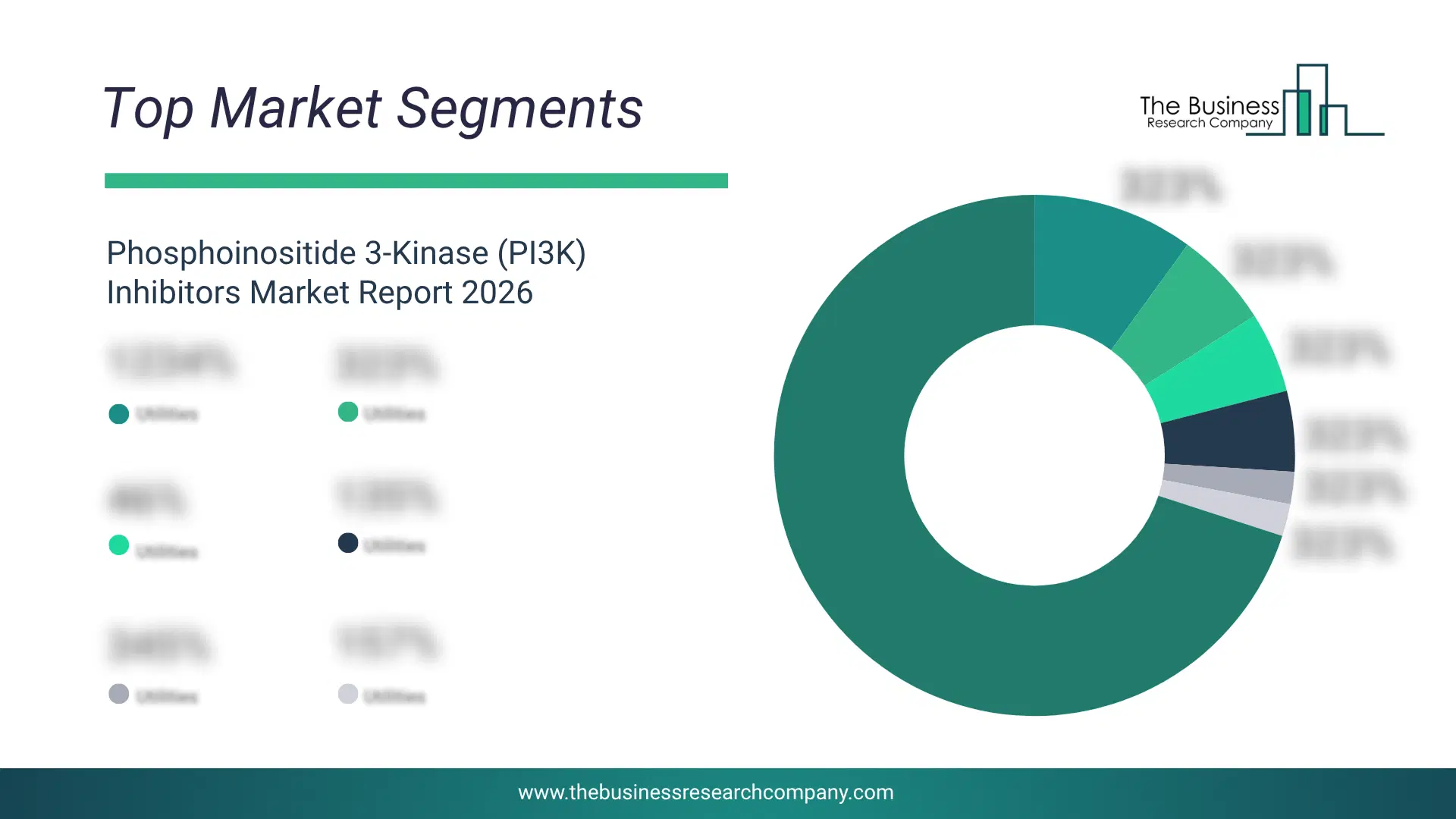
1) By Type Of Inhibitor: Isoform Selective Inhibitors, Pan-Phosphoinositide 3-Kinase (PI3K) Inhibitors, Dual Phosphoinositide 3-Kinase (PI3K) Or Mechanistic Target Of Rapamycin (mTOR) Inhibitors, Novel Targeted Inhibitors 2) By Distribution Channel: Hospital Pharmacies, Retail Pharmacies, Online Pharmacies, Other Distribution Channel 3) By Application Areas: Cancer Treatment, Metabolic Disorders, Autoimmune Diseases, Neurological Disorders 4) By End User: Hospitals, Research Institutes, Pharmaceutical Companies, Contract Research Organizations (CROs) Subsegments: 1) By Isoform Selective Inhibitors: Phosphoinositide 3-Kinase Alpha (PI3Kα), Phosphoinositide 3-Kinase Beta (PI3Kβ), Phosphoinositide 3-Kinase Delta (PI3Kδ), Phosphoinositide 3-Kinase Gamma (PI3Kγ) 2) By Pan-Phosphoinositide 3-Kinase (PI3K) Inhibitors: Class I Phosphoinositide 3-Kinase (PI3K), Non-Isoform Specific Phosphoinositide 3-Kinase (PI3K), Phosphoinositide 3-Kinase Kinase Domain 3) By Dual Phosphoinositide 3-Kinase (PI3K) Or Mechanistic Target of Rapamycin (mTOR) Inhibitors: Phosphoinositide 3-Kinase (PI3K) and Mechanistic Target of Rapamycin (mTOR) Inhibition, Adenosine Triphosphate-Competitive Dual Inhibitors, Allosteric Dual Inhibitors 4) By Novel Targeted Inhibitors: Next-Generation Phosphoinositide 3-Kinase, Targeting Mutant Phosphoinositide 3-Kinase Isoforms, Combination TherapiesWhat Is The Driver Of The Phosphoinositide 3-Kinase (PI3K) Inhibitors Market?
The increasing prevalence of cancer and autoimmune diseases is expected to propel the growth of the phosphoinositide 3-kinase (PI3K) inhibitors market going forward. Cancer is a group of diseases characterized by uncontrolled cell growth and proliferation, whereas autoimmune diseases arise when the body's immune system mistakenly attacks its healthy tissues, leading to chronic inflammation and tissue damage. The increasing prevalence of cancer and autoimmune diseases is due to increasing genetic predisposition, which leads to accumulated genetic mutations and immune system dysregulation over time. Phosphoinositide 3-kinase (PI3K) inhibitors play a pivotal role in addressing the rising incidence of these diseases by targeting aberrant PI3K signaling, which is implicated in tumor progression and immune dysfunction, thereby offering therapeutic benefits through precision medicine approaches that enhance treatment efficacy and patient outcomes. For instance, in May 2025, according to the National Cancer Institute, a US-based government agency, the number of cancer survivors in the United States was 18.1 million in 2022 and is projected to rise to 22.5 million by 2032, with an estimated 40.5% of the population expected to receive a cancer diagnosis in their lifetime. Therefore, the increasing prevalence of cancer and autoimmune diseases drives the growth of the Phosphoinositide 3-Kinase (PI3K) Inhibitors industry.Key Players In The Global Phosphoinositide 3-Kinase (PI3K) Inhibitors Market
Major companies operating in the phosphoinositide 3-kinase (pi3k) inhibitors market are Novartis AG, Gilead Sciences Inc., TG Therapeutics Inc., Verastem Oncology Inc., Bayer AG, AstraZeneca PLC, Pfizer Inc., AbbVie Inc., F. Hoffmann-La Roche Ltd, Genentech Inc., Takeda Pharmaceutical Company Limited, Incyte Corporation, Boehringer Ingelheim, Sanofi S.A., Bristol Myers Squibb, Eli Lilly and Company, Merck KGaA, Relay Therapeutics Inc., Ideaya Biosciences Inc., BeiGene Ltd.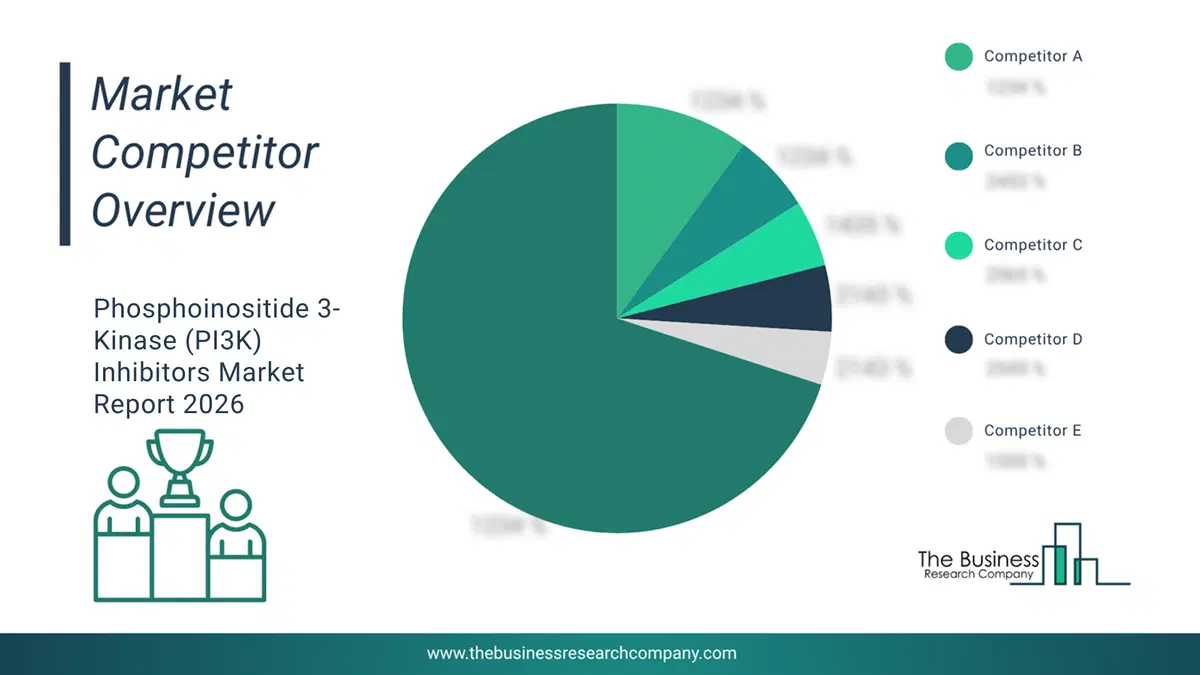
This chart is for illustrative purposes; the full report includes a detailed competitor analysis and comprehensive overview of the top 10 companies in the market.
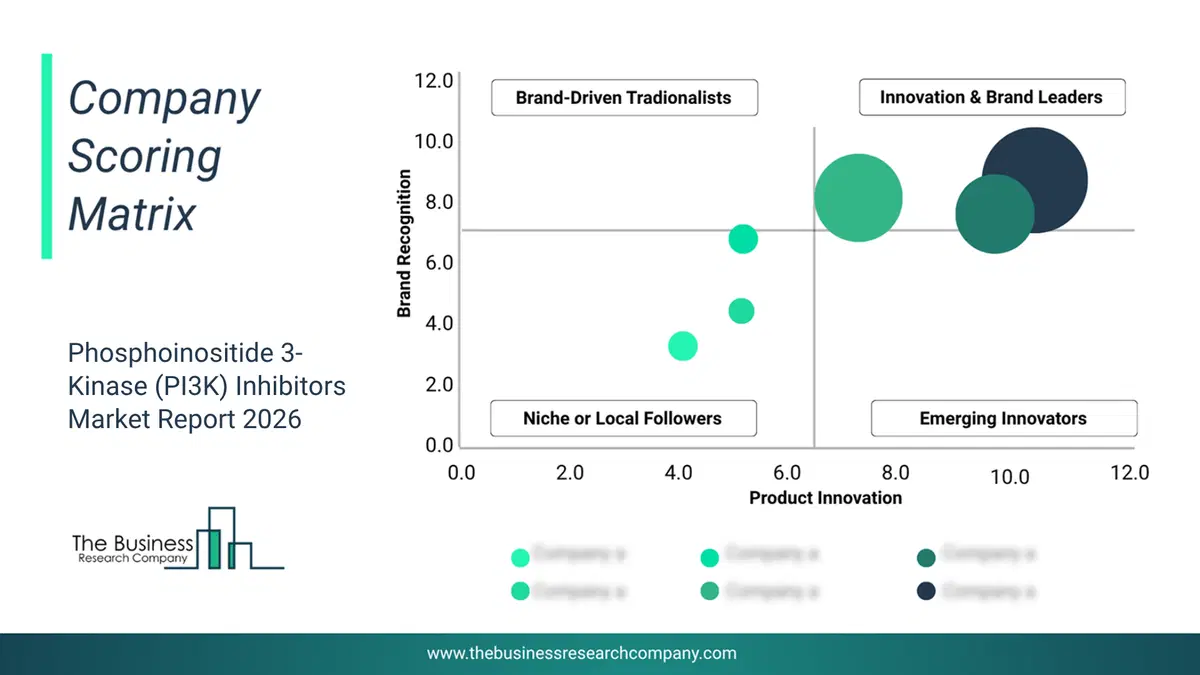
This chart maps companies by product innovation and brand strength, with bubble size indicating relative revenue, helping identify market leaders, challengers, and niche players. This is an illustrative chart; the full report provides a complete and accurate competitive analysis.
Global Phosphoinositide 3-Kinase (PI3K) Inhibitors Market Trends and Insights
Major companies in the phosphoinositide 3-kinase (PI3K) inhibitors market are focusing on developing innovative solutions, such as PI3K delta inhibitor therapies, to provide a targeted treatment option for conditions associated with dysregulated phosphoinositide 3-kinase (PI3K) signaling. Phosphoinositide 3-kinase (PI3K) delta inhibitor therapy is a targeted treatment that blocks the PI3K delta enzyme, which plays a key role in immune cell signaling, to reduce inflammation, autoimmune responses, and certain blood cancers. For instance, in March 2023, the United States Food and Drug Administration (FDA), a US-based government regulatory agency, announced the approval of Joenja (leniolisib) as the first treatment for activated phosphoinositide 3-kinase delta syndrome (APDS) in patients aged 12 years and older. This approval marked a significant milestone in targeted therapies by introducing a precision medicine approach to address immune dysfunction caused by genetic mutations in the PIK3CD or PIK3R1 genes. The launch of Joenja (leniolisib) not only expands the clinical applications of phosphoinositide 3-kinase (PI3K) inhibitors beyond oncology but also underscores the growing focus on personalized treatments for rare immunological disorders.What Are Latest Mergers And Acquisitions In The Phosphoinositide 3-Kinase (PI3K) Inhibitors Market?
In October 2024, OnKure Therapeutics, a US-based biopharmaceutical company, merged with Reneo Pharmaceuticals for an undisclosed amount. This deal aims to establish a clinical-stage biopharmaceutical company focused on advancing novel precision medicines in oncology, particularly mutant-selective phosphoinositide 3-kinase alpha (PI3Kα) inhibitors, while securing substantial financial resources to support multiple clinical milestones and sustain operations for long-term development. Reneo Pharmaceuticals, Inc. is a US-based clinical-stage pharmaceutical company that develops therapies for patients with rare genetic mitochondrial diseases.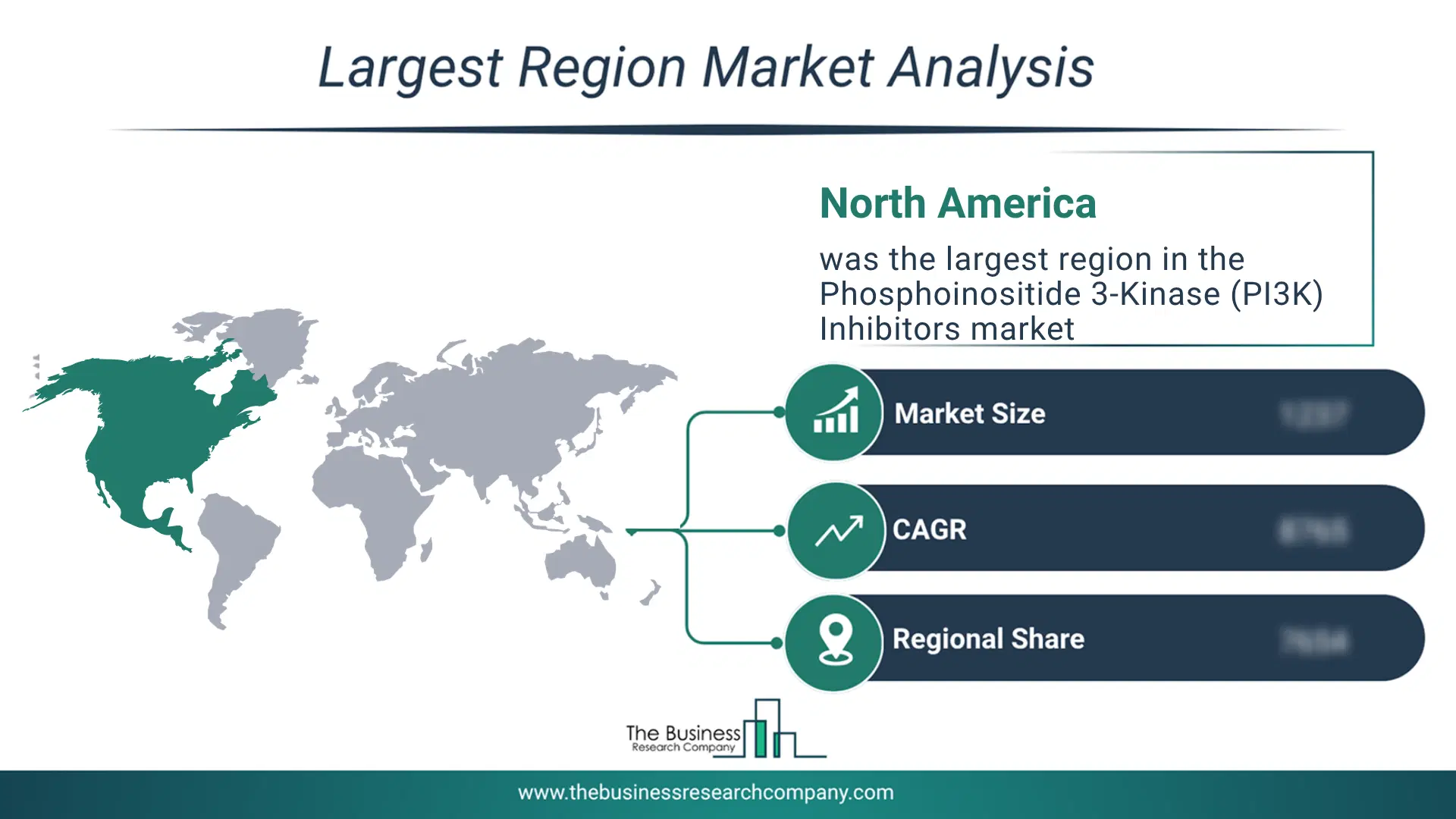
Regional Insights
North America was the largest region in the phosphoinositide 3-kinase (PI3K) inhibitors market in 2025. Asia-Pacific is expected to be the fastest-growing region in the forecast period. The regions covered in this market report are Asia-Pacific, South East Asia, Western Europe, Eastern Europe, North America, South America, Middle East, Africa. The countries covered in this market report are Australia, Brazil, China, France, Germany, India, Indonesia, Japan, Taiwan, Russia, South Korea, UK, USA, Canada, Italy, Spain.What Defines the Phosphoinositide 3-Kinase (PI3K) Inhibitors Market?
The phosphoinositide 3-kinase (PI3K) inhibitors market consists of sales of oral formulations, intravenous injections, and combination therapies. Values in this market are ‘factory gate’ values, that is, the value of goods sold by the manufacturers or creators of the goods, whether to other entities (including downstream manufacturers, wholesalers, distributors, and retailers) or directly to end customers. The value of goods in this market includes related services sold by the creators of the goods.How is Market Value Defined and Measured?
The market value is defined as the revenues that enterprises gain from the sale of goods and/or services within the specified market and geography through sales, grants, or donations in terms of the currency (in USD unless otherwise specified). The revenues for a specified geography are consumption values that are revenues generated by organizations in the specified geography within the market, irrespective of where they are produced. It does not include revenues from resales along the supply chain, either further along the supply chain or as part of other products.
This chart presents market attractiveness based on a quantitative evaluation of growth, competition, strategic alignment, and risk, offering a clear view of opportunity areas for decision-making. This chart is for illustrative purposes; the full report contains the complete analysis.

This chart highlights the Total Addressable Market (TAM) by estimating the maximum revenue opportunity using an assumption-driven approach, supporting strategic planning and opportunity sizing across markets. The chart is illustrative; the full report provides a more comprehensive analysis.
What Key Data and Analysis Are Included in the Phosphoinositide 3-Kinase (PI3K) Inhibitors Market Report 2026?
The phosphoinositide 3-kinase (pi3k) inhibitors market research report is one of a series of new reports from The Business Research Company that provides market statistics, including industry global market size, regional shares, competitors with the market share, detailed market segments, market trends and opportunities, and any further data you may need to thrive in the phosphoinositide 3-kinase (pi3k) inhibitors industry. The market research report delivers a complete perspective of everything you need, with an in-depth analysis of the current and future state of the industry.Phosphoinositide 3-Kinase (PI3K) Inhibitors Market Report Forecast Analysis
| Report Attribute | Details |
|---|---|
| Market Size Value In 2026 | $1.76 billion |
| Revenue Forecast In 2030 | $2.88 billion |
| Growth Rate | CAGR of 13.2% from 2026 to 2030 |
| Base Year For Estimation | 2025 |
| Actual Estimates/Historical Data | 2020-2025 |
| Forecast Period | 2026 - 2030 |
| Market Representation | Revenue in USD Billion and CAGR from 2026 to 2030 |
| Segments Covered | Type Of Inhibitor, Distribution Channel, Application Areas, End User |
| Regional Scope | Asia-Pacific, Western Europe, Eastern Europe, North America, South America, Middle East, Africa |
| Country Scope | The countries covered in the report are Australia, Brazil, China, France, Germany, India, Indonesia, Japan, Taiwan, Russia, South Korea, UK, USA, Canada, Italy, Spain. |
| Key Companies Profiled | Novartis AG, Gilead Sciences Inc., TG Therapeutics Inc., Verastem Oncology Inc., Bayer AG, AstraZeneca PLC, Pfizer Inc., AbbVie Inc., F. Hoffmann-La Roche Ltd, Genentech Inc., Takeda Pharmaceutical Company Limited, Incyte Corporation, Boehringer Ingelheim, Sanofi S.A., Bristol Myers Squibb, Eli Lilly and Company, Merck KGaA, Relay Therapeutics Inc., Ideaya Biosciences Inc., BeiGene Ltd. |
| Customization Scope | Request for Customization |
| Pricing And Purchase Options | Explore Purchase Options |