
Physical Access Control System Market Report 2026
Global Outlook – By Component ( Hardware, Software, Services ), By Technology ( Keypads-based PACs, Card-based PACs, Biometric PACs), By End User ( Banking, Financial Services and Insurance (BFSI), Healthcare, Manufacturing, Services, Communication and Media, Retail and Other Corporate, Transportation and Utilities, Other End Users) – Market Size, Trends, Strategies, and Forecast to 2030
Physical Access Control System Market Overview
• Physical Access Control System market size has reached to $10.81 billion in 2025 • Expected to grow to $18.51 billion in 2030 at a compound annual growth rate (CAGR) of 11.4% • Growth Driver: Surging Adoption Of Electronic Security Systems Drives Growth In The Physical Access Control System Market • Market Trend: Technological Advancements In Access Control Solutions Enhance Security, Connectivity, And Operational Efficiency In Physical Security Systems • North America was the largest region in 2025.Market Gains By 2030 – Top Opportunities By Segment
Market Gain identifies the most promising market opportunities by highlighting the segments or products expected to generate the highest incremental revenue growth over the next five years.
What Is Covered Under Physical Access Control System Market?
Physical access control systems are electronic systems and services that limit the ability of individuals or vehicles to enter a protected area by authenticating and authorizing them at access control points. It allows employees and contractors who work or visit a location to gain access by electronically confirming their PIV credentials. The main components of physical access control system are hardware, software, and services. Hardware is a physical component of a computer system that includes the circuit board, integrated circuits (ICs), and other devices. It is used to store and run the written instructions provided by the software of physical access control system. The different technology include keypads-based PACS, card-based PACS, biometric PACS, that are used by BFSI, healthcare, manufacturing, services, communication and media, retail and other corporate, transportation and utilities, other sectors.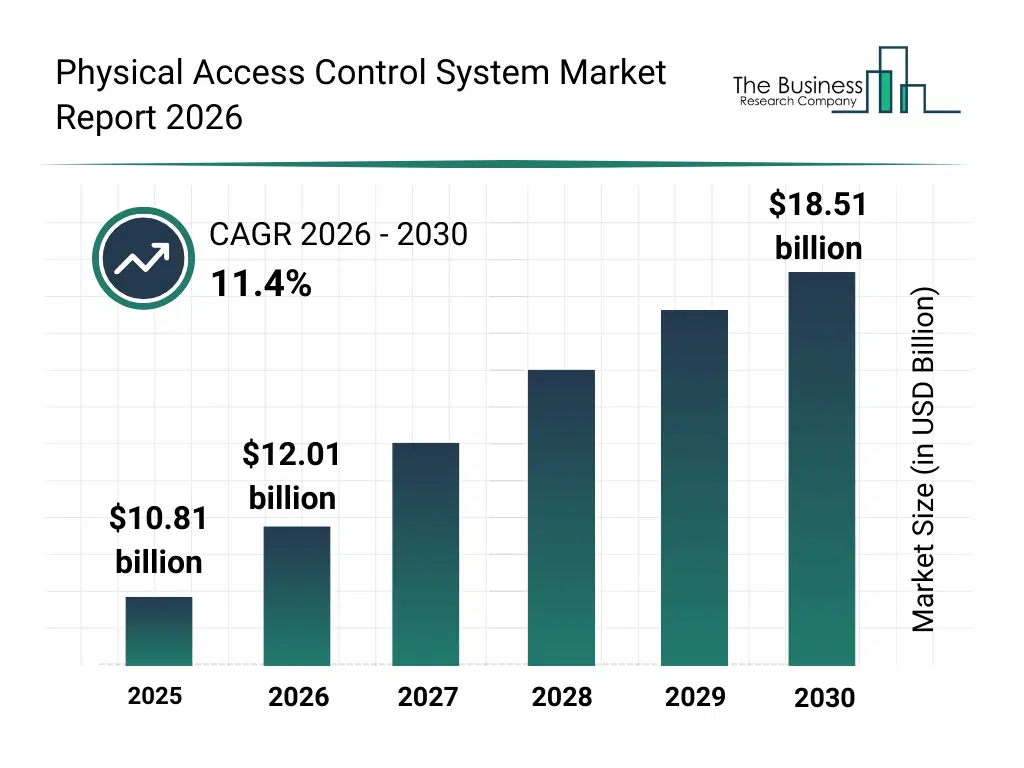
What Is The Physical Access Control System Market Size 2026 And Growth Rate?
The physical access control system market size has grown rapidly in recent years. It will grow from $10.81 billion in 2025 to $12.01 billion in 2026 at a compound annual growth rate (CAGR) of 11.1%. The growth in the historic period can be attributed to rise in commercial security needs, growth in enterprise digitalization, increasing deployment in critical infrastructure, expansion of corporate offices, rise in identity fraud prevention measures.What Is The Physical Access Control System Market Growth Forecast?
The physical access control system market size is expected to see rapid growth in the next few years. It will grow to $18.51 billion in 2030 at a compound annual growth rate (CAGR) of 11.4%. The growth in the forecast period can be attributed to increasing demand for cloud access control, growth in biometric authentication adoption, rising regulatory emphasis on data security, expansion of smart building deployments, adoption of mobile based identification solutions. Major trends in the forecast period include rising demand for biometric access solutions, growth in cloud based access control platforms, increasing integration of mobile credentialing, expansion of multi factor authentication systems, rising adoption of centralized access monitoring.
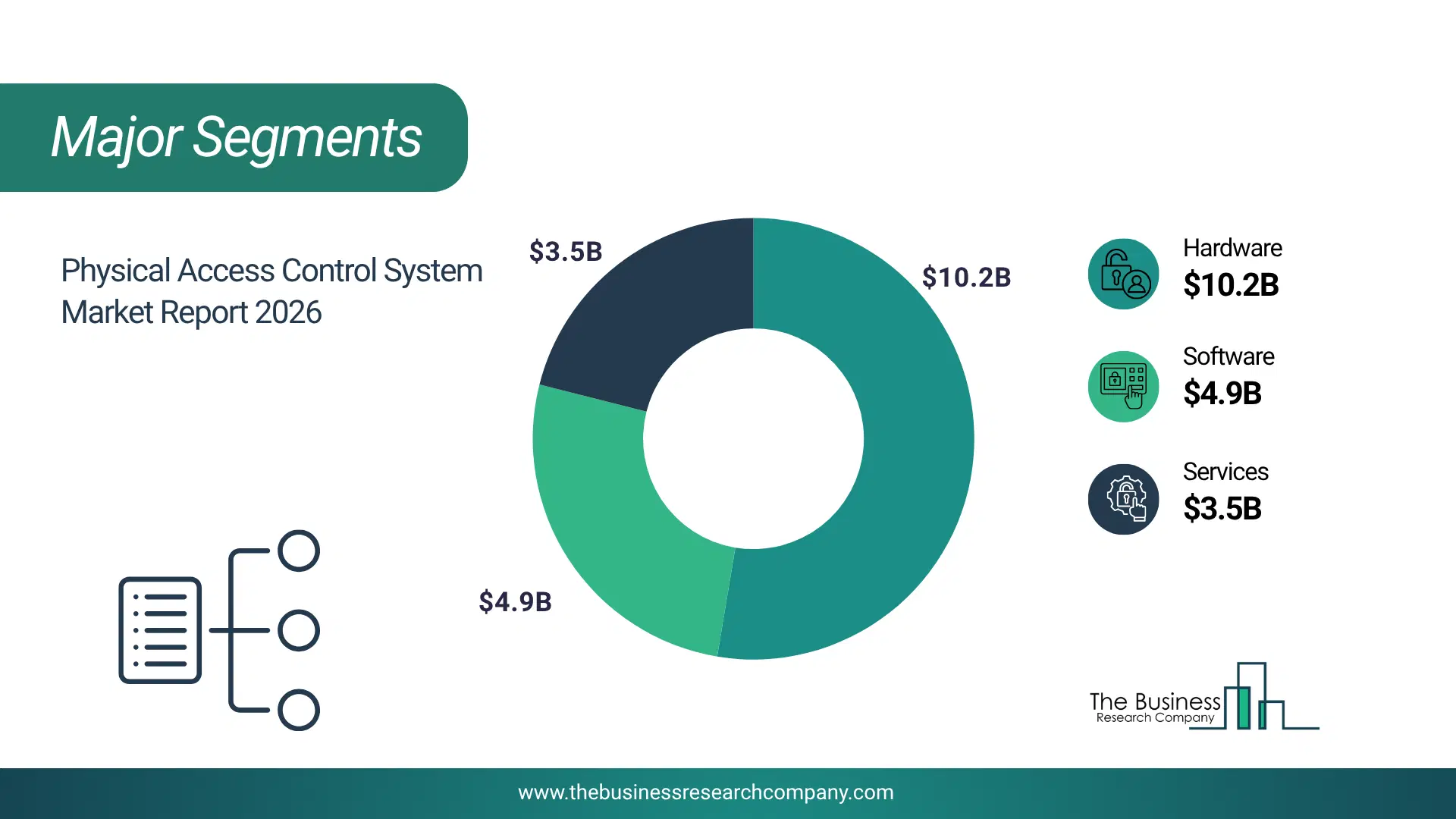
Global Physical Access Control System Market Segmentation
1) By Component: Hardware, Software, Services 2) By Technology: Keypads-based PACs, Card-based PACs, Biometric PACs 3) By End User: Banking, Financial Services and Insurance (BFSI), Healthcare, Manufacturing, Services, Communication and Media, Retail and Other Corporate, Transportation and Utilities, Other End Users Subsegments: 1) By Hardware: Card Readers, Biometric Readers, Keypads, Electric Locks, Controllers, Other Hardware Devices 2) By Software: Access Control Management Software, Visitor Management Software, Mobile Access Control Software, Integration Software, Other Software Solutions 3) By Services: Installation Services, Maintenance Services, Consulting Services, Monitoring Services, Other Support Services The top segments in the physical access control system market will be: • Hardware will reach $10.17 billion by 2030. • Software will reach $4.81 billion by 2030. • Services will reach $3.41 billion by 2030.What Is The Driver Of The Physical Access Control System Market?
The rising adoption of electronic security systems such as biometrics is expected to propel the growth of the physical access control system market going forward. An electronic security system refers to equipment that could perform security operations such as surveillance, access control, alarm, or intrusion control to a facility or area that uses power from the mains and a power backup. Electronic Security Systems are the physical security systems deployed to integrate into a facility's necessary level of protection. For instance, in September 2024, according to the U.S. Customs and Border Protection (CBP), a US-based law enforcement agency, CBP has processed over 540 million travelers using biometric facial comparison technology, successfully preventing more than 2,000 impostors from entering the U.S. Therefore, the rising adoption of electronic security systems will drive the growth of the physical access control system industry.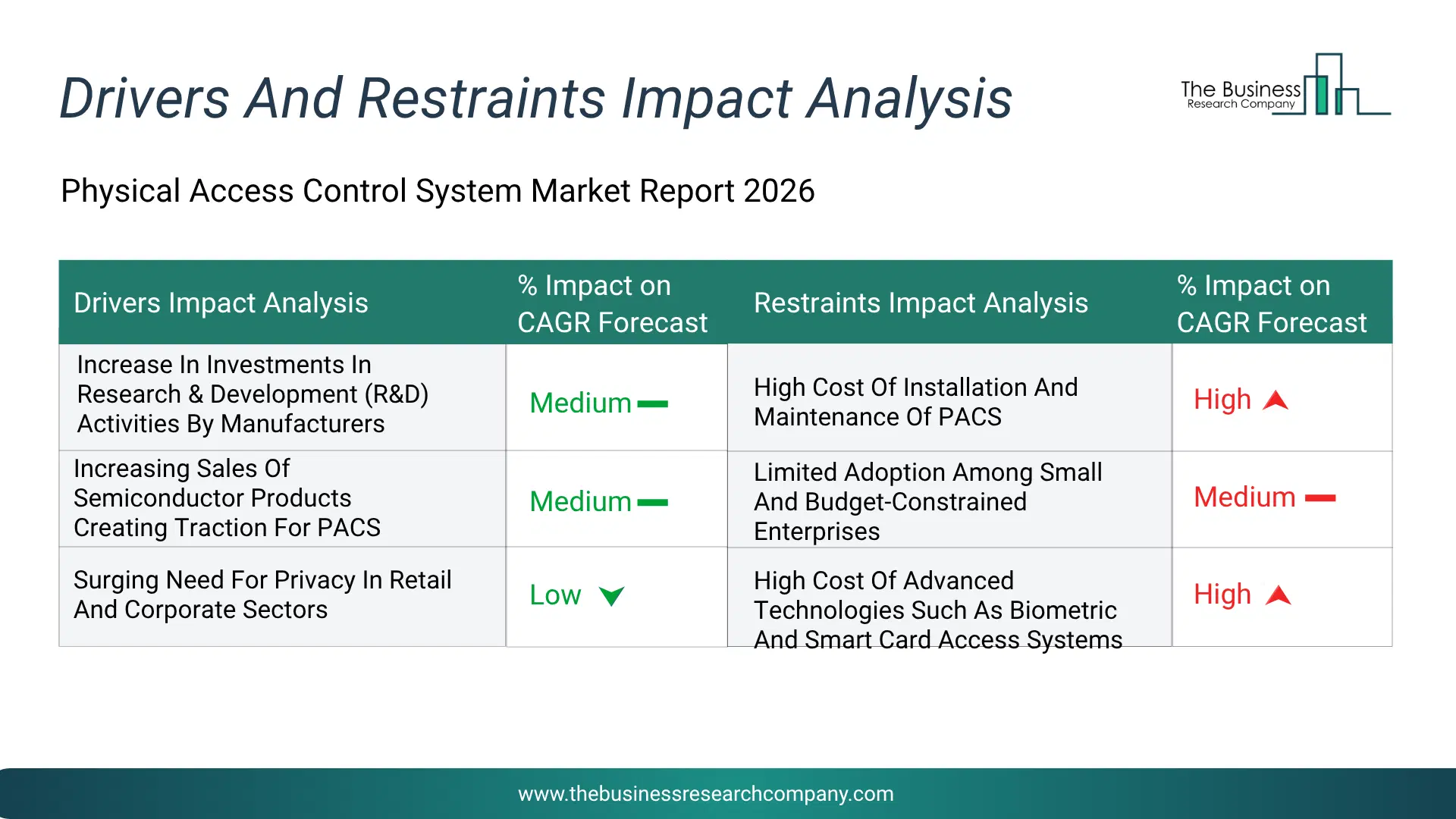
Infographic Chart Showing Key Market Drivers Analysis And Restraints For Physical Access Control System Market
The chart presents an impact analysis of key drivers and restraints, quantifying their relative influence on the market's growth rate and helping assess the balance between growth enablers and limiting factors. This chart offers a high-level perspective; the full report contains more detailed insights.
How Will The Drivers Impact Growth In The Global Physical Access Control System Market?
• Increase In Investments In Research & Development (R&D) Activities By Manufacturers (Medium) – During the forecast period, the increase in investments in research & development (r&d) activities by manufacturers is expected to become a key growth driver for the physical access control system market by 2030. Increasing investments in research and development (r&d) by manufacturers are driving innovation in the physical access control system (pacs) market. Through r&d, companies are developing advanced solutions such as biometric authentication, cloud -based access management, and ai -enabled surveillance integration, which enhance security and operational efficiency. These innovations help organizations address evolving security threats and regulatory requirements. Additionally, continuous technological improvements make pacs solutions more scalable and cost -effective, encouraging adoption across commercial, industrial, and government sectors. • Increasing Sales Of Semiconductor Products Creating Traction For PACS (Medium) – During the forecast period, the increasing sales of semiconductor products creating traction for pacs is expected to emerge as a major factor driving the expansion of the physical access control system market by 2030. Increasing sales of semiconductor products are significantly supporting the growth of the physical access control systems (pacs) market. Semiconductors are essential components in access control hardware such as biometric scanners, smart card readers, controllers, sensors, and surveillance devices. As semiconductor production expands, manufacturers can develop more advanced, efficient, and compact security solutions. Improved chip technologies also enable faster processing, enhanced connectivity, and better integration with iot-based security systems. • Surging Need For Privacy In Retail And Corporate Sectors (Low) – During the forecast period, the surging need for privacy in retail and corporate sectors is expected to act as a key growth catalyst for the physical access control system market by 2030. The surging need for privacy in retail and corporate sectors is a key factor driving the adoption of physical access control systems (pacs). Organizations are increasingly focused on protecting sensitive data, confidential business information, and restricted operational areas from unauthorized access. Pacs solutions help manage and monitor employee and visitor entry through technologies such as smart cards, biometrics, and mobile credentials. This enables businesses to strengthen internal security while ensuring compliance with data protection and workplace safety regulations. As privacy concerns continue to grow, companies are investing more in advanced access control systems to safeguard their assets and information.How Will The Restraints Impact Growth In The Global Physical Access Control System Market?
• High Cost Of Installation And Maintenance Of PACS (High) – During the forecast period, the the high cost of installation and maintenance of physical access control systems (pacs) acts as a significant restraint for market growth. Implementing pacs often requires substantial investment in hardware components such as biometric scanners, card readers, controllers, and surveillance devices, along with software and system integration. In addition, ongoing expenses related to system upgrades, technical support, and maintenance increase the total cost of ownership. These financial requirements can discourage small and medium-sized enterprises from adopting advanced access control solutions. As a result, high installation and operational costs can slow the widespread adoption of pacs across various sectors. • Limited Adoption Among Small And Budget-Constrained Enterprises (Medium) – During the forecast period, the limited adoption among small and budget-constrained enterprises acts as a restraint for the physical access control systems (pacs) market because many smaller organizations operate with restricted security budgets. Implementing pacs requires investments in hardware, software, installation, and ongoing maintenance, which may be financially challenging for small businesses. As a result, these enterprises often rely on traditional security measures such as manual locks or basic surveillance instead of advanced access control systems. This lower adoption rate across a large segment of businesses slows the overall expansion of the pacs market. • High Cost Of Advanced Technologies Such As Biometric And Smart Card Access Systems (High) – During the forecast period, the the high cost of advanced technologies such as biometric authentication and smart card access systems acts as a restraint for the pacs market. These technologies require specialized devices, advanced software, and integration with existing security infrastructure, which increases implementation costs. Additionally, expenses related to system upgrades, maintenance, and data management further raise the overall investment required. Many organizations, particularly those with limited budgets, may delay or avoid adopting such advanced solutions due to these financial barriers. Consequently, the high cost of these technologies can restrict widespread adoption and slow market growth.Key Players In The Global Physical Access Control System Market
Major companies operating in the physical access control system market are Panasonic Corporation, Schneider Electric SE, Johnson Controls International plc, NEC Corporation, Safran Group, Assa Abloy AB, Gallagher Group Ltd., Dahua Technology Ltd., Allegion plc Ltd., Gemalto NV, Dormakaba Holding AG, Idemia Group, TKH Group NV, Axis Communications AB, Avigilon Corporation, HID Global Corp, Genetec Inc., Honeywell Commercial Security Ltd., Nedap NV, Identiv Inc., LenelS2, Bosch Security and Safety Systems, Paxton Access., Brivo Systems LLC, Aiphone Co, Verkada Inc., Vanderbilt Industries LLC., Secugen Corporation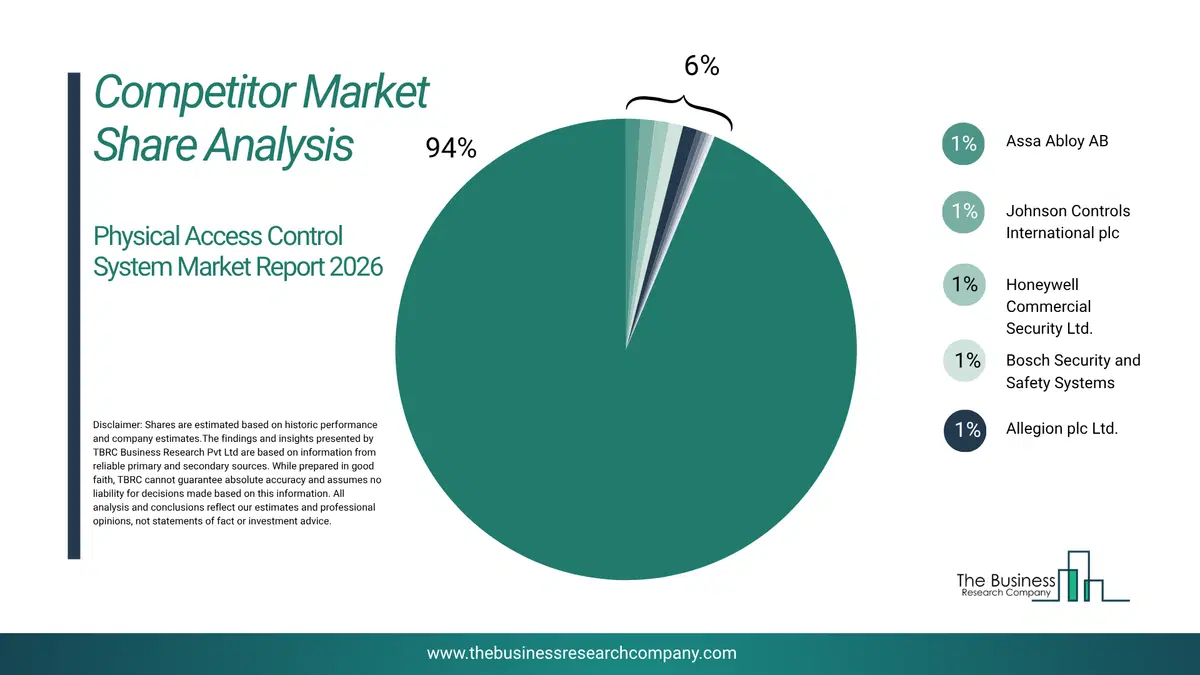
This chart is for illustrative purposes; the full report includes a detailed competitor analysis and comprehensive overview of the top 10 companies in the market.
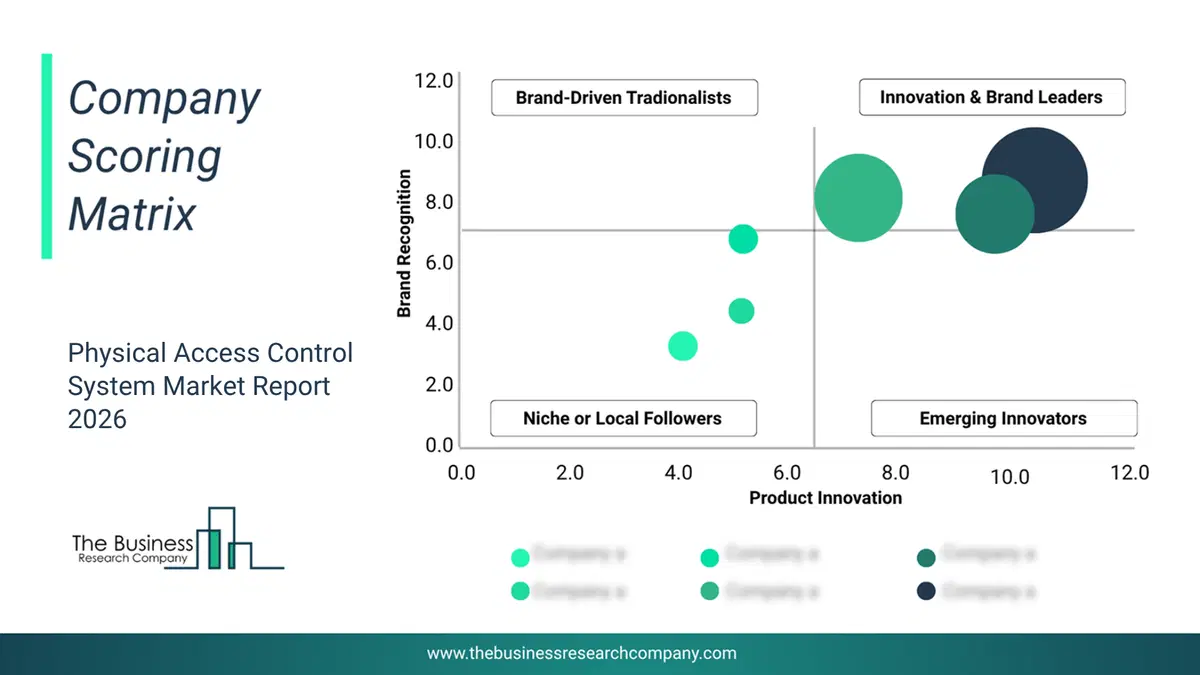
This chart maps companies by product innovation and brand strength, with bubble size indicating relative revenue, helping identify market leaders, challengers, and niche players. This is an illustrative chart; the full report provides a complete and accurate competitive analysis.
Global Physical Access Control System Market Trends and Insights
Major companies operating in the physical access control system market are focusing on developing advanced technologies, such as next-generation OSDP-enabled access control solutions, to strengthen security infrastructure, improve device interoperability, and enhance real-time monitoring capabilities across facilities. OSDP (Open Supervised Device Protocol) is a secure communication standard designed for access control systems, offering encrypted data transmission, bidirectional communication, and improved device management to ensure robust protection of physical spaces. For instance, in July 2023, Anviz, a US-based access control and security automation company, introduced its next-generation OSDP-powered access control solutions tailored for modern security environments. These systems provide enhanced encryption, streamlined device connectivity, and advanced management features that help organizations secure and efficiently monitor access to various facilities. By integrating OSDP technology, Anviz’s solutions deliver improved reliability, scalability, and compliance with evolving security requirements across commercial, institutional, and industrial settings.What Are Latest Mergers And Acquisitions In The Physical Access Control System Market?
In April 2024, ASSA ABLOY AB, a Sweden-based manufacturing company, acquired Messerschmitt Systems for an undisclosed amount. With this acquisition, ASSA ABLOY aimed to strengthen its access control hardware & software footprint in the hospitality and built-environment segment and enhance its credential & IoT-lock capabilities. Messerschmitt Systems is a Germany-based provider of access control hardware.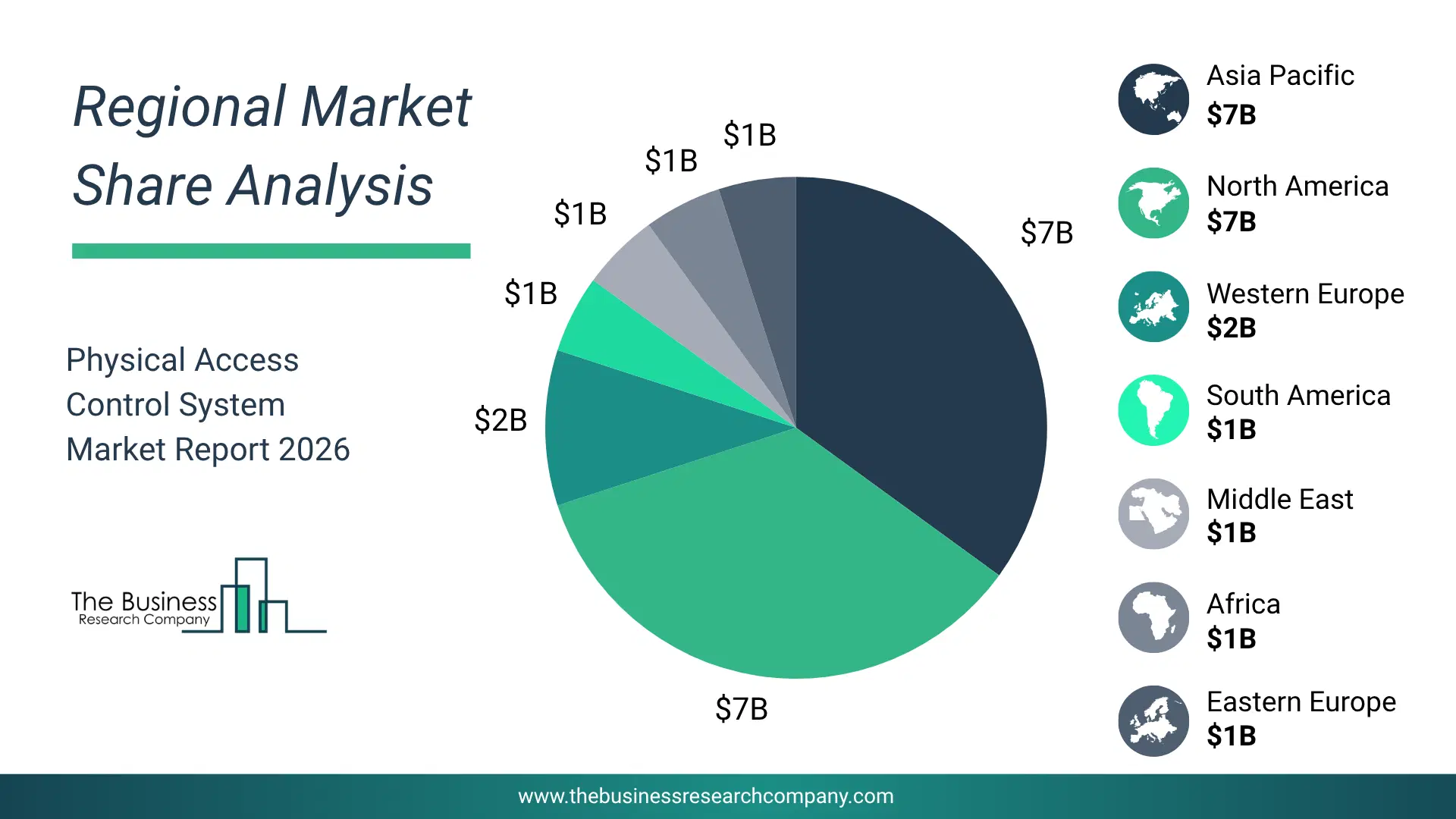
Regional Outlook
North America was the largest region in the physical access control system market in 2025. The regions covered in this market report are Asia-Pacific, South East Asia, Western Europe, Eastern Europe, North America, South America, Middle East, Africa. The countries covered in this market report are Australia, Brazil, China, France, Germany, India, Indonesia, Japan, Taiwan, Russia, South Korea, UK, USA, Canada, Italy, Spain.What Defines the Physical Access Control System Market?
The physical access control system market consists of revenues earned by entities by providing physical access control system market services such as video surveillance, mobile access control services, dual-factor authentication, role-based access control. The market value includes the value of related goods sold by the service provider or included within the service offering. The physical access control system market also includes sales of door locks, turnstiles, security gate systems, and elevators which are used in providing physical access control systems services. Values in this market are ‘factory gate’ values, that is the value of goods sold by the manufacturers or creators of the goods, whether to other entities (including downstream manufacturers, wholesalers, distributors, and retailers) or directly to end customers. The value of goods in this market includes related services sold by the creators of the goods.How is Market Value Defined and Measured?
The market value is defined as the revenues that enterprises gain from the sale of goods and/or services within the specified market and geography through sales, grants, or donations in terms of the currency (in USD unless otherwise specified). The revenues for a specified geography are consumption values that are revenues generated by organizations in the specified geography within the market, irrespective of where they are produced. It does not include revenues from resales along the supply chain, either further along the supply chain or as part of other products.
This chart presents market attractiveness based on a quantitative evaluation of growth, competition, strategic alignment, and risk, offering a clear view of opportunity areas for decision-making. This chart is for illustrative purposes; the full report contains the complete analysis.

This chart highlights the Total Addressable Market (TAM) by estimating the maximum revenue opportunity using an assumption-driven approach, supporting strategic planning and opportunity sizing across markets. The chart is illustrative; the full report provides a more comprehensive analysis.
What Key Data and Analysis Are Included in the Physical Access Control System Market Report 2026?
The physical access control system market research report is one of a series of new reports from The Business Research Company that provides market statistics, including industry global market size, regional shares, competitors with the market share, detailed market segments, market trends and opportunities, and any further data you may need to thrive in the physical access control system industry. The market research report delivers a complete perspective of everything you need, with an in-depth analysis of the current and future state of the industry.Physical Access Control System Market Report 2026 Market Report Forecast Analysis
| Report Attribute | Details |
|---|---|
| Market Size Value In 2026 | $12.01 billion |
| Revenue Forecast In 2030 | $18.51 billion |
| Growth Rate | CAGR of 11.4% from 2026 to 2030 |
| Base Year For Estimation | 2025 |
| Actual Estimates/Historical Data | 2020-2025 |
| Forecast Period | 2026 - 2030 |
| Market Representation | Revenue in USD Billion and CAGR from 2026 to 2030 |
| Segments Covered | Component, Technology, End User |
| Regional Scope | Asia-Pacific, Western Europe, Eastern Europe, North America, South America, Middle East, Africa |
| Country Scope | The countries covered in the report are Australia, Brazil, China, France, Germany, India, ... |
| Key Companies Profiled | Panasonic Corporation, Schneider Electric SE, Johnson Controls International plc, NEC Corporation, Safran Group, Assa Abloy AB, Gallagher Group Ltd., Dahua Technology Ltd., Allegion plc Ltd., Gemalto NV, Dormakaba Holding AG, Idemia Group, TKH Group NV, Axis Communications AB, Avigilon Corporation, HID Global Corp, Genetec Inc., Honeywell Commercial Security Ltd., Nedap NV, Identiv Inc., LenelS2, Bosch Security and Safety Systems, Paxton Access., Brivo Systems LLC, Aiphone Co, Verkada Inc., Vanderbilt Industries LLC., Secugen Corporation |
| Customization Scope | Request for Customization |
| Pricing And Purchase Options | Explore Purchase Options |