
Pigmentation Disorders Treatment Market Report 2026
Global Outlook – By Treatment Type (Topical Treatment, Dermabrasion, Chemical Peels, Laser Treatment, Phototherapy, Other Treatment Types), By Drugs (Calcineurin Inhibitors, Melanocyte-Stimulating Hormone, Other Drug Types), By Type Of Disorder (Albinism, Vitiligo, Melasma, Post-Inflammatory Hyperpigmentation (PIH), Other Types Of Disorder), By Route Of Administration (Oral, Topical, Other Routes Of Administration), By Distribution Channel (Dermatology Clinics, Aesthetic Clinics, Drugstores And Cosmetic Stores, E-Commerce, Other Distribution Channels) - Market Size, Trends, Strategies, and Forecast to 2030
Pigmentation Disorders Treatment Market Overview
• Pigmentation Disorders Treatment market size has reached to $6.67 billion in 2025 • Expected to grow to $9.98 billion in 2030 at a compound annual growth rate (CAGR) of 8.4% • Growth Driver: Increasing Prevalence Of Pigmentation Disorders Drives Growth Of Treatment Market • Market Trend: Rise Of Nutricosmetics Transforming Pigmentation Disorders Treatment Market • North America was the largest region in 2025 and Asia-Pacific is the fastest growing region.What Is Covered Under Pigmentation Disorders Treatment Market?
Pigmentation disorder treatment refers to the various methods and procedures used to address and manage conditions that affect the skin's pigmentation. These treatments aim to restore or balance skin pigmentation, reduce the appearance of dark spots or patches, and improve overall skin tone and appearance. The main types of pigmentation disorder treatments are topical treatment, dermabrasion, chemical peels, laser treatment, phototherapy, and others. Topical treatments are medications or products that are applied directly to the skin's surface to treat various skin conditions, including pigmentation disorders. The treatment of pigmentation disorders includes the use of various drugs, including calcineurin inhibitors, melanocyte-stimulating hormones, and others, to treat different types of disorders such as albinism, vitiligo, melasma, post-inflammatory hyperpigmentation (PIH), and others. These are administered through oral, topical, and other routes, and are distributed through dermatology clinics, aesthetic clinics, drugstores and cosmetic stores, e-commerce, and others.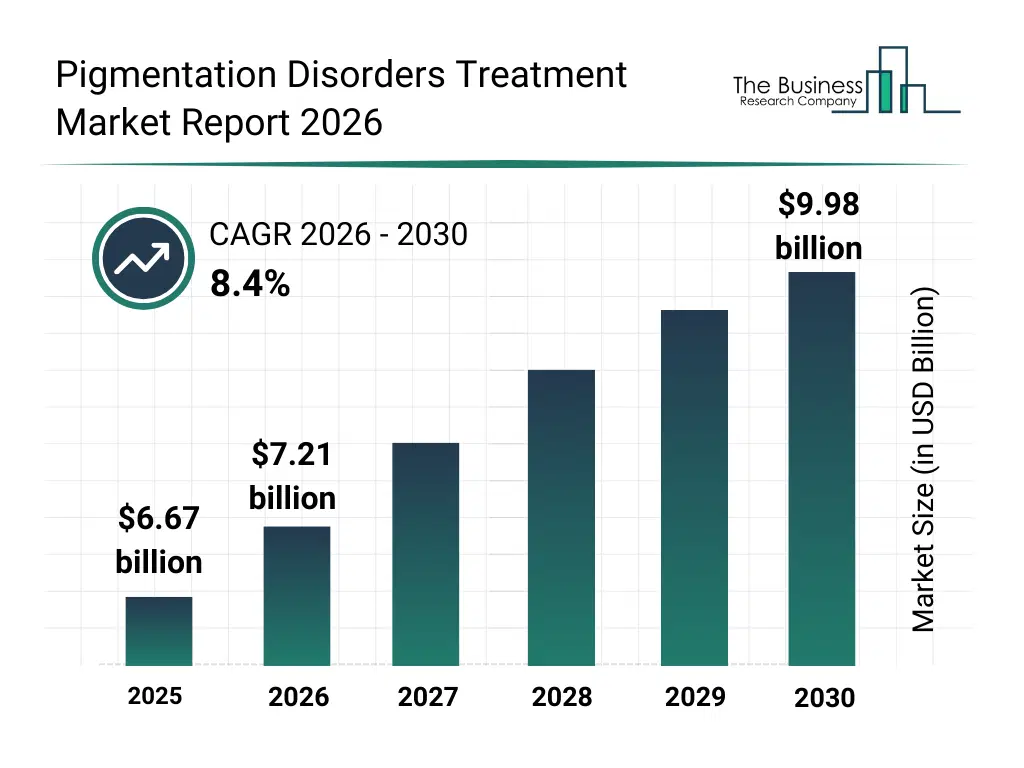
What Is The Pigmentation Disorders Treatment Market Size and Share 2026?
The pigmentation disorders treatment market size has grown strongly in recent years. It will grow from $6.67 billion in 2025 to $7.21 billion in 2026 at a compound annual growth rate (CAGR) of 8.1%. The growth in the historic period can be attributed to increasing prevalence of skin pigmentation disorders, rising awareness of aesthetic dermatology, expansion of dermatology clinic networks, growing use of topical depigmenting agents, improved access to dermatological care.What Is The Pigmentation Disorders Treatment Market Growth Forecast?
The pigmentation disorders treatment market size is expected to see strong growth in the next few years. It will grow to $9.98 billion in 2030 at a compound annual growth rate (CAGR) of 8.4%. The growth in the forecast period can be attributed to increasing adoption of precision dermatology solutions, rising demand for non-invasive cosmetic procedures, expansion of advanced laser and phototherapy technologies, growing focus on personalized treatment protocols, increasing investment in dermatology research and innovation. Major trends in the forecast period include increasing adoption of laser-based skin treatments, rising demand for combination therapy approaches, growing use of advanced topical formulations, expansion of minimally invasive dermatological procedures, enhanced focus on personalized skin treatment regimens.
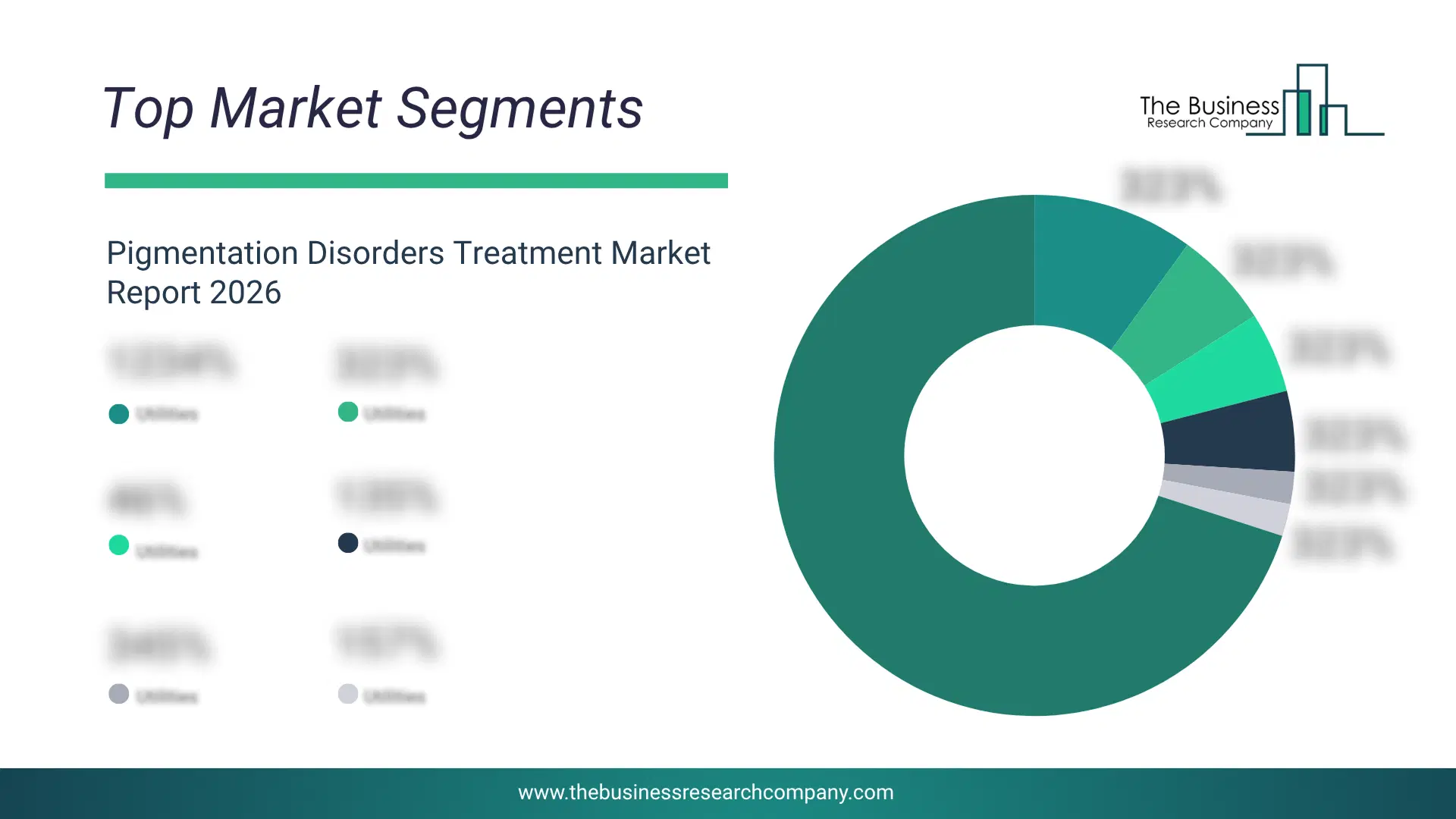
Global Pigmentation Disorders Treatment Market Segmentation
1) By Treatment Type: Topical Treatment, Dermabrasion, Chemical Peels, Laser Treatment, Phototherapy, Other Treatment Types 2) By Drugs: Calcineurin Inhibitors, Melanocyte-Stimulating Hormone, Other Drug Types 3) By Type Of Disorder: Albinism, Vitiligo, Melasma, Post-Inflammatory Hyperpigmentation (PIH), Other Types Of Disorder 4) By Route Of Administration: Oral, Topical, Other Routes Of Administration 5) By Distribution Channel: Dermatology Clinics, Aesthetic Clinics, Drugstores And Cosmetic Stores, E-Commerce, Other Distribution Channels Subsegments: 1) By Topical Treatment: Corticosteroids, Retinoids, Hydroquinone 2) By Dermabrasion: Microdermabrasion, Diamond Tip Dermabrasion, Crystal Dermabrasion 3) By Chemical Peels: Superficial Peels, Medium Peels, Deep Peels 4) By Laser Treatment: Fractional Lasers, Q-Switched Lasers, Intense Pulsed Light (IPL) 5) By Phototherapy: UVB Phototherapy, Narrowband UVB Phototherapy 6) By Other Treatment Types: Cryotherapy, Depigmentation Therapy, Microneedling, Platelet-Rich Plasma (PRP) TherapyWhat Is The Driver Of The Pigmentation Disorders Treatment Market?
The increasing prevalence of pigmentation disorders is expected to propel the growth of the pigmentation disorder treatment market going forward. Pigmentation disorders refer to conditions characterized by the abnormal or uneven coloring of the skin, hair, or eyes, which can be caused by various factors such as genetics, hormonal changes, sun exposure, or underlying medical conditions. Treatment for pigmentation disorders involves multiple approaches, such as topical medications, laser therapy, chemical peels, and microdermabrasion, aimed at reducing or lightening dark spots, patches, or irregular skin pigmentation caused by conditions such as albinism, melasma, vitiligo, or hyperpigmentation. For instance, in June 2024, according to the United Nations, a US-based intergovernmental organization, in North America and Europe, approximately 1 in every 17,000 to 20,000 individuals is affected by some form of albinism. However, the condition is significantly more common in sub-Saharan Africa, where estimates suggest that 1 in 1,400 people in Tanzania have albinism, and certain populations in Zimbabwe and specific ethnic groups in Southern Africa report prevalence rates as high as 1 in 1,000. Therefore, the increasing prevalence of pigmentation disorders is driving the growth of the pigmentation disorders treatment industry.Key Players In The Global Pigmentation Disorders Treatment Market
Major companies operating in the pigmentation disorders treatment market are AbbVie Inc., Novartis AG, Sanofi S.A., Bristol-Myers Squibb, L’Oréal S.A., Bausch Health Companies Inc., Bayer AG, Strides Pharma Science Limited, Galderma S.A., Incyte Corporation, Dr. Reddy's Laboratories Ltd., Laboratories Pierre Fabre, Glenmark Pharmaceuticals Limited, Dermavant Sciences Inc., Lumenis Be Ltd., Accord Healthcare, Obagi Medical Products Inc., Fotona d.o.o., Sesderma SL, DermaMed Solutions LLC, Vivier Pharma, Arcutis Biotherapeutics, Scientis SA, Philadelphia Pharmaceutical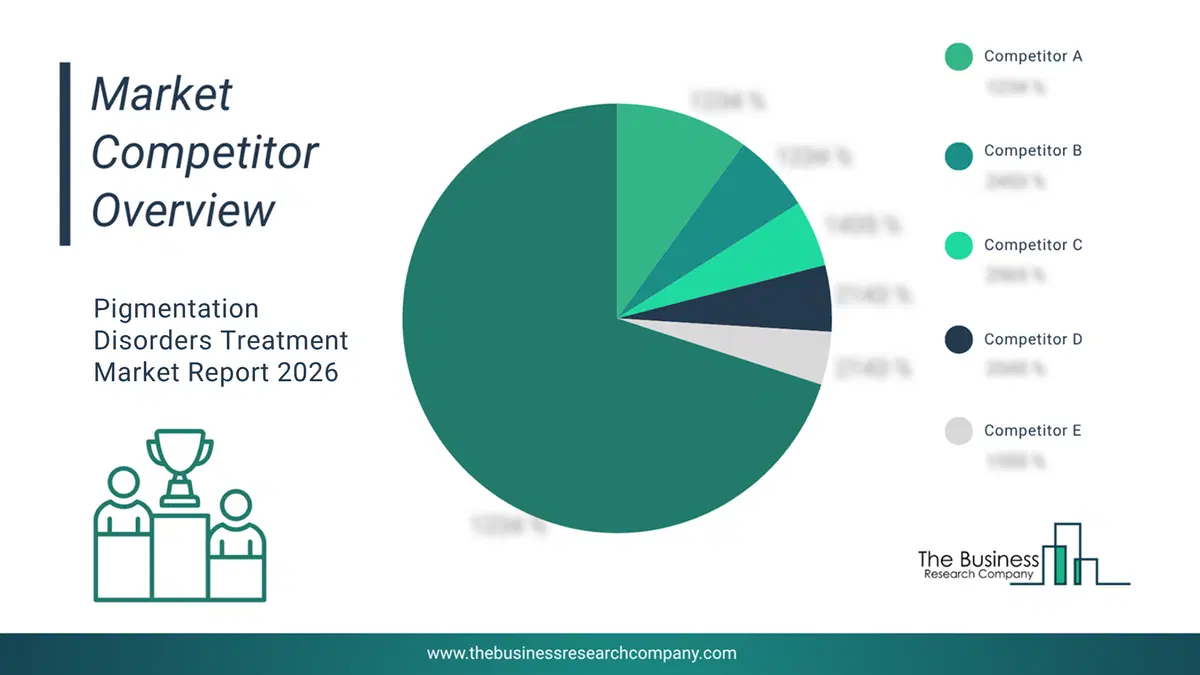
This chart is for illustrative purposes; the full report includes a detailed competitor analysis and comprehensive overview of the top 10 companies in the market.
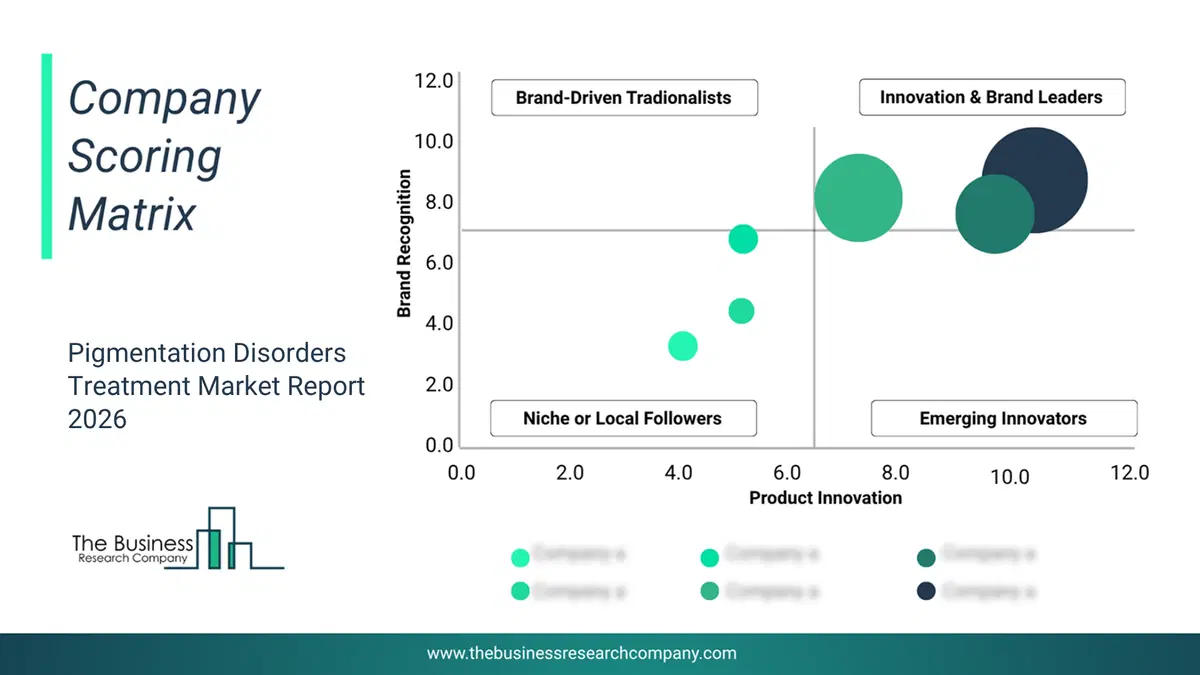
This chart maps companies by product innovation and brand strength, with bubble size indicating relative revenue, helping identify market leaders, challengers, and niche players. This is an illustrative chart; the full report provides a complete and accurate competitive analysis.
Global Pigmentation Disorders Treatment Market Trends and Insights
Major companies operating in the pigmentation disorders treatment market are focusing on developing nutricosmetics products. The integration of nutricosmetics, which involves the use of oral supplements to improve skin health, is gaining traction. Nutrients like antioxidants and vitamins are promoted for their potential to benefit pigmentation and overall skin condition. For instance, in March 2023, Symrise AG, a Germany-based chemicals company, launched Diana Food Bioactives for use in beauty-from-within products. With the development of these distinct and innovative nutricosmetic ingredients, the company is broadening its offering. The collection includes solutions for skin conditioning and anti-aging, skin brightening, and hair and nail care. It is made up of bioactives derived from nature, such as collagen type I, vitamins C and A, and polyphenols from various fruits. Symrise's long history in the beauty industry is complemented by this launch of cosmetic ingredients.What Are Latest Mergers And Acquisitions In The Pigmentation Disorders Treatment Market?
In February 2024, Shiseido, a Japan-based cosmetic company, acquired DDG Skincare Holdings LLC for an undisclosed amount. This strategic move aligns with Shiseido's strategy to bolster its portfolio with scientifically backed skincare solutions. Dr. Dennis Gross Skincare is a US-based provider of pigmentation disorder treatment.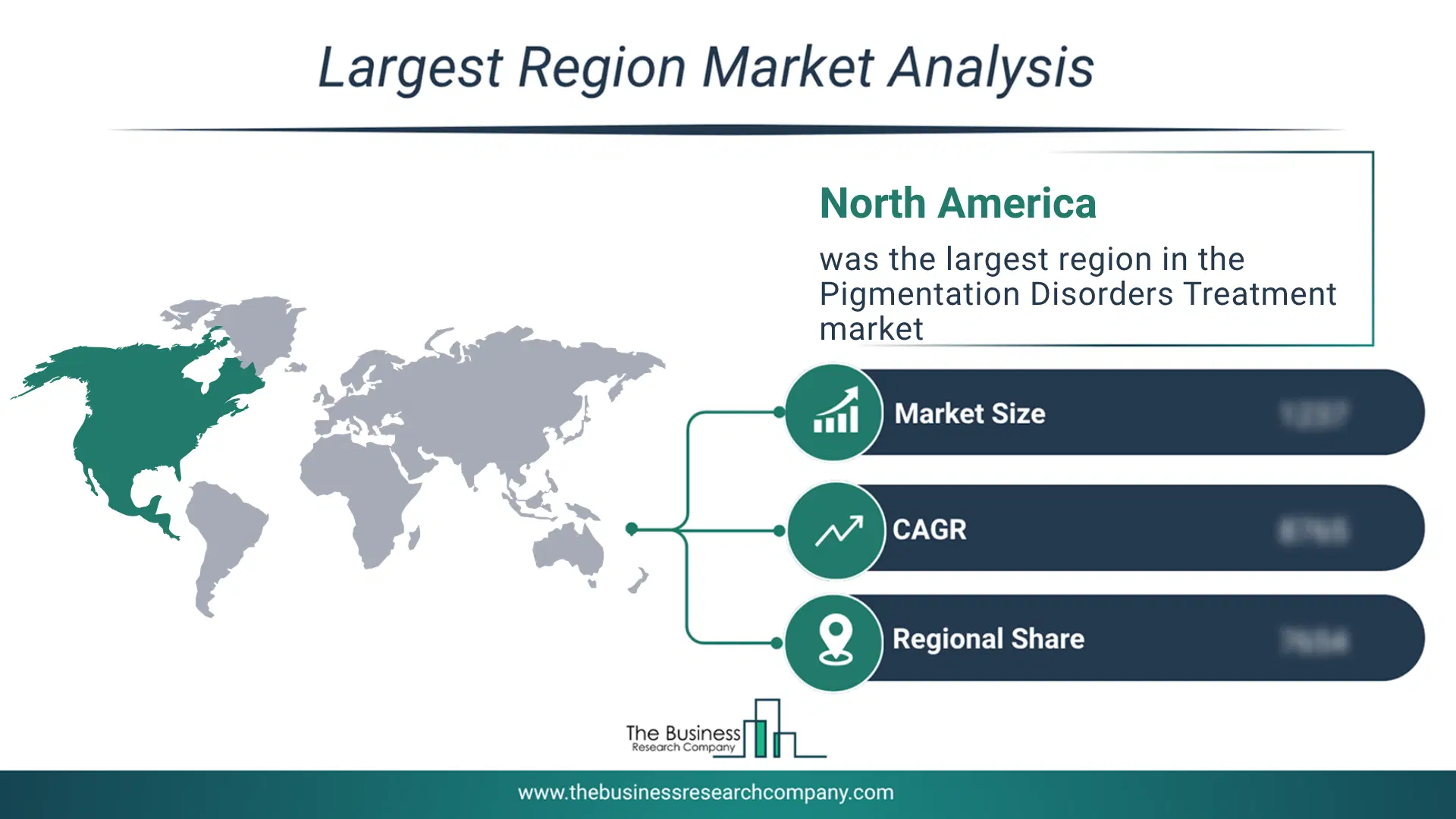
Regional Outlook
North America was the largest region in the pigmentation disorders treatment market in 2025. Asia-Pacific is expected to be the fastest-growing region in the forecast period. The regions covered in this market report are Asia-Pacific, South East Asia, Western Europe, Eastern Europe, North America, South America, Middle East, Africa. The countries covered in this market report are Australia, Brazil, China, France, Germany, India, Indonesia, Japan, Taiwan, Russia, South Korea, UK, USA, Canada, Italy, Spain.What Defines the Pigmentation Disorders Treatment Market?
The pigmentation disorders treatment market consists of revenues earned by entities by providing pigmentation disorders treatment services such as cryotherapy, light therapy, and depigmentation. The market value includes the value of related goods sold by the service provider or included within the service offering. The pigmentation disorder treatment market also includes sales of topical creams and serums, micro needling devices, and light therapy devices that are used in pigmentation disorder treatments. Values in this market are ‘factory gate’ values, that is the value of goods sold by the manufacturers or creators of the goods, whether to other entities (including downstream manufacturers, wholesalers, distributors, and retailers) or directly to end customers. The value of goods in this market includes related services sold by the creators of the goods.How is Market Value Defined and Measured?
The market value is defined as the revenues that enterprises gain from the sale of goods and/or services within the specified market and geography through sales, grants, or donations in terms of the currency (in USD unless otherwise specified). The revenues for a specified geography are consumption values that are revenues generated by organizations in the specified geography within the market, irrespective of where they are produced. It does not include revenues from resales along the supply chain, either further along the supply chain or as part of other products.
This chart presents market attractiveness based on a quantitative evaluation of growth, competition, strategic alignment, and risk, offering a clear view of opportunity areas for decision-making. This chart is for illustrative purposes; the full report contains the complete analysis.

This chart highlights the Total Addressable Market (TAM) by estimating the maximum revenue opportunity using an assumption-driven approach, supporting strategic planning and opportunity sizing across markets. The chart is illustrative; the full report provides a more comprehensive analysis.
What Key Data and Analysis Are Included in the Pigmentation Disorders Treatment Market Report 2026?
The pigmentation disorders treatment market research report is one of a series of new reports from The Business Research Company that provides market statistics, including industry global market size, regional shares, competitors with the market share, detailed market segments, market trends and opportunities, and any further data you may need to thrive in the pigmentation disorders treatment industry. The market research report delivers a complete perspective of everything you need, with an in-depth analysis of the current and future state of the industry.Pigmentation Disorders Treatment Market Report Forecast Analysis
| Report Attribute | Details |
|---|---|
| Market Size Value In 2026 | $7.21 billion |
| Revenue Forecast In 2030 | $9.98 billion |
| Growth Rate | CAGR of 8.4% from 2026 to 2030 |
| Base Year For Estimation | 2025 |
| Actual Estimates/Historical Data | 2020-2025 |
| Forecast Period | 2026 - 2030 |
| Market Representation | Revenue in USD Billion and CAGR from 2026 to 2030 |
| Segments Covered | Treatment Type, Drugs, Type Of Disorder, Route Of Administration, Distribution Channel |
| Regional Scope | Asia-Pacific, Western Europe, Eastern Europe, North America, South America, Middle East, Africa |
| Country Scope | The countries covered in the report are Australia, Brazil, China, France, Germany, India, Indonesia, Japan, Taiwan, Russia, South Korea, UK, USA, Canada, Italy, Spain |
| Key Companies Profiled | AbbVie Inc., Novartis AG, Sanofi S.A., Bristol-Myers Squibb, L’Oréal S.A., Bausch Health Companies Inc., Bayer AG, Strides Pharma Science Limited, Galderma S.A., Incyte Corporation, Dr. Reddy's Laboratories Ltd., Laboratories Pierre Fabre, Glenmark Pharmaceuticals Limited, Dermavant Sciences Inc., Lumenis Be Ltd., Accord Healthcare, Obagi Medical Products Inc., Fotona d.o.o., Sesderma SL, DermaMed Solutions LLC, Vivier Pharma, Arcutis Biotherapeutics, Scientis SA, Philadelphia Pharmaceutical |
| Customization Scope | Request for Customization |
| Pricing And Purchase Options | Explore Purchase Options |