
Pine-Derived Chemicals Market Report 2026
Global Outlook – By Type (Tall Oil Fatty Acid, Tall Oil Rosin, Gum Turpentine, Gum Rosin, Sterols, Other Types), By Process (Kraft, Tapping, Pulpmills), By Source (Living Trees, Dead Pine Stumps And Logs, By-Product Of Sulfate Pulping), By Application (Adhesives And Sealants, Paints And Coatings, Surfactants, Printing Inks, Perfumes, Fragrances, And Cosmetics, Other Applications) – Market Size, Trends, Strategies, and Forecast to 2030
Pine-Derived Chemicals Market Overview
• Pine-Derived Chemicals market size has reached to $6.02 billion in 2025 • Expected to grow to $8.01 billion in 2030 at a compound annual growth rate (CAGR) of 5.8% • Growth Driver: Growing Environmental Concerns Fuel The Demand For Pine-Derived Chemicals • Market Trend: Transforming Pharmaceuticals With Pine-Derived Solutions • North America was the largest region and fastest growing region.What Is Covered Under Pine-Derived Chemicals Market?
Pine-derived chemicals refer to co-products obtained during the distillation of pine trees in the papermaking process that are transformed into essential components for use in various applications such as paints, adhesives, and so on. The main types of pine-derived chemicals are tall oil fatty acid, tall oil rosin, gum turpentine, gum rosin, sterols, pitch, and others. Tall oil fatty acid refers to a type of pine chemical which is a low-cost, viscous, yellow-black, odorous chemical substance produced by the vacuum distillation of crude tall oil. The process involved is kraft, tapping, and pulp mills that are optioned by living trees, dead pine stumps, and logs sources. The various applications involved are adhesives and sealants, paints and coatings, surfactants, printing inks, perfumes, fragrances, and cosmetics, food additives, others.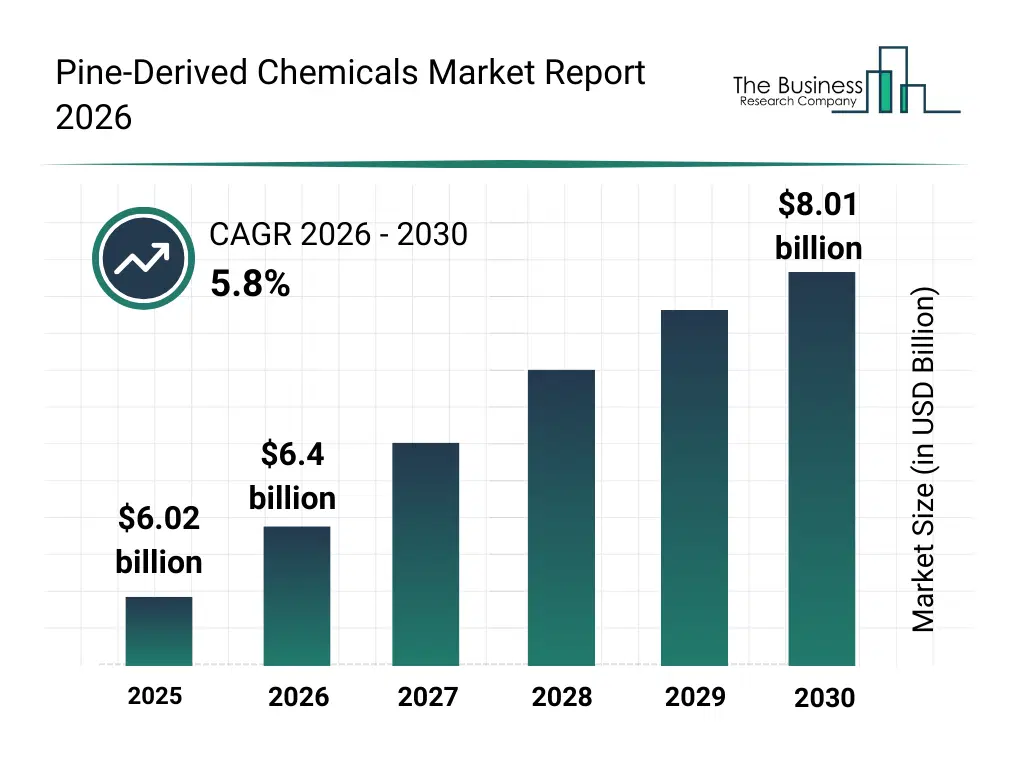
What Is The Pine-Derived Chemicals Market Size and Share 2026?
The pine-derived chemicals market size has grown strongly in recent years. It will grow from $6.02 billion in 2025 to $6.4 billion in 2026 at a compound annual growth rate (CAGR) of 6.4%. The growth in the historic period can be attributed to expansion of pulp and paper industry operations, availability of pine distillation by-products, growth of rosin and fatty acid applications, rising demand for natural resins, improvements in chemical recovery processes.What Is The Pine-Derived Chemicals Market Growth Forecast?
The pine-derived chemicals market size is expected to see strong growth in the next few years. It will grow to $8.01 billion in 2030 at a compound annual growth rate (CAGR) of 5.8%. The growth in the forecast period can be attributed to increasing regulations favoring bio-based chemicals, rising demand for sustainable industrial materials, expansion of green construction activities, growing adoption of natural ingredients in cosmetics, increasing investments in renewable chemical processing. Major trends in the forecast period include increasing demand for bio-based chemical alternatives, rising use in adhesives and sealants, growing adoption in paints and coatings, expansion of pine-based surfactants, enhanced focus on renewable feedstocks.
Global Pine-Derived Chemicals Market Segmentation
1) By Type: Tall Oil Fatty Acid, Tall Oil Rosin, Gum Turpentine, Gum Rosin, Sterols, Other Types 2) By Process: Kraft, Tapping, Pulpmills 3) By Source: Living Trees, Dead Pine Stumps And Logs, By-Product Of Sulfate Pulping 4) By Application: Adhesives And Sealants, Paints And Coatings, Surfactants, Printing Inks, Perfumes, Fragrances, And Cosmetics, Other Applications Subsegments: 1) By Tall Oil Fatty Acid: Unsaturated Fatty Acids, Saturated Fatty Acids 2) By Tall Oil Rosin: Modified Tall Oil Rosin, Natural Tall Oil Rosin 3) By Gum Turpentine: Chemical Grade Turpentine, Industrial Grade Turpentine 4) By Gum Rosin: Hydrated Gum Rosin, Non-Hydrated Gum Rosin 5) By Sterols: Phytosterols, Other Sterol Derivatives 6) By Other Types: Pine Essential Oils, Terpenes And TerpenoidsWhat Is The Driver Of The Pine-Derived Chemicals Market?
Growing environmental concerns are expected to propel the pine-derived chemicals market going forward. Environmental concerns refer to processes involved in preserving the land, sea, air, plants, and animals that make up the natural world. Growing environmental concerns have resulted in the increasing use of plant-based pine chemicals instead of traditional chemical synthesis methods, as synthetic chemicals cause environmental pollution. For instance, in November 2023, according to the United Nations Environment Programme, a Kenya-based intergovernmental organization, reported that greenhouse gas emissions in 2030, based on policies in place, were projected to increase by 16 percent at the time of the agreement’s adoption. Today, the projected increase is 3 percent. Therefore, growing environmental concerns are driving the pine-derived chemicals industry.Key Players In The Global Pine-Derived Chemicals Market
Major companies operating in the pine-derived chemicals market are Ingevity Corporation, Florachem Corporation, Harima Chemicals Group Inc., DRT (Les Dérivés Résiniques et Terpéniques), Georgia-Pacific Chemicals LLC, Privi Speciality Chemicals Limited, PineChemical Group Oy, SunPine AB, Lawter Inc., Arakawa Chemical Industries Ltd., Kraton Corporation, Forchem Oy, International Flavors & Fragrances Inc., Takasago International Corporation, Wuzhou Sun Shine Forestry and Chemicals Co., Ltd., Mercer International Inc., Respol Resinas S.A., Harbin Pine Chemical Co., Ltd., Guilin Songquan Forestry Chemical Co., Ltd., Guangxi Wuzhou Pine Chemicals Co., Ltd., Stora Enso Oyj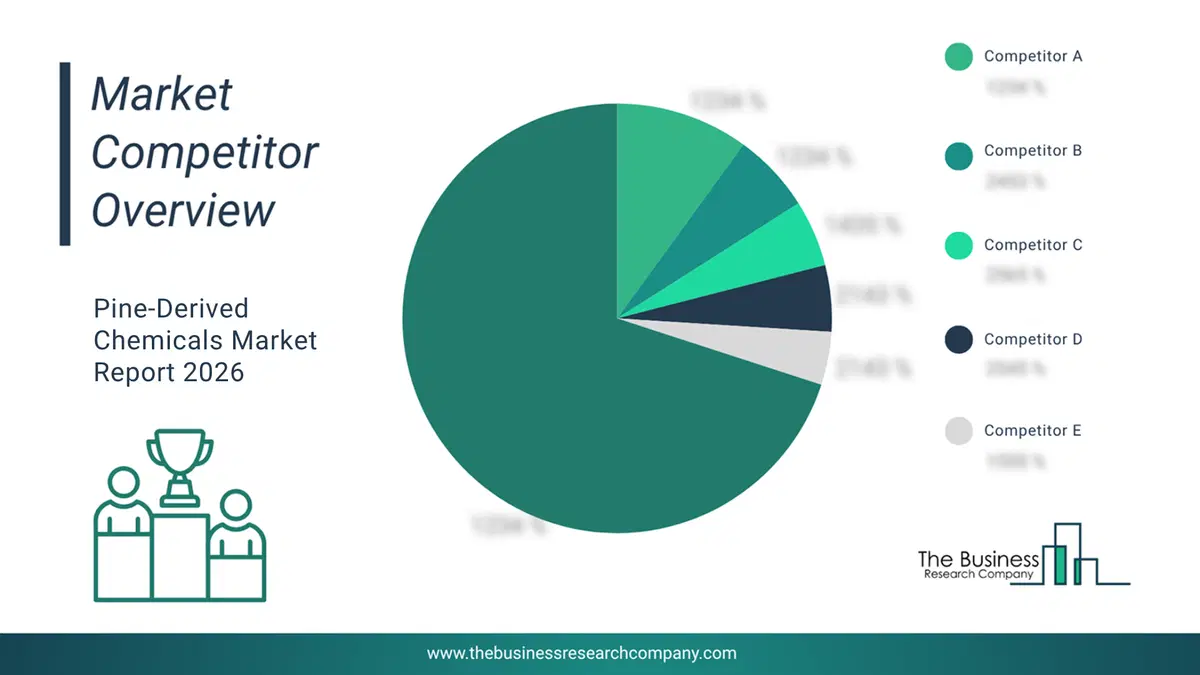
This chart is for illustrative purposes; the full report includes a detailed competitor analysis and comprehensive overview of the top 10 companies in the market.
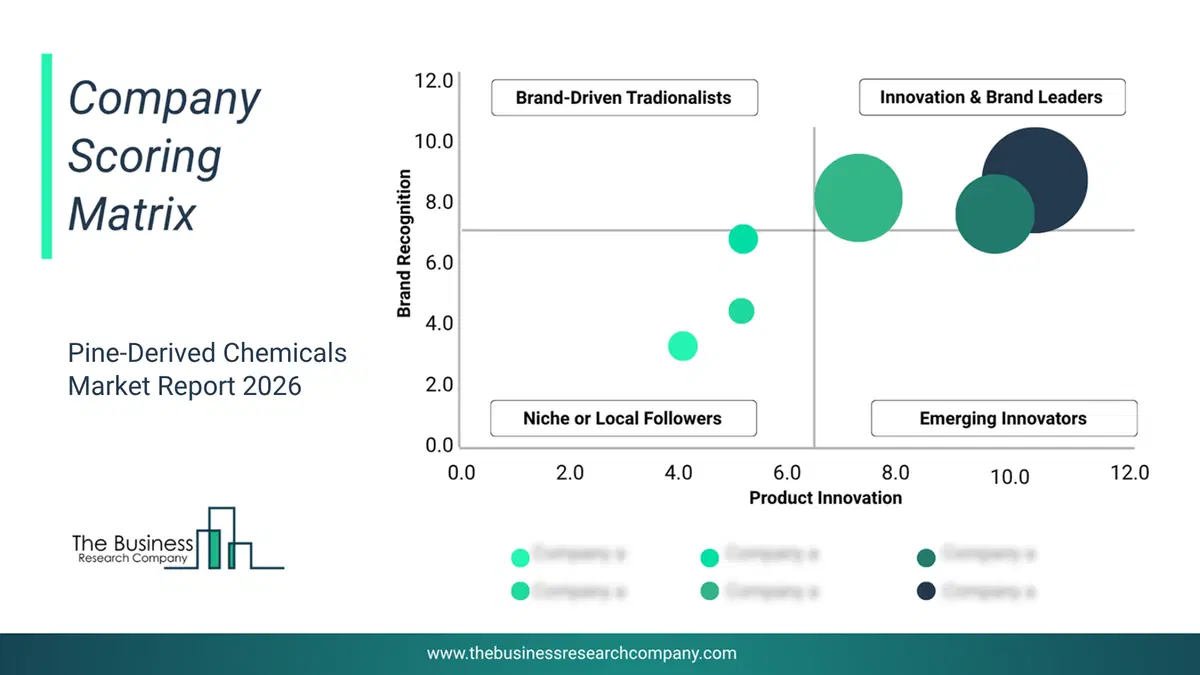
This chart maps companies by product innovation and brand strength, with bubble size indicating relative revenue, helping identify market leaders, challengers, and niche players. This is an illustrative chart; the full report provides a complete and accurate competitive analysis.
Global Pine-Derived Chemicals Market Trends and Insights
Major companies in the pine-derived chemicals market are focused on developing innovative products, such as pharmaceuticals with pine-derived chemicals, to produce better products and meet market demand. Pharmaceuticals with pine-derived chemicals refer to medications and drug compounds that are produced using chemical components extracted from pine trees. For instance, in July 2023, the University of Bath's Department of Chemistry and Institute for Sustainability, a UK-based research university, discovered a method to produce two widely used pain relievers, paracetamol and ibuprofen, using a compound derived from pine trees. This compound is a byproduct of the paper industry, offering an alternative source to crude oil for the synthesis of common drugs like paracetamol and ibuprofen. Operating on a turpentine-based biorefinery model, the method utilizes waste chemical by-products from the paper industry to generate a range of valuable, sustainable chemicals applicable in diverse industries, spanning perfumes to pharmaceuticals like paracetamol. The use of continuous flow reactors, as opposed to traditional large reactors, ensures uninterrupted production, and facilitates scalability. Although the current process may incur higher costs compared to oil-based feedstocks, consumer willingness to pay a slightly premium price for pharmaceuticals derived entirely from plant sources could drive market acceptance of more sustainable alternatives.What Are Latest Mergers And Acquisitions In The Pine-Derived Chemicals Market?
In March 2024, Grupo Resinas Brasil, a Brazil-based producer of pine oleoresin, gum rosin, gum turpentine, and derivatives, acquired Pinopine for an undisclosed amount. With this acquisition, Grupo Resinas Brasil aimed to expand its presence in the European pine-derived chemicals market and strengthen its global supply chain for rosin derivatives. Pinopine is a Portugal-based manufacturer of gum rosin derivatives serving adhesives, inks, coatings, and other industrial applications.
Regional Insights
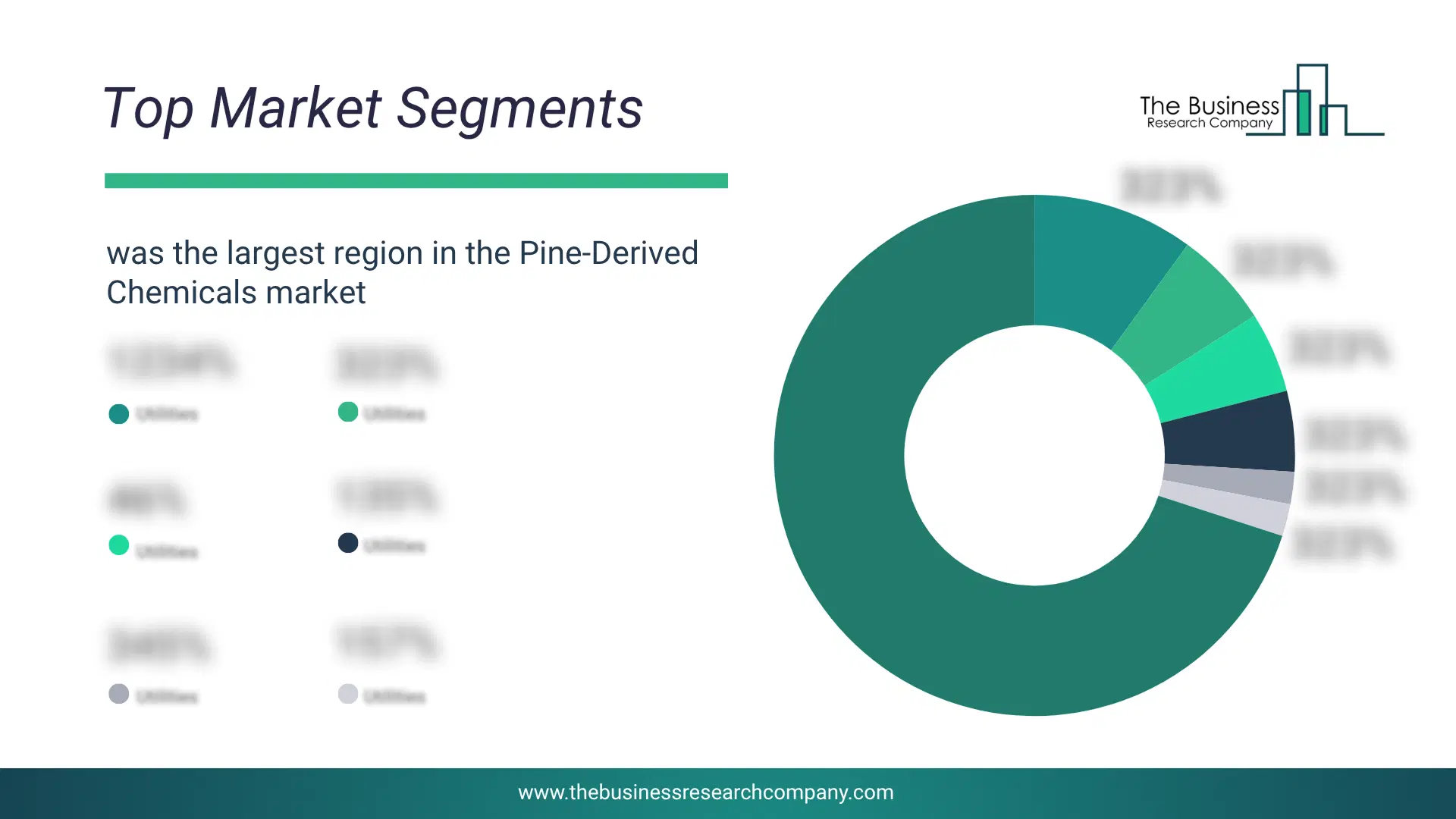
North America was the largest region in the pine-derived chemicals market in 2025. Europe was second-largest region in the pine-derived chemicals market report during the forecast period. The regions covered in this market report are Asia-Pacific, South East Asia, Western Europe, Eastern Europe, North America, South America, Middle East, Africa The countries covered in this market report are Australia, Brazil, China, France, Germany, India, Indonesia, Japan, Taiwan, Russia, South Korea, UK, USA, Canada, Italy, SpainWhat Defines the Pine-Derived Chemicals Market?
The pine-derived chemicals market consists of sales of crude sulfate turpentine sterols and stumps. Values in this market are ‘factory gate’ values, that is the value of goods sold by the manufacturers or creators of the goods, whether to other entities (including downstream manufacturers, wholesalers, distributors and retailers) or directly to end customers. The value of goods in this market includes related services sold by the creators of the goods.How is Market Value Defined and Measured?
The market value is defined as the revenues that enterprises gain from the sale of goods and/or services within the specified market and geography through sales, grants, or donations in terms of the currency (in USD unless otherwise specified). The revenues for a specified geography are consumption values that are revenues generated by organizations in the specified geography within the market, irrespective of where they are produced. It does not include revenues from resales along the supply chain, either further along the supply chain or as part of other products.
This chart presents market attractiveness based on a quantitative evaluation of growth, competition, strategic alignment, and risk, offering a clear view of opportunity areas for decision-making. This chart is for illustrative purposes; the full report contains the complete analysis.

This chart highlights the Total Addressable Market (TAM) by estimating the maximum revenue opportunity using an assumption-driven approach, supporting strategic planning and opportunity sizing across markets. The chart is illustrative; the full report provides a more comprehensive analysis.
What Key Data and Analysis Are Included in the Pine-Derived Chemicals Market Report 2026?
The pine-derived chemicals market research report is one of a series of new reports from The Business Research Company that provides market statistics, including industry global market size, regional shares, competitors with the market share, detailed market segments, market trends and opportunities, and any further data you may need to thrive in the pine-derived chemicals industry. The market research report delivers a complete perspective of everything you need, with an in-depth analysis of the current and future state of the industry.Pine-Derived Chemicals Market Report Forecast Analysis
| Report Attribute | Details |
|---|---|
| Market Size Value In 2026 | $6.4 billion |
| Revenue Forecast In 2030 | $8.01 billion |
| Growth Rate | CAGR of 6.4% from 2026 to 2030 |
| Base Year For Estimation | 2025 |
| Actual Estimates/Historical Data | 2020-2025 |
| Forecast Period | 2026 - 2030 |
| Market Representation | Revenue in USD Billion and CAGR from 2026 to 2030 |
| Segments Covered | Type, Process, Source, Application |
| Regional Scope | Asia-Pacific, Western Europe, Eastern Europe, North America, South America, Middle East, Africa |
| Country Scope | The countries covered in this market report are Australia, Brazil, China, France, Germany, India, Indonesia, Japan, Taiwan, Russia, South Korea, UK, USA, Canada, Italy, Spain |
| Key Companies Profiled | Ingevity Corporation, Florachem Corporation, Harima Chemicals Group Inc., DRT (Les Dérivés Résiniques et Terpéniques), Georgia-Pacific Chemicals LLC, Privi Speciality Chemicals Limited, PineChemical Group Oy, SunPine AB, Lawter Inc., Arakawa Chemical Industries Ltd., Kraton Corporation, Forchem Oy, International Flavors & Fragrances Inc., Takasago International Corporation, Wuzhou Sun Shine Forestry and Chemicals Co., Ltd., Mercer International Inc., Respol Resinas S.A., Harbin Pine Chemical Co., Ltd., Guilin Songquan Forestry Chemical Co., Ltd., Guangxi Wuzhou Pine Chemicals Co., Ltd., Stora Enso Oyj |
| Customization Scope | Request for Customization |
| Pricing And Purchase Options | Explore Purchase Options |