
Pituitary Dwarf Treatment Market Report 2026
Global Outlook – By Type (Pituitary Dwarfism Type I, Pituitary Dwarfism Type II, Pituitary Dwarfism Type III, Pituitary Dwarfism Type IV, Other Types), By Treatment (Surgery, Additional Therapy, Drugs, Other Treatments), By Route Of Administration (Parenteral, Other Routes Of Administrations), By End User (Hospitals, Homecare, Specialty Clinics, Other End Users) - Market Size, Trends, Strategies, and Forecast to 2030
Pituitary Dwarf Treatment Market Overview
• Pituitary Dwarf Treatment market size has reached to $6.37 billion in 2025 • Expected to grow to $12.37 billion in 2030 at a compound annual growth rate (CAGR) of 14.3% • Growth Driver: Expanding Pituitary Dwarf Treatment Market Driven By The Anticipated Increase In Prevalence Of Hormonal Disorders • Market Trend: Innovative Growth Hormone Therapies Enhance Treatment Convenience And Outcomes In The Market • North America was the largest region in 2025.What Is Covered Under Pituitary Dwarf Treatment Market?
Pituitary dwarf is a medical condition in which the pituitary gland fails to produce sufficient growth hormone (GH). This deficiency leads to impaired growth and development in affected individuals, resulting in short stature or dwarfism. The pituitary dwarf treatment stimulates the growth of bones, muscles and other tissues, which can cause a noticeable increase in height and overall physical development. The main types of pituitary dwarf treatment are pituitary dwarfism type I, pituitary dwarfism type II, pituitary dwarfism type III, pituitary dwarfism type IV and others. Pituitary dwarfism type I, also known as isolated growth hormone deficiency type I, is a medical condition characterized by a deficiency of growth hormone (GH) production from the pituitary gland. The various treatments surgery additional therapy, drugs and others. The various routes of administration include parenteral and others. These are used by various end-users such as hospitals, homecare, specialty clinics and others.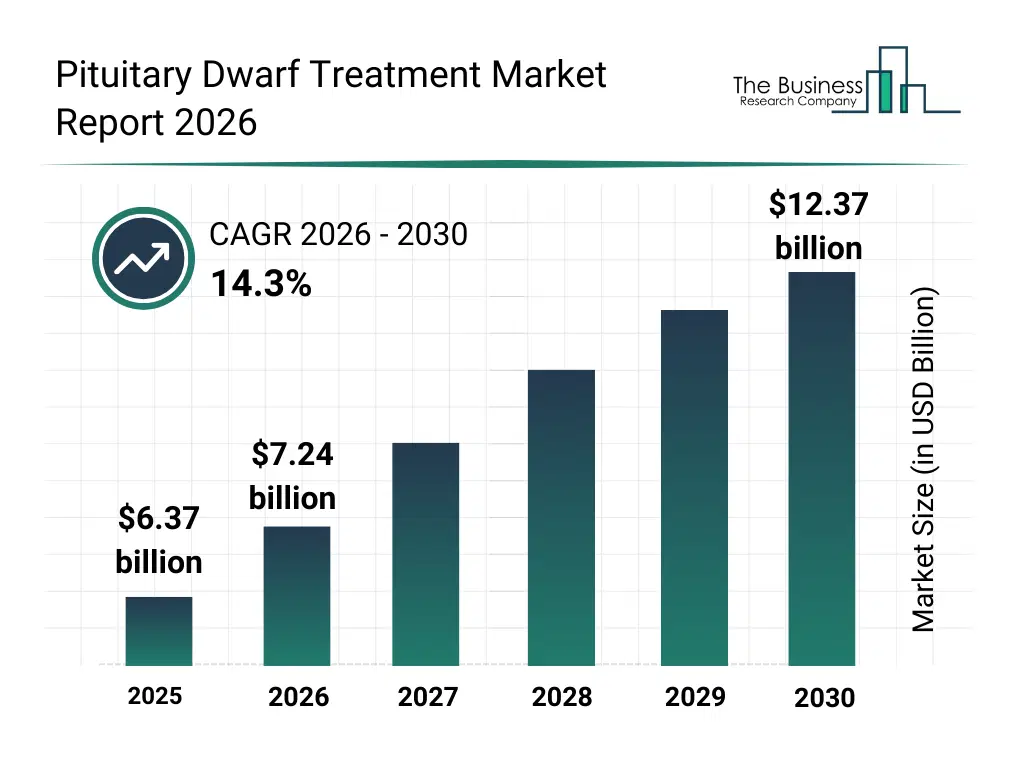
What Is The Pituitary Dwarf Treatment Market Size and Share 2026?
The pituitary dwarf treatment market size has grown rapidly in recent years. It will grow from $6.37 billion in 2025 to $7.24 billion in 2026 at a compound annual growth rate (CAGR) of 13.7%. The growth in the historic period can be attributed to increasing awareness of growth hormone deficiency, expansion of pediatric endocrine care services, improved diagnostic capabilities, rising availability of hormone replacement therapies, growing healthcare access in developed regions.What Is The Pituitary Dwarf Treatment Market Growth Forecast?
The pituitary dwarf treatment market size is expected to see rapid growth in the next few years. It will grow to $12.37 billion in 2030 at a compound annual growth rate (CAGR) of 14.3%. The growth in the forecast period can be attributed to increasing investment in rare disease treatments, rising demand for long-acting growth hormone therapies, expansion of precision endocrinology approaches, growing adoption of personalized medicine, increasing focus on early childhood intervention programs. Major trends in the forecast period include increasing adoption of recombinant growth hormone therapies, rising focus on early diagnosis and intervention, growing use of long-acting hormone formulations, expansion of specialized endocrine care services, enhanced emphasis on personalized treatment protocols.
Global Pituitary Dwarf Treatment Market Segmentation
1) By Type: Pituitary Dwarfism Type I, Pituitary Dwarfism Type II, Pituitary Dwarfism Type III, Pituitary Dwarfism Type IV, Other Types 2) By Treatment: Surgery, Additional Therapy, Drugs, Other Treatments 3) By Route Of Administration: Parenteral, Other Routes Of Administrations 4) By End User: Hospitals, Homecare, Specialty Clinics, Other End Users Subsegments: 1) By Pituitary Dwarfism Type I: Growth Hormone Deficiency, Hypopituitarism 2) By Pituitary Dwarfism Type II: Isolated Growth Hormone Deficiency, Combined Pituitary Hormone Deficiency 3) By Pituitary Dwarfism Type III: Congenital Anomalies, Genetic Disorders 4) By Pituitary Dwarfism Type IV: Acquired Causes, Other Hormonal Imbalances 5) By Other Types: Idiopathic Dwarfism, Syndromic DwarfismWhat Are The Drivers Of The Pituitary Dwarf Treatment Market?
The rise in the prevalence of hormonal disorders is expected to drive the expansion of the pituitary dwarf treatment market going forward. Hormonal disorders refer to medical conditions that involve abnormalities in the function of the endocrine system. The pituitary gland, located at the base of the brain, plays a central role in regulating the production and release of hormones, including growth hormone (GH). For instance, in June 2024, according to the National Health Service (NHS), a UK-based government department, among individuals under 40, it rose from 173,166 in 2022 to 216,440 in 2023. This significant growth highlights a concerning trend in this age group. The data reflects a rapid escalation in diabetes prevalence among younger populations. Therefore, the rise in the prevalence of hormonal disorders is driving the growth of the pituitary dwarf treatment industry. The rising healthcare spending is expected to propel the growth of the pituitary dwarf treatment market going forward. Healthcare spending refers to the total amount of financial resources dedicated to health services and goods, public health programs, and research and development within the healthcare sector. The rising healthcare spending can be attributed to factors such as the increasing prevalence of chronic diseases and the aging population. Additionally, advancements in medical technologies and the demand for higher-quality healthcare services. Pituitary dwarf treatment contributes to rising healthcare spending by increasing demand for specialized medical care, hormone therapies, and long-term management of the condition. For instance, in June 2025, the Centers for Medicare & Medicaid Services, a US-based government agency, reported that hospital expenditures grew 10.4% to $1,519.7 billion in 2023, faster than the 3.2% growth in 2022. Further, physician and clinical services expenditures grew 7.4% to $978.0 billion in 2023, faster growth than the 4.6% in 2022. Therefore, rising healthcare spending is driving the growth of the pituitary dwarf treatment industry.Key Players In The Global Pituitary Dwarf Treatment Market
Major companies operating in the pituitary dwarf treatment market are Pfizer Inc., Merck and Co Inc., Novartis AG, Sanofi S.A., Eli Lilly and Company, Novo Nordisk A/S, Mylan N.V., Teva Pharmaceutical Industries Ltd, Ipsen Pharma S.A., Genentech Inc., Apotex Inc., Cipla Limited, Ferring Pharmaceuticals, Anhui Anke Biotechnology Group Co Ltd., Amneal Pharmaceuticals LLC, BioMarin Pharmaceutical Inc., Biopartners GmbH, Xiamen Amoytop Biotech Co Ltd, GeneScience Pharmaceuticals Co Ltd, LG Chem Ltd, Sandoz International GmbH, Sun Pharmaceutical Industries Ltd
This chart is for illustrative purposes; the full report includes a detailed competitor analysis and comprehensive overview of the top 10 companies in the market.
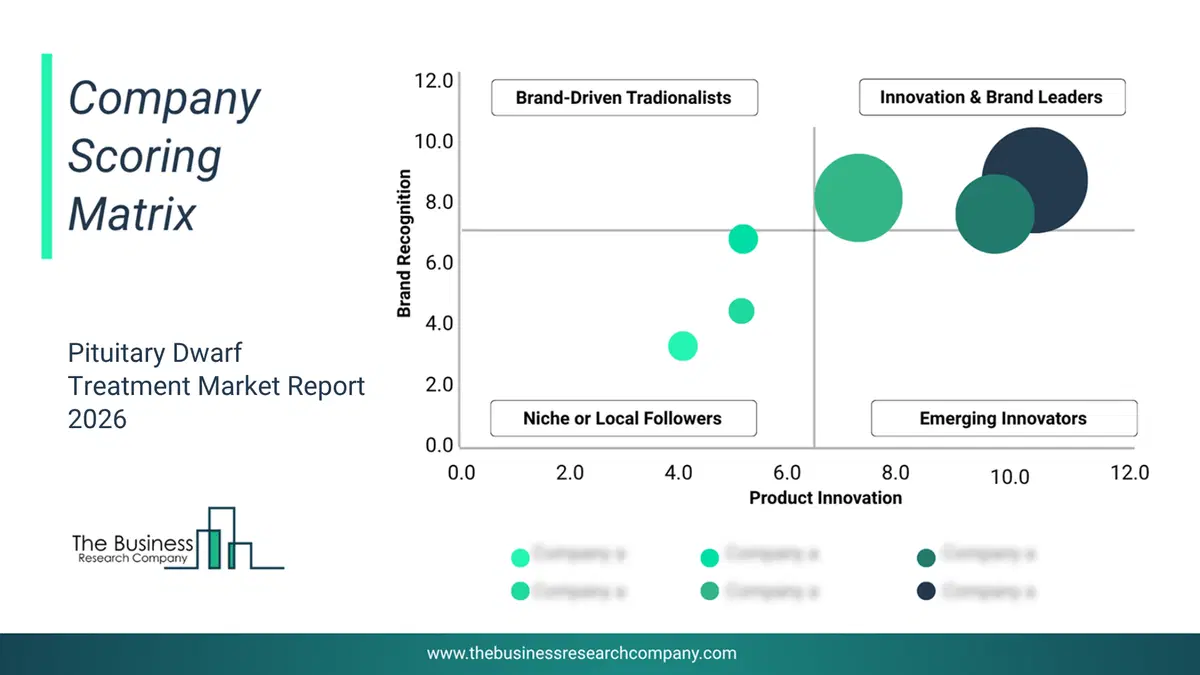
This chart maps companies by product innovation and brand strength, with bubble size indicating relative revenue, helping identify market leaders, challengers, and niche players. This is an illustrative chart; the full report provides a complete and accurate competitive analysis.
Global Pituitary Dwarf Treatment Market Trends and Insights
Major companies operating in the pituitary dwarf treatment market are focusing on developing advanced therapeutic products, such as long-acting growth hormone formulations, to improve treatment adherence, enhance clinical outcomes, and strengthen their competitive position. Long-acting growth hormone therapies refer to injectable medications designed to maintain stable hormone levels over extended periods, reducing dosing frequency and improving convenience for pediatric and adult patients with growth deficiencies. For instance, in April 2023, Novo Nordisk A/S, a Denmark-based pharmaceutical company, introduced Sogroya (somapacitan-beco) injections in 5 mg, 10 mg, and 15 mg strengths, following approval by the U.S. Food and Drug Administration (FDA). Sogroya is indicated for children aged 2.5 years and older with growth disorders caused by insufficient endogenous growth hormone secretion. With this expanded indication, Sogroya has become the only once-weekly growth hormone treatment available for both children and adults, marking a significant advancement in convenience and therapeutic management.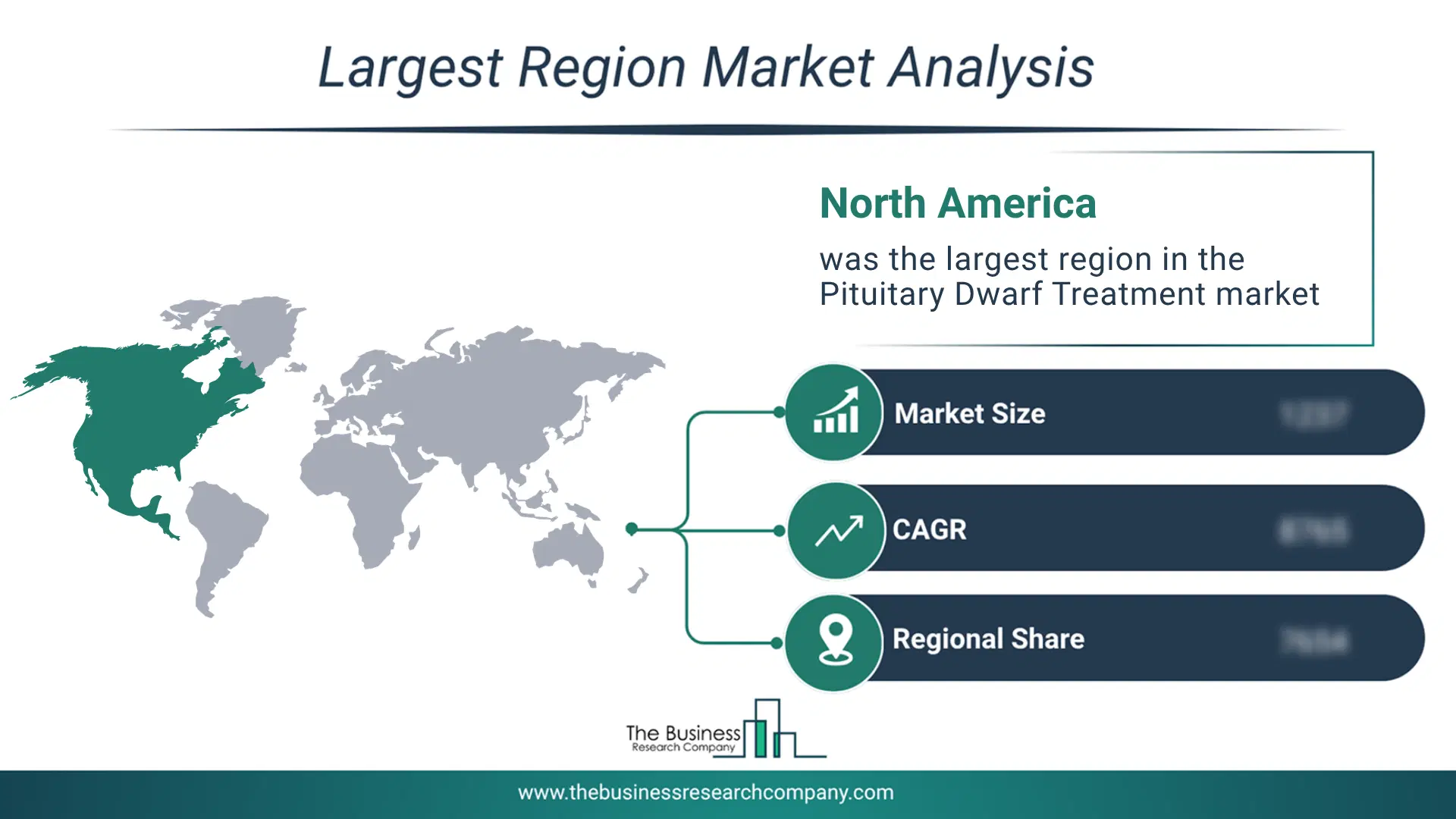
Regional Outlook
North America was the largest region in the pituitary dwarf treatment market in 2025. The regions covered in this market report are Asia-Pacific, South East Asia, Western Europe, Eastern Europe, North America, South America, Middle East, Africa. The countries covered in this market report are Australia, Brazil, China, France, Germany, India, Indonesia, Japan, Taiwan, Russia, South Korea, UK, USA, Canada, Italy, Spain.What Defines the Pituitary Dwarf Treatment Market?
The pituitary dwarf treatment market consists of revenues earned by entities by providing hormone replacement therapy (HRT), combined hormone therapy, synthetic human growth hormone injections and surgical interventions. The market value includes the value of related goods sold by the service provider or included within the service offering. The pituitary dwarf treatment market also includes sales of somatropin, bromocriptine and octreotide. Values in this market are ‘factory gate’ values, that is the value of goods sold by the manufacturers or creators of the goods, whether to other entities (including downstream manufacturers, wholesalers, distributors and retailers) or directly to end customers. The value of goods in this market includes related services sold by the creators of the goods.How is Market Value Defined and Measured?
The market value is defined as the revenues that enterprises gain from the sale of goods and/or services within the specified market and geography through sales, grants, or donations in terms of the currency (in USD unless otherwise specified). The revenues for a specified geography are consumption values that are revenues generated by organizations in the specified geography within the market, irrespective of where they are produced. It does not include revenues from resales along the supply chain, either further along the supply chain or as part of other products.
This chart presents market attractiveness based on a quantitative evaluation of growth, competition, strategic alignment, and risk, offering a clear view of opportunity areas for decision-making. This chart is for illustrative purposes; the full report contains the complete analysis.

This chart highlights the Total Addressable Market (TAM) by estimating the maximum revenue opportunity using an assumption-driven approach, supporting strategic planning and opportunity sizing across markets. The chart is illustrative; the full report provides a more comprehensive analysis.
What Key Data and Analysis Are Included in the Pituitary Dwarf Treatment Market Report 2026?
The pituitary dwarf treatment market research report is one of a series of new reports from The Business Research Company that provides market statistics, including industry global market size, regional shares, competitors with the market share, detailed market segments, market trends and opportunities, and any further data you may need to thrive in the pituitary dwarf treatment industry. The market research report delivers a complete perspective of everything you need, with an in-depth analysis of the current and future state of the industry.Pituitary Dwarf Treatment Market Report Forecast Analysis
| Report Attribute | Details |
|---|---|
| Market Size Value In 2026 | $7.24 billion |
| Revenue Forecast In 2030 | $12.37 billion |
| Growth Rate | CAGR of 14.3% from 2026 to 2030 |
| Base Year For Estimation | 2025 |
| Actual Estimates/Historical Data | 2020-2025 |
| Forecast Period | 2026 - 2030 |
| Market Representation | Revenue in USD Billion and CAGR from 2026 to 2030 |
| Segments Covered | Type, Treatment, Route Of Administration, End User |
| Regional Scope | Asia-Pacific, Western Europe, Eastern Europe, North America, South America, Middle East, Africa |
| Country Scope | The countries covered in the report are Australia, Brazil, China, France, Germany, India, Indonesia, Japan, Taiwan, Russia, South Korea, UK, USA, Canada, Italy, Spain |
| Key Companies Profiled | Pfizer Inc., Merck and Co Inc., Novartis AG, Sanofi S.A., Eli Lilly and Company, Novo Nordisk A/S, Mylan N.V., Teva Pharmaceutical Industries Ltd, Ipsen Pharma S.A., Genentech Inc., Apotex Inc., Cipla Limited, Ferring Pharmaceuticals, Anhui Anke Biotechnology Group Co Ltd., Amneal Pharmaceuticals LLC, BioMarin Pharmaceutical Inc., Biopartners GmbH, Xiamen Amoytop Biotech Co Ltd, GeneScience Pharmaceuticals Co Ltd, LG Chem Ltd, Sandoz International GmbH, Sun Pharmaceutical Industries Ltd |
| Customization Scope | Request for Customization |
| Pricing And Purchase Options | Explore Purchase Options |