
Plant-Based Food Market Report 2026
Global Outlook – By Type (Diary Alternatives, Meat Alternatives, Other Types), By Source (Soy, Almond, Wheat, Pea, Rice, Other Sources), By Distribution Channel (Supermarkets And Hypermarkets, Convenience Stores, Online Stores, Other Distribution Channels) – Market Size, Trends, Strategies, and Forecast to 2030
Plant-Based Food Market Overview
• Plant-Based Food market size has reached to $64.14 billion in 2025 • Expected to grow to $124.36 billion in 2030 at a compound annual growth rate (CAGR) of 14.2% • Growth Driver: The Surge Of Plant-Based Foods Soaring Future Of The Plant-Based Food Market • Market Trend: Strategic Collaborations Reshaping The Plant-Based Food Market Dynamics • North America was the largest region in 2025 and Asia-Pacific is the fastest growing region.Market Gains By 2030 – Top Opportunities By Segment
Market Gain identifies the most promising market opportunities by highlighting the segments or products expected to generate the highest incremental revenue growth over the next five years.
What Is Covered Under Plant-Based Food Market?
Plant-based food refers to a food item, product, or meat that is completely made from 100% plant ingredients and that is completely free from all animal products. Plant-based food is used for nutritional purposes and as potential sources in traditional medicines. The main types of plant-based food include dairy alternatives, meat alternatives, egg substitutes, condiments and others. Meat substitutes are synthetic food items that try to be similar to meat by emphasizing common characteristics and relationships. They are produced using various sources including soy, almond, wheat, pea, rice, and others, that are distributed through various channels such as supermarkets and hypermarkets convenience stores online stores and others.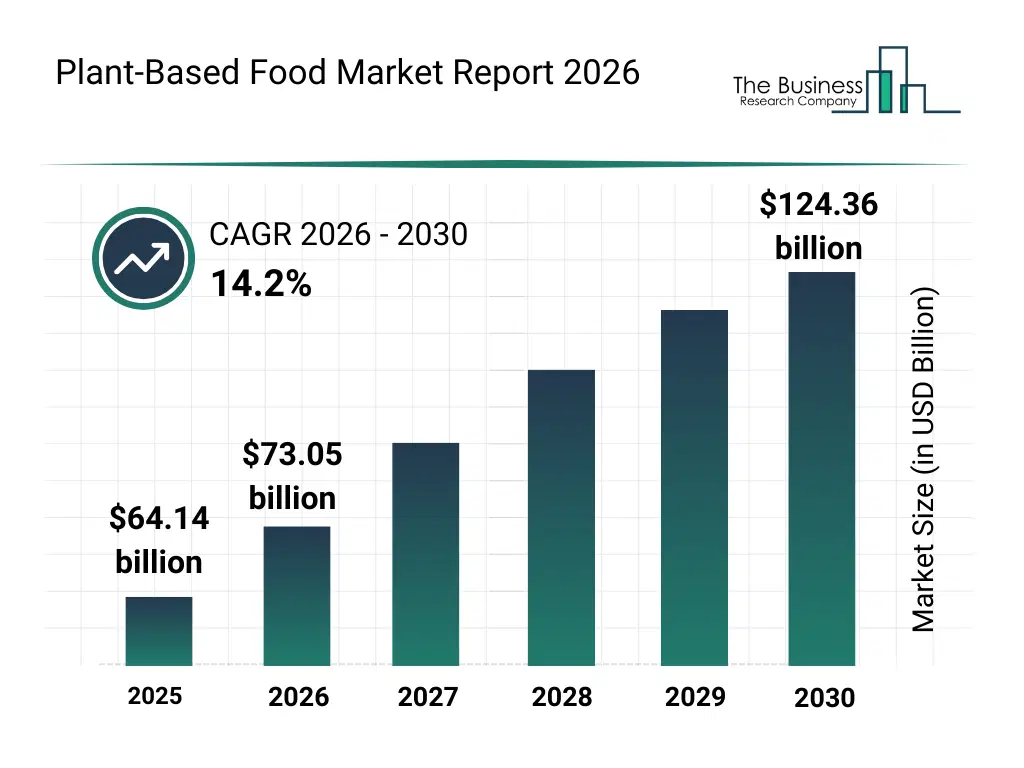
What Is The Plant-Based Food Market Size and Share 2026?
The plant-based food market size has grown rapidly in recent years. It will grow from $64.14 billion in 2025 to $73.05 billion in 2026 at a compound annual growth rate (CAGR) of 13.9%. The growth in the historic period can be attributed to rising consumer interest in health and wellness diets, increasing lactose intolerance and food allergies, expansion of vegetarian and vegan populations, growth of modern retail food distribution, availability of diverse plant protein sources.What Is The Plant-Based Food Market Growth Forecast?
The plant-based food market size is expected to see rapid growth in the next few years. It will grow to $124.36 billion in 2030 at a compound annual growth rate (CAGR) of 14.2%. The growth in the forecast period can be attributed to increasing focus on sustainable food systems, rising demand for fortified and functional plant-based foods, expansion of food technology innovation, growing penetration of plant-based foods in emerging markets, increased investment in alternative nutrition research. Major trends in the forecast period include expansion of plant-based protein product lines, rising demand for clean-label and natural foods, growing focus on nutritional fortification, increasing innovation in texture and taste enhancement, wider adoption of ready-to-eat plant-based foods.
Global Plant-Based Food Market Segmentation
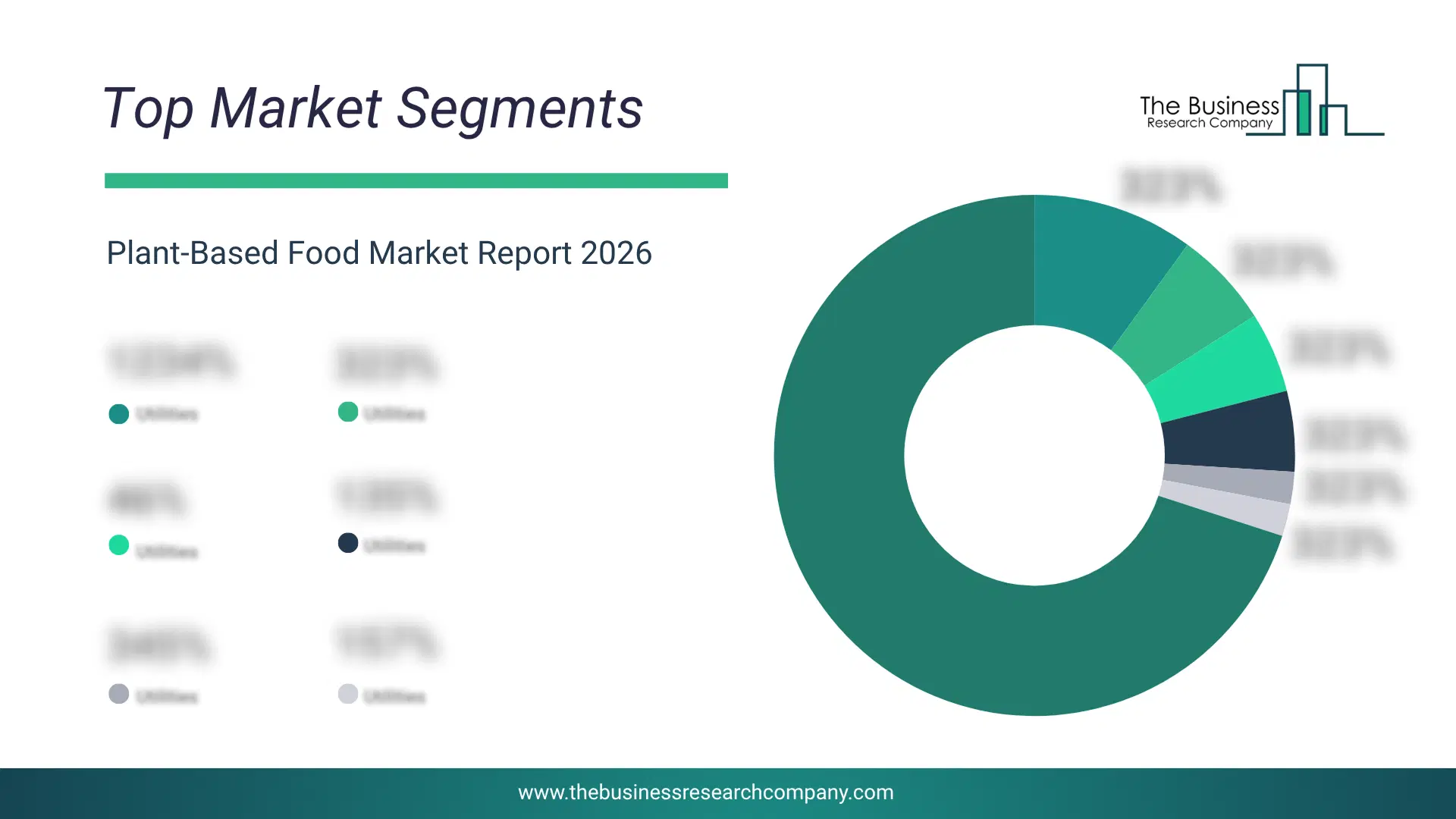
1) By Type: Diary Alternatives, Meat Alternatives, Other Types 2) By Source: Soy, Almond, Wheat, Pea, Rice, Other Sources 3) By Distribution Channel: Supermarkets And Hypermarkets, Convenience Stores, Online Stores, Other Distribution Channels Subsegments: 1) By Dairy Alternatives: Plant-based Milk, Yogurt Alternatives, Cheese Alternatives, Cream And Sour Cream Alternatives 2) By Meat Alternatives: Plant-Based Burgers, Chicken Alternatives, Fish Alternatives 3) By Other Types: Ready-to-Eat and Ready-to-Cook Plant-Based Meals, Frozen Plant-Based Foods, Plant-Based Soups and Broths, Plant-Based Functional Foods The top segments in the plant-based food market will be: • Dairy Alternatives will reach $69.32 Billion by 2030. • Meat Alternatives will reach $35.96 Billion by 2030. • Other Types will reach $18.49 Billion by 2030.What Is The Driver Of The Plant-Based Food Market?
Growing preference for plant-based food products is expected to propel the growth of the plant-based food market going forward. Plant-based food products refer to a product that is completely made from 100% plant ingredients and that is completely free from all animal products. They contain no animal products or animal-derived ingredients and include only vegetables, fruits, and grains. Increasing preference for plant-based food products is increasing because of their health benefits, ethical issues, and environmental concerns. People preferring plant-based food products will help to propel the market growth. For instance, in October 2024, according to the GFI, a US-based nonprofit organization, sales of plant-based foods in six key European countries grew by 5.5% to €5.4 billion last year. Therefore, the growing preference for plant-based food products is driving the growth of the plant-based food industry.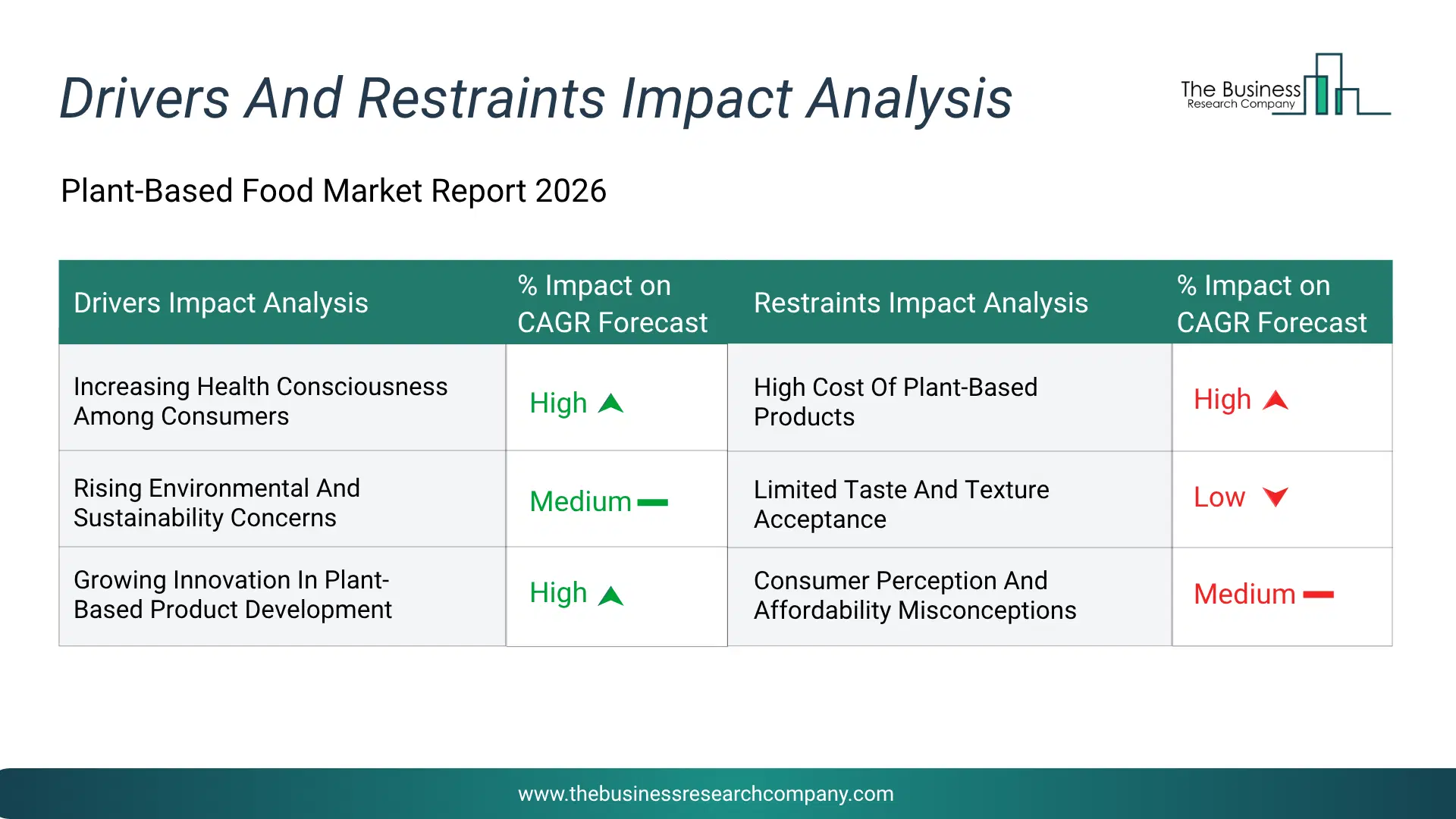
Infographic Chart Showing Key Market Drivers Analysis And Restraints For Plant-Based Food Market
The chart presents an impact analysis of key drivers and restraints, quantifying their relative influence on the market's growth rate and helping assess the balance between growth enablers and limiting factors. This chart offers a high-level perspective; the full report contains more detailed insights.
How Will The Drivers Impact Growth In The Global Plant-Based Food Market?
• Increasing Health Consciousness Among Consumers (High) – During the forecast period, the increasing health consciousness among consumers is expected to become a key growth driver for the plant-based food market by 2030. The growing awareness regarding lifestyle diseases such as obesity, diabetes, and cardiovascular conditions is significantly influencing consumer dietary choices. Plant-based foods are perceived as healthier alternatives due to their lower saturated fat and cholesterol content. This shift encourages consumers to replace conventional animal-based products with plant-derived options such as tofu, plant protein, and dairy alternatives. As a result, manufacturers are witnessing increased demand across retail and foodservice channels. This health-driven consumption pattern directly accelerates the expansion of the plant-based food market. • Rising Environmental And Sustainability Concerns (Medium) – During the forecast period, the rising environmental and sustainability concerns is expected to emerge as a major factor driving the expansion of the plant-based food market by 2030. Environmental awareness related to greenhouse gas emissions, water consumption, and land use in animal agriculture is driving the adoption of plant-based diets. Consumers and organizations are increasingly aligning with sustainable consumption practices, favoring foods with lower environmental footprints. Plant-based food production generally requires fewer natural resources, making it a preferred choice for environmentally conscious buyers. This shift is also supported by global sustainability initiatives and climate goals. Consequently, demand for plant-based products continues to grow, positively influencing market expansion. • Growing Innovation In Plant-Based Product Development (High) – During the forecast period, the growing innovation in plant-based product development is expected to act as a key growth catalyst for the plant-based food market by 2030. Continuous advancements in food technology have significantly improved the taste, texture, and nutritional value of plant-based products. Companies are investing in R&D to replicate meat, dairy, and other animal-based products more accurately, increasing consumer acceptance. The introduction of diverse product offerings such as mock meat, plant-based cheese, and protein powders is expanding the consumer base. Innovation also enables competitive pricing and wider accessibility across markets. This ongoing product evolution strengthens demand and drives sustained growth in the plant-based food market.How Will The Restraints Impact Growth In The Global Plant-Based Food Market?
• High Cost Of Plant-Based Products (High) – During the forecast period, the plant-based alternatives, especially processed products like mock meat and plant-based dairy, are often priced significantly higher than conventional animal-based foods due to complex processing and lower production scale. This price gap discourages adoption among cost-sensitive consumers and limits penetration in developing markets. Studies show plant-based meats can be substantially more expensive than traditional meat, delaying mass acceptance. As affordability remains a key purchase factor, this cost barrier directly restricts demand growth and acts as a major restraint for the market. • Limited Taste And Texture Acceptance (Medium) – During the forecast period, the although innovation is improving product quality, plant-based foods still struggle to consistently match the taste, texture, and sensory experience of conventional meat and dairy. Consumer studies indicate that taste remains a primary factor influencing food choices, and even small gaps can reduce repeat purchases. Many consumers compare plant-based products directly with animal-based equivalents and perceive them as inferior in flavor or mouthfeel. This perception slows adoption and reduces long-term loyalty, thereby restraining overall market expansion. • Consumer Perception And Affordability Misconceptions (High) – During the forecast period, a significant portion of consumers believe plant-based foods are more expensive and less accessible, even when affordable options exist. Surveys indicate that around 70% of consumers perceive plant-based products as costly, which discourages trial and regular consumption. Additionally, when plant-based options are priced higher than meat, consumer preference drops sharply, highlighting the sensitivity to perceived value. This perception gap reduces demand potential and acts as a psychological barrier, limiting market growth despite increasing awareness.Key Players In The Global Plant-Based Food Market
Major companies operating in the plant-based food market are Beyond Meat Inc., Impossible Foods Inc., Quorn Foods Ltd., Oatly Group AB, Amy’s Kitchen Inc., Hain Celestial Group Inc., Gold & Green Foods Ltd., Turtle Island Foods SPC, Daiya Foods Inc., Atlantic Natural Foods LLC, Fry Family Food Co., Tofutti Brands Inc., VBites Foods Ltd., Sunfed Meats Ltd., Garden Protein International Inc., Kite Hill Foods Inc., LikeMeat GmbH, Cauldron Foods Ltd., So Delicious Dairy Free, Soylent Inc., Laird Superfood Inc., Vitalite Foods Ltd.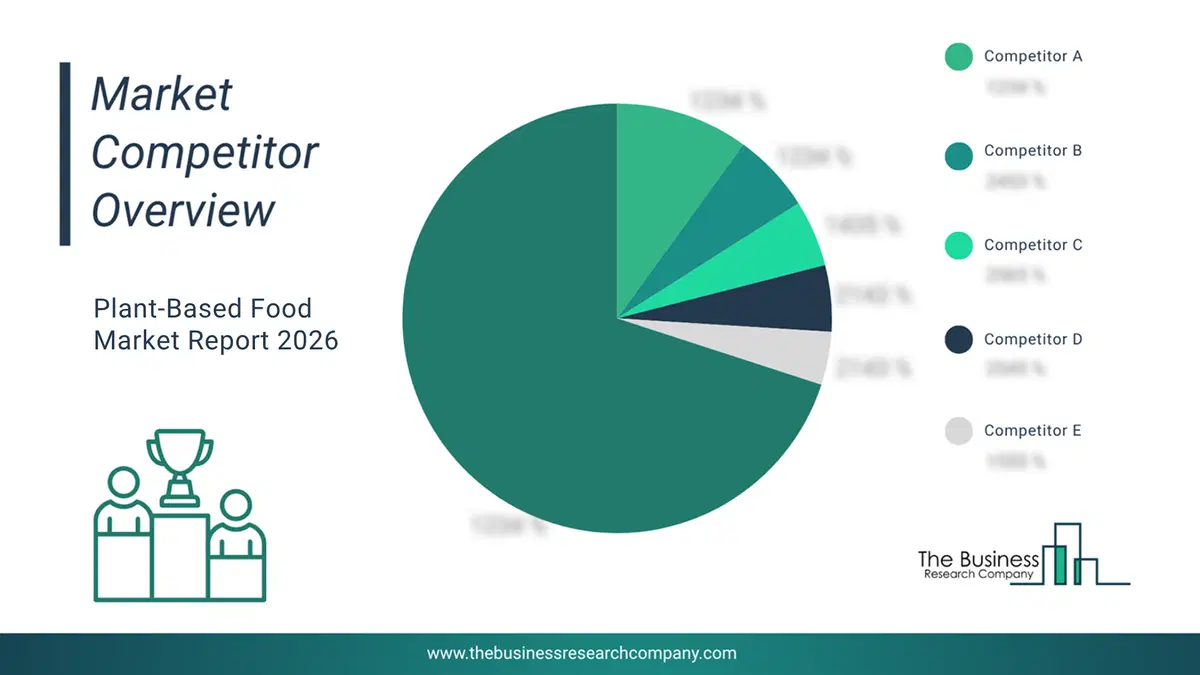
This chart is for illustrative purposes; the full report includes a detailed competitor analysis and comprehensive overview of the top 10 companies in the market.
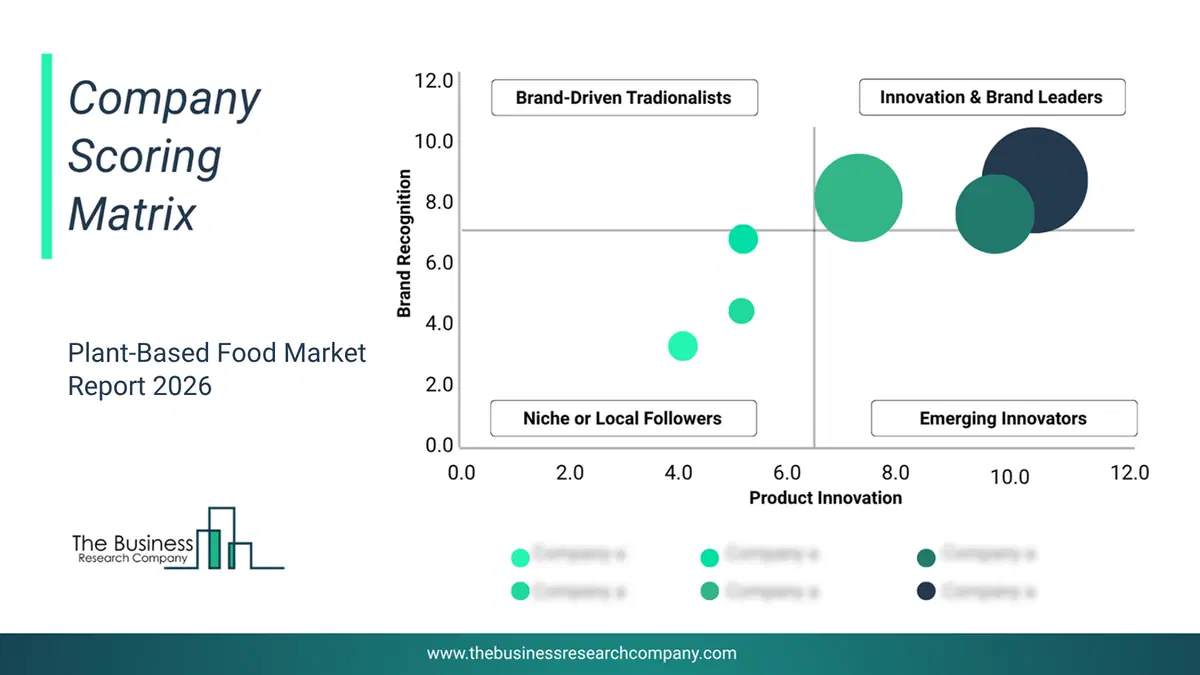
This chart maps companies by product innovation and brand strength, with bubble size indicating relative revenue, helping identify market leaders, challengers, and niche players. This is an illustrative chart; the full report provides a complete and accurate competitive analysis.
Global Plant-Based Food Market Trends and Insights
Major companies operating in the plant-based food market are forming partnerships to develop new products and strengthen their positions in the market. Strategic partnerships refer to a process in which companies leverage each other’s strengths and resources to achieve mutual benefits and success. For instance, in October 2023, Nelson-Jameson, a US-based food processing distributor partnered with Vaess, a Dutch-based food tech company and Lallemand Specialty Cultures, a US-based specialty cultures manufacturing company for expanding plant-based manufacturing. The collaboration strives to provide plant-based options, expanding the customer base to address the growing demand for greater diversity in the portfolios of existing customers. The partnership aims to implement focused strategies for companies manufacturing plant-based and hybrid products.What Are Latest Mergers And Acquisitions In The Plant-Based Food Market?
In June 2023, KWS SAAT SE & Co. KGaA, a Germany-based plant breeding company, partnered with VF Nutrition GmbH (vly) to further develop plant-based foods made from pea protein. With this partnership, KWS SAAT SE & Co. KGaA and VF Nutrition GmbH aim to enhance the taste, texture, and processing quality of pea-based ingredients to support the growing market for plant-based dairy alternatives. VF Nutrition GmbH is a Germany-based food technology company that specializes in producing pea-protein-based dairy alternative products.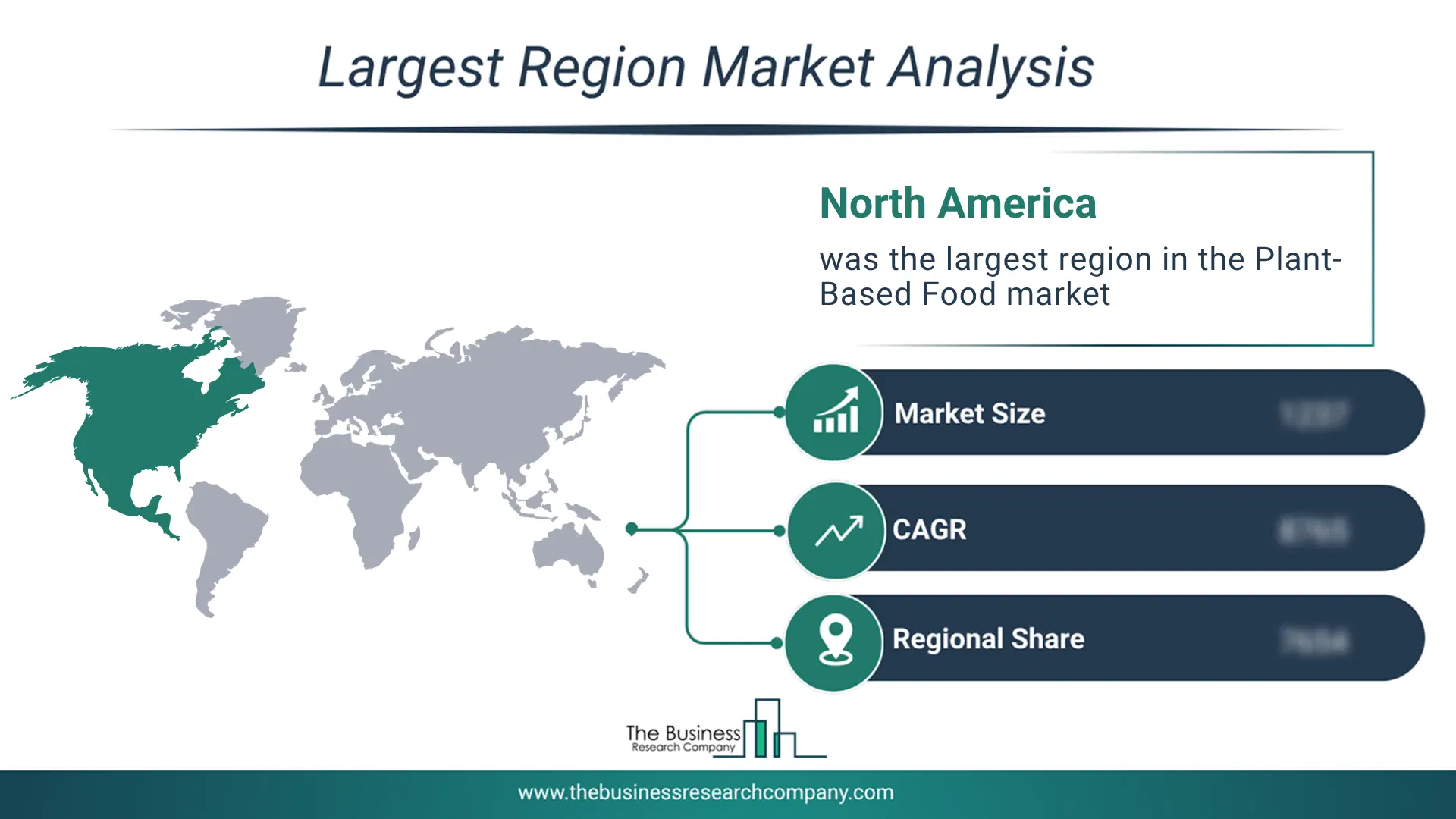
Regional Outlook
North America was the largest region in the plant-based food market in 2025. Asia-Pacific is expected to be the fastest-growing region in the global plant-based food market during forecast period. The regions covered in this market report are Asia-Pacific, South East Asia, Western Europe, Eastern Europe, North America, South America, Middle East and Africa. The countries covered in this market report are Australia, Brazil, China, France, Germany, India, Indonesia, Japan, Taiwan, Russia, South Korea, UK, USA, Italy, Spain, CanadaWhat Defines the Plant-Based Food Market?
The plant-based food market consists of sales of tofu, bread, plant-based protein powder, cheese, and mock meat. Values in this market are ‘factory gate’ values, that is the value of goods sold by the manufacturers or creators of the goods, whether to other entities (including downstream manufacturers, wholesalers, distributors, and retailers) or directly to end customers. The value of goods in this market includes related services sold by the creators of the goods.How is Market Value Defined and Measured?
The market value is defined as the revenues that enterprises gain from the sale of goods and/or services within the specified market and geography through sales, grants, or donations in terms of the currency (in USD unless otherwise specified). The revenues for a specified geography are consumption values that are revenues generated by organizations in the specified geography within the market, irrespective of where they are produced. It does not include revenues from resales along the supply chain, either further along the supply chain or as part of other products.
This chart presents market attractiveness based on a quantitative evaluation of growth, competition, strategic alignment, and risk, offering a clear view of opportunity areas for decision-making. This chart is for illustrative purposes; the full report contains the complete analysis.

This chart highlights the Total Addressable Market (TAM) by estimating the maximum revenue opportunity using an assumption-driven approach, supporting strategic planning and opportunity sizing across markets. The chart is illustrative; the full report provides a more comprehensive analysis.
What Key Data and Analysis Are Included in the Plant-Based Food Market Report 2026?
The plant-based food market research report is one of a series of new reports from The Business Research Company that provides market statistics, including industry global market size, regional shares, competitors with the market share, detailed market segments, market trends and opportunities, and any further data you may need to thrive in the plant-based food industry. The market research report delivers a complete perspective of everything you need, with an in-depth analysis of the current and future state of the industry.Plant-Based Food Market Report Forecast Analysis
| Report Attribute | Details |
|---|---|
| Market Size Value In 2026 | $73.05 billion |
| Revenue Forecast In 2030 | $124.36 billion |
| Growth Rate | CAGR of 13.9% from 2026 to 2030 |
| Base Year For Estimation | 2025 |
| Actual Estimates/Historical Data | 2020-2025 |
| Forecast Period | 2026 - 2030 |
| Market Representation | Revenue in USD Billion and CAGR from 2026 to 2030 |
| Segments Covered | Type, Source, Distribution Channel |
| Regional Scope | Asia-Pacific, Western Europe, Eastern Europe, North America, South America, Middle East, Africa |
| Country Scope | The countries covered in the report are Australia, Brazil, China, France, Germany, India, Indonesia, Japan, Taiwan, Russia, South Korea, UK, USA, Canada, Italy, Spain. |
| Key Companies Profiled | Beyond Meat Inc., Impossible Foods Inc., Quorn Foods Ltd., Oatly Group AB, Amy’s Kitchen Inc., Hain Celestial Group Inc., Gold & Green Foods Ltd., Turtle Island Foods SPC, Daiya Foods Inc., Atlantic Natural Foods LLC, Fry Family Food Co., Tofutti Brands Inc., VBites Foods Ltd., Sunfed Meats Ltd., Garden Protein International Inc., Kite Hill Foods Inc., LikeMeat GmbH, Cauldron Foods Ltd., So Delicious Dairy Free, Soylent Inc., Laird Superfood Inc., Vitalite Foods Ltd. |
| Customization Scope | Request for Customization |
| Pricing And Purchase Options | Explore Purchase Options |