
Plant-Derived Analgesics Market Report 2026
Global Outlook – By Product Type (Morphine, Codeine, Salicin, Cannabinoids, Curcumin), By Formulation Type (Tablets, Capsules, Creams, Injectable Forms, Oils), By Source (Plant-derived opioid alkaloids, Salicylate-type analgesics, Cannabinoids And hemp-derived, Polyphenolic, Other phytochemicals), By Sales Channel (Hospitals, Clinics, Retail Sales, Online Sales, Hypermarkets And Supermarkets), By Application (Chronic Pain Management, Acute Pain Relief, Post-Surgical Pain, Neuropathic Pain) – Market Size, Trends, Strategies, and Forecast to 2030
Plant-Derived Analgesics Market Overview
• Plant-Derived Analgesics market size has reached to $3.39 billion in 2025 • Expected to grow to $5.06 billion in 2030 at a compound annual growth rate (CAGR) of 8.4% • Growth Driver: Increasing Prevalence Of Chronic Pain Conditions Fueling Market Growth Due To Rising Awareness Of Side Effects And Addiction Risks Associated With Conventional Pain Medications • Market Trend: Advancements In Botanical Extraction And Bioavailability Technologies Enabling Standardized And Effective Natural Pain Management Solutions • North America was the largest region in 2025 and Asia-Pacific is the fastest growing region.What Is Covered Under Plant-Derived Analgesics Market?
Plant-derived analgesics refer to pain-relieving substances obtained from natural botanical sources, including medicinal plants that contain bioactive compounds with analgesic properties. These products are developed by extracting, purifying, and formulating plant-based active ingredients to reduce pain through biological mechanisms such as anti-inflammatory or neuro-modulatory effects. They are widely used in pharmaceutical, nutraceutical, and traditional medicine applications as alternatives or complements to synthetic pain management solutions. The main product types of plant-derived analgesics are morphine, codeine, salicin, cannabinoids, and curcumin. Morphine refers to a plant-derived opioid used for severe pain management, obtained from opium poppy. These analgesics are available in various formulation types, including tablets, capsules, creams, injectable forms, and oils, and are sourced from different plant origins, such as plant-derived opioid alkaloids, salicylate-type analgesics, cannabinoids and hemp-derived compounds, polyphenolic compounds, and other phytochemicals. They are distributed through multiple sales channels, including hospitals, clinics, retail sales, online sales, and hypermarkets and supermarkets, and are used across several applications, such as chronic pain management, acute pain relief, post-surgical pain, and neuropathic pain.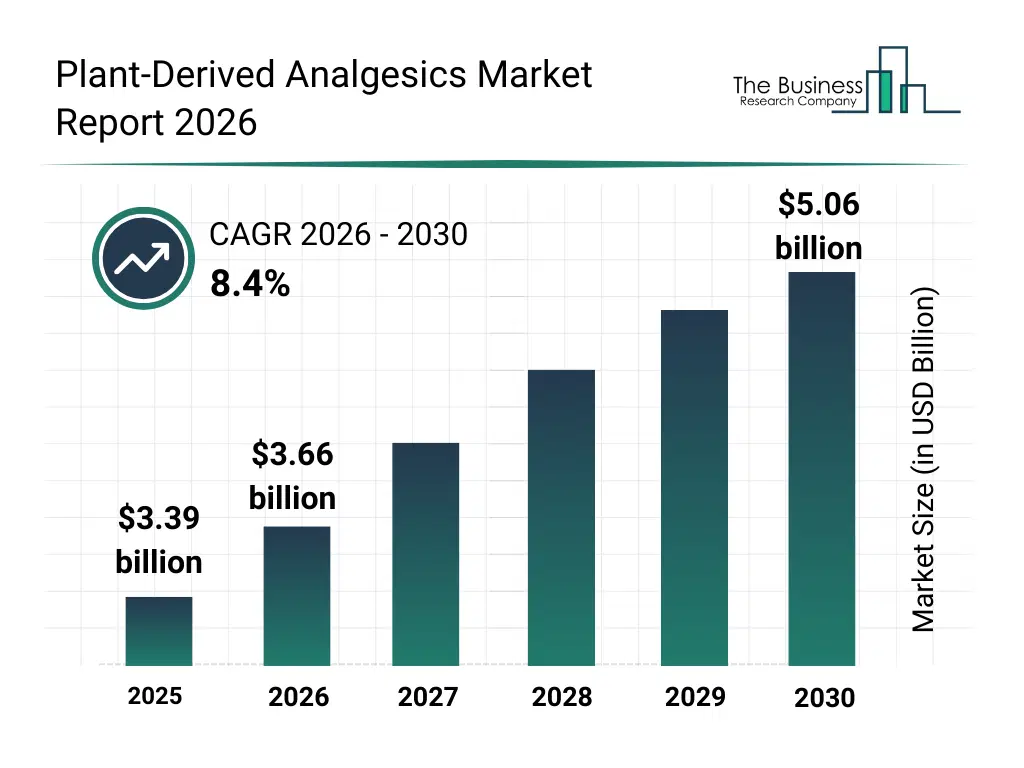
What Is The Plant-Derived Analgesics Market Size and Share 2026?
The plant-derived analgesics market size has grown strongly in recent years. It will grow from $3.39 billion in 2025 to $3.66 billion in 2026 at a compound annual growth rate (CAGR) of 8.2%. The growth in the historic period can be attributed to traditional medicine adoption, demand for natural pain relief, growth in herbal supplement use, opioid side effect concerns, expansion of botanical extraction.What Is The Plant-Derived Analgesics Market Growth Forecast?
The plant-derived analgesics market size is expected to see strong growth in the next few years. It will grow to $5.06 billion in 2030 at a compound annual growth rate (CAGR) of 8.4%. The growth in the forecast period can be attributed to rising preference for natural therapeutics, growth in cannabinoid medicines, expansion of plant based drug pipelines, increased clinical validation of botanicals, wider integrative care adoption. Major trends in the forecast period include standardized botanical pain extracts, high purity phytochemical isolation, combination herbal analgesic formulas, enhanced bioavailability plant actives, evidence based botanical therapies.
Global Plant-Derived Analgesics Market Segmentation
1) By Product Type: Morphine; Codeine; Salicin; Cannabinoids; Curcumin 2) By Formulation Type: Tablets; Capsules; Creams; Injectable Forms; Oils 3) By Source: Plant-derived opioid alkaloids; Salicylate-type analgesics; Cannabinoids And hemp-derived; Polyphenolic; Other phytochemicals 4) By Sales Channel: Hospitals; Clinics; Retail Sales; Online Sales; Hypermarkets And Supermarkets 5) By Application: Chronic Pain Management; Acute Pain Relief; Post-Surgical Pain; Neuropathic Pain Subsegments: 1) By Morphine: Immediate Release Formulations; Extended Release Formulations; Injectable Preparations; Oral Solid Dosage Forms 2) By Codeine: Single Ingredient Analgesics; Combination Pain Relief Products; Oral Solid Dosage Forms; Liquid Oral Formulations 3) By Salicin: Standardized Plant Extracts; Oral Solid Dosage Forms; Liquid Herbal Preparations; Combination Botanical Formulations 4) By Cannabinoids: Tetrahydrocannabinol Dominant Products; Cannabidiol Dominant Products; Balanced Cannabinoid Formulations; Full Spectrum Plant Extracts 5) By Curcumin: Standard Curcumin Extracts; Enhanced Bioavailability Formulations; Combination Herbal Products; Oral Solid Dosage FormsWhat Are The Drivers Of The Plant-Derived Analgesics Market?
The increasing prevalence of chronic pain conditions is expected to propel the growth of the plant-derived analgesics market going forward. Chronic pain conditions refer to persistent pain disorders, including musculoskeletal pain, arthritis, neuropathic pain, and inflammatory conditions, that require ongoing pain management. The prevalence of chronic pain conditions is rising globally due to aging populations, sedentary lifestyles, increasing obesity rates, and the growing burden of chronic diseases. Plant-derived analgesics support the management of chronic pain conditions by offering pain relief options formulated from Botanical Extracts, herbs, and bioactive plant compounds, which are increasingly used as complementary or alternative therapies for pain management. For instance, in November 2024, according to the Centers for Disease Control and Prevention (CDC), a US-based federal public health agency, around 24.3% of adults in the United States experienced chronic pain in 2023, while 8.5% had high-impact chronic pain. Therefore, the increasing prevalence of chronic pain conditions across major healthcare markets is driving the growth of the plant-derived analgesics industry. The rising consumer preference for natural remedies is expected to propel the growth of the plant-derived analgesics market going forward. Natural remedies refer to treatments derived from natural sources such as plants, herbs, minerals, and animal products that are used to prevent, manage, or relieve health conditions and are commonly associated with traditional, herbal, and complementary medicine practices, often used as alternatives or adjuncts to conventional medical therapies. The preference for natural remedies is increasing primarily due to growing consumer awareness of wellness-oriented and plant-based healthcare approaches, along with concerns regarding the side effects and long-term use of synthetic medicines. Plant-derived analgesics align with this preference by offering pain relief solutions sourced from medicinal plants, meeting consumer demand for plant-based and perceived safer therapeutic options. For instance, in September 2025, according to the American Botanical Council (ABC), a US-based nonprofit educational and research organization, retail sales of herbal dietary supplements in the United States reached a record $13.231 billion in 2024. Compared with 2023, U.S. consumers spent an additional $680 million on herbal supplements, representing a year-over-year increase of 5.4%. Therefore, the rising consumer preference for natural remedies is driving the growth of the plant-derived analgesics industry.Key Players In The Global Plant-Derived Analgesics Market
Major companies operating in the plant-derived analgesics market are Dabur India Limited, Patanjali Ayurved Limited, Blackmores Limited, Bionorica SE, Emami Limited, Himalaya Wellness Company, Biologische Heilmittel Heel GmbH, Charak Pharma Private Limited, Indena S.p.A., Nature’s Way Products LLC, Arya Vaidya Sala Kottakkal, Gaia Herbs Farm Inc., Hamdard Laboratories (India), Shree Dhootapapeshwar Limited, Sri Sri Tattva, Euromed S.A., Sami-Sabinsa Group Limited, Martin Bauer Group, Shree Baidyanath Ayurved Bhawan Private Limited, Organic India Private Limited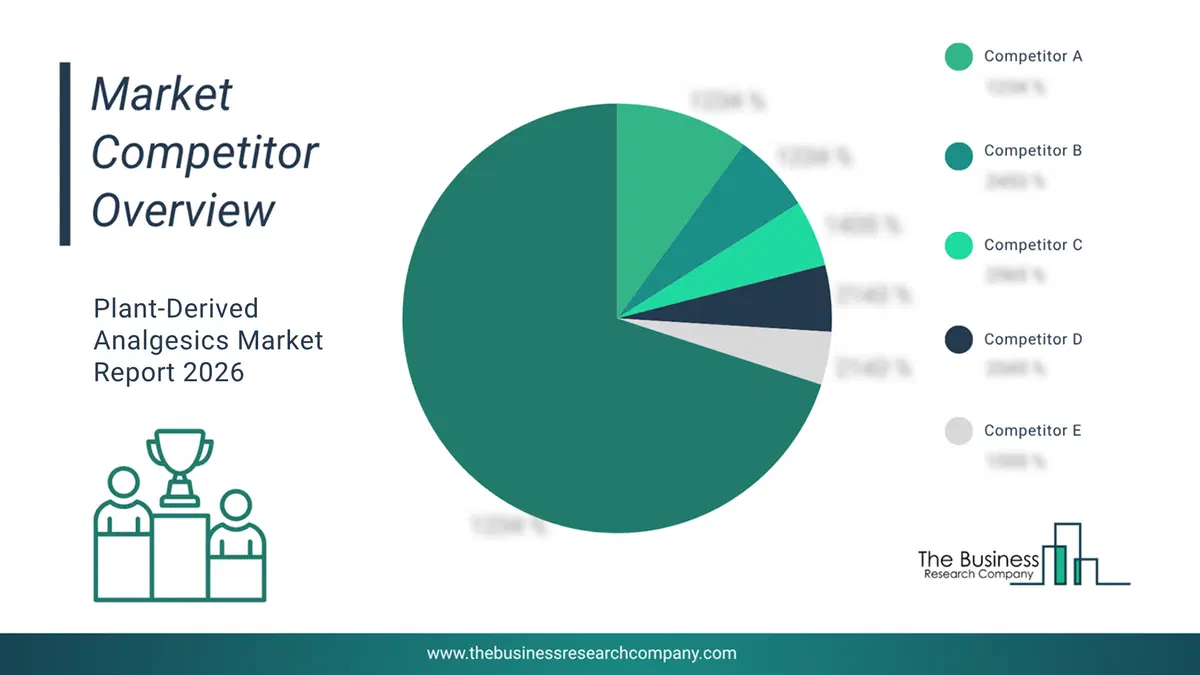
This chart is for illustrative purposes; the full report includes a detailed competitor analysis and comprehensive overview of the top 10 companies in the market.
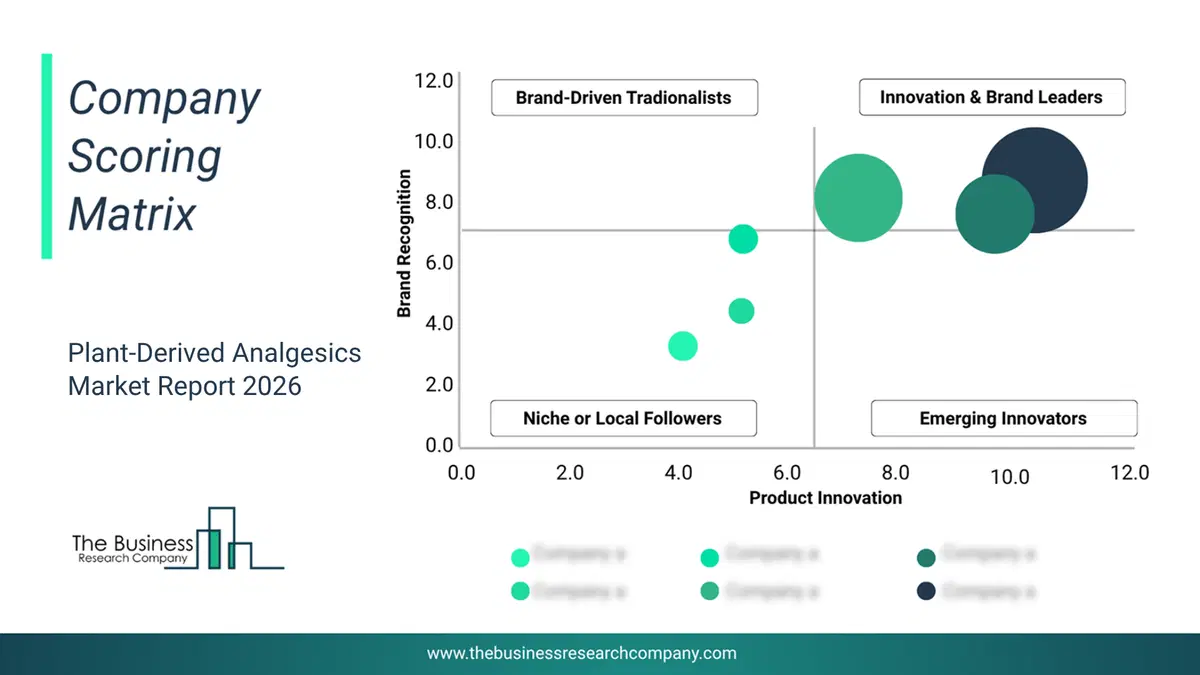
This chart maps companies by product innovation and brand strength, with bubble size indicating relative revenue, helping identify market leaders, challengers, and niche players. This is an illustrative chart; the full report provides a complete and accurate competitive analysis.
Global Plant-Derived Analgesics Market Trends and Insights
Major companies operating in the plant-derived analgesics market are focusing on technological advancements in botanical extraction, purification, and formulation techniques, including plant-based formulation and bioavailability enhancement, to reduce batch-to-batch variability and improve regulatory and consumer acceptance. Plant-based formulation and bioavailability enhancement refer to the scientific optimization of plant-derived analgesic products using advanced formulation approaches designed to improve the stability, solubility, and absorption of bioactive botanical compounds, supporting more consistent product performance and improved therapeutic delivery. For instance, in January 2023, Medterra CBD, LLC., a US-based botanical wellness company, launched its Natural Pain Relief capsules to expand consumer access to plant-based pain management solutions. The Natural Pain Relief capsules are positioned as a plant-based, non-opioid pain management option formulated with standardized botanical ingredients, including turmeric and Levagen+ palmitoylethanolamide (PEA), with the aim of enhancing bioavailability and supporting relief from muscle pain, joint stiffness, and inflammation.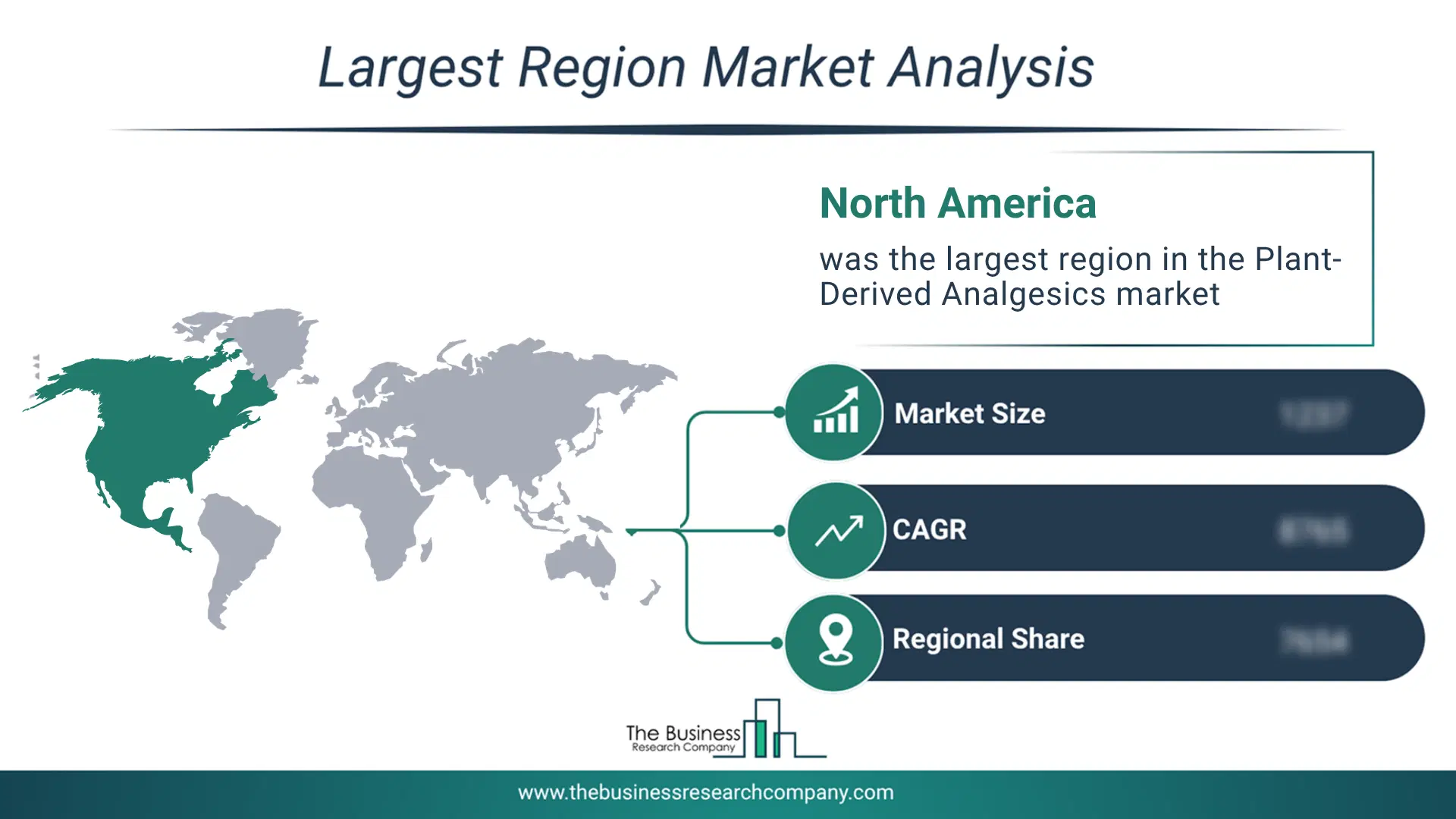
Regional Insights
North America was the largest region in the plant-derived analgesics market in 2025. Asia-Pacific is expected to be the fastest-growing region in the forecast period. The regions covered in this market report are Asia-Pacific, South East Asia, Western Europe, Eastern Europe, North America, South America, Middle East, Africa. The countries covered in this market report are Australia, Brazil, China, France, Germany, India, Indonesia, Japan, Taiwan, Russia, South Korea, UK, USA, Canada, Italy, Spain.What Defines the Plant-Derived Analgesics Market?
The plant-derived analgesics market consists of sales of plant-derived alkaloids and terpenoids, essential oil–based analgesics, capsaicin, menthol, gingerol, and eugenol. Values in this market are ‘factory gate’ values, that is, the value of goods sold by the manufacturers or creators of the goods, whether to other entities (including downstream manufacturers, wholesalers, distributors, and retailers) or directly to end customers. The value of goods in this market includes related services sold by the creators of the goods.How is Market Value Defined and Measured?
The market value is defined as the revenues that enterprises gain from the sale of goods and/or services within the specified market and geography through sales, grants, or donations in terms of the currency (in USD unless otherwise specified). The revenues for a specified geography are consumption values that are revenues generated by organizations in the specified geography within the market, irrespective of where they are produced. It does not include revenues from resales along the supply chain, either further along the supply chain or as part of other products.
This chart presents market attractiveness based on a quantitative evaluation of growth, competition, strategic alignment, and risk, offering a clear view of opportunity areas for decision-making. This chart is for illustrative purposes; the full report contains the complete analysis.

This chart highlights the Total Addressable Market (TAM) by estimating the maximum revenue opportunity using an assumption-driven approach, supporting strategic planning and opportunity sizing across markets. The chart is illustrative; the full report provides a more comprehensive analysis.
What Key Data and Analysis Are Included in the Plant-Derived Analgesics Market Report 2026?
The plant-derived analgesics market research report is one of a series of new reports from The Business Research Company that provides market statistics, including industry global market size, regional shares, competitors with the market share, detailed market segments, market trends and opportunities, and any further data you may need to thrive in the plant-derived analgesics industry. The market research report delivers a complete perspective of everything you need, with an in-depth analysis of the current and future state of the industry.Plant-Derived Analgesics Market Report Forecast Analysis
| Report Attribute | Details |
|---|---|
| Market Size Value In 2026 | $3.66 billion |
| Revenue Forecast In 2030 | $5.06 billion |
| Growth Rate | CAGR of 8.2% from 2026 to 2030 |
| Base Year For Estimation | 2025 |
| Actual Estimates/Historical Data | 2020-2025 |
| Forecast Period | 2026 - 2030 |
| Market Representation | Revenue in USD Billion and CAGR from 2026 to 2030 |
| Segments Covered | Product Type, Formulation Type, Source, Sales Channel, Application |
| Regional Scope | Asia-Pacific, Western Europe, Eastern Europe, North America, South America, Middle East, Africa |
| Country Scope | The countries covered in the report are Australia, Brazil, China, France, Germany, India, Indonesia, Japan, Taiwan, Russia, South Korea, UK, USA, Canada, Italy, Spain. |
| Key Companies Profiled | Dabur India Limited, Patanjali Ayurved Limited, Blackmores Limited, Bionorica SE, Emami Limited, Himalaya Wellness Company, Biologische Heilmittel Heel GmbH, Charak Pharma Private Limited, Indena S.p.A., Nature’s Way Products LLC, Arya Vaidya Sala Kottakkal, Gaia Herbs Farm Inc., Hamdard Laboratories (India), Shree Dhootapapeshwar Limited, Sri Sri Tattva, Euromed S.A., Sami-Sabinsa Group Limited, Martin Bauer Group, Shree Baidyanath Ayurved Bhawan Private Limited, Organic India Private Limited |
| Customization Scope | Request for Customization |
| Pricing And Purchase Options | Explore Purchase Options |