
Plant Genotyping Equipment Market Report 2026
Global Outlook – By Product Type (Polymerase Chain Reaction (PCR) Machines, Deoxyribonucleic Acid (DNA) Sequencers, Microarray Equipment, Other Product Types), By Technology Type (Polymerase Chain Reaction (PCR), Next Generation Sequencing (NGS), Microarray Analysis, Deoxyribonucleic Acid (DNA) Sequencing, single nucleotide polymorphism (SNP) genotyping), By Workflow Phase (Sample Collection, Nucleic Acid Extraction, Amplification And Targeting, Data Analysis And Interpretation, Reporting Results), By Application (Plant Research, Breeding, Product Development, Quality Assessment), By End-User Type (Academic And Research Institutions, Agricultural Biotechnology Companies, Seed Companies, Government Research Organizations) – Market Size, Trends, Strategies, and Forecast to 2030
Plant Genotyping Equipment Market Overview
• Plant Genotyping Equipment market size has reached to $1.55 billion in 2025 • Expected to grow to $2.41 billion in 2030 at a compound annual growth rate (CAGR) of 9.1% • Growth Driver: Surge In Precision Agriculture Driving The Growth Of The Market Due To Rising Global Food Demand And Need For Resource Optimization • Market Trend: Introduction of Large-Scale Low-pass Whole Genome Sequencing Enhancing Agricultural Research • North America was the largest region in 2025 and Asia-Pacific is the fastest growing region.What Is Covered Under Plant Genotyping Equipment Market?
Plant genotyping equipment refers to the specialized instruments and tools used to analyze the genetic makeup of plants by identifying variations in DNA sequences. This equipment enables researchers and breeders to detect genetic differences, study gene functions, and select desirable traits such as disease resistance, yield potential, or stress tolerance. The main product types of plant genotyping equipment include polymerase chain reaction (PCR) machines, deoxyribonucleic acid (DNA) sequencers, microarray equipment, and others. Polymerase chain reaction (PCR) machines are laboratory devices designed to amplify specific DNA sequences through repeated cycles of heating and cooling. It uses various technologies, including polymerase chain reaction (PCR), next-generation sequencing (NGS), microarray analysis, deoxyribonucleic acid (DNA) sequencing, and single nucleotide polymorphism (SNP) genotyping, and offers different workflow phases such as sample collection, nucleic acid extraction, amplification and targeting, data analysis and interpretation, and reporting results. It is applied for plant research, breeding, product development, and quality assessment by several end-users, including academic and research institutions, agricultural biotechnology companies, seed companies, government research organizations, and private laboratories.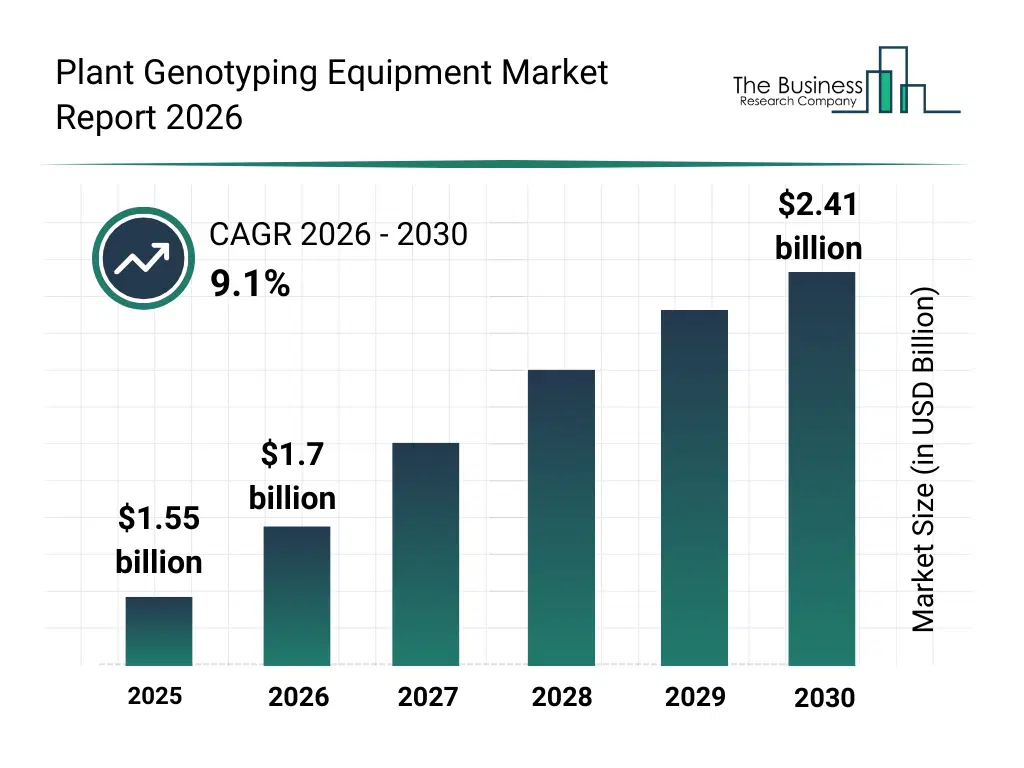
What Is The Plant Genotyping Equipment Market Size and Share 2026?
The plant genotyping equipment market size has grown strongly in recent years. It will grow from $1.55 billion in 2025 to $1.7 billion in 2026 at a compound annual growth rate (CAGR) of 9.4%. The growth in the historic period can be attributed to limited availability of advanced sequencing tools, increasing focus on plant trait identification, early adoption of pcr technologies, rising research funding for crop improvement, growing demand for genetic diversity analysis.What Is The Plant Genotyping Equipment Market Growth Forecast?
The plant genotyping equipment market size is expected to see strong growth in the next few years. It will grow to $2.41 billion in 2030 at a compound annual growth rate (CAGR) of 9.1%. The growth in the forecast period can be attributed to rapid expansion of ngs-based genotyping, increasing integration of ai-driven data analysis, rising investment in automated lab systems, growing adoption of snp-based genotyping, expanding applications in precision agriculture. Major trends in the forecast period include growing demand for high-throughput genotyping systems, increasing use of portable and automated genotyping tools, rising adoption of precision breeding programs, expansion of dna extraction and amplification innovations, enhanced integration of multi-platform genotyping technologies.
Global Plant Genotyping Equipment Market Segmentation
1) By Product Type: Polymerase Chain Reaction (PCR) Machines, Deoxyribonucleic Acid (DNA) Sequencers, Microarray Equipment, Other Product Types 2) By Technology Type: Polymerase Chain Reaction (PCR), Next-Generation Sequencing (NGS), Microarray Analysis, Deoxyribonucleic Acid (DNA) Sequencing, single nucleotide polymorphism (SNP) genotyping 3) By Workflow Phase: Sample Collection, Nucleic Acid Extraction, Amplification And Targeting, Data Analysis And Interpretation, Reporting Results 4) By Application: Plant Research, Breeding, Product Development, Quality Assessment 5) By End-User Type: Academic And Research Institutions, Agricultural Biotechnology Companies, Seed Companies, Government Research Organizations, Private Laboratories Subsegments: 1 By Polymerase Chain Reaction (PCR) Machines: Real-Time PCR Machines, Conventional PCR Machines, Digital PCR Machines 2) By Deoxyribonucleic Acid (DNA) Sequencers: Next-Generation Sequencers (NGS), Sanger Sequencers, Third-Generation Sequencers 3) By Microarray Equipment: Gene Expression Microarrays, Comparative Genomic Hybridization (CGH) Microarrays, SNP (Single Nucleotide Polymorphism) Microarrays 4) By Other Product Types: Electrophoresis Equipment, DNA Extraction Systems, Genotyping ArraysWhat Is Driver Of The Plant Genotyping Equipment Market?
The growing need for precision agriculture is expected to drive the growth of the plant genotyping equipment market going forward. Precision agriculture refers to a farming management approach that uses technology such as GPS, sensors, and data analytics to optimize field-level management regarding crop farming. The need for precision agriculture is rising due to increasing global food demand, as it helps farmers optimize resources and improve crop yields efficiently. Plant genotyping equipment helps precision agriculture by accurately identifying genetic traits in crops, enabling targeted cultivation strategies for improved efficiency and productivity. For instance, in January 2024, according to the Government Accountability Office, a US-based government agency, 27% of farms and ranches in the U.S. adopted precision agriculture practices for managing crops or livestock in 2023. Therefore, the growing need for precision agriculture is driving the growth of the plant genotyping equipment industry.Key Players In The Global Plant Genotyping Equipment Market
Major companies operating in the plant genotyping equipment market are Roche Diagnostics Corporation, Thermo Fisher Scientific Inc., Danaher Corporation, Eurofins Scientific SE, Agilent Technologies Inc., Illumina Inc., PerkinElmer Inc., Beckman Coulter Inc., Bio-Rad Laboratories Inc., Qiagen N.V., BGI Genomics Co. Ltd., Promega Corporation, Takara Bio Inc., Analytik Jena GmbH, Oxford Nanopore Technologies Plc, Pacific Biosciences Of California Inc., Standard BioTools Inc., LGC Biosearch Technologies, Zymo Research Corporation, Enzo Life Sciences Inc
This chart is for illustrative purposes; the full report includes a detailed competitor analysis and comprehensive overview of the top 10 companies in the market.
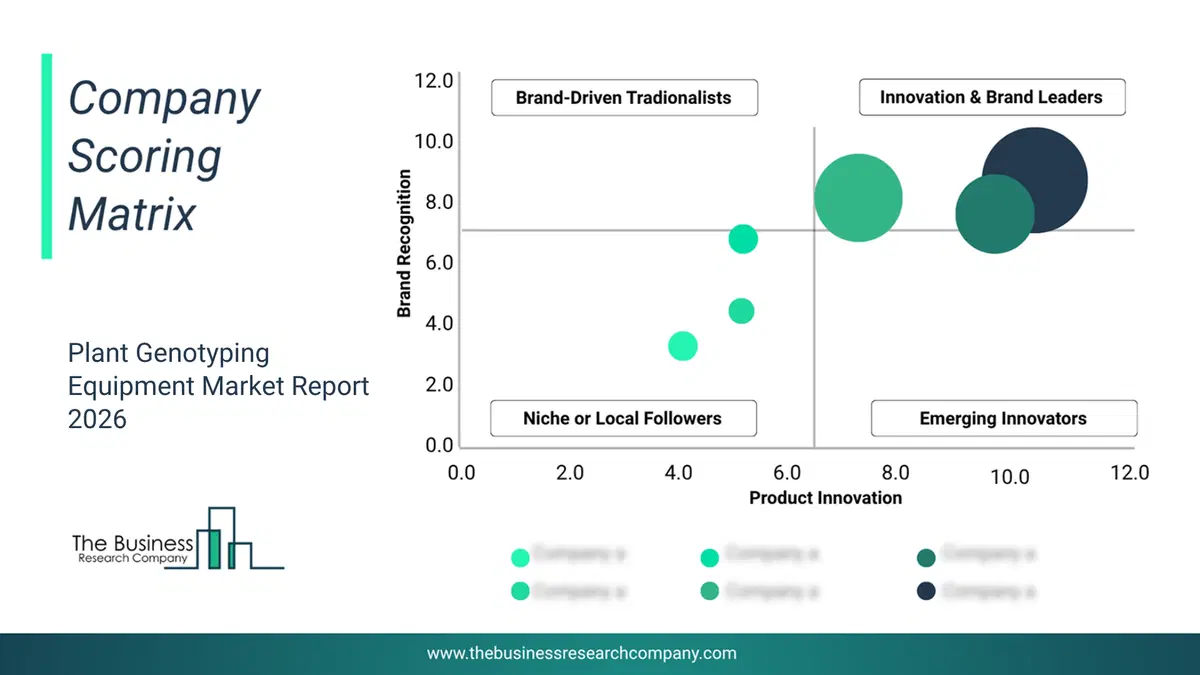
This chart maps companies by product innovation and brand strength, with bubble size indicating relative revenue, helping identify market leaders, challengers, and niche players. This is an illustrative chart; the full report provides a complete and accurate competitive analysis.
Global Plant Genotyping Equipment Market Trends and Insights
Major companies operating in the plant genotyping equipment market are focusing on developing innovative solutions, such as large-scale low-pass whole genome sequencing workflows, to improve precision and efficiency in agricultural research. Large-scale low-pass whole genome sequencing workflows integrate advanced sequencing technologies with streamlined processes to provide comprehensive genomic data at lower cost and time. For instance, in June 2024, MGI Tech, a China-based genomics company, launched its Whole Workflow Solution for Agricultural Large-Scale Low-pass Whole Genome Sequencing. This solution enables rapid, cost-effective genomic analysis to support crop breeding and research, improving productivity and sustainability. It simplifies operations through integrated platforms without requiring complex procedures. This advancement broadens genomic capabilities for breeders, researchers, and agricultural enterprises.What Are Latest Mergers And Acquisitions In The Plant Genotyping Equipment Market? Solis Agrosciences Acquired Ferris Genomics To Boost Plant Genotyping Capabilities
In November 2024, Solis Agrosciences Inc., a US-based biotechnology research company, acquired Ferris Genomics’ sequencing and bioinformatics platform for an undisclosed amount. Through this acquisition, Solis Agrosciences Inc. aims to strengthen its plant genotyping and molecular breeding capabilities, expand its research portfolio, and enhance service efficiency by integrating the advanced genomic technologies and expertise of Ferris Genomics. Ferris Genomics is a US-based biotechnology research company that provides plant genotyping services.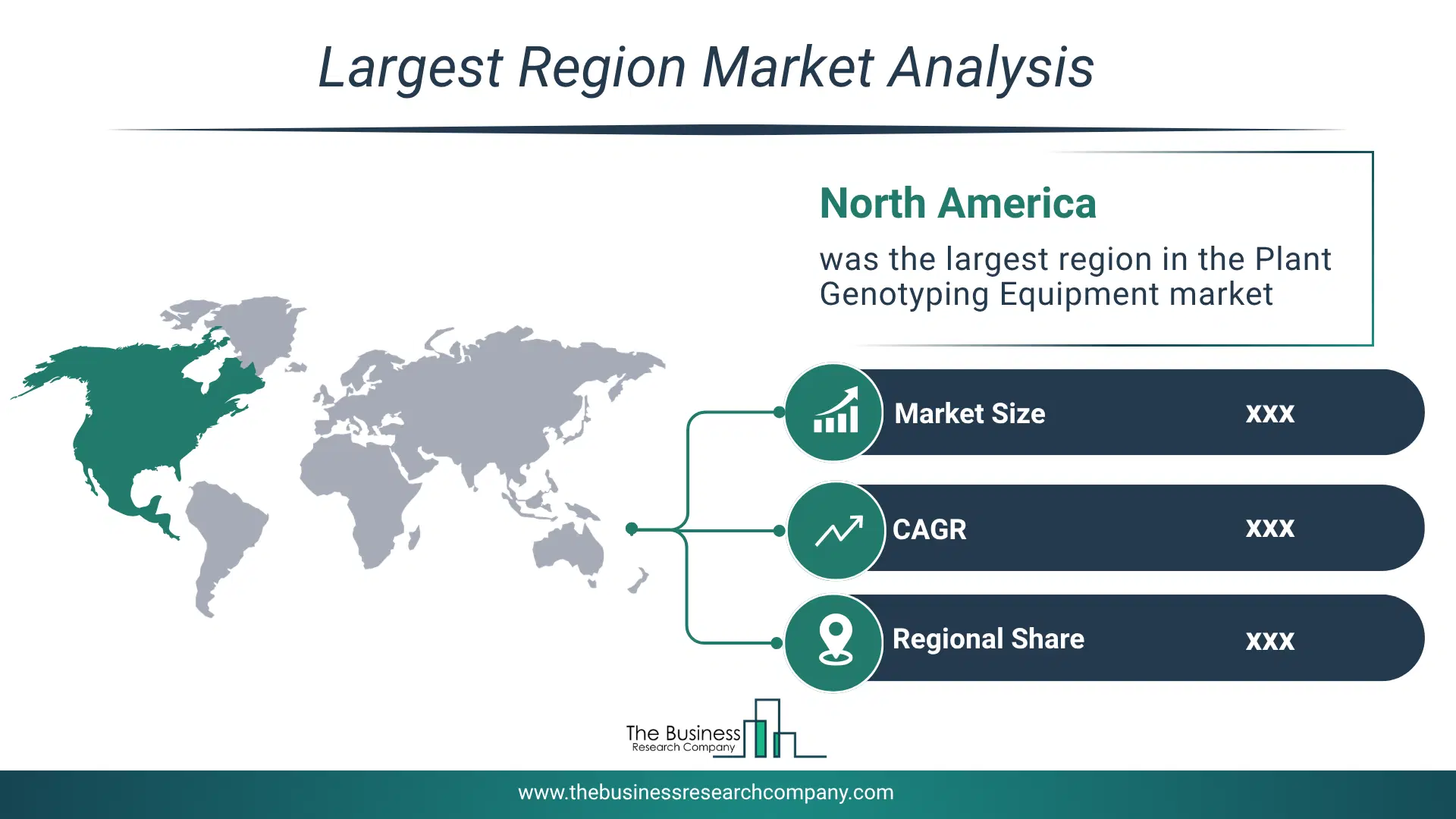
Regional Outlook
North America was the largest region in the plant genotyping equipment market in 2025. Asia-Pacific is expected to be the fastest-growing region in the forecast period. The regions covered in this market report are Asia-Pacific, South East Asia, Western Europe, Eastern Europe, North America, South America, Middle East, Africa. The countries covered in this market report are Australia, Brazil, China, France, Germany, India, Indonesia, Japan, Taiwan, Russia, South Korea, UK, USA, Canada, Italy, SpainWhat Defines the Plant Genotyping Equipment Market?
The plant genotyping equipment market consists of revenues earned by entities by providing services such as genetic marker analysis, whole-genome sequencing support, custom assay design, and database management services. The market value includes the value of related goods sold by the service provider or included within the service offering. The plant genotyping equipment market also includes sales of sample preparation systems, gel electrophoresis systems, automated liquid handling systems, and genetic mapping tools. Values in this market are ‘factory gate’ values, that is the value of goods sold by the manufacturers or creators of the goods, whether to other entities (including downstream manufacturers, wholesalers, distributors and retailers) or directly to end customers. The value of goods in this market includes related services sold by the creators of the goods.How is Market Value Defined and Measured?
The market value is defined as the revenues that enterprises gain from the sale of goods and/or services within the specified market and geography through sales, grants, or donations in terms of the currency (in USD unless otherwise specified). The revenues for a specified geography are consumption values that are revenues generated by organizations in the specified geography within the market, irrespective of where they are produced. It does not include revenues from resales along the supply chain, either further along the supply chain or as part of other products.
This chart presents market attractiveness based on a quantitative evaluation of growth, competition, strategic alignment, and risk, offering a clear view of opportunity areas for decision-making. This chart is for illustrative purposes; the full report contains the complete analysis.

This chart highlights the Total Addressable Market (TAM) by estimating the maximum revenue opportunity using an assumption-driven approach, supporting strategic planning and opportunity sizing across markets. The chart is illustrative; the full report provides a more comprehensive analysis.
What Key Data and Analysis Are Included in the Plant Genotyping Equipment Market Report 2026?
The plant genotyping equipment market research report is one of a series of new reports from The Business Research Company that provides market statistics, including industry global market size, regional shares, competitors with the market share, detailed market segments, market trends and opportunities, and any further data you may need to thrive in the plant genotyping equipment industry. The market research report delivers a complete perspective of everything you need, with an in-depth analysis of the current and future state of the industry.Plant Genotyping Equipment Market Report Forecast Analysis
| Report Attribute | Details |
|---|---|
| Market Size Value In 2026 | $1.7 billion |
| Revenue Forecast In 2030 | $2.41 billion |
| Growth Rate | CAGR of 9.1% from 2026 to 2030 |
| Base Year For Estimation | 2025 |
| Actual Estimates/Historical Data | 2020-2025 |
| Forecast Period | 2026 - 2030 |
| Market Representation | Revenue in USD Billion and CAGR from 2026 to 2030 |
| Segments Covered | Product Type, Technology Type, Workflow Phase, Application, End-User Type |
| Regional Scope | Asia-Pacific, Western Europe, Eastern Europe, North America, South America, Middle East, Africa |
| Country Scope | The countries covered in the report are Australia, Brazil, China, France, Germany, India, Indonesia, Japan, Taiwan, Russia, South Korea, UK, USA, Canada, Italy, Spain |
| Key Companies Profiled | Roche Diagnostics Corporation, Thermo Fisher Scientific Inc., Danaher Corporation, Eurofins Scientific SE, Agilent Technologies Inc., Illumina Inc., PerkinElmer Inc., Beckman Coulter Inc., Bio-Rad Laboratories Inc., Qiagen N.V., BGI Genomics Co. Ltd., Promega Corporation, Takara Bio Inc., Analytik Jena GmbH, Oxford Nanopore Technologies Plc, Pacific Biosciences Of California Inc., Standard BioTools Inc., LGC Biosearch Technologies, Zymo Research Corporation, Enzo Life Sciences Inc |
| Customization Scope | Request for Customization |
| Pricing And Purchase Options | Explore Purchase Options |