
Plant Growth Regulators Market Report 2026
Global Outlook – By Type (Cytokinins, Auxins, Gibberellins, Ethylene, Other Types), By Formulation (Water-Dispersible And Water-Soluble Granules, Wettable Powders, Solutions), By Application Type (Fruits And Vegetables, Cereals And Grains, Oil Seeds And Pulses, Turf And Ornaments) – Market Size, Trends, Strategies, and Forecast to 2030
Plant Growth Regulators Market Overview
• Plant Growth Regulators market size has reached to $3.49 billion in 2025 • Expected to grow to $5.52 billion in 2030 at a compound annual growth rate (CAGR) of 9.6% • Growth Driver: Organic Farming Surge Is A Catalyst For Robust Growth In The Plant Growth Regulators Market • Market Trend: Innovative Product Combinations Drive Growth In The Plant Growth Regulators Market • Europe was the largest region in 2025.What Is Covered Under Plant Growth Regulators Market?
Plant growth regulators refer to chemical substances that completely regulate all aspects of a plant's growth and development, such as increasing branching, reducing shoot growth, increasing return bloom, getting rid of extra fruit, or changing the maturity of the fruit. The main types of plant growth regulators are cytokinins, auxins, gibberelins, ethylene, and other types. Cytokinins refer to plant-specific chemical messengers (hormones) that are crucial for regulating the plant cell cycle and several developmental procedures. The various formulations included water-dispersible and water-soluble granules, wettable powders and solutions. These are used for several applications such as fruits and vegetables, cereals and grains, oil seeds and pulses, and turf and ornaments.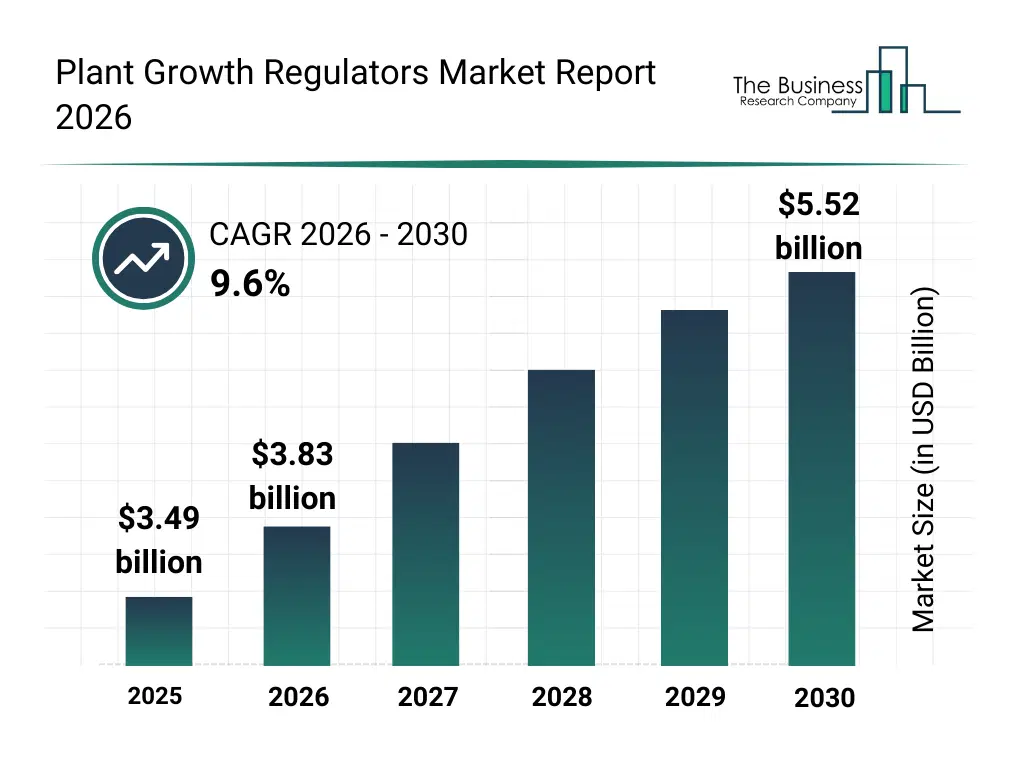
What Is The Plant Growth Regulators Market Size and Share 2026?
The plant growth regulators market size has grown strongly in recent years. It will grow from $3.49 billion in 2025 to $3.83 billion in 2026 at a compound annual growth rate (CAGR) of 9.6%. The growth in the historic period can be attributed to increasing commercial farming practices, rising adoption of intensive agriculture, growing demand for higher crop productivity, expansion of horticulture cultivation, availability of synthetic growth regulators.What Is The Plant Growth Regulators Market Growth Forecast?
The plant growth regulators market size is expected to see strong growth in the next few years. It will grow to $5.52 billion in 2030 at a compound annual growth rate (CAGR) of 9.6%. The growth in the forecast period can be attributed to increasing food demand due to population growth, rising focus on sustainable agriculture inputs, expansion of precision farming practices, growing adoption of bio-based growth regulators, increasing regulatory support for crop productivity solutions. Major trends in the forecast period include increasing adoption of crop yield enhancement solutions, rising demand for precision crop regulation chemicals, growing use of pgrs in high-value crops, expansion of controlled maturity and ripening applications, enhanced focus on sustainable crop management.
Global Plant Growth Regulators Market Segmentation
1) By Type: Cytokinins, Auxins, Gibberellins, Ethylene, Other Types 2) By Formulation: Water-Dispersible And Water-Soluble Granules, Wettable Powders, Solutions 3) By Application Type: Fruits And Vegetables, Cereals And Grains, Oil Seeds And Pulses, Turf And Ornaments Subsegments: 1) By Cytokinins: Zeatin, Kinetin, Benzyladenine (BA), Thidiazuron (TDZ) 2) By Auxins: Indole-3-Acetic Acid (IAA), Indole-3-Butyric Acid (IBA), Naphthalene Acetic Acid (NAA) 3) By Gibberellins: Gibberellic Acid (GA3), GA4 And GA7 (Gibberellins A4 And A7), Gibberellin Mixes 4) By Ethylene: Ethephon, Ethylene Gas Solutions, Ethylene Releasing Compounds 5) By Other Types: Abscisic Acid (ABA), Jasmonic Acid, BrassinosteroidsWhat Is The Driver Of The Plant Growth Regulators Market?
Increasing demand for organic farming is expected to propel the growth of the plant growth regulators market going forward. Organic farming refers to producing crops, animals, and other goods without using synthetic chemical pesticides, antibiotics, transgenic species, growth-stimulating hormones, or other chemicals. Plant growth regulators are primarily used in organic farming to improve crop quality and yield, boost root growth, and raise the size and productivity of specific crops, including grapes and strawberries. These factors boost the plant growth regulators market. For instance, in February 2024, according to the IFOAM (International Federation of Organic Agriculture Movements), a Germany-based an international organization, the global area under organic farming expanded by 2.5 million hectares in 2023, bringing the total to nearly 99 million hectares. Meanwhile, global sales of organic food rose to approximately 136 billion euros that same year. Therefore, increasing demand for organic farming is driving the growth of the plant growth regulators industry.Key Players In The Global Plant Growth Regulators Market
Major companies operating in the plant growth regulators market are Bayer AG, Syngenta AG, Corteva, Inc., BASF SE, UPL Limited, FMC Corporation, Nufarm Limited, Sumitomo Chemical Co., Ltd., PI Industries Limited, ADAMA Ltd., Isagro S.p.A., Valagro S.p.A., Biolchim S.p.A., Koppert Biological Systems B.V., Rallis India Limited, Arysta LifeScience Corporation, Albaugh LLC, Marrone Bio Innovations, Inc., Gowan Company, L.L.C., Helena Agri-Enterprises, LLC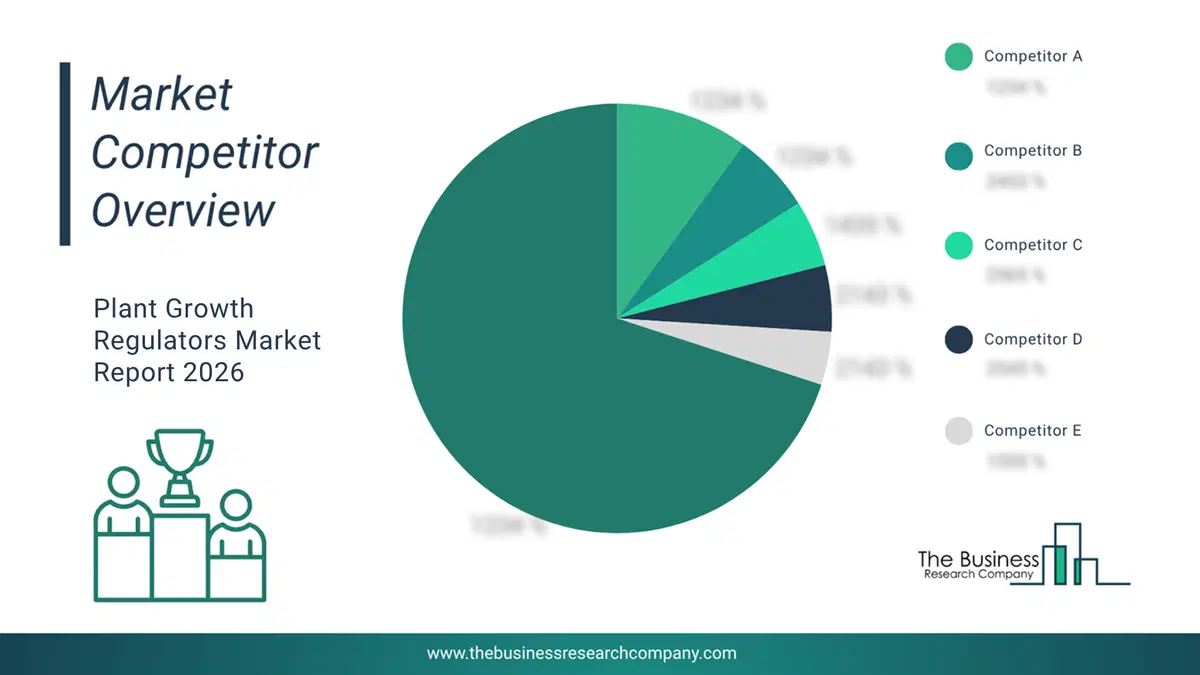
This chart is for illustrative purposes; the full report includes a detailed competitor analysis and comprehensive overview of the top 10 companies in the market.
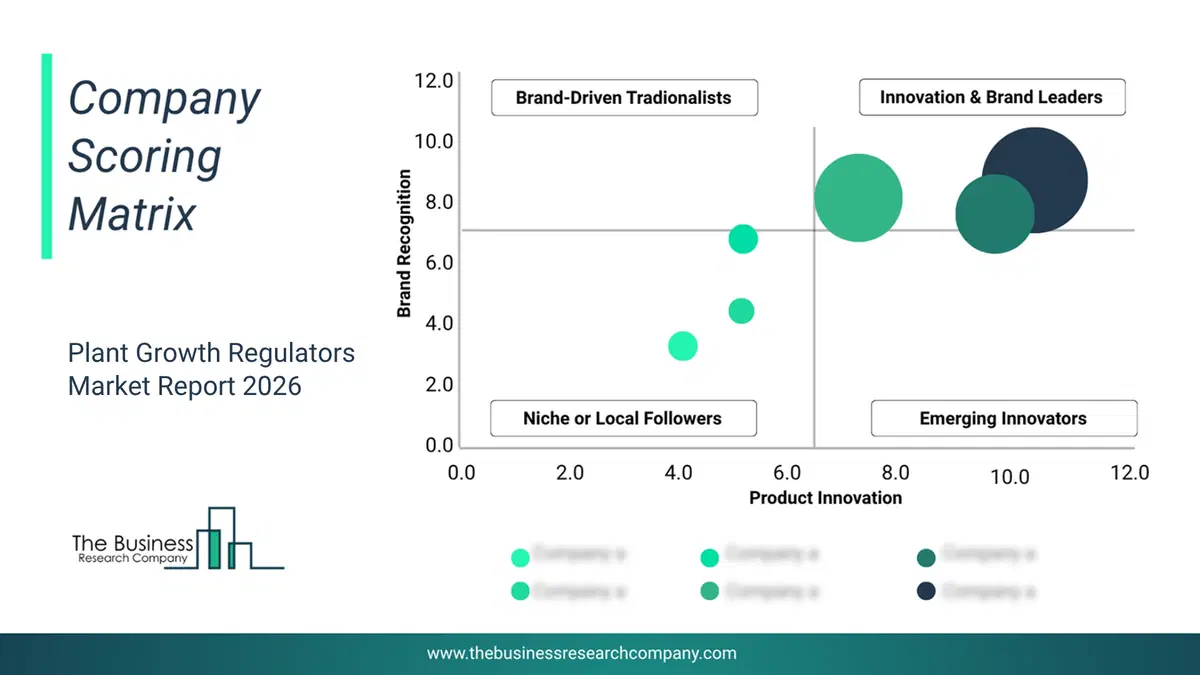
This chart maps companies by product innovation and brand strength, with bubble size indicating relative revenue, helping identify market leaders, challengers, and niche players. This is an illustrative chart; the full report provides a complete and accurate competitive analysis.
Global Plant Growth Regulators Market Trends and Insights
Major companies operating in the plant growth regulators market are focusing on introducing innovative products such as combining plant growth regulators to sustain their position in market. Combining plant growth regulators refers to the practice of using multiple types of growth hormones or synthetic compounds together to enhance or regulate plant growth and development more effectively. For instance, in July 2024, Zhejiang Sega Science and Technology Co.Ltd, a China-based farming company, launched A PANG. A PANG is a plant growth regulator combining Choline chloride and S-Abscisic acid, designed to enhance photosynthesis and improve crop resilience. It promotes better nutrient distribution and accelerates tuber expansion, boosting crop quality and yield.What Are Latest Mergers And Acquisitions In The Plant Growth Regulators Market?
In August 2024, PI Industries Ltd., an India-based agrochemical company, completed the acquisition of Plant Health Care Plc, for an undisclosed amount. With this acquisition, PI Industries aims to expand its global presence in sustainable agriculture, enhance its portfolio of plant health products, strengthen its R&D capabilities, and accelerate innovation in biological crop protection solutions. Plant Health Care Plc is a UK-based company specializing in biostimulants and plant health solutions offers a range of biologically derived products that promote plant growth and resilience.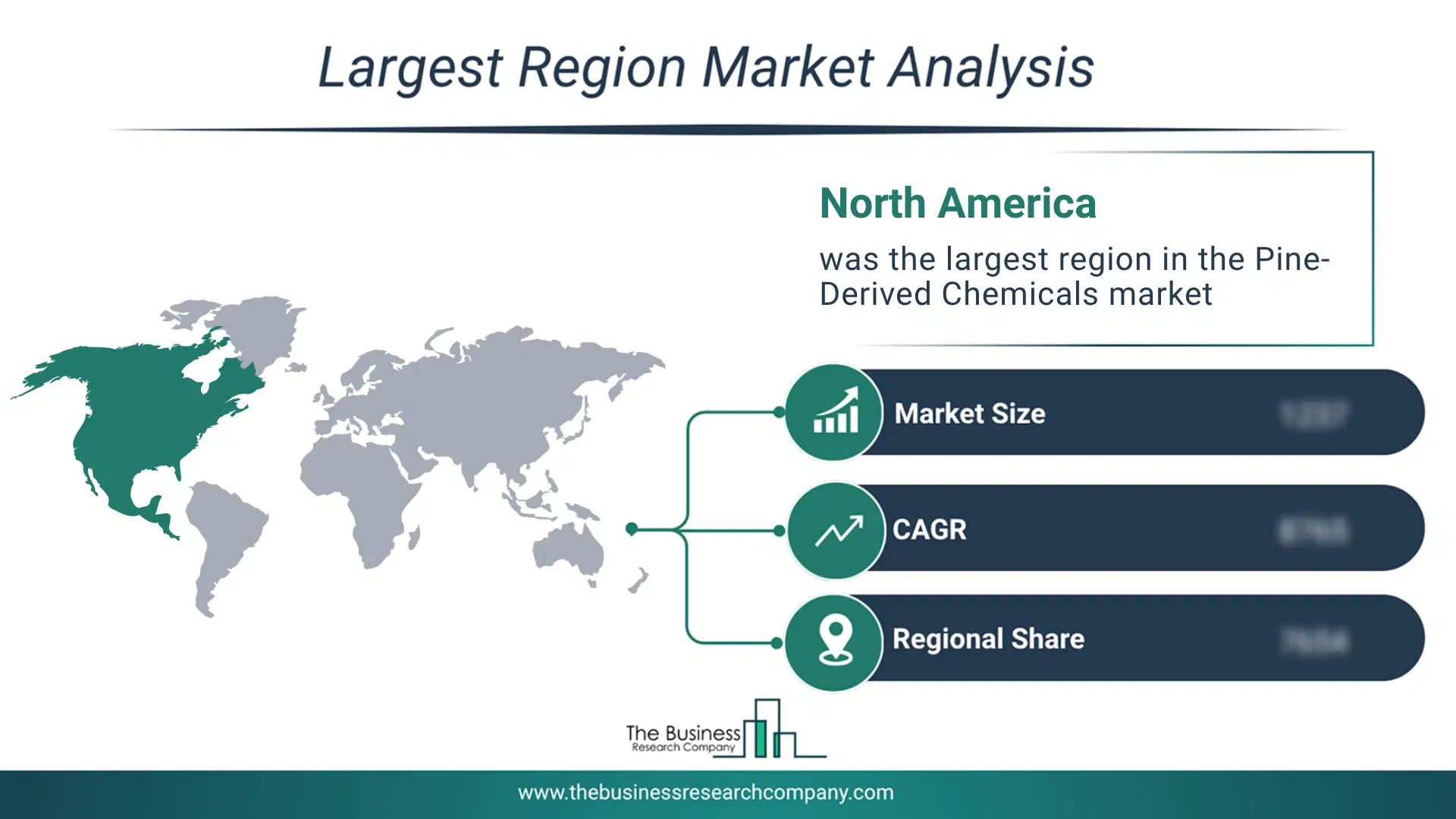
Regional Insights
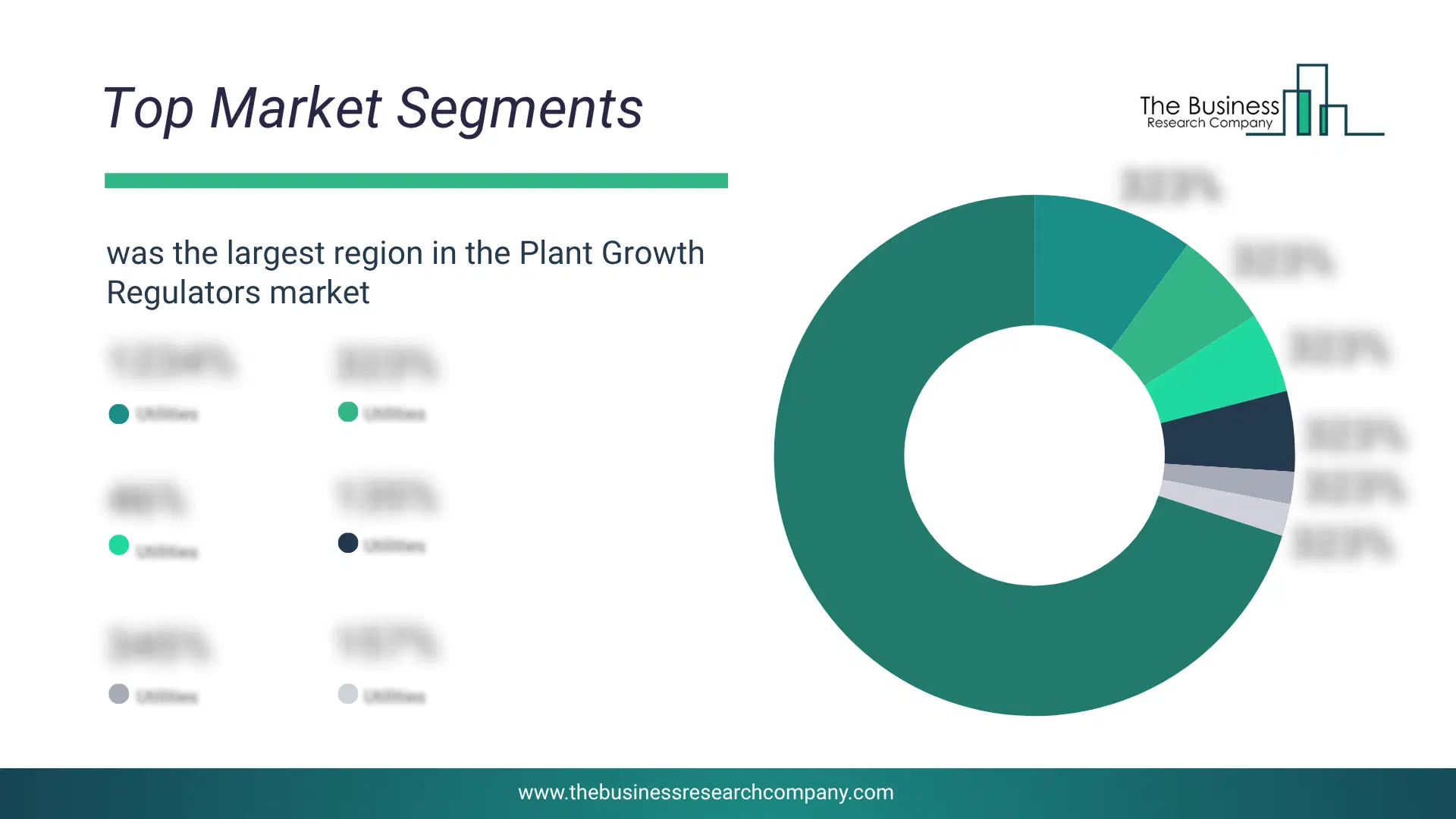
Europe was the largest region in the plant growth regulators market in 2025. The regions covered in this market report are Asia-Pacific, South East Asia, Western Europe, Eastern Europe, North America, South America, Middle East, Africa The countries covered in this market report are Australia, Brazil, China, France, Germany, India, Indonesia, Japan, Taiwan, Russia, South Korea, UK, USA, Canada, Italy, SpainWhat Defines the Plant Growth Regulators Market?
The plant growth regulators consist of sales of paclobutrazol, gibberellic acid, salicylic acid, brassinosteroids, strigolactones, and polyamine. Values in this market are ‘factory gate’ values, that is, the value of goods sold by the manufacturers or creators of the goods, whether to other entities (including downstream manufacturers, wholesalers, distributors, and retailers) or directly to end customers. The value of goods in this market includes related services sold by the creators of the goods.How is Market Value Defined and Measured?
The market value is defined as the revenues that enterprises gain from the sale of goods and/or services within the specified market and geography through sales, grants, or donations in terms of the currency (in USD unless otherwise specified). The revenues for a specified geography are consumption values that are revenues generated by organizations in the specified geography within the market, irrespective of where they are produced. It does not include revenues from resales along the supply chain, either further along the supply chain or as part of other products.
This chart presents market attractiveness based on a quantitative evaluation of growth, competition, strategic alignment, and risk, offering a clear view of opportunity areas for decision-making. This chart is for illustrative purposes; the full report contains the complete analysis.

This chart highlights the Total Addressable Market (TAM) by estimating the maximum revenue opportunity using an assumption-driven approach, supporting strategic planning and opportunity sizing across markets. The chart is illustrative; the full report provides a more comprehensive analysis.
What Key Data and Analysis Are Included in the Plant Growth Regulators Market Report 2026?
The plant growth regulators market research report is one of a series of new reports from The Business Research Company that provides market statistics, including industry global market size, regional shares, competitors with the market share, detailed market segments, market trends and opportunities, and any further data you may need to thrive in the plant growth regulators industry. The market research report delivers a complete perspective of everything you need, with an in-depth analysis of the current and future state of the industry.Plant Growth Regulators Market Report Forecast Analysis
| Report Attribute | Details |
|---|---|
| Market Size Value In 2026 | $3.83 billion |
| Revenue Forecast In 2030 | $5.52 billion |
| Growth Rate | CAGR of 9.6% from 2026 to 2030 |
| Base Year For Estimation | 2025 |
| Actual Estimates/Historical Data | 2020-2025 |
| Forecast Period | 2026 - 2030 |
| Market Representation | Revenue in USD Billion and CAGR from 2026 to 2030 |
| Segments Covered | Type, Formulation, Application Type |
| Regional Scope | Asia-Pacific, Western Europe, Eastern Europe, North America, South America, Middle East, Africa |
| Country Scope | The countries covered in this market report are Australia, Brazil, China, France, Germany, India, Indonesia, Japan, Taiwan, Russia, South Korea, UK, USA, Canada, Italy, Spain |
| Key Companies Profiled | Bayer AG, Syngenta AG, Corteva, Inc., BASF SE, UPL Limited, FMC Corporation, Nufarm Limited, Sumitomo Chemical Co., Ltd., PI Industries Limited, ADAMA Ltd., Isagro S.p.A., Valagro S.p.A., Biolchim S.p.A., Koppert Biological Systems B.V., Rallis India Limited, Arysta LifeScience Corporation, Albaugh LLC, Marrone Bio Innovations, Inc., Gowan Company, L.L.C., Helena Agri-Enterprises, LLC |
| Customization Scope | Request for Customization |
| Pricing And Purchase Options | Explore Purchase Options |