
Plant-Based-Meat Market Report 2026
Global Outlook – By Product Type (Burger Patties, Sausages, Strips, Nuggets, Meatballs), By Source (Soy, Wheat, Pea, Other Sources), By Distribution Channel (Grocery Stores, Food & Drinks Specialty Stores, Convenience Stores, Online Stores) – Market Size, Trends, Strategies, and Forecast to 2030
Plant-Based-Meat Market Overview
• Plant-Based-Meat market size has reached to $11.47 billion in 2025 • Expected to grow to $22.37 billion in 2030 at a compound annual growth rate (CAGR) of 14.3% • Growth Driver: Increasing Food And Beverage Industry Drives Growth In The Plant-Based Meat Market • Market Trend: Advancements In Ethical Food Solutions Supporting Health And Environmental Goals • Asia-Pacific was the largest region in 2025 and Western Europe is the fastest growing region.Market Gains By 2030 – Top Opportunities By Segment
Market Gain identifies the most promising market opportunities by highlighting the segments or products expected to generate the highest incremental revenue growth over the next five years.
What Is Covered Under Plant-Based-Meat Market?
Plant-based meat is meat that is prepared from plants and is similar to conventional meat in appearance and taste. The plant-based meat is produced using ingredients such as wheat gluten, lentils, yuba, tofu, soybeans, and a variety of nuts. The main product types of plant-based meat are burger patties, sausages, strips, nuggets, meatballs, and other product types. Sausage is a meat product made of finely chopped and seasoned meat that can be fresh, smoked, or pickled and which is then usually stuffed into a casing. The various sources of plant-based meat are soy, wheat, pea, and other product types. The plant-based meat products are distributed through grocery stores, food and beverage specialty stores, convenience stores, restaurants, and online stores.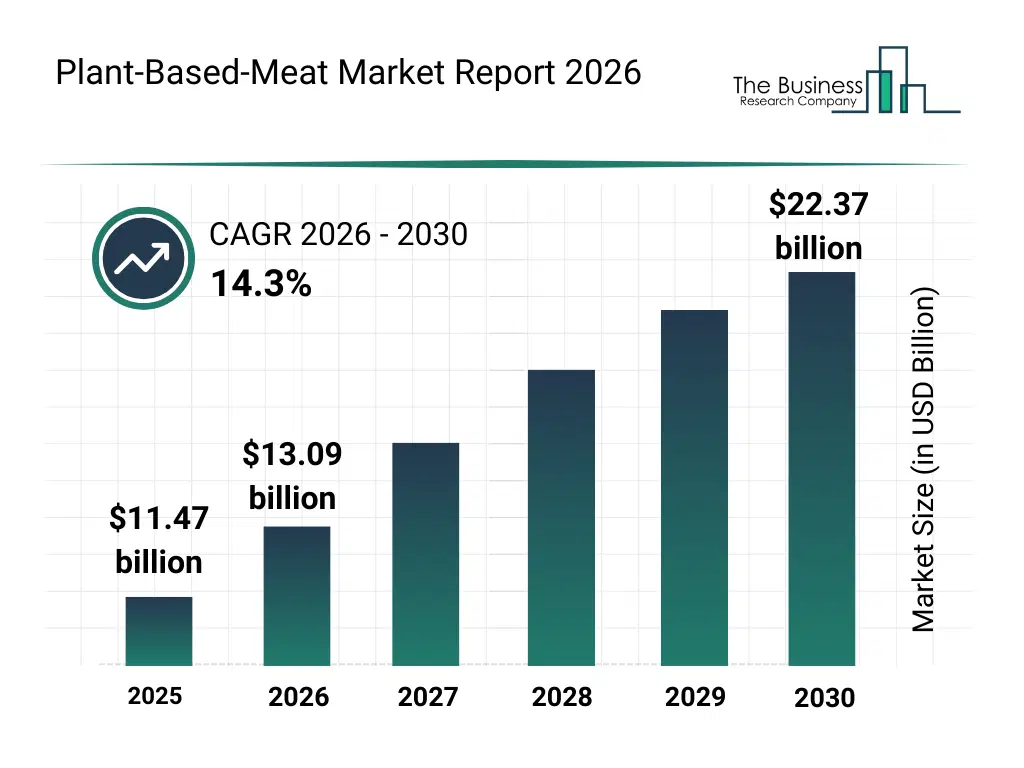
What Is The Plant-Based-Meat Market Size and Share 2026?
The plant-based-meat market size has grown rapidly in recent years. It will grow from $11.47 billion in 2025 to $13.09 billion in 2026 at a compound annual growth rate (CAGR) of 14.1%. The growth in the historic period can be attributed to increasing consumer interest in meat reduction diets, expansion of flexitarian lifestyles, growing awareness of environmental impacts of meat consumption, expansion of food innovation startups, increased availability of plant protein ingredients.What Is The Plant-Based-Meat Market Growth Forecast?
The plant-based-meat market size is expected to see rapid growth in the next few years. It will grow to $22.37 billion in 2030 at a compound annual growth rate (CAGR) of 14.3%. The growth in the forecast period can be attributed to increasing adoption of plant-based meat in mainstream diets, rising investment in food technology innovation, expansion of foodservice partnerships, growing focus on clean-label plant-based meats, continuous improvement in sensory quality and affordability. Major trends in the forecast period include advancements in meat-like texture replication, rising demand for high-protein alternatives, expansion of culinary variety and flavor profiles, growing use of novel plant protein blends, increased focus on nutritional parity with meat.
Global Plant-Based-Meat Market Segmentation
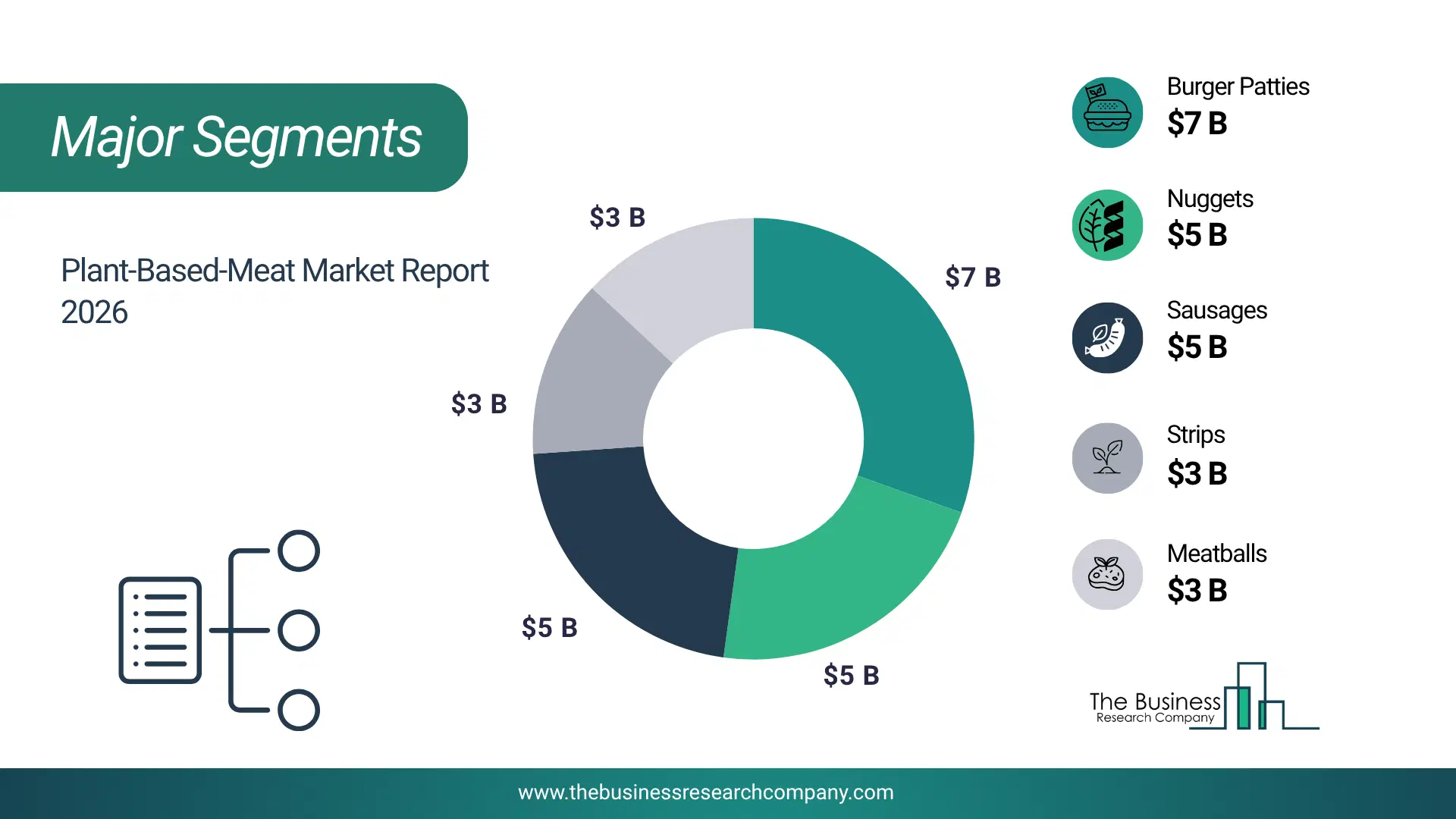
1) By Product Type: Burger Patties, Sausages, Strips, Nuggets, Meatballs 2) By Source: Soy, Wheat, Pea, Other Sources 3) By Distribution Channel: Grocery Stores, Food & Drinks Specialty Stores, Convenience Stores, Online Stores Subsegments: 1) By Burger Patties: Classic Burger Patties, Spicy Burger Patties, Gourmet Burger Patties, Pre-cooked Burger Patties 2) By Sausages: Breakfast Sausages, Italian Sausages, Bratwurst, Chorizo 3) By Strips: Grilled Strips, Breaded Strips, Spicy Strips 4) By Nuggets: Classic Breaded Plant-Based Nuggets, Crispy Coated Plant-Based Nuggets, Spicy Seasoned Plant-Based Nuggets, Gluten-Free Plant-Based Nuggets, Pre-Cooked and Ready-to-Heat Plant-Based Nuggets 5) By Meatballs: Classic Meatballs, Italian Meatballs, Spicy Meatballs, Swedish Meatballs The top segments in the plant-based-meat market will be: • Burger Patties will reach $7.27 Billion by 2030. • Nuggets will reach $4.92 Billion by 2030. • Sausages will reach $4.54 Billion by 2030. • Strips will reach $2.93 Billion by 2030. • Meatballs will reach $2.71 Billion by 2030.What Is The Driver Of The Plant-Based-Meat Market?
The growth of the food and beverage service industry is expected to propel the growth of the plant-based meat market going forward. The food and beverage service industry encompasses a wide range of businesses and establishments, such as restaurants, involved in preparing, serving, and delivering food and drinks to consumers. Plant-based meat products are increasingly being used in the food and beverage industry as a popular alternative to traditional animal-based meat. It mimics the taste, texture, and appearance of meat while being entirely derived from plant sources. For instance, in July 2025, according to the Agriculture and Agri-Food Department Canada, a Canada-based government department, in 2024, the food and beverage processing sector remained Canada’s largest manufacturing industry by production value, generating $173.4 billion in goods. This represented 20.3% of all manufacturing sales and contributed 1.6% to the national GDP. Exports of processed food and beverage products reached a record $59.8 billion, an increase of 3.8% from 2023, and accounted for 34.5% of the industry’s total production value. Therefore, the growth of the food and beverage service industry is driving the growth of the plant-based meat market.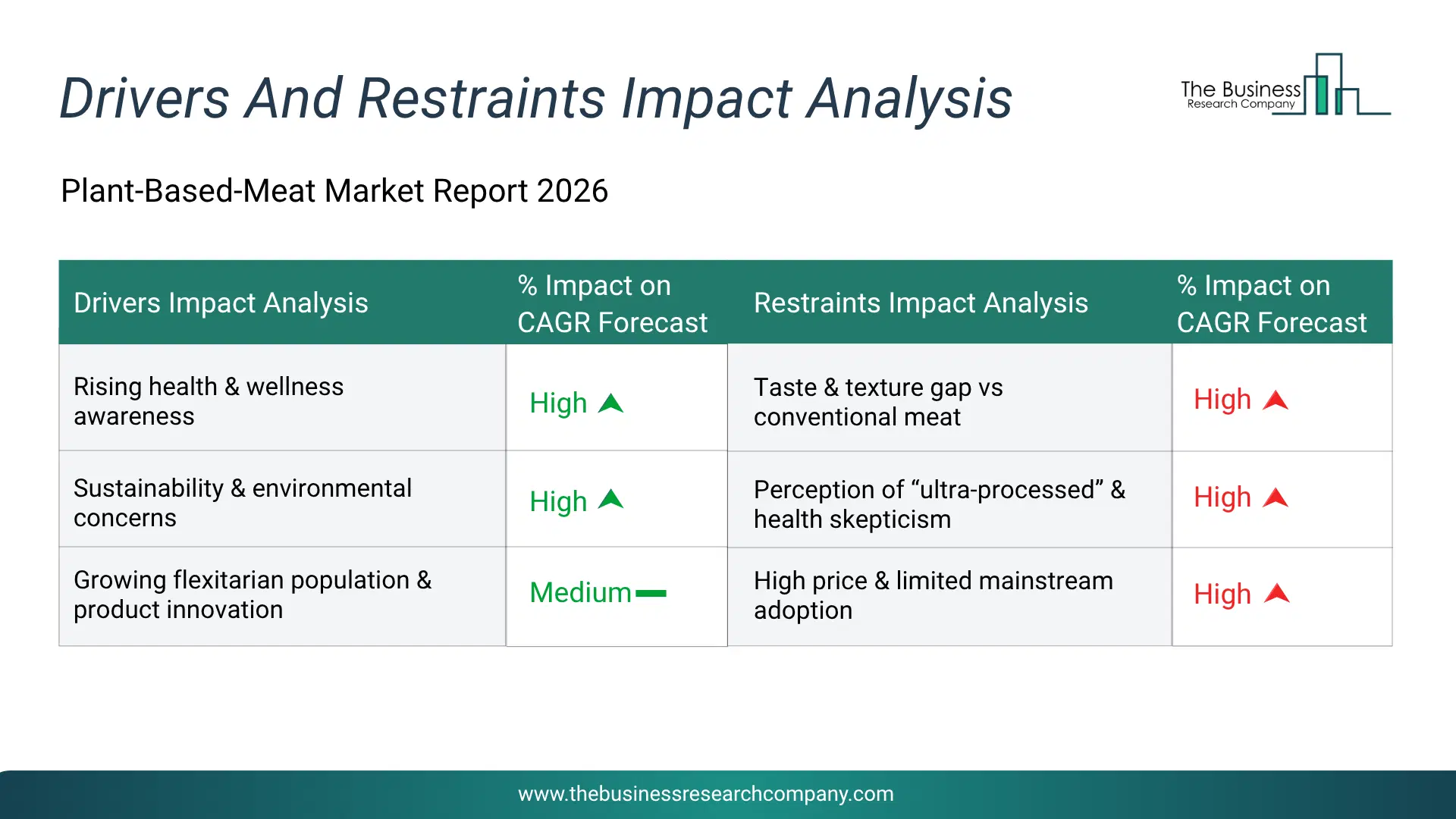
Infographic Chart Showing Key Market Drivers Analysis And Restraints For Plant-Based-Meat Market
The chart presents an impact analysis of key drivers and restraints, quantifying their relative influence on the market's growth rate and helping assess the balance between growth enablers and limiting factors. This chart offers a high-level perspective; the full report contains more detailed insights.
How Will The Drivers Impact Growth In The Global Plant-Based-Meat Market?
• Rising health & wellness awareness (High) – During the forecast period, the rising health and wellness awareness is expected to become a key growth driver for the plant-based meat market by 2030. Consumers are increasingly adopting healthier dietary habits, reducing red meat consumption due to concerns related to cholesterol, obesity, and chronic diseases. Plant-based meat products are perceived as healthier alternatives, offering lower saturated fat content and improved nutritional profiles. Food manufacturers are responding by developing fortified and functional products enriched with proteins, vitamins, and minerals. This shift toward health-conscious consumption is accelerating product adoption across diverse consumer groups. • Sustainability & environmental concerns (High) – During the forecast period, the growing emphasis on sustainability and environmental concerns is expected to emerge as a major factor driving the expansion of the plant-based meat market by 2030. Consumers and organizations are increasingly recognizing the environmental impact of conventional livestock farming, including greenhouse gas emissions, water usage, and land degradation. Plant-based meat production requires fewer natural resources and generates a lower carbon footprint, making it an attractive sustainable alternative. Companies are also strengthening sustainability commitments and transparent sourcing practices to align with consumer expectations. • Growing flexitarian population & product innovation (Medium) – During the forecast period, the expansion of the flexitarian population and continuous product innovation is expected to act as a key growth catalyst for the plant-based meat market by 2030. A growing number of consumers are adopting flexible diets that combine plant-based and animal-based foods, driving demand for versatile meat alternatives. Food companies are introducing new formats, flavors, and textures that closely replicate traditional meat experiences, enhancing consumer acceptance. Advancements in processing technologies and ingredient formulations are further improving product quality and variety. As flexitarian adoption increases globally, demand for innovative offerings is expected to rise significantly.How Will The Restraints Impact Growth In The Global Plant-Based-Meat Market?
• Taste & texture gap vs conventional meat (High) – During the forecast period, the taste and texture gap compared to conventional meat is significantly restricting the growth of the plant-based meat market. Despite advancements in formulation technologies, many products still struggle to fully replicate the sensory experience of animal-based meat, limiting repeat purchases and slowing mainstream consumer acceptance. • Perception of “ultra-processed” & health skepticism (High) – During the forecast period, the perception of “ultra-processed” foods and health skepticism is significantly restricting the growth of the plant-based meat market. Increasing consumer concerns regarding ingredient lists, processing methods, and long-term health impacts are reducing trust and creating resistance toward plant-based meat alternatives. • High price & limited mainstream adoption (Medium) – During the forecast period, high price and limited mainstream adoption are significantly restricting the growth of the plant-based meat market. Premium pricing compared to conventional meat products, combined with uneven distribution and limited availability in mass-market channels, is constraining large-scale consumer penetration and slowing overall market expansion.Key Players In The Global Plant-Based-Meat Market
Major companies operating in the plant-based-meat market are Beyond Meat Inc., Impossible Foods Inc., Maple Leaf Foods Inc., Quorn Foods Ltd., Amy’s Kitchen Inc., Greenleaf Foods LLC, Don Lee Farms Inc., Atlantic Natural Foods LLC, Ojah BV, Tofurky Inc., The Very Good Food Company Inc., Gold & Green Foods Ltd., Hungry Planet Inc., No Evil Foods Inc., Ocean Hugger Foods Inc., Sophie’s Kitchen Inc., VBites Foods Ltd., Good Catch Foods Inc., Dr. Praeger’s Sensible Foods Inc., Sunfed Meats Ltd., LikeMeat GmbH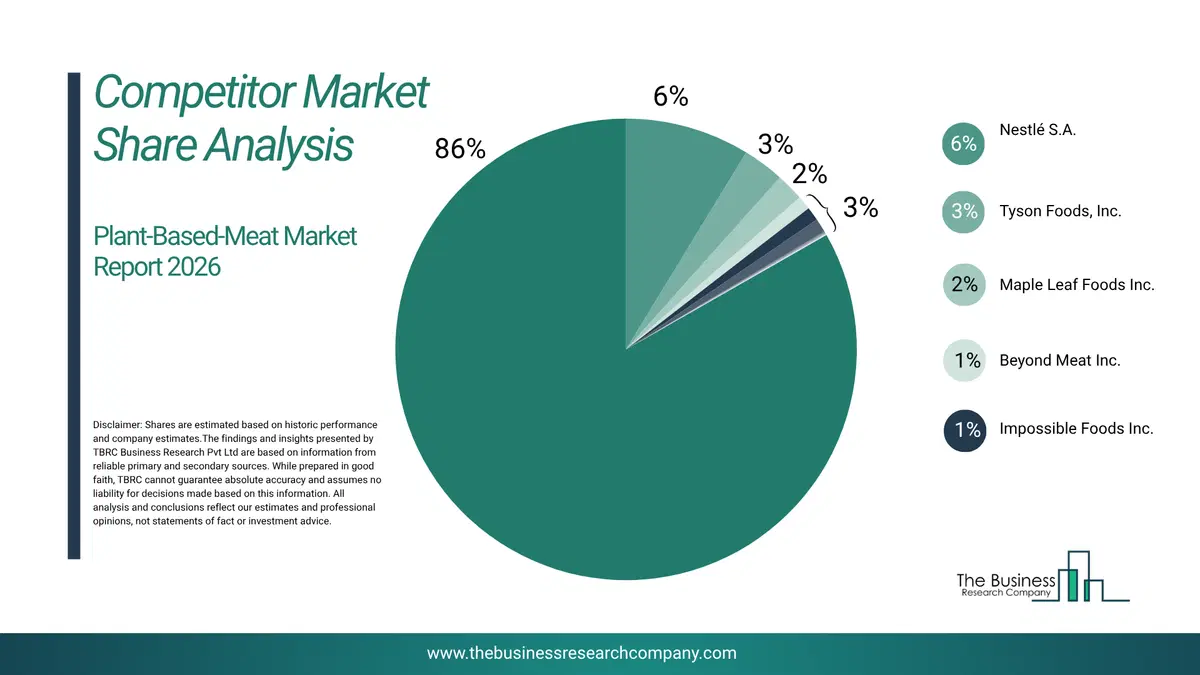
This chart is for illustrative purposes; the full report includes a detailed competitor analysis and comprehensive overview of the top 10 companies in the market.
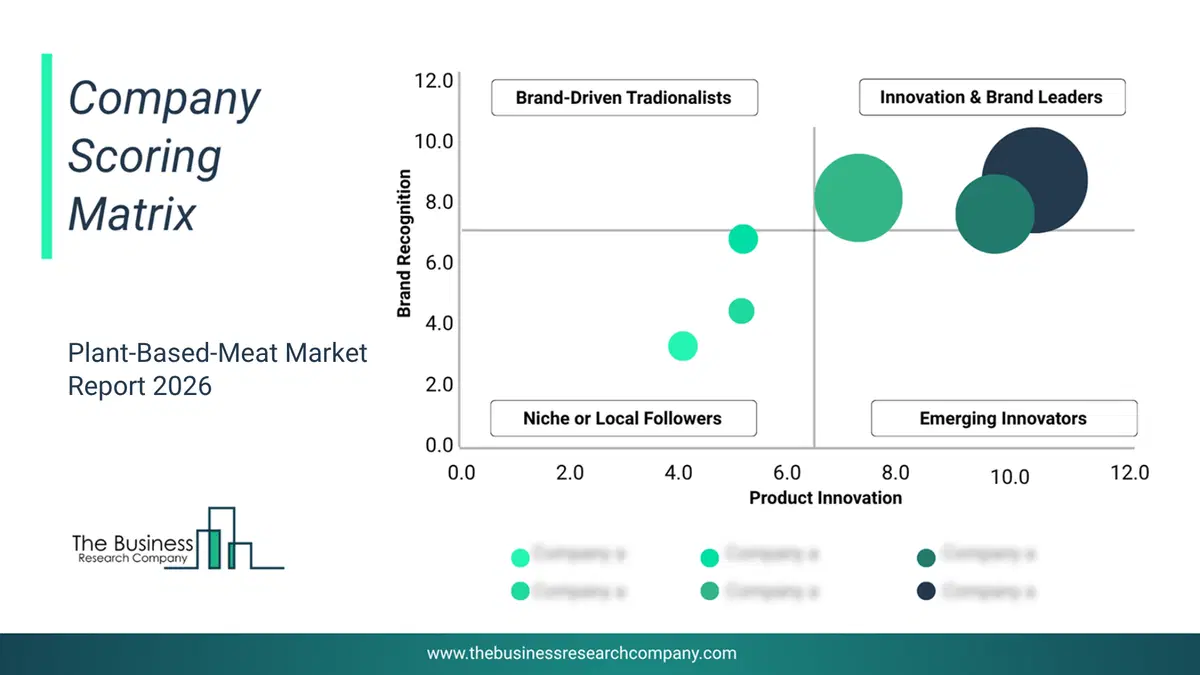
This chart maps companies by product innovation and brand strength, with bubble size indicating relative revenue, helping identify market leaders, challengers, and niche players. This is an illustrative chart; the full report provides a complete and accurate competitive analysis.
Global Plant-Based-Meat Market Trends and Insights
Major companies operating in the plant-based meat market are focusing on developing innovative products, such as next-generation plant-based burgers and beef mince, to meet the rising demand for healthier, sustainable, and ethically produced meat alternatives. Next-generation plant-based burgers and beef mince are formulated using plant-derived proteins to replicate the taste, texture, and appearance of conventional meat, while offering benefits such as lower saturated fat, no cholesterol, and high protein content, catering to health-conscious and environmentally aware consumers. For instance, in June 2025, Redefine Meat, a Netherlands-based plant-based meat company, launched an updated line of plant-based burgers and beef mince across Europe, featuring up to 90% less saturated fat, protein content of 11–16 g per 100 g, and texture and taste engineered to closely mimic traditional meat. These innovations enable consumers to enjoy a meat-like experience with reduced environmental impact and enhanced nutritional value.What Are Latest Mergers And Acquisitions In The Plant-Based-Meat Market?
In June 2023, VFC Foods, a UK-based vegan food company, acquired Meatless Farm for an undisclosed amount. Through this acquisition, VFC Foods aims to diversify its product portfolio and strengthen its position in the plant-based meat segment by integrating Meatless Farm’s brand, products, and customer base. Meatless Farm is a UK-based plant-based meat company that produces vegan meat alternatives made from soy and wheat protein for retail and foodservice channels.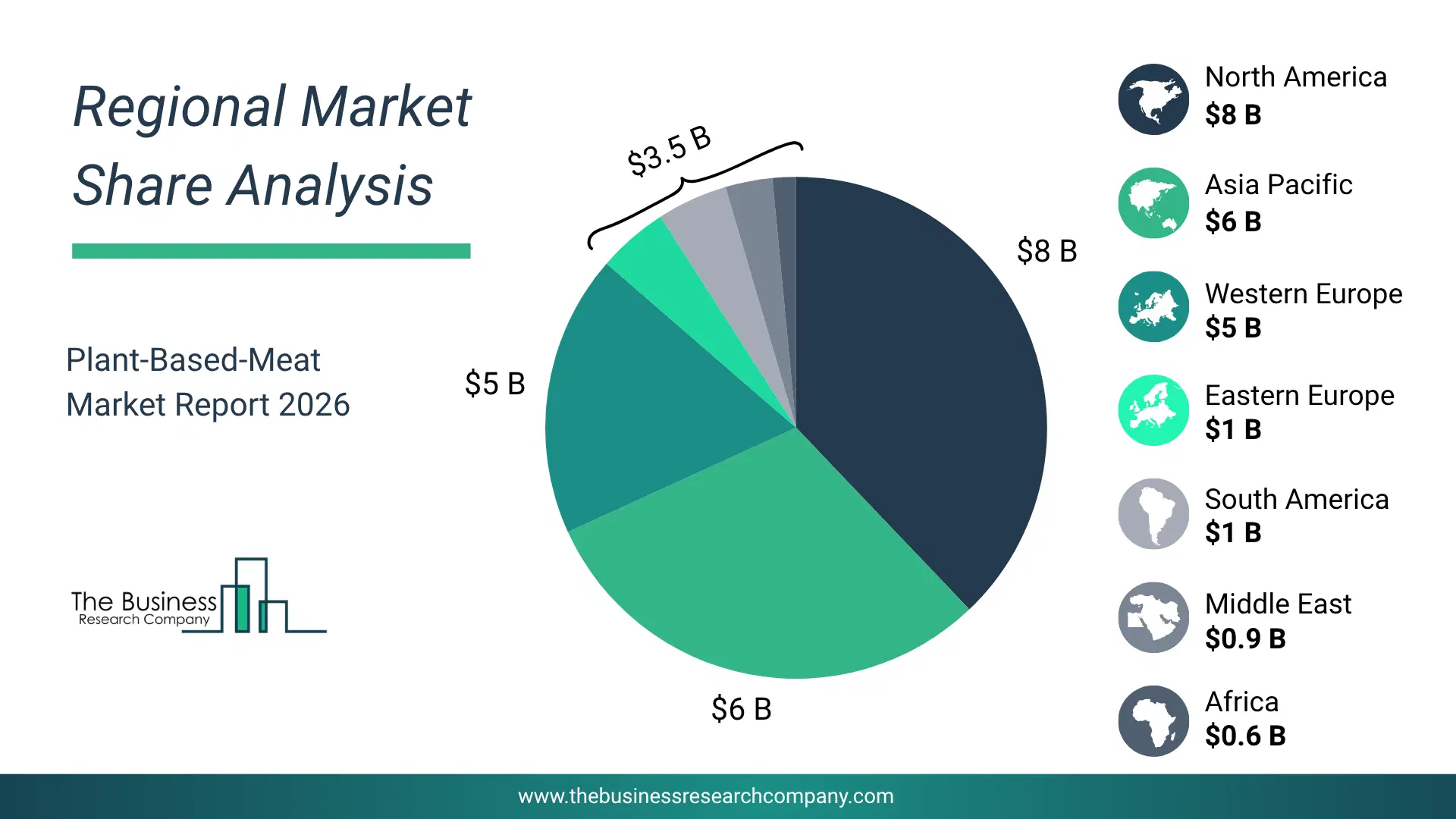
Regional Outlook
Asia-Pacific was the largest region in the plant-based meat market in 2025. Western Europe was the second-largest region in the global plant-based-meat market. The regions covered in this market report are Asia-Pacific, South East Asia, Western Europe, Eastern Europe, North America, South America, Middle East and Africa. The countries covered in this market report are Australia, Brazil, China, France, Germany, India, Indonesia, Japan, Taiwan, Russia, South Korea, UK, USA, Italy, Spain, CanadaWhat Defines the Plant-Based-Meat Market?
The plant-based meat market consists of sales of products in the form of a burger patty, crumbles, nuggets, sausages, and other plant-based meat products. Values in this market are factory gate values, that is the value of goods sold by the manufacturers or creators of the goods, whether to other entities (including downstream manufacturers, wholesalers, distributors and retailers) or directly to end customers. The value of goods in this market includes related services sold by the creators of the goods.How is Market Value Defined and Measured?
The market value is defined as the revenues that enterprises gain from the sale of goods and/or services within the specified market and geography through sales, grants, or donations in terms of the currency (in USD unless otherwise specified). The revenues for a specified geography are consumption values that are revenues generated by organizations in the specified geography within the market, irrespective of where they are produced. It does not include revenues from resales along the supply chain, either further along the supply chain or as part of other products.
This chart presents market attractiveness based on a quantitative evaluation of growth, competition, strategic alignment, and risk, offering a clear view of opportunity areas for decision-making. This chart is for illustrative purposes; the full report contains the complete analysis.

This chart highlights the Total Addressable Market (TAM) by estimating the maximum revenue opportunity using an assumption-driven approach, supporting strategic planning and opportunity sizing across markets. The chart is illustrative; the full report provides a more comprehensive analysis.
What Key Data and Analysis Are Included in the Plant-Based-Meat Market Report 2026?
The plant-based-meat market research report is one of a series of new reports from The Business Research Company that provides market statistics, including industry global market size, regional shares, competitors with the market share, detailed market segments, market trends and opportunities, and any further data you may need to thrive in the plant-based-meat industry. The market research report delivers a complete perspective of everything you need, with an in-depth analysis of the current and future state of the industry.Plant-Based-Meat Market Report Forecast Analysis
| Report Attribute | Details |
|---|---|
| Market Size Value In 2026 | $13.09 billion |
| Revenue Forecast In 2030 | $22.37 billion |
| Growth Rate | CAGR of 14.1% from 2026 to 2030 |
| Base Year For Estimation | 2025 |
| Actual Estimates/Historical Data | 2020-2025 |
| Forecast Period | 2026 - 2030 |
| Market Representation | Revenue in USD Billion and CAGR from 2026 to 2030 |
| Segments Covered | Product Type, Source, Distribution Channel |
| Regional Scope | Asia-Pacific, Western Europe, Eastern Europe, North America, South America, Middle East, Africa |
| Country Scope | The countries covered in the report are Australia, Brazil, China, France, Germany, India, Indonesia, Japan, Taiwan, Russia, South Korea, UK, USA, Canada, Italy, Spain. |
| Key Companies Profiled | Beyond Meat Inc., Impossible Foods Inc., Maple Leaf Foods Inc., Quorn Foods Ltd., Amy’s Kitchen Inc., Greenleaf Foods LLC, Don Lee Farms Inc., Atlantic Natural Foods LLC, Ojah BV, Tofurky Inc., The Very Good Food Company Inc., Gold & Green Foods Ltd., Hungry Planet Inc., No Evil Foods Inc., Ocean Hugger Foods Inc., Sophie’s Kitchen Inc., VBites Foods Ltd., Good Catch Foods Inc., Dr. Praeger’s Sensible Foods Inc., Sunfed Meats Ltd., LikeMeat GmbH |
| Customization Scope | Request for Customization |
| Pricing And Purchase Options | Explore Purchase Options |