
Plasma Fractionation Market Report 2026
Global Outlook – By Product (Immunoglobulins, Coagulation Factors, Albumin, Protease Inhibitors), By Application (Immunology, Hematology, Neurology, Critical Care, Hemato-Oncology, Rheumatology), By End User (Hospitals and Clinics, Clinical Research Laboratories, Academic Institutes) – Market Size, Trends, Strategies, and Forecast to 2030
Plasma Fractionation Market Overview
• Plasma Fractionation market size has reached to $34.14 billion in 2025 • Expected to grow to $55.85 billion in 2030 at a compound annual growth rate (CAGR) of 10.4% • Growth Driver: Elevated Demand For Plasma Fractionation Driven By The Escalating Burden Of Chronic Diseases • Market Trend: CSL Behring Unveils Plasma Fractionation Facility to Enhance Efficiency and Safety in Medicine Production • North America was the largest region in 2025 and Asia-Pacific is the fastest growing region.What Is Covered Under Plasma Fractionation Market?
Plasma fractionation refers to the process of integrating manufacturing procedures to isolate the crude fractions that are then refined into specific medicinal products, in a sequential and integrated manner. The main types of plasma fractionation market products are immunoglobulins, coagulation factors, albumin, and protease inhibitors. Immunoglobulins is used to treat a wide range of disorders, including primary and secondary immune deficiencies, autoimmune diseases, and inflammatory diseases. Immunoglobulins (Ig) and antibodies are glycoproteins produced by plasma cells that the immune system utilizes to recognize and neutralize foreign objects such as pathogenic bacteria and viruses. The various applications are in immunology, hematology, neurology, critical care, hemato-oncology, and rheumatology and various end users are in hospitals and clinics, clinical research laboratories, and academic institutes.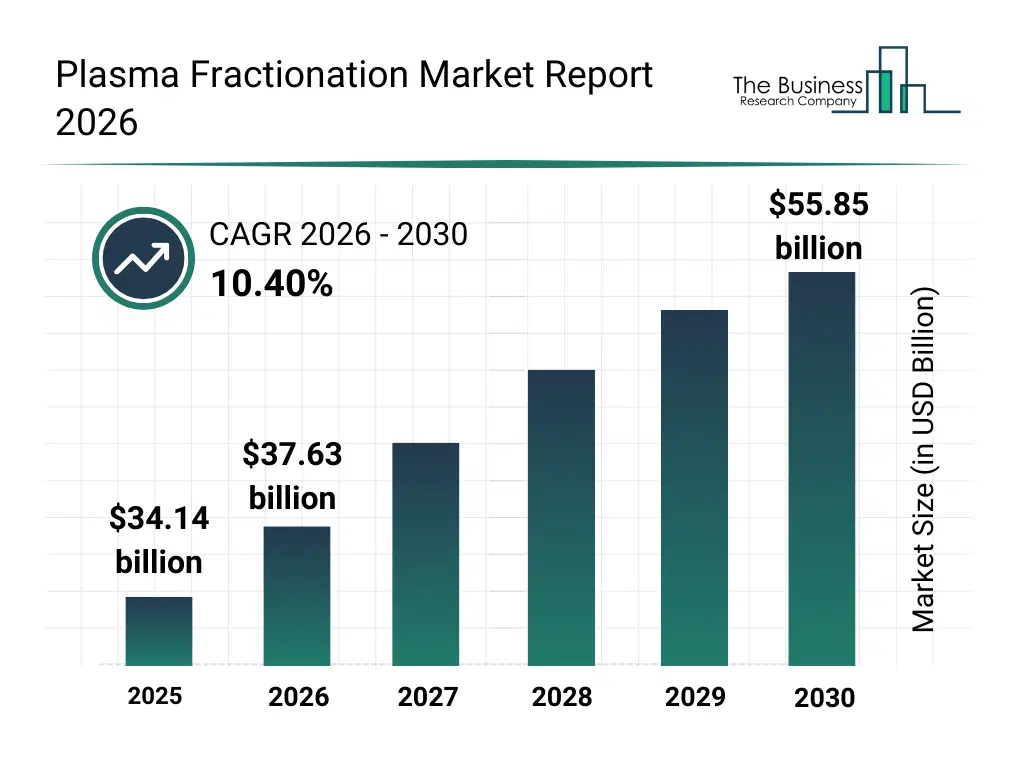
What Is The Plasma Fractionation Market Size and Share 2026?
The plasma fractionation market size has grown rapidly in recent years. It will grow from $34.14 billion in 2025 to $37.63 billion in 2026 at a compound annual growth rate (CAGR) of 10.2%. The growth in the historic period can be attributed to growth in demand for immunoglobulins, increased prevalence of hematological disorders, technological advancements in plasma fractionation, expansion of hospital and clinical infrastructure, rise in awareness about plasma-derived therapies.What Is The Plasma Fractionation Market Growth Forecast?
The plasma fractionation market size is expected to see rapid growth in the next few years. It will grow to $55.85 billion in 2030 at a compound annual growth rate (CAGR) of 10.4%. The growth in the forecast period can be attributed to increasing adoption of precision medicine, integration of ai in plasma manufacturing, expansion of global biopharmaceutical collaborations, rising investments in plasma collection centers, development of novel plasma-derived therapies. Major trends in the forecast period include advanced plasma fractionation techniques, biopharmaceutical product diversification, enhanced quality control and regulatory compliance, expansion of contract manufacturing organizations (cmos/cdmos), supply chain optimization in plasma products.
Global Plasma Fractionation Market Segmentation
1) By Product: Immunoglobulins, Coagulation Factors, Albumin, Protease Inhibitors 2) By Application: Immunology, Hematology, Neurology, Critical Care, Hemato-Oncology, Rheumatology 3) By End User: Hospitals and Clinics, Clinical Research Laboratories, Academic Institutes Subsegments: 1) By Immunoglobulins: Intravenous Immunoglobulin (IVIG), Subcutaneous Immunoglobulin (SCIG) 2) By Coagulation Factors: Factor VIII, Factor IX, Prothrombin Complex Concentrates (PCC) 3) By Albumin: Human Albumin, Bovine Serum Albumin (BSA) 4) By Protease Inhibitors: Alpha-1 Antitrypsin (AAT), C1 Esterase Inhibitor (C1-INH)What Is The Driver Of The Plasma Fractionation Market?
The increasing number of chronic diseases is expected to propel the growth of the plasma fractionation market going forward. Chronic diseases are defined as conditions that last 1 year or more and require ongoing medical attention, their examples include diseases such as heart disease, cancer, and diabetes. Treatment of patients with chronic diseases through access to plasma products reduces morbidity, improves the quality of life, and is cost-effective, this will in turn increase the demand for plasma fractionation. For instance, in March 2025, according to GOV.UK, a UK-based non-profit government organization, GP recorded type 2 diabetes prevalence in adults as 7.0% for those aged 17 and over in England in March 2024, which was an increase from 6.8% in March 2023. Therefore, an increasing number of chronic diseases of all ages is expected to propel the plasma fractionation industry growth.Key Players In The Global Plasma Fractionation Market
Major companies operating in the plasma fractionation market are Baxter International Inc., Bio Products Laboratory Limited, Biotest AG, CSL Limited, Grifols S. A, ADMA Biologics Inc., Green Cross Corporation, Hualan Bioengineering Inc., Intas Pharmaceuticals Ltd., Japan Blood Products Organization, Kedrion S. P. A., Kamada Ltd., LFB Biomedicaments S. A. S, Octapharma AG, Sanquin Plasma Products B. V., Shanghai Raas Blood Products Co. Ltd., Takeda Pharmaceutical Company, Terumo BCT, China Biologic Products Holdings Inc., China National Biotec Group, Emergent BioSolutions Inc., Bharat Serum Vaccines Limited, Plasma Therapeutics, Prothya Biosolutions B. V., BioPharma Plasma LLC, BioLife Plasma Services LP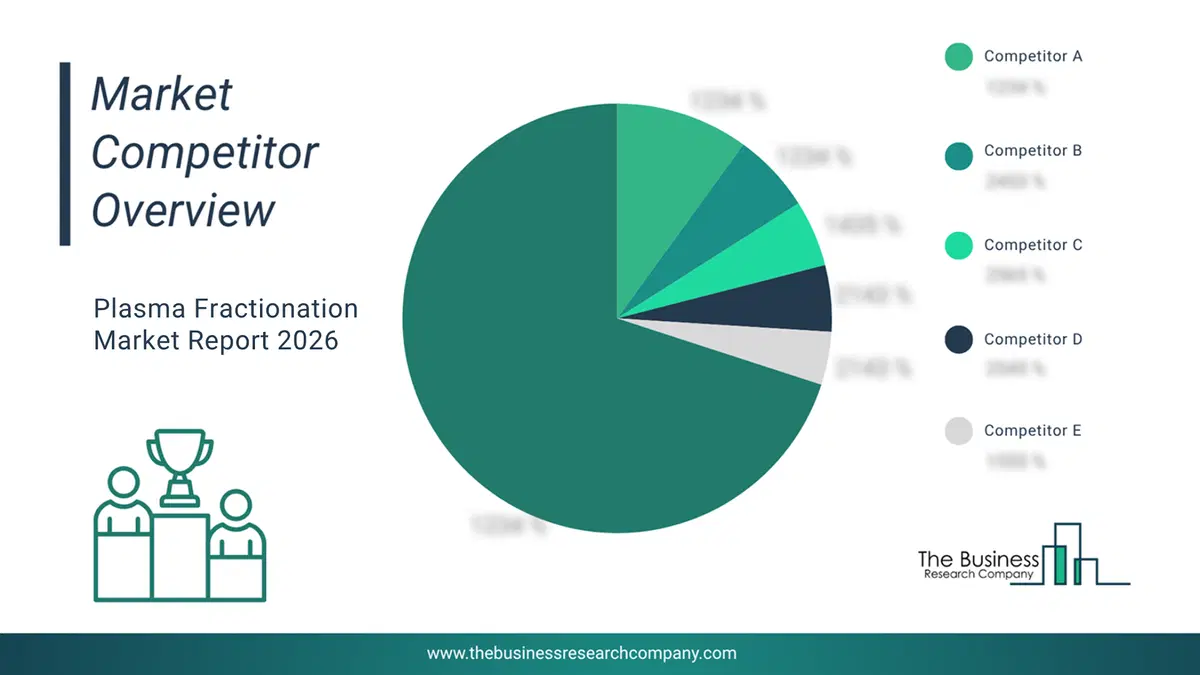
This chart is for illustrative purposes; the full report includes a detailed competitor analysis and comprehensive overview of the top 10 companies in the market.
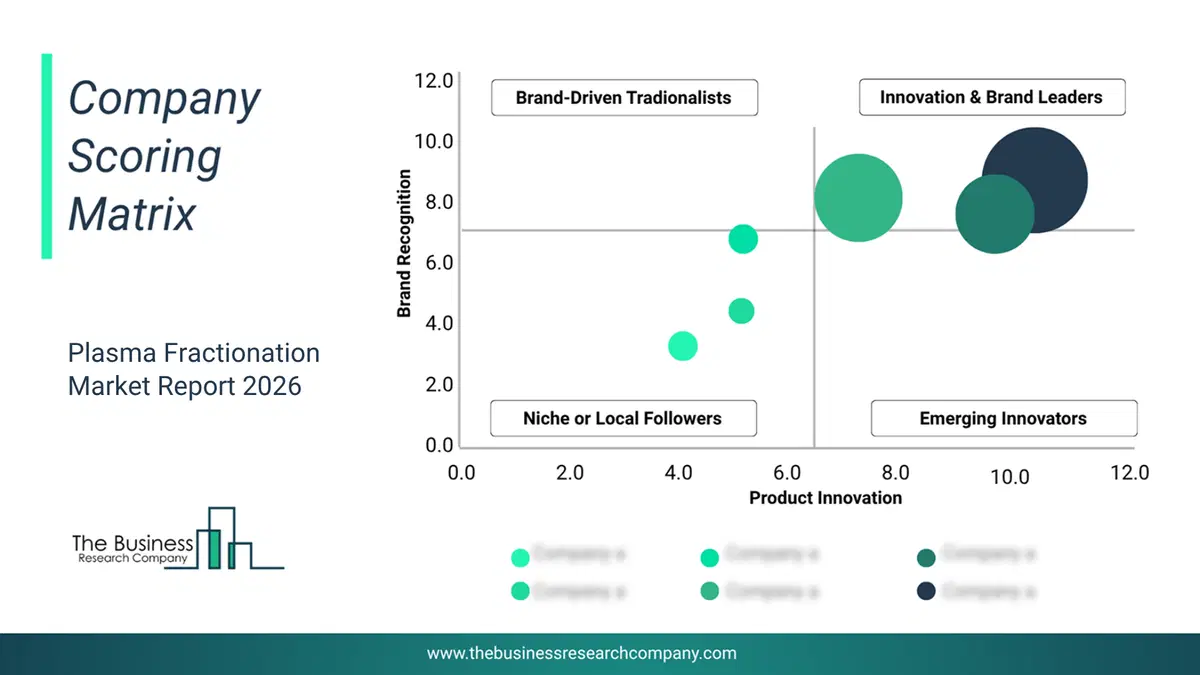
This chart maps companies by product innovation and brand strength, with bubble size indicating relative revenue, helping identify market leaders, challengers, and niche players. This is an illustrative chart; the full report provides a complete and accurate competitive analysis.
Global Plasma Fractionation Market Trends and Insights
Major companies operating in the market are introducing new technologies like hi-tech facility processes that turn donated human plasma into important medicines and use advanced technology to make the process more efficient and safer. For instance, in March 2023, CSL Behring, a German-based company, opened a new $470 million plasma fractionation facility that uses cutting-edge technology to improve the efficiency and safety of plasma processing, ensuring higher quality and more reliable medicines. By increasing the supply of these critical medicines, the facility helps meet the growing demand, ensuring more patients have access to life-saving treatments. With the advanced automation and self-cleaning systems, it reduces the risk of contamination and improves overall hygienic conditions, enhancing patient safety.What Are Latest Mergers And Acquisitions In The Plasma Fractionation Market?
In May 2024, LFB, a France-based biopharmaceutical company, acquired Amber Plasma for an undisclosed amount. With this acquisition, LFB aims to strengthen its plasma collection network in Europe and expand its capacity to support the production of plasma-derived therapies. Amber Plasma, a Czech Republic-based plasma collection company.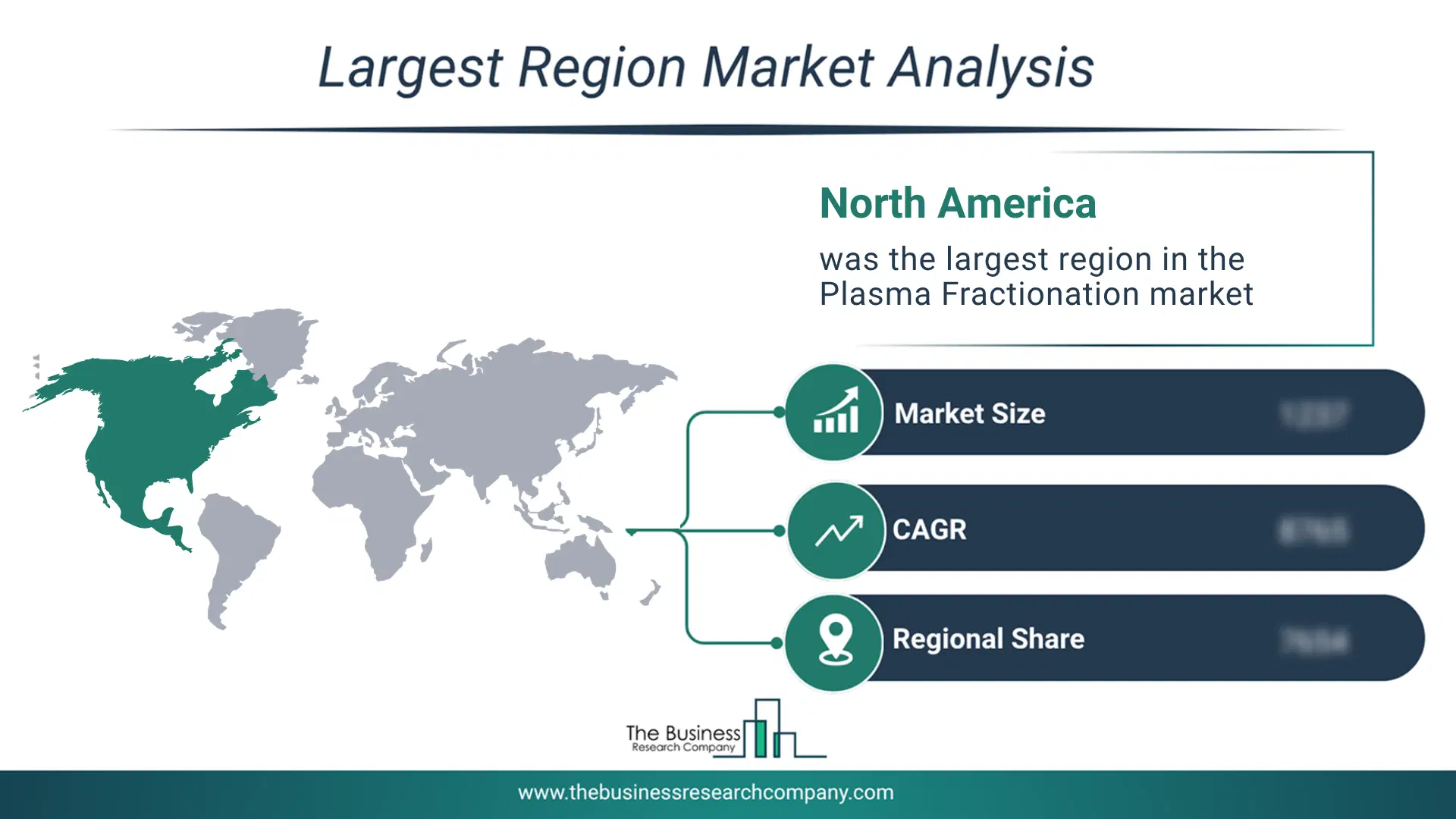
Regional Insights
North America was the largest region in the plasma fractionation market in 2025.Asia-Pacific is expected to be the fastest-growing region in the forecast period. The regions covered in this market report are Asia-Pacific, South East Asia, Western Europe, Eastern Europe, North America, South America, Middle East, Africa. The countries covered in this market report are Australia, Brazil, China, France, Germany, India, Indonesia, Japan, Taiwan, Russia, South Korea, UK, USA, Canada, Italy, Spain.What Defines the Plasma Fractionation Market?
The plasma fractionation market includes revenues earned by entities by combining manufacturing steps to isolate, in a sequential and integrated manner. The market value includes the value of related goods sold by the service provider or included within the service offering. Only goods and services traded between entities or sold to end consumers are included.How is Market Value Defined and Measured?
The market value is defined as the revenues that enterprises gain from the sale of goods and/or services within the specified market and geography through sales, grants, or donations in terms of the currency (in USD unless otherwise specified). The revenues for a specified geography are consumption values that are revenues generated by organizations in the specified geography within the market, irrespective of where they are produced. It does not include revenues from resales along the supply chain, either further along the supply chain or as part of other products.
This chart presents market attractiveness based on a quantitative evaluation of growth, competition, strategic alignment, and risk, offering a clear view of opportunity areas for decision-making. This chart is for illustrative purposes; the full report contains the complete analysis.

This chart highlights the Total Addressable Market (TAM) by estimating the maximum revenue opportunity using an assumption-driven approach, supporting strategic planning and opportunity sizing across markets. The chart is illustrative; the full report provides a more comprehensive analysis.
What Key Data and Analysis Are Included in the Plasma Fractionation Market Report 2026?
The plasma fractionation market research report is one of a series of new reports from The Business Research Company that provides market statistics, including industry global market size, regional shares, competitors with the market share, detailed market segments, market trends and opportunities, and any further data you may need to thrive in the plasma fractionation industry. The market research report delivers a complete perspective of everything you need, with an in-depth analysis of the current and future state of the industry.Plasma Fractionation Market Report Forecast Analysis
| Report Attribute | Details |
|---|---|
| Market Size Value In 2026 | $37.63 billion |
| Revenue Forecast In 2030 | $55.85 billion |
| Growth Rate | CAGR of 10.2% from 2026 to 2030 |
| Base Year For Estimation | 2025 |
| Actual Estimates/Historical Data | 2020-2025 |
| Forecast Period | 2026 - 2030 |
| Market Representation | Revenue in USD Billion and CAGR from 2026 to 2030 |
| Segments Covered | Product, Application, End User |
| Regional Scope | Asia-Pacific, Western Europe, Eastern Europe, North America, South America, Middle East, Africa |
| Country Scope | The countries covered in the report are Australia, Brazil, China, France, Germany, India, Indonesia, Japan, Taiwan, Russia, South Korea, UK, USA, Canada, Italy, Spain. |
| Key Companies Profiled | Baxter International Inc., Bio Products Laboratory Limited, Biotest AG, CSL Limited, Grifols S. A, ADMA Biologics Inc., Green Cross Corporation, Hualan Bioengineering Inc., Intas Pharmaceuticals Ltd., Japan Blood Products Organization, Kedrion S. P. A., Kamada Ltd., LFB Biomedicaments S. A. S, Octapharma AG, Sanquin Plasma Products B. V., Shanghai Raas Blood Products Co. Ltd., Takeda Pharmaceutical Company, Terumo BCT, China Biologic Products Holdings Inc., China National Biotec Group, Emergent BioSolutions Inc., Bharat Serum Vaccines Limited, Plasma Therapeutics, Prothya Biosolutions B. V., BioPharma Plasma LLC, BioLife Plasma Services LP |
| Customization Scope | Request for Customization |
| Pricing And Purchase Options | Explore Purchase Options |