
Plasma Protein Therapeutics Market Report 2026
Global Outlook – By Product (Immunoglobulin, Albumin, Coagulation Factor, C1-esterase Inhibitors, Other Products), By Route Of Administration (Intravenous, Subcutaneous), By Applications (Primary Immunodeficiency Disorder (PID), Idiopathic Thrombocytopenic Purpura, Secondary Immunodeficiency, Hereditary Angioedema, Other Applications) – Market Size, Trends, Strategies, and Forecast to 2030
Plasma Protein Therapeutics Market Overview
• Plasma Protein Therapeutics market size has reached to $34.68 billion in 2025 • Expected to grow to $48.98 billion in 2030 at a compound annual growth rate (CAGR) of 7.2% • Growth Driver: Increasing Prevalence Of Autoimmune Disorders To Enhance Market Position • Market Trend: Innovative Products Drive Competition In The Plasma Protein Therapeutics Market • North America was the largest region in 2025 and Asia-Pacific is the fastest growing region.Market Gains By 2030 – Top Opportunities By Segment
Market Gain identifies the most promising market opportunities by highlighting the segments or products expected to generate the highest incremental revenue growth over the next five years.
What Is Covered Under Plasma Protein Therapeutics Market?
Plasma protein therapeutics refers to therapies derived from plasma and their recombinant analogs. It is used for the treatment of specific medical conditions by replacing missing or deficient proteins found in plasma, allowing recipients to live healthier and more productive lives. The main products of plasma protein therapeutics are immunoglobulin, albumin, coagulation factor, c1-esterase inhibitors, and other products. Immunoglobulin refers to a component of blood plasma that contains immunoglobulins or antibodies. These are administrated through different routes of administration including intravenous, and subcutaneous and are used for various applications such as primary immunodeficiency disorder (PID), idiopathic thrombocytopenic purpura, secondary immunodeficiency, hereditary angioedema and other applications.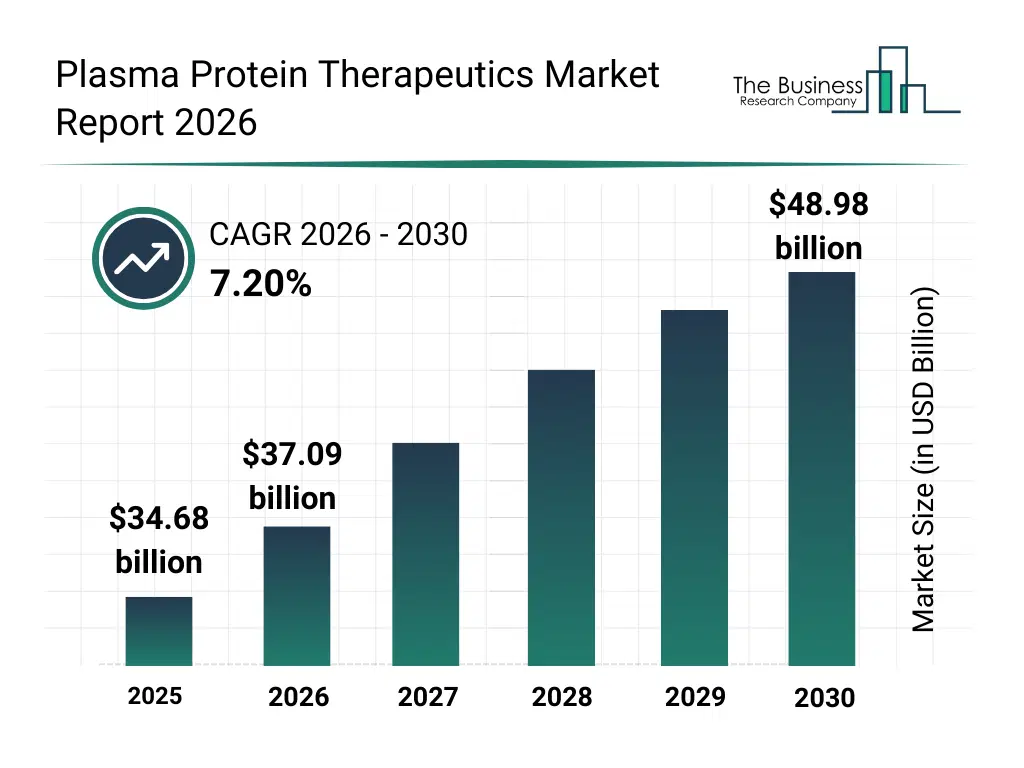
What Is The Plasma Protein Therapeutics Market Size and Share 2026?
The plasma protein therapeutics market size has grown strongly in recent years. It will grow from $34.68 billion in 2025 to $37.09 billion in 2026 at a compound annual growth rate (CAGR) of 6.9%. The growth in the historic period can be attributed to increasing prevalence of primary immunodeficiency disorder, rising demand for immunoglobulin therapies, limited plasma donation infrastructure, advances in protein purification technologies, regulatory approvals for plasma-derived therapies.What Is The Plasma Protein Therapeutics Market Growth Forecast?
The plasma protein therapeutics market size is expected to see strong growth in the next few years. It will grow to $48.98 billion in 2030 at a compound annual growth rate (CAGR) of 7.2%. The growth in the forecast period can be attributed to growth in recombinant albumin and coagulation factors, expansion of subcutaneous administration methods, increasing healthcare expenditure in emerging markets, technological advancements in precision medicine, rising public-private collaborations for plasma collection. Major trends in the forecast period include personalized plasma protein therapy development, expansion of recombinant protein production, increasing adoption of subcutaneous administration, growing awareness of rare blood disorders, enhanced supply chain and cold chain logistics.
Global Plasma Protein Therapeutics Market Segmentation
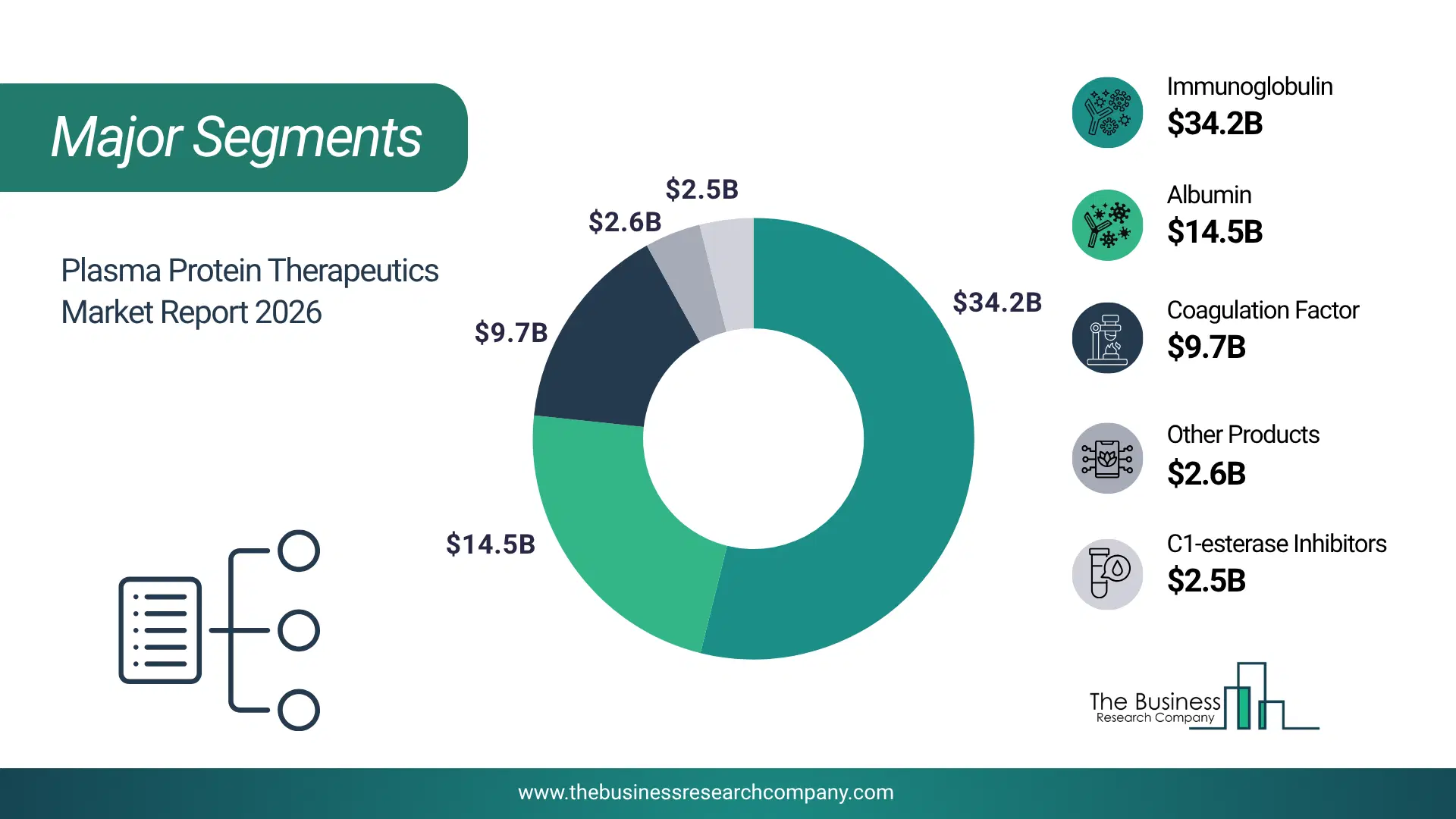
1) By Product: Immunoglobulin, Albumin, Coagulation Factor, C1-esterase Inhibitors, Other Products 2) By Route Of Administration: Intravenous, Subcutaneous 3) By Applications: Primary Immunodeficiency Disorder (PID), Idiopathic Thrombocytopenic Purpura, Secondary Immunodeficiency, Hereditary Angioedema, Other Applications Subsegments: 1) By Immunoglobulin: Intravenous Immunoglobulin (IVIG), Subcutaneous Immunoglobulin (SCIG) 2) By Albumin: Human Serum Albumin, Recombinant Albumin 3) By Coagulation Factor: Factor VIII, Factor IX, Prothrombin Complex Concentrates 4) By C1-Esterase Inhibitors: Human C1-Esterase Inhibitors, Recombinant C1-Esterase Inhibitors 5) By Other Products: Fibrinogen, Alpha-1 Antitrypsin, Clotting Factor Concentrates The top segments in the plasma protein therapeutics market will be: • Immunoglobulin will reach $34.17 billion by 2030. • Albumin will reach $14.49 billion by 2030. • Coagulation Factor will reach $9.62 billion by 2030. • Other Products will reach $2.59 billion by 2030. • C1-esterase Inhibitors will reach $2.46 billion by 2030.What Is The Driver Of The Plasma Protein Therapeutics Market?
An increasing prevalence of autoimmune disorders is expected to propel the growth of the plasma protein therapeutics market going forward. An autoimmune disorder is a condition that emerges when the body's immune system attacks and destroys healthy body cells. Therapeutic plasma exchange is used to treat autoimmune diseases, which emerge when the body misidentifies a part of itself as foreign and produces proteins (known as autoantibodies) that attack the part of the body that is misidentified. For instance, in May 2023, a study conducted by the University of Glasgow, a UK-based public university, involving 22 million people, found that autoimmune disorders affect about 10% of the UK's population, exceeding previous estimates of 2022. Therefore, the increasing prevalence of autoimmune disorders is driving the growth of the plasma protein therapeutics industry going forward.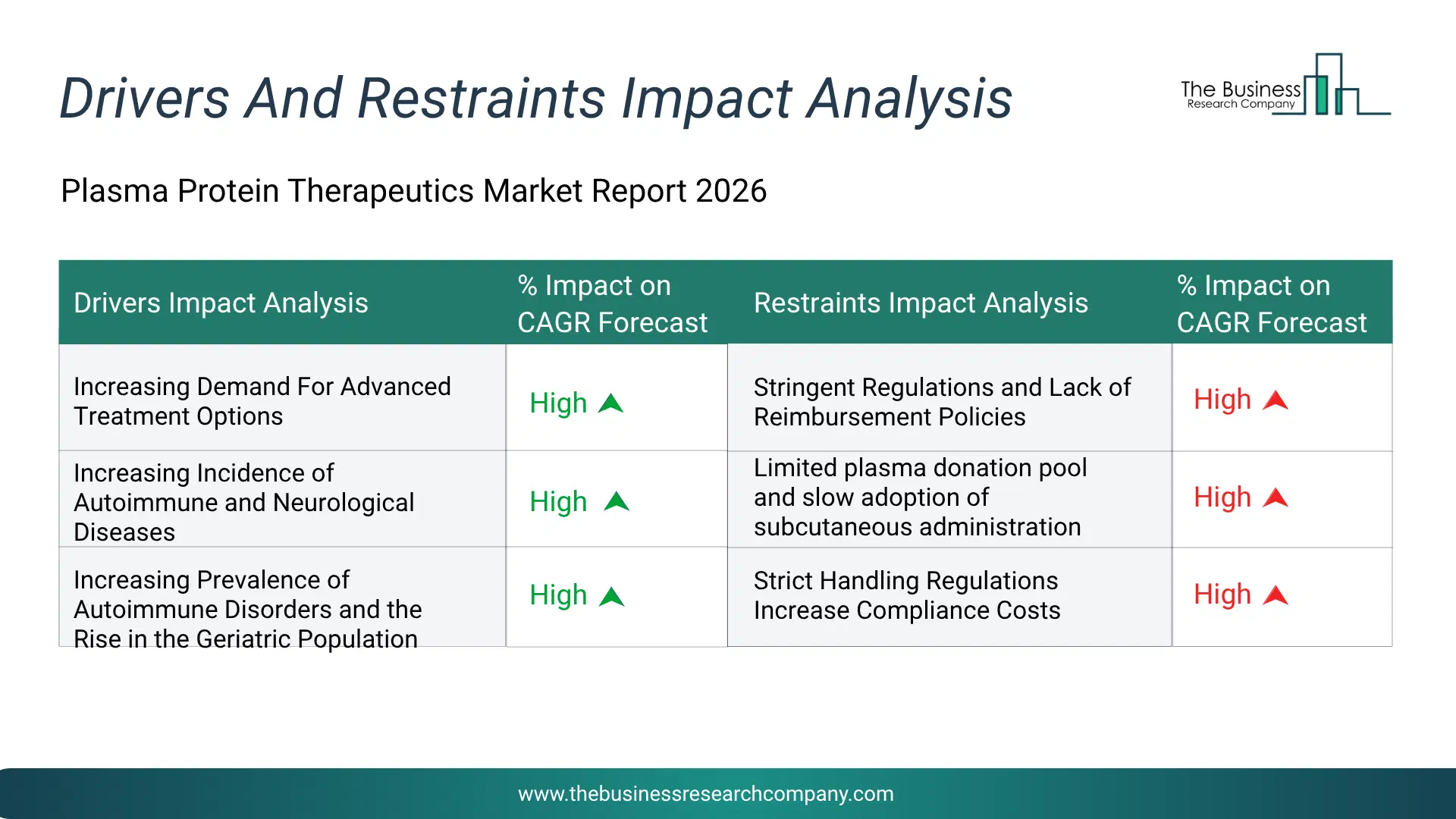
Infographic Chart Showing Key Market Drivers Analysis And Restraints For Plasma Protein Therapeutics Market
The chart presents an impact analysis of key drivers and restraints, quantifying their relative influence on the market's growth rate and helping assess the balance between growth enablers and limiting factors. This chart offers a high-level perspective; the full report contains more detailed insights.
How Will The Drivers Impact Growth In The Global Plasma Protein Therapeutics Market?
• Increasing Demand For Advanced Treatment Options (High) – During the forecast period, the increasing demand for advanced treatment options is expected to become a key growth driver for the plasma protein therapeutics market by 2030. Healthcare providers are increasingly adopting plasma -derived therapies due to their proven efficacy in treating rare and chronic conditions, particularly immunological and neurological disorders. Advances in biotechnology and fractionation processes are enabling the development of more targeted and effective therapies. Patients are also seeking improved treatment outcomes and quality of life, further driving demand. This shift toward advanced therapeutic solutions is strengthening market expansion. • Increasing Incidence of Autoimmune and Neurological Diseases (High) – During the forecast period, the increasing incidence of autoimmune and neurological diseases is expected to emerge as a major factor driving the expansion of the plasma protein therapeutics market by 2030. The rising global burden of conditions such as multiple sclerosis, guillain-barré syndrome, and chronic inflammatory demyelinating polyneuropathy is increasing the need for immunoglobulin-based treatments. Early diagnosis and improved awareness are further supporting treatment adoption. Additionally, advancements in clinical research are expanding the use of plasma therapies across new indications. • Increasing Prevalence of Autoimmune Disorders and the Rise in the Geriatric Population (High) – During the forecast period, the increasing prevalence of autoimmune disorders and the rise in the geriatric population are expected to act as key growth catalysts for the plasma protein therapeutics market by 2030. Aging populations are more susceptible to chronic and immune-related conditions, leading to higher demand for plasma-derived therapies. The growing incidence of autoimmune diseases is further increasing treatment requirements across healthcare systems. In addition, improved access to healthcare services and expanding diagnostic capabilities are supporting early and continuous treatment.How Will The Restraints Impact Growth In The Global Plasma Protein Therapeutics Market?
• Stringent Regulations and Lack of Reimbursement Policies (High) – During the forecast period, the strict regulatory requirements for plasma collection, fractionation, and product approval act as a major restraint on market growth. Manufacturers must comply with complex and time-consuming approval processes, which can delay product launches and increase operational costs. In addition, inconsistent or limited reimbursement policies in several regions restrict patient access to expensive plasma-derived therapies. This financial burden often discourages treatment adoption, particularly in low- and middle-income countries. As a result, both regulatory hurdles and reimbursement gaps slow down overall market expansion. • Limited plasma donation pool and slow adoption of subcutaneous administration (High) – During the forecast period, the the availability of plasma-derived therapies heavily depends on human plasma donations, which remain limited in many parts of the world. Factors such as lack of awareness, regulatory restrictions on donation, and dependency on a few key countries create supply constraints. Additionally, while subcutaneous administration offers convenience, its adoption is slower due to patient preference for traditional intravenous methods and limited training in some healthcare settings. This imbalance between demand and supply restricts market growth. Consequently, shortages and slower adoption of newer delivery methods hinder market scalability. • Strict Handling Regulations Increase Compliance Costs (High) – During the forecast period, the plasma protein therapeutics require highly controlled storage, transportation, and handling conditions to maintain product safety and efficacy. Regulatory authorities impose strict guidelines on cold chain logistics and quality control, which significantly increase compliance costs for manufacturers and distributors. These additional expenses impact pricing and reduce profit margins, especially for smaller market players. Maintaining such rigorous standards also demands continuous monitoring and infrastructure investment. As a result, high compliance costs act as a barrier to entry and limit market competitiveness.Key Players In The Global Plasma Protein Therapeutics Market
Major companies operating in the plasma protein therapeutics market are CSL Behring LLC, Grifols SA, China Biologic Products Holdings Inc., Takeda Pharmaceutical Company Limited, Baxter International Inc., Kedrion SpA, LFB SA, Emergent BioSolutions Inc., Reliance Life Sciences Private Limited, ADMA Biologics Inc., Prothya Biosolutions BV, Bio Products Laboratory Ltd., Biotest AG, Taibang Biological Group Co Ltd, Octapharma Plasma Inc., Green Cross Corporation, China National Biotec Group Company Limited, Kamada Ltd., Shire PLC, Octapharma AG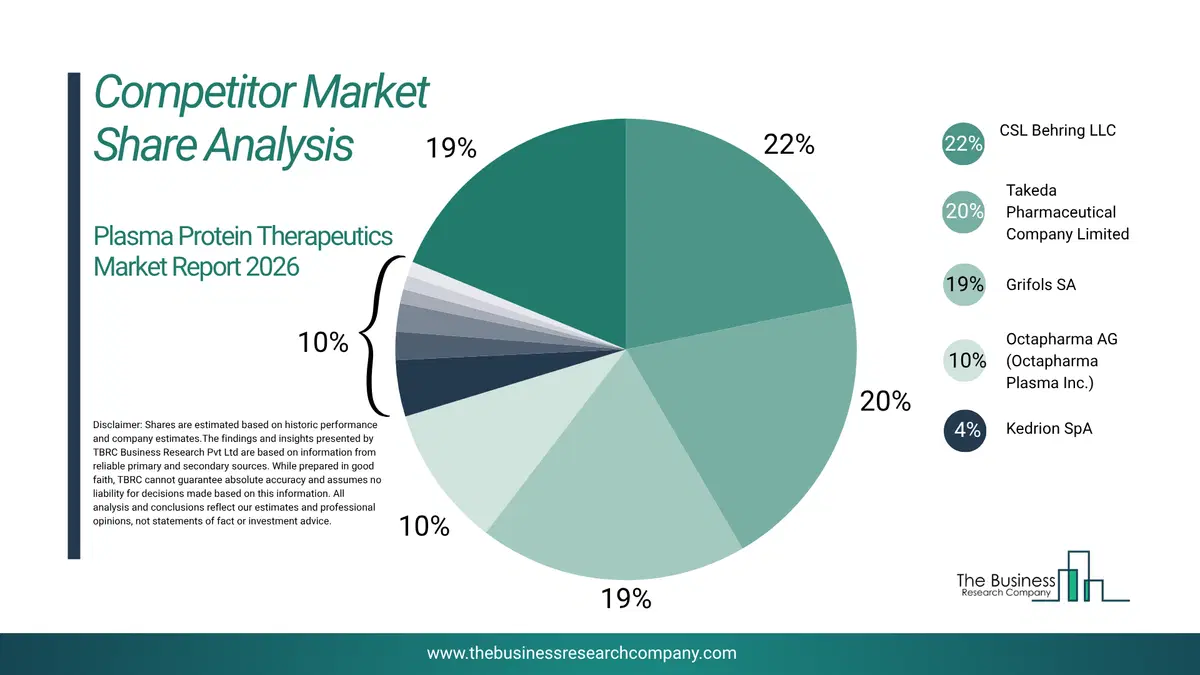
This chart is for illustrative purposes; the full report includes a detailed competitor analysis and comprehensive overview of the top 10 companies in the market.
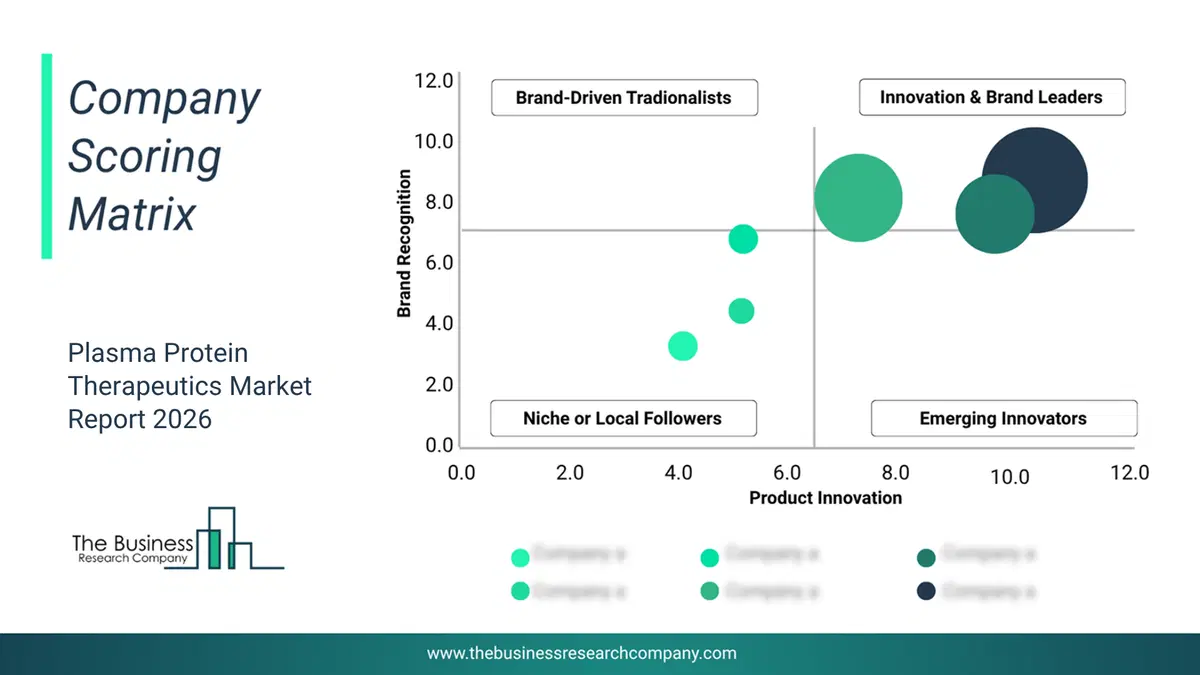
This chart maps companies by product innovation and brand strength, with bubble size indicating relative revenue, helping identify market leaders, challengers, and niche players. This is an illustrative chart; the full report provides a complete and accurate competitive analysis.
Global Plasma Protein Therapeutics Market Trends and Insights
Major companies operating in the plasma protein therapeutics market are focusing on developing innovative solutions, such as lyophilized plasma formulations, to meet the rising demand for portable, stable, and rapid-use blood products in emergency and pre-hospital care settings. Lyophilized plasma products are freeze-dried formulations that offer longer shelf life, easier storage, and quicker reconstitution compared to traditional frozen plasma, making them highly suitable for trauma, emergency medicine, and field environments. For instance, in October 2023, Octapharma AG, a Switzerland-based pharmaceutical company, received approval from European medical authorities for the lyophilized version of its octaplasLG product. This advanced formulation enables convenient pre-hospital transfusion, offering rapid availability, simplified handling, and improved stability for critical care situations. The product supports effective management of trauma and bleeding emergencies, demonstrating Octapharma’s commitment to advancing patient care through innovative plasma-based therapies.What Are Latest Mergers And Acquisitions In The Plasma Protein Therapeutics Market?
In June 2025, Grifols, a Spain-based provider of plasma-derived therapeutics including immunoglobulins, albumin, and clotting factors, acquired Biotest AG for an undisclosed amount. With this acquisition, Grifols aimed to gain full control over Biotest’s plasma-protein therapeutic portfolio, streamline operations, and strengthen its market position in the plasma protein therapeutics industry. Biotest AG is a Germany-based provider of plasma-derived therapies, including immunoglobulins, coagulation factors, and specialty plasma proteins.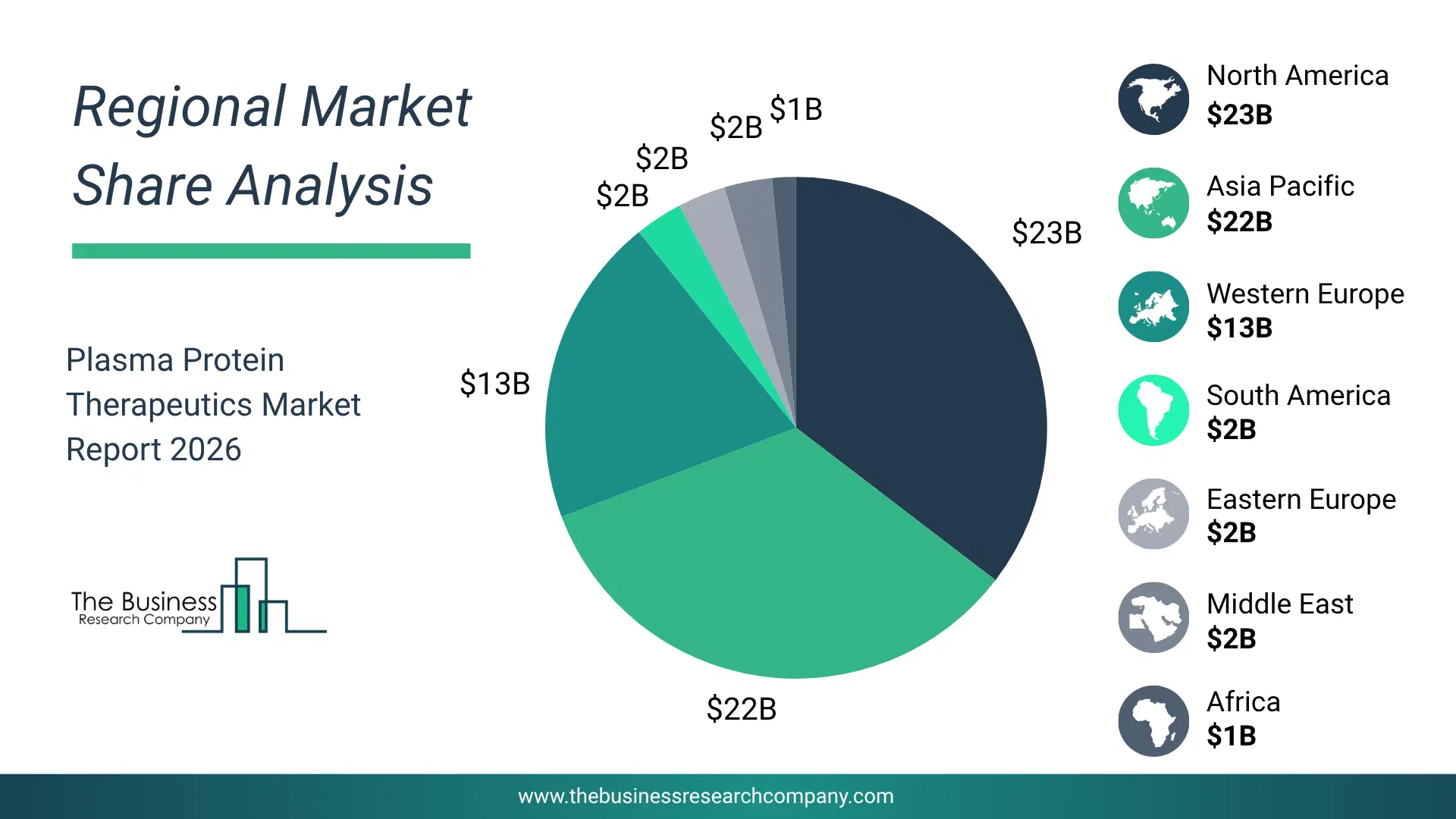
Regional Insights
North America was the largest region in the plasma protein therapeutics market in 2025. Asia-Pacific is expected to be the fastest-growing region in the forecast period. The regions covered in this market report are Asia-Pacific, South East Asia, Western Europe, Eastern Europe, North America, South America, Middle East, Africa. The countries covered in this market report are Australia, Brazil, China, France, Germany, India, Indonesia, Japan, Taiwan, Russia, South Korea, UK, USA, Canada, Italy, Spain.What Defines the Plasma Protein Therapeutics Market?
The plasma protein therapeutics market includes revenues earned by entities by providing therapy for liver disease and bleeding from trauma by using Alpha-1 Proteinase Inhibitors, Hyperimmune Globulins. The market value includes the value of related goods sold by the service provider or included within the service offering. Only goods and services traded between entities or sold to end consumers are included.How is Market Value Defined and Measured?
The market value is defined as the revenues that enterprises gain from the sale of goods and/or services within the specified market and geography through sales, grants, or donations in terms of the currency (in USD unless otherwise specified). The revenues for a specified geography are consumption values that are revenues generated by organizations in the specified geography within the market, irrespective of where they are produced. It does not include revenues from resales along the supply chain, either further along the supply chain or as part of other products.
This chart presents market attractiveness based on a quantitative evaluation of growth, competition, strategic alignment, and risk, offering a clear view of opportunity areas for decision-making. This chart is for illustrative purposes; the full report contains the complete analysis.

This chart highlights the Total Addressable Market (TAM) by estimating the maximum revenue opportunity using an assumption-driven approach, supporting strategic planning and opportunity sizing across markets. The chart is illustrative; the full report provides a more comprehensive analysis.
What Key Data and Analysis Are Included in the Plasma Protein Therapeutics Market Report 2026?
The plasma protein therapeutics market research report is one of a series of new reports from The Business Research Company that provides market statistics, including industry global market size, regional shares, competitors with the market share, detailed market segments, market trends and opportunities, and any further data you may need to thrive in the plasma protein therapeutics industry. The market research report delivers a complete perspective of everything you need, with an in-depth analysis of the current and future state of the industry.Plasma Protein Therapeutics Market Report Forecast Analysis
| Report Attribute | Details |
|---|---|
| Market Size Value In 2026 | $37.09 billion |
| Revenue Forecast In 2030 | $48.98 billion |
| Growth Rate | CAGR of 7.2% from 2026 to 2030 |
| Base Year For Estimation | 2025 |
| Actual Estimates/Historical Data | 2020-2025 |
| Forecast Period | 2026 - 2030 |
| Market Representation | Revenue in USD Billion and CAGR from 2026 to 2030 |
| Segments Covered | Product, Route Of Administration, Applications |
| Regional Scope | Asia-Pacific, Western Europe, Eastern Europe, North America, South America, Middle East, Africa |
| Country Scope | The countries covered in the report are Australia, Brazil, China, France, Germany, India, ... |
| Key Companies Profiled | CSL Behring LLC, Grifols SA, China Biologic Products Holdings Inc., Takeda Pharmaceutical Company Limited, Baxter International Inc., Kedrion SpA, LFB SA, Emergent BioSolutions Inc., Reliance Life Sciences Private Limited, ADMA Biologics Inc., Prothya Biosolutions BV, Bio Products Laboratory Ltd., Biotest AG, Taibang Biological Group Co Ltd, Octapharma Plasma Inc., Green Cross Corporation, China National Biotec Group Company Limited, Kamada Ltd., Shire PLC, Octapharma AG |
| Customization Scope | Request for Customization |
| Pricing And Purchase Options | Explore Purchase Options |