
Plug-In Hybrid Electric Vehicle Battery Market Report 2026
Global Outlook – By Battery Type ( Lithium-Ion Battery, Lead-Acid Battery, Other Battery Types), By Vehicle Type ( Passenger Vehicle, Light Commercial Vehicle), By Capacity ( Less Than 10 kWh, 10-20 kWh, 20-30 kWh, Above 30 kWh), By Charging Infrastructure ( Home Charging, Public Charging, Workplace Charging) – Market Size, Trends, Strategies, and Forecast to 2030
Plug-In Hybrid Electric Vehicle Battery Market Overview
• Plug-In Hybrid Electric Vehicle Battery market size has reached to $13.85 billion in 2025 • Expected to grow to $35.02 billion in 2030 at a compound annual growth rate (CAGR) of 20.3% • Growth Driver: Rising Preference For Energy-Efficient Vehicles Fueling The Growth Of The Market Due To Increasing Focus On Cost Savings And Emission Reduction • Market Trend: Next-Generation Lithium-Ion And Sodium-Ion Batteries For Extended-Range PHEVs • Asia-Pacific was the largest region in 2025 and Europe is the fastest growing region.Market Gains By 2030 – Top Opportunities By Segment
Market Gain identifies the most promising market opportunities by highlighting the segments or products expected to generate the highest incremental revenue growth over the next five years.
What Is Covered Under Plug-In Hybrid Electric Vehicle Battery Market?
A plug-in hybrid electric vehicle battery is a high-capacity rechargeable battery that stores electrical energy to power the vehicle’s electric motor and can be charged externally through a home outlet or public charging station. This battery allows the vehicle to operate on electric power alone for short to moderate distances, significantly reducing fuel consumption and emissions, while seamlessly integrating with the internal combustion engine for extended range and enhanced overall efficiency. The main battery types of plug-in hybrid electric vehicle batteries are lithium-ion batteries, lead-acid batteries, sodium-ion batteries, and others. Lithium-ion batteries refer to rechargeable energy storage devices that use lithium ions as the primary charge carriers, moving between the positive and negative electrodes during charging and discharging cycles. It is used for various vehicle types, such as passenger vehicles, light commercial vehicles, and heavy commercial vehicles, and capacities, including less than 10 kWh, 10-20 kWh, 20-30 kWh, and above 30 kWh. It includes charging infrastructures, including home charging, public charging, and workplace charging.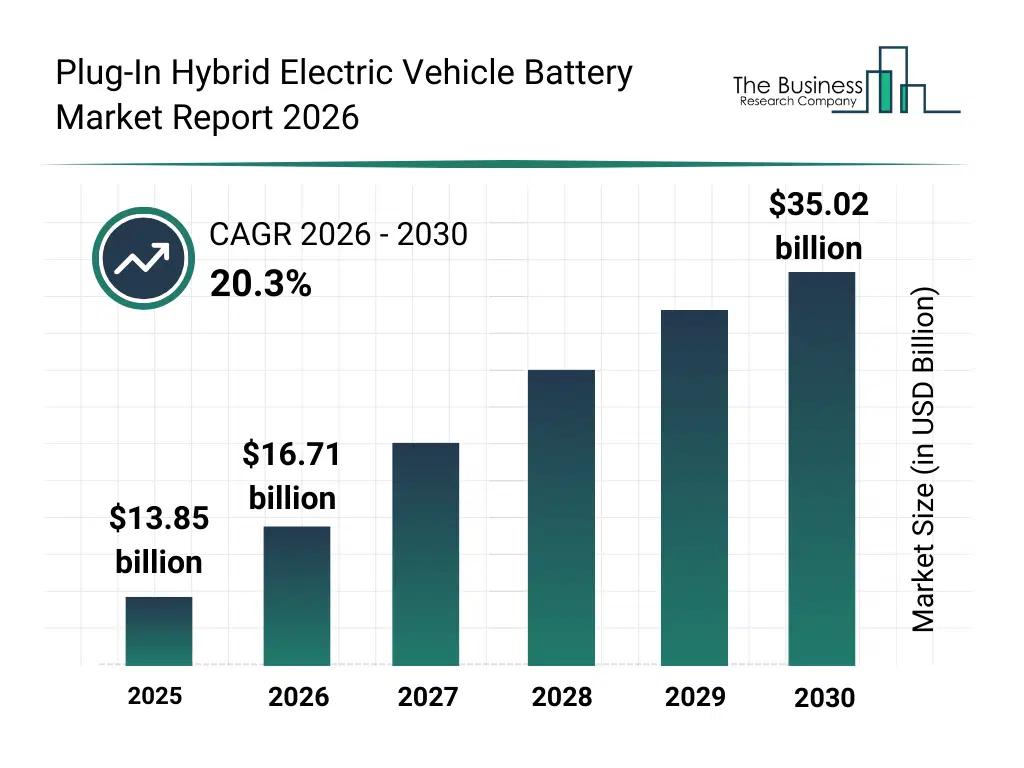
What Is The Plug-In Hybrid Electric Vehicle Battery Market Size 2026 And Growth Rate?
The plug-in hybrid electric vehicle battery market size has grown exponentially in recent years. It will grow from $13.85 billion in 2025 to $16.71 billion in 2026 at a compound annual growth rate (CAGR) of 20.6%. The growth in the historic period can be attributed to rising fuel prices, government subsidies for evs, limited charging infrastructure, increasing environmental regulations, growth of hybrid vehicles.What Is The Plug-In Hybrid Electric Vehicle Battery Market Growth Forecast?
The plug-in hybrid electric vehicle battery market size is expected to see exponential growth in the next few years. It will grow to $35.02 billion in 2030 at a compound annual growth rate (CAGR) of 20.3%. The growth in the forecast period can be attributed to advancements in battery chemistry, expansion of public charging networks, rising consumer awareness about sustainability, cost reduction in battery production, integration with smart grid technologies. Major trends in the forecast period include high-capacity rechargeable batteries, vehicle-to-grid (v2g) integration, fast charging technology, battery thermal management systems, lightweight & compact battery designs.
Global Plug-In Hybrid Electric Vehicle Battery Market Segmentation
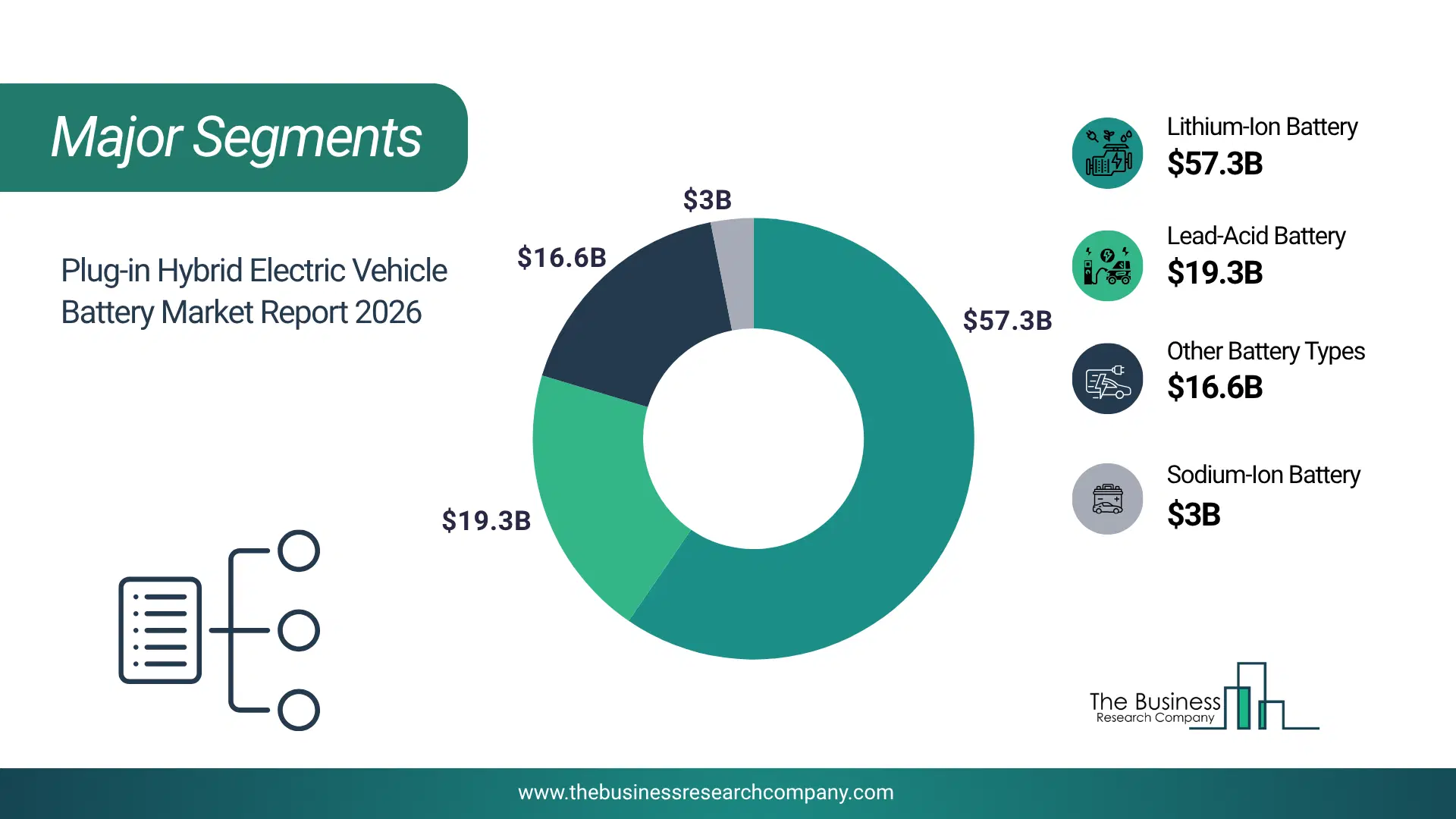
1) By Battery Type: Lithium-Ion Battery, Lead-Acid Battery, Other Battery Types 2) By Vehicle Type: Passenger Vehicle, Light Commercial Vehicle 3) By Capacity: Less Than 10 kWh, 10-20 kWh, 20-30 kWh, Above 30 kWh 4) By Charging Infrastructure: Home Charging, Public Charging, Workplace Charging Subsegments: 1) By Lithium-Ion Battery: Lithium Iron Phosphate Battery, Lithium Nickel Manganese Cobalt Oxide Battery, Lithium Cobalt Oxide Battery, Lithium Manganese Oxide Battery, Lithium Titanate Battery 2) By Lead-Acid Battery: Flooded Lead-Acid Battery, Sealed Lead-Acid Battery, Deep Cycle Lead-Acid Battery, Valve Regulated Lead-Acid Battery 3) By Other Battery Types: Nickel Metal Hydride Battery, Solid State Battery, Zinc Air Battery, Flow Battery The top segments in the plug-in hybrid electric vehicle battery market will be: • Lithium-Ion Battery will reach $57.29 billion by 2030. • Lead-Acid Battery will reach $19.28 billion by 2030. • Other Battery Types will reach $16.56 billion by 2030. • Sodium-Ion Battery will reach $2.96 billion by 2030.What Is The Driver Of The Plug-In Hybrid Electric Vehicle Battery Market?
The growing preference for energy-efficient vehicles is expected to propel the growth of the plug-in hybrid electric vehicle battery market going forward. Energy-efficient vehicles refer to automobiles that consume less fuel or electricity by utilizing advanced technologies to deliver higher performance with lower environmental impact. The growing preference for energy-efficient vehicles is largely driven by rising fuel prices, as consumers increasingly look for options that can significantly reduce their long-term operating costs while still meeting their mobility needs. A plug-in hybrid electric vehicle battery is useful for energy-efficient vehicles, as it enables them to run on electricity for short distances while relying on fuel for longer trips, thereby reducing overall energy consumption and emissions. For instance, in June 2025, according to the Department for Transport, a UK-based government department, the UK had 1,394,000 licensed zero-emission vehicles on the roads in 2024, representing a 37% rise from 2023. This total included 1,287,000 zero-emission cars, marking a 38% increase over the previous year. Therefore, the growing preference for energy-efficient vehicles is driving the growth of the plug-in hybrid electric vehicle battery industry.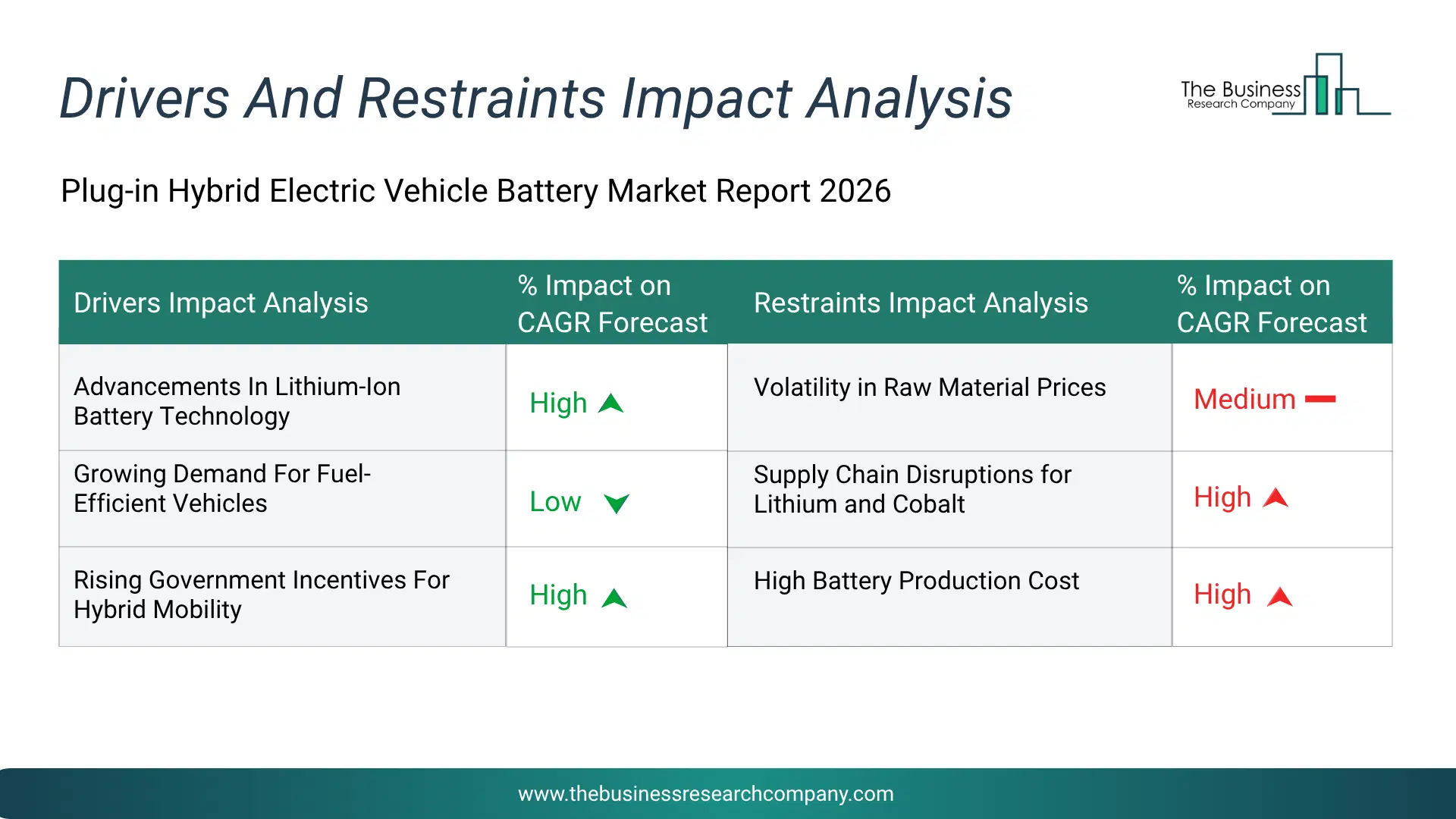
Infographic Chart Showing Key Market Drivers Analysis And Restraints For Plug-In Hybrid Electric Vehicle Battery Market
The chart presents an impact analysis of key drivers and restraints, quantifying their relative influence on the market's growth rate and helping assess the balance between growth enablers and limiting factors. This chart offers a high-level perspective; the full report contains more detailed insights.
How Will The Drivers Impact Growth In The Global Plug-in Hybrid Electric Vehicle Battery Market?
• Advancements In Lithium-Ion Battery Technology (High) – During the forecast period, the advancements in lithium-ion battery technology are expected to become a key growth driver for the plug-in hybrid electric vehicle battery market by 2030. Advancements in lithium-ion battery technology act as a major driver for the plug-in hybrid electric vehicle (phev) battery market by enhancing energy density, extending driving range, and improving overall efficiency. These innovations reduce battery weight and cost while increasing charging speed and lifecycle performance. Improved thermal management and safety features further boost consumer confidence in hybrid vehicles. As manufacturing processes become more efficient, production scalability and affordability rise. Together, these technological improvements accelerate the adoption of phevs and strengthen market growth. • Growing Demand For Fuel-Efficient Vehicles (Low) – During the forecast period, the growing demand for fuel-efficient vehicles is expected to emerge as a major factor driving the expansion of the plug-in hybrid electric vehicle battery market by 2030. The growing demand for fuel-efficient vehicles is a major driver for the plug-in hybrid electric vehicle (phev) battery market, as consumers and manufacturers increasingly prioritize reduced fuel consumption and lower emissions. Phev batteries enable vehicles to operate partly or fully on electric power, significantly improving overall fuel economy. Governments promoting fuel efficiency standards further accelerate the adoption of phevs, boosting battery demand. As fuel prices fluctuate, consumers view phevs as a cost-effective alternative to conventional vehicles. Consequently, the shift toward energy-efficient mobility continues to strengthen market growth for advanced phev battery technologies. • Rising Government Incentives For Hybrid Mobility (High) – During the forecast period, the rising government incentives for hybrid mobility is expected to act as a key growth catalyst for the plug-in hybrid electric vehicle battery market by 2030. Rising government incentives for hybrid mobility act as a key driver for the plug-in hybrid electric vehicle (phev) battery market by boosting consumer adoption and accelerating vehicle production. Subsidies, tax benefits, and purchase rebates lower the upfront cost of phevs, making them more affordable to a wider audience. These incentives also encourage automakers to invest in advanced battery technologies to meet growing demand and regulatory goals. Additionally, supportive policies for charging infrastructure and local battery manufacturing strengthen market growth. Overall, government initiatives create a favorable ecosystem that enhances both production and innovation in phev batteries.How Will The Restraints Impact Growth In The Global Plug-in Hybrid Electric Vehicle Battery Market?
• Volatility in Raw Material Prices (Medium) – During the forecast period, the volatility in raw material prices acts as a major restraint for the plug-in hybrid electric vehicle battery market because key components like lithium, cobalt, and nickel experience frequent price fluctuations due to unstable global supply and demand. These cost variations make it difficult for manufacturers to forecast production expenses and maintain stable pricing for end products. Sudden spikes in material costs can reduce profit margins and discourage investment in large-scale battery production. Moreover, volatile prices increase the financial risk for automakers relying on consistent supply contracts. As a result, overall market growth and affordability of phev batteries are adversely affected. • Supply Chain Disruptions for Lithium and Cobalt (High) – During the forecast period, the supply chain disruptions for lithium and cobalt act as a major restraint for plug-in hybrid electric vehicle (phev) batteries because these metals are essential raw materials for battery production. Any delays or shortages in their supply can halt or slow down manufacturing, leading to reduced production volumes. Price volatility resulting from limited availability further increases the cost of batteries, making vehicles less affordable. Geographic concentration of mining and processing facilities amplifies the risk of regional disruptions affecting global supply. Consequently, such disruptions limit market growth and hinder the widespread adoption of phevs. • High Battery Production Cost (High) – During the forecast period, the high battery production costs significantly restrain the growth of the plug-in hybrid electric vehicle (phev) battery market. The manufacturing process requires expensive raw materials such as lithium, cobalt, and nickel, along with advanced technologies for battery cells, packs, and thermal management systems. These high costs increase the overall price of phevs, limiting affordability and consumer adoption. Additionally, elevated production expenses reduce profit margins for manufacturers, discouraging large-scale investment and expansion. Consequently, high battery production costs act as a major barrier to market growth and widespread deployment of phevs.Key Players In The Global Plug-In Hybrid Electric Vehicle Battery Market
Major companies operating in the plug-in hybrid electric vehicle battery market are BYD Company Limited, Hitachi Chemical Co. Ltd., Panasonic Holdings Corporation, SK Innovation Co. Ltd., LG Energy Solution Ltd., Toshiba Corporation, Johnson Matthey Battery Systems Engineering Limited, Samsung SDI Co. Ltd., Sunwoda Electronic Co. Ltd., Gotion High-Tech Co. Ltd., GS Yuasa International Ltd., EnerSys Inc., Exide Industries Limited, Saft Groupe S.A., A123 Systems LLC, Farasis Energy Inc., Northvolt AB, Electrovaya Inc., Valence Technology Inc., Blue Energy Co. Ltd.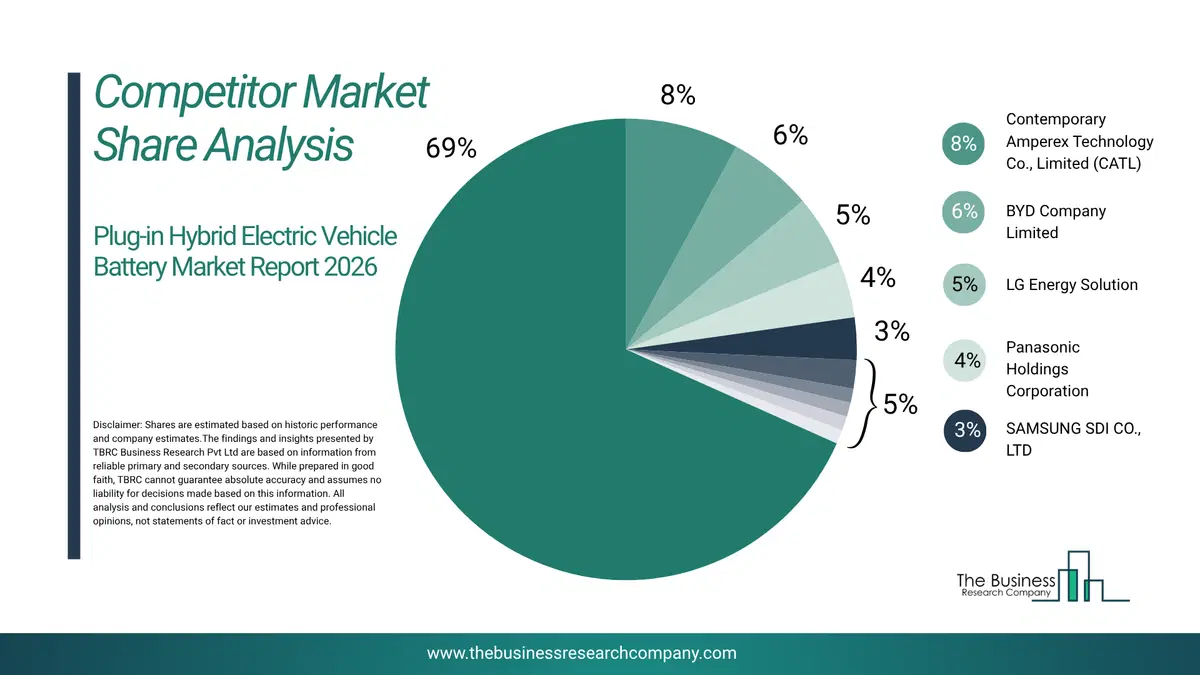
This chart is for illustrative purposes; the full report includes a detailed competitor analysis and comprehensive overview of the top 10 companies in the market.
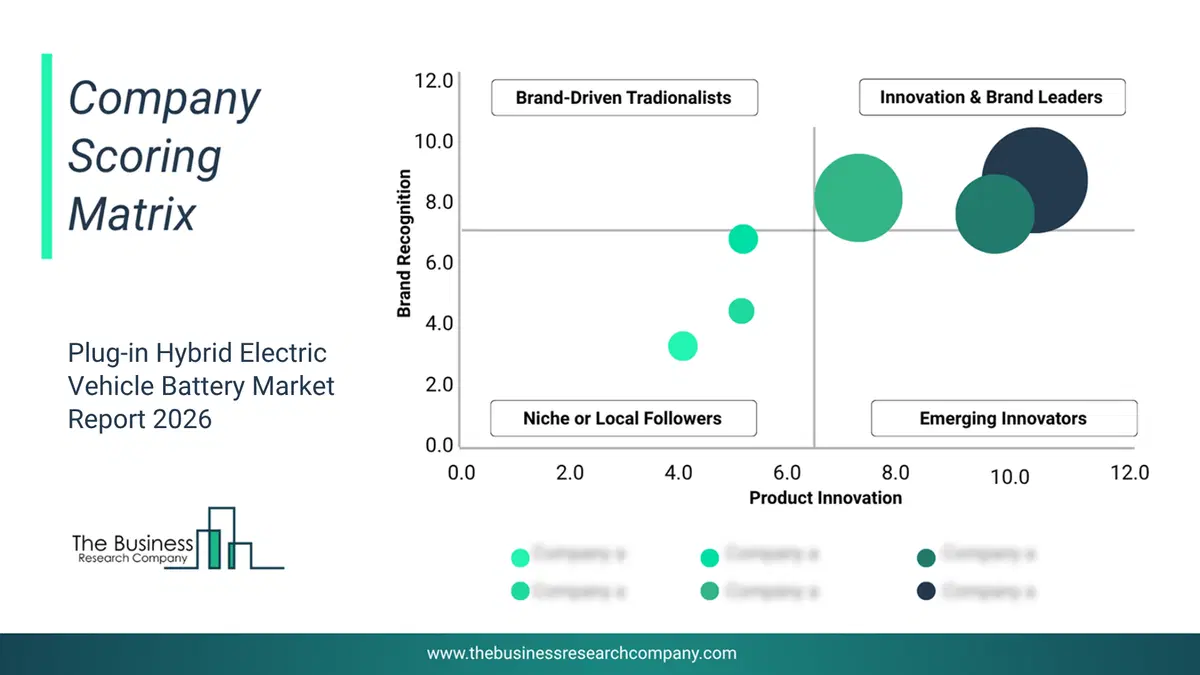
This chart maps companies by product innovation and brand strength, with bubble size indicating relative revenue, helping identify market leaders, challengers, and niche players. This is an illustrative chart; the full report provides a complete and accurate competitive analysis.
Global Plug-In Hybrid Electric Vehicle Battery Market Trends and Insights
Major companies operating in the plug-in hybrid electric vehicle battery market are focusing on developing batteries capable of extended all-electric range and ultra-fast charging, such as lithium-ion and sodium-ion chemistries to enable a pure electric range exceeding 400 km and 4C charging rates, to gain a competitive advantage. Lithium-ion and sodium-ion chemistries refer to rechargeable battery technologies that use lithium or sodium ions as charge carriers, with lithium-ion offering high energy density and fast charging, while sodium-ion provides lower cost and improved low-temperature performance. For instance, in October 2024, Contemporary Amperex Technology Co., Limited, a China-based battery technology company, introduced the Freevoy Super Hybrid Battery, a pioneering solution for hybrid vehicles, including PHEVs and extended-range electric vehicles (EREVs). This battery is the first in the world for hybrids to offer over 400 km of pure electric range and features 4C ultra-fast charging, allowing drivers to gain 280 km of range in just 10 minutes. This combines advanced lithium-ion and sodium-ion technologies, ensuring high performance even in extreme cold, while delivering improved efficiency, faster charging, and longer range, effectively addressing consumer concerns about limited range, slow charging, and poor cold-weather performance in current hybrid vehicles.What Are Latest Mergers And Acquisitions In The Plug-In Hybrid Electric Vehicle Battery Market?
In October 2024, Toyota Motor Corporation, a Japan-based provider of automobiles, hybrid vehicles, and mobility solutions, acquired Primearth EV Energy Co., Ltd. for an undisclosed amount. With this acquisition, Toyota aims to strengthen its control over battery production and expand its capabilities to support hybrid, plug-in hybrid, and battery electric vehicles, aligning with its long-term electrification strategy. Primearth EV Energy Co. Ltd. is a Japan-based provider of batteries for plug-in hybrid electric vehicles (PHEVs), in addition to batteries for hybrid electric vehicles (HEVs) and battery electric vehicles (BEVs).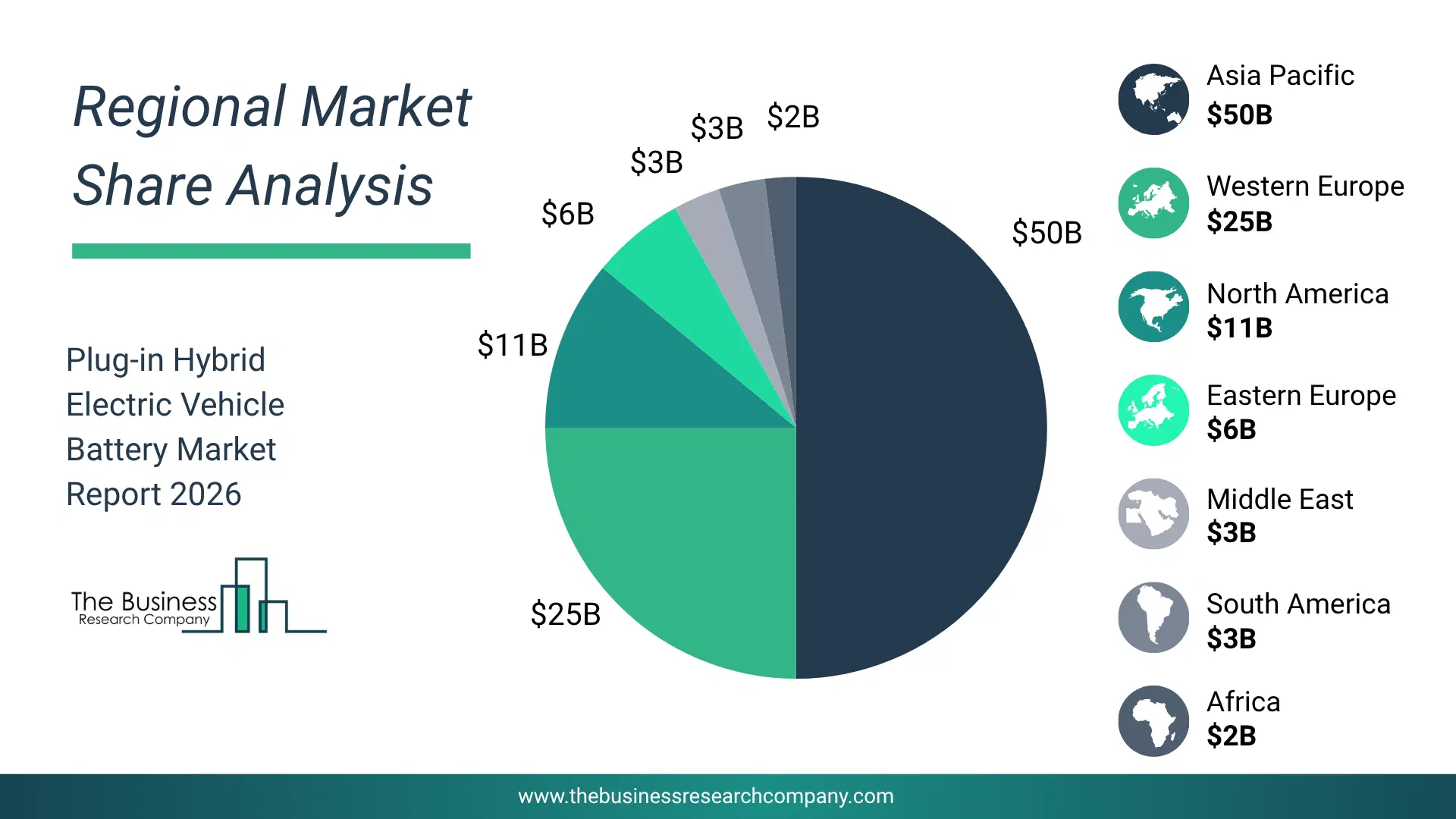
Regional Outlook
Asia-Pacific was the largest region in the plug-in hybrid electric vehicle battery market in 2025. Europe is expected to be the fastest-growing region in the forecast period. The regions covered in this market report are Asia-Pacific, South East Asia, Western Europe, Eastern Europe, North America, South America, Middle East, Africa. The countries covered in this market report are Australia, Brazil, China, France, Germany, India, Indonesia, Japan, Taiwan, Russia, South Korea, UK, USA, Canada, Italy, Spain.What Defines the Plug-In Hybrid Electric Vehicle Battery Market?
The plug-in hybrid electric vehicle battery market consists of sales of battery modules, energy storage control software, thermal management components, high-voltage cables and connectors, and battery management systems. Values in this market are ‘factory gate’ values, that is, the value of goods sold by the manufacturers or creators of the goods, whether to other entities (including downstream manufacturers, wholesalers, distributors, and retailers) or directly to end customers. The value of goods in this market includes related services sold by the creators of the goods.How is Market Value Defined and Measured?
The market value is defined as the revenues that enterprises gain from the sale of goods and/or services within the specified market and geography through sales, grants, or donations in terms of the currency (in USD unless otherwise specified). The revenues for a specified geography are consumption values that are revenues generated by organizations in the specified geography within the market, irrespective of where they are produced. It does not include revenues from resales along the supply chain, either further along the supply chain or as part of other products.
This chart presents market attractiveness based on a quantitative evaluation of growth, competition, strategic alignment, and risk, offering a clear view of opportunity areas for decision-making. This chart is for illustrative purposes; the full report contains the complete analysis.

This chart highlights the Total Addressable Market (TAM) by estimating the maximum revenue opportunity using an assumption-driven approach, supporting strategic planning and opportunity sizing across markets. The chart is illustrative; the full report provides a more comprehensive analysis.
What Key Data and Analysis Are Included in the Plug-In Hybrid Electric Vehicle Battery Market Report 2026?
The plug-in hybrid electric vehicle battery market research report is one of a series of new reports from The Business Research Company that provides market statistics, including industry global market size, regional shares, competitors with the market share, detailed market segments, market trends and opportunities, and any further data you may need to thrive in the plug-in hybrid electric vehicle battery industry. The market research report delivers a complete perspective of everything you need, with an in-depth analysis of the current and future state of the industry.Plug-In Hybrid Electric Vehicle Battery Market Report 2026 Market Report Forecast Analysis
| Report Attribute | Details |
|---|---|
| Market Size Value In 2026 | $16.71 billion |
| Revenue Forecast In 2030 | $35.02 billion |
| Growth Rate | CAGR of 20.3% from 2026 to 2030 |
| Base Year For Estimation | 2025 |
| Actual Estimates/Historical Data | 2020-2025 |
| Forecast Period | 2026 - 2030 |
| Market Representation | Revenue in USD Billion and CAGR from 2026 to 2030 |
| Segments Covered | Battery Type, Vehicle Type, Capacity, Charging Infrastructure |
| Regional Scope | Asia-Pacific, Western Europe, Eastern Europe, North America, South America, Middle East, Africa |
| Country Scope | The countries covered in the report are Australia, Brazil, China, France, Germany, India, ... |
| Key Companies Profiled | BYD Company Limited, Hitachi Chemical Co. Ltd., Panasonic Holdings Corporation, SK Innovation Co. Ltd., LG Energy Solution Ltd., Toshiba Corporation, Johnson Matthey Battery Systems Engineering Limited, Samsung SDI Co. Ltd., Sunwoda Electronic Co. Ltd., Gotion High-Tech Co. Ltd., GS Yuasa International Ltd., EnerSys Inc., Exide Industries Limited, Saft Groupe S.A., A123 Systems LLC, Farasis Energy Inc., Northvolt AB, Electrovaya Inc., Valence Technology Inc., Blue Energy Co. Ltd. |
| Customization Scope | Request for Customization |
| Pricing And Purchase Options | Explore Purchase Options |