

Point of Care Diagnostics Market Report 2026
Global Outlook – By Product (Glucose Monitoring Kits, Infectious Diseases Testing Kits, Pregnancy And Fertility Testing Kits, Hematology Testing Kits, Cardiometabolic Monitoring Kits, Urinalysis Testing Kits, Cholesterol Test Strips, Other Products), By Mode Of Prescription (Prescription Based Devices, OTC (Over-The-Counter) Based Devices), By End User (Professional Diagnostic Centers, Research Laboratories, Home Care, Other End-Users) - Market Size, Trends, Strategies, and Forecast to 2030
Point of Care Diagnostics Market Overview
• Point of Care Diagnostics market size has reached to $51.62 billion in 2025 • Expected to grow to $81.23 billion in 2030 at a compound annual growth rate (CAGR) of 9.6% • Growth Driver: Rising Disease Prevalence Propels Growth In Point-Of-Care (POC) Diagnostics Market • Market Trend: Innovative Breakthrough Transforming Point-Of-Care Diagnostics With Quick And Accurate Results • North America was the largest region in 2025 and Asia-Pacific is the fastest growing region.What Is Covered Under Point of Care Diagnostics Market?
Point of care (POC) diagnostics refers to medical testing that can be performed at or near the site of patient care. It is used to provide fast and accurate results that can be used to guide immediate patient care decisions. The main product types of point of care diagnostics include glucose monitoring kits, infectious diseases testing kits, pregnancy and fertility testing kits, hematology testing kits, cardiometabolic monitoring kits, urinalysis testing kits, cholesterol test strips, and others. Glucose monitoring kits refer to medical devices used to measure the levels of glucose (sugar) in a person's blood. They are prescribed based on OTC (over the counter) based devices and prescription-based devices for use by various end-users such as professional diagnostic centers, research laboratories, home care and others.
What Is The Point of Care Diagnostics Market Size and Share 2026?
The point of care diagnostics market size has grown strongly in recent years. It will grow from $51.62 billion in 2025 to $56.33 billion in 2026 at a compound annual growth rate (CAGR) of 9.1%. The growth in the historic period can be attributed to increasing prevalence of chronic and infectious diseases, expansion of decentralized healthcare models, growing use of glucose monitoring systems, rising demand for quick diagnostic results, increasing awareness of preventive healthcare.What Is The Point of Care Diagnostics Market Growth Forecast?
The point of care diagnostics market size is expected to see strong growth in the next few years. It will grow to $81.23 billion in 2030 at a compound annual growth rate (CAGR) of 9.6%. The growth in the forecast period can be attributed to increasing development of multiplex testing platforms, rising integration of digital connectivity in diagnostics, expansion of home healthcare diagnostics, growing demand for personalized medicine, increasing adoption of ai-enabled diagnostic tools. Major trends in the forecast period include increasing adoption of rapid diagnostic test kits, rising use of home-based testing devices, growing demand for infectious disease poc tests, expansion of otc diagnostic products, enhanced focus on real-time clinical decision making.
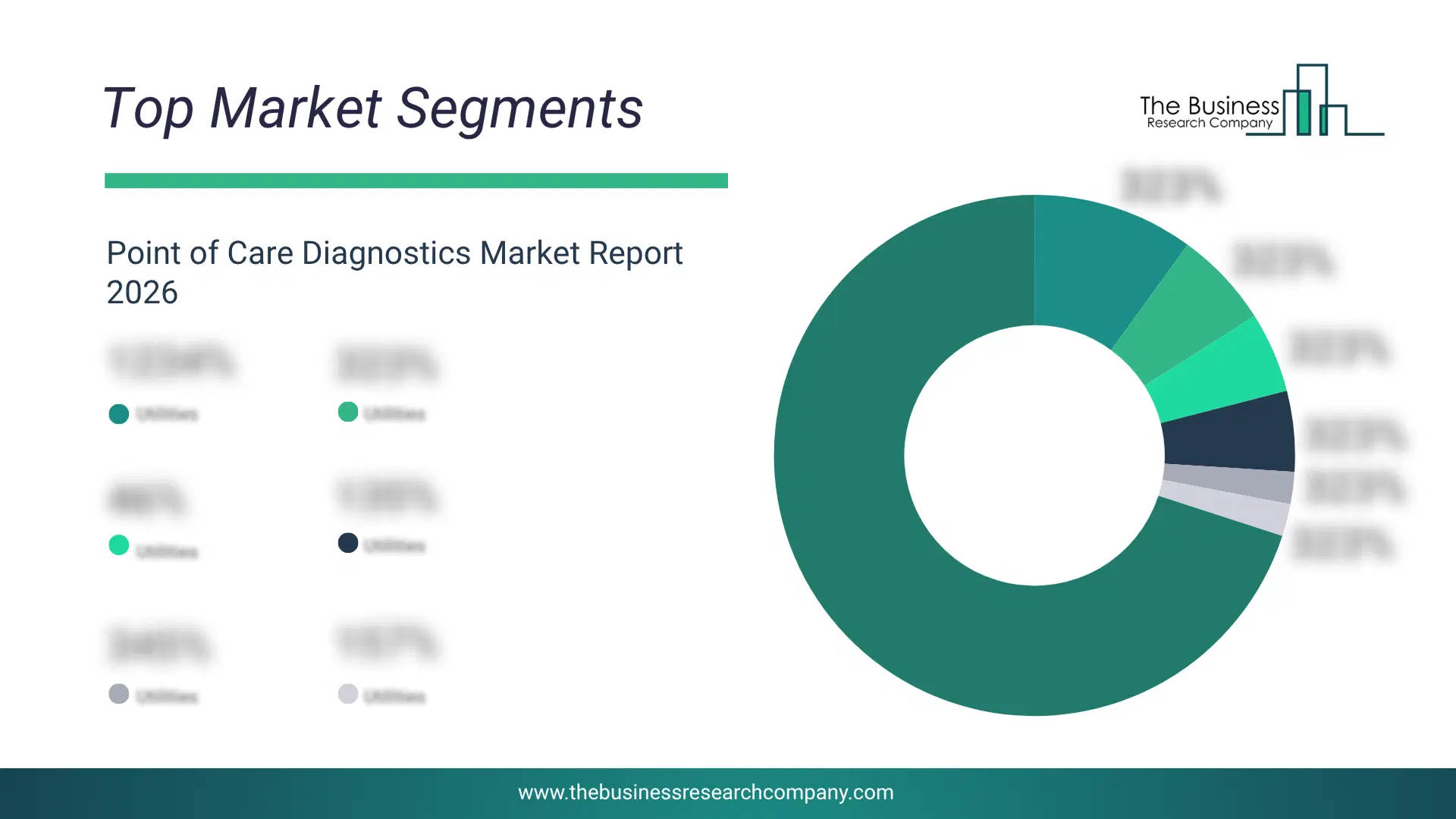
Global Point of Care Diagnostics Market Segmentation
1) By Product: Glucose Monitoring Kits, Infectious Diseases Testing Kits, Pregnancy And Fertility Testing Kits, Hematology Testing Kits, Cardiometabolic Monitoring Kits, Urinalysis Testing Kits, Cholesterol Test Strips, Other Products 2) By Mode Of Prescription: Prescription Based Devices, OTC (Over-The-Counter) Based Devices 3) By End User: Professional Diagnostic Centers, Research Laboratories, Home Care, Other End-Users Subsegments: 1) By Glucose Monitoring Kits: Blood Glucose Meters, Test Strips 2) By Infectious Diseases Testing Kits: Rapid Antigen Tests, PCR Testing Kits, Serology Tests 3) By Pregnancy And Fertility Testing Kits: Home Pregnancy Tests, Ovulation Predictor Kits 4) By Hematology Testing Kits: Complete Blood Count (CBC) Test Kits, Coagulation Test Kits 5) By Cardiometabolic Monitoring Kits: Lipid Profile Test Kits, Blood Pressure Monitors 6) By Urinalysis Testing Kits: Dipstick Test Kits, Urine Culture Kits 7) By Cholesterol Test Strips: Home Cholesterol Testing Kits 8) By Other Products: Customizable Test Kits, Point Of Care Testing PlatformsThe top segments in the point of care diagnostics market will be: • Glucose Monitoring Kits will reach $23 Billion by 2030. • Infectious Diseases Testing Kits will reach $19 Billion by 2030. • Pregnancy And Fertility Testing Kits will reach $10 Billion by 2030. • Cardiometabolic Monitoring Kits will reach $9 Billion by 2030. • Urinalysis Testing Kits will reach $7 Billion by 2030.What Is The Driver Of The Point of Care Diagnostics Market?
The increasing prevalence of chronic and infectious diseases is driving the point of care (POC) diagnostics market forward. Chronic diseases are diseases that progress slowly over time and usually last 3 months or longer. Point-of-care diagnostics is very useful in the easy management of chronic diseases and is widely used because of the convenience factor. For instance, in 2023, according to the Centers for Disease Control and Prevention (CDC), 42% of adults in the U.S. were living with two or more chronic conditions. This trend is concerning, as it highlights the growing prevalence of multiple chronic diseases among the adult population. Therefore, the increasing prevalence of chronic diseases is driving the point of care (POC) diagnostics market.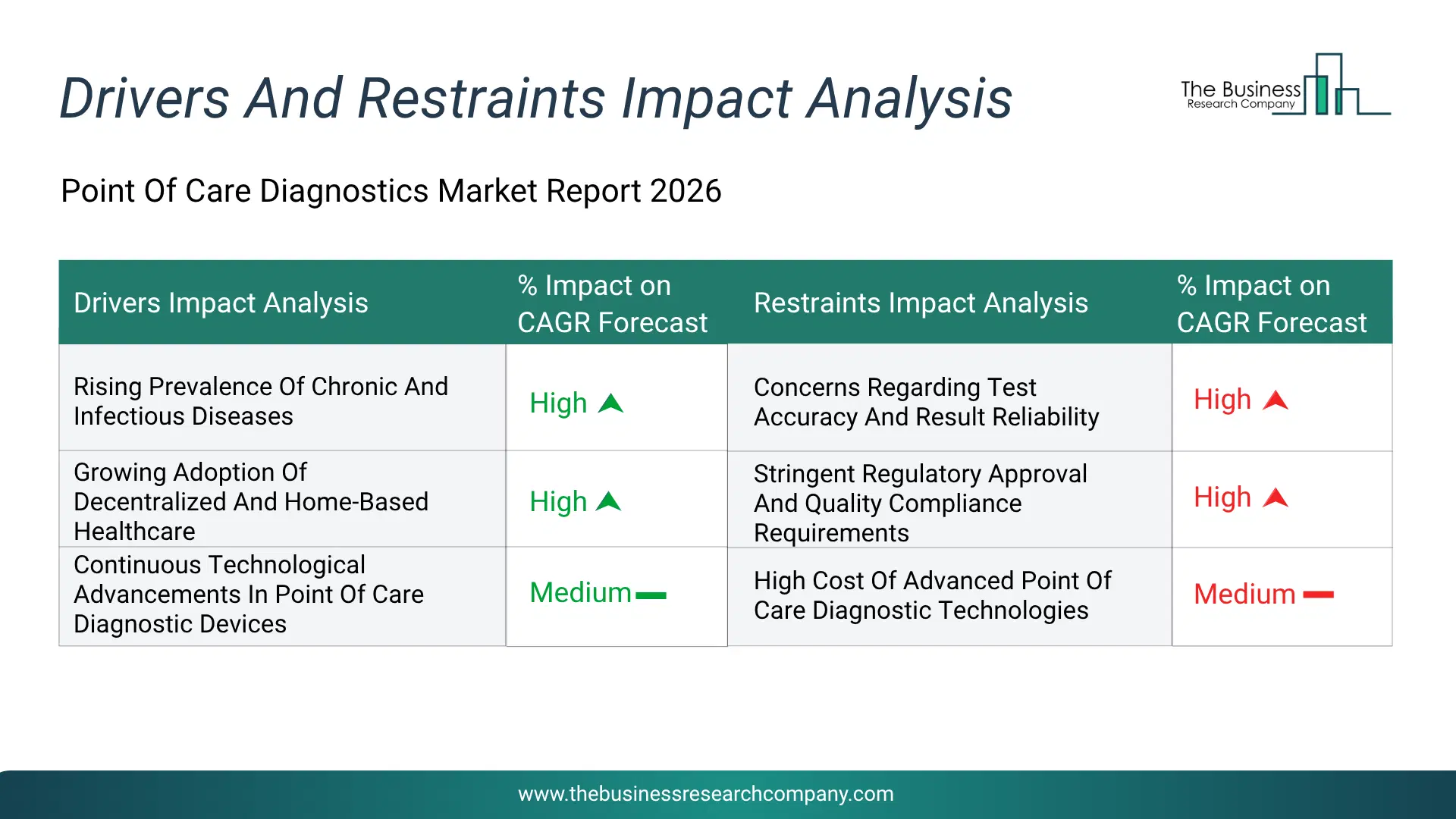
Infographic Chart Showing Key Market Drivers Analysis And Restraints For Point Of Care Diagnostics Market
The chart presents an impact analysis of key drivers and restraints, quantifying their relative influence on the market's growth rate and helping assess the balance between growth enablers and limiting factors. This chart offers a high-level perspective; the full report contains more detailed insights.
How Will The Drivers Impact Growth In The Global Point Of Care Diagnostics Market?
• Rising Prevalence Of Chronic And Infectious Diseases (High) – During the forecast period, the rising prevalence of chronic and infectious diseases is expected to become a key growth driver for the point of care diagnostics market by 2030. Rising prevalence of chronic and infectious diseases is a major factor driving the growth of the point of care (POC) diagnostics market because healthcare systems are witnessing a continuous increase in patients suffering from diabetes, cardiovascular diseases, chronic kidney disease, respiratory disorders, cancer, HIV, hepatitis, influenza, tuberculosis, and other infectious diseases. These conditions require rapid diagnosis, frequent monitoring, and immediate treatment decisions to improve patient outcomes and reduce complications. Point-of-care diagnostic devices allow physicians and healthcare professionals to obtain accurate results within minutes without relying on centralized laboratories, thereby reducing diagnostic delays and enabling faster clinical interventions. In addition, governments and healthcare organizations are promoting early disease screening programs and preventive healthcare initiatives, which further increase the adoption of portable diagnostic solutions. • Growing Adoption Of Decentralized And Home-Based Healthcare (High) – During the forecast period, the growing adoption of decentralized and home-based healthcare is expected to emerge as a major factor driving the expansion of the point of care diagnostics market by 2030. Growing adoption of decentralized and home-based healthcare is significantly expanding the demand for POC diagnostics as healthcare delivery increasingly shifts away from centralized hospitals toward community clinics, physician offices, ambulatory care centers, pharmacies, retail health clinics, and patients' homes. Healthcare providers are focusing on reducing hospital admissions, minimizing patient waiting times, lowering healthcare costs, and improving access to medical services, especially in rural and underserved regions. Point-of-care diagnostic devices support this transition by delivering rapid, laboratory-quality results at the patient's location, allowing healthcare professionals to diagnose conditions and initiate treatment during the same visit. The rapid growth of telemedicine, remote patient monitoring, digital healthcare platforms, and home healthcare services has further strengthened the demand for portable, user-friendly diagnostic technologies. • Continuous Technological Advancements In Point Of Care Diagnostic Devices (Medium) – During the forecast period, the continuous technological advancements in point of care diagnostic devices are expected to act as a key growth catalyst for the point of care diagnostics market by 2030. Continuous technological advancements in point of care diagnostic devices are accelerating market growth by significantly improving the speed, accuracy, portability, and clinical capabilities of diagnostic systems. Manufacturers are increasingly investing in innovations such as molecular point-of-care testing, multiplex diagnostic platforms capable of detecting multiple diseases simultaneously, AI-assisted result interpretation, biosensor technologies, lab-on-a-chip systems, smartphone-enabled diagnostics, cloud connectivity, and Internet of Things (IoT)-based patient monitoring. These innovations not only enhance diagnostic precision but also simplify device operation, reduce testing errors, and improve workflow efficiency for healthcare providers. Furthermore, the integration of digital health technologies enables seamless data sharing with electronic health records, allowing physicians to make faster and more informed clinical decisions.How Will The Restraints Impact Growth In The Global Point Of Care Diagnostics Market?
• Concerns Regarding Test Accuracy And Result Reliability (High) – During the forecast period, the concerns regarding test accuracy and result reliability are expected to restrain the point of care diagnostics market. Healthcare providers often require highly precise diagnostic results for critical clinical decisions. Although modern POC devices have improved considerably, their performance can still be affected by operator skill, improper sample collection, environmental conditions, device calibration, and quality control practices. In complex disease diagnosis, physicians frequently rely on centralized laboratory testing to confirm POC test results before initiating treatment. False-positive or false-negative results may delay appropriate care, increase healthcare costs, and reduce clinician confidence in rapid testing technologies. As a result, manufacturers must invest heavily in product validation, quality assurance, and clinical performance studies to improve diagnostic accuracy and gain broader acceptance among healthcare professionals. • Stringent Regulatory Approval And Quality Compliance Requirements (High) – During the forecast period, the stringent regulatory approval and quality compliance requirements are expected to restrain the point of care diagnostics market. Stringent Regulatory Approval And Quality Compliance Requirements represent a major challenge for companies developing new point-of-care diagnostic products. Manufacturers must comply with comprehensive regulatory standards established by organizations such as the U.S. FDA, European regulatory authorities, and other national healthcare agencies before products can be commercialized. These requirements involve extensive clinical validation, analytical performance testing, manufacturing audits, quality management systems, and post-market surveillance. Meeting these standards requires substantial financial investment, highly specialized expertise, and lengthy development timelines. Regulatory requirements also vary across countries, forcing manufacturers to undergo multiple approval processes when expanding internationally. These factors increase development costs, delay product launches, and create entry barriers for small and medium-sized companies, ultimately slowing the pace of market expansion. • High Cost Of Advanced Point Of Care Diagnostic Technologies (Medium) – During the forecast period, the high cost of advanced point of care diagnostic technologies is expected to restrain the point of care diagnostics market. Many next-generation diagnostic platforms incorporate sophisticated molecular testing technologies, biosensors, automation, digital connectivity, and AI-enabled analytical capabilities, all of which significantly increase equipment prices. In addition to the initial purchase cost, healthcare providers must also invest in consumables, calibration materials, maintenance services, software updates, staff training, and quality assurance programs. These expenses can be difficult for small hospitals, independent clinics, rural healthcare facilities, and healthcare systems in low- and middle-income countries to afford. Furthermore, reimbursement limitations for certain diagnostic procedures reduce the financial incentive for providers to invest in premium POC systems. Consequently, cost considerations continue to limit adoption despite the considerable clinical benefits offered by advanced point-of-care diagnostic technologies.Key Players In The Global Point of Care Diagnostics Market
Major companies operating in the point of care diagnostics market are Abbott Laboratories, Siemens Healthineers AG, Beckman Coulter Inc., Becton Dickinson and Company, Instrumentation Laboratory Company, Nova Biomedical Corporation, Qiagen NV, F Hoffmann La Roche Ltd, Biomeriux SA, Quidel Corporation, Orasure Technologies Inc., Johnson and Johnson, Thermo Fisher Scientific Inc., Sysmex Corporation, Sinocare Inc., Arkray Inc., Danaher Corporation, Chembio Diagnostics Inc., EKF Diagnostics Holdings plc, Trinity Biotech plc, Fluxergy Inc., LumiraDx UK Ltd., Meridian Bioscience Inc., Nipro Europe Group Companies, AccuBioTech Co. Ltd., Atlas Genetics Ltd., Biomeme Inc., Cepheid Inc.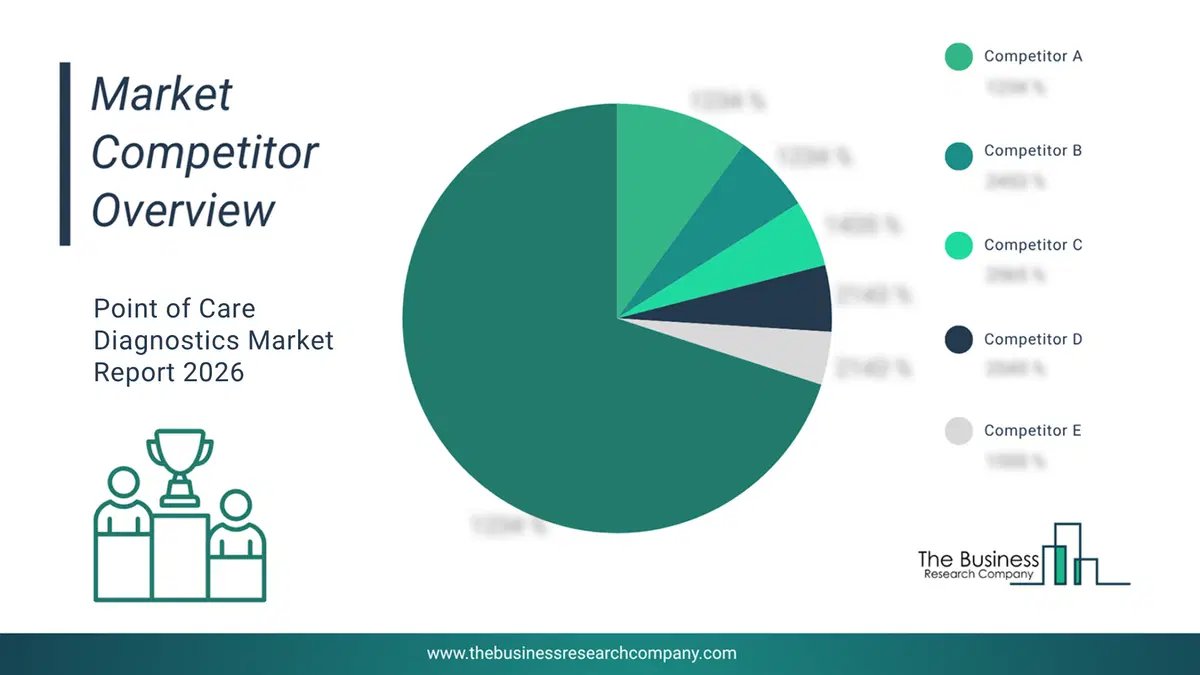
This chart is for illustrative purposes; the full report includes a detailed competitor analysis and comprehensive overview of the top 10 companies in the market.
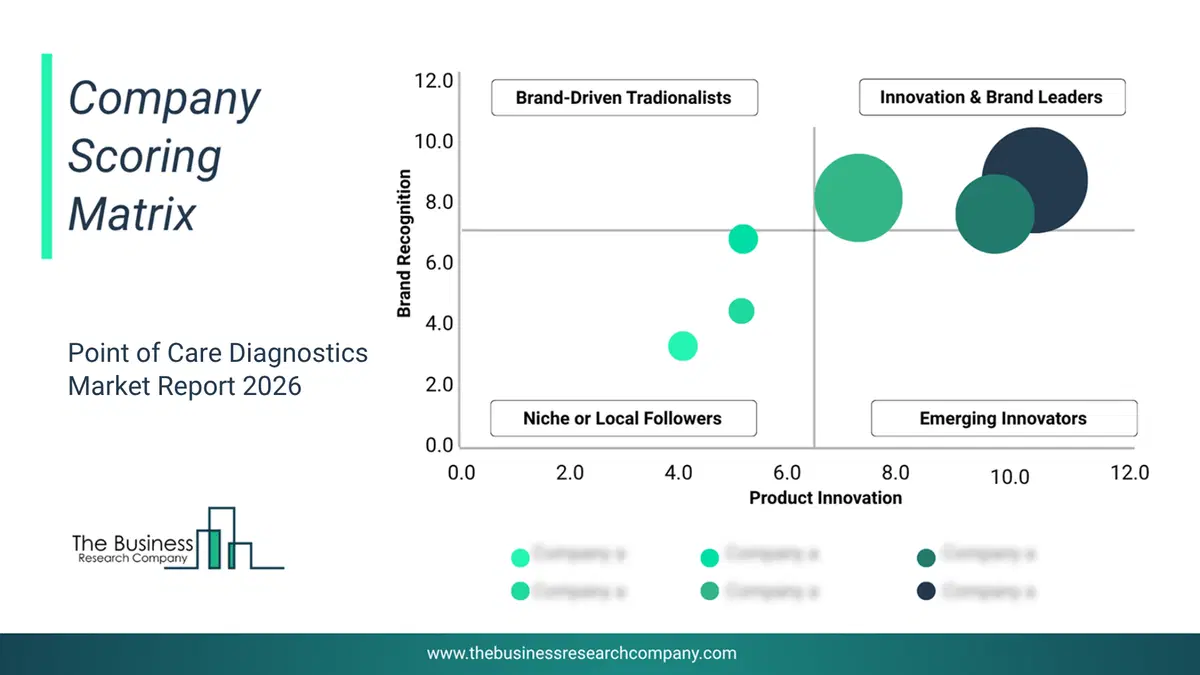
This chart maps companies by product innovation and brand strength, with bubble size indicating relative revenue, helping identify market leaders, challengers, and niche players. This is an illustrative chart; the full report provides a complete and accurate competitive analysis.
Global Point of Care Diagnostics Market Trends and Insights
Major companies operating in the point-of-care (POC) diagnostics market are focused on developing technological innovations, such as rapid PCR systems, to gain a competitive edge in the market. A rapid PCR system is a type of polymerase chain reaction (PCR) test that can provide results in a shorter amount of time than traditional PCR tests. For instance, in January 2023, Cipla, an India-based pharmaceutical company, launched its point-of-care testing device called Cippoint. This innovative device is designed to deliver quick and accurate diagnostic results for various health conditions. The Cippoint platform is compact, user-friendly, and suitable for deployment in diverse environments such as hospitals and clinics. It employs advanced technology that enables healthcare professionals to perform tests with ease and efficiency.What Are Latest Mergers And Acquisitions In The Point of Care Diagnostics Market?
In July 2024, Roche, a Switzerland-based pharmaceutical company, acquired LumiraDx's point-of-care technology for an undisclosed amount. This strategic move aims to enhance Roche's access to diagnostic testing in primary care settings. LumiraDx is a US-based company engaged in innovative point-of-care diagnostic solutions.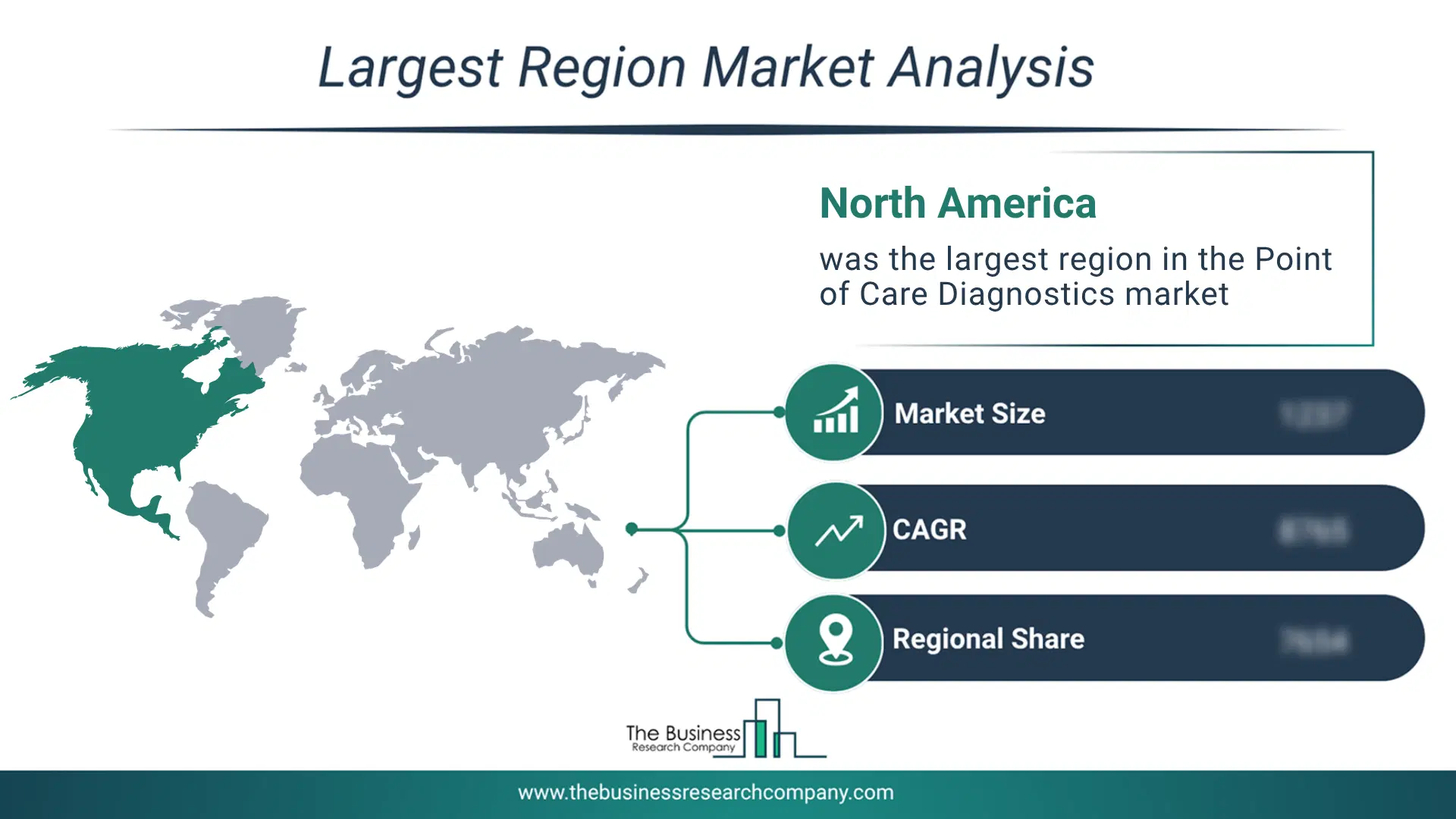
Regional Outlook
North America was the largest region in the point of care diagnostics market in 2025. Asia-Pacific is expected to be the fastest-growing region in the point of care diagnostics market report during the forecast period. The regions covered in this market report are Asia-Pacific, South East Asia, Western Europe, Eastern Europe, North America, South America, Middle East, Africa. The countries covered in this market report are Australia, Brazil, China, France, Germany, India, Indonesia, Japan, Taiwan, Russia, South Korea, UK, USA, Canada, Italy, Spain.What Defines the Point of Care Diagnostics Market?
The point of care (POC) diagnostics market consists of sales of blood glucose meters, pregnancy test kits, and cardiac markers. Values in this market are ‘factory gate’ values, that is the value of goods sold by the manufacturers or creators of the goods, whether to other entities (including downstream manufacturers, wholesalers, distributors, and retailers) or directly to end customers. The value of goods in this market includes related services sold by the creators of the goods.How is Market Value Defined and Measured?
The market value is defined as the revenues that enterprises gain from the sale of goods and/or services within the specified market and geography through sales, grants, or donations in terms of the currency (in USD unless otherwise specified). The revenues for a specified geography are consumption values that are revenues generated by organizations in the specified geography within the market, irrespective of where they are produced. It does not include revenues from resales along the supply chain, either further along the supply chain or as part of other products.
This chart presents market attractiveness based on a quantitative evaluation of growth, competition, strategic alignment, and risk, offering a clear view of opportunity areas for decision-making. This chart is for illustrative purposes; the full report contains the complete analysis.

This chart highlights the Total Addressable Market (TAM) by estimating the maximum revenue opportunity using an assumption-driven approach, supporting strategic planning and opportunity sizing across markets. The chart is illustrative; the full report provides a more comprehensive analysis.
What Key Data and Analysis Are Included in the Point of Care Diagnostics Market Report 2026?
The point of care diagnostics market research report is one of a series of new reports from The Business Research Company that provides market statistics, including industry global market size, regional shares, competitors with the market share, detailed market segments, market trends and opportunities, and any further data you may need to thrive in the point of care diagnostics industry. The market research report delivers a complete perspective of everything you need, with an in-depth analysis of the current and future state of the industry.Point of Care Diagnostics Market Report Forecast Analysis
| Report Attribute | Details |
|---|---|
| Market Size Value In 2026 | $56.33 billion |
| Revenue Forecast In 2035 | $81.23 billion |
| Growth Rate | CAGR of 9.1% from 2026 to 2035 |
| Base Year For Estimation | 2025 |
| Actual Estimates/Historical Data | 2020-2025 |
| Forecast Period | 2026 - 2030 - 2035 |
| Market Representation | Revenue in USD Billion and CAGR from 2026 to 2035 |
| Segments Covered | Product, Mode Of Prescription, End User |
| Regional Scope | Asia-Pacific, Western Europe, Eastern Europe, North America, South America, Middle East, Africa |
| Country Scope | The countries covered in the report are Australia, Brazil, China, France, Germany, India, ... |
| Key Companies Profiled | Abbott Laboratories, Siemens Healthineers AG, Beckman Coulter Inc., Becton Dickinson and Company, Instrumentation Laboratory Company, Nova Biomedical Corporation, Qiagen NV, F Hoffmann La Roche Ltd, Biomeriux SA, Quidel Corporation, Orasure Technologies Inc., Johnson and Johnson, Thermo Fisher Scientific Inc., Sysmex Corporation, Sinocare Inc., Arkray Inc., Danaher Corporation, Chembio Diagnostics Inc., EKF Diagnostics Holdings plc, Trinity Biotech plc, Fluxergy Inc., LumiraDx UK Ltd., Meridian Bioscience Inc., Nipro Europe Group Companies, AccuBioTech Co. Ltd., Atlas Genetics Ltd., Biomeme Inc., Cepheid Inc. |
| Customization Scope | Request for Customization |
| Pricing And Purchase Options | Explore Purchase Options |