
Point Of Care Hematology Diagnostics Global Market Opportunities And Strategies To 2035
By Type Into (Complete Blood Count, Coagulation Testing, Hemoglobin Testing, Anemia Diagnosis, Other Types), By Mode Of Prescription (Prescription-Based Product, Over-The-Counter Based Product.), By End User (Diagnostic Centers, Hospitals, Blood Banks, Transfusion Centers, Other End Users), And By Region, Opportunities And Strategies – Global Forecast To 2035
Point Of Care Haemotology Diagnostics Market Definition
Point of care hematology diagnostics refers to blood testing performed at or near the site of patient care using compact, portable analyzers, rather than in centralized laboratories. The primary purpose of POC hematology diagnostics is to enable rapid clinical decision-making by providing immediate test results, typically within minutes. This allows healthcare providers to quickly diagnose conditions such as anemia, infections, and other blood disorders, initiate timely treatment, and monitor patient status in real time. The point of care hematology diagnostics market consists of sales by entities (organizations, sole traders and partnerships) of point of care hematology diagnostics encompass portable analyzers, handheld devices, cartridges and reagents designed to measure key hematological indicators such as red and white blood cell counts, hemoglobin levels, hematocrit, platelet counts and coagulation parameters.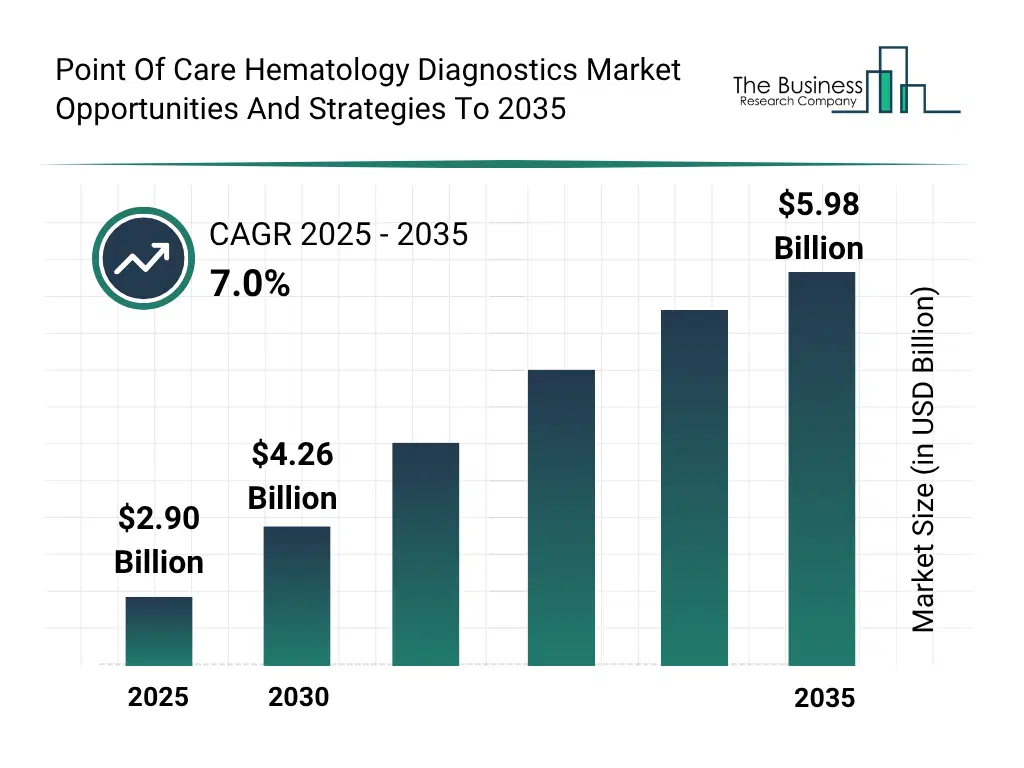
Point Of Care Haemotology Diagnostics Market Size
The global point of care hematology diagnostics market reached a value of nearly $2,900.5 million in 2025, having grown at a compound annual growth rate (CAGR) of 8.3% since 2020. The market is expected to grow from $2,900.5 million in 2025 to $4,262.6 million in 2030 at a rate of 8.0%. The market is then expected to grow at a CAGR of 7.0% from 2030 and reach $5,976.4 million in 2035. Growth in the historic period resulted from growing awareness and screening programs for anemia and blood-related conditions, rising prevalence of infectious diseases increasing investment in healthcare infrastructure and diagnostics, and growing prevalence of chronic blood disorders. Factors that negatively affected growth in the historic period were limited high cost of devices and supply chain disruptions. Going forward, rising geriatric population, increasing use of point of care diagnostics in rural and remote healthcare settings and increasing demand for cost-effective diagnostic tools, and expansion of private diagnostic centers and clinic chains will drive the growth. Factors that could hinder the growth of the point of care hematology diagnostics market in the future include regulatory challenges, connectivity issues and impact of trade war and tariffs.
Point Of Care Haemotology Diagnostics Market Segmentation
The point of care hematology diagnostics market is segmented by type, by mode of prescription, by end user.By Type –
The point of care hematology diagnostics market is segmented by type into:
- a) Complete Blood Count
- b) Coagulation Testing
- c) Hemoglobin Testing
- d) Anemia Diagnosis
- e) Other Types
By Mode Of Prescription –
The point of care hematology diagnostics market is segmented by mode of prescription into:
- a) Prescription Based Product
- b) Over-The-Counter Based Product
By End-User –
The point of care hematology diagnostics market is segmented by end-user into:
- a) Diagnostic Centers
- b) Hospitals
- c) Blood Banks
- d) Transfusion Centers
- e) Other End Users
By Geography - The point of care hematology diagnostics market is segmented by geography into:
- China
- India
- Japan
- Australia
- Indonesia
- South Korea
- USA
- Canada
- Brazil
- France
- Germany
- UK
- Italy
- Spain
- Russia
-
o Asia Pacific
o Africa