
Poly ADP-Ribose Polymerase (PARP) Inhibitor Market Report 2026
Global Outlook – By Drug Type (Talazoparib, Veliparib, Olaparib, Other Drug Types), By Distribution Channel (Hospital Pharmacy, Online Pharmacy, Retail Pharmacy, Other Distribution Channels), By Application (Ovarian Cancer, Breast Cancer, Other Applications), By End Users (Hospitals, Homecare, Specialty Clinics, Other End Users) - Market Size, Trends, Strategies, and Forecast to 2030
Poly ADP-Ribose Polymerase (PARP) Inhibitor Market Overview
• Poly ADP-Ribose Polymerase (PARP) Inhibitor market size has reached to $9.28 billion in 2025 • Expected to grow to $14.93 billion in 2030 at a compound annual growth rate (CAGR) of 9.7% • Growth Driver: Surging Prevalence Of Ovarian Cancer Fuels Growth In The Poly ADP-Ribose Polymerase (PARP) Inhibitor Market • Market Trend: Tailored Therapy For Genetic Mutation-Driven Cancers • North America was the largest region in 2025 and Asia-Pacific is the fastest growing region.What Is Covered Under Poly ADP-Ribose Polymerase (PARP) Inhibitor Market?
Poly ADP-ribose polymerase (PARP) inhibitors are a class of pharmacological inhibitors that block the enzyme PARP, which is involved in deoxyribonucleic acid (DNA) repair. These inhibitors treat cancers with defects in other DNA repair pathways, preventing cancer cells from repairing damaged DNA and leading to their death. The main drug types of poly ADP-ribose polymerase (PARP) inhibitor are talazoparib, veliparib, olaparib, and others. Talazoparib refers to a potent PARP inhibitor utilized in cancer therapy by disrupting DNA repair mechanisms in cancer cells. These are sold through various channels, including hospital pharmacies, online pharmacies, retail pharmacies, and others. These inhibitors have found applications in ovarian cancer, breast cancer, and others and are used by several end users, such as hospitals, homecare, specialty clinics, and others.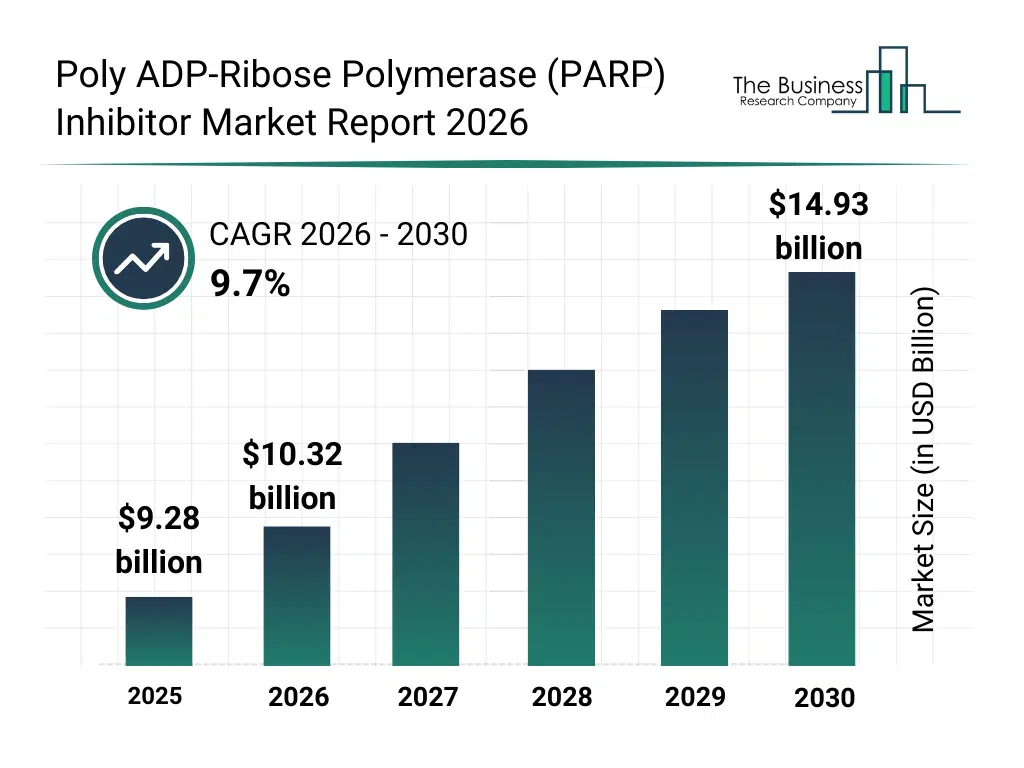
What Is The Poly ADP-Ribose Polymerase (PARP) Inhibitor Market Size and Share 2026?
The poly adp-ribose polymerase (parp) inhibitor market size has grown rapidly in recent years. It will grow from $9.28 billion in 2025 to $10.32 billion in 2026 at a compound annual growth rate (CAGR) of 11.2%. The growth in the historic period can be attributed to increasing cancer incidence rates, advancements in dna repair pathway research, regulatory approvals for first-generation parp inhibitors, growing adoption of targeted cancer therapies, expansion of oncology clinical research.What Is The Poly ADP-Ribose Polymerase (PARP) Inhibitor Market Growth Forecast?
The poly adp-ribose polymerase (parp) inhibitor market size is expected to see strong growth in the next few years. It will grow to $14.93 billion in 2030 at a compound annual growth rate (CAGR) of 9.7%. The growth in the forecast period can be attributed to increasing focus on precision oncology, rising development of next-generation parp inhibitors, expanding indications beyond ovarian and breast cancer, growing investment in oncology drug pipelines, increased use of companion diagnostics. Major trends in the forecast period include expanding use of parp inhibitors in combination therapies, growing focus on brca-mutated cancer treatments, increasing clinical trials for new parp molecules, rising adoption of personalized oncology treatments, enhanced patient stratification using biomarkers.
Global Poly ADP-Ribose Polymerase (PARP) Inhibitor Market Segmentation
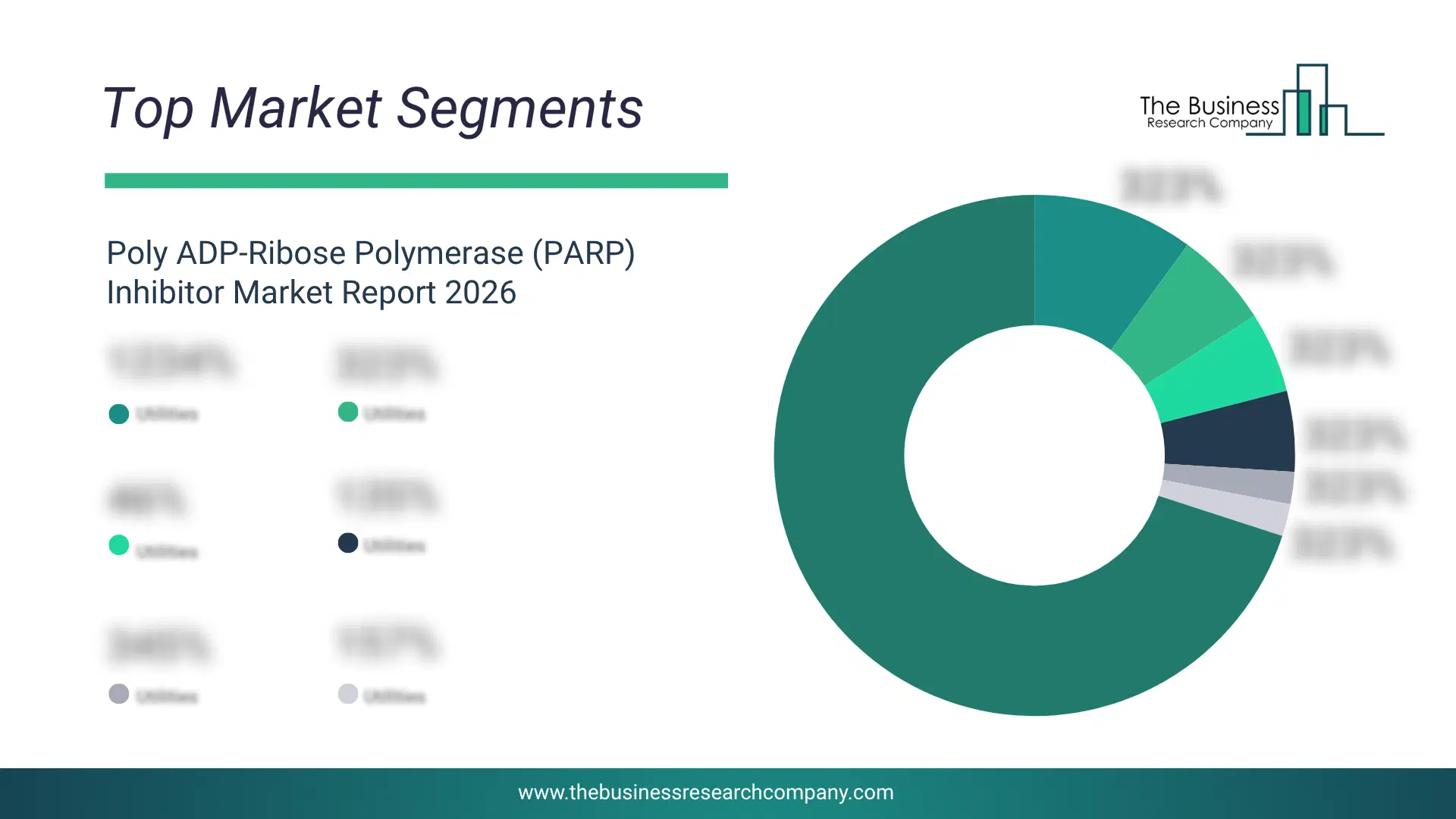
1) By Drug Type: Talazoparib, Veliparib, Olaparib, Other Drug Types 2) By Distribution Channel: Hospital Pharmacy, Online Pharmacy, Retail Pharmacy, Other Distribution Channels 3) By Application: Ovarian Cancer, Breast Cancer, Other Applications 4) By End Users: Hospitals, Homecare, Specialty Clinics, Other End Users Subsegments: 1) By Talazoparib: Talazoparib For Breast Cancer, Talazoparib For Ovarian Cancer, Talazoparib For Prostate Cancer, Talazoparib For Other Cancers 2) By Veliparib: Veliparib For Breast Cancer, Veliparib For Ovarian Cancer, Veliparib For Non-Small Cell Lung Cancer (Nsclc), Veliparib For Other Cancers 3) By Olaparib: Olaparib For Breast Cancer (Her2-negative), Olaparib For Ovarian Cancer (Brca-mutated), Olaparib For Prostate Cancer (Brca-Mutated), Olaparib For Pancreatic Cancer (Brca-Mutated), Olaparib For Other Cancers 4) By Other Drug Types: Niraparib, Rucaparib, Pembrolizumab (Combination Therapy With Parp Inhibitors), Other Parp Inhibitors (Emerging Drugs In Clinical Trials)What Is The Driver Of The Poly ADP-Ribose Polymerase (PARP) Inhibitor Market?
The increasing prevalence of ovarian cancer is expected to propel the growth of the poly ADP-ribose polymerase (PARP) inhibitor market going forward. Ovarian cancer refers to a malignant tumor that develops in one or both of a woman's ovaries, which are part of the female reproductive system responsible for producing eggs and female hormones. Ovarian cancer is growing due to the impact of genetic predisposition, an aging population, environmental exposures, and hormonal imbalances. Poly ADP-Ribose Polymerase (PARP) Inhibitors are used in ovarian cancer treatment to target DNA repair mechanisms, specifically in patients with BRCA mutations, leading to synthetic lethality and enhanced tumor cell death. For instance, in February 2024, according to the World Ovarian Cancer Coalition, a Canada-based non-profit organization, the number of women dying from ovarian cancer per year is projected to increase to 350,956, an increase of almost 70% from 2022. Therefore, the increasing prevalence of ovarian cancer is driving the growth of the poly ADP-ribose polymerase (PARP) inhibitor industry.Key Players In The Global Poly ADP-Ribose Polymerase (PARP) Inhibitor Market
Major companies operating in the poly adp-ribose polymerase (parp) inhibitor market are Pfizer Inc., Johnson & Johnson Services Inc., AbbVie Inc., Bayer AG, Novartis AG, Sanofi S.A., AstraZeneca plc, GlaxoSmithKline plc, Takeda Pharmaceutical Company Limited, Merck KGaA, Teva Pharmaceutical Industries Ltd., Daiichi Sankyo Company Limited, Ipsen Biopharmaceuticals Inc., Genentech Inc., Seattle Genetics Inc., Medivation Inc., Myriad Genetics Inc., PharmaMar S.A., Clovis Oncology, Tolero Pharmaceuticals Inc., Everest Pharmaceuticals, Verastem Inc.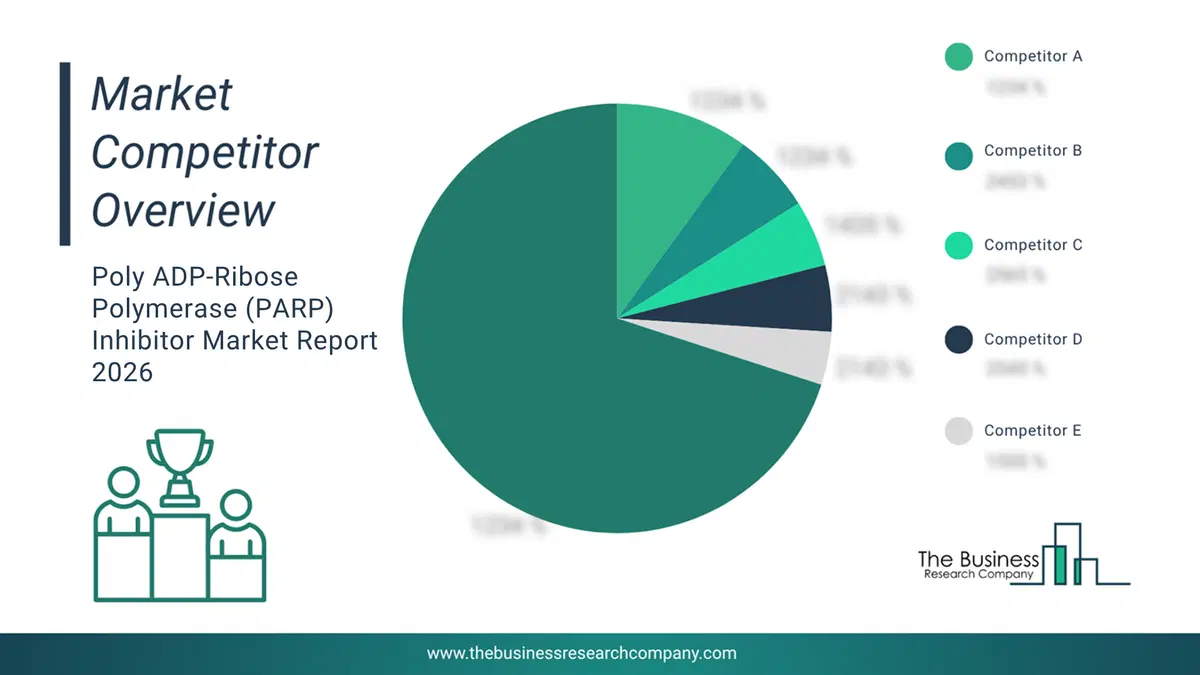
This chart is for illustrative purposes; the full report includes a detailed competitor analysis and comprehensive overview of the top 10 companies in the market.
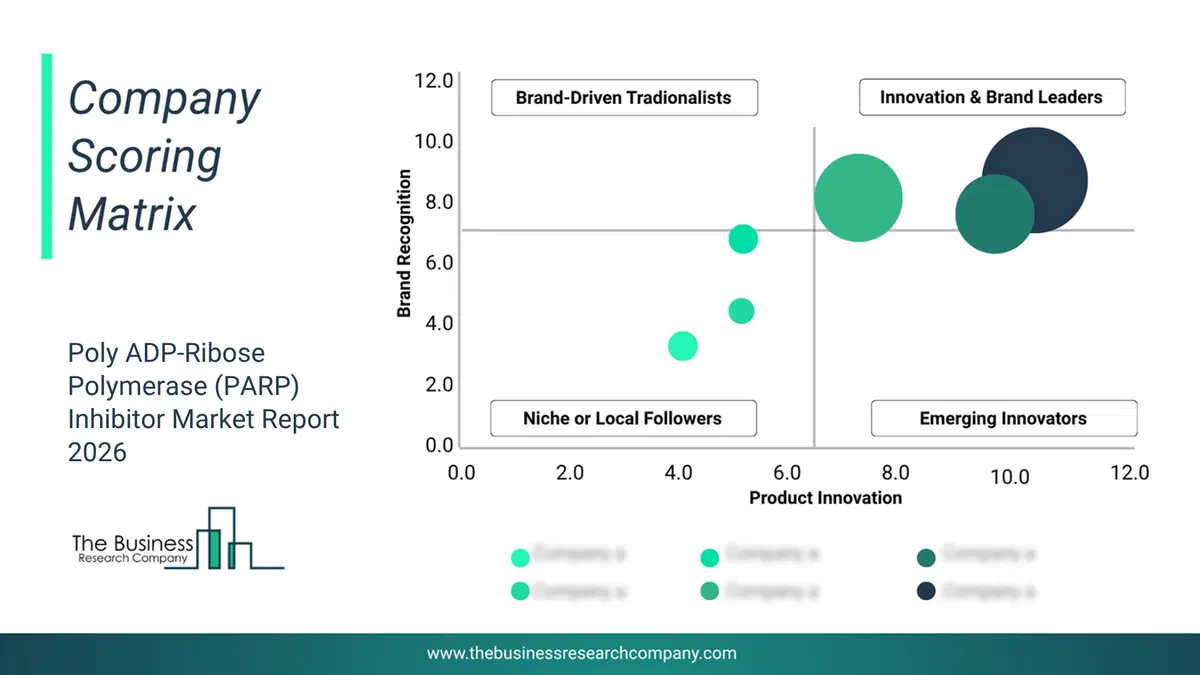
This chart maps companies by product innovation and brand strength, with bubble size indicating relative revenue, helping identify market leaders, challengers, and niche players. This is an illustrative chart; the full report provides a complete and accurate competitive analysis.
Global Poly ADP-Ribose Polymerase (PARP) Inhibitor Market Trends and Insights
Major companies operating in the poly ADP-ribose polymerase (PARP) inhibitor market are developing generic PARP inhibitors to offer a tailored treatment approach for cancer patients with specific genetic mutations. Generic PARP inhibitors are medications that block the activity of the enzyme poly ADP-ribose polymerase (PARP). For instance, in March 2024, Zydus Lifesciences Limited, an India-based pharmaceutical company, launched Olaparib, a PARP inhibitor under the IBYRA brand, aiming to enhance accessibility to advanced cancer treatment. IBYRA targets specific genetic mutations found in breast, ovarian, prostate, and pancreatic cancers, offering a tailored and effective treatment approach. The drug is particularly beneficial for patients with HRD-positive or BRCA mutations, helping to delay disease progression.What Are Latest Mergers And Acquisitions In The Poly ADP-Ribose Polymerase (PARP) Inhibitor Market?
In June 2023, Ariceum Therapeutics GmbH, a Germany-based radiopharmaceutical company, acquired Theragnostics Ltd. for $41.5 million. With this acquisition, Ariceum Therapeutics significantly enhanced its radiopharmaceutical portfolio, gaining access to novel PARP inhibitor radiation therapies. Theragnostics Ltd. is a UK-based biotechnology company that develops radiolabeled PARP inhibitors to diagnose and treat tumors.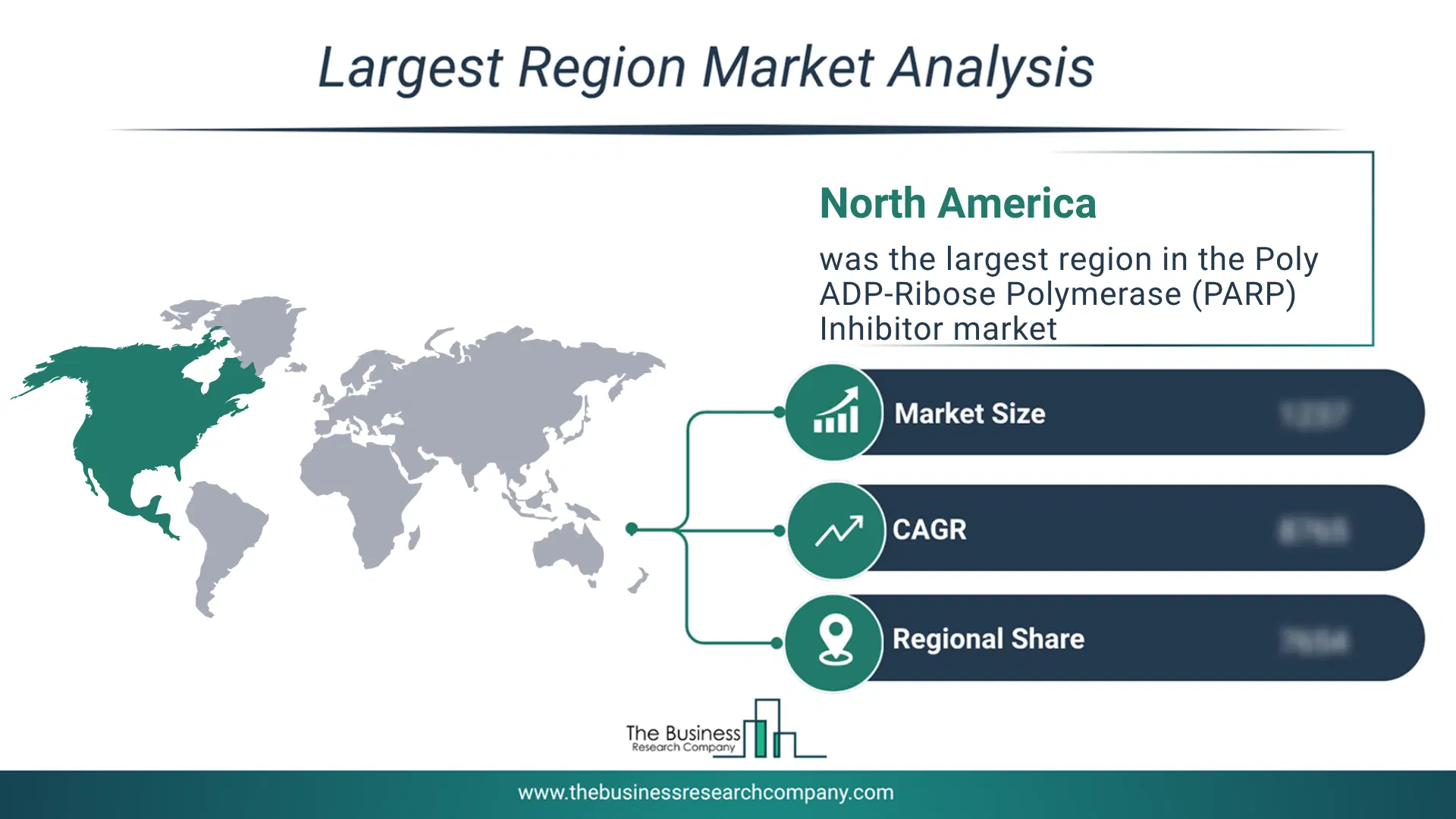
Regional Outlook
North America was the largest region in the poly ADP-ribose polymerase (PARP) inhibitor market in 2025. Asia-Pacific is expected to be the fastest-growing region in the forecast period. The regions covered in this market report are Asia-Pacific, South East Asia, Western Europe, Eastern Europe, North America, South America, Middle East, Africa. The countries covered in this market report are Australia, Brazil, China, France, Germany, India, Indonesia, Japan, Taiwan, Russia, South Korea, UK, USA, Canada, Italy, Spain.What Defines the Poly ADP-Ribose Polymerase (PARP) Inhibitor Market?
The poly ADP-ribose polymerase (PARP) inhibitor market consists of revenues earned by entities by providing services such as diagnostic tests, clinical trials, consulting services, and patient support programs. The market value includes the value of related goods sold by the service provider or included within the service offering. The poly ADP-ribose polymerase (PARP) inhibitor market also includes sales of test kits, laboratory equipment, imaging systems, sample processing instruments, reagents, and chemicals. Values in this market are ‘factory gate’ values, that is the value of goods sold by the manufacturers or creators of the goods, whether to other entities (including downstream manufacturers, wholesalers, distributors and retailers) or directly to end customers. The value of goods in this market includes related services sold by the creators of the goods.How is Market Value Defined and Measured?
The market value is defined as the revenues that enterprises gain from the sale of goods and/or services within the specified market and geography through sales, grants, or donations in terms of the currency (in USD unless otherwise specified). The revenues for a specified geography are consumption values that are revenues generated by organizations in the specified geography within the market, irrespective of where they are produced. It does not include revenues from resales along the supply chain, either further along the supply chain or as part of other products.
This chart presents market attractiveness based on a quantitative evaluation of growth, competition, strategic alignment, and risk, offering a clear view of opportunity areas for decision-making. This chart is for illustrative purposes; the full report contains the complete analysis.

This chart highlights the Total Addressable Market (TAM) by estimating the maximum revenue opportunity using an assumption-driven approach, supporting strategic planning and opportunity sizing across markets. The chart is illustrative; the full report provides a more comprehensive analysis.
What Key Data and Analysis Are Included in the Poly ADP-Ribose Polymerase (PARP) Inhibitor Market Report 2026?
The poly adp-ribose polymerase (parp) inhibitor market research report is one of a series of new reports from The Business Research Company that provides market statistics, including industry global market size, regional shares, competitors with the market share, detailed market segments, market trends and opportunities, and any further data you may need to thrive in the poly adp-ribose polymerase (parp) inhibitor industry. The market research report delivers a complete perspective of everything you need, with an in-depth analysis of the current and future state of the industry.Poly ADP-Ribose Polymerase (PARP) Inhibitor Market Report Forecast Analysis
| Report Attribute | Details |
|---|---|
| Market Size Value In 2026 | $10.32 billion |
| Revenue Forecast In 2030 | $14.93 billion |
| Growth Rate | CAGR of 9.7% from 2026 to 2030 |
| Base Year For Estimation | 2025 |
| Actual Estimates/Historical Data | 2020-2025 |
| Forecast Period | 2026 - 2030 |
| Market Representation | Revenue in USD Billion and CAGR from 2026 to 2030 |
| Segments Covered | Drug Type, Distribution Channel, Application, End Users |
| Regional Scope | Asia-Pacific, Western Europe, Eastern Europe, North America, South America, Middle East, Africa |
| Country Scope | The countries covered in the report are Australia, Brazil, China, France, Germany, India, Indonesia, Japan, Taiwan, Russia, South Korea, UK, USA, Canada, Italy, Spain |
| Key Companies Profiled | Pfizer Inc., Johnson & Johnson Services Inc., AbbVie Inc., Bayer AG, Novartis AG, Sanofi S.A., AstraZeneca plc, GlaxoSmithKline plc, Takeda Pharmaceutical Company Limited, Merck KGaA, Teva Pharmaceutical Industries Ltd., Daiichi Sankyo Company Limited, Ipsen Biopharmaceuticals Inc., Genentech Inc., Seattle Genetics Inc., Medivation Inc., Myriad Genetics Inc., PharmaMar S.A., Clovis Oncology, Tolero Pharmaceuticals Inc., Everest Pharmaceuticals, Verastem Inc. |
| Customization Scope | Request for Customization |
| Pricing And Purchase Options | Explore Purchase Options |