
Polyisobutylene Market Report 2026
Global Outlook – By Product (Conventional PIB, Highly Reactive PIB), By Molecular Weight (Low Molecular Weight, Medium Molecular Weight, High Molecular Weight), By Application (Tires And Tubes, Adhesives, Sealants, Lubricants, Electrical Insulation, Stretch Wrap), By End User Industry (Industrial, Food, Other End User Industries) – Market Size, Trends, Strategies, and Forecast to 2030
Polyisobutylene Market Overview
• Polyisobutylene market size has reached to $2.76 billion in 2025 • Expected to grow to $3.78 billion in 2030 at a compound annual growth rate (CAGR) of 6.4% • Growth Driver: Growing Tire And Tube Demand Fuels Polyisobutylene Market Growth • Market Trend: Innovative Product Solutions Propel Polyisobutylene Market With The Introduction Of PIB R-01 • Asia-Pacific was the largest region and fastest growing region.What Is Covered Under Polyisobutylene Market?
Polyisobutylene (PIB) is a man-made rubber created through the polymerization of isobutylene, a hydrocarbon. It stands out for being highly resistant to gases, chemicals, and environmental wear. Its flexibility and ability to repel water make it useful in manufacturing inner tubes, adhesives, sealants, and lubricants, with minimal moisture absorption. The main products of polyisobutylene are conventional PIB and highly reactive PIB. Highly-reactive polyisobutylene is a molecule with double bonds that are terminally positioned. They are categorized into low molecular weight, medium molecular weight, and high molecular weight for use in applications such as tires and tubes, adhesives, sealants, lubricants, electrical insulation, and stretch wrap and in various end-users including industrial and food and other end users.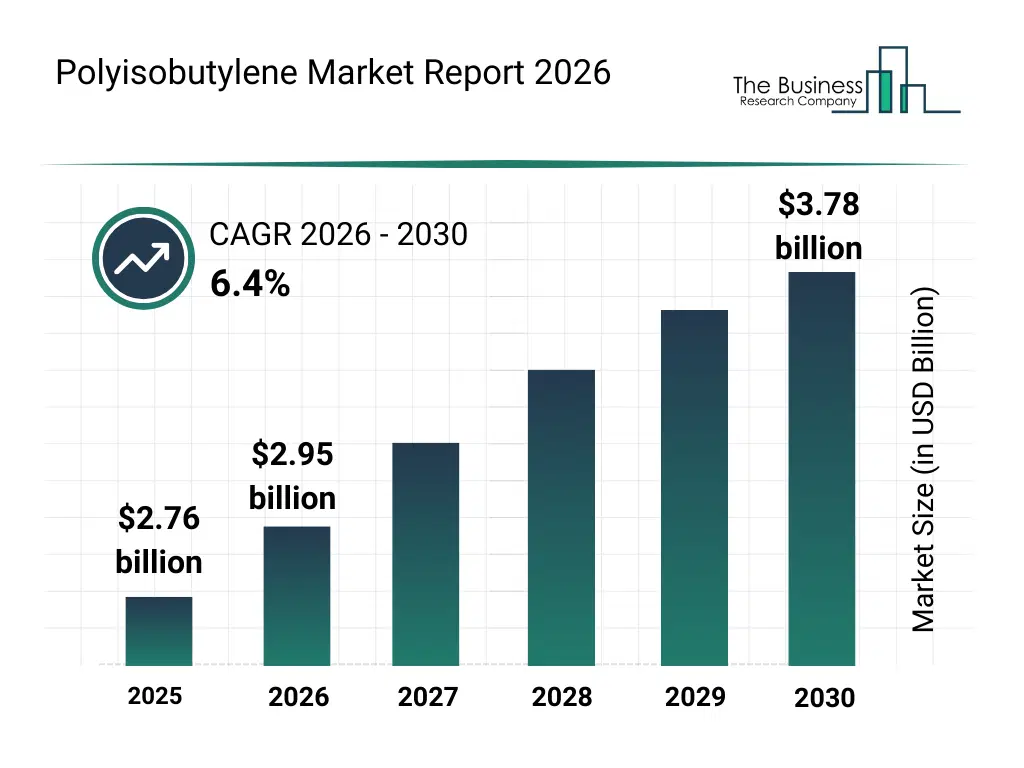
What Is The Polyisobutylene Market Size and Share 2026?
The polyisobutylene market size has grown strongly in recent years. It will grow from $2.76 billion in 2025 to $2.95 billion in 2026 at a compound annual growth rate (CAGR) of 6.9%. The growth in the historic period can be attributed to growth in automotive manufacturing, increasing demand for tire inner liners, expansion of industrial sealant applications, rising use of specialty lubricants, availability of isobutylene feedstock.What Is The Polyisobutylene Market Growth Forecast?
The polyisobutylene market size is expected to see strong growth in the next few years. It will grow to $3.78 billion in 2030 at a compound annual growth rate (CAGR) of 6.4%. The growth in the forecast period can be attributed to rising adoption in electric vehicle components, increasing demand for long-life industrial materials, expansion of high-barrier packaging applications, growing focus on performance polymers, increasing investment in advanced elastomer formulations. Major trends in the forecast period include rising demand for high-performance elastomers, increasing use in automotive sealants, growing adoption in lubricant additives, expansion of gas-barrier applications, enhanced focus on chemical resistance.
Global Polyisobutylene Market Segmentation
1) By Product: Conventional PIB, Highly Reactive PIB 2) By Molecular Weight: Low Molecular Weight, Medium Molecular Weight, High Molecular Weight 3) By Application: Tires And Tubes, Adhesives, Sealants, Lubricants, Electrical Insulation, Stretch Wrap 4) By End User Industry: Industrial, Food, Other End User Industries Subsegments: 1) By Conventional PIB: Low Molecular Weight PIB, High Molecular Weight PIB 2) By Highly Reactive PIB: Modified PIB, Functionalized PIBWhat Are The Drivers Of The Polyisobutylene Market?
Rising demand for the tires and tubes market is expected to propel the growth of the polyisobutylene market going forward. Tires and tubes are the automotive components that are helpful in transportation. Polyisobutylene is a synthetic rubber utilized in the production of tire inner tubes for buses, vehicles, lorries, and airplanes due to its ability to act as a barrier to the passage of oxygen; thus, an increase in demand for tires and tubeless tires is propelling the demand for polyisobutylene. For instance, in December 2024, according to the Japan Automobile Tyre Manufacturers Association, a Japan-based industry association/trade association representing tire manufacturers in Japan, it was estimated that the total rubber consumption by tires and tire products of the world in 2024 was 18.04 million tons, an increase of 2% from the previous year. Therefore, rising demand for the tires and tubes market is driving the growth of the polyisobutylene industry. Increasing demand in the construction industry is expected to propel the growth of the polyisobutylene market going forward. The construction industry refers to the building of new infrastructures. Polyisobutylene is mostly used for the production of anticorrosion coatings, pastes, glues, and coatings in the construction industry; as a result, increasing demand in construction increases the demand for the polyisobutylene market. For instance, in November 2024, according to the Office for National Statistics (ONS), a UK-based non-ministerial department, monthly construction output is estimated to have grown by 0.4% in volume terms in November 2024. Therefore, increasing demand in the construction industry drives the polyisobutylene industry.Key Players In The Global Polyisobutylene Market
Major companies operating in the polyisobutylene market are Badische Anilin und Soda Fabrik Societas Europaea, TPC Group, Lubrizol Corporation, INEOS Group Limited, Kothari Petrochemicals Limited, Braskem, ENEOS Corporation, Janex S.A., RB Products Inc., Chevron Corporation, Mayzo Inc., Reliance Industries Limited, Evonik Industries AG, KEMAT N.V, Daelim Industrial Company Ltd, ExxonMobil, Lanxess, Dowpol Corporation, Infineum, Shandong Hongrui New Material Technology, Afton Chemical Corporation, Zhejiang Shunda New Material, SABIC, Kemipex, FERRO-PLAST S.r.l., Jilin Petrochemical Company, Efremov Synthetic Rubber Enterprise Company, Naxant, JXTG Nippon Oil & Energy Corporation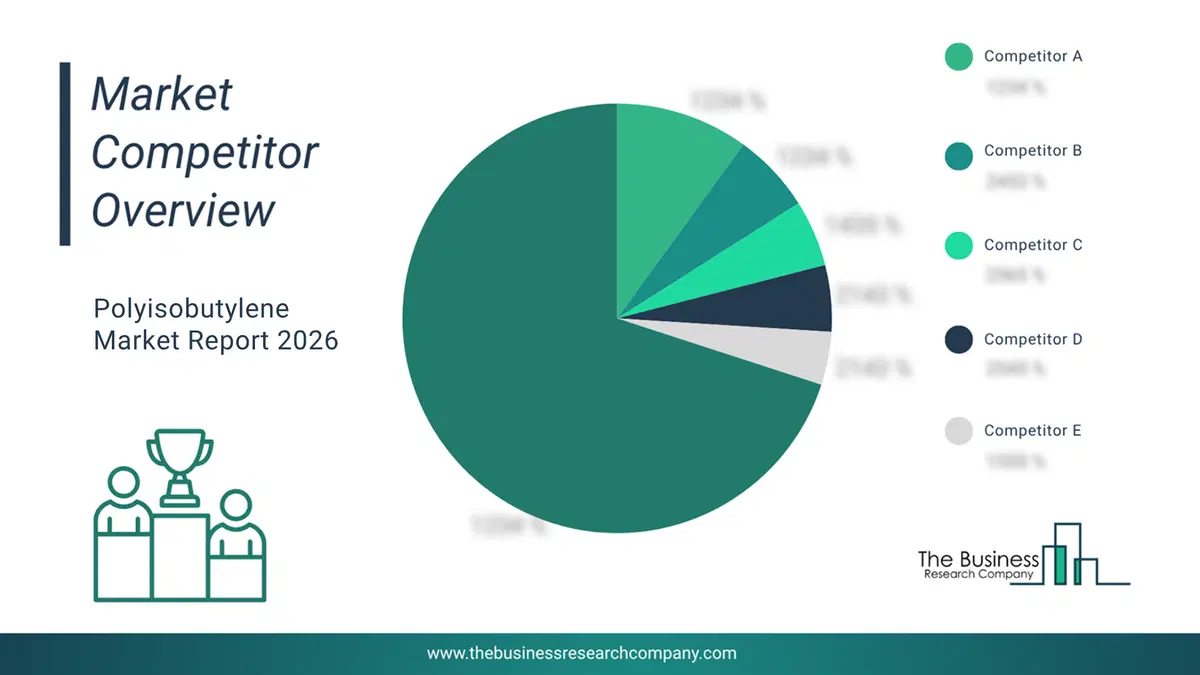
This chart is for illustrative purposes; the full report includes a detailed competitor analysis and comprehensive overview of the top 10 companies in the market.
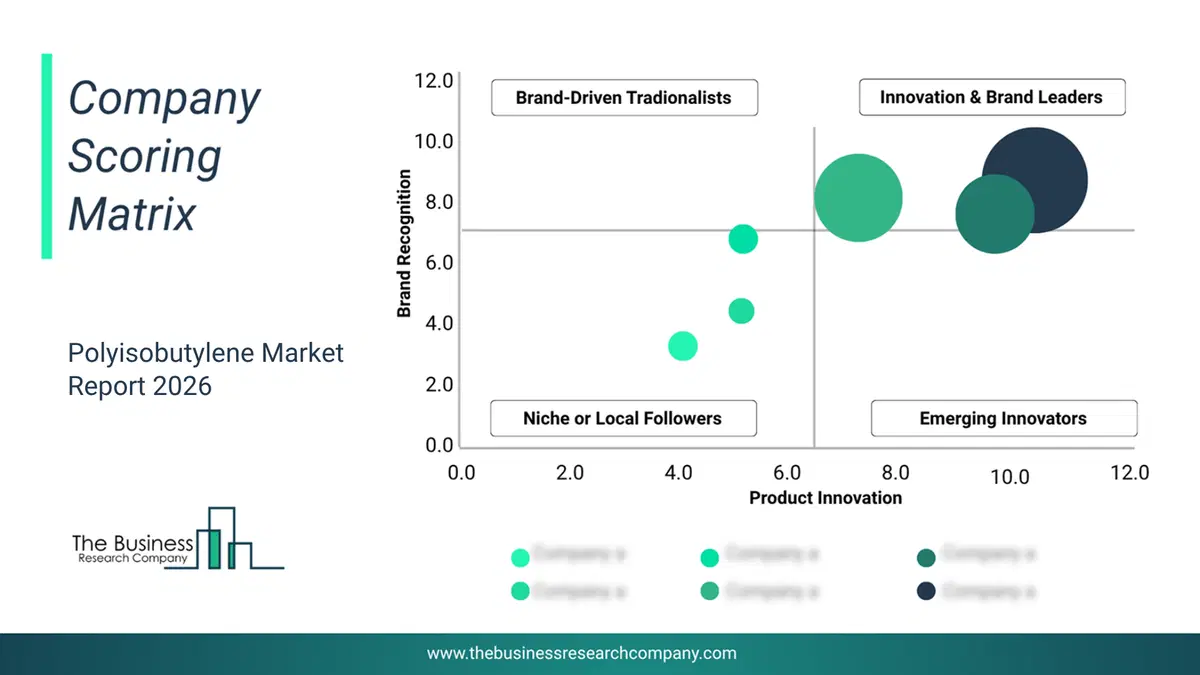
This chart maps companies by product innovation and brand strength, with bubble size indicating relative revenue, helping identify market leaders, challengers, and niche players. This is an illustrative chart; the full report provides a complete and accurate competitive analysis.
Global Polyisobutylene Market Trends and Insights
Major companies operating in the polyisobutylene market are focusing on developing innovative solutions, such as capacity expansion initiatives and advanced production technologies, to meet the rising demand for high-performance elastomers used in adhesives, sealants, lubricants, and fuel additives. These advancements help manufacturers enhance product availability, improve process efficiency, and strengthen supply reliability compared to traditional production setups. For instance, in August 2023, BASF, a Germany-based specialty chemicals manufacturer, announced a 25% increase in production capacity for its medium-molecular-weight polyisobutenes, marketed under the tradename OPPANOL B, at its Ludwigshafen site. OPPANOL B is a versatile polyisobutylene known for its excellent flexibility, chemical resistance, impermeability, and adhesion properties. It is widely used in applications such as pressure-sensitive adhesives, protective films, lubricants, sealants, and packaging materials. The capacity expansion strengthens BASF’s capability to meet growing global demand, ensures stable supply, and reinforces the company’s position as a leading polyisobutylene producer.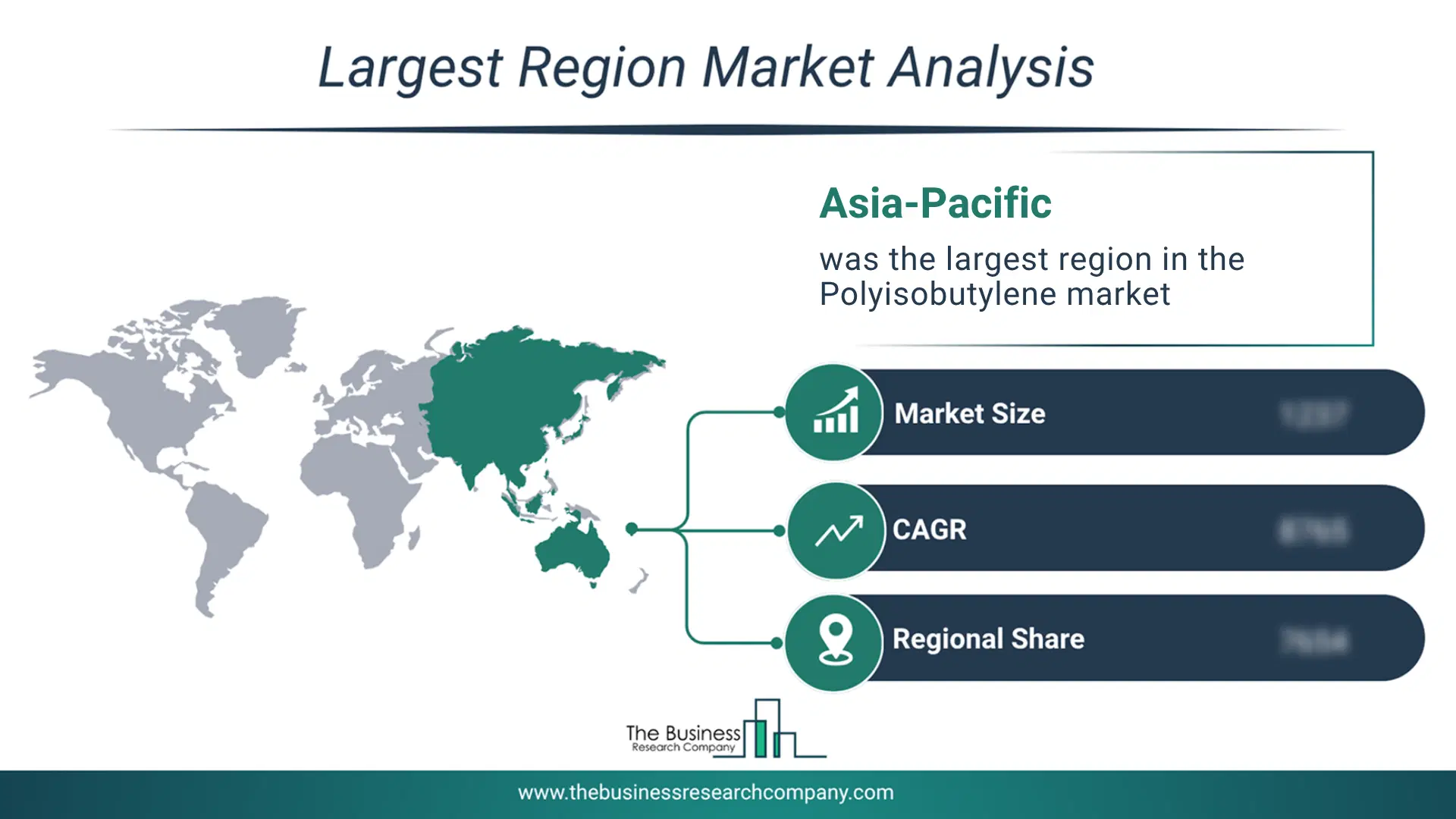
Regional Insights
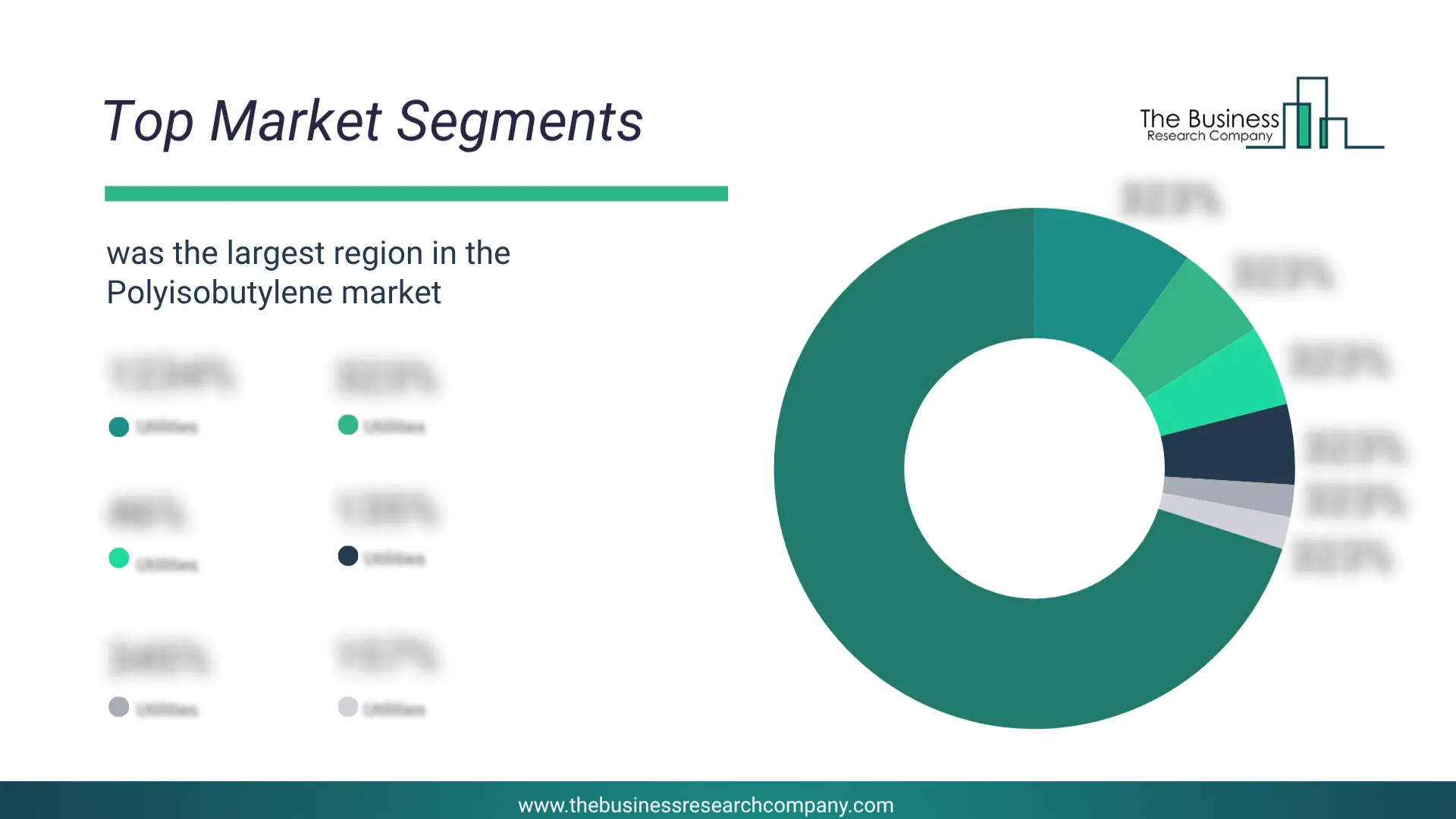
Asia-Pacific was the largest region in the polyisobutylene market in 2025. Asia-Pacific is expected to be the fastest-growing region in the polyisobutylene market during the forecast period. The regions covered in this market report are Asia-Pacific, South East Asia, Western Europe, Eastern Europe, North America, South America, Middle East, Africa The countries covered in this market report are Australia, Brazil, China, France, Germany, India, Indonesia, Japan, Taiwan, Russia, South Korea, UK, USA, Canada, Italy, SpainWhat Defines the Polyisobutylene Market?
The polyisobutylene market consists of sales of polyisobutylene synthesized using raw materials such as 1-butene, isobutylene, and 2-butene. Values in this market are ‘factory gate’ values, that is the value of goods sold by the manufacturers or creators of the goods, whether to other entities (including downstream manufacturers, wholesalers, distributors, and retailers) or directly to end customers. The value of goods in this market includes related services sold by the creators of the goods.How is Market Value Defined and Measured?
The market value is defined as the revenues that enterprises gain from the sale of goods and/or services within the specified market and geography through sales, grants, or donations in terms of the currency (in USD unless otherwise specified). The revenues for a specified geography are consumption values that are revenues generated by organizations in the specified geography within the market, irrespective of where they are produced. It does not include revenues from resales along the supply chain, either further along the supply chain or as part of other products.
This chart presents market attractiveness based on a quantitative evaluation of growth, competition, strategic alignment, and risk, offering a clear view of opportunity areas for decision-making. This chart is for illustrative purposes; the full report contains the complete analysis.

This chart highlights the Total Addressable Market (TAM) by estimating the maximum revenue opportunity using an assumption-driven approach, supporting strategic planning and opportunity sizing across markets. The chart is illustrative; the full report provides a more comprehensive analysis.
What Key Data and Analysis Are Included in the Polyisobutylene Market Report 2026?
The polyisobutylene market research report is one of a series of new reports from The Business Research Company that provides market statistics, including industry global market size, regional shares, competitors with the market share, detailed market segments, market trends and opportunities, and any further data you may need to thrive in the polyisobutylene industry. The market research report delivers a complete perspective of everything you need, with an in-depth analysis of the current and future state of the industry.Polyisobutylene Market Report Forecast Analysis
| Report Attribute | Details |
|---|---|
| Market Size Value In 2026 | $2.95 billion |
| Revenue Forecast In 2030 | $3.78 billion |
| Growth Rate | CAGR of 6.9% from 2026 to 2030 |
| Base Year For Estimation | 2025 |
| Actual Estimates/Historical Data | 2020-2025 |
| Forecast Period | 2026 - 2030 |
| Market Representation | Revenue in USD Billion and CAGR from 2026 to 2030 |
| Segments Covered | Product, Molecular Weight, Application, End User Industry |
| Regional Scope | Asia-Pacific, Western Europe, Eastern Europe, North America, South America, Middle East, Africa |
| Country Scope | The countries covered in this market report are Australia, Brazil, China, France, Germany, India, Indonesia, Japan, Taiwan, Russia, South Korea, UK, USA, Canada, Italy, Spain |
| Key Companies Profiled | Badische Anilin und Soda Fabrik Societas Europaea, TPC Group, Lubrizol Corporation, INEOS Group Limited, Kothari Petrochemicals Limited, Braskem, ENEOS Corporation, Janex S.A., RB Products Inc., Chevron Corporation, Mayzo Inc., Reliance Industries Limited, Evonik Industries AG, KEMAT N.V, Daelim Industrial Company Ltd, ExxonMobil, Lanxess, Dowpol Corporation, Infineum, Shandong Hongrui New Material Technology, Afton Chemical Corporation, Zhejiang Shunda New Material, SABIC, Kemipex, FERRO-PLAST S.r.l., Jilin Petrochemical Company, Efremov Synthetic Rubber Enterprise Company, Naxant, JXTG Nippon Oil & Energy Corporation |
| Customization Scope | Request for Customization |
| Pricing And Purchase Options | Explore Purchase Options |