
Polymer Biomaterial Market Report 2026
Global Outlook – By Type (Nylon, Silicone Rubber, Polyester, Polymethyl Methacrylate (PMMA), Polyethylene (PE), Polyvinyl Chloride, Other Types), By Nature (Natural, Synthetic), By Application (Cardiovascular, Ophthalmology, Dental, Plastic Surgery, Wound Healing, Tissue Engineering, Orthopedics, Neurological Disorders Or Central Nervous System, Other Applications) – Market Size, Trends, Strategies, and Forecast to 2030
Polymer Biomaterial Market Overview
• Polymer Biomaterial market size has reached to $94.98 billion in 2025 • Expected to grow to $197.22 billion in 2030 at a compound annual growth rate (CAGR) of 15.8% • Growth Driver: Rising Prevalence Of Chronic Diseases Boosts Demand For Polymer Biomaterials • Market Trend: Innovative Technologies Are Transforming Polymer Biomaterials Market • North America was the largest region in 2025 and Western Europe is the fastest growing region.What Is Covered Under Polymer Biomaterial Market?
Polymer biomaterials are inert pharmacological substances made up of natural and synthetic origin. Polymer biomaterials are used for enhancing the functionality of tissues and organs that are damaged in various disease therapies. The main types of polymer biomaterial are silicone rubber, polyester, polymethyl methacrylate (PMMA), polyethylene (PE), polyvinyl chloride, and others. The silicon rubber in polymer biomaterials refers to the rubber matrix that is lightly cross-linked with a polyacrylamide hydrogel and is used for biological and medical purposes. The various natures include natural and synthetic. Polymer biomaterials are used in cardiovascular, ophthalmology, dental, plastic surgery, wound healing, tissue engineering, orthopedics, neurological disorders / central nervous systems, and others.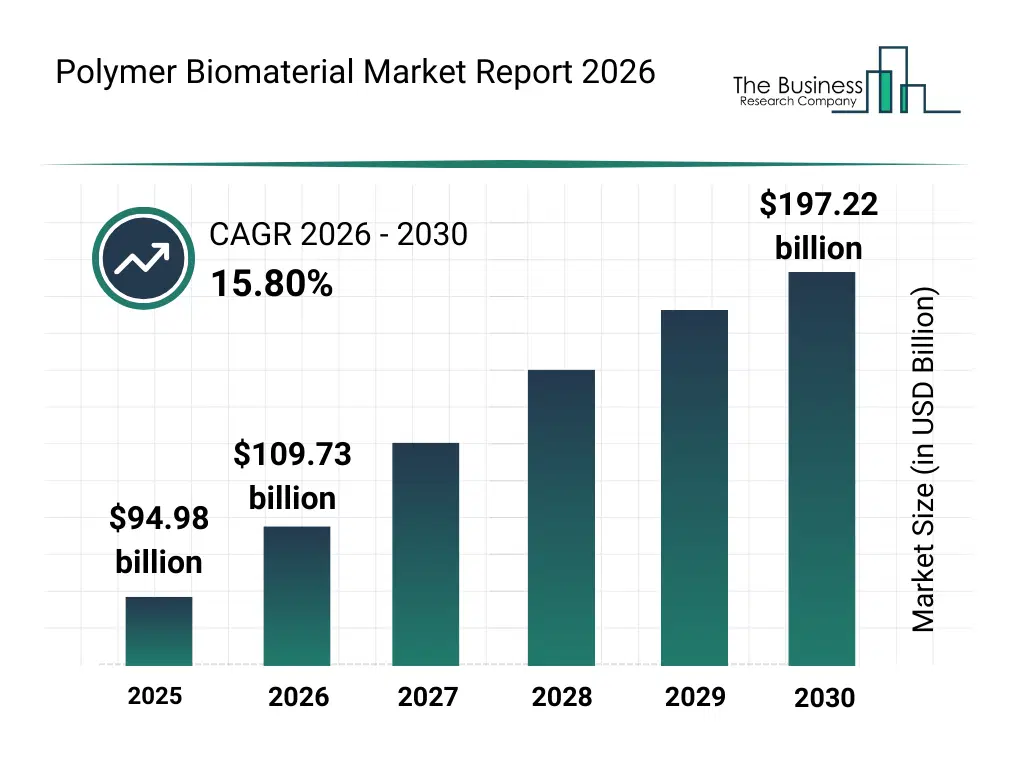
What Is The Polymer Biomaterial Market Size and Share 2026?
The polymer biomaterial market size has grown rapidly in recent years. It will grow from $94.98 billion in 2025 to $109.73 billion in 2026 at a compound annual growth rate (CAGR) of 15.5%. The growth in the historic period can be attributed to growth in orthopedic procedures, expansion of dental implants, rising cardiovascular surgeries, increased plastic surgery demand, adoption of synthetic materials.What Is The Polymer Biomaterial Market Growth Forecast?
The polymer biomaterial market size is expected to see rapid growth in the next few years. It will grow to $197.22 billion in 2030 at a compound annual growth rate (CAGR) of 15.8%. The growth in the forecast period can be attributed to growth in regenerative medicine, increasing chronic diseases, expansion of implant technologies, rising demand for biodegradable materials, advancements in polymer chemistry. Major trends in the forecast period include rising demand for biocompatible polymers, growth of implantable medical devices, increasing use of synthetic biomaterials, expansion of tissue engineering applications, development of long-term durable polymers.
Global Polymer Biomaterial Market Segmentation
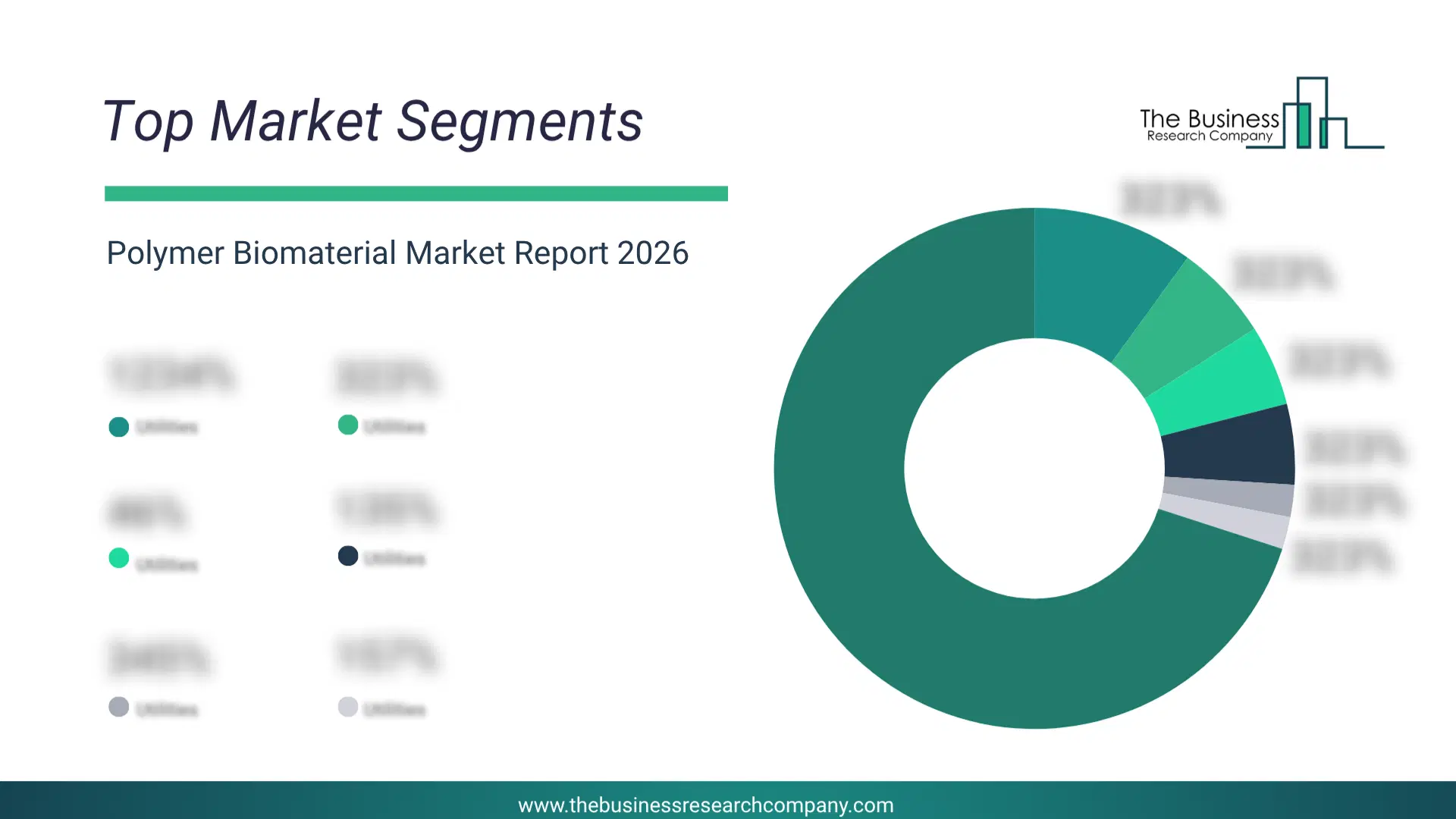
1) By Type: Nylon, Silicone Rubber, Polyester, Polymethyl Methacrylate (PMMA), Polyethylene (PE), Polyvinyl Chloride, Other Types 2) By Nature: Natural, Synthetic 3) By Application: Cardiovascular, Ophthalmology, Dental, Plastic Surgery, Wound Healing, Tissue Engineering, Orthopedics, Neurological Disorders Or Central Nervous System, Other Applications Subsegments: 1) By Nylon: Nylon 6, Nylon 66 2) By Silicone Rubber: Liquid Silicone Rubber (LSR), Solid Silicone Rubber (SSR) 3) By Polyester: Polyethylene Terephthalate (PET), Polybutylene Terephthalate (PBT) 4) By Polymethyl Methacrylate (PMMA): Clear PMMA, Colored PMMA 5) By Polyethylene (PE): High-Density Polyethylene (HDPE), Low-Density Polyethylene (LDPE), Linear Low-Density Polyethylene (LLDPE) 6) By Polyvinyl Chloride: Rigid PVC, Flexible PVC 7) By Other Types: Polyurethane (PU), Polycarbonate (PC)What Is The Driver Of The Polymer Biomaterial Market?
The increasing number of chronic diseases is expected to propel the growth of the polymer biomaterial market going forward. Chronic diseases, often referred to as non-communicable diseases (NCDs), are long-term medical conditions that persist over an extended period and typically progress slowly. The polymer biomaterials are used to develop implantable devices such as drug pumps or electrodes for neuromodulation. These devices help control symptoms and improve the patient's quality of life. For instance, in June 2024, according to the National Health Service, a UK-based publicly funded healthcare system, in 2023, 3,615,330 people registered with a GP were found to have non-diabetic hyperglycemia (pre-diabetes), up from 3,065,825 in 2022, marking an 18% increase year-on-year. Therefore, the increasing number of chronic diseases is driving the growth of the polymer biomaterial industry.Key Players In The Global Polymer Biomaterial Market
Major companies operating in the polymer biomaterial market are BASF SE, Corbion N.V., Zimmer Biomet Holdings Inc., Royal DSM N.V., Covestro AG, Evonik Industries AG, Starch Medical Inc., Victrex plc, W. L. Gore and Associates Inc., DSM Biomedical B.V., Purac Biomaterials, Ticona LLC, Invibo LLC, Covalon Technologies Ltd., Osteotech Inc., Medtronic plc, Stryker Corporation, Synthes Inc., Polyfibre Industries Pte Ltd., Toray Industries Inc., Stein Fibers Ltd., Bezwada Biomedical LLC, Collagen Solutions plc, Gelita AG, AorTech Biomaterials Pty Ltd., Berkeley Advanced Biomaterials Inc., Biocomposites Ltd., BioHorizons IPH Inc., Biomerics LLC, Bioteque Corporation, CollPlant Holdings Ltd., EndoShape Inc., PolyNovo Biomaterials Pty Ltd., Secant Group LLC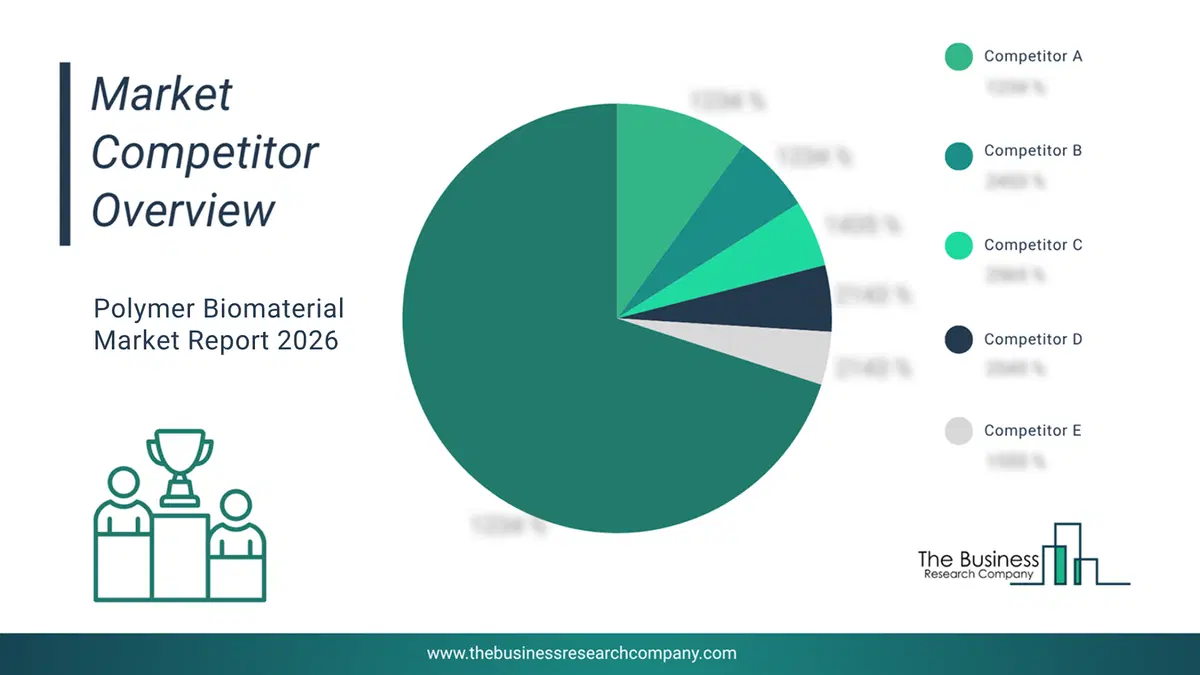
This chart is for illustrative purposes; the full report includes a detailed competitor analysis and comprehensive overview of the top 10 companies in the market.
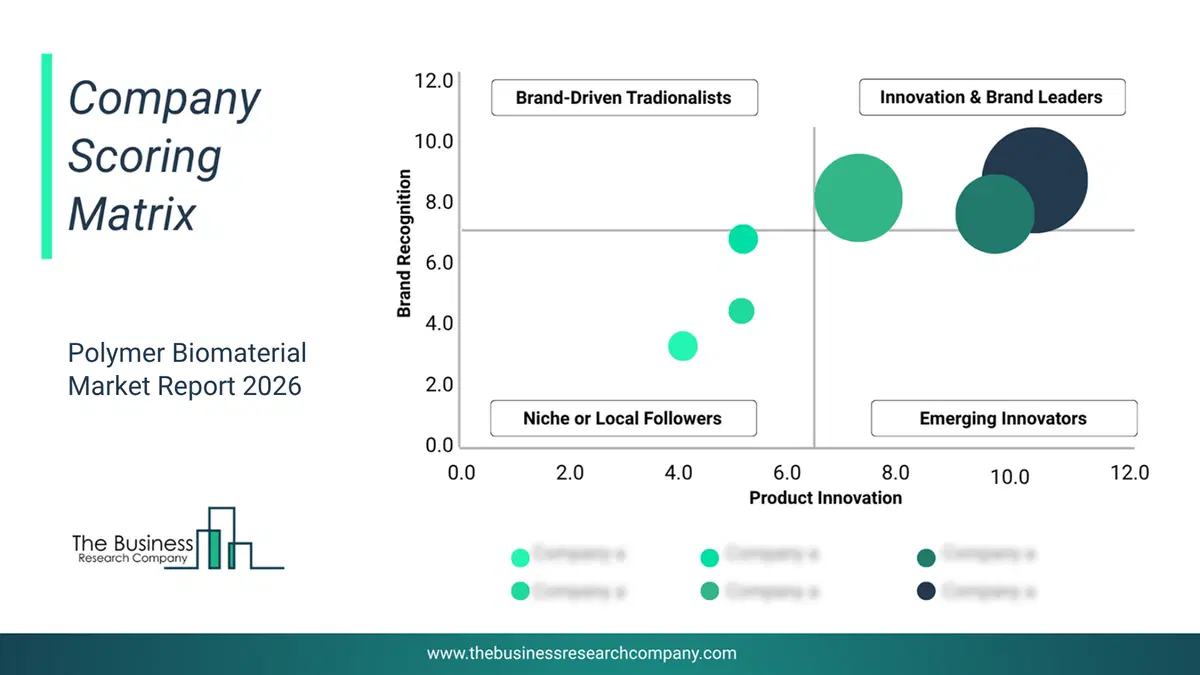
This chart maps companies by product innovation and brand strength, with bubble size indicating relative revenue, helping identify market leaders, challengers, and niche players. This is an illustrative chart; the full report provides a complete and accurate competitive analysis.
Global Polymer Biomaterial Market Trends and Insights
Major companies operating in the polymer biomaterial market are innovating new technologies, such as designed enzymatic biomaterials (DEB) technology, to increase their profitability in the market. Designed enzymatic biomaterials (DEB) is a brand-new technological platform that offers a completely novel method of producing high-performing polysaccharides. For instance, in June 2023, International Flavors & Fragrances Inc., a US-based cosmetic and flavor company, launched Enzymatic Biomaterials (DEB) technology. It is a sustainable biopolymer technology platform that enables the production of biopolymers with excellent performance and properties similar to those of polymers made from petroleum. It enables customization and fine-tuning of the characteristics of the produced biopolymers by directly transferring the functionalities of petroleum-based polymer materials into biopolymer components.What Are Latest Mergers And Acquisitions In The Polymer Biomaterial Market?
In July 2023, Biocoat, a US-based company specializing in biocompatible coatings for medical devices, acquired Chempilots for an undisclosed amount. Through this acquisition, Biocoat aimed to enhance its capabilities in polymer development, focusing on expanding its product offerings in the biomedical sector. Chempilots is a Denmark-based company recognized for its advanced polymer solutions that support the development of innovative medical technologies.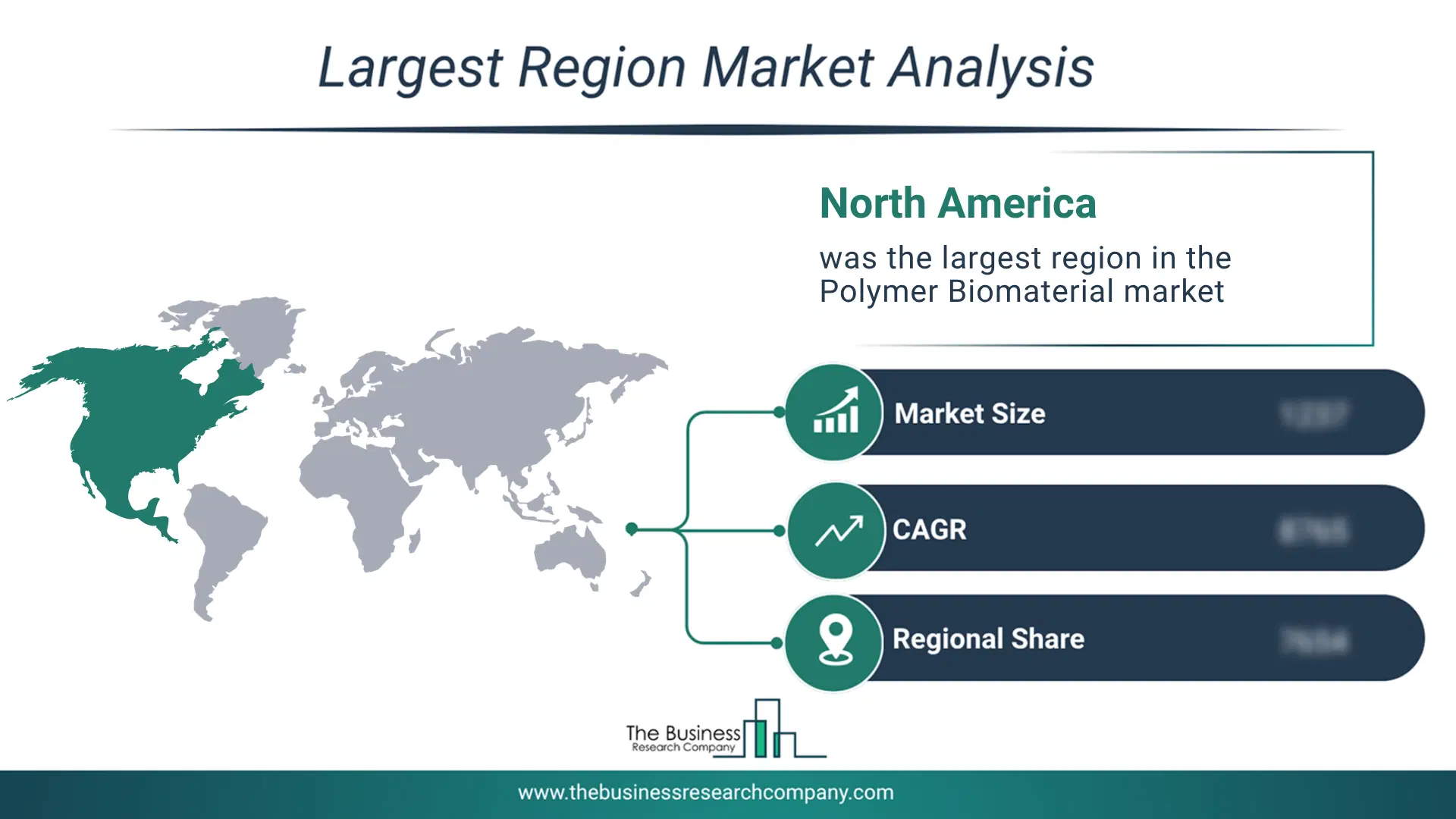
Regional Outlook
North America was the largest region in the polymer biomaterials market in 2025. Western Europe was the second-largest region in the global polymer biomaterials market report. The regions covered in this market report are Asia-Pacific, South East Asia, Western Europe, Eastern Europe, North America, South America, Middle East, Africa. The countries covered in this market report are Australia, Brazil, China, France, Germany, India, Indonesia, Japan, Taiwan, Russia, South Korea, UK, USA, Canada, Italy, SpainWhat Defines the Polymer Biomaterial Market?
The polymer biomaterials market consists of sales of PCL, PVDF, PLGA, PVP, and nylon. Values in this market are factory gate values, that is the value of goods sold by the manufacturers or creators of the goods, whether to other entities (including downstream manufacturers, wholesalers, distributors, and retailers) or directly to end customers. The value of goods in this market includes related services sold by the creators of the goods.How is Market Value Defined and Measured?
The market value is defined as the revenues that enterprises gain from the sale of goods and/or services within the specified market and geography through sales, grants, or donations in terms of the currency (in USD unless otherwise specified). The revenues for a specified geography are consumption values that are revenues generated by organizations in the specified geography within the market, irrespective of where they are produced. It does not include revenues from resales along the supply chain, either further along the supply chain or as part of other products.
This chart presents market attractiveness based on a quantitative evaluation of growth, competition, strategic alignment, and risk, offering a clear view of opportunity areas for decision-making. This chart is for illustrative purposes; the full report contains the complete analysis.

This chart highlights the Total Addressable Market (TAM) by estimating the maximum revenue opportunity using an assumption-driven approach, supporting strategic planning and opportunity sizing across markets. The chart is illustrative; the full report provides a more comprehensive analysis.
What Key Data and Analysis Are Included in the Polymer Biomaterial Market Report 2026?
The polymer biomaterial market research report is one of a series of new reports from The Business Research Company that provides market statistics, including industry global market size, regional shares, competitors with the market share, detailed market segments, market trends and opportunities, and any further data you may need to thrive in the polymer biomaterial industry. The market research report delivers a complete perspective of everything you need, with an in-depth analysis of the current and future state of the industry.Polymer Biomaterial Market Report Forecast Analysis
| Report Attribute | Details |
|---|---|
| Market Size Value In 2026 | $109.73 billion |
| Revenue Forecast In 2030 | $197.22 billion |
| Growth Rate | CAGR of 15.8% from 2026 to 2030 |
| Base Year For Estimation | 2025 |
| Actual Estimates/Historical Data | 2020-2025 |
| Forecast Period | 2026 - 2030 |
| Market Representation | Revenue in USD Billion and CAGR from 2026 to 2030 |
| Segments Covered | Type, Nature, Application |
| Regional Scope | Asia-Pacific, Western Europe, Eastern Europe, North America, South America, Middle East, Africa |
| Country Scope | The countries covered in the report are Australia, Brazil, China, France, Germany, India, Indonesia, Japan, Taiwan, Russia, South Korea, UK, USA, Canada, Italy, Spain. |
| Key Companies Profiled | BASF SE, Corbion N.V., Zimmer Biomet Holdings Inc., Royal DSM N.V., Covestro AG, Evonik Industries AG, Starch Medical Inc., Victrex plc, W. L. Gore and Associates Inc., DSM Biomedical B.V., Purac Biomaterials, Ticona LLC, Invibo LLC, Covalon Technologies Ltd., Osteotech Inc., Medtronic plc, Stryker Corporation, Synthes Inc., Polyfibre Industries Pte Ltd., Toray Industries Inc., Stein Fibers Ltd., Bezwada Biomedical LLC, Collagen Solutions plc, Gelita AG, AorTech Biomaterials Pty Ltd., Berkeley Advanced Biomaterials Inc., Biocomposites Ltd., BioHorizons IPH Inc., Biomerics LLC, Bioteque Corporation, CollPlant Holdings Ltd., EndoShape Inc., PolyNovo Biomaterials Pty Ltd., Secant Group LLC |
| Customization Scope | Request for Customization |
| Pricing And Purchase Options | Explore Purchase Options |