
Polymer Blends Alloys Market Report 2026
Global Outlook – By Polymer Type (Polycarbonate Blends, Polyamide Blends, Polypropylene Blends, Polyethylene Blends, Acrylonitrile Butadiene Styrene Blends, Polyvinyl Chloride Blends, Polyethylene Terephthalate Blends, Polybutylene Terephthalate Blends), By Polymer Structure (Miscible Polymer Blends, Immiscible Polymer Blends, Reactive Compatibilized Blends), By Manufacturing Process (Injection Molding, Extrusion, Blow Molding, Thermoforming, Other Processing Methods), By Application (Automotive, Electrical And Electronics, Consumer Goods, Other Applications) – Market Size, Trends, Strategies, and Forecast to 2030
Polymer Blends Alloys Market Overview
• Polymer Blends Alloys market size has reached to $5.23 billion in 2025 • Expected to grow to $7.68 billion in 2030 at a compound annual growth rate (CAGR) of 7.8% • Growth Driver: Surge In Adoption Of Electric Vehicles Fueling The Growth Of The Market Due To Rising Demand For Lightweight, High-performance Automotive Materials • Market Trend: Innovations In High-Performance Polymer Alloys Enhance Material Durability And Performance • Asia-Pacific was the largest region and fastest growing region.What Is Covered Under Polymer Blends Alloys Market?
Polymer blends alloys are engineered materials created by combining two or more polymers to achieve improved performance characteristics compared with individual polymers. These materials enhance properties such as strength, toughness, chemical resistance, thermal stability, and processability through controlled polymer interactions. Polymer blends alloys are developed using advanced compounding and compatibility techniques to create materials with optimized functional properties for diverse industrial applications. The main polymer types of polymer blends alloys include polycarbonate blends, polyamide blends, polypropylene blends, polyethylene blends, acrylonitrile butadiene styrene blends, polyvinyl chloride blends, polyethylene terephthalate blends, and polybutylene terephthalate blends. Polycarbonate blends refer to combinations of polycarbonate with other polymers to achieve enhanced mechanical strength, impact resistance, dimensional stability, and processing characteristics. These blends have miscible polymer structures, immiscible polymer structures, and reactive compatibilized structures. They are manufactured using injection molding, extrusion, blow molding, thermoforming, and other processing methods and find application in automotive, electrical and electronics, consumer goods, and others.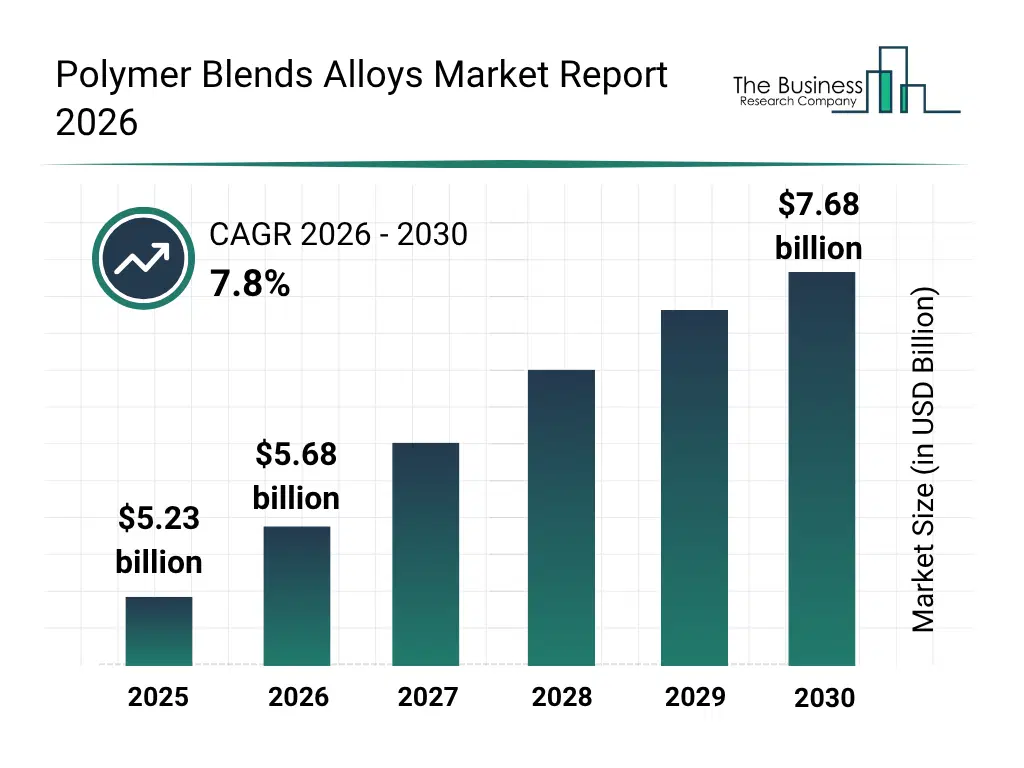
What Is The Polymer Blends Alloys Market Size and Share 2026?
The polymer blends alloys market size has grown strongly in recent years. It will grow from $5.23 billion in 2025 to $5.68 billion in 2026 at a compound annual growth rate (CAGR) of 8.5%. The growth in the historic period can be attributed to increasing demand for high-strength engineering plastics, rising automotive production, growing electrical and electronics component manufacturing, increasing consumer goods production, rising demand for improved polymer toughness.What Is The Polymer Blends Alloys Market Growth Forecast?
The polymer blends alloys market size is expected to see strong growth in the next few years. It will grow to $7.68 billion in 2030 at a compound annual growth rate (CAGR) of 7.8%. The growth in the forecast period can be attributed to growing demand for lightweight automotive components, increasing production of electrical and electronic devices, expanding use of polymer blends in consumer products, rising demand for thermally stable materials, growing need for chemically resistant polymer components. Major trends in the forecast period include rising demand for high-performance polymer blends, increasing use of compatibilized polymer blend formulations, growing demand for enhanced thermal stability, rising adoption of lightweight polymer blend materials, increasing demand for improved chemical resistance.Tariff Impact On Polymer Blends Alloys Market
Tariffs are impacting the polymer blends alloys market by increasing the cost of imported polymer resins, specialty additives, compatibilizers, compounding equipment, and processing machinery required for blend production. This is increasing manufacturing costs and can delay capacity expansion across automotive, electrical and electronics, and consumer goods applications, particularly in regions dependent on imported polymers and processing equipment such as Asia-Pacific and Europe. Polymer types such as polycarbonate, polyamide, polypropylene, and engineering polymer blends are most affected due to their reliance on specialized raw materials and global supply chains. However, tariffs are also encouraging domestic polymer production, regional sourcing, supplier diversification, and increased investment in local compounding capabilities, strengthening supply chain resilience.
Global Polymer Blends Alloys Market Segmentation
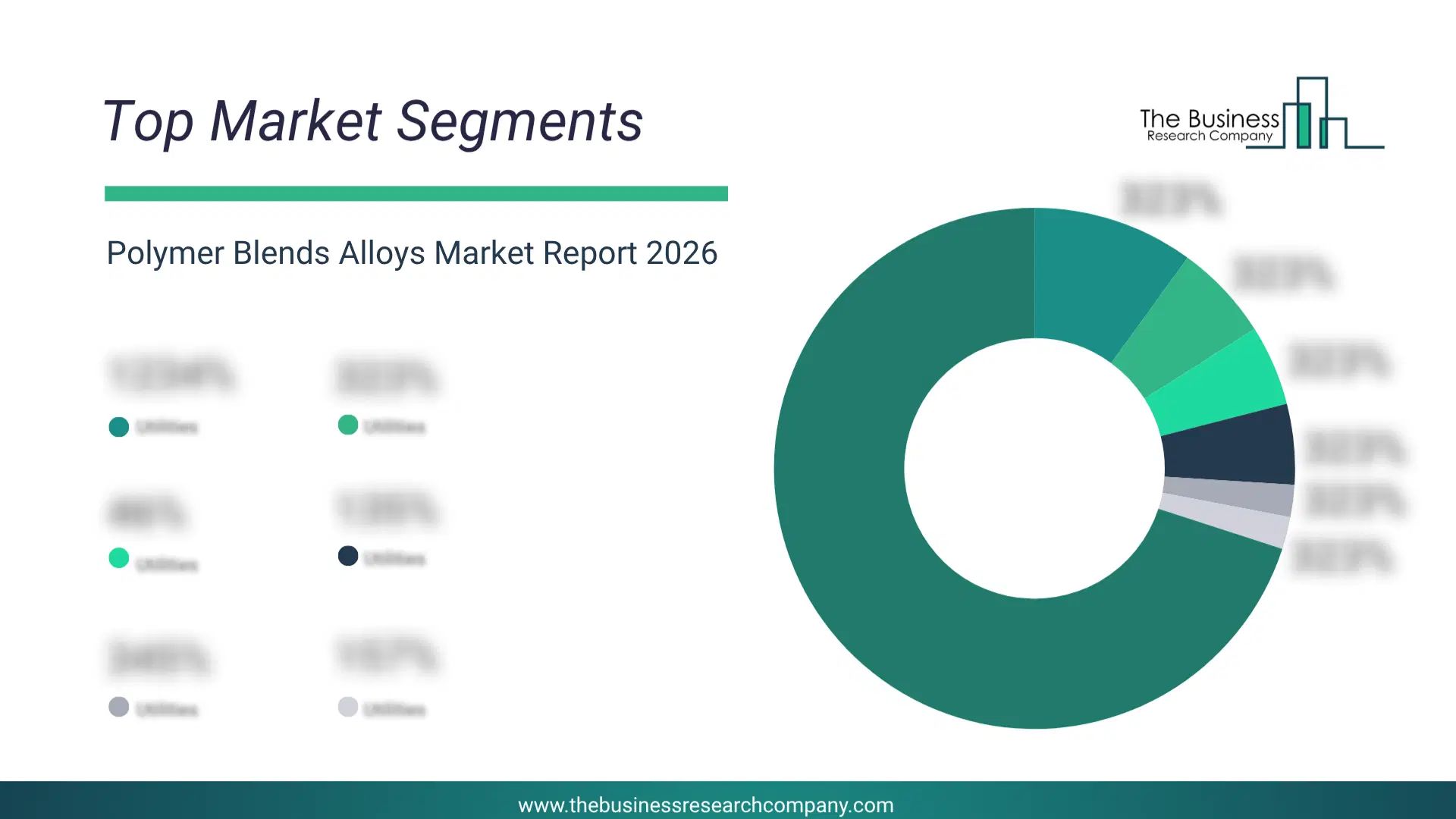
1) By Polymer Type: Polycarbonate Blends, Polyamide Blends, Polypropylene Blends, Polyethylene Blends, Acrylonitrile Butadiene Styrene Blends, Polyvinyl Chloride Blends, Polyethylene Terephthalate Blends, Polybutylene Terephthalate Blends 2) By Polymer Structure: Miscible Polymer Blends, Immiscible Polymer Blends, Reactive Compatibilized Blends 3) By Manufacturing Process: Injection Molding, Extrusion, Blow Molding, Thermoforming, Other Processing Methods 4) By Application: Automotive, Electrical And Electronics, Consumer Goods, Other Applications Subsegments: 1) By Polycarbonate Blends: Polycarbonate Acrylonitrile Butadiene Styrene Blends, Polycarbonate Polyethylene Terephthalate Blends, Polycarbonate Polyamide Blends 2) By Polyamide Blends: Polyamide Polypropylene Blends, Polyamide Polyphenylene Ether Blends, Polyamide Polybutylene Terephthalate Blends, Polyamide Polyethylene Blends 3) By Polypropylene Blends: Polypropylene Polyethylene Blends, Polypropylene Ethylene Propylene Diene Monomer Blends, Polypropylene Polystyrene Blends 4) By Polyethylene Blends: Polyethylene Polypropylene Blends, Polyethylene Ethylene Vinyl Acetate Blends, Polyethylene Polyamide Blends, Polyethylene Polystyrene Blends 5) By Acrylonitrile Butadiene Styrene Blends: Acrylonitrile Butadiene Styrene Polyamide Blends, Acrylonitrile Butadiene Styrene Polyvinyl Chloride Blends, Acrylonitrile Butadiene Styrene Polyethylene Terephthalate Blends 6) By Polyvinyl Chloride Blends: Polyvinyl Chloride Acrylonitrile Butadiene Styrene Blends, Polyvinyl Chloride Polyurethane Blends, Polyvinyl Chloride Polyethylene Blends, Polyvinyl Chloride Polypropylene Blends 7) By Polyethylene Terephthalate Blends: Polyethylene Terephthalate Polybutylene Terephthalate Blends, Polyethylene Terephthalate Polyamide Blends, Polyethylene Terephthalate Polyethylene Blends 8) By Polybutylene Terephthalate Blends: Polybutylene Terephthalate Polycarbonate Blends, Polybutylene Terephthalate Acrylonitrile Butadiene Styrene Blends, Polybutylene Terephthalate Polyamide Blends, Polybutylene Terephthalate Polyethylene Terephthalate BlendsWhat Is The Driver Of The Polymer Blends Alloys Market?
The growing adoption of electric vehicles is expected to propel the growth of the polymer blends and alloys market going forward. Electric vehicles (EVs) refer to vehicles powered by electricity stored in batteries or other electric power systems instead of conventional internal combustion engines using petrol or diesel. The growing adoption of electric vehicles is driven by increasing demand for sustainable transportation, as they reduce emissions, improve energy efficiency, and support the transition toward cleaner mobility solutions. The growing adoption of electric vehicles supports the polymer blends and alloys by increasing the demand for lightweight, high-performance materials that help reduce vehicle weight, enhance mechanical strength, improve thermal stability, and provide design flexibility for automotive components. For instance, in July 2026, according to the U.S. Energy Information Administration, a US-based government agency, electrified vehicles accounted for 24% of new light-duty vehicle sales in the US in the second quarter of 2026, up from 22% in the second quarter of 2025, with hybrid electric vehicles reaching a record 16% market share during the period. Therefore, the growing adoption of electric vehicles is driving the growth of the polymer blends alloys industry.Key Players In The Global Polymer Blends Alloys Market
Major companies operating in the polymer blends alloys market are BASF SE, LyondellBasell Industries N.V., SABIC, Formosa Plastics Corporation, Toray Industries Inc., LOTTE Chemical Corporation, Asahi Kasei Corporation, LG Chem Ltd., Covestro AG, DuPont de Nemours Inc., Celanese Corporation, Arkema S.A., Syensqo SA/NV, Daicel Corporation, Trinseo PLC, Kingfa Science & Technology Co. Ltd., CHIMEI Corporation, DOMO Chemicals GmbH, RTP Company, Ensinger GmbH, Americhem Inc., Polykemi AB, Romira GmbH, Axel Polymers Limited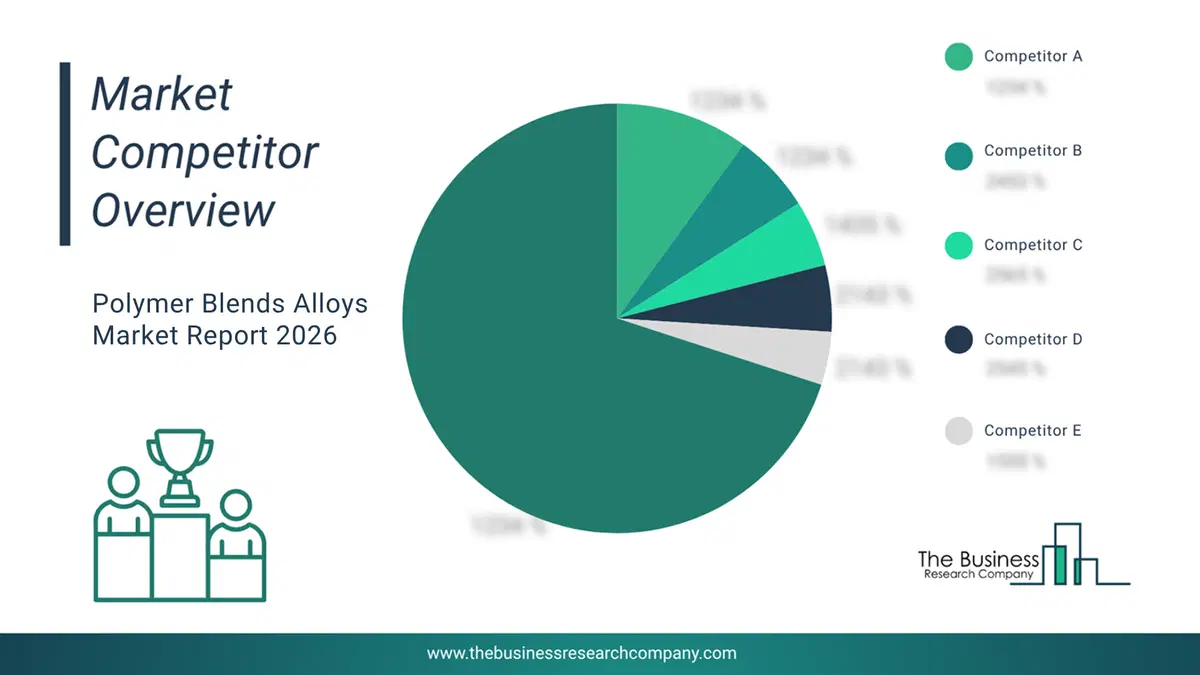
This chart is for illustrative purposes; the full report includes a detailed competitor analysis and comprehensive overview of the top 10 companies in the market.
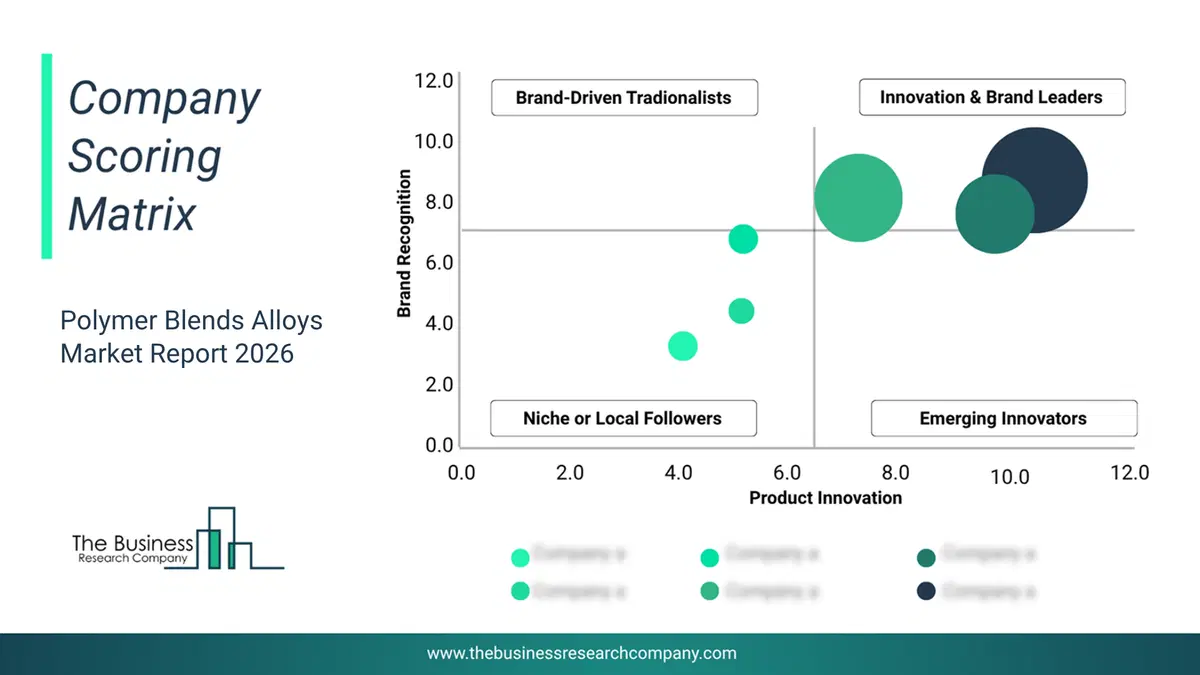
This chart maps companies by product innovation and brand strength, with bubble size indicating relative revenue, helping identify market leaders, challengers, and niche players. This is an illustrative chart; the full report provides a complete and accurate competitive analysis.
Global Polymer Blends Alloys Market Trends and Insights
Major companies operating in the polymer blends and alloys market are focusing on developing advanced alloy platforms, such as high-performance polymer alloys, to balance multiple material properties and improve durability under demanding operating conditions. High-performance polymer alloys refer to engineered materials that combine complementary polymer chemistries into a single material system to achieve balanced properties such as toughness, chemical resistance, durability, dimensional stability, and processability. For instance, in May 2026, Americhem, a US-based polymer solutions company, launched its High Performance Alloy (HPA) platform, engineered to integrate complementary polymer chemistries into a single material system for demanding applications. It is designed to provide more consistent material behavior under stress, sterilization, and chemical exposure. The platform helps reduce stress cracking and brittle failure risk while improving long-term reliability and processing consistency across healthcare, transportation, electronics, and industrial applications.What Are Latest Mergers And Acquisitions In The Polymer Blends Alloys Market?
In April 2026, Teknor Apex B.V., a US-based manufacturer of specialty polymer blends and engineering thermoplastic alloys, partnered with Shriram Polytech Ltd. to form a joint venture for advanced polymer compounds and engineered material solutions. Through this partnership, the companies aim to expand advanced polymer compound capabilities by combining Teknor Apex’s formulation expertise with Shriram Polytech’s manufacturing strengths to develop high-performance engineered polymer solutions. Shriram Polytech Ltd. is an India-based manufacturer of PVC compounds, CPVC compounds, and color masterbatches.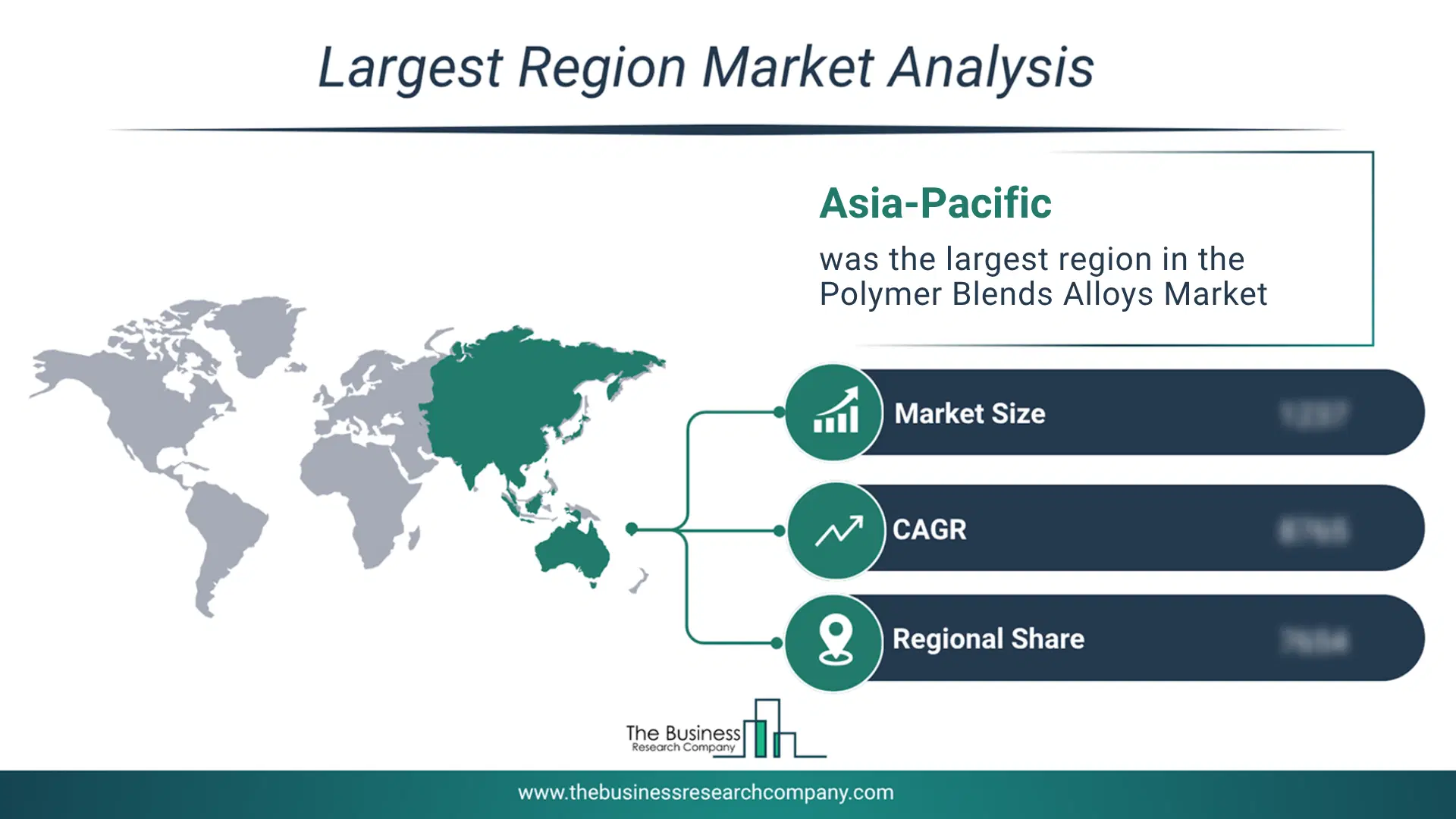
Regional Outlook
Asia-Pacific was the largest region in the polymer blends alloys market in 2025. Asia-Pacific is expected to be the fastest-growing region in the forecast period. The regions covered in this market report are Asia-Pacific, South East Asia, Western Europe, Eastern Europe, North America, South America, Middle East, Africa. The countries covered in this market report are Australia, Brazil, China, France, Germany, India, Indonesia, Japan, Taiwan, Russia, South Korea, UK, USA, Canada, Italy, Spain.What Defines the Polymer Blends Alloys Market?
The polymer blends alloys market consists of sales of impact modified plastics, engineering plastic compounds, and thermoplastic alloy sheets. Values in this market are ‘factory gate’ values, that is, the value of goods sold by the manufacturers or creators of the goods, whether to other entities (including downstream manufacturers, wholesalers, distributors, and retailers) or directly to end customers. The value of goods in this market includes related services sold by the creators of the goods.How is Market Value Defined and Measured?
The market value is defined as the revenues that enterprises gain from the sale of goods and/or services within the specified market and geography through sales, grants, or donations in terms of the currency (in USD unless otherwise specified). The revenues for a specified geography are consumption values that are revenues generated by organizations in the specified geography within the market, irrespective of where they are produced. It does not include revenues from resales along the supply chain, either further along the supply chain or as part of other products.
This chart presents market attractiveness based on a quantitative evaluation of growth, competition, strategic alignment, and risk, offering a clear view of opportunity areas for decision-making. This chart is for illustrative purposes; the full report contains the complete analysis.

This chart highlights the Total Addressable Market (TAM) by estimating the maximum revenue opportunity using an assumption-driven approach, supporting strategic planning and opportunity sizing across markets. The chart is illustrative; the full report provides a more comprehensive analysis.
What Key Data and Analysis Are Included in the Polymer Blends Alloys Market Report 2026?
The polymer blends alloys market research report is one of a series of new reports from The Business Research Company that provides market statistics, including industry global market size, regional shares, competitors with the market share, detailed market segments, market trends and opportunities, and any further data you may need to thrive in the polymer blends alloys industry. The market research report delivers a complete perspective of everything you need, with an in-depth analysis of the current and future state of the industry.Polymer Blends Alloys Market Report Forecast Analysis
| Report Attribute | Details |
|---|---|
| Market Size Value In 2026 | $5.68 billion |
| Revenue Forecast In 2030 | $7.68 billion |
| Growth Rate | CAGR of 7.8% from 2026 to 2030 |
| Base Year For Estimation | 2025 |
| Actual Estimates/Historical Data | 2020-2025 |
| Forecast Period | 2026 - 2030 |
| Market Representation | Revenue in USD Billion and CAGR from 2026 to 2030 |
| Segments Covered | Polymer Type, Polymer Structure, Manufacturing Process, Application |
| Regional Scope | Asia-Pacific, Western Europe, Eastern Europe, North America, South America, Middle East, Africa |
| Country Scope | The countries covered in the report are Australia, Brazil, China, France, Germany, India, Indonesia, Japan, Taiwan, Russia, South Korea, UK, USA, Canada, Italy, Spain. |
| Key Companies Profiled | BASF SE, LyondellBasell Industries N.V., SABIC, Formosa Plastics Corporation, Toray Industries Inc., LOTTE Chemical Corporation, Asahi Kasei Corporation, LG Chem Ltd., Covestro AG, DuPont de Nemours Inc., Celanese Corporation, Arkema S.A., Syensqo SA/NV, Daicel Corporation, Trinseo PLC, Kingfa Science & Technology Co. Ltd., CHIMEI Corporation, DOMO Chemicals GmbH, RTP Company, Ensinger GmbH, Americhem Inc., Polykemi AB, Romira GmbH, Axel Polymers Limited |
| Customization Scope | Request for Customization |
| Pricing And Purchase Options | Explore Purchase Options |